Results by title
3027 books match the query 'Sociology' and 538 start with t
The Making of Modern Nevada
Hal Rothman
University of Nevada Press, 2010
The Making of Pro-life Activists
How Social Movement Mobilization WorksZiad W. Munson
University of Chicago Press, 2008
Through extensive interviews and detailed studies of pro-life organizations across the nation, Munson makes the startling discovery that many activists join up before they develop strong beliefs about abortion—in fact, some are even pro-choice prior to their mobilization. Therefore, Munson concludes, commitment to an issue is often a consequence rather than a cause of activism.
The Making of Pro-life Activists provides a compelling new model of how people become activists while also offering a penetrating analysis of the complex relationship between religion, politics, and the pro-life movement. Policy makers, activists on both sides of the issue, and anyone seeking to understand how social movements take shape will find this book essential.
The Making of a Socialist Night
Society, Imagination and Everyday Life in Czechoslovakia 1945-1960Lucie Dusková
Central European University Press, 2026

The Making of an Artist
Desire, Courage, and CommitmentKristin G. Congdon
Intellect Books, 2018
Powerfully insightful and fully accessible, The Making of an Artist will be an invaluable resource for practicing artists, those just setting out on artistic careers, and art teachers alike.

The Man-Made City
The Land-Use Confidence Game in ChicagoGerald D. Suttles
University of Chicago Press, 1990
Gerald D. Suttles here offers an irreverent, highly critical guide to both the realities and myths of land-use planning and development in Chicago from 1976 through 1987.
The Mangle in Practice
Science, Society, and BecomingAndrew Pickering and Keith Guzik, eds.
Duke University Press, 2008
The Mangle in Practice opens with a fresh introduction to the mangle by Pickering. Several contributors then present empirical studies that demonstrate the mangle’s applicability to topics as diverse as pig farming, Chinese medicine, economic theory, and domestic-violence policing. Other contributors offer examples of the mangle in action: real-world practices that implement a self-consciously “mangle-ish” stance in environmental management and software development. Further essays discuss the mangle as philosophy and social theory. As Pickering argues in the preface, the mangle points to a shift in interpretive sensibilities that makes visible a world of de-centered becoming. This volume demonstrates the viability, coherence, and promise of such a shift, not only in science and technology studies, but in the social sciences and humanities more generally.
Contributors: Lisa Asplen, Dawn Coppin, Adrian Franklin, Keith Guzik, Casper Bruun Jensen,Yiannis Koutalos, Brian Marick, Randi Markussen, Andrew Pickering, Volker Scheid, Esther-Mirjam Sent, Carol Steiner, Maxim Waldstein
The Many Futures of Work
Rethinking Expectations and Breaking MoldsEdited by Peter A. Creticos, Larry Bennett, Laura Owen, Costas Spirou, and Maxine Morphis-Riesbeck
Temple University Press, 2021
What will work eventually look like? This is the question at the heart of this timely collection. The editors and contributors—a mix of policy experts, academics, and advocates—seek to reframe the typical projections of the “future” of work. They examine the impact of structural racism on work, the loss of family‑sustaining jobs, the new role of gig work, growing economic inequality, barriers to rewarding employment such as age, gender, disability, and immigration status, and the business policies driving these ongoing challenges.
Together the essays present varied and practical insights into both U.S. and global trends, discuss the role of labor activism in furthering economic justice, and examine progressive strategies to improve the experience of work, wages, and the lives of workers. The Many Futures of Work offers a range of viable policies and practices that can promote rewarding employment and steer our course away from low-wage, unstable jobs toward jobs that lead to equitable prosperity and economic inclusion.
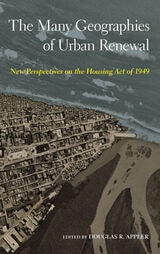
The Many Geographies of Urban Renewal
New Perspectives on the Housing Act of 1949Edited by Douglas R. Appler
Temple University Press, 2023
Taken as a whole, the essays showcase the unexpected diversity of how different communities used the federal urban renewal program. The Many Geographies of Urban Renewal allows us to better understand what was arguably the most significant urban policy of the 20th century, and how that policy shaped the American landscape.
Contributors include Francesca Russello Ammon, Brent Cebul, Robert B. Fairbanks, Leif Fredrickson, Colin Gordon, David Hochfelder, Robert K. Nelson, Benjamin D. Lisle, Stacy Kinlock Sewell and the editor.

The Marrying Kind?
Debating Same-Sex Marriage within the Lesbian and Gay MovementMary Bernstein
University of Minnesota Press, 2013
As the fight for same-sex marriage rages across the United States and lesbian and gay couples rush to marriage license counters, the goal of marriage is still fiercely questioned within the LGBT movement. Rarely has an objective so central to a social movement’s political agenda been so controversial within the movement itself. While antigay forces work to restrict marriage to one man and one woman, lesbian and gay activists are passionately arguing about the desirability, viability, and social consequences of same-sex marriage.
The Marrying Kind? is the first book to draw on empirical research to examine these debates and how they are affecting marriage equality campaigns. The essays in this volume analyze the rhetoric, strategies, and makeup of the LGBT social movement organizations pushing for same-sex marriage, and address the dire predictions of some LGBT commentators that same-sex marriage will spell the end of queer identity and community. Case studies from California, Connecticut, Massachusetts, New Jersey, Oklahoma, Vermont, and Canada illuminate the complicated politics of same-sex marriage, making clear that the current disagreements among LGBT activists over whether marriage is conforming or transformative are far too simplistic. Instead, the impact of the marriage equality movement is complex and often contradictory, neither fully assimilationist nor fully oppositional.
Contributors: Ellen Ann Andersen, U of Vermont; Mary C. Burke, U of Vermont; Adam Isaiah Green, U of Toronto; Melanie Heath, McMaster U, Ontario; Kathleen E. Hull, U of Minnesota; Katrina Kimport, U of California, San Francisco; Jeffrey Kosbie; Katie Oliviero, U of Colorado, Boulder; Kristine A. Olsen; Timothy A. Ortyl; Arlene Stein, Rutgers U; Amy L. Stone, Trinity U; Nella Van Dyke, U of California, Merced.
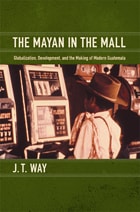
The Mayan in the Mall
Globalization, Development, and the Making of Modern GuatemalaJ. T. Way
Duke University Press, 2012
Using a wide array of historical and contemporary sources, Way explores the multiple intersections of development and individual life, focusing on the construction of social space through successive waves of land reform, urban planning, and economic policy. His explorations move from Guatemala City's poorest neighborhoods and informal economies (run predominantly by women) to a countryside still recovering from civil war and anti-Mayan genocide, and they encompass such artifacts of development as the modernist Pan-American Highway and the postmodern Grand Tikal Futura, a Mayan-themed shopping mall ringed by gated communities and shantytowns. Capitalist development, Way concludes, has dramatically reshaped the country's physical and social landscapes—engendering poverty, ethnic regionalism, and genocidal violence—and positioned Guatemala as a harbinger of globalization's future.
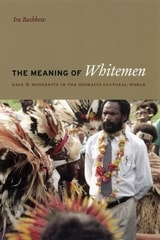
The Meaning of Whitemen
Race and Modernity in the Orokaiva Cultural WorldIra Bashkow
University of Chicago Press, 2006
While Papua New Guinea’s resident white population has been severely reduced due to postcolonial white flight, the whiteman remains a significant racial and cultural other here—not only as an archetype of power and wealth in the modern arena, but also as a foil for people’s evaluations of themselves within vernacular frames of meaning. As Ira Bashkow explains, ideas of self versus other need not always be anti-humanistic or deprecatory, but can be a creative and potentially constructive part of all cultures.
A brilliant analysis of whiteness and race in a non-Western society, The Meaning of Whitemen turns traditional ethnography to the purpose of understanding how others see us.

The Measurement of Urban Home Environment
Validation and Standardization of the Minnesota Home Status IndexAlice Leahy
University of Minnesota Press, 1936
The Media Equation
How People Treat Computers, Television, and New Media Like Real People and PlacesByron Reeves and Clifford Nass
CSLI, 2003

The Men's Section
Orthodox Jewish Men in an Egalitarian WorldElana Maryles Sztokman
Brandeis University Press, 2011
The Menace of Prosperity
New York City and the Struggle for Economic Development, 1865–1981Daniel Wortel-London
University of Chicago Press, 2025
Many local policymakers make decisions based on a deep-seated belief: what’s good for the rich is good for cities. Convinced that local finances depend on attracting wealthy firms and residents, municipal governments lavish public subsidies on their behalf. Whatever form this strategy takes—tax-exempt apartments, corporate incentives, debt-financed mega projects—its rationale remains consistent and assumed to be true. But this wasn’t always the case. Between the 1870s and the 1970s, a wide range of activists, citizens, and intellectuals in New York City connected local fiscal crises to the greed and waste of the rich. These figures saw other routes to development, possibilities rooted in alternate ideas about what was fiscally viable.
In The Menace of Prosperity, Daniel Wortel-London argues that urban economics and politics are shaped by what he terms the “fiscal imagination” of policymakers, activists, advocates, and other figures. His survey of New York City during a period of explosive growth shows how residents went beyond the limits of redistributive liberalism to imagine how their communities could become economically viable without the largesse of the wealthy. Their strategies—which included cooperatives, public housing, land-value taxation, public utilities, and more—centered the needs and capabilities of ordinary residents as the basis for local economies that were both prosperous and just.
Overturning stale axioms about economic policy, The Menace of Prosperity shows that not all growth is productive for cities. Wortel-London’s ambitious history demonstrates the range of options we’ve abandoned and hints at the economic frameworks we could still realize—and the more democratic cities that might result.
The Menace of Prosperity
New York City and the Struggle for Economic Development, 1865–1981Daniel Wortel-London
University of Chicago Press, 2025
Upends entrenched thinking about cities, demonstrating how urban economies are defined—or constrained—by the fiscal imagination of policymakers, activists, and residents.
Many local policymakers make decisions based on a deep-seated belief: what’s good for the rich is good for cities. Convinced that local finances depend on attracting wealthy firms and residents, municipal governments lavish public subsidies on their behalf. Whatever form this strategy takes—tax-exempt apartments, corporate incentives, debt-financed mega projects—its rationale remains consistent and assumed to be true. But this wasn’t always the case. Between the 1870s and the 1970s, a wide range of activists, citizens, and intellectuals in New York City connected local fiscal crises to the greed and waste of the rich. These figures saw other routes to development, possibilities rooted in alternate ideas about what was fiscally viable.
In The Menace of Prosperity, Daniel Wortel-London argues that urban economics and politics are shaped by what he terms the “fiscal imagination” of policymakers, activists, advocates, and other figures. His survey of New York City during a period of explosive growth shows how residents went beyond the limits of redistributive liberalism to imagine how their communities could become economically viable without the largesse of the wealthy. Their strategies—which included cooperatives, public housing, land-value taxation, public utilities, and more—centered the needs and capabilities of ordinary residents as the basis for local economies that were both prosperous and just.
Overturning stale axioms about economic policy, The Menace of Prosperity shows that not all growth is productive for cities. Wortel-London’s ambitious history demonstrates the range of options we’ve abandoned and hints at the economic frameworks we could still realize—and the more democratic cities that might result.
The Methamphetamine Industry in America
Transnational Cartels and Local EntrepreneursBrownstein, Henry H
Rutgers University Press, 2016
The Methamphetamine Industry in America describes the reality that the methamphetamine industry is a social phenomenon connecting local, national, and international communities and markets. The book details the results of a groundbreaking three-stage study, part of a joint initiative of the National Institute on Drug Abuse and the National Institute of Justice, in which police agencies across the United States were surveyed and their responses used to identify likely areas of study. The authors then visited these areas to observe and interview local participants, from users and dealers to law enforcement officers and clinical treatment workers.
Through the eyes and words of these participants, the book tells the story of the evolution of methamphetamine markets in the United States over the past several years, given changes in public policies and practices and changing public opinion about methamphetamine. The authors look closely at how the markets are part of a larger industry, how they are socially organized, and how they operate. They also consider the relationships among the people involved and those around them, and the national, regional, and local culture of the markets. Their work demonstrates the importance of understanding the business of methamphetamine—and by extension other drugs in society—through a lens that focuses on social behavior, social relationships, and the cultural elements that shape the organization and operation of this illicit but effective industry.
The Missing Links
Formation and Decay of Economic NetworksJames E. Rauch
Russell Sage Foundation, 2007
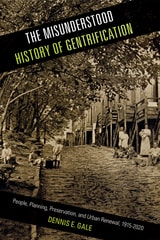
The Misunderstood History of Gentrification
People, Planning, Preservation, and Urban Renewal, 1915-2020Dennis E. Gale
Temple University Press, 2021
The origins of gentrification date back to World War I—only it was sometimes known as “remodeling” then. Dennis Gale’s insightful book, TheMisunderstood History of Gentrification, provides a recontextualization of American gentrification, planning, and policymaking. He argues that gentrification must be understood as an urban phenomenon with historical roots in the very early twentieth century.
Gale uses solid empirical evidence to trace the embryonic revitalization of Georgetown, Greenwich Village, Beacon Hill, and elsewhere back to 1915. He shows how reinvestment and restoration reversed urban decline and revitalized neighborhoods. The Misunderstood History of Gentrification also explains how federal policies such as the Urban Redevelopment Program (later named Urban Renewal), which first emerged in 1949, razed urban slums and created an “urban crisis” that persisted in the 1960s and ‘70s. This situation soon prompted city gentrifiers and historic preservationists to reuse and rehabilitate existing structures.
Within a more expansive historical framework, Gale offers a fresh perspective on and debunks misperceptions about gentrification in America.
The Modern Age
Turn-of-the-Century American Culture and the Invention of AdolescenceKent Baxter
University of Alabama Press, 2008
The Modern Age examines the discourses that have come to characterize adolescence and argues that commonplace views of adolescents as impulsive, conflicted, and rebellious are constructions inspired by broader cultural anxieties that characterized American society in early-twentieth-century America.
The idea of adolescence, argues Kent Baxter, came into being because it fulfilled specific historical and cultural needs: to define a quickly expanding segment of the population, and to express concerns associated with the movement into a new era. Adolescence—a term that had little currency before 1900 and made a sudden and pronounced appearance in a wide variety of discourses thereafter—is a “modern age” not only because it sprung from changes in American society that are synonymous with modernity, but also because it came to represent all that was threatening about “modern life.”
Baxter provides a preliminary history of adolescence, focusing specifically on changes in the American educational system and the creation of the juvenile justice system that carved out a developmental space between the child and the adult. He looks at the psychological works of G. Stanley Hall and the anthropological works of Margaret Mead and explores what might have inspired their markedly negative descriptions of this new demographic. He examines the rise of the Woodcraft Indian youth movement and its promotion of “red skin” values while also studying the proliferation of off-reservation boarding schools for Native American youth, where educators attempted to eradicate the very “red skin” values promoted by the Woodcraft movement.
Finally Baxter studies reading at the turn of the century, focusing specifically on Horatio Alger (the Ragged Dick series) and Edward Stratemeyer (the Tom Swift, Nancy Drew, and Hardy Boys series) and what those works reveal about the “problem” of adolescence and its solutions in terms of value, both economic and moral.
The Modernist City
An Anthropological Critique of BrasiliaJames Holston
University of Chicago Press, 1989
The Modernity of Tradition
Political Development in IndiaLloyd I. Rudolph and Susanne Hoeber Rudolph
University of Chicago Press, 1984
Three areas of Indian life are analyzed: social stratification, charismatic leadership, and law. The authors question whether objective historical conditions, such as advanced industrialization, urbanization, or literacy, are requisites for political modernization.
The Motherhood Business
Consumption, Communication, and PrivilegeEdited by Anne Teresa Demo, Jennifer L. Borda, and Charlotte Kroløkke
University of Alabama Press, 2015
Examining how motherhood, consumption, and privilege shape identities in contemporary culture.
The Motherhood Business is a piercing collection of ten original essays that reveal the rhetoric of the motherhood industry. Focusing on the consumer life of mothers and the emerging entrepreneurship associated with motherhood, the collection considers how different forms of privilege (class, race, and nationality) inform discourses about mothering, consumption, mobility, and leisure.
The Motherhood Business follows the harried mother’s path into the anxious maelstrom of intelligent toys, healthy foods and meals, and educational choices. It also traces how some enterprising mothers leverage cultural capital and rhetorical vision to create thriving baby- and child-based businesses of their own, as evidenced by the rise of mommy bloggers and “mompreneurs”over the last decade.
Starting with the rapidly expanding global fertility market, The Motherhood Business explores the intersection of motherhood, consumption, and privilege in the context of fertility tourism, international adoption, and transnational surrogacy. The synergy between motherhood and the marketplace demonstrated across the essays affirms the stronghold of “intensive mothering ideology” in decisions over what mothers buy and how they brand their businesses even as that ideology evolves. Across diverse contexts, the volume also identifies how different forms or privilege shape how mothers construct their identities through their consumption and entrepreneurship.
Although social observers have long commented on the link between motherhood and consumerism, little has been written within the field of rhetoric. Penetrating and interdisciplinary, The Motherhood Business illuminates how consumer culture not only shapes contemporary motherhood but also changes in response to mothers who constitute a driving force of the economy.

The Motherlode
Why Most US Mothers Will Find Themselves Financially Supporting Their ChildrenJennifer L. Glass
Russell Sage Foundation, 2026
Despite cultural scripts that continue to view fathers as the primary breadwinners in their families, there has been a striking escalation of mothers’ assumption of that role. Over the last twenty years, the rate at which mothers become the primary breadwinner has increased by almost 50 percent and an astonishing 70 percent of American mothers can expect to become the primary earner for their household for at least a year before their first child turns eighteen. In The Motherlode, sociologist Jennifer L. Glass traces the rise of mothers as the primary financial providers for their children, investigates the causes of this increase, and evaluates the consequences of this shift for mothers and families.
Glass finds the swift increase of fiscal responsibility for children by their mothers is occurring in households of all racial backgrounds and across the educational spectrum. This increase is not due to more divorces or relationship breakups. In fact, the most rapid growth in mothers’ financial responsibility for the household has come from married mothers, not single mothers, and about half of contemporary mom-breadwinners have spouses or romantic partners living in the home. Nor is it due to a narrowing of the gender pay gap or mothers’ ability to out-earn their partners—the bulk of breadwinning mothers see large financial losses or are better off financially but still living in poverty when they become the primary earner. Instead, this rise is due to broader, long-term changes in the economy, which have led to less job security and wage stagnation for all workers.
The increase of mothers’ financial obligations to their children has occurred at the same time that nonfinancial responsibilities for children has increased—more time is dedicated to identifying, evaluating, and obtaining goods and services for children, including healthcare and schooling. There has not been a corresponding increase in support for mothers by their employers, the government, or fathers. This leaves mothers with greater burdens of both financial support and nonmonetary care for their children, which increases the number of children that are vulnerable to dependency on their mothers’ earnings and intermittent poverty. While this rise in maternal breadwinning is unlikely to decline anytime soon, Glass suggests policies that could provide mothers with more support, such as enacting labor protections for care occupations dominated by women and federal paid family and medical leave and providing federally funded, wraparound, non-means-tested systems of childcare.
The Motherlode is an illuminating and in-depth examination of the surprisingly pervasive phenomenon of maternal breadwinning in American society.
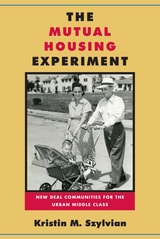
The Mutual Housing Experiment
New Deal Communities for the Urban Middle ClassKristin M Szylvian
Temple University Press, 2016
In The Mutual Housing Experiment, Kristin Szylvian examines 32 mutual housing associations that are still in existence today, and offers strong evidence to show that federal public housing policy was not the failure that critics allege. She explains that mutual home ownership has not only proven its economic value, but has also given rise to communities characterized by a strong sense of identity and civic engagement.
The book shows that this important period in urban and housing policy provides critical lessons for contemporary housing analysts who continue to emphasize traditional home ownership for all wage-earners despite the home mortgage crisis of 2008.
The Myth of Political Correctness
The Conservative Attack on Higher EducationJohn K. Wilson
Duke University Press, 1995
The phrase "political correctness" is on everyone’s lips, on radio and television, and in newspapers and magazines. The phenomenon itself, however, has been deceptively described. Wilson steps into the nation’s favorite cultural fray to reveal that many of the most widely publicized anecdotes about PC are in fact more myth than reality. Based on his own experience as a student and in-depth research, he shows what’s really going on beneath the hysteria and alarmism about political correctness and finds that the most disturbing examples of thought policing on campus have come from the right. The image of the college campus as a gulag of left-wing totalitarianism is false, argues Wilson, created largely through the exaggeration of deceptive stories by conservatives who hypocritically seek to silence their political opponents.
Many of today’s most controversial topics are here: multiculturalism, reverse discrimination, speech codes, date rape, and sexual harassment. So are the well-recognized protagonists in the debate: Dinesh D’Souza, William Bennett, and Lynne Cheney, among others. In lively fashion and in meticulous detail, Wilson compares fact to fiction and lays one myth after another to rest, revealing the double standard that allows "conservative correctness" on college campuses to go unchallenged.

The Names of John Gergen
Immigrant Identities in Early Twentieth-Century St. LouisBenjamin Moore
University of Missouri Press, 2020
Winner of the 2022 Missouri History Book Award
Rescued from the dumpster of a boarded-up house, the yellowing scraps of a young migrant’s schoolwork provided Benjamin Moore with the jumping-off point for this study of migration, memory, and identity. Centering on the compelling story of its eponymous subject, The Names of John Gergen examines the converging governmental and institutional forces that affected the lives of migrants in the industrial neighborhoods of South St. Louis in the early twentieth century. These migrants were Banat Swabians from Torontál County in southern Hungary—they were Catholic, agrarian, and ethnically German.
Between 1900 and 1920, the St. Louis neighborhoods occupied by migrants were sites of efforts by civic authorities and social reformers to counter the perceived threat of foreignness by attempting to Americanize foreign-born residents. At the same time, these neighborhoods saw the strengthening of Banat Swabians’ ethnic identities. Historically, scholars and laypeople have understood migrants in terms of their aspirations and transformations, especially their transformations into Americans. The experiences of John Gergen and his kin, however, suggest that identity at the level of the individual was both more fragmented and more fluid than twentieth-century historians have recognized, subject to a variety of forces that often pulled migrants in multiple directions.
The National Question
Nationalism, Ethnic Conflict, and Self-Determination in the Twentieth Centuryedited by Berch Berberoglu
Temple University Press, 1995

The Nature of Space
Milton Santos
Duke University Press, 2021
The Neoliberal Diet
Healthy Profits, Unhealthy PeopleBy Gerardo Otero
University of Texas Press, 2018
Why are people getting fatter in the United States and beyond? Mainstream explanations argue that people simply eat too much “energy-dense” food while exercising too little. By swapping the chips and sodas for fruits and vegetables and exercising more, the problem would be solved. By contrast, The Neoliberal Diet argues that increased obesity does not result merely from individual food and lifestyle choices. Since the 1980s, the neoliberal turn in policy and practice has promoted trade liberalization and retrenchment of the welfare regime, along with continued agricultural subsidies in rich countries. Neoliberal regulation has enabled agribusiness multinationals to thrive by selling highly processed foods loaded with refined flour and sugars—a diet that originated in the United States—as well as meat. Drawing on extensive empirical data, Gerardo Otero identifies the socioeconomic and political forces that created this diet, which has been exported around the globe, often at the expense of people’s health.
Otero shows how state-level actions, particularly subsidies for big farms and agribusiness, have ensured the dominance of processed foods and made healthful fresh foods inaccessible to many. Comparing agrifood performance across several nations, including the NAFTA region, and correlating food access to class inequality, he convincingly demonstrates the structural character of food production and the effect of inequality on individual food choices. Resolving the global obesity crisis, Otero concludes, lies not in blaming individuals but in creating state-level programs to reduce inequality and make healthier food accessible to all.
The Netherlands in a Nutshell
Highlights from Dutch History and CultureEdited by Frits van Oostrom
Amsterdam University Press, 2009

The New American City Faces its Regional Future
A Cleveland PerspectiveDavid C. Sweet
Ohio University Press, 1999
The fate of Cleveland, Ohio, rides on a web of interdependencies on a regional scale. People and communities throughout that area of Ohio are being forced to adjust to new civic roles. The city of Cleveland must understand how it fits into Greater Cleveland. And suburbs must understand their dependence on the historic central city and be drawn into the Cleveland community.
In this sweeping study by local and national experts, these and more specific issues are raised and examined in depth. The New American City Faces Its Regional Future captures the dynamic thinking concerned with Cleveland and its surrounding region. The authors address questions of importance not only to Cleveland and its region but also to communities across the country that are facing similar issues. How does the city want to grow in the future? How can it become a more livable community? As the population of the region moves farther and farther out from the established urban areas, consuming more and more land, and as it enters its third century, these questions will need to be addressed. This book takes some first, important steps toward providing the answers.
The New Chicago
A Social and Cultural Analysisedited by John P. Koval, Larry Bennett, Michael I. J. Bennett, Fassil Demissie, Roberta Garner and Kiljoong Kim
Temple University Press, 2006
The New Decentralists
The Back-to-the-Land Movement and the Politics of Localism in Appalachia, 1968-2000Jinny A Turman
West Virginia University Press, 2026
How some “back-to-the-landers” fled alienating urban, bureaucratic places for rural Appalachia in pursuit of self-reliance, liberation, and community, only to later find themselves vulnerable to a rising tide of national conservatism that minted new political elites on the state and local level at odds with their progressive social ideas and environmental values.
The New Feminist Movement
Marion Lockwood Carden
Russell Sage Foundation, 1974
The New Institutionalism in Organizational Analysis
Edited by Walter W. Powell and Paul J. DiMaggio
University of Chicago Press, 1991
In their introduction, the editors discuss points of convergence and disagreement with institutionally oriented research in economics and political science, and locate the "institutional" approach in relation to major developments in contemporary sociological theory. Several chapters consolidate the theoretical advances of the past decade, identify and clarify the paradigm's key ambiguities, and push the theoretical agenda in novel ways by developing sophisticated arguments about the linkage between institutional patterns and forms of social structure. The empirical studies that follow—involving such diverse topics as mental health clinics, art museums, large corporations, civil-service systems, and national polities—illustrate the explanatory power of institutional theory in the analysis of organizational change.
Required reading for anyone interested in the sociology of organizations, the volume should appeal to scholars concerned with culture, political institutions, and social change.
The New Institutionalism in Sociology
Mary C. Brinton
Russell Sage Foundation, 1998

The New Neighborhood Senior Center
Redefining Social and Service Roles for the Baby Boom GenerationWeil, Joyce
Rutgers University Press, 2014
The New Political Sociology of Science
Institutions, Networks, and PowerEdited by Scott Frickel and Kelly Moore
University of Wisconsin Press, 2015
The New Politics of Online Feminism
Akane Kanai
Duke University Press, 2026

The New Suburban History
Edited by Kevin M. Kruse and Thomas J. Sugrue
University of Chicago Press, 2006
Kruse and Sugrue here collect ten essays—augmented by their provocative introduction—that challenge our understanding of suburbia. Drawing from original research on suburbs across the country, the contributors recast important political and social issues in the context of suburbanization. Their essays reveal the role suburbs have played in the transformation of American liberalism and conservatism; the contentious politics of race, class, and ethnicity; and debates about the environment, land use, and taxation. The contributors move the history of African Americans, Latinos, Asians, and blue-collar workers from the margins to the mainstream of suburban history.
From this broad perspective, these innovative historians explore the way suburbs affect—and are affected by—central cities, competing suburbs, and entire regions. The results, they show, are far-reaching: the emergence of a suburban America has reshaped national politics, fostered new social movements, and remade the American landscape. The New Suburban History offers nothing less than a new American history—one that claims the nation cannot be fully understood without a history of American suburbs at its very center.
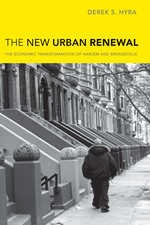
The New Urban Renewal
The Economic Transformation of Harlem and BronzevilleDerek S. Hyra
University of Chicago Press, 2008
As public housing is torn down and money floods back into cities across the United States, countless neighborhoods are being monumentally altered. The New Urban Renewal is a compelling study of the shifting dynamics of class and race at work in the contemporary urban landscape.
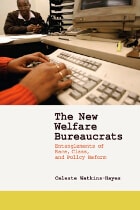
The New Welfare Bureaucrats
Entanglements of Race, Class, and Policy ReformCeleste Watkins-Hayes
University of Chicago Press, 2009
As the recession worsens, more and more Americans must turn to welfare to make ends meet. Once inside the agency, the newly jobless will face a bureaucracy that has undergone massive change since the advent of welfare reform in 1996. A behind-the-scenes look at bureaucracy’s human face, The New Welfare Bureaucrats is a compelling study of welfare officers and how they navigate the increasingly tangled political and emotional terrain of their jobs.
Celeste Watkins-Hayes here reveals how welfare reform engendered a shift in focus for caseworkers from simply providing monetary aid to the much more complex process of helping recipients find work. Now both more intimately involved in their clients’ lives and wielding greater power over their well-being, welfare officers’ racial, class, and professional identities have become increasingly important factors in their work. Based on the author’s extensive fieldwork in two very different communities in the northeast, The New Welfare Bureaucrats is a boon to anyone looking to understand the impact of the institutional and policy changes wrought by welfare reform as well as the subtle social dynamics that shape the way welfare is meted out at the individual level.

The Night is Young
Sexuality in Mexico in the Time of AIDSHéctor Carrillo
University of Chicago Press, 2002
Carrillo finds that young Mexicans today grapple in a variety of ways with two competing tendencies. On the one hand, many seek to challenge traditional ideas and values they find limiting. But they also want to maintain a sense of Mexico's cultural distinctiveness, especially in relation to the United States. For example, while Mexicans are well aware of the dangers of unprotected sex, they may also prize the surrender to sexual passion, even in casual sexual encounters—an attitude which stems from the strong values placed on collective life, spontaneity, and an openness toward intimacy. Because these expectations contrast sharply with messages about individuality, planning, and overt negotiation commonly promoted in global public health efforts, Carrillo argues that they demand a new approach to AIDS prevention education in Mexico.
A Mexican native, Carrillo has written an exceptionally insightful and accessible study of the relations among sexuality, social change, and AIDS prevention in Mexico. Anyone concerned with the changing place of sexuality in a modern and increasingly globalized world will profit greatly from The Night Is Young.

The Northeast Corridor
The Trains, the People, the History, the RegionDavid Alff
University of Chicago Press, 2024
Traversed by thousands of trains and millions of riders, the Northeast Corridor might be America’s most famous railway, but its influence goes far beyond the right-of-way. David Alff welcomes readers aboard to see how nineteenth-century train tracks did more than connect Boston to Washington, DC. They transformed hundreds of miles of Atlantic shoreline into a political capital, a global financial hub, and home to fifty million people. The Northeast Corridor reveals how freight trains, commuter rail, and Amtrak influenced—and in turn were shaped by—centuries of American industrial expansion, metropolitan growth, downtown decline, and revitalization.
Paying as much attention to Canton, Trenton, New Rochelle, and Providence as to New York City, Philadelphia, and Baltimore, Alff provides narrative thrills for history buffs, train enthusiasts, and adventurers alike. What’s more, he offers a glimpse into the future of the corridor. New infrastructural plans—supported by President Joe Biden, famously Amtrak’s biggest fan—envision ever-faster trains zipping along technologically advanced rails. Yet those tracks will literally sit atop a history that links the life of Frederick Douglass, who fled to freedom by boarding a train in Baltimore, to the Frederick Douglass Tunnel, which is expected to be the newest link in the corridor by 2032.
Trains have long made the places that make America, and they still do.
The Nuptial Deal
Same-Sex Marriage and Neo-Liberal GovernanceJaye Cee Whitehead
University of Chicago Press, 2011

The Olympics that Never Happened
Denver '76 and the Politics of GrowthAdam Berg
University of Texas Press, 2023
A look back at how powerful politicians, business leaders, and a diverse cast of activists used a thwarted Olympics to shape the state of Colorado and the city of Denver.
If you don’t recall the 1976 Denver Olympic Games, it’s because they never happened. The Mile-High City won the right to host the winter games and then was forced by Colorado citizens to back away from its successful Olympic bid through a statewide ballot initiative. Adam Berg details the powerful Colorado regime that gained the games for Denver and the grassroots activism that brought down its Olympic dreams, and he explores the legacy of this milestone moment for the games and politics in the United States.
The ink was hardly dry on Denver’s host agreement when Mexican American and African American urbanites, white middle-class environmentalists, and fiscally concerned local politicians realized opposition to the Olympics provided them new political openings. The Olympics quickly became a platform for taking stands on a range of issues, from conservation to urban livability to the very idea of growth, which for decades had been unquestioned in Colorado. The Olympics That Never Happened argues that hostility to the Olympics galvanized and empowered diverse citizens in a major US city, with long-term ramifications for Colorado and political activism elsewhere. The Olympics themselves were changed forever, compelling organizers to take seriously competing interests from subgroups within their communities.

The Oocyte Economy
The Changing Meaning of Human EggsCatherine Waldby
Duke University Press, 2019

The Opera Fanatic
Ethnography of an ObsessionClaudio E. Benzecry
University of Chicago Press, 2011
Though some dismiss opera as old-fashioned, it shows no sign of disappearing from the world’s stage. So why do audiences continue to flock to it? Given its association with wealth, one might imagine that opera tickets function as a status symbol. But while a desire to hobnob with the upper crust might motivate the occasional operagoer, for hardcore fans the real answer, according to The Opera Fanatic, is passion—they do it for love.
Opera lovers are an intense lot, Claudio E. Benzecry discovers in his look at the fanatics who haunt the legendary Colón Opera House in Buenos Aires, a key site for opera’s globalization. Listening to the fans and their stories, Benzecry hears of two-hundred-mile trips for performances and nightlong camp-outs for tickets, while others testify to a particular opera’s power to move them—whether to song or to tears—no matter how many times they have seen it before. Drawing on his insightful analysis of these acts of love, Benzecry proposes new ways of thinking about people’s relationship to art and shows how, far from merely enhancing aspects of everyday life, art allows us to transcend it.
The Organization of Journalism
Market Models and Practice in a Fraying ProfessionPatrick Ferrucci
University of Illinois Press, 2024
Using rich interviews and participant observation, Patrick Ferrucci examines institutions with funding mechanisms that range from traditional mogul ownership and online-only nonprofits to staff-owned cooperatives and hedge fund control. The variations in market models have frayed the tenets of professionalization, with unique work cultures emerging from each organization’s focus on its mission and the implantation of its own processes and ethical guidelines. As a result, the field of American journalism no longer shares uniform newsgathering practices and a common identity, a break with the past that affects what information we consume today and what the press will become tomorrow.
An inside look at a fracturing profession, The Organization of Journalism illuminates the institution’s expanding impact on newsgathering and the people who practice it.