Results by title
22279 books match the query 'Social Science' and 4007 start with t
The Struggle for Water
Politics, Rationality, and Identity in the American SouthwestWendy Nelson Espeland
University of Chicago Press, 1998
In the 1970s, the three groups most intimately involved in the Orme Dam—younger Bureau of Reclamation employees committed to "rational choice" decision making, older Bureau engineers committed to the dam, and the Yavapai community—all found themselves and their values transformed by their struggles. Wendy Nelson Espeland lays bare the relations between interests and identities that emerged during the conflict, creating a contemporary tale of power and colonization, bureaucracies and democratic practice, that asks the crucial question of what it means to be "rational."

The Struggle for the Georgia Coast
John E. Worth
University of Alabama Press, 2007
In 1733, General James Edward Oglethorpe officially established the colony of Georgia, and within three years had fortified the coast southward toward St. Augustine. Although this region, originally known as the provinces of Guale and Mocama, had previously been under Spanish control for more than a century, territorial fighting had emptied the region of Spanish missionaries, soldiers, and their Indian allies. Spanish officials maintained that the long history of Spanish authority over the territory guaranteed Spain the right to defy and repel the English intruders. By 1739, with diplomatic negotiations failing and the potential for war imminent, King Philip V requested that Don Manuel de Montiano, Governor of Spanish Florida, provide him with every document from both governmental and ecclesiastical sources that would demonstrate prior Spanish presence and control over the region. Original documents and translations were delivered within the year and safely filed for future use--then forgotten. With the outbreak of open war six months earlier, the diplomatic utility of the documents had passed.
For over 250 years, the documents languished safely in the Archive of the Indies in Seville until recognized, recovered, translated, and published by John Worth. Within this volume, Worth brings to light the history of the documents, provides complete translations and full explanations of their contents and a narrative exposition of the Spanish presence along the Atlantic coast never before fully understood. David Hurst Thomas provides an introduction that places Worth's translations and his historical overview into the context of ongoing archaeological excavations on the Georgia coast. With the publication of this volume, one of the least known chapters of Georgia history is finally examined in detail.
The Struggle of Non-Sovereign Caribbean Territories
Neoliberalism since the French Antillean Uprisings of 2009H. Adlai Murdoch
Rutgers University Press, 2021
The Struggling State
Nationalism, Mass Militarization, and the Education of EritreaJennifer Riggan
Temple University Press, 2016
In her provocative ethnography, The Struggling State, Jennifer Riggan examines the contradictions of state power as simultaneously oppressive to and enacted by teachers. Riggan, who conducted participant observation with teachers in and out of schools, explores the tenuous hyphen between nation and state under lived conditions of everyday authoritarianism.
The Struggling State shows how the hopes of Eritrean teachers and students for the future of their nation have turned to a hopelessness in which they cannot imagine a future at all.

The Study of Population
An Inventory and AppraisalEdited by Philip M. Hauser and Otis Dudley Duncan
University of Chicago Press, 1959
The Subject and Other Subjects
On Ethical, Aesthetic, and Political IdentityTobin Siebers
University of Michigan Press, 1998
The Subject of Coexistence
Otherness in International RelationsLouiza Odysseos
University of Minnesota Press, 2007
In this pioneering book, Louiza Odysseos argues that debates about ethnic conflict, human rights, and the viability of multicultural communities all revolve around the question of coexistence. Yet, issues of coexistence have not been adequately addressed by international relations. Instead of being regarded as a question, “coexistence” is a term whose meaning is considered self-evident.
The Subject of Coexistence traces the institutional neglect of coexistence to the ontological commitments of international relations as a modern social science predicated on conceptions of modern subjectivity. This reliance leads to the assumption that coexistence means little more than the social and political copresence of individuals, a premise that occludes the roles of otherness in the constitution of the self. Countering this reliance necessitates the examination of how existence itself is coexistential from the start.
Odysseos opens up the possibility of a coexistential ontology, drawing on Martin Heidegger and his interlocutors, in which selfhood can be rethought beyond subjectivism, reinstating coexistence as a question for global politics—away from the restrictive discursive parameters of the modern subject.
Louiza Odysseos is senior lecturer in international relations at the University of Sussex.

The Subject of Murder
Gender, Exceptionality, and the Modern KillerLisa Downing
University of Chicago Press, 2013
The Subject(s) of Human Rights
Crises, Violations, and Asian/American CritiqueCathy J. Schlund-Vials
Temple University Press, 2020
Human rights violations have always been part of Asian American studies. From Chinese immigration restrictions, the incarceration of Japanese Americans, yellow peril characterizations, and recent acts of deportation and Islamophobia, Asian Americans have consistently functioned as subordinated “subjects” of human rights violations. The Subject(s) of Human Rights brings together scholars from North America and Asia to recalibrate these human rights concerns from both sides of the Pacific.
The essays in this collection provide a sharper understanding of how Asian/Americans have been subjected to human rights violations, how they act as subjects of history and agents of change, and how they produce knowledge around such subjects. The editors of and contributors to The Subject(s) of Human Rights examine refugee narratives, human trafficking, and citizenship issues in twentieth- and twenty-first century literature. These themes further refract issues of American war-making, settler colonialism, military occupation, collateral damage, and displacement that relocate the imagined geographies of Asian America from the periphery to the center of human rights critique.
The Sublime Object of Orientalism
Asian Physical Culture in the WestPaul Bowman
Hong Kong University Press, 2026
An exploration of the little-understood relationship between popular Asian physical practices and the sublime.
This book proposes that globalized Asian physical and cultural practices such as taiji, qigong, yoga, and meditation can be understood by examining the intimate connection between Western orientalism and the Romantic aesthetic notion of the sublime. The Sublime Object of Orientalism recasts “orientalist physical culture” as a set of practices animated by the sublime.
Paul Bowman combines new readings of philosophers and cultural critics such as Slavoj Žižek and Jane Iwamura with analyses of film, media, and Asian physical practices and their entrepreneurial forms to shed light on the quest to articulate a philosophy of orientalist physical culture. He also explores ways to make sense of orientalist physical culture in the contemporary world and evaluate the often problematic ideologies that circulate around these cultural practices without uncritically accepting their value or rejecting them outright. This empathetic and accessible volume is a must-read for students, researchers, and teachers of cross-cultural studies, cultural theory, postcolonialism, and orientalism.
The Subsequent Blues
Gary Copeland Lilley
Four Way Books, 2004
The Subtlety of the Street
The Discourse of ResponsibilityM Peregrine Balmat
University of Michigan Press, 2026
The Subtlety of the Street examines the effects of small, seemingly mundane words that occur in conversations between street-level workers and those they serve. Combining discourse analysis, public policy studies, and higher education and social work research, M Peregrine Balmat examines data from two distinct ethnographies that comprise over 1100 pages of transcribed social interaction and 24 months of participant observation fieldwork. Balmat uses Interactional Linguistics to examine how responsibility is constructed over time in social work (homeless shelter) and higher education (community college) contexts, bringing to light systemic issues that face street-level disciplines. Analyzing constellations of words—personal pronouns, terms referring to performance benchmarks and assessments, and cultural mythologies—the author shows that clusters of seemingly generic phrases street-level workers use to communicate responsibility can function, in concert, as racialized microaggressions —termed the Gestalt of Responsibility.
These problematic linguistic choices can accumulate over a student’s time in the classroom or over a person’s time in shelter. They shift in response to performance assessments and measurements, increasing in unfriendly, morally-loaded constructions of responsibility as testing days and shelter restrictions approach. While street-level research suggests that strategies like these are utilized because workers believe those discourse practices work, the phrases reflect historical English Poor Laws and racialized ideologies leveled against enslaved Black people as well as more modern neoliberal welfare state and education politics where such ideologies persist. The Subtlety of the Street offers recommendations for street-level workers’ collaborative professional development and implications for street-level approaches to pedagogy and practice.

The Suburban Racial Dilemma
Housing and NeighborhoodsW. Dennis Keating
Temple University Press, 1994

The Subversion of Romance in the Novels of Barbara Pym
University of Wisconsin Press, 1998
This book seeks to explore how Barbara Pym subverts the discourse of the romance novel through her use of food, clothes, heroine and hero characterizations, and marriage customs.
The Suicide Archive
Reading Resistance in the Wake of French EmpireDoyle D. Calhoun
Duke University Press, 2024
The Sum Of Our Parts
Mixed-Heritage Asian AmericansTeresa Williams-Leon
Temple University Press, 2001
In the U.S., discussions of race generally center on matters of black and white; Asian Americans usually figure in conversations about race as an undifferentiated ethnic group or as exotic Eurasians. The contributors to this book disrupt the standard discussions by considering people of mixed Asian ethnicities. They also pay particular attention to non-white multiracial identities to decenter whiteness and reflect the experience of individuals or communities who are considered a minority within a minority. With an entire section devoted to the Asian diaspora, The Sum of Our Parts suggests that questions of multiracial and multiethnic identity are surfacing around the globe. This timely and provocative collection articulates them for social scientists and students.

The Summer of Her Baldness
A Cancer ImprovisationBy Catherine Lord
University of Texas Press, 2004
"No eyebrows. No eyelashes. When it rains the water will run straight down into my eyes," Catherine Lord wrote before her hair fell out during chemotherapy. Propelled into an involuntary performance piece occasioned by the diagnosis of breast cancer, Lord adopted the online persona of Her Baldness—an irascible, witty, polemical presence who speaks candidly about shame and fear to her listserv audience. While Lord suffers from unwanted isolation and loss of control as her treatment progresses, Her Baldness talks back to the society that stigmatizes bald women, not to mention middle-aged lesbians with a life-threatening disease.
In this irreverent and moving memoir, Lord draws on the e-mail correspondence of Her Baldness to offer an unconventional look at life with breast cancer and the societal space occupied by the seriously ill. She photographs herself and the rooms in which she negotiates her disease. She details the clash of personalities in support groups, her ambivalence about Western medicine, her struggles to maintain her relationship with her partner, and her bemusement when she is mistaken for a "sir." She uses these experiences—common to the one-in-eight women who will be diagnosed at some point with breast cancer—to illuminate larger issues of gender signifiers, sexuality, and the construction of community.
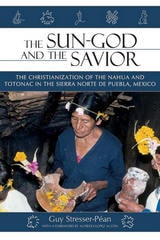
The Sun God and the Savior
The Christianization of the Nahua and Totonac in the Sierra Norte de Puebla, MexicoGuy Stresser-Péan
University Press of Colorado, 2009
The first English translation of Guy Stresser-Péan's tour-de-force presents two decades of fieldwork in the Sierra Norte de Puebla, Mexico, where native pre-Hispanic pagan beliefs blended with traditional Catholic evangelization from the sixteenth century and the more recent intrusion of modernism.
The Indians of the Sierra Norte de Puebla are deeply devoted to Christianity, but their devotion is seamlessly combined with pagan customs, resulting in a hybrid belief system that is not wholly indigenous, yet not wholly Christian. The syncretism practiced here has led the Totonac and Nahua people to identify Christ with the Sun God, a belief expressed symbolically in ritual practices such as the Dance of the Voladores.
Spanning the four centuries from the earliest systematic campaign against Nahua ritual practices - Zumárraga's idolatry trials of 1536-1540 - to the twentieth century, Stresser-Péan contextualizes Nahua and Totonac ritual practices as a series of responses to Christian evangelization and the social reproduction of traditional ritual practices. The Sun God and the Savior is a monumental work on the ethnographic and historical knowledge of the peoples of the Sierra Norte.
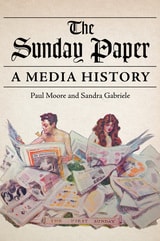
The Sunday Paper
A Media HistoryPaul Moore and Sandra Gabriele
University of Illinois Press, 2022
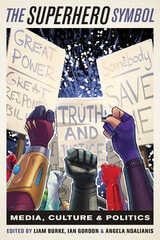
The Superhero Symbol
Media, Culture, and PoliticsLiam Burke
Rutgers University Press, 2020
It is hard to imagine a time when superheroes have been more pervasive in our culture. Today, superheroes are intellectual property jealously guarded by media conglomerates, icons co-opted by grassroots groups as a four-color rebuttal to social inequities, masks people wear to more confidently walk convention floors and city streets, and bulletproof banners that embody regional and national identities. From activism to cosplay, this collection unmasks the symbolic function of superheroes.
Bringing together superhero scholars from a range of disciplines, alongside key industry figures such as Harley Quinn co-creator Paul Dini, The Superhero Symbol provides fresh perspectives on how characters like Captain America, Iron Man, and Wonder Woman have engaged with media, culture, and politics, to become the “everlasting” symbols to which a young Bruce Wayne once aspired.
The Supernatural in Society, Culture, and History
Dennis Waskul and Marc Eaton
Temple University Press, 2018
In the twenty-first century, as in centuries past, stories of the supernatural thrill and terrify us. But despite their popularity, scholars often dismiss such beliefs in the uncanny as inconsequential, or even embarrassing. The editors and contributors to The Supernatural in Society, Culture, and History have made a concerted effort to understand encounters with ghosts and the supernatural that have remain present and flourished. Featuring folkloric researchers examining the cultural value of such beliefs and practices, sociologists who acknowledge the social and historical value of the supernatural, and enthusiasts of the mystical and uncanny, this volume includes a variety of experts and interested observers using first-hand ethnographic experiences and historical records.
The Supernatural in Society, Culture, and History seeks to understand the socio-cultural and socio-historical contexts of the supernatural. This volume takes the supernatural as real because belief in it has fundamentally shaped human history. It continues to inform people’s interpretations, actions, and identities on a daily basis. The supernatural is an indelible part of our social world that deserves sincere scholarly attention.
Contributors include: Janet Baldwin, I'Nasah Crockett, William Ryan Force, Rachael Ironside, Tea Krulos, Joseph Laycock, Stephen L. Muzzatti, Scott Scribner, Emma Smith, Jeannie Banks Thomas, and the editors

The Suppression of Guilt
The Israeli Media and the Reoccupation of the West BankDaniel Dor
Pluto Press, 2005
In the three years that have passed since Operation Defensive Shield – three years marked by denial, deceit, rage and resentment – one fact remains uncontroversial: never, until the operation, had there been such a wide breach between the Israeli collective consciousness and international public opinion. Israeli scholar Daniel Dor measures this gap and concludes that Israeli society has withdrawn into an unprecedented sense of isolation and victimization – largely because of the role played by the Israeli media.
Different media outlets provided their readers and viewers with significantly different perspectives on the operation, but they all shared a certain emotional attitude, not vis-à-vis the operation itself, but in relations to the global discourse of blame against Israel: they all projected an urgent, desperate, almost obsessive urge to suppress, to dismiss, to fend off guilt.
Dor shows how analysing this type of reporting as an attempt to manufacture consent with the government and the military fails to capture its essential nature. He argues that, at its core, the coverage proposed alternatives for the construction of an Israeli identity. During the operation, all the different media converged around one assertion: being Israeli at this point in time feels like being accused by the entire world of something we are not guilty of. Basing his arguments on detailed analyses of media reports, Dor explores how the Israeli media work within the context of the global media and world opinion, rather than within the classic context of the nation-state -- and what it means for the future of the country.

The Surgery Issue
Eric Plemons and Chris Straayer, special issue editors
Duke University Press, 2018
Contributors. Paisley Currah, Joshua Franklin, Cressida J. Heyes, Julia Horncastle, Riki Lane, J.R. Latham, Sandra Mesics, Eric Plemons, Katherine Rachlin, Chris Straayer, Susan Stryker
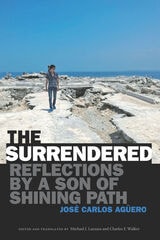
The Surrendered
Reflections by a Son of Shining PathJosé Carlos Agüero. Edited and Translated by Michael J. Lazzara and Charles F. Walker
Duke University Press, 2021
The Surrounds
Urban Life within and beyond CaptureAbdouMaliq Simone
Duke University Press, 2022
The Suspect
Counterterrorism, Islam, and the Security StateRizwaan Sabir
Pluto Press, 2021
What impact has two decades' worth of policing and counterterrorism had on the state of mind of Muslims in Britain? The Suspect draws on the author's lived experiences of being suspected of terrorism to take the reader on a journey through British counterterrorism practices and the policing of Muslims.
Rizwaan Sabir describes what led to his arrest for suspected terrorism, his time in detention, and the surveillance he was subjected to on release from custody, including stop and frisk on the roadside, detentions at the border, and monitoring by police and government departments throughout his research.
Writing publicly for the first time about the traumatizing mental health effects of these experiences, he argues that these harmful outcomes are not the result of errors in government planning, but the consequences of using a counterinsurgency warfare approach to surveillance. If we are to break this injustice, we need to resist counterterrorism policy and practice.
The Sweetness of Freedom
Stories of ImmigrantsMartha Aladjem Bloomfield
Michigan State University Press, 2010
The Sweetness of Freedom presents an eclectic grouping of late nineteenth- and twentieth-century immigrants' narratives and the personal artifacts, historical documents, and photographs these travelers brought on their journeys to Michigan. Most of the oral histories in this volume are based on interviews conducted with the immigrants themselves.
Some of the immigrants presented here hoped to gain better education and jobs. Others—refugees—fled their homelands because of war, poverty, repression, religious persecution, or ethnic discrimination. All dreamt of freedom and opportunity. They tell why they left their homelands, why they chose to settle in Michigan, and what they brought or left behind. Some wanted to preserve their heritage, religious customs, traditions, and ethnic identity. Others wanted to forget past conflicts and lost family members. Their stories reveal how they established new lives far away from home, how they endured homesickness and separation, what they gave up and what they gained.
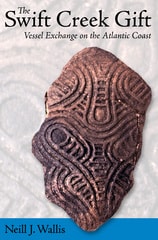
The Swift Creek Gift
Vessel Exchange on the Atlantic CoastNeill J. Wallis
University of Alabama Press, 2011
A unique dataset for studying past social interactions comes from Swift Creek Complicated Stamped pottery that linked sites throughout much of the Eastern Woodlands but that was primarily distributed over the lower Southeast. Although connections have been demonstrated, their significance has remained enigmatic. How and why were apparently utilitarian vessels, or the wooden tools used to make them, distributed widely across the landscape?
This book assesses Woodland Period interactions using technofunctional, mineralogical, and chemical data derived from Swift Creek Complicated Stamped sherds whose provenience is fully documented from both mortuary mounds and village middens along the Atlantic coast. Together, these data demonstrate formal and functional differences between mortuary and village assemblages along with the nearly exclusive occurrence of foreign-made cooking pots in mortuary contexts. The Swift Creek Gift provides insight into the unique workings of gift exchanges to transform seemingly mundane materials like cooking pots into powerful tools of commemoration, affiliation, and ownership.

The Symbolic Uses of Politics
Murray Edelman
University of Illinois Press, 1985
Unlike the conventional study of politics that deals with how people get the things they want through government, this book concentrates on how politics influence what they want, what they fear, and what they regard as possible. In examining politics as a symbolic form, it looks at man and politics as reflections of each other.
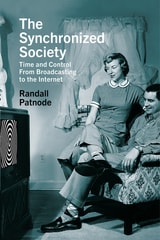
The Synchronized Society
Time and Control From Broadcasting to the InternetRandall Patnode
Rutgers University Press, 2023
The Synchronized Society traces the history of the synchronous broadcast experience of the twentieth century and the transition to the asynchronous media that dominate today. Broadcasting grew out of the latent desire by nineteenth-century industrialists, political thinkers, and social reformers to tame an unruly society by controlling how people used their time. The idea manifested itself in the form of the broadcast schedule, a managed flow of information and entertainment that required audiences to be in a particular place – usually the home – at a particular time and helped to create “water cooler” moments, as audiences reflected on their shared media texts. Audiences began disconnecting from the broadcast schedule at the end of the twentieth century, but promoters of social media and television services still kept audiences under control, replacing the schedule with surveillance of media use. Author Randall Patnode offers compelling new insights into the intermingled roles of broadcasting and industrial/post-industrial work and how Americans spend their time.
The System of Professions
An Essay on the Division of Expert LaborAndrew Abbott
University of Chicago Press, 1988
The TV Arab
Jack G. Shaheen
University of Wisconsin Press, 1984
Dr. Shaheen, studying over 100 different popular entertainment programs, cartoons and major documentaries telecast on network, independent and public channels, totaling nearly 200 episodes that relate to Arabs, has thrown new and revealing light on the stereotypes of people from the Middle East.
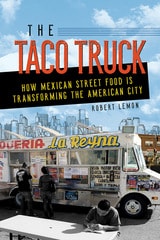
The Taco Truck
How Mexican Street Food Is Transforming the American CityRobert Lemon
University of Illinois Press, 2019
Drawing on interviews with taco truck workers and his own skills as a geographer, Robert Lemon illuminates new truths about foodways, community, and the unexpected places where ethnicity, class, and culture meet. Lemon focuses on the San Francisco Bay Area, Sacramento, and Columbus, Ohio, to show how the arrival of taco trucks challenge preconceived ideas of urban planning even as cities use them to reinvent whole neighborhoods. As Lemon charts the relationships between food practices and city spaces, he uncovers the many ways residents and politicians alike contest, celebrate, and influence not only where your favorite truck parks, but what's on the menu.

The Tale of Matsura
Fujiwara Teika’s Experiment in FictionTranslated with an Introduction and Notes by Wayne P. Lammers
University of Michigan Press, 1992
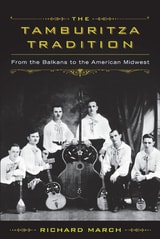
The Tamburitza Tradition
From the Balkans to the American MidwestRichard March
University of Wisconsin Press, 2013

The Tangled Roots of Feminism, Environmentalism, and Appalachian Literature
Elizabeth S. D. Engelhardt
Ohio University Press, 2003
Contemporaries were shocked when author Mary Noailles Murfree revealed she was a woman, but modern readers may be more surprised by her cogent discussion of community responses to unwanted development. Effie Waller Smith, an African American woman writing of her love for the Appalachian mountains, wove discussions of women's rights, racial tension, and cultural difference into her Appalachian poetry. Grace MacGowan Cooke participated in avant-garde writers' colonies with the era's literary lights and applied their progressive ideals to her fiction about the Appalachia of her youth. Emma Bell Miles, witness to poverty, industrialization, and violence against women, wrote poignant and insightful critiques of her Appalachian home.
In The Tangled Roots of Feminism, Environmentalism, and Appalachian Literature Elizabeth Engelhardt finds in all four women's writings the origins of what we recognize today as ecological feminism—a wide-reaching philosophy that values the connections between humans and nonhumans and works for social and environmental justice.
People and the land in Appalachia were also the subject of women authors with radically different approaches to mountains and their residents. Authors with progressive ideas about women's rights did not always respect the Appalachian places they were writing about or apply their ideas to all of the women in those places—but they did create hundreds of short stories, novels, letters, diaries, photographs, sketches, and poems about the mountains.
While The Tangled Roots of Feminism, Environmentalism, and Appalachian Literature ascribes much that is noble to the beginnings of the ecological feminism movement as it developed in Appalachia, it is also unyielding in its assessment of the literatures of the voyeur, tourist, and social crusader who supported status quo systems of oppression in Appalachia.

The Tango Machine
Musical Culture in the Age of ExpediencyMorgan James Luker
University of Chicago Press, 2016
Luker traces the diverse and often contradictory ways tango is used in Argentina in activities ranging from state cultural policy-making to its export abroad as a cultural emblem, from the expanding nonprofit arts sector to tango-themed urban renewal projects. He shows how projects such as these are not peripheral to an otherwise “real” tango—they are the absolutely central means by which the values of this musical culture are cultivated. By richly detailing the interdependence of aesthetic value and the regimes of cultural management, this book sheds light on core conceptual challenges facing critical music scholarship today.
The Tarahumara Rebellion of 1690
Embattled Settlers and Missionaries in Northern New SpainJoseph P. Sánchez
University of Arizona Press, 2025
Previous histories have interpreted this revolt, and other borderlands uprisings, as localized and spontaneous events aimed at rectifying specific grievances. Historian Joseph P. Sánchez argues that the revolts of the Tepehuanes and the Tarahumaras in northern New Spain, or Nueva Vizcaya, were well-planned, inspired by outside events, and drew in multiple communities and ethnicities. Drawing on a wealth of primary sources, including Jesuit accounts and archival documents, Sánchez offers a comprehensive narrative that challenges conventional interpretations of colonial Mexican uprisings.
Far from localized, the Indigenous rebellions in the northern Mexican borderlands during the colonial period were part of the overall Indigenous struggle for defense of homeland throughout the Americas. The Tarahumara Rebellion of 1690 brings together a rich history of localized events and broader historical trends and offers a compelling narrative that enriches our understanding of the colonial experience in northern New Spain.
The Tartar Moment
Crisis and the Globalization of Chinese Knowledge in Early Modern EuropeGianamar Giovannetti-Singh
University of Chicago Press, 0
How seventeenth-century Europeans, following Jesuit missionary Martino Martini, saw their continent as historically, environmentally, and culturally intertwined with China.
The Tartar Moment focuses on understanding how the Manchu conquest of the Ming Empire in 1644 transformed European science, technology, and politics for over a century. Gianamar Giovannetti-Singh argues that seventeenth-century European natural philosophers found the nomadic takeover of a seemingly eternal empire deeply relevant for their own concerns. They began to reevaluate how they thought about the roles of astronomy, history-writing, agriculture, and military technologies in ensuring the long-term survival of a state.
The book’s narrative center is the Jesuit missionary Martino Martini, who first grasped the global significance of the Tartar War and its aftermath. Giovannetti-Singh situates Martini as a broker bridging multiple worlds, each grappling with new forms of turbulence. Martini’s writings reinterpreted Chinese knowledge and culture for diverse European audiences urgently seeking order in an age of uncertainty. China ceased to be imagined as a timeless Other and instead appeared as a civilization that, like Europe, confronted recurring disorder and crafted philosophical solutions to maintain stability. During this period, Europeans selectively appropriated Chinese methods of reading the heavens, cultivating the earth, and governing the state.
By tracing how Martini recognized, theorized, and recounted crises in Ming, Manchu, and European contexts, The Tartar Moment shows that the 1640s and 1650s were not simply years of collapse but of intense creativity in interpreting and responding to disorder.
The Task of Cultural Critique
Teresa L. Ebert
University of Illinois Press, 2008
Through groundbreaking analyses of cultural texts, Ebert questions the contemporary Derridian dogma that asserts "the future belongs to ghosts." Events-to-come are not spectral, she contends, but the material outcome of global class struggles. Not "hauntology" but history produces cultural practices and their conflictive representations--from sexuality, war, and consumption to democracy, torture, globalization, and absolute otherness. With close readings of texts from Proust and Balzac to "Chick Lit," from Lukács, de Man, Deleuze, and Marx to Derrida, Žižek, Butler, Kollontai, and Agamben, the book opens up new directions for cultural critique today.
The Taste for Civilization
Food, Politics, and Civil SocietyJanet A. Flammang
University of Illinois Press, 2009
This book explores the idea that table activities--the mealtime rituals of food preparation, serving, and dining--lay the foundation for a proper education on the value of civility, the importance of the common good, and what it means to be a good citizen. The arts of conversation and diplomatic speech are learned and practiced at tables, and a political history of food practices recasts thoughtfulness and generosity as virtues that enhance civil society and democracy. In our industrialized and profit-centered culture, however, foodwork is devalued and civility is eroding.
Looking at the field of American civility, Janet A. Flammang addresses the gendered responsibilities for foodwork's civilizing functions and argues that any formulation of "civil society" must consider food practices and the household. To allow space for practicing civility, generosity, and thoughtfulness through everyday foodwork, Americans must challenge the norms of unbridled consumerism, work-life balance, and domesticity and caregiving. Connecting political theory with the quotidian activities of the dinner table, Flammang discusses practical ideas from the "delicious revolution" and Slow Food movement to illustrate how civic activities are linked to foodwork, and she points to farmers' markets and gardens in communities, schools, and jails as sites for strengthening civil society and degendering foodwork.
The Taste of Art
Cooking, Food, and Counterculture in Contemporary PracticesSilvia Bottinelli
University of Arkansas Press, 2017
The Taste of Art offers a sample of scholarly essays that examine the role of food in Western contemporary art practices. The contributors are scholars from a range of disciplines, including art history, philosophy, film studies, and history. As a whole, the volume illustrates how artists engage with food as matter and process in order to explore alternative aesthetic strategies and indicate countercultural shifts in society.
The collection opens by exploring the theoretical intersections of art and food, food art’s historical root in Futurism, and the ways in which food carries gendered meaning in popular film. Subsequent sections analyze the ways in which artists challenge mainstream ideas through food in a variety of scenarios. Beginning from a focus on the body and subjectivity, the authors zoom out to look at the domestic sphere, and finally the public sphere.
Here are essays that study a range of artists including, among others, Filippo Tommaso Marinetti, Daniel Spoerri, Dieter Roth, Joseph Beuys, Al Ruppersberg, Alison Knowles, Martha Rosler, Robin Weltsch, Vicki Hodgetts, Paul McCarthy, Luciano Fabro, Carries Mae Weems, Peter Fischli and David Weiss, Janine Antoni, Elżbieta Jabłońska, Liza Lou, Tom Marioni, Rirkrit Tiravanija, Michael Rakowitz, and Natalie Jeremijenko.
The Taste of Nostalgia
Women, Race, and Culinary Longing in PeruAmy Cox Hall
University of Texas Press, 2024
An exploration of gender, race, and food in Peru in the 1950s and 1960s and today.
From the late 1940s to the mid 1960s, Peru’s rapid industrialization and anti-communist authoritarianism coincided with the rise of mass-produced cookbooks, the first televised cooking shows, glossy lifestyle magazines, and imported domestic appliances and foodstuffs. Amy Cox Hall’s The Taste of Nostalgia uses taste as a thematic and analytic thread to examine the ways that women, race, and the kitchen were foundational to Peruvian longings for modernity, both during the Cold War and today.
Drawing on interviews, personal stories, media images, and archival and ethnographic research, Cox Hall considers how elite, European-descended women and the urban home were central to Peru’s modernizing project and finds that all women who labored within the deeply racialized and gendered world of food helped set the stage for a Peruvian food nationalism that is now global in the twenty-first century. Cox Hall skillfully connects how the sometimes-unsavory tastes of the past are served again in today’s profitable and pervasive gastronostalgia that helps sell Peru and its cuisine both at home and abroad.
The Taxi-Dance Hall
A Sociological Study in Commercialized Recreation and City LifePaul Goalby Cressey
University of Chicago Press, 1932
Taxi-dance halls, as the introduction notes, were social centers where men could come and pay to dance with “a bevy of pretty, vivacious, and often mercenary” women. Ten cents per dance was the usual fee, with half the proceeds going to the dancer and the other half to the owner of the taxi-hall. Cressey’s study includes detailed maps of the taxi-dance districts, illuminating interviews with dancers, patrons, and owners, and vivid analyses of local attempts to reform the taxi-dance hall and its attendees.
Cressey’s study reveals these halls to be the distinctive urban consequence of tensions between a young, diverse, and economically independent population at odds with the restrictive regulations of Prohibition America. Thick with sexual vice, ethnic clashes, and powerful undercurrents of class, The Taxi-Dance Hall is a landmark example of Chicago sociology, perfect for scholars and history buffs alike.
The Taylor Mac Book
Ritual, Realness and Radical PerformanceDavid Román and Sean F. Edgecomb, Editors
University of Michigan Press, 2023
Featuring essays, interviews, and commentaries by noted critics and artists, the volume examines the vastness of Mac’s theatrical imagination, the singularity of their voice, the inclusiveness of their cultural insights and critiques, and the creativity they display through stylistic and formal qualities and the unorthodoxies of their personal and professional trajectories. Contributors consider the range of Mac’s career as a playwright, performer, actor, and singer, expanding and enriching the conversation on this much-celebrated and deeply resonant body of work.
The Teabo Manuscript
Maya Christian Copybooks, Chilam Balams, and Native Text Production in YucatánBy Mark Z. Christensen
University of Texas Press, 2016
Winner, LASA Mexico Humanities Book Prize, 2017
Among the surviving documents from the colonial period in Mexico are rare Maya-authored manuscript compilations of Christian texts, translated and adapted into the Maya language and worldview, which were used to evangelize the local population. The Morely Manuscript is well known to scholars, and now The Teabo Manuscript introduces an additional example of what Mark Z. Christensen terms a Maya Christian copybook. Recently discovered in the archives of Brigham Young University, the Teabo Manuscript represents a Yucatecan Maya recounting of various aspects of Christian doctrine, including the creation of the world, the Fall of Adam and Eve, and the genealogy of Christ.
The Teabo Manuscript presents the first English translation and analysis of this late colonial Maya-language document, a facsimile and transcription of which are also included in the book. Working through the manuscript section by section, Christensen makes a strong case for its native authorship, as well as its connections with other European and Maya religious texts, including the Morely Manuscript and the Books of Chilam Balam. He uses the Teabo Manuscript as a platform to explore various topics, such as the evangelization of the Maya, their literary compositions, and the aspects of Christianity that they deemed important enough to write about and preserve. This pioneering research offers important new insights into how the Maya negotiated their precontact intellectual traditions within a Spanish and Catholic colonial world.
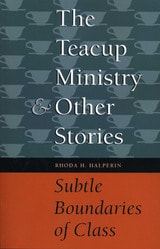
The Teacup Ministry and Other Stories
Subtle Boundaries of ClassBy Rhoda H. Halperin
University of Texas Press, 2001
In the global world of the twenty-first century, class boundaries are subtle and permeable, though real nonetheless. Markers of identity, authenticity, and belonging can change with a gesture or a glance, making people feel they do or don't belong in certain places, with certain people, at certain times. In these powerfully written ethnographic stories, Rhoda Halperin maps the boundaries of class by examining three themes: crossing class boundaries, class creativity, and class vulnerability.
In telling these stories, Halperin draws on a wealth of ethnographic experiences in this country and abroad. Her book challenges class stereotypes in ways that touch on universals across cultures and over time.

The Team That Changed Baseball
Roberto Clemente and the 1971 Pittsburgh PiratesBruce Markusen
Westholme Publishing, 2006
The Inspiring Story of Roberto Clemente's Greatest Season and One of the Most Important Teams in Sport History
In 1947, major league baseball experienced its first measure of integration when the Brooklyn Dodgers brought Jackie Robinson to the National League. While Robinson's breakthrough opened the gates of opportunity for African Americans and other minority players, the process of integration proved slow and uneven. It was not until the 1960s that a handful of major league teams began to boast more than a few Black and Latino players. But the 1971 World Championship team enjoyed a full and complete level of integration, with half of its twenty-five-man roster comprised of players of African American and Latino descent. That team was the Pittsburgh Pirates, managed by an old-time Irishman.
In The Team That Changed Baseball: Roberto Clemente and the 1971 Pittsburgh Pirates, veteran baseball writer Bruce Markusen tells the story of one of the most likable and significant teams in the history of professional sports. In addition to the fact that they fielded the first all-minority lineup in major league history, the 1971 Pirates are noteworthy for the team's inspiring individual performances, including those of future Hall of Famers Roberto Clemente, Willie Stargell, and Bill Mazeroski, and their remarkable World Series victory over the heavily favored Baltimore Orioles. But perhaps their greatest legacy is the team's influence on the future of baseball, inspiring later championship teams such as the New York Yankees and Oakland Athletics to open their doors fully to all talented players, regardless of race, particularly in the new era of free agency.
The Technical Delusion
Electronics, Power, InsanityJeffrey Sconce
Duke University Press, 2019
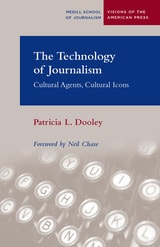
The Technology of Journalism
Cultural Agents, Cultural IconsPatricia L. Dooley
Northwestern University Press, 2007
From the printing press to the telegraph to the camera and beyond, technology has always been tied closely to journalism. In The Technology of Journalism, Patricia L. Dooley proposes a history of news that heeds the social and cultural environments in which both technology and the press emerge and exist.
By placing this history solidly in its cultural context, Dooley can explore the effects of shifts in social, economic, and political systems and the impact of war. One such development with far reaching implications was Matthew Brady’s use of photography during the Civil War. Growth or decline in readership can also influence technological changes in journalism; most recently, the shift toward digital and Web-based journalism has reshaped the press.
Finally, Dooley assesses the legacy and future of print, deciding what happens to print journalism—and all forms of reportage—will depend on the willingness of industry leaders to innovate in ways that will help them connect, through their reporting, to Americans of all ages and walks of life.