Results by title
22279 books match the query 'Social Science' and 4007 start with t
The Tenacity of the Couple-Norm
Intimate Citizenship Regimes in a Changing EuropeSasha Roseneil, Isabel Crowhurst, Tone Hellesund, Ana Cristina Santos, and Mariya Stoilava
University College London, 2020
The Tenacity of the Couple-Norm makes an important contribution to literature on citizenship, intimacy, family life, and social change in sociology, social policy, socio-legal studies, gender/sexuality/queer studies, and psychosocial studies.
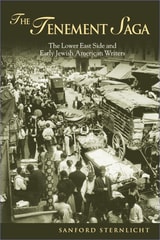
The Tenement Saga
The Lower East Side and Early Jewish American WritersSanford Sternlicht
University of Wisconsin Press, 2004
Sternlicht discusses the role of women, the Yiddish Theater, secular values, the struggle between generations, street crime, politics, labor unions, and the importance of newspapers and periodicals. He documents the decline of Yiddish culture as these immigrants blended into what they called "The Golden Land."
The Tennessee, Green, and Lower Ohio Rivers Expeditions of Clarence Bloomfield Moore
Clarence Bloomfield Moore, edited and introduced by Richard R. Polhemus
University of Alabama Press, 2002
This richly illustrated book is the eighth of nine Classics in Southeastern Archaeology volumes based on Moore's investigations along the waterways of eastern North America.
This oversized reprint volume presents original materials from Moore's northernmost expeditions conducted in the early 1900s as he surveyed areas of potential archaeological interest in the southeastern United States. Some of the sites he found were later targeted for major excavations during the days of the WPA/CCC. Many National Register Historic Sites are today located along the rivers he explored in this work. In many cases, however, Moore's report documents sites since destroyed by river action or by lake impoundments behind hydroelectric dams or by looters.
As with all of Moore's other investigations, his thorough documentation and collaboration with other scholars advanced understanding of aboriginal peoples and fueled debate among the experts. For instance, more than 296 burials were recovered from Indian Knoll on the Green River in Kentucky. Some graves included ceremonially "killed" artifacts, dogs buried with both adults and children, and exotic materials leading to speculations concerning origins, usage, and trade networks. Stone box graves were widespread and somewhat exclusive to this area, giving rise to early assumptions regarding kinship between scattered modern Indian tribes.
Richard Polhemus has compiled a comprehensive inventory of Moore's work in Tennessee, Alabama, Mississippi, and Kentucky and written a concise introduction to place the work in context. In so doing, he has made available to contemporary scholars of history, archaeology, and anthropology a trove of resource material on one of the most archaeologically rich and artifact-diverse regions in the nation.

The Tented Field
A History of Cricket in AmericaTom Melville
University of Wisconsin Press, 1998
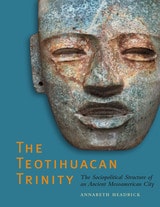
The Teotihuacan Trinity
The Sociopolitical Structure of an Ancient Mesoamerican CityBy Annabeth Headrick
University of Texas Press, 2007
Northeast of modern-day Mexico City stand the remnants of one of the world's largest preindustrial cities, Teotihuacan. Monumental in scale, Teotihuacan is organized along a three-mile-long thoroughfare, the Avenue of the Dead, that leads up to the massive Pyramid of the Moon. Lining the avenue are numerous plazas and temples, which indicate that the city once housed a large population that engaged in complex rituals and ceremonies. Although scholars have studied Teotihuacan for over a century, the precise nature of its religious and political life has remained unclear, in part because no one has yet deciphered the glyphs that may explain much about the city's organization and belief systems.
In this groundbreaking book, Annabeth Headrick analyzes Teotihuacan's art and architecture, in the light of archaeological data and Mesoamerican ethnography, to propose a new model for the city's social and political organization. Challenging the view that Teotihuacan was a peaceful city in which disparate groups united in an ideology of solidarity, Headrick instead identifies three social groups that competed for political power—rulers, kin-based groups led by influential lineage heads, and military orders that each had their own animal insignia. Her findings provide the most complete evidence to date that Teotihuacan had powerful rulers who allied with the military to maintain their authority in the face of challenges by the lineage heads. Headrick's analysis also underscores the importance of warfare in Teotihuacan society and clarifies significant aspects of its ritual life, including shamanism and an annual tree-raising ceremony that commemorated the Mesoamerican creation story.
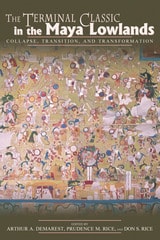
The Terminal Classic in the Maya Lowlands
Collapse, Transition, and TransformationArthur A. Demarest
University Press of Colorado, 2004
Featuring an impressive roster of scholars, The Terminal Classic presents the most recent data and interpretations pertaining to this perplexing period of cultural transformation in the Maya lowlands. Although the research reveals clear interregional patterns, the contributors resist a single overarching explanation. Rather, this volume's diverse and nuanced interpretations provide a new, more properly grounded beginning for continued debate on the nature of lowland Terminal Classic Maya civilization.
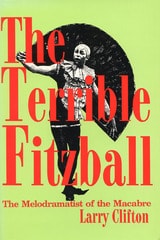
The Terrible Fitzball
The Melodramatist of the MacabreLarry Stephen Clifton
University of Wisconsin Press, 1993
The Terrible We
Thinking with Trans MaladjustmentCameron Awkward-Rich
Duke University Press, 2022
Duke University Press Scholars of Color First Book Award recipient
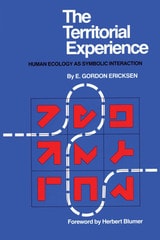
The Territorial Experience
Human Ecology as Symbolic InteractionBy E. Gordon Ericksen
University of Texas Press, 1980
During the 1920s, the Chicago school of sociology developed an ecological orientation toward the study of the city. At the same time, other Chicago scholars developed the social psychological approach that was to be named symbolic interactionism. Over fifty years later, Gordon Ericksen examines the best of these two schools to present a revisionist human ecology. In The Territorial Experience, he gives us a fresh perspective on human ecology by reconstructing the discipline in a way that genuinely reflects the realities of our territorial life.
Ericksen's symbolic interactionist approach to the spatial world is based on the appreciation of humans as the creative artists they are, as designers and builders of their environment. Exploring the symbolic meanings attached to space and territory, he challenges the orthodox in human ecology by introducing hypotheses and conceptual tools of analysis which link spatial facts to human motivations and meanings. With people living in a habitat which they have largely shaped for themselves—a world of airports, shopping malls, retirement villages, where human spaces convey human messages—Ericksen demands that we examine what we have done with our environment in order to survive and prosper.
This major contribution to human ecology will be of importance to specialists and lay readers in the fields of sociology, social psychology, geography, city and regional planning, urban affairs, and economics. Showing how humankind speaks in and through its physical setting, The Territorial Experience is a bench mark in communications theory.
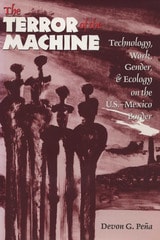
The Terror of the Machine
Technology, Work, Gender, and Ecology on the U.S.-Mexico BorderBy Devon G. Peña
University of Texas Press, 1995
Born of thirteen years of field research, this interdisciplinary work explores the complex intersections of technology, class, gender, and ecology in the transnational milieu of Mexico's maquiladoras, foreign-owned assembly plants located along the U.S. border.
Devon Peña examines workplace and community struggles from the perspective of the women who work in the maquiladoras. He describes the workers' struggles for workplace democracy, social justice, and sustainable development. He also observes the circulation of struggle from the factory to the community, highlighting the efforts to establish worker-owned cooperatives in the border region during the 1970s and 1980s.
Female maquila workers are typically portrayed as passive, apolitical, and easily exploited. This book, however, presents an opposing view, investigating the "subaltern life of the shop floor"—the workers' informal methods of resistance to hazardous conditions, sexual harassment, and managerial tyranny. Using survey research, oral history, discourse analysis, and site ethnography, the author develops a cogent critique of labor-process theory, a critique grounded on his extensive study of actual workplace politics in the maquiladoras.
The Terror of the Machine is a trenchant analysis of the political, cultural, and environmental effects of maquila industrialization and an eloquent and persuasive call for alternatives in the direction of ecologically sustainable and culturally appropriate modes of development.
The Terrorism News Beat
Professionalism, Profit, and the PressAaron M. Hoffman
University of Michigan Press, 2025
The Terrorism News Beat engages thinking about terrorism and the news media from the fields of political science, communication, criminology, economics, and sociology using multimethod research involving more than 2,500 newspaper articles published between 1997 and 2018. Chapters analyze the terrorism news beat’s subject matter, language, and coverage of the Oklahoma City Bombing, Olympic Park bombing, 9/11 attacks, DC Sniper case, and Dallas Police shooting. When it comes to language use, Hoffman finds that, rather than giving into the temptation to convey the news in lurid detail, journalists are minimalists. The language used to depict events on the terrorism beat is typically moderate and extreme words like “torture” appear only as necessary. The Terrorism News Beat shows that contrary to claims of sensationalism, the tone of terrorism coverage becomes even more sober during terrorism crises than it is during non-crisis periods and meets journalistic standards for quality.
The Tewa World
Space, Time, Being and Becoming in a Pueblo SocietyAlfonso Ortiz
University of Chicago Press, 1972
The Text is Myself
Women's Life Writing and CatastropheMiriam Fuchs
University of Wisconsin Press, 2004
In The Text Is Myself, Miriam Fuchs analyzes the impact of catastrophe on the lives and writings of these five women. She shows that, however much the past may be shaped into a discernible storyline, it is the uncertain present that preoccupies these writers. Using a feminist and comparative approach to the texts, Fuchs links the women in creative and insightful ways and displays their many profound connections, despite the differences in their cultural and geographic backgrounds.
Fuchs argues convincingly for a new genre within life writing—the narrative of catastrophe, defined by the writing process that occurs during catastrophic events. Two narratives are being told, and two levels of representation, literal and figurative, are present.
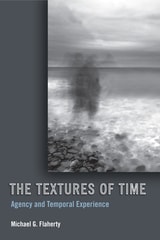
The Textures of Time
Agency and Temporal ExperienceAuthored by Michael G. Flaherty
Temple University Press, 2010
What do we mean when we say, "I made the time pass more quickly," or, "I’m creating some ‘me’ time"? InThe Textures of Time, Michael Flaherty examines how we alter or customize our experience of time. His detailed analysis reveals different strategies we use to try to manipulate time, further describing and defining those strategies within six discrete time categories: Duration, Frequency, Sequence, Timing, Allocation, and Taking Time.
Using in-depth interviews and analyzing responses through a sociological lens, Flaherty unearths folk theories and practices, which he calls "time work," that construct circumstances in order to provoke desired forms of temporal experience. As such, time is not justinflicted on us; rather, its various textures result from our intervention, and/or from our efforts to create different forms of temporal experience. These first-person accounts also highlight ongoing tensions between agency and determinism in social groups. Ultimately, in keeping with his central thesis, Flaherty's lucid prose make this book a quick read, and the strategies he describes reveal the profound and inventive ways we "manage the clock."
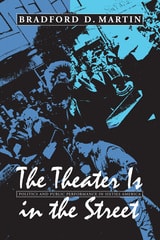
The Theater Is in the Street
Politics and Public Performance in 1960s AmericaBradford D. Martin
University of Massachusetts Press, 2004
During the 1960s, the SNCC Freedom Singers, The Living Theatre, the Diggers, the Art Workers Coalition, and the Guerrilla Art Action Group fused art and politics by staging unexpected and uninvited performances in public spaces. Through their activism and the response it provoked, art, theater, and politics began to converge and assume a new visibility in everyday life. While their specific political visions varied, these groups shared the impulse to stage performances and actions publicly—"in the streets"—eschewing museums, theaters, and other conventional halls of culture. Bradford D. Martin offers detailed portraits of each of these groups and examines why they embraced public performance as a vehicle to express and advance their politics.
At a time when the New Left and the counterculture were on the rise, these artists reflected the decade's political and cultural radicalism and helped to define a new aesthetic. Civil rights activists mobilized singing in the struggle for desegregation, introducing a vibrant musical form into the public space. The Living Theatre culminated an arduous quest to mesh artistic and political goals, leading audiences from theaters into the streets to begin the “beautiful nonviolent anarchist revolution.” The Diggers playfully engaged San Francisco's counterculture in politics with their carnivalesque public actions. The Art Workers Coalition and the Guerrilla Action Art Group sought to disrupt the conventional art world, mounting protests in and around New York City museums.
By questioning the values and assumptions that separated art from politics, these groups not only established public performance as a legitimate aesthetic but also provided a new creative vocabulary for future generations of artists. Their continued involvement with the women's liberation movement, rural communes, and political street theater into the 1970s and beyond challenges the popular myth that activists disengaged from politics after the 1960s.
The Theater of Operations
National Security Affect from the Cold War to the War on TerrorJoseph Masco
Duke University Press, 2014
The Theatre of Genocide
Four Plays about Mass Murder in Rwanda, Bosnia, Cambodia, and ArmeniaEdited and with an introduction by Robert Skloot
University of Wisconsin Press, 2008

The Theatricalists
Making Politics AppearTheron Schmidt
Northwestern University Press, 2024
Examines how the politics of the theater can illuminate the theatricality of politics
Theatricality is often dismissed as a distraction from “real” politics, as when cynical political gestures are derided as “pure theater” or “only theater.” But the artists and theater companies discussed in this book, including Back to Back Theatre, Tim Crouch, Rabih Mroué, Nature Theater of Oklahoma, and Christoph Schlingensief, take a different approach. Theron Schmidt argues that they represent a “theatricalist turn” that explores and tests the conditions of the theater itself. Across diverse contexts of political engagement, ranging from disability rights to representations of violence, these theatrical conditions are interconnected with political struggles, such as those over who is seen and heard, how labor is valued, and what counts as “political” in the first place. In a so-called post-political era, The Theatricalists argues that an examination of theater’s internal politics can expand our understanding of the theatricality of politics more broadly.

The Therapy Industry
The Irresistible Rise of the Talking Cure, and Why It Doesn't WorkPaul Moloney
Pluto Press, 2013
Across the world anxiety, stress and depression are on the increase, a trend which looks set to continue as austerity measures bite. The official response tells people that unhappiness is just a personal problem, rather than a social one.
Written by a practising psychologist, with nearly thirty years' experience in the fields of mental health and learning disabilities, The Therapy Industry offers a concise, accessible and critical overview of the world of psychological practice in Britain and the USA. Paul Moloney argues that much therapy is geared towards compliance and acceptance of the status quo, rather than attempting to facilitate social change.
The Therapy Industry fundamentally challenges our conceptions of happiness and wellbeing. Moloney argues that therapeutic and applied psychology have little basis in science, that their benefits are highly exaggerated and they prosper because they serve the interests of power.
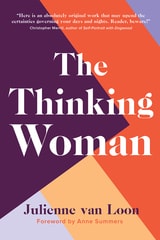
The Thinking Woman
Julienne van Loon
Rutgers University Press, 2021
While women have struggled to gain recognition in the discipline of philosophy, there is no shortage of brilliant female thinkers. What can these women teach us about ethics, politics, and the nature of existence, and how might we relate these big ideas back to the smaller everyday concerns of domestic life, work, play, love, and relationships?
Australian novelist Julienne van Loon goes on a worldwide quest to answer these questions, by engaging with eight world-renowned thinkers who have deep insights on humanity and society: media scholar Laura Kipnis, novelist Siri Hustvedt, political philosopher Nancy Holmstrom, psychoanalytic theorist Julia Kristeva, domestic violence reformer Rosie Batty, peace activist Helen Caldicott, historian Marina Warner, and feminist philosopher Rosi Braidotti. As she speaks to these women, she reflects on her own experiences. Combining the intimacy of a memoir with the intellectual stimulation of a theoretical text, The Thinking Woman draws novel connections between the philosophical, personal, and political. Giving readers a new appreciation for both the ethical complexities and wonder of everyday life, this book is inspiration to all thinking people.
The Third Body
Helene Cixous
Northwestern University Press, 2009
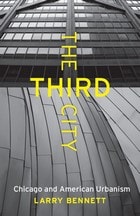
The Third City
Chicago and American UrbanismLarry Bennett
University of Chicago Press, 2010
Our traditional image of Chicago—as a gritty metropolis carved into ethnically defined enclaves where the game of machine politics overshadows its ends—is such a powerful shaper of the city’s identity that many of its closest observers fail to notice that a new Chicago has emerged over the past two decades. Larry Bennett here tackles some of our more commonly held ideas about the Windy City—inherited from such icons as Theodore Dreiser, Carl Sandburg, Daniel Burnham, Robert Park, Sara Paretsky, and Mike Royko—with the goal of better understanding Chicago as it is now: the third city.
Bennett calls contemporary Chicago the third city to distinguish it from its two predecessors: the first city, a sprawling industrial center whose historical arc ran from the Civil War to the Great Depression; and the second city, the Rustbelt exemplar of the period from around 1950 to 1990. The third city features a dramatically revitalized urban core, a shifting population mix that includes new immigrant streams, and a growing number of middle-class professionals working in new economy sectors. It is also a city utterly transformed by the top-to-bottom reconstruction of public housing developments and the ambitious provision of public works like Millennium Park. It is, according to Bennett, a work in progress spearheaded by Richard M. Daley, a self-consciously innovative mayor whose strategy of neighborhood revitalization and urban renewal is a prototype of city governance for the twenty-first century. The Third City ultimately contends that to understand Chicago under Daley’s charge is to understand what metropolitan life across North America may well look like in the coming decades.
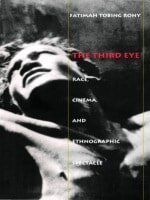
The Third Eye
Race, Cinema, and Ethnographic SpectacleFatimah Tobing Rony
Duke University Press, 1996
In films as seemingly dissimilar as Nanook of the North, King Kong, and research footage of West Africans from an 1895 Paris ethnographic exposition, Rony exposes a shared fascination with—and anxiety over—race. She shows how photographic “realism” contributed to popular and scientific notions of evolution, race, and civilization, and how, in turn, anthropology understood and critiqued its own use of photographic technology. Looking beyond negative Western images of the Other, Rony considers performance strategies that disrupt these images—for example, the use of open resistance, recontextualization, and parody in the films of Katherine Dunham and Zora Neale Hurston, or the performances of Josephine Baker. She also draws on the work of contemporary artists such as Lorna Simpson and Victor Masayesva Jr., and writers such as Frantz Fanon and James Baldwin, who unveil the language of racialization in ethnographic cinema.
Elegantly written and richly illustrated, innovative in theory and original in method, The Third Eye is a remarkable interdisciplinary contribution to critical thought in film studies, anthropology, cultural studies, art history, postcolonial studies, and women’s studies.
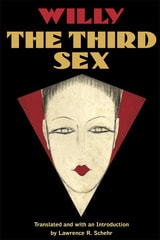
The Third Sex
Willy. Translated and with an Introduction by Lawrence R. Schehr
University of Illinois Press, 2007
Thirty-two years before Simone de Beauvoir's classic The Second Sex, popular French novelist Willy published The Third Sex, a vivid description of the world of European homosexuals in France, Italy, and Germany during the late 1920s. Stepping directly into the heart of gay men's culture, Willy follows homosexual nightlife into music halls, nightclubs, casinos, bars, and saunas. While he finds plenty of drug and alcohol abuse, he also discovers homosexual publishers, scientific societies, group rivalries, and opinions--both medical and political--about the nature of homosexuality itself. Lawrence R. Schehr's introduction provides context and translator's notes for this first-ever English edition.
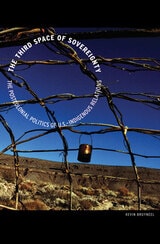
The Third Space of Sovereignty
The Postcolonial Politics of U.S.–Indigenous RelationsKevin Bruyneel
University of Minnesota Press, 2007
The imposition of modern American colonial rule has defined U.S.–indigenous relations since the time of the American Civil War. In resistance, Kevin Bruyneel asserts, indigenous political actors work across American spatial and temporal boundaries, demanding rights and resources from the government while also challenging the imposition of colonial rule over their lives. This resistance engenders what he calls a “third space of sovereignty,” which resides neither inside nor outside the U.S. political system but rather exists on its boundaries, exposing both the practices and limitations of American colonial rule.
The Third Space of Sovereignty offers fresh insights on such topics as the crucial importance of the formal end of treaty-making in 1871, indigenous responses to the prospect of U.S. citizenship in the 1920s, native politics during the tumultuous civil rights era of the 1960s, the question of indigenousness in the special election of California’s governor in 2003, and the current issues surrounding gaming and casinos.
In this engaging and provocative work, Bruyneel shows how native political actors have effectively contested the narrow limits that the United States has imposed on indigenous people’s ability to define their identity and to develop economically and politically on their own terms.
Kevin Bruyneel is assistant professor of politics at Babson College.
The Thought of Death and the Memory of War
Marc Crépon
University of Minnesota Press, 2013
War lays bare death and our relation to it. And in the wars—or more precisely the memories of war—of the twentieth century, images of the deaths of countless faceless or nameless others eclipse the singularity of each victim’s death as well as the end of the world as such that each death signifies.
Marc Crépon’s The Thought of Death and the Memory of War is a call to resist such images in which death is no longer actual death since it happens to anonymous others, and to seek instead a world in which mourning the other whose mortality we always already share points us toward a cosmopolitics. Crépon pursues this path toward a cosmopolitics of mourning through readings of works by Freud, Heidegger, Sartre, Patocka, Levinas, Derrida, and Ricœur, and others. The movement among these writers, Crépon shows, marks a way through—and against—twentieth-century interpretation to argue that no war, genocide, or neglect of people is possible without suspending how one relates to the death of another human being.
A history of a critical strain in contemporary thought, this book is, as Rodolphe Gasché says in the Foreword, “a profound meditation on what constitutes evil and a rigorous and illuminating reflection on death, community, and world.”
The translation of this work received financial support from the French Ministry of Foreign Affairs.
The Three Axial Ages
Moral, Material, MentalTorpey, John
Rutgers University Press, 2017
Torpey’s argument advances the idea that there are in fact three “Axial Ages,” instead of one original Axial Age and several subsequent, smaller developments. Each of the three ages contributed decisively to how humanity lives, and the difficulties it faces. The earliest, or original, Axial Age was a moral one; the second was material, and revolved around the creation and use of physical objects; and the third is chiefly mental, and focused on the technological. While there are profound risks and challenges, Torpey shows how a worldview that combines the strengths of all three ages has the potential to usher in a period of exceptional human freedom and possibility.
The Three Nephites
Saints, Service, and Supernatural LegendJulie Swallow, Christopher James Blythe, Eric A. Eliason, and Jill Terry Rudy
University of Illinois Press, 2025
The Three Worlds
Culture and World DevelopmentPeter Worsley
University of Chicago Press, 1984
Peter Worsley first considers existing theories of development, synthesizing the Marxist approach with that of social anthropologists and identifying culture—in the sense of a shared set of values—as the key element missing in more traditional approaches to the sociology of development. Worsley then examines successive forms of rural organization, develops a new definition of the urban poor, considers the relation of ethnicity and nationalism to social class and to each other, and, finally, discusses the nature of the three worlds implied in the term Third World.
The Three and a Half Minute Transaction
Boilerplate and the Limits of Contract DesignMitu Gulati and Robert E. Scott
University of Chicago Press, 2012
Boilerplate language in contracts tends to stick around long after its origins and purpose have been forgotten. Usually there are no serious repercussions, but sometimes it can cause unexpected problems. Such was the case with the obscure pari passu clause in cross-border sovereign debt contracts, until a novel judicial interpretation rattled international finance by forcing a defaulting sovereign—for one of the first times in the market’s centuries-long history—to repay its foreign creditors. Though neither party wanted this outcome, the vast majority of contracts subsequently issued demonstrate virtually no attempt to clarify the imprecise language of the clause.
The Time Has Grown Short
René Girard, or the Last LawBenoît Chantre
Michigan State University Press, 2022
The Time beneath the Concrete
Palestine between Camp and ColonyNasser Abourahme
Duke University Press, 2025
The Time of Laughter
Comedy and the Media Cultures of JapanDavid Humphrey
University of Michigan Press, 2023
The Time of Liberty
Popular Political Culture in Oaxaca, 1750–1850Peter Guardino
Duke University Press, 2005
Guardino makes extensive use of archival materials, including judicial transcripts and newspaper accounts, to illuminate the dramatic contrasts between the local politics of the city and of the countryside, describing in detail how both sets of citizens spoke and acted politically. He contends that although it was the elites who initiated the national change to republicanism, the transition took root only when engaged by subalterns. He convincingly argues that various aspects of the new political paradigms found adherents among even some of the most isolated segments of society and that any subsequent failure of electoral politics was due to an absence of pluralism rather than a lack of widespread political participation.
The Timeliness of George Herbert Mead
Edited by Hans Joas and Daniel R. Huebner
University of Chicago Press, 2016
Edited by well-respected Mead scholars Hans Joas and Daniel R. Huebner, the volume as a whole makes a coherent statement that places Mead in dialogue with current research, pushing these domains of scholarship forward while also revitalizing the growing literature on an author who has an ongoing and major influence on sociology, psychology, and philosophy.
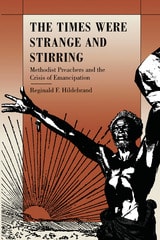
The Times Were Strange and Stirring
Methodist Preachers and the Crisis of EmancipationReginald F. Hildebrand
Duke University Press, 1995
Hildebrand explores the ideas and ideals of missionaries from several branches of Methodism—the African Methodist Episcopal Church, the Colored Methodist Episcopal Church, and the northern-based Methodist Episcopal Church—and the significant and highly charged battle waged between them over the challenge and meaning of freedom. He traces the various strategies and goals pursued by these competing visions and develops a typology of some of the ways in which emancipation was approached and understood.
Focusing on individual church leaders such as Lucius H. Holsey, Richard Harvey Cain, and Gilbert Haven, and with the benefit of extensive research in church archives and newspapers, Hildebrand tells the dramatic and sometimes moving story of how missionaries labored to organize their denominations in the black South, and of how they were overwhelmed at times by the struggles of freedom.
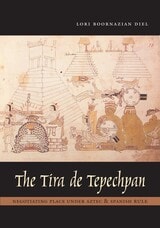
The Tira de Tepechpan
Negotiating Place under Aztec and Spanish RuleBy Lori Boornazian Diel
University of Texas Press, 2008
Created in Tepechpan, a relatively minor Aztec city in Central Mexico, the Tira de Tepechpan records important events in the city's history from 1298 through 1596. Most of the history is presented pictographically. A line of indigenous year signs runs the length of the Tira, with images above the line depicting events in Tepechpan and images below the line recording events at Tenochtitlan, capital of the Aztec empire and later the seat of Spanish rule. Written annotations amplify some of the images.
In this volume, which includes color plates of the entire Tira, Lori Boornazian Diel investigates the motives behind the creation and modification of the Tira in the second half of the sixteenth century. She identifies the Tira's different contributors and reconciles their various histories by asking why these painters and annotators, working at different times, recorded the events that they did. Comparing the Tira to other painted histories from Central Mexico, Diel demonstrates that the main goal of the Tira was to establish the antiquity, autonomy, and prestige of Tepechpan among the Central Mexican city-states that vied for power and status in the preconquest and colonial worlds. Offering the unique point of view of a minor city with grand ambitions, this study of the Tira reveals imperial strategy from the grassroots up, showing how a subject city negotiated its position under Aztec and Spanish control.
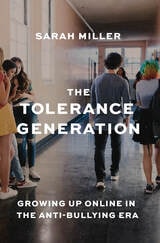
The Tolerance Generation
Growing Up Online in the Anti-Bullying EraSarah Miller
University of Chicago Press, 2026
Draws directly on insights from teens to reframe our understanding of bullying in the age of social media and why anti-bullying campaigns have been unsuccessful in combating it.
Fitting in and standing out is an eternal rite of passage for teenagers. Increasingly, their struggles to establish hierarchies and regulate social norms are labeled under the umbrella of “bullying.” This phenomenon is considered such a significant problem that all fifty states have passed anti-bullying legislation, and many schools now engage prevention programs that promote tolerance, kindness, and active bystander interventions. Despite these efforts, bullying remains as widespread as ever. Why is that? The answer lies in a unique challenge faced by teens today: social media.
In The Tolerance Generation, sociologist Sarah Miller explores how youth grapple with bullying in the digital age alongside the anti-bullying industry. Drawing on two school years with students at a Northeastern high school, Miller reveals how institutional efforts to curb bullying are no match for the many online interactions in which bullying thrives. She charts teens’ experiences as they confront not only bullying, but also sexting exposures, school shooting threats, and viral cancel culture, illustrating the escalating pressures social media places on youth. Yet the school’s anti-bullying campaigns are a mismatch. They are engineered to address individual instances of explicit conflict, not to change the culture that contributes to bullying, nor to help marginalized students who are most likely to be targeted. Miller captures how exclusion and harm spread through the interplay of teens’ on and offline lives and shows how this is due, in part, to school practices that both reinforce—and fail to address—bullying as a systemic problem.
But while social media can foster conflict, it can also be a tool for building a youth culture of care. Miller shows how many teens harness digital culture to develop their own prevention strategies, going beyond tolerance to use social media as a site for education, conflict resolution, and resistance. Ultimately, Miller argues that the anti-bullying movement is an inadequate training ground for youth to learn how to deal with American inequalities. However, by addressing the structural factors that produce bullying, and by listening to teens’ wisdom on how best to handle it, schools can create a more effective curriculum.
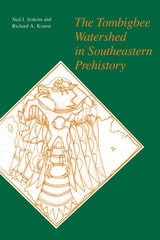
The Tombigbee Watershed in Southeastern Prehistory
Ned J. Jenkins
University of Alabama Press, 1986
Representing the synthesis of approximately ten years of archaeological research along the central Tombigbee River, this book offers new theoretical and interpretive contributions to the study of human activity in the Tombigbee River Valley from 1000 B.C. to A.D. 1450. The authors have devised a new taxonomic approach that allows them to portray cultures as they gathered momentum and peaked in their potential as social, economic, and political structures. The data acquired for this study are from the massive cultural resource management program that accompanied the construction of the Tennessee-Tombigbee Waterway.
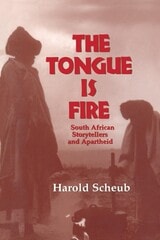
The Tongue Is Fire
South African Storytellers and ApartheidHarold E. Scheub
University of Wisconsin Press, 1996
With tape-recorder and camera in hand, Scheub registered the testaments of Swati, Xhosa, Ndebele, and Zulu storytellers, farming people who lived in the remote reaches of rural South Africa. While young people fought in the streets of Soweto and South African writers made the world aware of apartheid’s evils, the rural storytellers resisted apartheid in their own way, using myth and metaphor to preserve their traditions and confront their oppressors. For more than 20 years, Scheub kept the promise he made to the storytellers to publish his translations of their stories only when freedom came to South Africa. The Tongue Is Fire presents these voices of South African oral tradition—the historians, the poets, the epic-performers, the myth-makers—documenting their enduring faith in the power of the word to sustain tradition in the face of determined efforts to distort or eliminate it. These texts are a tribute to the storytellers who have always, in periods of crisis, exercised their art to inspire their own people.
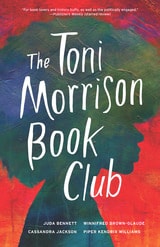
The Toni Morrison Book Club
Juda Bennett
University of Wisconsin Press, 2020
Framing their book club around collective secrets, the group bears witness to how Morrison’s works and words can propel us forward while we sit with uncomfortable questions about race, gender, and identity. How do we make space for black vulnerability in the face of white supremacy and internalized self-loathing? How do historical novels speak to us now about the delicate seams that hold black minds and bodies together?
This slim and brilliant confessional offers a radical vision for book clubs as sites of self-discovery and communal healing. The Toni Morrison Book Club insists that we find ourselves in fiction and think of Morrison as a spiritual guide to our most difficult thoughts and ideas about American literature and life.
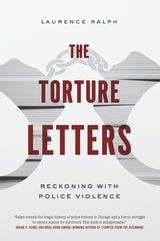
The Torture Letters
Reckoning with Police ViolenceLaurence Ralph
University of Chicago Press, 2019
In The Torture Letters, Laurence Ralph chronicles the history of torture in Chicago, the burgeoning activist movement against police violence, and the American public’s complicity in perpetuating torture at home and abroad. Engaging with a long tradition of epistolary meditations on racism in the United States, from James Baldwin’s The Fire Next Time to Ta-Nehisi Coates’s Between the World and Me, Ralph offers in this book a collection of open letters written to protesters, victims, students, and others. Through these moving, questing, enraged letters, Ralph bears witness to police violence that began in Burge’s Area Two and follows the city’s networks of torture to the global War on Terror. From Vietnam to Geneva to Guantanamo Bay—Ralph’s story extends as far as the legacy of American imperialism. Combining insights from fourteen years of research on torture with testimonies of victims of police violence, retired officers, lawyers, and protesters, this is a powerful indictment of police violence and a fierce challenge to all Americans to demand an end to the systems that support it.
With compassion and careful skill, Ralph uncovers the tangled connections among law enforcement, the political machine, and the courts in Chicago, amplifying the voices of torture victims who are still with us—and lending a voice to those long deceased.

The Torture Letters
Reckoning with Police ViolenceLaurence Ralph
University of Chicago Press, 2020
In The Torture Letters, Laurence Ralph chronicles the history of torture in Chicago, the burgeoning activist movement against police violence, and the American public’s complicity in perpetuating torture at home and abroad. Engaging with a long tradition of epistolary meditations on racism in the United States, from James Baldwin’s The Fire Next Time to Ta-Nehisi Coates’s Between the World and Me, Ralph offers in this book a collection of open letters written to protesters, victims, students, and others. Through these moving, questing, enraged letters, Ralph bears witness to police violence that began in Burge’s Area Two and follows the city’s networks of torture to the global War on Terror. From Vietnam to Geneva to Guantanamo Bay—Ralph’s story extends as far as the legacy of American imperialism. Combining insights from fourteen years of research on torture with testimonies of victims of police violence, retired officers, lawyers, and protesters, this is a powerful indictment of police violence and a fierce challenge to all Americans to demand an end to the systems that support it.
With compassion and careful skill, Ralph uncovers the tangled connections among law enforcement, the political machine, and the courts in Chicago, amplifying the voices of torture victims who are still with us—and lending a voice to those long deceased.
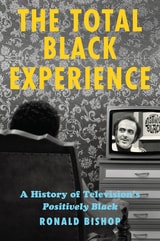
The Total Black Experience
A History of Television’s Positively BlackRonald Bishop
Rutgers University Press, 2026
The Total Black Experience is the first book to chronicle the history and social significance of Positively Black, one of the longest-running public affairs shows in the history of television. Spurred on by the findings of the Kerner Commission, executives at WNBC-TV greenlit the show and turned production over to a small but dedicated team of storytellers who quickly made it their mission to carve out a space for serious and nuanced discussion of issues important to the Black community and to celebrate all aspects of Black culture. They believed that accurate representation of their experiences was a right, not a privilege. The show’s first cohosts included the well-known Harlem-based activist Rev. Eugene Callender and Gus Heningburg, activist, successful consultant and mediator, and advocate for organized labor. Callender had founded Harlem Prep to equip young Black people for college, while Heningburg played a key role in stabilizing life in Newark following the rebellion there in the late 1960s. Both were adept at using the media to reach their constituencies. Combining in-depth interviews with painstaking archival research, The Total Black Experience introduces readers to key members of the Positively Black production team and analyzes thematic shifts in the show’s content. The book celebrates Positively Black’s longevity and challenges readers to explore the current state of Black representation on television.
The Total Survey Error Approach
A Guide to the New Science of Survey ResearchHerbert F. Weisberg
University of Chicago Press, 2005
Herbert F. Weisberg's handbook presents a unified method for conducting good survey research centered on the various types of errors that can occur in surveys—from measurement and nonresponse error to coverage and sampling error. Each chapter is built on theoretical elements drawn from specific disciplines, such as social psychology and statistics, and follows through with detailed treatments of the specific types of error and their potential solutions. Throughout, Weisberg is attentive to survey constraints, including time and ethical considerations, as well as controversies within the field and the effects of new technology on the survey process—from Internet surveys to those completed by phone, by mail, and in person. Practitioners and students will find this comprehensive guide particularly useful now that survey research has assumed a primary place in both public and academic circles.
The Tour Guide
Walking and Talking New YorkJonathan R. Wynn
University of Chicago Press, 2011
Everyone wants to visit New York at least once. The Big Apple is a global tourist destination with a dizzying array of attractions throughout the five boroughs. The only problem is figuring out where to start—and that’s where the city’s tour guides come in.
These guides are a vital part of New York’s raucous sidewalk culture, and, as The Tour Guide reveals, the tours they offer are as fascinatingly diverse—and eccentric—as the city itself. Visitors can take tours that cover Manhattan before the arrival of European settlers, the nineteenth-century Irish gangs of Five Points, the culinary traditions of Queens, the culture of Harlem, or even the surveillance cameras of Chelsea—in short, there are tours to satisfy anyone’s curiosity about the city’s past or present. And the guides are as intriguing as the subjects, we learn, as Jonathan R. Wynn explores the lives of the people behind the tours, introducing us to office workers looking for a diversion from their desk jobs, unemployed actors honing their vocal skills, and struggling retirees searching for a second calling. Matching years of research with his own experiences as a guide, Wynn also lays bare the grueling process of acquiring an official license and offers a how-to guide to designing and leading a tour.
Touching on the long history of tour-giving across the globe as well as the ups and downs of New York’s tour guide industry in the wake of 9/11, The Tour Guide is as informative and insightful as the chatty, charming, and colorful characters at its heart.

The Tourist State
Performing Leisure, Liberalism, and Race in New ZealandMargaret Werry
University of Minnesota Press, 2011
No longer the dreary sheep farm at the end of the world, the New Zealand of the new millennium is a hot global ticket, heralded for its bicultural dynamism, laid-back lifestyle, and scenery extraordinary enough to pass for Tolkien’s Middle Earth. How this image was crafted is the story The Tourist State tells. In a series of narratives that address the embodied dimensions of biopolitics and explore the collision of race, performance, and the cultural poetics of the state, Margaret Werry exposes the real drama behind the new New Zealand, revealing how a nation was sold to the world—and to itself.
The story stretches back to the so-called Liberal Era at the beginning of the twentieth century, in which the young settler colony touted itself as the social laboratory of the world. Focusing on where tourism and liberal governmentality coincide, The Tourist State takes us from military diplomacy at the dawn of the American Pacific to the exotic blandishments of Broadway and Coney Island, from landscape preservation to health reform and town planning, from blockbuster film to knowledge economy policy.
Weaving together interpretive history, performance ethnography, and cultural criticism, Werry offers new ways to think about race and indigeneity—and about the role of human agency in state-making.
The Traffic in Women's Work
East European Migration and the Making of EuropeAnca Parvulescu
University of Chicago Press, 2014
The Tragedy of the Commodity
Oceans, Fisheries, and AquacultureLongo, Stefano B
Rutgers University Press, 2015
Although humans have long depended on oceans and aquatic ecosystems for sustenance and trade, only recently has human influence on these resources dramatically increased, transforming and undermining oceanic environments throughout the world. Marine ecosystems are in a crisis that is global in scope, rapid in pace, and colossal in scale. In The Tragedy of the Commodity, sociologists Stefano B. Longo, Rebecca Clausen, and Brett Clark explore the role human influence plays in this crisis, highlighting the social and economic forces that are at the heart of this looming ecological problem.
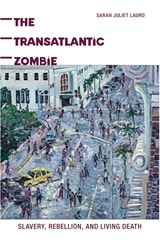
The Transatlantic Zombie
Slavery, Rebellion, and Living DeathSarah Juliet Lauro
Rutgers University Press, 2015