Results by title
22279 books match the query 'Social Science' and 4007 start with t

The Web of Violence
From Interpersonal to GlobalEdited by Jennifer Turpin and Lester Kurtz
University of Illinois Press, 1996
Violence is a topic of concern everywhere--in the media, in churches, in the halls of governments. In every land and in every culture violence is considered by most to be taboo, a last resort. Yet under certain conditions, from the level of the family to the level of nations, violence is used as a mechanism of social control. Various rationalizations thus emerge to distinguish between legitimate and illegitimate violence.
The Web of Violence explores the interrelationship among personal, collective, national, and global levels of violence. This unique collection brings together a number of internationally known contributors to address the genesis and manifestations of violence in the search for a remedy for this confounding social problem.
As the global community becomes more intimate, we must better understand the nature of violence. The Web of Violence supports this aim by examining the dangerous human phenomenon from many perspectives, at different levels, and using multiple methodologies.
Contributors: Robert Jay Lifton, Christopher G. Ellison, John P. Bartkowski, Yuan-Horng Chu, Philip Smith, Robert Elias, Birgit Brock-Utne, Riane Eisler, Johan Galtung
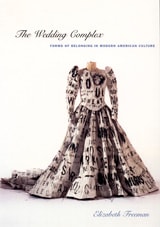
The Wedding Complex
Forms of Belonging in Modern American CultureElizabeth Freeman
Duke University Press, 2002
Freeman draws on queer theory and social history to focus on a range of texts where weddings do not necessarily lead to legal marriage but instead reflect yearnings for intimate arrangements other than long-term, state-sanctioned, domestic couplehood. Beginning with a look at the debates over gay marriage, she proceeds to consider literary works by Nathaniel Hawthorne, William Faulkner, Carson McCullers, Vladimir Nabokov, and Edgar Allan Poe, along with such Hollywood films as Father of the Bride, The Graduate, and The Godfather. She also discusses less well-known texts such as Su Friedrich’s experimental film First Comes Love and the off-Broadway, interactive dinner play Tony ‘n’ Tina’s Wedding.
Offering bold new ways to imagine attachment and belonging, and the public performance and recognition of social intimacy, The Wedding Complex is a major contribution to American studies, queer theory, and cultural studies.

The Wedding Heard 'Round the World
America's First Gay MarriageMichael McConnell
University of Minnesota Press, 2016
At the dawn of the modern gay movement (while New York’s Stonewall riots and San Francisco’s emerging political activism bloomed), these two young men insisted on making their commitment a legal reality. They were already crusaders for gay rights: Jack had twice been elected the University of Minnesota’s student president—the first openly gay university student president in the country, an election reported by Walter Cronkite on network TV news. They were featured in Look magazine’s special issue about the American family and received letters of support from around the world.
The couple navigated complex procedures to obtain a state-issued marriage license. Their ceremony was conducted by a Methodist minister in a friend’s tiny Minneapolis apartment. Wearing matching white pantsuits, exchanging custom-designed rings, and sharing a tiered wedding cake, Michael and Jack celebrated their historic marriage. After reciting their vows, they sealed their promise to love and honor each other with a kiss and a signed marriage certificate.
Repercussions were immediate: Michael’s job offer at the University of Minnesota was rescinded, leading him to wage a battle against job discrimination with the help of the Minnesota Civil Liberties Union. The couple eventually reached the U.S. Supreme Court with two precedent-setting cases.
Michael and Jack have retired from the public spotlight, but after four decades their marriage is still their joy and comfort. Living quietly in a Minneapolis bungalow, they exemplify a contemporary version of the American dream. Only now, with marriage equality in the headlines and the Supreme Court decision to make love the law of the land, are they willing to tell the entire story of their groundbreaking experiences. TIME magazine listed the twenty-five most influential marriages of all time and included Michael and Jack, and they were recently profiled in a cover story in the Sunday New York Times. Their long campaign for marriage equality and insistence on equal rights for all citizens is a model for advocates of social justice and an inspiration for everyone who struggles for acceptance in a less-than-equal world.
The Weedkiller's Daughter
Harriette Simpson Arnow
Michigan State University Press, 2012
As compelling as it is turbulent, The Weedkiller’s Daughter captures a family at the center of the rapidly changing society of midcentury Detroit. Fifteen-year-old Susie greets this new era with a sense of curiosity, while her father rages against it, approaching anything and everything foreign, unconventional, or unfortunate as he does the weeds he perpetually removes from his garden. As Susie seeks escape from her parents’ increasingly restrictive world of order and monotony, she ventures deeper and deeper into a dangerously new territory. The Weedkiller’s Daughter is a gripping psychological exploration of a generation on the brink of indelible—and irreversible—transformation.
The Well-Being of the Elderly in Asia
A Four-Country Comparative StudyAlbert I. Hermalin, Editor
University of Michigan Press, 2010
The Well-Being of the Elderly in Asia
A Four-Country Comparative StudyAlbert I. Hermalin, Editor
University of Michigan Press, 2002

The Welsh in America
Letters From the ImmigrantsAlan Conway, Editor
University of Minnesota Press, 1961
The Welsh in America was first published in 1961. Minnesota Archive Editions uses digital technology to make long-unavailable books once again accessible, and are published unaltered from the original University of Minnesota Press editions.
The Welsh formed a small but significant part of the great migration from Europe to the United States during the nineteenth century. In this volume they tell their own story in letters they wrote from America to their families and friends back home. The letters are highly readable, written, for the most part, in vivid and entertaining style which reveals the Welsh as an unusually literate people.
The 197 letters are arranged chronologically and geographically, starting with letters that tell of the voyage across the Atlantic. Once in America, the immigrants described their experiences in the farming country of New York, Pennsylvania, Ohio, and some of the other midwestern states. Later, as the frontier moved west, they wrote of their efforts to establish exclusive Welsh settlements on the Great Plains. From the industrial centers there are letters from coal miners and iron and steel workers. The fortune seekers who went to California in the gold rush or to the mines in Colorado are also represented. Still others tell of their search for salvation in the Mormon Zion of Utah.
For each chapter or group of letters Mr. Conway has written an introduction giving the general background of the region or period and relating it to the Welsh settlers. Thus the events chronicled and the views expressed in the letters become significant in the history of the times. The majority of the letters were written in Welsh and they appear here in translation. Some were obtained from the files of old newspapers or denominational magazines; others came from the collections of the National Library of Wales or from individuals.

The West Bank Wall
Unmaking PalestineRay Dolphin
Pluto Press, 2006
Israel claims it is a security measure to protect Israeli citizens from terrorist attacks. Opponents point to the serious impact on the rights of Palestinians, depriving them of their land, mobility and access to health and educational services.
This book explores the Palestinian experience of the Wall in their international context. What are the real intentions behind the Israeli security argument? Is it a means of securing territory permanently through an illegal annexation of East Jerusalem? The West Bank Wall is a cutting account of the impact of the wall and how it affects prospects of a future peace in the Middle East.
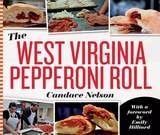
The West Virginia Pepperoni Roll
Candace Nelson
West Virginia University Press, 2017
This spicy snack soon found its way out of the mines and into bakeries, bread companies, restaurants, and event venues around the state, often with additional ingredients like cheese, red sauce, or peppers.
As the pepperoni roll’s reputation moves beyond the borders of West Virginia, this food continues to embody the culinary culture of its home state. It is now found at the center of bake-offs, eating contests, festivals, as a gourmet item on local menus, and even on a bill in the state’s legislature.
The West Virginia Pepperoni Roll is a comprehensive history of the unofficial state food of West Virginia. With over 100 photographs and countless recipes and recollections, it tells the story of the immigrants, business owners, laborers, and citizens who have developed and devoured this simple yet practical food since its invention.
The West and Central Florida Expeditions of Clarence Bloomfield Moore
Clarence Bloomfield Moore, edited and with an introduction by Jeffrey M. Mitchem
University of Alabama Press, 1999
This compilation of Moore's publications on western and central Florida provides all of his archaeological data on the region's mounds and prehistoric canals in a single volume.
The name Clarence B. Moore is familiar to every archaeologist interested in the southeastern United States. This amateur archaeologist's
numerous scientific expeditions to the region resulted in dozens of well-illustrated publications, the value of which increases daily as many of the sites he investigated continue to be destroyed by modern development.
Moore invested considerable time and effort exploring Florida's archaeological sites, devoting more pages of published reports and articles to Florida than to any other state. Because of the wealth of material on Florida, Moore's Florida expedition publications have been
collected in three separate volumes, all published within the Classics in Southeastern Archaeology series. The thirteen papers reproduced in this
volume present the results of Moore's research in West and Central Florida.
Moore's first and last expeditions were to Florida and spanned almost fifty years of archaeological investigations. Following the eastern river drainages to central and western Florida, in 1900 Moore concentrated his efforts along the Florida Gulf Coast, spurred by the exciting
discoveries of Frank Hamilton Cushing at Key Marco in 1896. Although this region is rich in mound sites, many sites located by Moore in the early
years of this century had already been destroyed by construction and lime processing. In addition to mound groupings—some containing masses of skeletal remains—Moore found a number of sites connected by a network of prehistoric canals. Several of the sites located by Moore contained European trade goods and have been used to trace the early wanderings of the conquistadores in the New World.
Moore's early work on the Florida Gulf Coast succeeded in preserving much of the archaeological record in this area. He is to be credited with remarkable insights concerning mound and earthwork construction, artifact trade networks, and chronology development.

The Western Bahr Al Ghazal under British Rule, 1898–1956
Mis Af#57Ahmad Alawad Sikainga
Ohio University Press, 1991
The Western Disease
Contesting Autism in the Somali DiasporaClaire Laurier Decoteau
University of Chicago Press, 2021
Because autism is an increasingly common diagnosis, North Americans are familiar with its symptoms and treatments. But what we know and think about autism is shaped by our social relationship to health, disease, and the medical system. In The Western Disease Claire Laurier Decoteau explores the ways that recent immigrants from Somalia to Canada and the US make sense of their children’s diagnosis of autism. Having never heard of autism before migrating to North America, they often determine that it must be a Western disease. Given its apparent absence in Somalia, they view it as Western in nature, caused by environmental and health conditions unique to life in North America.
Following Somali parents as they struggle to make sense of their children's illness and advocate for alternative care, Decoteau unfolds how complex interacting factors of immigration, race, and class affect Somalis’ relationship to the disease. Somalis’ engagement with autism challenges the prevailing presumption among Western doctors that their approach to healing is universal. Decoteau argues that centering an analysis on autism within the Somali diaspora exposes how autism has been defined and institutionalized as a white, middle-class disorder, leading to health disparities based on race, class, age, and ability. The Western Disease asks us to consider the social causes of disease and the role environmental changes and structural inequalities play in health vulnerability.
The Western Illusion of Human Nature
With Reflections on the Long History of Hierarchy, Equality and the Sublimation of Anarchy in the West, and Comparative Notes on Other Conceptions of the Human ConditionMarshall Sahlins
Prickly Paradigm Press, 2008
The Westo Indians
Slave Traders of the Early Colonial SouthEric E. Bowne
University of Alabama Press, 2005
A comprehensive study that rescues the Westo from obscurity.
The Westo Indians, who lived in the Savannah River region during the second half of the 17th century, are mentioned in few primary documents and only infrequently in secondary literature. There are no known Westo archaeological sites; no artifacts can be linked to the group; and no more than a single word of their language is known to us today. Yet, from the extant evidence, it is believed that the Westos, who migrated from around Lake Erie by 1656, had a profound effect on the development of the colonial South.
This volume reproduces excerpts from all 19 documents that indisputably reference the Westos, although the Europeans referred to them by a variety of names. Most of the information was written by Lords Proprietors who never met the Westos, or by a handful of Carolinians who did. But the author is able to chart a highly plausible history of this Native group who, for a period, thrived on the Southern frontier.
The narrative traces their northeastern origins and how the Erie conflicts with the Five Nations Iroquois in the Beaver Wars forced them southward, where they found new economic opportunities in the lucrative slave trade. At the height of their influence, between 1659 and 1680, it is believed the Westos captured and sold several thousand Indians from Spanish Florida, often trading them for guns. Eventually, their military advantage over the Indians of the lower South was compromised by the rise of powerful confederacies of native peoples, who could acquire equivalent firearms from the Europeans. Even though the aggressive Westos declined, they had influenced profound change in the Southeast. They furthered the demise of chiefly organization, helped to shift the emphasis from agricultural to hunting economies, and influenced the dramatic decrease in the number and diversity of native polities.
The Wet and the Dry
Irrigation and Agricultural Intensification in PolynesiaPatrick Vinton Kirch
University of Chicago Press, 1994
Examining research on cultural adaptation and ecology in Western Polynesia and utilizing extensive data from a variety of important South Pacific sites, Kirch not only reveals how particular systems of production developed within the constraints imposed by environmental conditions, but also explores the tension that arises between contrasting productive systems with differential abilities to produce surplus. He shows that the near total neglect of short-fallow dryland cultivation, as well as arboriculture, or tree-cropping, has seriously distorted the picture that archaeologists and anthropologists have of agricultural intensification and its relation to complex social structure.
This work, likely to become a classic, will be central to all future discussions of the ecology and politics of agricultural intensification.
The White Logic
Alcoholism and Gender in American Modernist FictionJohn W. Crowley
University of Massachusetts Press, 1994
Crowley considers the historical formation of "alcoholism" and earlier concepts of habitual drunkenness and their bearing on the social construction of gender roles. He also defines the "drunk narrative," a mode of fiction that expresses the conjunction of modernism and alcoholism in a pervasive ideology of despair--the White Logic of John Barleycorn, London's nihilistic lord of the spirits.
The White Negress
Literature, Minstrelsy, and the Black-Jewish ImaginaryHarrison-Kahan, Lori
Rutgers University Press, 2010
Lori Harrison-Kahan examines writings by Edna Ferber, Fannie Hurst, and Zora Neale Hurston, as well as the blackface performances of vaudevillian Sophie Tucker and controversies over the musical and film adaptations of Show Boat and Imitation of Life. Moving between literature and popular culture, she illuminates how the dynamics of interethnic exchange have at once produced and undermined the binary of black and white.

The White Plague
Tuberculosis, Man and SocietyDubos, Jean
Rutgers University Press, 1987
In The White Plague, René and Jean Dubos argue that the great increase of tuberculosis was intimately connected with the rise of an industrial, urbanized society and—a much more controversial idea when this book first appeared forty years ago—that the progress of medical science had very little to do with the marked decline in tuberculosis in the twentieth century.
The White Plague has long been regarded as a classic in the social and environmental history of disease. This reprint of the 1952 edition features new introductory writings by two distinguished practitioners of the sociology and history of medicine. David Mechanic's foreword describes the personal and intellectual experience that shaped René Dubos's view of tuberculosis. Barbara Gutmann Rosenkrantz's historical introduction reexamines The White Plague in light of recent work on the social history of tuberculosis. Her thought-provoking essay pays particular attention to the broader cultural and medical assumptions about sickness and sick people that inform a society’s approach to the conquest of disease.
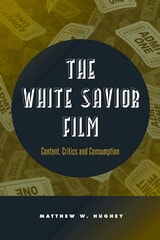
The White Savior Film
Content, Critics, and ConsumptionMatthew Hughey
Temple University Press, 2014
In The White Savior Film, Matthew Hughey provides a cogent, multipronged analysis of this subgenre of films to investigate the underpinnings of the Hollywood-constructed images of idealized (and often idealistic) white Americans.
Hughey considers the production, distribution, and consumption of white savior films to show how the dominant messages of sacrifice, suffering, and redemption are perceived by both critics and audiences. Examining the content of fifty films, nearly 3,000 reviews, and interviews with viewer focus groups, he accounts for the popularity of this subgenre and its portrayal of "racial progress."
The White Savior Film shows how we as a society create and understand these films and how they reflect the political and cultural contexts of their time.
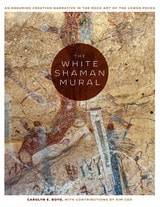
The White Shaman Mural
An Enduring Creation Narrative in the Rock Art of the Lower PecosBy Carolyn E. Boyd, with contributions by Kim Cox
University of Texas Press, 2016
Winner, Society for American Archaeology Book Award, 2017
San Antonio Conservation Society Publication Award, 2019
The prehistoric hunter-gatherers of the Lower Pecos Canyonlands of Texas and Coahuila, Mexico, created some of the most spectacularly complex, colorful, extensive, and enduring rock art of the ancient world. Perhaps the greatest of these masterpieces is the White Shaman mural, an intricate painting that spans some twenty-six feet in length and thirteen feet in height on the wall of a shallow cave overlooking the Pecos River. In The White Shaman Mural, Carolyn E. Boyd takes us on a journey of discovery as she builds a convincing case that the mural tells a story of the birth of the sun and the beginning of time—making it possibly the oldest pictorial creation narrative in North America.
Unlike previous scholars who have viewed Pecos rock art as random and indecipherable, Boyd demonstrates that the White Shaman mural was intentionally composed as a visual narrative, using a graphic vocabulary of images to communicate multiple levels of meaning and function. Drawing on twenty-five years of archaeological research and analysis, as well as insights from ethnohistory and art history, Boyd identifies patterns in the imagery that equate, in stunning detail, to the mythologies of Uto-Aztecan-speaking peoples, including the ancient Aztec and the present-day Huichol. This paradigm-shifting identification of core Mesoamerican beliefs in the Pecos rock art reveals that a shared ideological universe was already firmly established among foragers living in the Lower Pecos region as long as four thousand years ago.
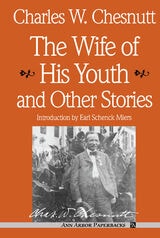
The Wife of His Youth and Other Stories
Charles W. Chesnutt
University of Michigan Press, 1968
The Wild East
Criminal Political Economies in South AsiaEdited by Barbara Harriss-White and Lucia Michelutti
University College London, 2019
The Wild Goose
Mori Ogai; Translated with an Introduction by Burton Watson
University of Michigan Press, 1995
The Will to Improve
Governmentality, Development, and the Practice of PoliticsTania Murray Li
Duke University Press, 2007
Demonstrating that the “will to improve” has a long and troubled history, Li identifies enduring continuities from the colonial period to the present. She explores the tools experts have used to set the conditions for reform—tools that combine the reshaping of desires with applications of force. Attending in detail to the highlands of Sulawesi, she shows how a series of interventions entangled with one another and tracks their results, ranging from wealth to famine, from compliance to political mobilization, and from new solidarities to oppositional identities and violent attack. The Will to Improve is an engaging read—conceptually innovative, empirically rich, and alive with the actions and reflections of the targets of improvement, people with their own critical analyses of the problems that beset them.
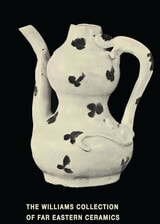
The Williams Collection of Far Eastern Ceramics
Chinese, Siamese, and Annamese Ceramic Ware Selected from the Collection of Justice and Mrs. G. Mennen Williams in the University of Michigan Museum of AnthropologyKamer Aga-Oglu
University of Michigan Press, 1972
The Williams Collection of Far Eastern Ceramics
Tonnancour SectionKamer Aga-Oglu
University of Michigan Press, 1975

The Williamsburg Avant-Garde
Experimental Music and Sound on the Brooklyn WaterfrontCisco Bradley
Duke University Press, 2023
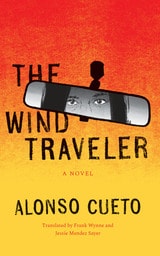
The Wind Traveler
A NovelBy Alonso Cueto; translated by Frank Wynne and Jessie Mendez Sayer
University of Texas Press, 2020
The Wind Traveler showcases the mesmerizing storytelling of Alonso Cueto at the top of his career. At the heart of his latest work is a seemingly ordinary man named Ángel, who sells kitchenware at a store in Lima. In the early 1990s, he had served as an army soldier, engaging in brutal acts whose aftermath still reverberates. He is forced to reckon with his past when a woman he was instructed to kill enters the store and buys a few items. How can she still be alive? What's more, how can she not recognize Ángel? Remarkably, she asks him to deliver her purchases to her house. From this moment, Ángel feels compelled to make amends through any means necessary, even if it requires sacrificing his life of quiet retirement.
A stirring tribute to the wounded souls who yearn to make peace with the past, The Wind Traveler offers a new vision of the fragile human connections that sustain a deeply fractured world.
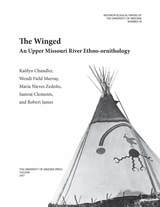
The Winged
An Upper Missouri River Ethno-ornithologyKaitlyn Chandler, Wendi Field Murray, María Nieves Zedeño, Samrat Clements, and Robert James
University of Arizona Press, 2017
The Missouri River Basin is home to thousands of bird species that migrate across the Great Plains of North America each year, marking the seasonal cycle and filling the air with their song. In time immemorial, Native inhabitants of this vast region established alliances with birds that helped them to connect with the gods, to learn the workings of nature, and to live well.
This book integrates published and archival sources covering archaeology, ethnohistory, historical ethnography, folklore, and interviews with elders from the Blackfoot, Assiniboine, Mandan, Hidatsa, Arikara, and Crow communities to explore how relationships between people and birds are situated in contemporary practice, and what has fostered its cultural persistence. Native principles of ecological and cosmological knowledge are brought into focus to highlight specific beliefs, practices, and concerns associated with individual bird species, bird parts, bird objects, the natural and cultural landscapes that birds and people cohabit, and the future of this ancient alliance.
Detailed descriptions critical to ethnohistorians and ethnobiologists are accompanied by thirty-four color images. A unique contribution, The Winged expands our understanding of sets of interrelated dependencies or entanglements between bird and human agents, and it steps beyond traditional scientific and anthropological distinctions between humans and animals to reveal the intricate and eminently social character of these interactions.
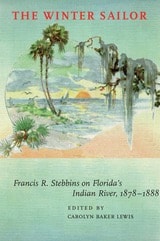
The Winter Sailor
Francis R. Stebbins on Florida's Indian River, 1878-1888Edited by Carolyn Frances Baker Lewis
University of Alabama Press, 2004
A unique guide to Florida's frontier history along Indian River.
The Winter Sailor is a historical adventure that details the yearly winter travels of Francis R. Stebbins to Florida's Indian River. Stebbins, a writer from Michigan, visited Florida in March of 1878 and became entranced by its pristine beauty. Subsequently, Stebbins and his traveling companions made annual visits to Indian River—until 1888 when tragedy struck and ended Stebbins' yearly journeys.
Being an observant traveler, Stebbins began a series of descriptive articles for his hometown newspaper that chronicled his journeys to the Indian River area. Stebbins's articles tell of his own personal experiences during his leisurely visits, which included such activities as hunting and fishing, studying the natural surroundings, and excavating Indian mounds. What Stebbins enjoyed most was sailing down the river interviewing townspeople and examining local attractions as he went. His articles also detail the lifestyle of the region, food, fashion, industry, history, environment, and changes that occurred over time. Stebbins's articles not only entertained and informed but also became a travelogue for his readers. He inspired northern travelers to go south and visit Florida, which contributed to the beginnings of large-scale tourism in the region.
The Winter Sailor combines Stebbins's 49 articles along with three by his companions, to provide an enjoyable, historical guide. Unique among 19th-century travelogues, this fascinating look into Florida's past documents a decade of change to the Indian River wilderness and becomes Stebbins's gift to the present.
The Wintu and Their Neighbors
A Very Small World-System in Northern CaliforniaChristopher Chase-Dunn
University of Arizona Press, 1998
Chase-Dunn and Mann argue that Immanuel Wallerstein's world-systems perspective, originally applied only to the study of modern capitalistic societies, can also be applied to the study of the social, economic, and political relationships in small stateless societies. They contend that, despite the fact that the Wintu appear on the surface to have been a household-based society, this indigenous group was in fact involved in a myriad of networks of interaction, which resulted in intermarriage and which extended for many miles around the region. These networks, which were not based on the economic dominance of one society over another—a concept fundamental to Wallerstein's world-systems theory—led to the eventual expansion of the Wintu as a cultural group.
Thus, despite the fact that the Wintu did not behave like a modern society—lacking wealth accumulation, class distinctions, and cultural dominance—Chase-Dunn and Mann insist that the Wintu were involved in a world-system and argue, therefore, that the concept of the "minisystem" should be discarded. They urge other scholars to employ this comparative world-systems perspective in their research on stateless societies.
The Wire
Race, Class, and GenreEdited by Liam Kennedy and Stephen Shapiro
University of Michigan Press, 2012
Few other television series have received as much academic, media, and fan celebration as The Wire, which has been called the best dramatic series ever created. The show depicts the conflict between Baltimore's police and criminals to raise a warning about race; drug war policing; deindustrialization; and the inadequacies of America’s civic, educational, and political institutions. The show's unflinching explorations of a city in crisis and its nuanced portrayals of those affected make it a show all about race and class in America.
The essays in this volume offer a range of astute critical responses to this television phenomenon. More consistently than any other crime show of its generation, The Wire challenges viewers' perceptions of the racialization of urban space and the media conventions that support this. The Wire reminds us of just how remarkably restricted the grammar of race is on American television and related media, and of the normative codings of race---as identity, as landscape---across urban narratives, from documentary to entertainment media.
The Wired City
Reimagining Journalism and Civic Life in the Post-Newspaper AgeDan Kennedy
University of Massachusetts Press, 2013
Although the Independent is the principal subject of The Wired City, Kennedy examines a number of other online news projects as well, including nonprofit organizations such as Voiceof San Diego and the Connecticut Mirror and for-profit ventures such as the Batavian, Baristanet, and CT News Junkie. Where legacy media such as major city newspapers are cutting back on coverage, entrepreneurs are now moving in to fill at least some of the vacuum.
The Wired City includes the perspectives of journalists, activists, and civic leaders who are actively re-envisioning how journalism can be meaningful in a hyperconnected age of abundant news sources. Kennedy provides deeper context by analyzing the decline of the newspaper industry in recent years and, in the case of those sites choosing such a path, the uneasy relationship between nonprofit status and the First Amendment.
At a time of pessimism over the future of journalism, The Wired City offers hope. What Kennedy documents is not the death of journalism but rather the uncertain and sometimes painful early stages of rebirth.

The Witch Studies Reader
Soma Chaudhuri and Jane Ward, editors
Duke University Press, 2025
Contributors. Maria Amir, Ruth Asiimwe, Bernadette Barton, Ethel Brooks, Shelina Brown, Ruth Charnock, Soma Chaudhuri, Carolyn Chernoff, Saira Chhibber, Simon Clay, Krystal Cleary, Adrianna L. Ernstberger, Tina Escaja, Laurie Essig, Marcelitte Failla, D Ferrett, Marion Goldman, Jaime Hartless, Margaretha Haughwout, Patricia Humura, Apoorvaa Joshi, Govind Kelkar, Oliver Kellhammer, Ayça Kurtoğlu, Helen Macdonald, Isabel Machado, Brandy Renee McCann, Dev Nathan, Mary Jo Neitz, Amy Nichols-Belo, Allison (or AP) Pierce, Emma Quilty, Anna Rogel, Karen Schaller, Jacquelyn Marie Shannon, Shashank Shekhar Sinha, Gabriella V. Smith, Nathan Snaza, Shannon Hughes Spence, Eric Steinhart, Morena Tartari, Nicole Trigg, Katie Von Wald, Tushabe wa Tushabe, Jane Ward

The Witch's Flight
The Cinematic, the Black Femme, and the Image of Common SenseKara Keeling
Duke University Press, 2007
Keeling draws on the thought of Frantz Fanon, Angela Davis, Karl Marx, Antonio Gramsci, and others in addition to Deleuze. She pursues the elusive figure of the black femme through Haile Gerima’s film Sankofa, images of women in the Black Panther Party, Pam Grier’s roles in the blaxploitation films of the early 1970s, F. Gary Gray’s film Set It Off, and Kasi Lemmons’s Eve’s Bayou.

The Witchcraft Series Maqlu
Tzvi Abusch
SBL Press, 2015
A new reconstruction and translation of the Maqlû text
The Akkadian series Maqlû, “Burning,” is one of the most significant and interesting magical texts from the Ancient Near East. The incantations and accompanying rituals are directed against witches and witchcraft and ctually represent a single complex ceremony. The ceremony was performed during a single night and into the following morning at the end of the month Abu (July/August), a time when spirits were thought to move back and forth between the netherworld and the world of the living.
Features:
- English translation of approximately 100 incantations and rituals
- Annotated transcription
- Introduction places the series in historical context and shows how it is a product of a complex literary and ceremonial development.
The Wolf and Furton Sites
Macomb County, MichiganEmerson F. Greenman
University of Michigan Press, 1939

The Wolf at Number 4
A NovelAyo Tamakloe-Garr
Ohio University Press, 2018
The Woman Detective
GENDER AND GENREViola Klein
University of Illinois Press, 1995
This new edition adds sixty new female private eyes to the roster and includes an afterword that assesses the current state of the genre's new and old novels. A comprehensive bibliography and a character list update the field through mid-1994.
"A highly intelligent analysis." -- Ms.
"Well-researched and well-written. . . . Traces the evolution of sexist boundaries in popular detective fiction from a feminist viewpoint and documents the parallels in social history and the women's rights movement." -- Ronald C. Miller, The Armchair Detective
"Identifies dozens of good novels whose titles are not well known, its promise of good reading extending well beyond its own covers." -- Jane Bakerman, Belles Lettres
The Woman I Was Not Born To Be
A Transsexual JourneyAleshia Brevard
Temple University Press, 2001
Under the stage name Lee Shaw, Brevard worked as a drag queen at Finocchio's, a San Francisco club, doing Marilyn Monroe impersonations. (Like Marilyn, she sought romance all the time and had a string of entanglements with men.) Later, she worked as a stripper in Reno and as a Playboy Bunny at the Sunset Strip hutch.
After playing opposite Don Knotts in the movie The Love God, Brevard appeared in other films and broke into TV as a regular on the Red Skelton Show. She created the role of Tex on the daytime soap opera One Life To Live. As a woman, Brevard returned to teach theater at East Tennessee State, the same university she had attended as a boy.
This memoir is a rare pre-Women's Movement account of coming to terms with gender identity. Brevard writes frankly about the degree to which she organized her life around pleasing men, and how absurd it all seems to her now.

The Woman Who Knew Too Much, Revised Ed.
Alice Stewart and the Secrets of RadiationGayle Greene
University of Michigan Press, 2017
Author Gayle Greene traces Stewart's life and career as she came up against ever more powerful authorities, first the British medical profession, then the U.S. nuclear industry, and finally the regulatory agencies that set radiation safety standards throughout the world. Stewart endured the fate of other women scientists in having her findings dismissed and funding cut, but today is recognized as a pioneering figure in epidemiological research on the dangers of nuclear radiation. In her preface to the second edition, Greene looks at new information that’s come out about the forces and individuals responsible for marginalizing her as a scientist and downplaying the disturbing implications of her research.

The Woman Who Knew Too Much
Alice Stewart and the Secrets of RadiationGayle Greene
University of Michigan Press, 2001
This biography illuminates the life and achievements of the remarkable woman scientist who revolutionized the concept of radiation risk.
In the 1950s Alice Stewart began research that led to her discovery that fetal X rays double a child's risk of developing cancer. Two decades later---when she was in her seventies---she again astounded the scientific world with a study showing that the U.S. nuclear weapons industry is about twenty times more dangerous than safety regulations permit. This finding put her at the center of the international controversy over radiation risk. In 1990, the New York Times called Stewart "perhaps the Energy Department's most influential and feared scientific critic."
The Woman Who Knew Too Much traces Stewart's life and career from her early childhood in Sheffield to her medical education at Cambridge to her research positions at Oxford University and the University of Birmingham.
Gayle Greene is Professor of Women's Studies and Literature, Scripps College.

The Woman in the Violence
Gender, Poverty, and Resistance in PeruM. Cristina Alcalde
Vanderbilt University Press, 2010
Focusing on the experiences of women who are predominantly poor, nonwhite, rural-to-urban migrants with little or no formal education, The Woman in the Violence addresses a range of serious concerns. What types of violence do women experience at different stages in their lives? Which identities and roles are manifested throughout their lives, and do some of these increase their vulnerability to different forms of violence? What strategies do women employ to gain some power and control in these situations, and how can we conceptualize these strategies?
In examining these questions, The Woman in the Violence contributes to our understanding of violence, gender, race, resistance, and urbanism as it exposes and analyzes systemic violence against women. The everyday forms of resistance these women employ provide significant insight for students, scholars, and health professionals.
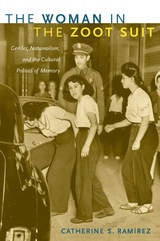
The Woman in the Zoot Suit
Gender, Nationalism, and the Cultural Politics of MemoryCatherine S. Ramírez
Duke University Press, 2009
Two events in wartime Los Angeles thrust young Mexican American zoot suiters into the media spotlight. In the Sleepy Lagoon incident, a man was murdered during a mass brawl in August 1942. Twenty-two young men, all but one of Mexican descent, were tried and convicted of the crime. In the Zoot Suit Riots of June 1943, white servicemen attacked young zoot suiters, particularly Mexican Americans, throughout Los Angeles. The Chicano movement of the 1960s–1980s cast these events as key moments in the political awakening of Mexican Americans and pachucos as exemplars of Chicano identity, resistance, and style. While pachucas and other Mexican American women figured in the two incidents, they were barely acknowledged in later Chicano movement narratives. Catherine S. Ramírez draws on interviews she conducted with Mexican American women who came of age in Los Angeles in the late 1930s, 1940s, and 1950s as she recovers the neglected stories of pachucas. Investigating their relative absence in scholarly and artistic works, she argues that both wartime U.S. culture and the Chicano movement rejected pachucas because they threatened traditional gender roles. Ramírez reveals how pachucas challenged dominant notions of Mexican American and Chicano identity, how feminists have reinterpreted la pachuca, and how attention to an overlooked figure can disclose much about history making, nationalism, and resistant identities.
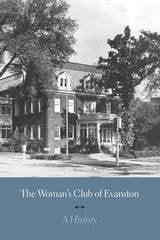
The Woman's Club of Evanston
A HistoryErin Hvizdak with an epilogue by Kathy Rocklin
Northwestern University Press, 2019
An exemplar of the women’s club movement, over the course of its long history the Woman’s Club has redirected its efforts in service and philanthropy and adjusted its organization in response to the changing needs of its community. The Charitable Foundation of the Woman’s Club of Evanston was established to support programs that provide a continuity of care and education and address gaps in funding for families in need. In 2010, the Harbert Society was created to recognize individuals who support the Woman’s Club of Evanston and to encourage and document planned gifts.
The Wombs of Women
Race, Capital, FeminismFrançoise Vergès
Duke University Press, 2020
The Women Who Reconstructed American Jewish Education, 1910-1965
Edited by Carol K. Ingall
Brandeis University Press, 2010

The Women of CourtWatch
Reforming a Corrupt Family Court SystemBy Carole Bell Ford
University of Texas Press, 2005
Houston was a terrible place to divorce or seek child custody in the 1980s and early 1990s. Family court judges routinely rendered verdicts that damaged the interests of women and children. In some especially shocking cases, they even granted custody to fathers who had been accused of molesting their own children. Yet despite persistent allegations of cronyism, incompetence, sexism, racism, bribery, and fraud, the judges wielded such political power and influence that removing them seemed all but impossible. The family court system was clearly broken, but there appeared to be no way to fix it.
This book recounts the inspiring and courageous story of women activists who came together to oppose Houston's family court judges and whose political action committee, CourtWatch, played a crucial role in defeating five of the judges in the 1994 judicial election. Carole Bell Ford draws on extensive interviews with Florence Kusnetz, the attorney who led the reform effort, and other CourtWatch veterans, as well as news accounts, to provide a full history of the formation, struggles, and successes of a women's grassroots organization that overcame powerful political interests to improve Houston's family courts. More than just a local story, however, this history of CourtWatch provides a model that can be used by activists in other communities in which legal and social institutions have gone astray. It also honors the heroism of Florence Kusnetz, whose commitment to the Jewish concept of tikkun olam ("repairing and improving the world") brought her out of a comfortable retirement to fight for justice for women and children.
The Women of Karbala
Ritual Performance and Symbolic Discourses in Modern Shi'i IslamEdited by Kamran Scot Aghaie
University of Texas Press, 2005
Commemorating the Battle of Karbala, in which the Prophet Mohammad's grandson Hosayn and seventy-two of his family members and supporters were martyred in 680 CE, is the central religious observance of Shi'i Islam. Though much has been written about the rituals that reenact and venerate Karbala, until now no one has studied women's participation in these observances. This collection of original essays by a multidisciplinary team of scholars analyzes the diverse roles that women have played in the Karbala rituals, as well as the varied ways in which gender-coded symbols have been used within religious and political discourses.
The contributors to this volume consider women as participants in and observers of the Karbala rituals in Iran, Iraq, Lebanon, India, Pakistan, and the United States. They find that women's experiences in the Shi'i rituals vary considerably from one community to another, based on regional customs, personal preferences, religious interpretations, popular culture, and socioeconomic background. The authors also examine the gender symbolism within the rituals, showing how it reinforces distinctions between the genders while it also highlights the centrality of women to the symbolic repertory of Shi'ism. Overall, the authors conclude that while Shi'i rituals and symbols have in some ways been used to restrict women's social roles, in other ways they have served to provide women with a sense of independence and empowerment.
The Women of Katrina
How Gender, Race, and Class Matter in an American DisasterEmmanuel David
Vanderbilt University Press, 2012