Results by title
3071 books match the query 'Business & Economics' and 687 start with t

The India Museum Revisited
Arthur MacGregor
University College London, 2023
The museum of the East India Company formed, for a large part of the nineteenth century, one of the sights of London. In recent years, little has been remembered of it beyond its mere existence, while an assumed negative role has been widely attributed to it on the basis of its position at the heart of one of Britain’s arch-colonialist enterprises.
Extensively illustrated, The India Museum Revisited surveys the contents of its multi-faceted collections—with respect to materials, their manufacture, and original functions on the Indian sub-continent—as well as the collectors who gathered them and the manner in which they were mobilized to various ends within the museum.
From this integrated treatment of documentary and material sources, a more accurate, rounded, and nuanced picture emerges of an institution that contributed in major ways, over a period of eighty years, to the representation of India for a European audience, not only in Britain but through the museum’s involvement in the international exposition movement to audiences on the continent and beyond.
The Industrial Organization and Regulation of the Securities Industry
Edited by Andrew W. Lo
University of Chicago Press, 1995
Ten original essays address topics including electronic trading and the "virtual"stock exchange; trading costs and liquidity on the London and Tokyo Stock Exchanges and in the German and Japanese government bond markets; international coordination among regulatory agencies; and the impact of changing margin requirements on stock prices, volatility, and liquidity.
This clear presentation of groundbreaking research will appeal to economists, lawyers, and legislators who seek a refreshingly new perspective on policy issues in the securities industry.

The Industrialization of São Paulo, 1800-1945
By Warren Dean
University of Texas Press, 1969
São Paulo is one of the few places in the underdeveloped world where an advanced industrial system has grown out of a tropical raw-material-exporting economy. By 1960 there were 830,000 industrial workers in the state, producing $3.3 billion worth of goods. It had become Latin America’s largest industrial center.
This is a study of the early years of manufacturing in São Paulo: how it was influenced by the growth and decline of the coffee trade; where it found its markets, its credit, and its labor force; and how it confronted the competition of imports. The principal focus, however, is on the manufacturers themselves, whose perceptions of their opportunities determined how industrialization was brought about. Warren Dean discusses their social origins, their connections with other sectors of the elite, their attitudes toward workers and consumers, and their view of the potentialities of economic development. He analyzes the political activities of the manufacturers, to discover both how they promoted their interests and how they confronted the larger challenge of social and political transformation.
Paradoxically, the industrialization of São Paulo is not a “success story” of private entrepreneurship. Until after World War II manufacturing grew quite slowly, and its hallmarks were always low productivity, technical backwardness, and consumer hostility. More than half of the state’s present large-scale factory production and nearly all of its heavy industry was built by foreign capital or state enterprise, not by privately owned firms. Dean shows that this outcome is partly a consequence of the historical experience of domestic manufacture.
Throughout the book the author points out the “peculiar articulations” of the industrial system of São Paulo—the significant social and political interests that determined what kinds of development were possible. The result is an exposition of an unusual case study in twentieth-century economic development.

The Infinite Resource
The Power of Ideas on a Finite PlanetRamez Naam
University Press of New England, 2013
The Inflation-Targeting Debate
Edited by Ben S. Bernanke and Michael Woodford
University of Chicago Press, 2004
In Inflation Targeting, a distinguished group of contributors explores the many underexamined dimensions of inflation targeting—its potential, its successes, and its limitations—from both a theoretical and an empirical standpoint, and for both developed and emerging economies. The volume opens with a discussion of the optimal formulation of inflation-targeting policy and continues with a debate about the desirability of such a model for the United States. The concluding chapters discuss the special problems of inflation targeting in emerging markets, including the Czech Republic, Poland, and Hungary.
The Insider
How the Kiplinger Newsletter Bridged Washington and Wall StreetRob Wells
University of Massachusetts Press, 2022
When Willard M. Kiplinger launched the groundbreaking Kiplinger Washington Letter in 1923, he left the sidelines of traditional journalism to strike out on his own. With a specialized knowledge of finance and close connections to top Washington officials, Kiplinger was uniquely positioned to tell deeper truths about the intersections between government and business. With careful reporting and insider access, he delivered perceptive analysis and forecasts of business, economic, and political news to busy business executives, and the newsletter’s readership grew exponentially over the coming decades.
More than just a pioneering business journalist, Kiplinger emerged as a quiet but powerful link between the worlds of Presidents Hoover and Roosevelt, and used his Letter to play a little-known but influential role in the New Deal. Part journalism history, part biography, and part democratic chronicle, The Insider offers a well-written and deeply researched portrayal of how Kiplinger not only developed a widely read newsletter that launched a business publishing empire but also how he forged a new role for the journalist as political actor.

The Institutional Revolution
Measurement and the Economic Emergence of the Modern WorldDouglas W. Allen
University of Chicago Press, 2011
Few events in the history of humanity rival the Industrial Revolution. Following its onset in eighteenth-century Britain, sweeping changes in agriculture, manufacturing, transportation, and technology began to gain unstoppable momentum throughout Europe, North America, and eventually much of the world—with profound effects on socioeconomic and cultural conditions.

The Intended and Unintended Effects of U.S. Agricultural and Biotechnology Policies
Edited by Joshua S. Graff Zivin and Jeffrey M. Perloff
University of Chicago Press, 2012
Using economic models and empirical analysis, this volume examines a wide range of agricultural and biofuel policy issues and their effects on American agricultural and related agrarian insurance markets. Beginning with a look at the distribution of funds by insurance programs—created to support farmers but often benefiting crop processors instead—the book then examines the demand for biofuel and the effects of biofuel policies on agricultural price uncertainty. Also discussed are genetically engineered crops, which are assuming an increasingly important role in arbitrating tensions between energy production, environmental protection, and the global food supply. Other contributions discuss the major effects of genetic engineering on worldwide food markets. By addressing some of the most challenging topics at the intersection of agriculture and biotechnology, this volume informs crucial debates.

The International Monetary Fund and Latin America
The Argentine Puzzle in ContextClaudia Kedar
Temple University Press, 2013
The International Monetary Fund (IMF) has played a critical role in the global economy since the postwar era. But, claims Claudia Kedar, behind the strictly economic aspects of the IMF’s intervention, there are influential interactions between IMF technocrats and local economists—even when countries are not borrowing money.
In The International Monetary Fund and Latin America, Kedar seeks to expose the motivations and constraints of the operations of both the IMF and borrowers. With access to never-before-seen archive materials, Kedar reveals both the routine and behind-the-scenes practices that have depicted International Monetary Fund–Latin American relations in general and the asymmetrical IMF-Argentina relations in particular.
Kedar also analyzes the “routine of dependency” that characterizes IMF-borrower relations with several Latin American countries such as Chile, Peru, and Brazil. The International Monetary Fund and Latin America shows how debtor countries have adopted IMF’s policies during past decades and why Latin American leaders today largely refrain from knocking at the IMF’s doors again.
The International Transmission of Inflation
Michael R. Darby, James R. Lothian, Arthur E. Gandolfi, Anna J. Schwartz, and Al
University of Chicago Press, 1984
The authors construct a consistent data base of information for eight countries and design a theoretically sound model to test and evaluate competing hypotheses incorporating the most recent theoretical developments. Additional chapters address an impressive variety of issues that complement and corroborate the core of the study. They answer such questions as these: Can countries conduct an independent monetary policy under fixed exchange rates? How closely tied are product prices across countries? How are disturbances transmitted across countries?
The International Transmission of Inflation is an important contribution to international monetary economics in furnishing an invaluable empirical foundation for future investigation and discussion.

The Internationalization of Equity Markets
Edited by Jeffrey A. Frankel
University of Chicago Press, 1994
Eight essays examine such issues as the current extent of international market integration, gains to U.S. investors through international diversification, home-country bias in investing, the role of time and location around the world in stock trading, and the behavior of country funds. Other, long-standing questions about equity markets are also addressed, including market efficiency and the accuracy of models of expected returns, with a particular focus on variances, covariances, and the price of risk according to the Capital Asset Pricing Model.

The Internet Myth
From the Internet Imaginary to Network IdeologiesPaolo Bory
University of Westminster Press, 2020
‘The Internet is broken and Paolo Bory knows how we got here. In a powerful book based on original research, Bory carefully documents the myths, imaginaries, and ideologies that shaped the material and cultural history of the Internet. As important as this book is to understand our shattered digital world, it is essential for those who would fix it.’ — Vincent Mosco, author of The Smart City in a Digital World
The Internet Myth retraces and challenges the myth laying at the foundations of the network ideologies – the idea that networks, by themselves, are the main agents of social, economic, political and cultural change. By comparing and integrating different sources related to network histories, this book emphasizes how a dominant narrative has extensively contributed to the construction of the Internet myth while other visions of the networked society have been erased from the collective imaginary. The book decodes, analyzes and challenges the foundations of the network ideologies looking at how networks have been imagined, designed and promoted during the crucial phase of the 1990s.
Three case studies are scrutinized so as to reveal the complexity of network imaginaries in this decade: the birth of the Web and the mythopoesis of its inventor; and the histories of two Italian networking projects, the infrastructural plan Socrate and the civic network Iperbole, the first to give free Internet access to citizens.
The Internet Myth thereby provides a compelling and hidden sociohistorical narrative in order to challenge one of the most powerful myths of our time.
This title has been published with the financial assistance of the Fondazione Hilda e Felice Vitali, Lugano, Switzerland.
The Invention of Capitalism
Classical Political Economy and the Secret History of Primitive AccumulationMichael Perelman
Duke University Press, 2000
Clearly, they did not go willingly. As Michael Perelman shows, they were forced into the factories with the active support of the same economists who were making theoretical claims for capitalism as a self-correcting mechanism that thrived without needing government intervention. Directly contradicting the laissez-faire principles they claimed to espouse, these men advocated government policies that deprived the peasantry of the means for self-provision in order to coerce these small farmers into wage labor. To show how Adam Smith and the other classical economists appear to have deliberately obscured the nature of the control of labor and how policies attacking the economic independence of the rural peasantry were essentially conceived to foster primitive accumulation, Perelman examines diaries, letters, and the more practical writings of the classical economists. He argues that these private and practical writings reveal the real intentions and goals of classical political economy—to separate a rural peasantry from their access to land.
This rereading of the history of classical political economy sheds important light on the rise of capitalism to its present state of world dominance. Historians of political economy and Marxist thought will find that this book broadens their understanding of how capitalism took hold in the industrial age.
The Invention of Coinage and the Monetization of Ancient Greece
David M. Schaps
University of Michigan Press, 2015
The Invention of Infinite Growth
How Economists Came to Believe a Dangerous DelusionChristopher F. Jones
University of Chicago Press, 2025
Most economists believe that growth is the surest path to better lives. This has proven to be one of humanity’s most powerful and dangerous ideas. It shapes policy across the globe, but it fatally undermines the natural ecosystems necessary to sustain human life. How did we get here? In The Invention of Infinite Growth, environmental historian Christopher F. Jones takes us through two hundred and fifty years of economic thinking to examine the ideal of growth, its powerful influence, and the crippling burdens many decisions made in its name have placed on us all. Jones argues that the pursuit of growth has never reflected its costs, because economists downplay environmental degradation. What’s worse, skyrocketing inequality and diminishing improvements in most people’s well-being mean growth too often delivers too little for too many. Jones urges economists to engage more broadly with other ways of thinking, as well as with citizens and governments to recognize and slow infinite growth’s impact on the real world.
Both accessible and eye-opening, The Invention of Infinite Growth offers hope for the future. Humans have not always believed that economic growth could or should continue, and so it is possible for us to change course. We can still create new ideas about how to promote environmental sustainability, human welfare, and even responsible growth, without killing the planet and ourselves.
The Investment Policies of Foundations
Ralph Lowell Nelson
Russell Sage Foundation, 1967
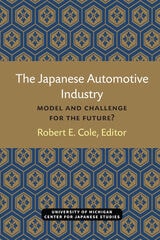
The Japanese Automotive Industry
Model and Challenge for the Future?Robert E. Cole, Editor
University of Michigan Press, 1981

The Japanese Television Cartel
A Study Based on "Matsushita v. Zenith"David Schwartzman
University of Michigan Press, 1993

The Jobless Future
Second EditionStanley Aronowitz
University of Minnesota Press, 2010

The Journal of Law and Economics, volume 65 number 2 (May 2022)
The University of Chicago Press
University of Chicago Press Journals, 2022
The Journal of Law and Economics, volume 65 number 3 (August 2022)
The University of Chicago Press
University of Chicago Press Journals, 2022
The Journal of Law and Economics, volume 65 number 4 (November 2022)
The University of Chicago Press
University of Chicago Press Journals, 2022
The Journal of Law and Economics, volume 65 number S2 (November 2022)
The University of Chicago Press
University of Chicago Press Journals, 2022
The Journal of Law and Economics, volume 66 number 1 (February 2023)
The University of Chicago Press
University of Chicago Press Journals, 2023
The Journal of Law and Economics, volume 66 number 2 (May 2023)
The University of Chicago Press
University of Chicago Press Journals, 2023
The Journal of Law and Economics, volume 66 number 3 (August 2023)
The University of Chicago Press
University of Chicago Press Journals, 2023
The Journal of Law and Economics, volume 66 number 4 (November 2023)
The University of Chicago Press
University of Chicago Press Journals, 2023
The Journal of Law and Economics, volume 67 number 1 (February 2024)
The University of Chicago Press
University of Chicago Press Journals, 2024
The Journal of Law and Economics, volume 67 number 2 (May 2024)
The University of Chicago Press
University of Chicago Press Journals, 2024
The Journal of Law and Economics, volume 67 number 3 (August 2024)
The University of Chicago Press
University of Chicago Press Journals, 2024
The Journal of Law and Economics, volume 67 number 4 (November 2024)
The University of Chicago Press
University of Chicago Press Journals, 2024
The Journal of Law and Economics, volume 68 number 1 (February 2025)
The University of Chicago Press
University of Chicago Press Journals, 2025
The Journal of Law and Economics, volume 68 number 2 (May 2025)
The University of Chicago Press
University of Chicago Press Journals, 2025
The Journal of Law and Economics, volume 68 number 3 (August 2025)
The University of Chicago Press
University of Chicago Press Journals, 2025
The Journal of Law and Economics, volume 68 number 4 (November 2025)
The University of Chicago Press
University of Chicago Press Journals, 2025
The Journal of Law and Economics, volume 69 number 1 (February 2026)
The University of Chicago Press
University of Chicago Press Journals, 2026
The Journal of Law and Economics, volume 69 number 2 (May 2026)
The University of Chicago Press
University of Chicago Press Journals, 2026
The Journal of Law and Economics, volume 69 number 3 (August 2026)
The University of Chicago Press
University of Chicago Press Journals, 2026

The Journal of the Association for Consumer Research, volume 6 number 3 (July 2021)
The University of Chicago Press
University of Chicago Press Journals, 2021
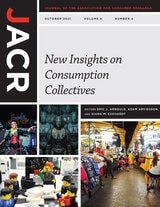
The Journal of the Association for Consumer Research, volume 6 number 4 (October 2021)
The University of Chicago Press
University of Chicago Press Journals, 2021

The Journal of the Association for Consumer Research, volume 7 number 1 (January 2022)
The University of Chicago Press
University of Chicago Press Journals, 2022

The Journal of the Association for Consumer Research, volume 7 number 2 (April 2022)
The University of Chicago Press
University of Chicago Press Journals, 2022
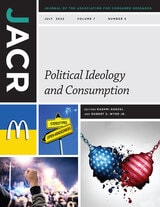
The Journal of the Association for Consumer Research, volume 7 number 3 (July 2022)
The University of Chicago Press
University of Chicago Press Journals, 2022
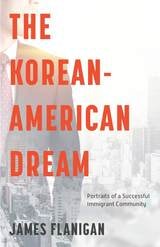
The Korean-American Dream
Portraits of a Successful Immigrant CommunityJames Flanigan
University of Nevada Press, 2018
In The Korean-American Dream, respected and distinguished business journalist James Flanigan uncovers the struggles and contributions of the people who have made Los Angeles the largest Korean city outside of Seoul.
This intimate account illustrates how Korean immigrants have preserved their culture and history as well as adapted to the American culture of E Pluribus Unum, the radical promise of “out of many, one.” Flanigan shows how Los Angeles emerged as a capital of the Asia Pacific region.
At less than 2 million, Korean Americans are a relatively small group compared to new Americans from China, the Philippines, and India. But with energy and drive, they are building landmarks in New York as well as L.A., lobbying for causes in Washington, founding businesses, heading universities and hospitals, and holding public office in all parts of the U.S.
Flanigan’s compelling narrative told largely through personal interviews provides a front-row seat to the economic, business, and cultural developments of the Korean American Community. At a time of spirited debate about immigration, their energy and ambition serve as a ringing reminder of the promise of the American mosaic.
The Landrum-Griffin Act and Union Democracy
Doris B. McLaughlin and Anita L.W. Schoomaker
University of Michigan Press, 1979
The Language of Public Administration
Bureaucracy, Modernity, and PostmodernityDavid John Farmer
University of Alabama Press, 1995
Rethinking bureaucracy through the lenses of modernity, postmodernity, and administrative imagination.
Coping with the practical problems of bureaucracy is hampered by the limited self-conception and the constricted mindsets of mainstream public administration thinking. Modernist public administration theory, although valuable and capable of producing ever more remarkable results, is limiting as an explanatory and catalytic force in resolving fundamental problems about the nature, size, scope, and functioning of public bureaucracy and in transforming public bureaucracy into a more positive force.
This original study specifies a reflexive language paradigm for public administration thinking and shows how a postmodern perspective permits a revolution in the character of thinking about public bureaucracy. The author considers imagination, deconstruction, deterritorialization, and alterity. Farmer's work emphasizes the need for an expansion in the character and scope of public administration's disciplinary concerns and shows clearly how the study and practice of public administration can be reinvigorated.
The Launch Lens
20 Questions Every Entrepreneur Should AskJim Price
Michigan Publishing Services, 2018
Too often, innovative individuals and teams come up with new-business ideas only to hit the proverbial wall, become discouraged, and fail to follow through. How can you get more traction with your ideas and see them through to fruition? As with so many things in life, half the battle is knowing what questions to ask. In this book, serial entrepreneur and business professor Jim Price illustrates a simple, yet powerful framework known as the Launch Lens. Price’s method leads innovators through a structured process to clearly define and communicate their concept, distinguish the good ideas from the not-so-good, and lay the cornerstones of the startup planning process.
The Launch Lens is comprised of twenty critical questions or Focal Points, organized according the classic new-business planning categories: problem, solution, market, business model, marketing and sales, finance, capital, and team. The book leads readers through explanations of how to address each question, illustrated by useful examples, tips, and red flags. Already in active use by thousands of innovators – ranging from aspiring entrepreneurs to early-stage startup teams and venture investors, from incubators and accelerators to intrapreneurs within established corporations and non-profits – The Launch Lens can help you bring your new-business concepts into clear focus.

The Left Behind
Reimagining Britain's Socially ExcludedJames
Pluto Press, 2022
Examines the ways in which the 'Left Behind' have been used to symbolize and foment social divisions in contemporary Britain.
'The Left Behind' is a defining motif of contemporary British political discourse. It is the thread that knits together the 2016 Brexit referendum, the crumbling of the fabled 'Red Wall' in the North, and the pernicious culture war being waged today. But who are the Left Behind?
James Morrison goes in search of the reality behind the rhetoric, offering the first comprehensive, historical analysis of the origins, uses and meanings of the term. He interrogates the popular archetype of the Left Behind - as a working-class, Leave-voting white male from a former industrial heartland - and situates the concept in the context of longstanding, demonizing discourses aimed at communities seen as backward and 'undeserving'.
Analyzing national newspaper coverage and parliamentary discussions, and drawing on interviews with MPs, community leaders, charities, and people with direct lived experiences of poverty and precarity, The Left Behind grapples with the real human cost of austerity for neglected post-industrial communities and other marginalized groups across the world, and the stigmatizing discourse that does little to serve them.
The Liberal Illusion
Does Trade Promote Peace?Katherine Barbieri
University of Michigan Press, 2005
--Nils Petter Gleditsch, Journal of Peace Research
"Barbieri builds on a solid foundation of work on trade and conflict and specifies the conditions under which trade reduces and increases conflict. . . . The bottom line is that this is an important book in the study of trade and conflict because of its comprehensive approach."
--Kathy L. Powers, Perspectives on Politics
"Barbieri's analysis reveals the fundamental and intellectual weaknesses of the various arguments on this topic. [A] solid and timely contribution to the literature"
--Choice
The Liberal Illusion sheds light on an increasingly important question in international relations scholarship and the domain of policy making-whether international trade promotes peace. By examining a broad range of theories about trade's impact on interstate relations and undertaking a set of empirical analyses of the trade-conflict puzzle, Katherine Barbieri provides a comprehensive assessment of the liberal view that trade promotes peace. Barbieri's stunning conclusions depart from conventional wisdom in international relations. Consequently, The Liberal Illusion serves as an important counterargument and a warning call to policymakers who rely upon trade-based strategies to promote peace, strategies that appear to offer little hope of achieving their goals.

The Life and Death of Texas German
Eileen Boris, ed.
Duke University Press, 0
By comparing and contrasting present-day data with data from the German dialects brought to Texas since the 1840s, the volume offers an in-depth analysis of mutual interaction between the German-speaking community and English-speaking Texans, long-term accommodation of Texas German speakers in this new community, and language hybridization on the Texas frontier. The volume also analyzes a number of phonological, syntactic, and morphological changes in Texas German over the past century and examines sociolinguistic aspects of the Texas German community from its foundation to today, providing insight into the dynamics underlying new-dialect formation, diglossia, language shift, language maintenance, and language death. Finally, the volume investigates the rapid disappearance of languages, which has global social and cultural implications for areas beyond linguistics.