Results by title
1832 books match the query 'Essays' and 450 start with t
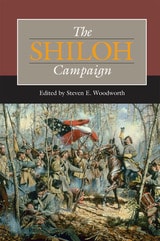
The Shiloh Campaign
Edited by Steven E. Woodworth
Southern Illinois University Press, 2009
Some 100,000 soldiers fought in the April 1862 battle of Shiloh, and nearly 20,000 men were killed or wounded; more Americans died on that Tennessee battlefield than had died in all the nation’s previous wars combined. In the first book in his new series, Steven E. Woodworth has brought together a group of superb historians to reassess this significant battleandprovide in-depth analyses of key aspects of the campaign and its aftermath.
The eight talented contributors dissect the campaign’s fundamental events, many of which have not received adequate attention before now. John R. Lundberg examines the role of Albert Sidney Johnston, the prized Confederate commander who recovered impressively after a less-than-stellar performance at forts Henry and Donelson only to die at Shiloh; Alexander Mendoza analyzes the crucial, and perhaps decisive, struggle to defend the Union’s left; Timothy B. Smith investigates the persistent legend that the Hornet’s Nest was the spot of the hottest fighting at Shiloh; Steven E. Woodworth follows Lew Wallace’s controversial march to the battlefield and shows why Ulysses S. Grant never forgave him; Gary D. Joiner provides the deepest analysis available of action by the Union gunboats; Grady McWhineydescribes P. G. T. Beauregard’s decision to stop the first day’s attack and takes issue with his claim of victory; and Charles D. Grear shows the battle’s impact on Confederate soldiers, many of whom did not consider the battle a defeat for their side. In the final chapter, Brooks D. Simpson analyzes how command relationships—specifically the interactions among Grant, Henry Halleck, William T. Sherman, and Abraham Lincoln—affected the campaign and debunks commonly held beliefs about Grant’s reactions to Shiloh’s aftermath.
The Shiloh Campaign will enhance readers’ understanding of a pivotal battle that helped unlock the western theater to Union conquest. It is sure to inspire further study of and debate about one of the American Civil War’s momentous campaigns.
The Shortstop’s Son
Essays and JournalismPhilip Martin
University of Arkansas Press, 1997
Through these varied essays on politics, ethics, music, race, and culture Philip Martin admits “a minor obsession” with what he calls “the American Frolic”—the essential lack of seriousness with which many of us approach the questions inherent in living in a free society. He observes that Americans have been conditioned to react, not to consider; that while we are very good at ripostes and snappy comebacks, at cracking wise and looking smart, we often fail to authentically engage the issues with which we pretend to be most concerned. We inadvertently talk past one another, he says, resorting to cant and partisan boilerplate.
In the essays presented in The Shortstop’s Son, Philip Martin rigorously resists easy labels and rote ideological truths. He pursues more subtle meanings with a commonsense lucidity and a fundamental compassion for humanity. Whether writing about the mythos built upon Bonnie and Clyde’s bullet-ridden Ford or the ignoble death and burial of blues legend Blind Lemon Jefferson, Martin strikes the chord that both moves and informs.
Martin is our critic at large. Deeply engaged in the world of thought and experience, he applies his nimble mind and very human heart to those things which should concern us most. He allows us, through his “obsession” and the clarity of his prose, to experience a new vision, one based in our desire for rich life.
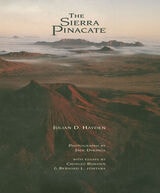
The Sierra Pinacate
Julian D. Hayden; Photographs by Jack Dykinga; With Essays by Charles Bowden and Bernard L. Fontana
University of Arizona Press, 1998
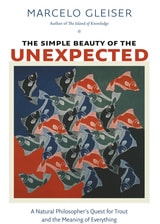
The Simple Beauty of the Unexpected
A Natural Philosopher’s Quest for Trout and the Meaning of EverythingMarcelo Gleiser
Dartmouth College Press, 2016
The Simple Beauty of the Unexpected
A Natural Philosopher’s Quest for Trout and the Meaning of EverythingMarcelo Gleiser
Brandeis University Press, 2022
Marcelo Gleiser has had a passion for science and fishing since he was a boy growing up on the beaches of Rio de Janeiro. As a world-famous theoretical physicist with hundreds of scientific articles and several books of popular science to his credit, he felt it was time to once again connect with nature in less theoretical ways. After seeing a fly-fishing class on the Dartmouth College green, he decided to learn to fly-fish, a hobby, he says, that teaches humility. In The Simple Beauty of the Unexpected, Gleiser travels the world to scientific conferences, fishing wherever he goes. At each stop, he ponders the myriad ways physics informs the act of fishing; how, in its turn, fishing serves as a lens into nature’s inner workings; and how science engages with questions of meaning and spirituality, inspiring a sense of mystery and awe of the not yet known. Personal and engaging, The Simple Beauty of the Unexpected is a scientist’s tribute to nature, an affirmation of humanity’s deep connection with and debt to Earth, and an exploration of the meaning of existence, from atom to trout to cosmos.
This softcover edition features a new essay by Gleiser on how we need a profound change of worldview if we are to have a vibrant future for our species in this fragile environment. He describes how this book was an incubator for his current thinking.
The Six-Minute Memoir
Fifty-Five Short Essays on LifeMary Helen Stefaniak
University of Iowa Press, 2022
What’s more, writing prompts at the end of the book invite readers to search their own lives for such moments—the kind that could be forgotten but instead are turned, by the gift of perspective and perfectly chosen detail, into treasure. The Six-Minute Memoir encourages people to tell their own stories even if they think they don’t have the kind of story that belongs in a memoir.
The Slaves of Palamau and Other Writings
Mahasweta Devi
Seagull Books, 2026
A collection of Mahasweta Devi's activist essays, reportage, and editorials on rural development and dispossession.
What do India’s poorest communities reveal about power, land, and survival? In the late 1970s, writer Mahasweta Devi shifted her focus to the lives of Adivasi (Indigenous peoples of the Indian subcontinent) and Dalit communities in eastern India, especially Bihar and West Bengal. Traveling widely and staying with the communities she wrote about, she drew on these firsthand encounters in her writing. She also edited the Bengali quarterly Bortika, making the journal a space for peasants, laborers, workers, and other marginalized groups to speak for themselves.
The Slaves of Palamau and Other Writings brings together a representative selection from her activist prose of the 1980s and early 1990s, drawn from essays, reportage, and editorials. These pieces examine rural development; dispossession and land alienation; environmental damage; and the conditions of landless laborers, sharecroppers, bonded and contract workers, miners, and Indigenous communities, with the steady attention that also informs her fiction.
The Smoking Book
Lesley Stern
University of Chicago Press, 1999
Stern writes of addictions and passionate attachments, of the body and bodily pleasure, of autobiography and cultural history. Smoking is Stern's seductive pretext, her way of entering unknown and mysterious regions. The Smoking Book begins with intimate and vivid accounts of growing up on a tobacco farm in colonial Rhodesia, reminiscences that permeate subsequent excursions into precolonial tobacco production and postcolonial life in Zimbabwe, as well as dramatic vignettes set in Australia, the United States, Scotland, Italy, Japan, and South America. Stern has written a book, at once intensely personal and kaleidoscopically international, that weaves the intimate act of a solitary person smoking a cigarette into a broad cultural picture of desire, exchange, fulfillment, and the acts that bind people together, either in lasting ways or through ephemeral encounters.
The Smoking Book is for anyone who has ever smoked or loved a smoker (against their better judgment); it is for those who have never smoked or for those who mourn the loss of cigarettes as they would grieve for a lost friend. But mostly, The Smoking Book is for all those who are smoldering still.
The Social Justice Torah Commentary
Rabbi Barry H. Block
Central Conference of American Rabbis, 2021
What does the Torah have to say about social justice? As the contributors to The Social Justice Torah Commentary demonstrate, a great deal. A diverse array of authors delve deeply into each week's parashah, drawing lessons to inspire tikkun olam. Chapters address key contemporary issues such as racism, climate change, mass incarceration, immigration, disability, women's rights, voting rights, and many more. The result is an indispensable resource for weekly Torah study and for anyone committed to repairing the world.
The Sonoran Desert
A Literary Field GuideEdited by Eric Magrane and Christopher Cokinos, Illustrations by Paul Mirocha
University of Arizona Press, 2016
Both literary anthology and hands-on field guide, The Sonoran Desert is a groundbreaking book that melds art and science. It captures the stunning biodiversity of the world’s most verdant desert through words and images. More than fifty poets and writers—including Christopher Cokinos, Alison Hawthorne Deming, Ken Lamberton, Eric Magrane, Jane Miller, Gary Paul Nabhan, Alberto Ríos, Ofelia Zepeda, and many others—have composed responses to key species of this striking desert. Each creative contribution is joined by an illustration by award-winning artist Paul Mirocha and scientific information about the creature or plant authored by the book’s editors.
From the saguaro to the mountain lion, from the black-tailed jackrabbit to the mesquite, the species represented here have evoked compelling and creative responses from each contributor. Just as writers such as Edward Abbey and Ellen Meloy have memorialized the desert, this collection is sure to become a new classic, offering up the next generation of voices of this special and beautiful place, the Sonoran Desert.
The Soul of Tragedy
Essays on Athenian DramaEdited by Victoria Pedrick and Steven M. Oberhelman
University of Chicago Press, 2005
Exemplary of the nature and scope of this book, the essays range from Simon Goldhill's comparative study of music, gender, and culture to Martha Nussbaum's inspection of "the comic soul." Through the critical lenses of psychoanalysis, gender, social history, and philology, this compilation looks at Greek tragedy's peculiar power to illuminate the workings of the human soul. Structures of tragic meaning, the relationship between character desire and spectator experience, and investigations of tragedy's extraordinary preoccupation with gender reveal the form's emotional core and explain its rapid ascent through the hierarchy of cultural practices in classical Greece. The Soul of Tragedy is a celebration and a model of collaboration that will be essential reading for scholars in classics, literature, and drama.
The Souls of Black Folk
Essays and SketchesW.E.B. Du Bois
University of Massachusetts Press, 2018
Unlike Du Bois's more scholarly work, Souls blends narrative and autobiographical essays, and it continues to reach a wide domestic and international readership. This moving homage to black life and culture and its sharp economic and historical critique are more important than ever, resonating with today's unequivocal demand that Black Lives Matter in the twenty-first century.
The Sound of Memory
Themes from a Violinist’s LifeRebecca Fischer
The Ohio State University Press, 2022
The Sound of Thinking
A Listener's Companion to Conceptual MusicCraig Dworkin
University of Chicago Press, 2026
An artist draws two octaves of pitches randomly from a hat, just enough to set each syllable of the dictionary definition of imprimer (to score, to print). Trawling the internet for cute videos of cats “playing” piano, an artist splices together a complete, note-perfect performance of Arnold Schoenberg’s Opus 11. Half a century after the release of Miles Davis’s album Kind of Blue, a jazz quintet spends months of focused practice to reproduce the original exactly. These performances share a common denominator: absolute fidelity to the outcome of a system. From Marcel Duchamp to Yoko Ono, Steve Reich to Sun Ra, The Sound of Thinking brings together a diverse array of musical or sonic works that are algorithmic, automatic, permutational, procedural, or otherwise structured in contrast to the creative expressivity typically associated with artistic production.
In twenty-six short essays, each keyed to a term that begins with a different letter of the alphabet, Dworkin discusses work composed or performed according to a predetermined rule, transforming artistic creation into a system running its course. The pieces detailed here, drawn from more than a century of musical experimentation, offer a fresh perspective on the history of innovative music by decoupling music from expression and by shunting creativity from the level of organizing sounds to the level of devising a system that can do the organizing. Not only does this book spotlight the critical role of music in twentieth-century conceptual art, but it also identifies previously overlooked links among diverse artists and movements.
The Southern Elite and Social Change
Essays in Honor of Willard B. Gatewood, Jr.Randy Finley
University of Arkansas Press, 2002
The Sower and the Seer
Perspectives on the Intellectual History of the American MidwestJoseph Hogan
Wisconsin Historical Society Press, 2021
The Midwest has been characterized as a fertile seedbed for the germination of great thinkers, but a wasteland for their further growth. The Sower and the Seer reveals that representation to be false. In fact, the region has sustained many innovative minds and been the locus of extraordinary intellectualism. It has also been the site of shifting interpretations—to some a frontier, to others a colonized space, a breadbasket, a crossroads, a heartland. As agrarian reformed (and Michigander) Liberty Hyde Bailey expressed in his 1916 poem “Sower and Seer,” the Midwestern landscape has given rise to significant visionaries, just as their knowledge has nourished and shaped the region.
The essays gathered for this collection examine individual thinkers, writers, and leaders, as well as movements and ideas that shaped the Midwest, including rural school consolidation, women’s literary societies, Progressive-era urban planning, and Midwestern radical liberalism. While disparate in subject and style, these essays taken together establish the irrefutable significance of the intellectual history of the American Midwest.
The Space In-Between
Essays on Latin American CultureSilviano Santiago
Duke University Press, 2001
Santiago’s work creates a theoretical field that transcends both the study of a specific national literature and the traditional perspectives of comparative literature. He examines the pedagogical and modernizing mission of Western voyagers from the conquistadors to the present. He deconstructs the ideas of “original” and “copy,” unpacking their implications for the notions of so-called dominant and dominated cultures. Santiago also confronts questions of cultural dependency and analyzes the problems involved in the imposition of an alien European history, the cultural displacements experienced by the Indians through their religious conversion, and the hierarchical suppression of native and Afro-Brazilian values.
Elegantly written and translated, The Space In-Between will provide insights and perspectives that will interest cultural and literary theorists, postcolonial scholars, and other students of contemporary culture.
The Speaking Stone
Stories Cemeteries TellMichael Griffith
Ohio University Press, 2021
Published by the University of Cincinnati Press
The Speaking Stone: Stories Cemeteries Tell is a literary love letter to the joys of wandering graveyards. While working on a novel, author and longtime Cincinnati resident Michael Griffith starts visiting Spring Grove Cemetery and Arboretum, the nation’s third-largest cemetery. Soon he’s taking almost daily jaunts, following curiosity and accident wherever they lead. The result is this fascinating collection of essays that emerge from chance encounters with an interesting headstone, odd epitaph, unusual name, or quirk of memory. Researching obituaries, newspaper clippings, and family legacies, Griffith uncovers stories of race, feminism, art, and death.
Rather than sticking to the cemetery’s most famous, or infamous, graves, Griffith stays true to the principle of ramble and incidental discovery. The result is an eclectic group of subjects, ranging from well-known figures like the feminist icon and freethinker Fanny Wright to those much less celebrated— a spiritual medium, a temperance advocate, a young heiress who died under mysterious circumstances. Nearly ninety photos add dimension and often an element of playfulness.
The Speaking Stone examines what endures and what does not, reflecting on the vanity and poignancy of our attempt to leave monuments that last. In doing so, it beautifully weaves connections born out of the storyteller’s inquisitive mind.
The Staff and the Serpent
Pertinent and Impertinent Observatioins on the World of MedicineAllen B. Weisse, M.D.
Southern Illinois University Press, 1998
If laughter is good medicine, then the twenty-two essays offered here by Dr. Allen B. Weisse should prove a hearty antidote to a host of ills suffered by doctors, students and would-be students of medicine, amateur and professional medical historians, and, of course, patients, those of us who wonder what the medical profession is all about and how it affects us.
Often humorous and always informative, these essays cover a broad range of medical subjects. Weisse tackles medical ethics, offers advice to medical and premedical students and their families, delves into unusual episodes in medical history, confronts considerations of aging and self-image, and discusses the vagaries of rewards and recognition available from medical research. He also examines honesty in medical thinking, investigates ways of dealing with bureaucracies, and considers ways of learning to live with oneself. Finally, he evaluates the changing nature of medicine and medical research and looks into the roles of minorities and women in medicine.
Weisse knows whereof he speaks, enlivening each essay with personal anecdotes. When he explains past and current medical school admissions policies, for example, he approaches the subject with the combined knowledge of a former premedical student, a medical student, a faculty member, and an admissions chairperson over the past thirty years. As a medical researcher whose chief turned against him, he certainly knows what he is talking about in "Betrayal." He also writes with authority in his humorous account of how he, as a senior physician, struggles to keep on top of the overwhelming onslaught of medical advances ("Confessions of Creeping Obsolescence"). And in an essay to boost all of our spirits, he tells how an ivory tower physician (Weisse himself) gets drawn up in the service of the IRS bureaucracy and winds up tweaking its nose a bit ("In the Service of the IRS").
Perhaps nothing better illustrates the vigor, wit, and élan that characterize Weisse’s essays than his titles. "On Chinese Restaurants" deals with unusual syndromes and the way in which they have evolved and affected the way we look at ourselves. Other titles are "Pneumocystis and Me," "The Vanishing Male," "Say It Isn’t ‘No," "Bats in the Belfry or Bugs in the Belly?: Helicobacter and the Resurrection of Johannes Fibiger," and "PC: Politically Correct or Potentially Corrupting?"
Finally, two words in this book’s subtitle succinctly characterize Weisse’s essays: pertinent and impertinent—germane and irreverent information rakishly presented.
The State of the American Mind
16 Leading Critics on the New Anti-IntellectualismMark Bauerlein
Templeton Press, 2015
That was over twenty years ago. Since then, the United States has experienced unprecedented wealth, more youth enrolling in higher education than ever before, and technology advancements far beyond what many in the 1980s dreamed possible. And yet, the state of the American mind seems to have deteriorated further. Benjamin Franklin’s “self-made man” has become a man dependent on the state. Independence has turned into self-absorption. Liberty has been curtailed in the defense of multiculturalism.
In order to fully grasp the underpinnings of this shift away from the self-reliant, well-informed American, editors Mark Bauerlein and Adam Bellow have brought together a group of cultural and educational experts to discuss the root causes of the decline of the American mind. The writers of these fifteen original essays include E. D. Hirsch, Nicholas Eberstadt, and Dennis Prager, as well as Daniel Dreisbach, Gerald Graff, Richard Arum, Robert Whitaker, David T. Z. Mindich, Maggie Jackson, Jean Twenge, Jonathan Kay, Ilya Somin, Steve Wasserman, Greg Lukianoff, and R. R. Reno. Their essays are compiled into three main categories:
- States of Mind: Indicators of Intellectual and Cognitive Decline
- These essays broach specific mental deficiencies among the population, including lagging cultural IQ, low Biblical literacy, poor writing skills, and over-medication.
- Personal and Cognitive Habits/Interests
- These essays turn to specific mental behaviors and interests, including avoidance of the news, short attention spans, narcissism, and conspiracy obsessions.
- National Consequences
- These essays examine broader trends affecting populations and institutions, including rates of entitlement claims, voting habits, and a low-performing higher education system.

The Still Point
Laurence Gonzales
University of Arkansas Press, 1996

The Stories Whiteness Tells Itself
Racial Myths and Our American NarrativesDavid Mura
University of Minnesota Press, 2022
Uncovering the pernicious narratives white people create to justify white supremacy and sustain racist oppression
The police murders of two Black men, Philando Castile and George Floyd, frame this searing exploration of the historical and fictional narratives that white America tells itself to justify and maintain white supremacy. From the country’s founding through the summer of Black Lives Matter in 2020, David Mura unmasks how white stories about race attempt to erase the brutality of the past and underpin systemic racism in the present.
Intertwining history, literature, ethics, and the deeply personal, Mura looks back to foundational narratives of white supremacy (Jefferson’s defense of slavery, Lincoln’s frequently minimized racism, and the establishment of Jim Crow) to show how white identity is based on shared belief in the pernicious myths, false histories, and racially segregated fictions that allow whites to deny their culpability in past atrocities and current inequities. White supremacy always insists white knowledge is superior to Black knowledge, Mura argues, and this belief dismisses the truths embodied in Black narratives.
Mura turns to literature, comparing the white savior portrayal of the film Amistad to the novelization of its script by the Black novelist Alexs Pate, which focuses on its African protagonists; depictions of slavery in Faulkner and Morrison; and race’s absence in the fiction of Jonathan Franzen and its inescapable presence in works by ZZ Packer, tracing the construction of Whiteness to willfully distorted portraits of race in America. In James Baldwin’s essays, Mura finds a response to this racial distortion and a way for Blacks and other BIPOC people to heal from the wounds of racism.
Taking readers beyond apology, contrition, or sadness, Mura attends to the persistent trauma racism has exacted and lays bare how deeply we need to change our racial narratives—what white people must do—to dissolve the myth of Whiteness and fully acknowledge the stories and experiences of Black Americans.
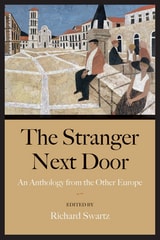
The Stranger Next Door
An Anthology from the Other EuropeRichard Swartz
Northwestern University Press, 2013
The Balkans have been so troubled by violence and misunderstanding that we have the verb “balkanize,” meaning to break up into smaller, warring components. While some of the region’s artists and thinkers have invariably fallen into nationalistic tendencies, the twenty-two prominent authors represented here, from the erstwhile Yugoslavia and its neighbors Albania and Bulgaria, have chosen to attempt to bridge these divides. The essays, biographical sketches, and stories in The Stranger Next Door form a project of understanding that picks up where politics fail. The English-language translation joins editions of the book that appeared concurrently in all of the participating countries.
The Study of Signed Languages
Essays in Honor of William C. StokoeDavid F. Armstrong
Gallaudet University Press, 2002
In 1999, many of today’s notable researchers assembled at a special conference in honor of William C. Stokoe to explore the remarkable research that grew out of his original insights on American Sign Language. The Study of Signed Languages presents the fascinating findings from that conference.
Part 1, Historical Perspectives, begins with a description of the decline of sign language studies in the 1800s. Past research on signed languages and its relationship to language origins theory follows, along with a consideration of modality and conflicting agendas for its study.
In Part 2, Language Origins, the first entry intrigues with the possibility that sign language could answer conundrums posed by Noam Chomsky’s linguistic theories. The next essay considers how to build a better language model by citing continuity, ethology, and Stokoe’s work as key elements. Stokoe’s own research on the gestural theory of language origins is examined in the section’s closing chapter.
Part 3, Diverse Populations, delineates the impact of sign language research on black deaf communities in America, on deaf education, on research into variation in sign language, and even on sign communication and the motor functioning of autistic children and others. In its wide-ranging, brilliant scholarship, The Study of Signed Languages serves as a fitting tribute to William C. Stokoe and his work.
The Syntax of Sports, Class 1
The Words Under the WordsPatrick Barry
Michigan Publishing Services, 2019
The beginning of a multi-volume series, this initial book recreates the first day of class as it was taught to undergraduates at the University of Michigan. The examples are compelling. The dialogue is fast moving. The stories are ones you’ll want to return to and retell over and over again. There is a reason the actual students who took The Syntax of Sports said the following things about it:
“Every class I learned something new that I know I’ll actually use in my writing for years to come. Couldn’t be happier that I took a chance on Syntax of Sports.”
“Prof. Barry has structured the course so that it’s almost impossible not to learn something valuable to take with you to future classes and future career possibilities.”
“I have learned a ton of techniques for being a better writer in this class. I have also learned many life lessons that will undoubtedly guide how I act in the future.”
“I absolutely loved this course because the teacher was so awesome. I enjoyed sitting through class listening to Professor Barry and falling in love with his brain.”
The Syntax of Sports, Class 2
The Power of the ParticularPatrick Barry
Michigan Publishing Services, 2020
What can we learn from baseball great Ted Williams about how to improve our writing? What can we learn we from the iconic ESPN show SportsCenter about how to manage information? And are you sure you really know what the word “peruse” means?
Explore these and other questions in the second volume of The Syntax of Sports, a series designed to recreate a popular course at the University of Michigan. Here are a few things students have said about the experience of taking it.
-
“Patrick Barry is the best teacher I have ever had. I have never learned so much in a class. I hated English my whole life until I took this course.”
-
“I feel like this is and always will be the most valuable class I've ever taken here.”
-
“I genuinely wanted to show up to this class due to the amount I knew I would learn.”
-
“I'm going to severely SEVERELY miss this course.”
-
“Every student should try to take one of Prof. Barry’s classes if he or she wants to become a better writer.”
-
“My writing is now 113x better.”
The Syntax of Sports, Class 3
The Rule of ThreePatrick Barry
Michigan Publishing Services, 2021
It’s not an accident that hall of fame coaches, Pulitzer Prize-winning writers, and the marketing teams at the most innovative companies in the world often rely on a certain three-part structure when trying to communicate their ideas. This third volume of The Syntax of Sports series explores the mechanics of that structure and shows how it can add a compelling mix of clarity and sophistication to your writing.
Like in the previous volumes, the materials come from a popular course at the University of Michigan. Here are comments from students who have taken it:
“The quality of this course was fantastic!”
“Professor Barry really knows how to keep students engaged.”
“Professor Barry is very passionate about teaching, and his enthusiasm made me want to write and learn.”
“This course not only helps you become a better writer but also sheds light on how you might become a better person.”
The Syntax of Sports, Class 4
Parallel StructurePatrick Barry
Michigan Publishing Services, 2022
“Once you find the right structure, perhaps it will be easier to find the right content.” That’s one of the key insights from this fourth book in the series The Syntax of Sports. Others include:
- The importance of being “radically inclusive”
- The power of defining something by what it is not
- The creative elegance of the word “as”
So join Professor Patrick Barry as he continues to share lessons from the popular writing course at the University of Michigan on which The Syntax of Sports is based. You’ll learn about language. You’ll learn about advocacy. And you’ll get to explore some illuminating connections between everything from the speeches of Winston Churchill, to the paintings of Leonardo da Vinci, to—perhaps most surprisingly—the face of NFL legend (and former University of Michigan quarterback) Tom Brady.
The Syntax of Sports, Class 5
Rhetorical RepetitionPatrick Barry
Michigan Publishing Services, 2024
- "Fantastic"
- "Phenomenal"
- "Very engaging and informative:
- "Incredibly useful
- "Full of practical lessons for both my career and life generally"
The Syntax of Sports, Class 6
Drafting and EditingPatrick Barry
Michigan Publishing Services, 2024
How do you start a piece of writing? How do you edit one? And what can be done to combat those pesky—and paralyzing—feelings of perfectionism that often derail our most important sentences and paragraphs?
This sixth volume of the Syntax of Sports series creatively uses the language of baseball, football, tennis, and many other sports to explore these questions. Based on a popular course at the University of Michigan, it captures the energy, originality, and discipline - crossing insights that make its author, Professor Patrick Barry, such a sought-after teacher and presenter.
The Syntax of Sports, Class 7
Information FlowPatrick Barry
Michigan Publishing Services, 2025
The Tallgrass Prairie
An IntroductionCindy Crosby
Northwestern University Press, 2017
Like a walking tour with a literate friend and expert, Cindy Crosby's Tallgrass Prairie prepares travelers and armchair travelers for an adventure in the tallgrass. Crosby's engaging gateway assumes no prior knowledge of tallgrass landscapes, and she acquaints readers with the native plants they’ll discover there. She demystifies botanic plant names and offers engaging mnemonic tips for mastering Latin names with verve and confidence. Visitors to the prairie will learn to identify native plants using the five senses to discover what makes each plant unique or memorable. In the summer, for example, the unusual square stem of cup plant, Silphium perfoliatum, sets it apart from its neighbors. And its distinctive leaf cups water after the rain.
A gifted raconteur, Crosby tells stories about how humankind has adopted the prairie as a grocery, an apothecary, and even as a shop for love charms. Rounding out this exceptional introduction are suggestions for experiencing the American prairie, including journaling techniques and sensory experiences, tips for preparing for a hike in tallgrass landscapes, ways to integrate native prairie plants into home landscapes (without upsetting the neighbors), and a wealth of resources for further exploration.
An instant classic in the tradition of American naturalist writing, The Tallgrass Prairie will delight not only scholars and policy makers, but guests to tallgrass prairie preserves, outdoors enthusiasts and gardeners, and readers interested in American ecosystems and native plants.
The Tangled Bank
Writings from OrionRobert Michael Pyle
Oregon State University Press, 2012
Robert Michael Pyle’s popular “Tangled Bank” column appeared in fifty-two consecutive issues of Orion and Orion Afield magazines over eleven years. Each essay collected in The Tangled Bank explores Charles Darwin’s contention that the elements of such a bank, and by extension all the living world, are endlessly interesting and ever evolving.
Pyle’s thoughtful and concise narratives range in subject from hops and those who love them to independent bookstores to the monarchs of Mexico. In each piece, Pyle refutes “the idea that the world is a boring place,” sharing his meticulous observations of the endless and fascinating details of the living earth.
The Tanner Lectures on Human Values
Volume 39Edited by Mark Matheson
University of Utah Press, 2024
The Telling Distance
Conversations with the American DesertBruce Berger
University of Arizona Press, 1990
The Templeton Science and Religion Reader
J. Wetzel van Huysssteen
Templeton Press, 2012
The Terrible Unlikelihood of Our Being Here
Susanne Paola Antonetta
The Ohio State University Press, 2021
Antonetta reflects on a life spent wrestling with bipolar disorder, drug dependency, and the trauma of electroshock treatment—exploring these experiences alongside conversations with some of the world’s leading neuroscientists and physicists, and with psychics. The result is a meditation on the legacy of family, on thought and being, and what we humans can actually ever really know about our world.
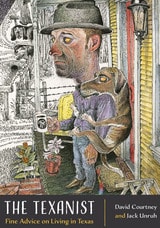
The Texanist
Fine Advice on Living in TexasBy David Courtney and Jack Unruh
University of Texas Press, 2017
The Texanist, Texas Monthly’s perennially popular back-page column, has become the magazine’s most-read feature. With an inimitable style and an unassailable wholesomeness, columnist David Courtney has counseled many a well-intentioned Texan, native or wannabe, on how to properly conduct him- or herself. Until the July 2016 issue, an original illustration by the late award-winning artist Jack Unruh, depicting the Texanist in a situation described in the column, accompanied the Texanist’s sage wisdom. Unruh’s peerless illustrations displayed a sly wit that paired perfectly with Courtney’s humorous ripostes.
The Texanist gathers several dozen of Unruh’s most unforgettable illustrations, along with the fascinating, perplexing, and even downright weird questions that inspired them. Curing the curious, exorcizing bedevilment, and orienting the disoriented, the Texanist advises on such things as: Is it wrong to wear your football team’s jersey to church? When out at a dancehall, do you need to stick with the one that brung ya? Is it real Tex-Mex if it’s served with a side of black beans? Can one have too many Texas-themed tattoos? The Texanist addresses all of these important subjects and more. Whether you heed the good guidance, or just enjoy the whimsical illustrations, The Texanist will both entertain and educate you.
The Text and Beyond
Essays in Literary LinguisticsCynthia Bernstein
University of Alabama Press, 1997
A groundbreaking collection that bridges linguistics and literature, offering powerful tools to uncover how language shapes meaning, identity, and power in literary texts.
The Text and Beyond: Essays in Literary Linguistics, edited by Cynthia Bernstein, presents a groundbreaking collection of essays that demonstrate how linguistic tools can enrich literary analysis. The volume brings together scholars who explore the intersections of language, literature, and culture—examining how syntax, discourse, gender, power, and regional dialects shape meaning in texts. From Tennessee Williams to Harry Crews, from Dickens to immigrant literature, the essays offer models for integrating linguistic theory with literary interpretation. This book is essential for scholars of stylistics, discourse analysis, and anyone interested in the evolving relationship between language and literature.
The Texture of Being
Essays in First PhilosophyKenneth L. Schmitz
Catholic University of America Press, 2007
The Three Cs of Higher Education
Competition, Collaboration and ComplementarityMark O'Hara
Central European University Press, 2019
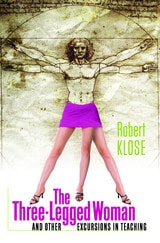
The Three-Legged Woman and Other Excursions in Teaching
Robert Klose
University Press of New England, 2013
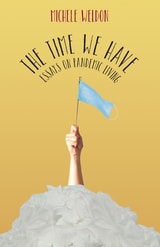
The Time We Have
Essays on Pandemic LivingMichele Weldon
Northwestern University Press, 2024
At a time when so many are dealing with collective and personal grief, award-winning author and journalist Michele Weldon’s new collection of essays navigates the revelatory and upending nature of this extraordinary pandemic era through a lens of love and connection. Weldon explores pain and pleasure alike with emotional texture, empathy, wisdom, vulnerability, and humor. She interrogates moments of joy, despair, and triumph, offering readers the possibility for a richly cathartic experience. With honesty and agility, Weldon creates poignant intersections of her narrative with popular culture, history, media, news, consumerism, family traditions, and healthcare. Employing honest and daring language, Weldon examines the concepts of safety, importance of beloved objects, power of words, shift to remote relationships, concepts of feminism, betrayal of public lies, and more. Ultimately, with grace and heart, Weldon offers in these essays useful pathways toward framing this swath of time so that we might arrive at a sense of understanding, belonging, and peace with our new realities.
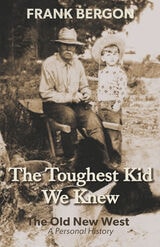
The Toughest Kid We Knew
The Old New West: A Personal HistoryFrank Bergon
University of Nevada Press, 2020
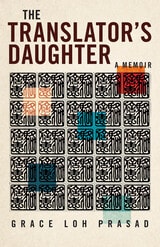
The Translator's Daughter
A MemoirGrace Loh Prasad
The Ohio State University Press, 2024
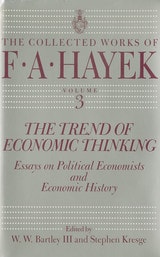
The Trend of Economic Thinking
Essays on Political Economists and Economic HistoryF. A. Hayek
University of Chicago Press, 1991
The Trend of Economic Thinking captures Hayek's views on political economists and economic history—on Mandeville, Hume, Cantillon, Adam Smith, and Henry Thornton. Framed by insightful editorial notes, fifteen newly collected essays—including five previously unpublished pieces and two others never before available in English—provide a fascinating introduction to the historical context of political economy and the evolution of monetary practices. In a highlight of the collection, "On Being an Economist," Hayek reflects on the influence of economists, the time required for new ideas to take hold, the best way to educate economic theorists, and the need to follow one's own interests, often in opposition to fashionable beliefs. As always, the words of this outspoken scholar are sure to provoke debate.
The Tribulations of Sophia
Etienne Gilson
St. Augustine's Press, 2021
The heart of the book is entitled, “Three Lectures on Thomism and its Current Situation.” During the Second Vatican Council and its immediate aftermath, the status of Thomism in Catholic intellectual circles and institutions was vigorously challenged. Once again, the problem of Thomism emerges: What is Thomism and where does it belong? Gilson’s devotion to elaborating the nature of Christian philosophy compels him to confront this question head-on. Indeed, because Gilson approaches Thomism as the veritable model for Christian philosophy he cannot ignore the attempts to suppress or supplant it.
And yet this section also contains a fourth lecture on Teilhard de Chardin, whom Gilson knew and held in high esteem. Was Teilhard's thought to become the new Christian philosophy and theology? Was it even appropriate to label his thought as proper philosophy and theology?
The second, somewhat shorter, portion of the book wrestles with the theme of dialogue that was very much in vogue in the 1960s. The central figure here is the French Marxist Roger Garaudy, internationally known for his call to dialogue with Christians. Gilson denies any possibility of such a dialogue, and certainly any usefulness in it. “I regret to say—not having myself any of the virtues of a skilled dialoguer, which are not to listen to what is being said and to take it in a sense that makes it easy to refute. It is a chimerical hope that there should be two people who proceed otherwise.” But specifically on the point of Christian and Marxist dialogue, from the massive ideological, bestial corpus of Marxism Gilson carves out its fundamental need for the world and serves it back to Garaudy, but without garnish, for among Marxists each has his own particular manner of impoverishing the concept of man.
What might be called the postscript of the book, “Wandering Amid the Ruins,” shares some of Gilson's own experiences and unease in the unsettled situation of the Catholic Church at that time. “The Council was the work of truly supernatural courage. For more than three centuries the Church was harshly blamed for not having taken the initiative to make necessary reforms in the sixteenth century.” Yet Gilson laments that perhaps the manner of enacting reform is confused and not in all cases simply intent on reversing the trends of empty churches and the vocations drought. Perhaps we have not understood the Council at all. Gilson’s kind but clear description of the turmoil in Catholic teaching and thought is for the reader essential to any understanding of the tension and transitions of this period of history.
The Trouble with Men
Reflections on Sex, Love, Marriage, Porn, and PowerDavid Shields
The Ohio State University Press, 2019
The Truth About Stories
A Native NarrativeThomas King
University of Minnesota Press, 2005

The Truth That Never Hurts 25th anniversary edition
Writings on Race, Gender, and FreedomBarbara Smith
Rutgers University Press, 2024
Barbara Smith has been doing groundbreaking work since the early 1970s, describing a Black feminism for Black women. Her work in Black women's literary traditions; in examining the sexual politics of the lives of women of color; in representing the lives of Black lesbians and gay men; and in making connections between race, class, sexuality and gender is gathered in The Truth That Never Hurts. This collection contains some of her major essays on Black women's literature, Black lesbian writing, racism in the women's movement, Black-Jewish relations, and homophobia in the Black community. Her forays into these areas ignited dialogue about topics that few other writers were addressing at the time, and which, sadly, remain pertinent to this day. This twenty-fifth anniversary edition, in a beautiful new package, also contains the essays from the original about the 1968 Chicago convention demonstrations; attacks on the NEA; the Anita Hill-Clarence Thomas Senate hearings; and police brutality against Rodney King and Abner Louima, which, after twenty-five years, still have the urgency they did when they were first written.