Results by title
3785 books match the query 'Poetry' and 833 start with t
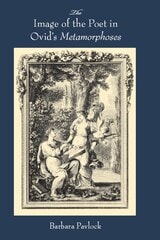
The Image of the Poet in Ovid’s Metamorphoses
Barbara Pavlock
University of Wisconsin Press, 2009
The Image of the Poet explores issues central to Ovid’s poetics—the status of the image, the generation of plots, repetition, opposition between refined and inflated epic style, the reliability of the narrative voice, and the interrelation of rhetoric and poetry. The work explores the constructed author and complements recent criticism focusing on the reader in the text.
2009 Outstanding Academic Title, Choice Magazine
The Imaginary Present
Essays in Quantum PoeticsAmy Catanzano
University of Michigan Press, 2025
19th Annual National Indie Excellence Awards Poetry Finalist
The Imaginary Present by award-winning poet and professor Amy Catanzano explores cutting-edge scientific fields such as particle physics and astrophysics, and branches of physics such as quantum theory and relativity, through a poetic vision equally loyal to the imagination and rationality. Drawing upon her groundbreaking research and artist residencies at major scientific research centers like CERN and the U.S. National Science Foundation’s NOIRLab, as well as talks and poetry readings at esteemed institutions, Catanzano invites enthusiasts of poetry and science to consider what can be achieved through greater collaboration between these fields.
In linked chapters that fluidly blend lyric essay, literary and scientific analysis, poetry, theory, and memoir, The Imaginary Present offers refreshing new insights on a wide range of thinkers over the past 100 years, including poets Rae Armantrout and M. NourbeSe Philip, novelists Alfred Jarry and Virginia Woolf, comic book writer Grant Morrison, and physicists Albert Einstein and Werner Heisenberg. The introduction explores why poetry and physics are capable of jointly investigating our most fundamental questions about the universe and discusses the history of the art-science connection in addition to the author’s own journey. In searching for the groundbreaking ways that artists and scientists can collaborate, The Imaginary Present offers readers both reasoned grounding and poetic framing for an interdisciplinary poetics and praxis based on science.
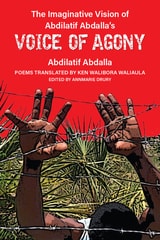
The Imaginative Vision of Abdilatif Abdalla’s Voice of Agony
Abdilatif Abdalla, edited by Annmarie Drury
University of Michigan Press, 2024
Yet, Imaginative Vision is also something more. Even as it centers on a literary translation of a singularly beautiful and influential book of poetry, it tells English-language readers the story of that book. Supporting materials illuminate the circumstances of its inception when Abdilatif, aged 22, was arrested and tried. They explore what the volume meant to its first readers and its affiliations with subsequent extraordinary works of prison literature by Alamin Mazrui and Ngũgĩ wa Thiong’o. They trace its links to literary art of the past, including the nineteenth-century poet Muyaka bin Haji, and to writing that followed. And they explain social and historical aspects of the Swahili coastal world that nurtured Abdilatif’s political engagement and stunning verbal art. Under the editorship of scholar, translator, and poet Annmarie Drury, contributors bring insights from their diverse backgrounds to present contextualizing material that illuminates the poems at the heart of this book.
The Incorporative Consciousness of Robert Bly
Victoria Frenkel Harris
Southern Illinois University Press, 1991
Victoria Frenkel Harris traces the aesthetic journey of poet Robert Bly from his early structured works of mystical imagery and lyrical landscapes to his recent explorations of intimate relationships and male socialization.
Examining the various ways Bly’s prose poems articulate his opposition to the Vietnam War and his recent writings manipulate more formal patterns in detailing the intricacies of human relationships, Harris labels this evolution in form, subject, and imagery the incorporative consciousness, incorporative because it assimilates Jungian psychological categories, international poetic traditions, and a compelling breadth of topics.
Harris relies in part on contemporary feminist theory to throw revealing new light on Bly’s recent works. Though sympathetic to Bly, Harris finds that—in spite of his affirmation of the interaction of psychic, creative, and intellectual energies in both sexes—the poet’s later, erotic poems tend to objectify women in counterproductive ways. Bly’s idealization of woman as a Jungian universal, Harris contends, can blind him toward actual women.
Harris is at her best as she delimits with balance and precision the full complexity of the poet’s work.

The Indigenization of Pali Meters in Thai Poetry
Mis Sea#87Thomas Hudak
Ohio University Press, 1990
This study of the Thai chan meters contends that Thai linguistic constraints and poetic principles determined the transformation of the Pali meters and stanzas into their Thai counterparts. Disproving the frequent claims that the old chan compositions ignored the sequencing of the particular syllable types required by the meters, the author determines why the meters became popular only during certain eras and just what the aesthetic conditions were that nurtured the use of the meters.

The Infant Scholar
Kathy Nilsson
Tupelo Press, 2015
The Infinity Room
Gary Fincke
Michigan State University Press, 2019
The Inspiration Machine
Computational Creativity in Poetry and JazzEitan Y. Wilf
University of Chicago Press, 2023
In The Inspiration Machine, Eitan Y. Wilf explores the transformative potentials that digital technology opens up for creative practice through three ethnographic cases, two with jazz musicians and one with a group of poets. At times dissatisfied with the limitations of human creativity, these artists do not turn to computerized algorithms merely to execute their preconceived ideas. Rather, they approach them as creative partners, delegating to them different degrees of agentive control and artistic decision-making in the hopes of finding inspiration in their output and thereby expanding their own creative horizons.
The algorithms these artists develop and use, however, remain rooted in and haunted by the specific social predicaments and human shortfalls that they were intended to overcome. Experiments in the digital thus hold an important lesson: although Wilf’s interlocutors returned from their adventures with computational creativity with modified, novel, and enriched capacities and predilections, they also gained a renewed appreciation for, and at times a desire to re-inhabit, non-digital creativity. In examining the potentials and pitfalls of seemingly autonomous digital technologies in the realm of art, Wilf shows that computational solutions to the real or imagined insufficiencies of human practice are best developed in relation to, rather than away from, the social and cultural contexts that gave rise to those insufficiencies, in the first place.
The Intimacy Trials
Aja Couchois Duncan
University of Chicago Press, 2026
Aja Couchois Duncan’s third book of poetry, The Intimacy Trials, explores cycles of violence, loss, and love that arc across history. Composed of intersecting narratives, this collection follows a post-apocalyptic collective of survivors living in a state of gratitude, shame, and awe amid desecrated ecosystems. The present tense of The Intimacy Trials carries the magnitude of a historic past tense filled with land theft, genocide, settler colonialism, and the vicissitudes of romantic love. Couchois Duncan’s lyrical, concomitant stories produce a space that holds in balance the complexities of life—joy, despair, intimacy, and irreconcilable grief.
In language that is prophetic, lush, and unequivocal, The Intimacy Trials is a loving accountability letter to our past, present, and future selves, holding both our yearning for connection and the remembrance of what has driven us apart.
The Inventors
And Other PoemsRené Char
Seagull Books, 2015
The Inventors includes a brief introduction to Char’s life and work, as well as a series of notes on the backstories of the works, which explain allusions that may not be immediately familiar to the English-speaking reader. These new translations stay true to the originals, while at the same time conveying much of the music and beauty of the French poems.
Praise for René Char
“Char, I believe, is a poet who will tower over twentieth-century French poetry.”—George Steiner
The Iowa Anthology of New American Poetries
Reginald Shepherd
University of Iowa Press, 2004
This landmark collection features emerging poets who combine a commitment to innovation and experimentation with a love for the lyric tradition, whose poetry transcends “mainstream” and avant-garde practice to create new and exciting poetic territories.
These new American poetries for the twenty-first century and beyond reach back toward the Modernists and even earlier lyric poetries (such as those of Wyatt, Donne, Keats, and Dickinson) and, simultaneously, reach forward to poetic possibilities not yet realized or even imagined. Most of the poets included here have won publication prizes, awards, and fellowships, and some have had their work anthologized. Others are at earlier stages of recognition but have published in major journals. All are writing highly accomplished work that will soon find a wider audience.
One distinguishing feature of this collection is the inclusion of substantial artistic statements from each contributor, in which the poets discuss their works, their influences, their aims, and their poetics. These statements are invaluable in giving readers a point of entry to the poems and can contribute to the development of a conversation among American poets that transcends questions of “craft” to address fundamental issues of poetry as an artistic practice.
Shepherd, a leading poet, essayist, and literary critic, is uniquely situated to bring us this important collection: young enough to feel the spirit of newer poets and yet established enough to bring a more experienced eye and a wider view to this groundbreaking project.The Iowa Anthology of New American Poetries highlights some of the most exciting, vital, and productive tendencies in contemporary American poetry and will be a significant milestone for students and teachers of poetry as well as for the general reader.
The Island of Lost Luggage
Janet McAdams
University of Arizona Press, 2000
the disappeared, the lost children, the Earharts
of modern life. It's your bad luck to die in the cold
wars of certain nations. But in the line at Unclaimed
Baggage, no one mourns for the sorry world
that sent them here . . ."
The abused. The oppressed. The terrified victims of institutionalized insanity. Making daring connections between the personal and the political, Janet McAdams draws new lines in the conflict between the new and old worlds as she redefines the struggle to remain human.
This award-winning collection of poetry forges surprising links among seemingly unrelated forms of violence and resistance in today's world: war in Central America, abuses against Nature, the battleground of the bedroom. McAdams evokes the absurdity of everyday existence as she sends out a new call for social responsibility.
The Island of Lost Luggage is the poetry winner of the 1999 First Book Awards competition of the Native Writers' Circle of the Americas.
The Iuvenilia of Marc-Antoine Muret
With a translation, introduction, notes, and commentary by Kirk M. Summers
The Ohio State University Press, 2006
A growing interest in the contributions and perspectives of Renaissance authors who wrote in Latin has created an urgent need for accessible modern editions of their works. There is no hope of truly understanding the Renaissance, which, after all, was a revival of ancient learning integrated with an emerging modern world view, without taking into account the large body of work produced by neo-Latin authors. The Iuvenilia of Marc-Antoine Muret helps fill the need for critical editions that provide a general context and interpretation. A major neo-Latin poet, Muret was thoroughly versed in classical literature, mythology, rhetoric, and philosophy. He had inherited centuries of medieval learning and practices, both secular and religious. Muret incorporated the generic innovations of contemporary humanists while referring to current events and figures. In short, he summed up in his own person the body of human endeavor and thinking as it stood in his own time.
Given Muret’s importance, this lively translation by Kirk M. Summers, with an introduction, notes, and commentary, will appeal to classicists, including those interested in the classical tradition, as well as to scholars working on the French and European Renaissance.
The Keep
Emily Wilson
University of Iowa Press, 2001
The poems in The Keep are influenced by art, by paintings, by “thinking about abstraction and figuration and the space between, beauty apprehended and lost, the divine apprehended and lost.” Emily Wilson's poems are also saturated with nature; from “the great oaks emptying, russet, gusseted” to “the caribou mov[ing] through us beyond numerous,” each image connects the natural world of tides and marshes and forests to the human world of documentation and preservation. The image of the keep as a place of safety and as a kind of prison also informs this very strong collection.
The Keepsake Storm
Gina Franco
University of Arizona Press, 2004
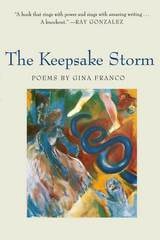
Kathryn is near the end of her life and is losing her memories: travels, husbands, a storm of keepsakes. As Gina Franco unleashes that storm and as Kathryn's flood of memories washes over us, we know at once that we are in the hands of a truly gifted poet. "The Keepsake Storm" is the culmination of a verse cycle that probes the depths of the heart—a meditation on the meaning of life in a difficult world. Drawing on a rich tradition of storytelling in Latino literature, Franco explores the transformative power of compassion as she addresses themes of cultural alienation, lost family roots, and the uncertain resiliency of the self. In writing that blends rapture, vision, and mystery, Franco calls on a multiplicity of voices and a prodigious command of forms to explore the underlying rhythms of life, finding poetry even in the imperfect transmissions of e-mail:
"I was happy to get your letter. I had a rough day.
My step-mom had a breakdown and is in a hospitol.
I don't understand all the why's of it. She has paranoia
scetsafrinia. (and I know that is spelled totally
wrong). I don't blame myself I just didn't see it coming."
By reaffirming the power of self-awareness, history, and place, Franco reaches out to all who struggle to find meaning in times of trouble or self-doubt. The Keepsake Storm is a personal journey through many lives that is nothing less than a celebration—and a reassessment—of American consciousness.
The Key to the City
Anne Winters
University of Chicago Press, 1985
The Kin of Nakedness
Chris Crowder
Four Way Books, 2026
The debut collection from Adroit Managing Editor Chris Crowder, The Kin of Nakedness interrogates the ethics of complaining and self-work beginning with a lens focused on body image. Structured by sections that complicate the biblical definitions of servitude—being Christ’s hands and feet—and a long ars poetica, the speaker risks toward honesty as he explores his struggles and privileges as a Black and biracial man. “Digging for everything I have to write into my flesh,” Crowder works to witness the harm done to himself and others who are competing for recognition. Seeking to understand these internal and external struggles, he embodies characters, including benched quarterbacks and Jimmy Fallon, while reckoning with fractured subjects like greedy pastors and alternate universes.
In wrestling with despair, Crowder neither refuses reality nor surrenders to nihilism. The speaker of “I’m Not Always Sulking, Resting My Elbow on a Well” admits to the temptation to surrender, saying, “I can’t trick my anxious ass into thinking that things aren’t better than this,” but the elaboration of “this” becomes a litany that contradicts the insufficiency of this life: “My corgi, Eden. My parents’ garden of beans, collard greens, and spicy peppers. Reacting to heat: it’s actually got good flavor to it. So do the worst days.” Crowder has a signature gift for distilling the bizarre beauty of this existential maelstrom, the succor beside the suffering. He achieves an astonishing inverse transmogrification that shows man capable of God’s metamorphosis: not the body into bread, but the abyss into being. “Before I had skin, I hated it. / The idea.” But, though our nakedness terrifies us, the mortification of the flesh is its capacity to feel every excruciating and ecstatic thing. “Lord, // you asked me what sense / could you not bear / to lose? My answer, now, is touch.”
The Kinds of Poetry I Want
Essays & ComediesCharles Bernstein
University of Chicago Press, 2024
For more than four decades, Charles Bernstein has been at the forefront of experimental poetry, ever reaching for a radical poetics that defies schools, periods, and cultural institutions. The Kinds of Poetry I Want is a celebration of invention and includes not only poetry but also essays on aesthetics and literary studies, interviews with other poets, autobiographical sketches, and more.
At once a dialogic novel, long poem, and grand opera, The Kinds of Poetry I Want arrives amid renewed attacks on humanistic expression. In his polemical, humorous style, Bernstein faces these challenges head-on and affirms the enduring vitality and attraction of poetry, poetics, and literary criticism.
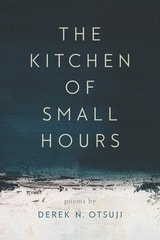
The Kitchen of Small Hours
Derek N. Otsuji
Southern Illinois University Press, 2021
In The Kitchen of Small Hours, Derek N. Otsuji embraces the fragility and endurance of a family of immigrants from two prefectures in Japan: Kagoshima in the south and Okinawa, an island more than four hundred miles from the mainland. In these poems, five generations sing, save, scold, bury, and cook against the culture and history that emerged from the pineapple and sugar cane plantations of mid-nineteenth-century Hawaii, from the bomb-scapes and hatreds of World War II, and from the canning and tourism industry of the twentieth century. Otsuji writes of how his family used stories and rugged cheer to fill the spaces apart from the cane fields and the canning factory. Their recipes, rituals, celebrations, songs, dances, myths, and family stories passed from grandmother to father to son, who folds them into lyrics.
Here too are whispers, failures, and traceable absences: a face removed from photos, a love silenced to be acceptable, a dead firstborn housed in an urn. There are things that no one intended to give. Otsuji’s language hungers for them anyway. The haunting reunions between author and ancestor sink just as deep as roots and hold just as fast. The cooking pot, the family photo, the moon recur as images that feed and comfort. Lyrical and warm, Otsuji’s voice sounds out a sinew of words that make the remnants of heritage and home durable. In these poems each new generation seeks to reimagine for itself the elusive American Dream
The Ladder
PoemsAlan Michael Parker
Tupelo Press, 2016
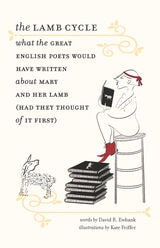
The Lamb Cycle
What the Great English Poets Would Have Written About Mary and Her Lamb (Had They Thought of It First)David R. Ewbank
Brandeis University Press, 2023
In The Lamb Cycle, David R. Ewbank achieves the unthinkable—he writes so convincingly in the style of the great English poets that one could be lulled into thinking that Shakespeare himself was inspired to muse upon the subject of “Mary Had a Little Lamb.” Ewbank captures not only the style of each of the poets he chooses, but also their preoccupations and subject matter. So D.H. Lawrence’s Mary longs for her lamb as any woman longing for her lover, whilst T.S. Eliot’s Mary is recollected by an old man looking back on his life. Alexander Pope writes an “An Essay on Lambs,” and Tennyson’s lotus eaters become “The Clover Eater.” Brilliantly written, sophisticated, and laugh-out-loud funny, these poems, enhanced by Kate Feiffer’s charming illustrations, will enchant anyone who has ever read an English poem.
The Land of the Dead Is Open for Business
Jacob Strautmann
Four Way Books, 2020
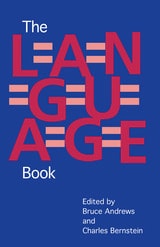
The Language Book
Bruce Andrews and Charles Bernstein
Southern Illinois University Press, 1984
“Ok murky in alter all end, unpredictable day, with rainshine any degree night, the sun kin warm and hot. Enough stone or other jugs lineup of whatever is In Through Out That’s light as much as known Differences evanesce Like, where and/or what on the equator might be french or spanish Longitude and latitude, yep yep sure Americana.”—Larry Eigner, commentary on a selection from Gertrude Stein’s Tender Buttons
This selection of essays and poetry from the first three volumes of L=A=N=G=U=A=G=E magazine discusses a “spectrum of writing that places its attention primarily on language and ways of making meaning, that takes for granted neither vocabulary, grammar, process, shape, syntax, program, nor subject matter.” (Bernstein and Andrews) The various writers shun labels, slogans, or catch-phrases; their exploration of the ways that meanings and values are revealed through the written word is intended to open the field of poetic activity, not close it.
The common thread of these essays is the multitude and scope of words’ referential powers—denotative, connotative, and associational; and studying these powers is ultimately a social and political activity as well as an aesthetic one.
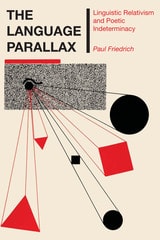
The Language Parallax
Linguistic Relativism and Poetic IndeterminacyBy Paul Friedrich
University of Texas Press, 1986
Humankind has always been fascinated and troubled by the way languages and dialects differ. Linguistically based differences in point of view have preoccupied many original minds of the past, such as Kant, and remain at the forefront of language study: in philosophy, anthropology, literary criticism, and other fields.
Paul Friedrich's The Language Parallax argues persuasively that the "locus and focus" of differences among languages lies not so much in practical or rational aspects as in the complexity and richness of more poetic dimensions—in the nuances of words, or the style and voice of an author. This poetic reformulation of what has been called "linguistic relativism" is grounded in the author's theory of the imagination as a main source of poetic indeterminacy. The reformulation is also based on the intimate relation of the concentrated language of poetry to the potential or possibilities for poetry in ordinary conversation, dreams, and other experiences. The author presents challenging thoughts on the order and system of language in their dynamic relation to indeterminacy and, ultimately, disorder and chaos.
Drawing on his considerable fieldwork in anthropology and linguistics, Friedrich interweaves distinct and provocative elements: the poetry of language difference, the indeterminacy in dialects and poetic forms, the discovery of underlying orders, the workings of different languages, the strength of his own poetry. The result is an innovative and organic whole.
The Language Parallax, then, is a highly original work with a single bold thesis. It draws on research and writing that has involved, in particular, English, Russian, and the Tarascan language of Mexico, as well as the personal and literary study of the respective cultures. Anthropologist, linguist, and poet, Friedrich synthesizes from his experience in order to interrelate language variation and structure, the creative individual, ideas of system-in-process, and questions of scientific and aesthetic truth. The result is a new view of language held to the light of its potentially creative nature.
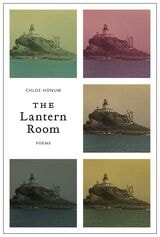
The Lantern Room
Chloe Honum
Tupelo Press, 2021
—Allison Benis Whit
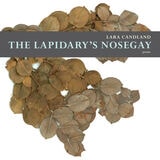
The Lapidary's Nosegay
Lara Candland
University Press of Colorado, 2018
The Lapidary’s Nosegay, Lara Candland’s primer of poems, presents to readers a bouquet of resplendent poems that Candland has created, collaged, curated, and reimagined by using the rich floral and gem imagery in the poetry of Emily Dickinson as her primary source material. Dickinson and Candland share linguistic and theological roots in the Bible, nineteenth-century American Protestantism, and a lexicon distinctive to their specific individuarian communities, and this collection of poems draws a serpentine kind of map across nearly two centuries, journeying from Amherst, Massachusetts, to Provo, Utah, from Dickinson’s severe and lush New England to Candland’s own jagged, harsh, and stunning high desert Utah. The Lapidary’s Nosegay explores the ways that both poets have simultaneously challenged and embraced the axiomatic constraints of religion, landscape, and cultural conventions and expectations of each poet’s time and place.
Aesthetically, Candland attempts to challenge the hierarchies of the page through linguistic, typographic, and sonic experimentation. The Lapidary’s Nosegay carries Dickinsonian echoes to alliterative and parenthetic excessivities that indicate sound stresses or that pictographically invoke sun, god, ghosts, ecstasy, and the jewels and flowers tumbling throughout Dickinson’s own poems. This collection works at toppling textual hierarchies, systematically jumbling sound, text, meaning, symbol, and context and entering the vein of radical American aesthetics, politics, and culture that have shaped Candland’s life and poetics.
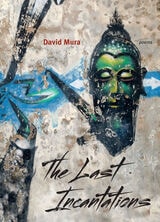
The Last Incantations
PoemsDavid Mura
Northwestern University Press, 2014
The personal, historical, and artistic are all in dialogue in David Mura’s daring collection, The Last Incantations. In a variety of poetic modes, Mura harmonizes and contrasts multiple voices to form a powerful meditation. Certain poems speak from his experiences as a third-generation Japanese American and his family’s struggles to prove their "Americanness." Others speak from the intersections of our multiracial society—an Asian teenager in love with a Somali Muslim girl, an apostrophe to Richard Pryor, poems about a Palestinian American friend, Abu Ghraib, the hapa sculptor Isamu Noguchi. The result is a sustained multifoliate poetry, bursting with elegance, heartache, and truth.
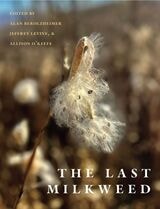
The Last Milkweed
Edited by Jeffrey Levine, Alan Berholzheimer, and Allison O'Keefe
Tupelo Press, 2025
In this extraordinary anthology, forty-seven contemporary poets and one photographer respond to the myriad ways in which what we think and feel about the “autumnal” resonates through our lives and senses: spiritually, physically, and philosophically. Contributing poets were asked “to let their language rub up against any part or parts of the autumnal world that calls to them, whether from the outside in or the inside out.” In other words, these autumn poems and photographs need not so much as mention fallen leaves, milkweed, or even “autumn.” Autumn is the inspiration, but not necessarily the destination. The destination is as ever, the discovery of the human condition, the discovery of the ways in which we respond to the natural world.
The poems included in this anthology have all been written fresh in response to the autumnal prompt, with new work from luminaries such as Elise Paschen, Martha Ronk, G.C. Waldrep, Michael Chitwood, Gillian Cummings, Gibson Fay-LeBlanc, Rick Hilles, Eva Hooker, Luisa A. Igloria, and William Orem.
The photographs are by Jeffrey Levine, who, in addition to being executive director of Tupelo Press, is widely recognized for his work behind the camera. These images boast exceptional composition and color, but beyond technique, each photo offers up a penetrating resonance on the theme of autumn and the autumnal.
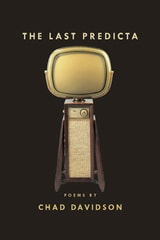
The Last Predicta
Chad Davidson
Southern Illinois University Press, 2008
The Last Predicta is Chad Davidson's searing collection of poetry dedicated to endings of all varieties. From odes to the corporate cornucopia of Target and the aggressive cheer of a Carnival cruise, to emotive examinations of Caravaggio's The Calling of St. Matthew or flies circling a putrescent bowl of forgotten fruit, Davidson weaves a lyrical web of apocalyptic scenarios and snapshots of pop culture. Throughout the volume appear cataclysms large and small, whether the finality of a minute passed or the deaths of a thousand swans at Seneca Lake in 1912. Images of King Kong, Starburst candies, and the Brady Bunch swim with mythological figures, Roman heroes, and dead animals as Davidson deftly explores the relationship between the mundane and the profound. At the center of the collection sits the Predicta television itself, "the lives blooming there in Technicolor," at once futuristic and nostalgic in its space age prophecy.
Moving in their very simplicity, these poems resonate with discoveries that belie their seemingly ordinary wellsprings. Chad Davidson's stunning collection repeatedly explores the moment of revelation and all its accompanying aftermaths. The Last Predicta leads readers to ponder all manner of predictions, endings, and everything that follows.
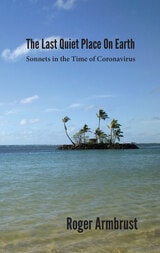
The Last Quiet Place on Earth
Sonnets in the Time of CoronavirusRoger Armbrust
Parkhurst Brothers, Inc., 2022
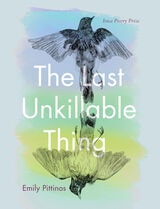
The Last Unkillable Thing
Emily Pitinos
University of Iowa Press, 2021
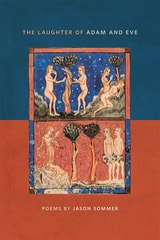
The Laughter of Adam and Eve
Jason Sommer
Southern Illinois University Press, 2013
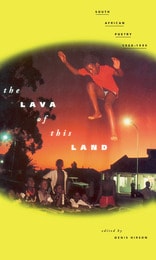
The Lava of This Land
South African Poetry 1960-1996Denis Hirson
Northwestern University Press, 1997
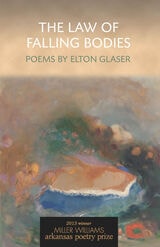
The Law of Falling Bodies
PoemsElton Glaser
University of Arkansas Press, 2013
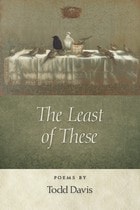
The Least of These
Todd Davis
Michigan State University Press, 2010
In his third collection of poems Todd Davis advises us that "the only corruption comes / in not loving this life enough." Over the course of this masterful and heartfelt book it becomes clear that Davis not only loves the life he's been given, but also believes that the ravishing desire of this world can offer hope, and even joy, however it might be negotiated.
Drawing upon a range of stories from the Christian, Transcendental, and Asian traditions, as well as from his own deep understanding of the natural world, Davis explores the connection between the visible and invisible worlds, or what Pierre Teilhard de Chardin called "the incandescent surface of matter plunged in God."
A direct poetic descendant of Walt Whitman, Davis invites us to sing "the songs we collect in the hymnals of our flesh- / impromptu, a cappella, our mouths flung open / in a great wide O."
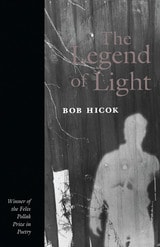
The Legend of Light
Bob Hicok
University of Wisconsin Press, 1995
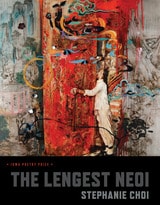
The Lengest Neoi
Stephanie Choi
University of Iowa Press, 2024
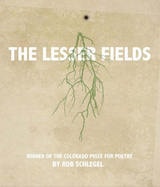
The Lesser Fields
Rob Schlegel
University Press of Colorado, 2009
Published by the Center for Literary Publishing at Colorado State University
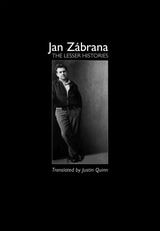
The Lesser Histories
Jan Zábrana
Karolinum Press, 2022
From the eighth floor of a tower block in Central Europe, Jan Zábrana surveyed the twentieth century. He had been exiled from his own life by Communism. His parents were imprisoned, their health was broken, and he was not allowed to study languages in college. Refusing both to rebel outright or to cave in, he thought of himself as a dead man walking. “To all those who keep asking me to do things for them, I sometimes feel like saying: ‘But I’m dead. I died long ago. Why do you keep treating me as if I were one of the living?’”
Yet during some of Europe’s most difficult years, he wrote The Lesser Histories, a collection of sixty-four sonnets that range through themes of age, sex, and political repression—a radiant testament to his times. The lines are emptied both of personal pathos and political stridency. Often Zábrana’s own voice segues into those of poets he had translated over the years, leaving only a bare shimmer of subjectivity—humorous, oblique, pained—with which to view his own works and days. The poems document a splendid and bitter isolation, and are immersed in the humor, hatreds, and loves of the everyday. Published in Czech in the ill-fated year of 1968, they subsequently fell into neglect. After the fall of Communism in 1989, Zábrana’s collected poems and selected diaries were published in Czech, and he was acclaimed as a major twentieth-century writer. Now, with this collection, he can begin to reach English-language readers for the first time.
The Life Assignment
Ricardo Alberto Maldonado
Four Way Books, 2020
The Life Beside This One
Lawrence Raab
Tupelo Press, 2017
The Life and Letters
Irving Feldman
University of Chicago Press, 1994
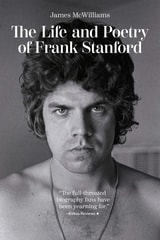
The Life and Poetry of Frank Stanford
James McWilliams
University of Arkansas Press, 2025
Finalist, 2026 Pulitzer Prize (Biography)
Kirkus Reviews - Best of 2025, Nonfiction
"The full-throated biography fans have been yearning for.”
—Kirkus Starred Review, April 2025
"McWilliams does a remarkable job connecting Stanford’s poetry with his personal life, particularly his lifelong friendship with Irv Broughton, owner of a small press and Stanford’s first publisher; his penchant for love triangles; and how his need for connection fueled his poetry. The end of Stanford’s life, which saw him cohabiting with two women in different towns and running an independent press before his death by suicide at age 29, is rendered here in spellbinding detail. It’s a page-turner."
—Publishers Weekly Starred Review, July 2025
When twenty-nine-year-old Frank Stanford put three bullets in his chest on June 3, 1978, he ended a life that had been inextricably linked with poetry since childhood. Deeply influential but largely unknown outside his corner of the poetry world, this prodigy of the American South inspired a cult following that has kept his reputation and work flickering on the periphery of the American literary tradition ever since.
The Life and Poetry of Frank Stanford offers for the first time a comprehensive study of Stanford’s life and work, introducing to a broad readership poetry that remains both captivating to poets and, in its celebration of everyday experience over academic erudition, accessible to those who rarely read poetry.
Stanford’s poems range from one line to his 15,283-line epic, The Battlefield Where the Moon Says I Love You. The vital thread running through all of his poetry is an ear for language that vies with Walt Whitman in its expansiveness and generosity. Stanford’s omnivorous attraction to vernacular, particularly Black and rural vernacular, centered on an admiration for the marginalized and eccentric. Blending the Southern Gothic of Faulkner and O’Connor with a racially egalitarian vision, his poetry thrives on the stories and traditions of the oppressed and forgotten.
The themes that preoccupied Stanford’s prolific output—language, sex, death, class, geography, commercialism, surrealism, film, race—also preoccupied the poet in his daily life, which was marked by heavy drinking, philandering, mental instability, emotional abuse, and, through it all, an inveterate desire for beauty. Constantly attentive to this tension, biographer James McWilliams traces the short and painfully complicated life of this hidden talent who left a lifetime’s worth of poetry that, through its grounding in the mundane, achieved a vision of the transcendent.
The Life of Texts
An Introduction to Literary StudiesKiene Brillenburg Wurth
Amsterdam University Press, 2019
The Life of Texts is designed around particular issues rather than the history of the discipline as such. Each chapter concentrates on a different aspect of 'the life of texts' and introduces the key debates and concepts relevant to its study. The issues discussed range from aesthetics and narrative to intertextuality and intermediality, from reading practices to hermeneutics and semiotics, popular culture to literary canonisation, postcolonial criticism to cultural memory. Key concepts and schools in the field have been highlighted in the text and then collected in a glossary for ease of reference. All chapters are richly illustrated with examples from different language areas.
The Life of a Hunter
Michelle Robinson
University of Iowa Press, 2005
The Light of Desire
La Luz del DeseoMarjorie Agosín
Swan Isle Press, 2009
Marjorie Agosín’s intensely personal long poem The Light of Desire is both a secular and sacred meditation on love and its meanings in the land of Israel. Following the tradition of the Song of Songs and the secular poetry of Sepharad, the beloved in The Light of Desire is both physical and metaphorical. The lovers’ bodies are the paths, the geography, leading not only from desire to sensual pleasure, but to memory and illumination. The light on the pink stones of Jerusalem, the sunlight of Galilee, from hills to the sea, the fragrant air and “mantle of stars,” all become one in this tender, rhapsodic expression of longing and desire. This is not unrequited love, but rather a reciprocal passion that brings exquisite pleasure, pain, a sense of fragility, and the hope and belief in that which is eternal.
The poem was written over a four-year span in Jerusalem’s Mishkenot Sha’ananim neighborhood, overlooking the wall of the Second Temple, and these hallowed surroundings imbued Agosín’s poetic voice. Lori Marie Carlson’s sensitive translation maintains the spirit of the original Spanish in this bilingual edition.
The Light the Dead See
Selected Poems of Frank StanfordFrank Stanford
University of Arkansas Press, 1991
Between 1972, when he published his first book, The Signing Knives, and 1978, when he died at the age of twenty-nine, Frank Stanford published seven volumes of poetry. Within a year of his death, two posthumous collections were published. At the time of this death, as Leon Stokesbury asserts in his introduction, “Stanford was the best poet in America under the age of thirty-five.”
The Light the Dead See collects the best work from those nine volumes and six previously unpublished poems. In the earlier poems, Stanford creates a world where he could keep childhood alive, deny time and mutability, and place a version of himself at the center of great myth and drama.
Later, the denial of time and mutability gives way to an obsessive and familiar confrontation with death. Although Stanford paid an enormous price for his growing familiarity with Death as a presence, the direct address to that presence is a source of much of the striking originality and stunning power in the poetry.
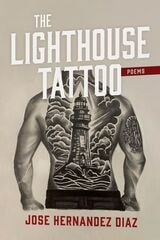
The Lighthouse Tattoo
PoemsJose Hernandez Diaz
Acre Books, 2026
In his fourth full-length collection, Jose Hernandez Diaz explores the first-generation Mexican American experience in nuanced linear verse, avant-garde offerings, and deadpan absurdist prose poems.
The Lighthouse Tattoo features plainspoken pieces that reveal the Latinx experience through the lens of a socially conscious contrarian in work that melds the quotidian and the profound. Also included, of course, are experimental prose poems in the signature style and voice that contributed to the meteoric rise of this unique artist. Invoking James Tate, Gabriel García Márquez, Salvador Dalí, Pablo Picasso, Albert Camus, Marosa di Giorgio, and others, Hernandez Diaz cements his place in both the poetic and surrealist traditions.
Even as it unravels mysteries and explores the strange—zebras in a zoo on the moon or English dragons on the Pacific Coast Highway—The Lighthouse Tattoo shines its light on the complex emotions of a seasoned Latinx poet. In this extraordinary volume, the titular tattoo itself becomes evidence of a trauma survived, an apt metaphor for the book as a whole. As one speaker says, “I’m trapped inside of this prose poem, but I don’t want to get out. It's nice and cozy in here. I’m invincible.”
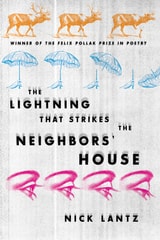
The Lightning That Strikes the Neighbors’ House
Nick Lantz
University of Wisconsin Press, 2010
Finalist, Foreword Magazine’s Poetry Book of the Year
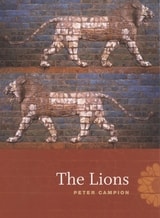
The Lions
Peter Campion
University of Chicago Press, 2009
Big Avalanche Ravine
Just the warning light on a blue crane.
Just mountains. Just the mist that skimmed
them both and bled to silver rain
lashing the condominiums.
But there it sank on me. This urge
to carve a life from the long expanse.
To hold some ground against the surge
of sheer material. It was a tense
and persistent and metallic shiver.
And it stayed, that tremor, small and stark
as the noise of the hidden river
fluming its edge against the dark.
In his second collection of poems, Peter Campion writes about the struggle of making a life in America, about the urge “to carve a space” for love and family from out of the vast sweep of modern life. Coursing between the political and personal with astonishing ease, Campion writes at one moment of his disturbing connection to the public political structure, symbolized by Robert McNamara (who makes a startling appearance in the title poem), then in the next, of a haunting reverie beneath a magnolia tree, representing his impulse to escape the culture altogether. He moves through various forms just as effortlessly, as confident in rhymed quatrains as in slender, tensed free verse. In The Lions, Campion achieves a fusion of narrative structure and lyric intensity that proves him to be one of the very best poets of his generation.
Praise for Other People
“Campion is a poet who knows that what a poet sees is nothing without a mixture of formal prowess and emotional insight.”—David Biespiel, The Oregonian