Results by title
4038 books match the query 'Social aspects' and 711 start with t
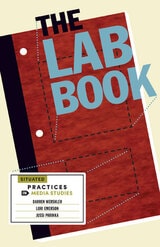
The Lab Book
Situated Practices in Media StudiesDarren Wershler
University of Minnesota Press, 2021
An important new approach to the study of laboratories, presenting a practical method for understanding labs in all walks of life
From the “Big Science” of Bell Laboratories to the esoteric world of séance chambers to university media labs to neighborhood makerspaces, places we call “labs” are everywhere—but how exactly do we account for the wide variety of ways that they produce knowledge? More than imitations of science and engineering labs, many contemporary labs are hybrid forms that require a new methodological and theoretical toolkit to describe. The Lab Book investigates these vital, creative spaces, presenting readers with the concept of the “hybrid lab” and offering an extended—and rare—critical investigation of how labs have proliferated throughout culture.
Organized by interpretive categories such as space, infrastructure, and imaginaries, The Lab Book uses both historical and contemporary examples to show how laboratories have become fundamentally connected to changes in the contemporary university. Its wide reach includes institutions like the MIT Media Lab, the Tuskegee Institute’s Jesup Wagon, ACTLab, and the Media Archaeological Fundus. The authors cover topics such as the evolution and delineation of lab-based communities, how labs’ tools and technologies contribute to defining their space, and a glossary of key hybrid lab techniques.
Providing rich historical breadth and depth, The Lab Book brings into focus a critical, but often misunderstood, aspect of the contemporary arts and humanities.
The Labor of Care
Filipina Migrants and Transnational Families in the Digital AgeValerie Francisco-Menchavez
University of Illinois Press, 2018

The Land of the Dead Is Open for Business
Jacob Strautmann
Four Way Books, 2020

The Last Dinosaur Book
The Life and Times of a Cultural IconW. J. T. Mitchell
University of Chicago Press, 1998
Mitchell aims to trace the cultural family tree of the dinosaur, and what he discovers is a creature of striking flexibility, linked to dragons and mammoths, skyscrapers and steam engines, cowboys and Indians. In the vast territory between the cunning predators of Jurassic Park and the mawkishly sweet Barney, from political leviathans to corporate icons, from paleontology to Barnum and Bailey, Mitchell finds a cultural symbol whose plurality of meaning and often contradictory nature is emblematic of modern society itself. As a scientific entity, the dinosaur endured a near-eclipse for over a century, but as an image it is enjoying its widest circulation. And it endures, according to Mitchell, because it is uniquely malleable, a figure of both innovation and obsolescence, massive power and pathetic failure—the totem animal of modernity.
Drawing unforeseen and unusual connections at every turn between dinosaurs real and imagined, The Last Dinosaur Book is the first to delve so deeply, so insightfully, and so enjoyably into our modern dino-obsession.
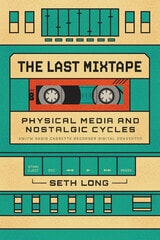
The Last Mixtape
Physical Media and Nostalgic CyclesSeth Long
University of Chicago Press, 2025
Obsolescence makes the heart grow fonder, at least in the case of the mixtape. Not all technologies are so lucky. Some (say, wax cylinders) fade almost completely from cultural memory. A lucky few pass into metaphor: we still “hang up” our smartphones, “cut” film, and “patch” computer code. As digital streaming completes the obsolescence of physical media, what will become of the humble cassette?
In The Last Mixtape, Seth Long offers a microhistory of music curation, anchored by the cassette, from which he explores the meanings of obsolescence, ownership, nostalgia, and the speed of cultural change. A moving meditation on our relationship with music, memory, and curation in the digital century, Long ultimately calls for a return to the media ecology represented by the mixtape: a world in which media is cheap and abundant but tactile and meaningfully engaged.
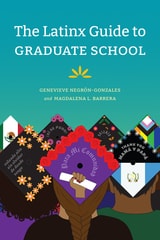
The Latinx Guide to Graduate School
Genevieve Negrón-Gonzales and Magdalena L. Barrera
Duke University Press, 2023
The Laws of Cool
Knowledge Work and the Culture of InformationAlan Liu
University of Chicago Press, 2004
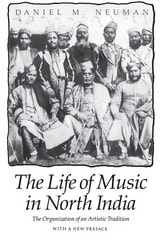
The Life of Music in North India
The Organization of an Artistic TraditionDaniel M. Neuman
University of Chicago Press, 1990
Drawing primarily from fieldwork performed in Delhi in 1969-71—from interviewing musicians, learning and performing on the Indian fiddle, and speaking with music connoisseurs—Neuman examines the cultural and social matrix in which Hindustani music is nurtured, listened and attended to, cultivated, and consumed in contemporary India. Through his interpretation of the impact that modern media, educational institutions, and public performances exert on the music and musicians, Neuman highlights the drama of a great musical tradition engaging a changing world, and presents the adaptive strategies its practitioners employ to practice their art. His work has gained the distinction of introducing a new approach to research on Indian music, and appears in this edition with a new preface by the author.
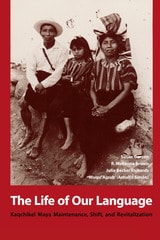
The Life of Our Language
Kaqchikel Maya Maintenance, Shift, and RevitalizationBy Susan Garzon, R. McKenna Brown, Julia Becker Richards, and Wuqu’ Ajpub’
University of Texas Press, 1998
The native Maya peoples of Mexico, Guatemala, Honduras, and Belize have been remarkably successful in maintaining their cultural identity during centuries of contact with and domination by outside groups. Yet change is occurring in all Mayan communities as contact with Spanish-speaking Ladino society increases. This book explores change and continuity in one of the most vital areas of Mayan culture—language use.
The authors look specifically at Kaqchikel, one of the most commonly spoken Mayan languages. Following an examination of language contact situations among indigenous groups in the Americas, the authors proceed to a historical overview of the use of Kaqchikel in the Guatemalan Highlands. They then present case studies of three highland communities in which the balance is shifting between Kaqchikel and Spanish. Wuqu' Ajpub', a native Kaqchikel speaker, gives a personal account of growing up negotiating between the two languages and the different world views they encode. The authors conclude with a look at the Mayan language revitalization movement and offer a scenario in which Kaqchikel and other Mayan languages can continue to thrive.

The Limits of Familiarity
Authorship and Romantic ReadersLindsey Eckert
Bucknell University Press, 2022
What did Wordsworth wear, and where did he walk? Who was Byron’s new mistress, and how did his marriage fare? Answers—sometimes accurate, sometimes not—were tantalizingly at the ready in the Romantic era, when confessional poetry, romans à clef, personal essays, and gossip columns offered readers exceptional access to well-known authors. But at what point did familiarity become overfamiliarity? Widely recognized as a social virtue, familiarity—a feeling of emotional closeness or comforting predictability—could also be dangerous, vulgar, or boring. In The Limits of Familiarity, Eckert persuasively argues that such concerns shaped literary production in the Romantic period. Bringing together reception studies, celebrity studies, and literary history to reveal how anxieties about familiarity shaped both Romanticism and conceptions of authorship, this book encourages us to reflect in our own fraught historical moment on the distinction between telling all and telling all too much.
The Limits of Revolution
Worker Citizens in a Bolivian Mining CityElena McGrath
University of Texas Press, 2026
The role of Bolivian mining families in revolution and politics.
In 1952, Bolivia’s Revolutionary Nationalist Movement (MNR) swept into power, promising collective prosperity through class-based nationalism. The heroic symbol of the movement was the worker citizen—the formerly indigenous miner who would fuel economic development in a nationalized mining economy.
The Limits of Revolution explores this history from the worker barrios of the copper mining city of Corocoro. As the state walked back its promises of worker political power at the national level, mining men and women in Corocoro struggled—through protests, court battles, and barfights—to maintain the benefits of worker citizenship locally. After the MNR fell to a military dictatorship in 1964, however, families retreated to defending the nationalized mining company against an increasingly hostile state. In this battle to keep the revolution alive, the expansive potential of worker citizenship disappeared and old racial exclusions resurfaced. Largely forgotten today, Bolivia’s experience of revolution exposes the contradictions of postcolonial nationalism and sheds light on Latin America’s transition from Cold War–era class politics to twenty-first-century Pink Tide politics.
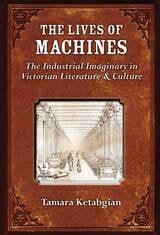
The Lives of Machines
The Industrial Imaginary in Victorian Literature and CultureTamara Ketabgian
University of Michigan Press, 2011
"The Lives of Machines is intelligent, closely argued, and persuasive, and puts forth a contention that will unsettle the current consensus about Victorian attitudes toward the machine."
---Jay Clayton, Vanderbilt University
Today we commonly describe ourselves as machines that "let off steam" or feel "under pressure." The Lives of Machines investigates how Victorian technoculture came to shape this language of human emotion so pervasively and irrevocably and argues that nothing is more intensely human and affecting than the nonhuman. Tamara Ketabgian explores the emergence of a modern and more mechanical view of human nature in Victorian literature and culture.
Treating British literature from the 1830s to the 1870s, this study examines forms of feeling and community that combine the vital and the mechanical, the human and the nonhuman, in surprisingly hybrid and productive alliances. Challenging accounts of industrial alienation that still persist, the author defines mechanical character and feeling not as erasures or negations of self, but as robust and nuanced entities in their own right. The Lives of Machines thus offers an alternate cultural history that traces sympathies between humans, animals, and machines in novels and nonfiction about factory work as well as in other unexpected literary sites and genres, whether domestic, scientific, musical, or philosophical. Ketabgian historicizes a model of affect and community that continues to inform recent theories of technology, psychology, and the posthuman.
The Lives of Machines will be of interest to students of British literature and history, history of science and of technology, novel studies, psychoanalysis, and postmodern cultural studies.
Cover image: "Power Loom Factory of Thomas Robinson," from Andrew Ure, The Philosophy of Manufactures (London: Charles Knight, 1835), frontispiece.
DIGITALCULTUREBOOKS: a collaborative imprint of the University of Michigan Press and the University of Michigan Library
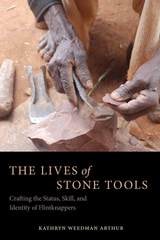
The Lives of Stone Tools
Crafting the Status, Skill, and Identity of FlintknappersKathryn Weedman Arthur
University of Arizona Press, 2018
Anthropologist Kathryn Weedman Arthur offers insights from her more than twenty years working with the Gamo. She deftly addresses historical and present-day experiences and practices, privileging the Gamo’s perspectives. Providing a rich, detailed look into the world of lithic technology, Arthur urges us to follow her into a world that recognizes Indigenous theories of material culture as valid alternatives to academic theories. In so doing, she subverts long-held Western perspectives concerning gender, skill, and lifeless status of inorganic matter.
The book offers the perspectives that, contrary to long-held Western views, stone tools are living beings with a life course, and lithic technology is a reproductive process that should ideally include both male and female participation. Only individuals of particular lineages knowledgeable in the lives of stones may work with stone technology. Knappers acquire skill and status through incremental guided instruction corresponding to their own phases of maturation. The tools’ lives parallel those of their knappers from birth (procurement), circumcision (knapping), maturation (use), seclusion (storage), and death (discardment).
Given current expectations that the Gamo’s lithic technology may disappear with the next generation, The Lives of Stone Tools is a work of vital importance and possibly one of the last contemporaneous books about a population that engages with the craft daily.

The Logic of Women on Trial
Case Studies of Popular American TrialsJanice Schuetz
Southern Illinois University Press, 1994
Janice Schuetz investigates the felony trials of nine American women from colonial Salem to the present: Rebecca Nurse, tried for witchcraft in 1692; Mary E. Surratt, tried in 1865 for assisting John Wilkes Booth in the assassination of Abraham Lincoln; Lizzie Andrew Borden, tried in 1892 for the ax murder of her father and stepmother; Margaret Sanger, tried in 1915, 1917, and 1929 for her actions in support of birth control; Ethel Rosenberg, tried in 1951 for aiding the disclosure of secrets of the atom bomb to the Soviets; Yvonne Wanrow, tried in 1974 for killing a man who molested her neighbor’s daughter; Patricia Campbell Hearst, tried in 1975 for bank robbery as a member of the Symbionese Liberation Army; Jean Harris, tried in 1982 for killing Herman Tarnower, the Diet Doctor; and Darci Kayleen Pierce, tried in 1988 for kidnapping and brutally murdering a pregnant woman, then removing the baby from the woman’s womb.
In her analysis, Schuetz is careful to define these trials as popular trials. Characteristically, popular trials involve persons, issues, or crimes of social interest that attract extensive public interest and involvement. Such trials make a contribution to the ongoing historical dialogue about the meaning of justice and the legal system, while reflecting the values of the time and place in which they occur.
Schuetz examines the kinds of communication that transpired and the importance of gender in the trials by applying a different current rhetorical theory to each trial text. In every chapter, she explains her chosen interpretive theory, compares that framework with the discourse of the trial, and makes judgments about the meaning of the trial texts based on the interpretive theory.

The Lonely Letters
Ashon T. Crawley
Duke University Press, 2020

The Long Shadow
Family Background, Disadvantaged Urban Youth, and the Transition to AdulthoodKarl Alexander
Russell Sage Foundation, 2014

The Long War on Drugs
Anne L. Foster
Duke University Press, 2023

The Look of the 1960s
Barbarella and Pulp Pop ComicsJan Baetens and Hugo Frey
University of Texas Press, 2026
How the classic aesthetic of 1960s pulp comics influenced art, culture, and politics.
As a form of visual art, comic books rely on a distinct and eye-catching aesthetic. This is especially true of the iconic comics, graphic novels, and illustrations of the 1960s and 1970s. The Look of the 1960s explores the sources of inspiration that influenced the world of comics, beginning with the well-known French comics series Barbarella.
Noted comics scholars Jan Baetens and Hugo Frey analyze the impacts of the often-provocative images featured in the comics of the 1960s, which pushed back against French censorship in a politically tense time, and detail how women resisted their objectification in the comic book industry. Barbarella left its mark on the world and gained international attention, inspiring a movie adaptation and changing the look and content of other popular comics. The “Pulp Pop” movement remains relevant today, continuing to influence the art and political world. With new information about artists and an astute analysis of sociopolitical influence, The Look of the 1960s offers deep insights, making it a must read for comics fans all over the world.

The Los Angeles Plaza
Sacred and Contested SpaceBy William David Estrada
University of Texas Press, 2008
2008 — Gold Award in Californiana – California Book Awards – Commonwealth Club of California
2010 — NACCS Book Award – National Association for Chicana and Chicano Studies
City plazas worldwide are centers of cultural expression and artistic display. They are settings for everyday urban life where daily interactions, economic exchanges, and informal conversations occur, thereby creating a socially meaningful place at the core of a city.
At the heart of historic Los Angeles, the Plaza represents a quintessential public space where real and imagined narratives overlap and provide as many questions as answers about the development of the city and what it means to be an Angeleno. The author, a social and cultural historian who specializes in nineteenth- and early twentieth-century Los Angeles, is well suited to explore the complex history and modern-day relevance of the Los Angeles Plaza. From its indigenous and colonial origins to the present day, Estrada explores the subject from an interdisciplinary and multiethnic perspective, delving into the pages of local newspapers, diaries and letters, and the personal memories of former and present Plaza residents, in order to examine the spatial and social dimensions of the Plaza over an extended period of time.
The author contributes to the growing historiography of Los Angeles by providing a groundbreaking analysis of the original core of the city that covers a long span of time, space, and social relations. He examines the impact of change on the lives of ordinary people in a specific place, and how this change reflects the larger story of the city.
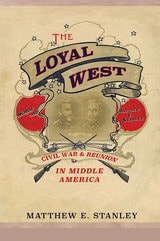
The Loyal West
Civil War and Reunion in Middle AmericaMatthew E. Stanley
University of Illinois Press, 2017
Matthew E. Stanley's intimate study explores the Civil War, Reconstruction, and sectional reunion in this bellwether region. Using the lives of area soldiers and officers as a lens, Stanley reveals a place and a strain of collective memory that was anti-rebel, anti-eastern, and anti-black in its attitudes--one that came to be at the forefront of the northern retreat from Reconstruction and toward white reunion. The Lower Middle West's embrace of black exclusion laws, origination of the Copperhead movement, backlash against liberalizing war measures, and rejection of Reconstruction were all pivotal to broader American politics. And the region's legacies of white supremacy--from racialized labor violence to sundown towns to lynching--found malignant expression nationwide, intersecting with how Loyal Westerners remembered the war.
A daring challenge to traditional narratives of section and commemoration, The Loyal West taps into a powerful and fascinating wellspring of Civil War identity and memory.

The Lumberman's Frontier
Three Centuries of Land Use, Society, and Change in America's ForestsThomas R. Cox
Oregon State University Press, 2010
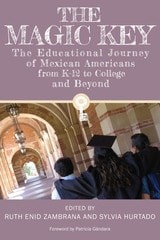
The Magic Key
The Educational Journey of Mexican Americans from K-12 to College and BeyondEdited by Ruth Enid Zambrana and Sylvia Hurtado
University of Texas Press, 2015
Mexican Americans comprise the largest subgroup of Latina/os, and their path to education can be a difficult one. Yet just as this group is often marginalized, so are their stories, and relatively few studies have chronicled the educational trajectory of Mexican American men and women. In this interdisciplinary collection, editors Zambrana and Hurtado have brought together research studies that reveal new ways to understand how and why members of this subgroup have succeeded and how the facilitators of success in higher education have changed or remained the same.
The Magic Key’s four sections explain the context of Mexican American higher education issues, provide conceptual understandings, explore contemporary college experiences, and offer implications for educational policy and future practices. Using historical and contemporary data as well as new conceptual apparatuses, the authors in this collection create a comparative, nuanced approach that brings Mexican Americans’ lived experiences into the dominant discourse of social science and education. This diverse set of studies presents both quantitative and qualitative data by gender to examine trends of generations of Mexican American college students, provides information on perceptions of welcoming university climates, and proffers insights on emergent issues in the field of higher education for this population. Professors and students across disciplines will find this volume indispensable for its insights on the Mexican American educational experience, both past and present.
The Making of Measure and the Promise of Sameness
Emanuele Lugli
University of Chicago Press, 2019
Measurement is all around us—from the circumference of a pizza to the square footage of an apartment, from the length of a newborn baby to the number of miles between neighboring towns. Whether inches or miles, centimeters or kilometers, measures of distance stand at the very foundation of everything we do, so much so that we take them for granted. Yet, this has not always been the case.
This book reaches back to medieval Italy to speak of a time when measurements were displayed in the open, showing how such a deceptively simple innovation triggered a chain of cultural transformations whose consequences are visible today on a global scale. Drawing from literary works and frescoes, architectural surveys, and legal compilations, Emanuele Lugli offers a history of material practices widely overlooked by historians. He argues that the public display of measurements in Italy’s newly formed city republics not only laid the foundation for now centuries-old practices of making, but also helped to legitimize local governments and shore up church power, buttressing fantasies of exactitude and certainty that linger to this day.
This ambitious, truly interdisciplinary book explains how measurements, rather than being mere descriptors of the real, themselves work as powerful molds of ideas, affecting our notions of what we consider similar, accurate, and truthful.
The Making of the Unborn Patient
A Social Anatomy of Fetal SurgeryCasper, Monica J
Rutgers University Press, 1998
It is now possible for physicians to recognize that a pregnant woman's fetus is facing life-threatening problems, perform surgery on the fetus, and if it survives, return it to the woman's uterus to finish gestation. Although fetal surgery has existed in various forms for three decades, it is only just beginning to capture the public's imagination. These still largely experimental procedures raise all types of medical, political and ethical questions. Who is the patient? What are the technical difficulties involved in fetal surgery? How do reproductive politics seep into the operating room, and how do medical definitions and meanings flow out of medicine and into other social spheres? How are ethical issues defined in this practice and who defines them? Is fetal surgery the kind of medicine we want? What is involved in reframing fetal surgery as a women's health issue, rather than simply a pediatric concern? In this ethnographic study of the social, cultural and historical aspects of fetal surgery, Monica Casper addresses these questions. The Making of the Unborn Patient examines two important and connected events of the second half of the 20th century: the emergence of fetal surgery as a new medical specialty and the debut of the unborn patient.
The Male Pill
A Biography of a Technology in the MakingNelly Oudshoorn
Duke University Press, 2003
Oudshoorn emphasizes that the introduction of contraceptives for men depends to a great extent on changing ideas about reproductive responsibility. Initial interest in the male pill, she shows, came from outside the scientific community: from the governments of China and India, which were interested in population control, and from Western feminists, who wanted the responsibilities and health risks associated with contraception shared more equally between the sexes. She documents how in the 1970s, the World Health Organization took the lead in investigating male contraceptives by coordinating an unprecedented, worldwide research network. She chronicles how the search for a male pill required significant reorganization of drug-testing standards and protocols and of the family-planning infrastructure—including founding special clinics for men, creating separate spaces for men within existing clinics, enrolling new professionals, and defining new categories of patients. The Male Pill is ultimately a story as much about the design of masculinities in the last decades of the twentieth century as it is about the development of safe and effective technologies.
The Mangle in Practice
Science, Society, and BecomingAndrew Pickering and Keith Guzik, eds.
Duke University Press, 2008
The Mangle in Practice opens with a fresh introduction to the mangle by Pickering. Several contributors then present empirical studies that demonstrate the mangle’s applicability to topics as diverse as pig farming, Chinese medicine, economic theory, and domestic-violence policing. Other contributors offer examples of the mangle in action: real-world practices that implement a self-consciously “mangle-ish” stance in environmental management and software development. Further essays discuss the mangle as philosophy and social theory. As Pickering argues in the preface, the mangle points to a shift in interpretive sensibilities that makes visible a world of de-centered becoming. This volume demonstrates the viability, coherence, and promise of such a shift, not only in science and technology studies, but in the social sciences and humanities more generally.
Contributors: Lisa Asplen, Dawn Coppin, Adrian Franklin, Keith Guzik, Casper Bruun Jensen,Yiannis Koutalos, Brian Marick, Randi Markussen, Andrew Pickering, Volker Scheid, Esther-Mirjam Sent, Carol Steiner, Maxim Waldstein

The Mangle of Practice
Time, Agency, and ScienceAndrew Pickering
University of Chicago Press, 1995
Andrew Pickering offers a new approach to the unpredictable nature of change in science, taking into account the extraordinary number of factors—social, technological, conceptual, and natural—that interact to affect the creation of scientific knowledge. In his view, machines, instruments, facts, theories, conceptual and mathematical structures, disciplined practices, and human beings are in constantly shifting relationships with one another—"mangled" together in unforeseeable ways that are shaped by the contingencies of culture, time, and place.
Situating material as well as human agency in their larger cultural context, Pickering uses case studies to show how this picture of the open, changeable nature of science advances a richer understanding of scientific work both past and present. Pickering examines in detail the building of the bubble chamber in particle physics, the search for the quark, the construction of the quarternion system in mathematics, and the introduction of computer-controlled machine tools in industry. He uses these examples to address the most basic elements of scientific practice—the development of experimental apparatus, the production of facts, the development of theory, and the interrelation of machines and social organization.
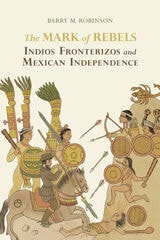
The Mark of Rebels
Indios Fronterizos and Mexican IndependenceBarry M. Robinson
University of Alabama Press, 2016
Explores social and cultural transformations among the indigenous communities of western Mexico, especially the indios fronterizos (Frontier Indians), preceding and during the struggle for independence
In The Mark of Rebels Barry Robinson offers a new look at Mexican Independence from the perspective of an indigenous population caught in the heart of the struggle. During the conquest and settlement of Mexico’s Western Sierra Madre, Spain’s indigenous allies constructed an indio fronterizo identity for their ethnically diverse descendants. These communities used their special status to maintain a measure of autonomy during the colonial era, but the cultural shifts of the late colonial period radically transformed the relationship between these indios fronterizos and their neighbors.
Marshalling an extensive array of archival material from Mexico, the United States, and Spain, Robinson shows that indio fronterizo participation in the Mexican wars of independence grafted into the larger Hidalgo Revolt through alignment with creole commanders. Still, a considerable gulf existed between the aims of indigenous rebels and the creole leadership. Consequently, the privileges that the indios fronterizos sought to preserve continued to diminish, unable to survive either the late colonial reforms of the Spanish regime or creole conceptions of race and property in the formation of the new nation-state.
This story suggests that Mexico’s transition from colony to nation can only be understood by revisiting the origins of the colonial system and by recognizing the role of Spain’s indigenous allies in both its construction and demolition. The study relates events in the region to broader patterns of identity, loyalty, and subversion throughout the Americas, providing insight into the process of mestizaje that is commonly understood to have shaped Latin America. It also foreshadows the popular conservatism of the nineteenth century and identifies the roots of post-colonial social unrest.
This book provides new context for scholars, historians, ethnographers, anthropologists, and anyone interested in the history of Mexico, colonization, Native Americans, and the Age of Revolutions.
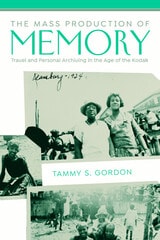
The Mass Production of Memory
Travel and Personal Archiving in the Age of the KodakTammy S. Gordon
University of Massachusetts Press, 2020
In 1888, the Eastman Dry Plate and Film Company offered the first portable camera that allowed users to conveniently take photos, using leisure travel as a primary marketing feature to promote it. The combination of portability, ease of use, and mass advertising fed into a national trend of popular photography that drew on Americans' increasing mobility and leisure time. The Kodak Company and the first generation of tourist photographers established new standards for personal archiving that amplified the individual's role in authoring the national narrative. But not everyone had equal access to travel and tourism, and many members of the African American, Native American, and gay and lesbian communities used the camera to counter the racism, homophobia, and classism that shaped public spaces.
In this groundbreaking history, Tammy S. Gordon tells the story of the camera's emerging centrality in leisure travel across the late nineteenth and early twentieth centuries and its role in “the mass production of memory,” a process in which users crafted a visual archive attesting to their experiences, values, and circumstances, setting the stage for the customizable visual culture of the digital age.
The Matter of Disability
Materiality, Biopolitics, Crip AffectDavid T. Mitchell, Susan Antebi, and Sharon L. Snyder, Editors
University of Michigan Press, 2019
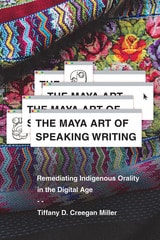
The Maya Art of Speaking Writing
Remediating Indigenous Orality in the Digital AgeTiffany D. Creegan Miller
University of Arizona Press, 2022
Based on nearly a decade of fieldwork in the Guatemalan highlands, Tiffany D. Creegan Miller discusses images that are sonic, pictorial, gestural, and alphabetic. She reveals various forms of creativity and agency that are woven through a rich media landscape in Indigenous Guatemala, as well as Maya diasporas in Mexico and the United States. Miller discusses how technologies of inscription and their mediations are shaped by human editors, translators, communities, and audiences, as well as by voices from the natural world.
These texts push back not just on linear and compartmentalized Western notions of media but also on the idea of the singular author, creator, scholar, or artist removed from their environment. The persistence of orality and the interweaving of media forms combine to offer a challenge to audiences to participate in decolonial actions through language preservation.
The Maya Art of Speaking Writing calls for centering Indigenous epistemologies by doing research in and through Indigenous languages as we engage in debates surrounding Indigenous literatures, anthropology, decoloniality, media studies, orality, and the digital humanities.
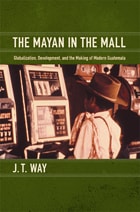
The Mayan in the Mall
Globalization, Development, and the Making of Modern GuatemalaJ. T. Way
Duke University Press, 2012
Using a wide array of historical and contemporary sources, Way explores the multiple intersections of development and individual life, focusing on the construction of social space through successive waves of land reform, urban planning, and economic policy. His explorations move from Guatemala City's poorest neighborhoods and informal economies (run predominantly by women) to a countryside still recovering from civil war and anti-Mayan genocide, and they encompass such artifacts of development as the modernist Pan-American Highway and the postmodern Grand Tikal Futura, a Mayan-themed shopping mall ringed by gated communities and shantytowns. Capitalist development, Way concludes, has dramatically reshaped the country's physical and social landscapes—engendering poverty, ethnic regionalism, and genocidal violence—and positioned Guatemala as a harbinger of globalization's future.
The Means of Prediction
How AI Really Works (and Who Benefits)Maximilian Kasy
University of Chicago Press, 2025
AI is inescapable, from its mundane uses online to its increasingly consequential decision-making in courtrooms, job interviews, and wars. The ubiquity of AI is so great that it might produce public resignation—a sense that the technology is our shared fate.
As economist Maximilian Kasy shows in The Means of Prediction, artificial intelligence, far from being an unstoppable force, is irrevocably shaped by human decisions—choices made to date by the ownership class that steers its development and deployment. Kasy shows that the technology of AI is ultimately not that complex. It is insidious, however, in its capacity to steer results to its owners’ wants and ends. Kasy clearly and accessibly explains the fundamental principles on which AI works, and, in doing so, reveals that the real conflict isn’t between humans and machines, but between those who control the machines and the rest of us.
The Means of Prediction offers a powerful vision of the future of AI: a future not shaped by technology, but by the technology’s owners. Amid a deluge of debates about technical details, new possibilities, and social problems, Kasy cuts to the core issue: Who controls AI’s objectives, and how is this control maintained? The answer lies in what he calls “the means of prediction,” or the essential resources required for building AI systems: data, computing power, expertise, and energy. As Kasy shows, in a world already defined by inequality, one of humanity’s most consequential technologies has been and will be steered by those already in power.
Against those stakes, Kasy offers an elegant framework both for understanding AI’s capabilities and for designing its public control. He makes a compelling case for democratic control over AI objectives as the answer to mounting concerns about AI's risks and harms. The Means of Prediction is a revelation, both an expert undressing of a technology that has masqueraded as more complicated and a compelling call for public oversight of this transformative technology.

The Mechanical Horse
How the Bicycle Reshaped American LifeBy Margaret Guroff
University of Texas Press, 2016
With cities across the country adding miles of bike lanes and building bike-share stations, bicycling is enjoying a new surge of popularity in America. It seems that every generation or two, Americans rediscover the freedom of movement, convenience, and relative affordability of the bicycle. The earliest two-wheeler, the draisine, arrived in Philadelphia in 1819 and astonished onlookers with the possibility of propelling themselves “like lightning.” Two centuries later, the bicycle is still the fastest way to cover ground on gridlocked city streets.
Filled with lively stories, The Mechanical Horse reveals how the bicycle transformed American life. As bicycling caught on in the nineteenth century, many of the country’s rough, rutted roads were paved for the first time, laying a foundation for the interstate highway system. Cyclists were among the first to see the possibilities of self-directed, long-distance travel, and some of them (including a fellow named Henry Ford) went on to develop the automobile. Women shed their cumbersome Victorian dresses—as well as their restricted gender roles—so they could ride. And doctors recognized that aerobic exercise actually benefits the body, which helped to modernize medicine. Margaret Guroff demonstrates that the bicycle’s story is really the story of a more mobile America—one in which physical mobility has opened wider horizons of thought and new opportunities for people in all avenues of life.
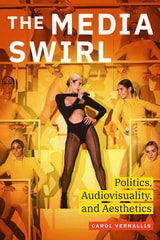
The Media Swirl
Politics, Audiovisuality, and AestheticsCarol Vernallis
Duke University Press, 2023
The Media Welfare State
Nordic Media in the Digital EraTrine Syvertsen, Gunn Enli, Ole J. Mjøs, and Hallvard Moe
University of Michigan Press, 2014
The Media Welfare State: Nordic Media in the Digital Era comprehensively addresses the central dynamics of the digitalization of the media industry in the Nordic countries—Sweden, Norway, Denmark, Finland, and Iceland—and the ways media organizations there are transforming to address the new digital environment. Taking a comparative approach, the authors provide an overview of media institutions, content, use, and policy throughout the region, focusing on the impact of information and communication technology/internet and digitalization on the Nordic media sector. Illustrating the shifting media landscape the authors draw on a wide range of cases, including developments in the press, television, the public service media institutions, and telecommunication.
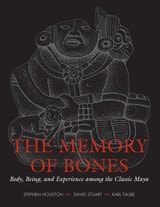
The Memory of Bones
Body, Being, and Experience among the Classic MayaBy Stephen Houston, David Stuart, and Karl Taube
University of Texas Press, 2006
All of human experience flows from bodies that feel, express emotion, and think about what such experiences mean. But is it possible for us, embodied as we are in a particular time and place, to know how people of long ago thought about the body and its experiences? In this groundbreaking book, three leading experts on the Classic Maya (ca. AD 250 to 850) marshal a vast array of evidence from Maya iconography and hieroglyphic writing, as well as archaeological findings, to argue that the Classic Maya developed a coherent approach to the human body that we can recover and understand today.
The authors open with a cartography of the Maya body, its parts and their meanings, as depicted in imagery and texts. They go on to explore such issues as how the body was replicated in portraiture; how it experienced the world through ingestion, the senses, and the emotions; how the body experienced war and sacrifice and the pain and sexuality that were intimately bound up in these domains; how words, often heaven-sent, could be embodied; and how bodies could be blurred through spirit possession.
From these investigations, the authors convincingly demonstrate that the Maya conceptualized the body in varying roles, as a metaphor of time, as a gendered, sexualized being, in distinct stages of life, as an instrument of honor and dishonor, as a vehicle for communication and consumption, as an exemplification of beauty and ugliness, and as a dancer and song-maker. Their findings open a new avenue for empathetically understanding the ancient Maya as living human beings who experienced the world as we do, through the body.
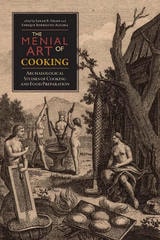
The Menial Art of Cooking
Archaeological Studies of Cooking and Food PreparationSarah R. Graff
University Press of Colorado, 2012
This book examines techniques and technologies of food preparation, the spaces where food was cooked, the relationship between cooking and changes in suprahousehold economies, the religious and symbolic aspects of cooking, the relationship between cooking and social identity, and how examining foodways provides insight into social relations of production, distribution, and consumption. Contributors use a wide variety of evidence-including archaeological data; archival research; analysis of ceramics, fauna, botany, glass artifacts, stone tools, murals, and painted ceramics; ethnographic analogy; and the distribution of artifacts across space-to identify signs of cooking and food processing left by ancient cooks.
The Menial Art of Cooking is the first archaeological volume focused on cooking and food preparation in prehistoric and historic settings around the world and will interest archaeologists, social anthropologists, sociologists, and other scholars studying cooking and food preparation or subsistence.
The Message Is Murder
Substrates of Computational CapitalJonathan Beller
Pluto Press, 2017

The Methamphetamine Industry in America
Transnational Cartels and Local EntrepreneursBrownstein, Henry H
Rutgers University Press, 2016
The Methamphetamine Industry in America describes the reality that the methamphetamine industry is a social phenomenon connecting local, national, and international communities and markets. The book details the results of a groundbreaking three-stage study, part of a joint initiative of the National Institute on Drug Abuse and the National Institute of Justice, in which police agencies across the United States were surveyed and their responses used to identify likely areas of study. The authors then visited these areas to observe and interview local participants, from users and dealers to law enforcement officers and clinical treatment workers.
Through the eyes and words of these participants, the book tells the story of the evolution of methamphetamine markets in the United States over the past several years, given changes in public policies and practices and changing public opinion about methamphetamine. The authors look closely at how the markets are part of a larger industry, how they are socially organized, and how they operate. They also consider the relationships among the people involved and those around them, and the national, regional, and local culture of the markets. Their work demonstrates the importance of understanding the business of methamphetamine—and by extension other drugs in society—through a lens that focuses on social behavior, social relationships, and the cultural elements that shape the organization and operation of this illicit but effective industry.
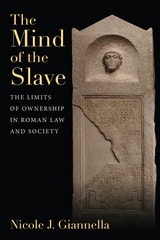
The Mind of the Slave
The Limits of Ownership in Roman Law and SocietyNicole J. Giannella
University of Michigan Press, 2026
In order to place Roman jurists in conversation with both technical and literary sources, Giannella grounds this study in philology and argues that conceptions of the mind of the slave were at the heart of legal and cultural debates about the nature of slavery and ownership. It also contributes to a wider debate about selfhood and autonomy, since philosophers often used the figure of the slave as a representation of humanity as its limits.
The Minor Intimacies of Race
Asian Publics in North AmericaChristine Kim
University of Illinois Press, 2016
The Misinterpellated Subject
James R. Martel
Duke University Press, 2017
The Mode of Information
Poststructuralism and Social ContextMark Poster
University of Chicago Press, 1990
The difference, Mark Poster argues, is the profound effect electronic mediation exerts on the very way we perceive ourselves and reality. To help decode the linguistic dimensions of our multiple forms of social interaction, he plays upon Marx's theory of the mode of production—the shift to late capitalism has a parallel in the shift from the mode of production to that of information.
Enlisting poststructuralist theory, he links four modes of communication with four poststructuralists: TV ads with Baudrillard, data bases with Foucault, electronic writing with Derrida, and computer science with Lyotard. Mode of Information points the way to a poststructuralist strategy for writing history, a framework well suited to unearthing structures of domination and the means to their disruption.
"An informed, insightful, provocative account of phenomena that have transformed virtually every area of public and private life on our time."—Robert Anchor, American Historical Review
"The importance of Poster's book is unmistakable for he skillfully negotiates between and juxtaposes two wide theoretical domains—electronically mediated communications and poststructuralist theory—about which much has been written, but hardly with the acumen that he brings to bear in a long-awaited critical rapprochement."—Charles J. Stivale, Criticism
The Modern Girl Around the World
Consumption, Modernity, and GlobalizationThe Modern Girl Around the World Research Group
Duke University Press, 2008
Scholars of history, women’s studies, literature, and cultural studies follow the Modern Girl around the world, analyzing her manifestations in Germany, Australia, China, Japan, France, India, the United States, Russia, South Africa, and Zimbabwe. Along the way, they demonstrate how the economic structures and cultural flows that shaped a particular form of modern femininity crossed national and imperial boundaries. In so doing, they highlight the gendered dynamics of interwar processes of racial formation, showing how images and ideas of the Modern Girl were used to shore up or critique nationalist and imperial agendas. A mix of collaborative and individually authored chapters, the volume concludes with commentaries by Kathy Peiss, Miriam Silverberg, and Timothy Burke.
Contributors: Davarian L. Baldwin, Tani E. Barlow, Timothy Burke, Liz Conor, Madeleine Yue Dong, Anne E. Gorsuch, Ruri Ito, Kathy Peiss, Uta G. Poiger, Priti Ramamurthy, Mary Louise Roberts, Barbara Sato, Miriam Silverberg, Lynn M. Thomas, Alys Eve Weinbaum
The Modern Israeli and Palestinian Diasporas
A Comparative ApproachEdited by Nahum Karlinsky
University of Texas Press, 2024
A comparative study of contemporary Israeli and Palestinian diasporas.
Exilic and diasporic experience have become ubiquitous in recent decades. Jews, lacking a homeland, spread to various parts of the world, making the Jewish diaspora paradigmatic. But after the establishment of Israel in 1948, a different kind of diaspora emerged, as more than a tenth of Israeli citizens have chosen to leave their newly established state and resettle. Meanwhile, about half of all Palestinians, including Palestinian citizens of Israel, now reside in exile, predominantly as a result of the ongoing Palestinian-Israeli conflict.
Recognizing that Israeli-Jewish and Palestinian-Arab societies coexist and are engaged in constant relations, Nahum Karlinsky has assembled an impressive array of contributors to explore these diasporas alongside one another and in dialogue with other diasporic communities. The collected essays cover such topics as Palestinian exiles and diasporas, the demographics of today’s Israeli diaspora, immigrant enterprises, transnationalism and development, the unique place of Israeli Jews in the United States, the literature of Palestinian transnationals, and the emergence of Berlin as a queer Israeli-Jewish immigrant enclave.The Modern Israeli and Palestinian Diasporas challenges and reimagines the very notion of a homeland.
The Modernist City
An Anthropological Critique of BrasiliaJames Holston
University of Chicago Press, 1989
The Modernization of Fatherhood
A Social and Political HistoryRalph LaRossa
University of Chicago Press, 1997
LaRossa explains that during the interwar period the image of the father as economic provider, pal, and male role model, all in one, became institutionalized. Using personal letters and popular magazine and newspaper sources, he explores how the social and economic conditions of the Roaring Twenties and the Great Depression—a period of technical innovation as well as economic hardship—fused these expectations into a cultural ideal. With chapters on the U.S. Children's Bureau, the fathercraft movement, the magazine industry and the development of Parent's Magazine, and the creation of Father's Day, this book is a major addition to the growing literature on masculinity and fatherhood.
The Moro Morality Play
Terrorism as Social DramaRobin Wagner-Pacifici
University of Chicago Press, 1986
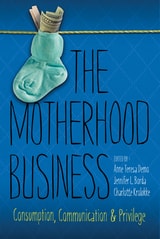
The Motherhood Business
Consumption, Communication, and PrivilegeEdited by Anne Teresa Demo, Jennifer L. Borda, and Charlotte Kroløkke
University of Alabama Press, 2015
Examining how motherhood, consumption, and privilege shape identities in contemporary culture.
The Motherhood Business is a piercing collection of ten original essays that reveal the rhetoric of the motherhood industry. Focusing on the consumer life of mothers and the emerging entrepreneurship associated with motherhood, the collection considers how different forms of privilege (class, race, and nationality) inform discourses about mothering, consumption, mobility, and leisure.
The Motherhood Business follows the harried mother’s path into the anxious maelstrom of intelligent toys, healthy foods and meals, and educational choices. It also traces how some enterprising mothers leverage cultural capital and rhetorical vision to create thriving baby- and child-based businesses of their own, as evidenced by the rise of mommy bloggers and “mompreneurs”over the last decade.
Starting with the rapidly expanding global fertility market, The Motherhood Business explores the intersection of motherhood, consumption, and privilege in the context of fertility tourism, international adoption, and transnational surrogacy. The synergy between motherhood and the marketplace demonstrated across the essays affirms the stronghold of “intensive mothering ideology” in decisions over what mothers buy and how they brand their businesses even as that ideology evolves. Across diverse contexts, the volume also identifies how different forms or privilege shape how mothers construct their identities through their consumption and entrepreneurship.
Although social observers have long commented on the link between motherhood and consumerism, little has been written within the field of rhetoric. Penetrating and interdisciplinary, The Motherhood Business illuminates how consumer culture not only shapes contemporary motherhood but also changes in response to mothers who constitute a driving force of the economy.