Results by title
4413 books match the query 'Anthropology' and 750 start with t

The Micmac Indians of Eastern Canada
Wilson D. Wallis and Ruth Sawtell Wallis
University of Minnesota Press, 1955
The Micmac Indians of Eastern Canada was first published in 1955. Minnesota Archive Editions uses digital technology to make long-unavailable books once again accessible, and are published unaltered from the original University of Minnesota Press editions.
The culture of an Indian tribe over a period of 300 years is described in this comprehensive ethnographic study by a husband and wife anthropologist team. The earliest accounts of the Micmac Indians were written by seventeenth-century French explorers and missionaries. These give historical perspective to the work done by the Wallises, whose research is based on field trips that bridged a 40-years span. Dr. Wallis first observed the Micmac tribes in 1911–12. He and Mrs. Wallis revisited them in 1950 and 1953, assessing the changes in material cultural and in orientation, drives, and motivations. In addition, they have preserved a rich collection of Micmac folktales and traditions, published as a separate section of the book.
The Middle East Remembered
Forged Identities, Competing Narratives, Contested SpacesJacob Lassner
University of Michigan Press, 2000
In the first of the book's three parts, Lassner examines what he calls the stratigraphy of the text--he makes sense of the unusual organization of medieval Islamic narrative. The second section investigates issues such as work on city planning and on the creation of imperial centers. The last portion studies the interplay between Jewish and Muslim memory and the trading of themes and ideas between the cultures.
Shorter studies in the volume have been revised, and the author weaves new and complementary essays around them. Earlier work has been transformed and made more available to the general public. The style is accessible, and technical and arcane usages have been kept to a minimum. Throughout there are flashes of the author's wry humor.
Jacob Lassner is Philip M. and Ethel Klutsnick Professor of Jewish Civilization, Northwestern University, and Professor of Middle East History, Tel Aviv University.

The Migrant's Paradox
Street Livelihoods and Marginal Citizenship in BritainSuzanne M. Hall
University of Minnesota Press, 2021
Connects global migration with urban marginalization, exploring how “race” maps onto place across the globe, state, and street
In this richly observed account of migrant shopkeepers in five cities in the United Kingdom, Suzanne Hall examines the brutal contradictions of sovereignty and capitalism in the formation of street livelihoods in the urban margins. Hall locates The Migrant’s Paradox on streets in the far-flung parts of de-industrialized peripheries, where jobs are hard to come by and the impacts of historic state underinvestment are deeply felt.
Drawing on hundreds of in-person interviews on streets in Birmingham, Bristol, Leicester, London, and Manchester, Hall brings together histories of colonization with current forms of coloniality. Her six-year project spans the combined impacts of the 2008 financial crisis, austerity governance, punitive immigration laws and the Brexit Referendum, and processes of state-sanctioned regeneration. She incorporates the spaces of shops, conference halls, and planning offices to capture how official border talk overlaps with everyday formations of work and belonging on the street.
Original and ambitious, Hall’s work complicates understandings of migrants, demonstrating how migrant journeys and claims to space illuminate the relations between global displacement and urban emplacement. In articulating “a citizenship of the edge” as an adaptive and audacious mode of belonging, she shows how sovereignty and inequality are maintained and refuted.
The Mimetic Brain
Jean-Michel Oughourlian
Michigan State University Press, 2016
Offering up clinical studies and a complete reevaluation of classical psychiatry, Oughourlian explores the interaction among reason, emotions, and imitation and reveals that rivalry—the blind spot in contemporary neuroscientific understandings of imitation—is a misunderstood driving force behind mental illness. Oughourlian’s analyses shake the very foundations of psychiatry as we know it and open up new avenues for both theoretical research and clinical practice.
The Mind of the Slave
The Limits of Ownership in Roman Law and SocietyNicole J. Giannella
University of Michigan Press, 2026
In order to place Roman jurists in conversation with both technical and literary sources, Giannella grounds this study in philology and argues that conceptions of the mind of the slave were at the heart of legal and cultural debates about the nature of slavery and ownership. It also contributes to a wider debate about selfhood and autonomy, since philosophers often used the figure of the slave as a representation of humanity as its limits.
The Minor Intimacies of Race
Asian Publics in North AmericaChristine Kim
University of Illinois Press, 2016
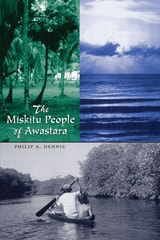
The Miskitu People of Awastara
By Philip A. Dennis
University of Texas Press, 2004
"Most anthropologists who have lived among other people . . . feel a periodic need to go back," writes Philip A. Dennis in the introduction to this book. "Fieldwork gives you a stake in the people themselves, a set of relationships that last the rest of your life . . . and when the time is right, it is important to go back."
Dennis first journeyed to Awastara, a village on the northeastern coast of Nicaragua, during 1978-1979 as a postdoctoral student. He had come to study a culture-bound syndrome in which young women are possessed by devils. In the process, he became fascinated by other aspects of Miskitu culture—turtle fishing, Miskitu Christianity, community development efforts—the whole pattern of Miskitu community life. He also formed deep friendships to carry into the future.
Twenty years later he was able to return and continue his ethnographic work. Utilizing ideas from recent interpretive anthropology and a vivid writing style, Dennis describes food habits, language, health practices, religious beliefs, and storytelling, inviting the reader to experience life in Awastara along with him. Building upon earlier work by Mary Helms, Bernard Nietschmann, Edmund Gordon, and Charles Hale, The Miskitu People of Awastara makes its own original contribution. It is the first full-length study of a coastal Miskitu community north of Puerto Cabezas, contrasting life before and after the war years of the 1980s. It will be a valuable addition to the literature on this indigenous group and should appeal to anthropologists and other social scientists, as well as all readers interested in peoples of the Caribbean coast.
The Mixe of Oaxaca
Religion, Ritual, and HealingBy Frank J. Lipp
University of Texas Press, 1991
The Mixe of Oaxaca was the first extensive ethnography of the Mixe, with a special focus on Mixe religious beliefs and rituals and the curing practices associated with them. It records the procedures, design-plan, corresponding prayers, and symbolic context of well over one hundred rituals. Frank Lipp has written a new preface for this edition, in which he comments on the relationship of Mixe religion to current theoretical understandings of present-day Middle American folk religions.
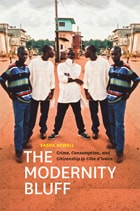
The Modernity Bluff
Crime, Consumption, and Citizenship in Côte d’IvoireSasha Newell
University of Chicago Press, 2012
In Côte d’Ivoire, appearing modern is so important for success that many young men deplete their already meager resources to project an illusion of wealth in a fantastic display of Western imitation, spending far more than they can afford on brand name clothing, accessories, technology, and a robust nightlife. Such imitation, however, is not primarily meant to deceive—rather, as Sasha Newell argues in The Modernity Bluff, it is an explicit performance so valued in Côte d’Ivoire it has become a matter of national pride.
Called bluffeurs, these young urban men operate in a system of cultural economy where reputation is essential for financial success. That reputation is measured by familiarity with and access to the fashionable and expensive, which leads to a paradoxical state of affairs in which the wasting of wealth is essential to its accumulation. Using the consumption of Western goods to express their cultural mastery over Western taste, Newell argues, bluffeurs engage a global hierarchy that is profoundly modern, one that values performance over authenticity—highlighting the counterfeit nature of modernity itself.
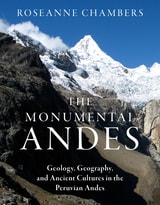
The Monumental Andes
Geology, Geography, and Ancient Cultures in the Peruvian AndesRoseanne Chambers
University of Utah Press, 2024
At once approachable and informative, The Monumental Andes tells the history of the lofty mountains and civilizations that characterize the Central Andes. The book explores many interconnected aspects of ancient Andean life, including climate, topography, agricultural methods, natural hazards, the construction of monumental structures, the creation of sophisticated art objects, and the plant-based hallucinogens and narcotics used in religious rituals. From earthquake-resistant structures to shrines on the tops of active volcanoes, ancient Andeans left behind relics that amaze and inspire today.
The Moral Neoliberal
Welfare and Citizenship in ItalyAndrea Muehlebach
University of Chicago Press, 2012

The Moral Triangle
Germans, Israelis, PalestiniansSa'red Atshan and Katharina Galor
Duke University Press, 2020
The Mound-Builders
Henry Clyde Shetrone; with a new introduction by Bradley T. Lepper
University of Alabama Press, 2004
A Dan Josselyn Memorial Publication
A classic resource on early knowledge of prehistoric mounds and the peoples who constructed them in the eastern United States
With this accessible volume, Henry Clyde Shetrone made available to general readers the archaeological research data and conclusions concerning the ancient mounds and earthworks that dot the landscape of eastern North America. Dismissing popularly held theories of mysterious giants who built these structures, he explained that their purposes were defensive and ceremonial, that they had been used for habitation, burial, and worship. Their builders were antecedents of the native peoples of present-day America and had been skilled artisans and engineers with successful agricultural practices and structured leadership.
Twenty chapters discuss aspects of mound-builder cultures: quarrying of flint and obsidian for knapping into points; mining of copper and iron and its fashioning into tools and ceremonial objects; spinning and weaving materials and methods; smoking customs; carving of calumets and their use in ceremony; freshwater pearls and other items for body ornamentation; and the use of stone burial vaults, cremation basins, and concepts of an afterlife. Data is presented from excavations ranging broadly from Massachusetts to Florida and from Texas to North Dakota.
As Bradley Lepper points out in his new introduction, "The Mound-Builders is a testament to Shetrone's success at working towards 'correlation and systematization' of data, as well as public education. . . . Shetrone was no armchair popularizer. His work was based on years of excavation and first-hand familiarity with much of the data. His popularizations [still] echo with the ring of the shovel and trowel in gravelly soil."
The Multispecies Salon
Eben Kirksey
Duke University Press, 2014
Delectable mushrooms flourishing in the aftermath of ecological disaster, microbial cultures enlivening the politics and value of food, and nascent life forms running wild in the age of biotechnology all figure in this curated collection of essays and artifacts. Recipes provide instructions on how to cook acorn mush, make cheese out of human milk, and enliven forests after they have been clear-cut. The Multispecies Salon investigates messianic dreams, environmental nightmares, and modest sites of biocultural hope.
For additional materials see the companion website: www.multispecies-salon.org/
Contributors. Karen Barad, Caitlin Berrigan, Karin Bolender, Maria Brodine, Brandon Costelloe-Kuehn, David S. Edmunds, Christine Hamilton, Donna J. Haraway, Stefan Helmreich, Angela James, Lindsay Kelley, Eben Kirksey, Linda Noel, Heather Paxson, Nathan Rich, Anna Rodriguez, Dorion Sagan, Craig Schuetze, Nicholas Shapiro, Miriam Simun, Kim TallBear, Anna Lowenhaupt Tsing
The Muse in Bronzeville
African American Creative Expression in Chicago, 1932-1950Bone, Robert
Rutgers University Press, 2011
The Muse in Bronzeville, a dynamic reappraisal of a neglected period in African American cultural history, is the first comprehensive critical study of the creative awakening that occurred on Chicago's South Side from the early 1930s to the cold war. Coming of age during the hard Depression years and in the wake of the Great Migration, this generation of Black creative artists produced works of literature, music, and visual art fully comparable in distinction and scope to the achievements of the Harlem Renaissance.
This highly informative and accessible work, enhanced with reproductions of paintings of the same period, examines Black Chicago's "Renaissance" through richly anecdotal profiles of such figures as Richard Wright, Gwendolyn Brooks, Margaret Walker, Charles White, Gordon Parks, Horace Cayton, Muddy Waters, Mahalia Jackson, and Katherine Dunham. Robert Bone and Richard A. Courage make a powerful case for moving Chicago's Bronzeville, long overshadowed by New York's Harlem, from a peripheral to a central position within African American and American studies.
The Museum in the Cultural Sciences
Collecting, Displaying, and Interpreting Material Culture in the Twentieth CenturyEdited by Peter N. Miller
Bard Graduate Center, 2021
The Museum in the Cultural Sciences offers the first full English translations of these articles, which remain influential in conversations about the implications of art, historical, and ethnographic museums. They show how sophisticated the discussion of museums and museum display was in the early twentieth century and how much could be gained from revisiting these reflections today. Accompanied by short commentaries from museum professionals, these articles offer an intervention into and intensification of the current debate about the function and purpose of museums.
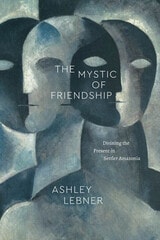
The Mystic of Friendship
Divining the Present in Settler AmazoniaAshley Lebner
University of Chicago Press, 2025
On Brazil’s Amazonian frontier, settlers pursue land and opportunity, but they also gather for prayer and pilgrimage, yearning for a deep relationship with God and one another. In this book, anthropologist Ashley Lebner examines how everyday religious practices and feelings, what she calls a mystic of friendship, shape and sustain colonization in the Amazon.
Lebner invites us to a stretch of highway in Pará, Brazil, where violent colonization coexists with prophetic dreams, Afro-Brazilian prayers, and emerging evangelicalism. She shows how, amid political tensions and physical hardship, settlers believe that the violence they experience and enact derives from the bestial nature of earthly life that must be overcome. In exposing a longing for divinely-infused friendship that animates colonization, Lebner offers a powerful new perspective on the forces driving colonialism as much as religious and political expression.
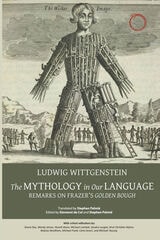
The Mythology in Our Language
Remarks on Frazer's Golden BoughLudwig Wittgenstein
HAU, 2018
In 1931 Ludwig Wittgenstein wrote his famous Remarks on Frazer’s “Golden Bough,” published posthumously in 1967. At that time, anthropology and philosophy were in close contact—continental thinkers drew heavily on anthropology’s theoretical terms, like mana, taboo, and potlatch, in order to help them explore the limits of human belief and imagination. Now the book receives its first translation by an anthropologist, in the hope that it can kick-start a new era of interdisciplinary fertilization.
Wittgenstein’s remarks on ritual, magic, religion, belief, ceremony, and Frazer’s own logical presuppositions are as lucid and thought-provoking now as they were in Wittgenstein’s day. Anthropologists find themselves asking many of the same questions as Wittgenstein—and in a reflection of that, this volume is fleshed out with a series of engagements with Wittgenstein’s ideas by some of the world’s leading anthropologists, including Veena Das, David Graeber, Wendy James, Heonik Kwon, Michael Lambek, Michael Puett, and Carlo Severi.
The NFL
Critical and Cultural PerspectivesThomas Oates
Temple University Press, 2015
The National Football League is one of the most significant cultural engines in contemporary American life. Yet despite intense and near ubiquitous media coverage, commentators rarely turn a critical lens on the league to ask what material and social forces have contributed to its success, and how the NFL has influenced public life in the United States.
The editors of and contributors to The NFL examine the league as a culturally, economically, and politically powerful presence in American life. The essays, by established and up-and-coming scholars, explore how the NFL is packaged for commercial consumption, the league's influence on American identity, and its relationship to state and cultural militarism.
The NFL is the first collection of critical essays to focus attention on the NFL as a cultural force. It boldly moves beyond popular celebrations of the sport and toward a fuller understanding of football's role in shaping contemporary sport, media, and everyday life.
Contributors include: David L. Andrews, Aaron Baker, Michael Butterworth, Jacob Dittmer, Dan Grano, Samantha King, Kyle Kusz, Toby Miller, Ronald L. Mower, Dylan Mulvin, Oliver J.C. Rick, Katie Rodgers, and the editors.
The Nahua
Language and Culture from the 16th Century to the PresentGalen Brokaw
University Press of Colorado, 2024
During the colonial period, Nahuatl became a means of empowerment, oppression, and indoctrination. In modern times, Nahuatl continues to serve as an ideological lightning rod for both the Mexican government and Indigenous communities. Contributors to this volume focus on Nahua intellectual production from the sixteenth century to the present; contact and the negotiation of meaning; adaptations of Christian lore that show how representations of creation, hell, and the Passion of Christ reflected Nahua perceptions and understandings; Nahua cultural expressions, including poetry, healing rituals, and even running; language and geography; Nahuatl place-names; and the transformation of Nahuatl speakers from antiquity to the present.
Showcasing how Nahuatl’s cultural resilience permanently shaped the region’s social geography, The Nahua engages the field’s interest in the nonhomogenous character of the language, with regional and subregional dialects and pronunciations that reflect the history of pre-Columbian migrations and modern-era influences. Bridging the study of Nahuatl as a “historical” Indigenous language tradition with the study of modern-day speakers and their experiences, this work is of significance to students, scholars, and speakers of the languages as well as those studying colonial New Spain, Indigenous resilience, or Indigenous linguistics.
The Naked Man
Mythologiques, Volume 4Claude Lévi-Strauss
University of Chicago Press, 1990
"Lévi-Strauss uses the structural method he developed to analyze and 'decode' the mythology of native North Americans, focusing on the area west of the Rockies. . . . [The author] takes the opportunity to refute arguments against his method; his chapter 'Finale' is a defense of structural analysis as well as the closing statement of this four-volume opus which started with an 'Ouverture' in The Raw and the Cooked."—Library Journal
"The culmination of one of the major intellectual feats of our time."—Paul Stuewe, Quill and Quire
The Names of the Python
Belonging in East Africa, 900 to 1930David L. Schoenbrun
University of Wisconsin Press, 2023
Grounded in Schoenbrun’s skillful mastery of historical linguistics and vernacular texts, The Names of the Python supplements and redirects current debates about ethnicity in ex-colonial Africa and beyond. This timely volume carefully distinguishes past from present and shows the many possibilities that still exist for the creative cultural imagination.
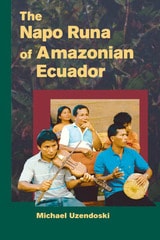
The Napo Runa of Amazonian Ecuador
Michael Uzendoski
University of Illinois Press, 2005
Michael Uzendoski's theoretically informed work analyzes value from the perspective of the Napo Runa people of the Amazonian Ecuador.
Based upon historical and archival research, as well as the author's years of fieldwork in indigenous communities, The Napo Runa of Amazonian Ecuadorpresents theoretical issues of value, poetics, and kinship as linked to the author's intersubjective experiences in Napo Runa culture. Drawing on insights from the theory of gift and value, Uzendoski argues that Napo Runa culture personifies value by transforming things into people through a process of subordinating them to human relationships. While many traditional exchange models treat the production of things as inconsequential, the Napo Runa understand production to involve a relationship with natural beings (plants, animals, and spirits of the forest) that they believe share spiritual substance, or samai. Value is the outcome of a complicated poetics of transformation by which things and persons are woven into kinship forms that define daily social and ritual life.

The Nation's Tortured Body
Violence, Representation, and the Formation of a Sikh "Diaspora"Brian Keith Axel
Duke University Press, 2001
Based on ethnographic and archival research conducted by Axel at several sites in India, England, and the United States, the text delineates a theoretical trajectory for thinking about the proliferation of diaspora studies and area studies in America and England. After discussing this trajectory in relation to the colonial and postcolonial movement of Sikhs, Axel analyzes the production and circulation of images of Sikhs around the world, beginning with visual representations of Maharaja Duleep Singh, the last Sikh ruler of Punjab, who died in 1893. He argues that imagery of particular male Sikh bodies has situated—at different times and in different ways—points of mediation between various populations of Sikhs around the world. Most crucially, he describes the torture of Sikhs by Indian police between 1983 and the present and discusses the images of tortured Sikh bodies that have been circulating on the Internet since 1996. Finally, he returns to questions of the homeland, reflecting on what the issues discussed in The Nation's Tortured Body might mean for the ongoing fight for Khalistan.
Specialists in anthropology, history, cultural studies, diaspora studies, and Sikh studies will find much of interest in this important work.
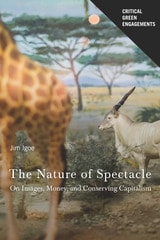
The Nature of Spectacle
On Images, Money, and Conserving CapitalismJim Igoe
University of Arizona Press, 2017
In The Nature of Spectacle, Jim Igoe embarks on multifaceted explorations of how we imagine nature and how nature shapes our imaginations. The book traces spectacular productions of imagined nature across time and space—from African nature tourism to transnational policy events to green consumer appeals in which the push of a virtual button appears to initiate a chain of events resulting in the protection of polar bears in the Arctic or jaguars in the Amazon rainforest. These explorations illuminate the often surprising intersections of consumerism, entertainment, and environmental policy. They show how these intersections figure in a strengthening and problematic policy consensus in which economic growth and ecosystem health are cast as mutually necessitating conditions. They also take seriously the potential of these intersections and how they may facilitate other alignments and imaginings that may become the basis of alternatives to our current socioecological predicaments.
The Navajo Hunter Tradition
Karl W. Luckert
University of Arizona Press, 1975
The Necromantic State
Spectral Remains in the Afterglow of Venezuela's Bolivarian RevolutionIrina R. Troconis
Duke University Press, 2025
The Need to Help
The Domestic Arts of International HumanitarianismLiisa H. Malkki
Duke University Press, 2015
The Negotiation of Urgency
Economies of Attention in an Italian Emergency RoomMirko Pasquini
Rutgers University Press, 2025
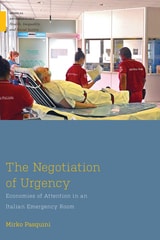
Mirko Pasquini shows that there is more than medical urgency at stake in the ER, where mistrust of medical authority is fueled and violence often sparks. He analyzes the making of urgency, that is triage, not as a neutral medical way of sorting, but as a practice that actively creates difference through economies of attention. The Negotiation of Urgency illustrates both the limits of triage, and how those limits can spark improvisation and creative reinvention.
The Neighborhood of Gods
The Sacred and the Visible at the Margins of MumbaiWilliam Elison
University of Chicago Press, 2018
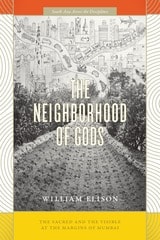
The Neighborhood of Gods explores this question, bringing an ethnographic lens to a range of visual and spatial practices: from the shrine construction that encroaches on downtown streets, to the “tribal art” practices of an indigenous group facing displacement, to the work of image production at two Bollywood film studios. A pioneering ethnography, this book offers a creative intervention in debates on postcolonial citizenship, urban geography, and visuality in the religions of India.
The Neighborhood
Space, State, and Daily Life in a Manchurian CityNianshen Song
University of Chicago Press, 2025
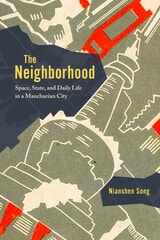
What can one neighborhood reveal about the making of a modern nation? The Neighborhood deciphers the unexpected significance of Xita, a half-square-mile quarter in Shenyang, in Northeast China. As the historian Nianshen Song shows, over nearly four centuries, Xita has been shaped and reshaped by empire, war, migration, and urban transformation. Remarkably, the history of this small area mirrors large-scale changes, including and especially China’s metamorphosis from a multiethnic Eurasian empire to a postindustrial society.
Song begins with Xita’s origins as a Qing-era Tibetan Buddhist center, following the lives of Mongol lamas and their imperial patrons. He tracks the neighborhood through the tumultuous twentieth century, when competing Russian and Japanese railway empires fueled its industrial growth, and Japanese colonizers turned it into a showcase for their imperial ambitions. Later, Xita became a vital enclave for Korea’s diaspora before emerging in the post-Mao era as a neon-lit hub of commerce and entertainment.
A thoroughly researched microhistory, The Neighborhood reveals how global forces play out in everyday spaces. By studying the emperors, warlords, merchants, laborers, and migrants who shaped Xita, Song presents a captivating and original perspective for understanding China’s past—not from the top down, but through the streets and people who lived it.

The Neoliberal Diet
Healthy Profits, Unhealthy PeopleBy Gerardo Otero
University of Texas Press, 2018
Why are people getting fatter in the United States and beyond? Mainstream explanations argue that people simply eat too much “energy-dense” food while exercising too little. By swapping the chips and sodas for fruits and vegetables and exercising more, the problem would be solved. By contrast, The Neoliberal Diet argues that increased obesity does not result merely from individual food and lifestyle choices. Since the 1980s, the neoliberal turn in policy and practice has promoted trade liberalization and retrenchment of the welfare regime, along with continued agricultural subsidies in rich countries. Neoliberal regulation has enabled agribusiness multinationals to thrive by selling highly processed foods loaded with refined flour and sugars—a diet that originated in the United States—as well as meat. Drawing on extensive empirical data, Gerardo Otero identifies the socioeconomic and political forces that created this diet, which has been exported around the globe, often at the expense of people’s health.
Otero shows how state-level actions, particularly subsidies for big farms and agribusiness, have ensured the dominance of processed foods and made healthful fresh foods inaccessible to many. Comparing agrifood performance across several nations, including the NAFTA region, and correlating food access to class inequality, he convincingly demonstrates the structural character of food production and the effect of inequality on individual food choices. Resolving the global obesity crisis, Otero concludes, lies not in blaming individuals but in creating state-level programs to reduce inequality and make healthier food accessible to all.
The Network Inside Out
Annelise Riles
University of Michigan Press, 2001
The immediate subject of Riles's ethnographic work was a group of Fijian bureaucrats and activists preparing for and participating in the United Nations Fourth World Conference on Women. Participants in this meeting and the activities surrounding it understood themselves to be "focal points" in national, regional, and global "networks."
Starting from the premise that anthropologists are "inside" the Network, that is, that they are producers, consumers, and aesthetes, not simply observers, of the artifacts of late modern institutional life, Riles enacts a new ethnographic method for turning the network "inside out." The resulting experiment in the theory and ethnography of transnational institutional practices makes an important contribution to the anthropology of knowledge.
With its focus on developing a method for studying transnational phenomena, The Network Inside Out will appeal not only to anthropologists, but also to legal scholars and political scientists.
Annelise Riles is Assistant Professor, Northwestern University School of Law, Research Fellow, American Bar Foundation.
The New World Inside A Basque Village
The Oiartzun Valley And Its Atlantic Emigrants, 1550-1800Juan Javier Pescador
University of Nevada Press, 2003
An ethnohistory detailing the lives of fifteen generations in a Basque-speaking community in Spain and the result of their diverse contacts with the New World. The Basques’ remarkable role in the establishment and exploitation of Spain’s American empire is well known, but until now the impact of these achievements on the Basque Country itself has received little attention. In this pioneering study, Juan Javier Pescador meticulously examines three centuries of social and economic change in the Oiartzun Valley of Gipuzkoa, a typical Basque peasant community altered by its contacts with the New World.
The News Event
Popular Sovereignty in the Age of Deep MediatizationFrancis Cody
University of Chicago Press, 2023
Not merely the act of representing events with words or images, a “news event” is the reciprocal relationship between the events being reported in the news and the event of the news coverage itself. In The News Event, Francis Cody focuses on how imaginaries of popular sovereignty have been remade through the production and experience of such events. Political sovereignty is thoroughly mediated by the production of news, and subjects invested in the idea of democracy are remarkably reflexive about the role of publicly circulating images and texts in the very constitution of their subjectivity. The law comes to stand as both a limit and positive condition in this process of event making, where acts of legal and extralegal repression of publication can also become the stuff of news about news makers. When the subjects of news inhabit multiple participant roles in the unfolding of public events, when the very technologies of recording and circulating events themselves become news, the act of representing a political event becomes difficult to disentangle from that of participating in it. This, Cody argues, is the crisis of contemporary news making: the news can no longer claim exteriority to the world on which it reports.
The Newspapers Of Nevada
A History And Bibliography, 1854-1979Richard E. Lingenfelter
University of Nevada Press, 1984
This new bibliography of Nevada's newspapers supersedes and greatly expands on previous works. More than 800 publications are now included: traditional newspapers, penny shoppers, comic and campaign sheets, entertainment and matrimonial guides, and fictitious newspapers that had life only in the columns of other papers. Also included is a brief appendix of early newspapers from boarder states that reported regularly on Nevada. The authors have provided a brief historical sketch of each publication, together with a list and location of known copies of the original papers, plus current microfilm holdings. The bibliography also documents frequency of publication, proprietorship, title changes, printing locations, and political affiliation. This volume will be of value to historians ranging from scholars to genealogy buffs who need access to the information only newspapers can provide.
The Night is Young
Sexuality in Mexico in the Time of AIDSHéctor Carrillo
University of Chicago Press, 2002
Carrillo finds that young Mexicans today grapple in a variety of ways with two competing tendencies. On the one hand, many seek to challenge traditional ideas and values they find limiting. But they also want to maintain a sense of Mexico's cultural distinctiveness, especially in relation to the United States. For example, while Mexicans are well aware of the dangers of unprotected sex, they may also prize the surrender to sexual passion, even in casual sexual encounters—an attitude which stems from the strong values placed on collective life, spontaneity, and an openness toward intimacy. Because these expectations contrast sharply with messages about individuality, planning, and overt negotiation commonly promoted in global public health efforts, Carrillo argues that they demand a new approach to AIDS prevention education in Mexico.
A Mexican native, Carrillo has written an exceptionally insightful and accessible study of the relations among sexuality, social change, and AIDS prevention in Mexico. Anyone concerned with the changing place of sexuality in a modern and increasingly globalized world will profit greatly from The Night Is Young.
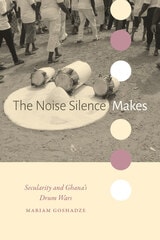
The Noise Silence Makes
Secularity and Ghana's Drum WarsMariam Goshadze
Duke University Press, 2025
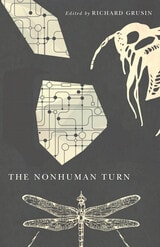
The Nonhuman Turn
Richard Grusin
University of Minnesota Press, 2015
Edited by Richard Grusin of the Center for 21st Century Studies, this is the first book to name and characterize—and therefore consolidate—a wide array of current critical, theoretical, and philosophical approaches to the humanities and social sciences under the concept of the nonhuman turn. Each of these approaches is engaged in decentering the human in favor of a concern for the nonhuman, understood by contributors in a variety of ways—in terms of animals, affectivity, bodies, materiality, technologies, and organic and geophysical systems.
The nonhuman turn in twenty-first-century studies can be traced to multiple intellectual and theoretical developments from the last decades of the twentieth century: actor-network theory, affect theory, animal studies, assemblage theory, cognitive sciences, new materialism, new media theory, speculative realism, and systems theory. Such varied analytical and theoretical formations obviously diverge and disagree in many of their assumptions, objects, and methodologies. However, they all take up aspects of the nonhuman as critical to the future of twenty-first-century studies in the arts, humanities, and social sciences.
Unlike the posthuman turn, the nonhuman turn does not make a claim about teleology or progress in which we begin with the human and see a transformation from the human to the posthuman. Rather, the nonhuman turn insists (paraphrasing Bruno Latour) that “we have never been human,” that the human has always coevolved, coexisted, or collaborated with the nonhuman—and that the human is identified precisely by this indistinction from the nonhuman.
Contributors: Jane Bennett, Johns Hopkins U; Ian Bogost, Georgia Institute of Technology; Wendy Hui Kyong Chun, Brown U; Mark B. N. Hansen, Duke U; Erin Manning, Concordia U, Montreal; Brian Massumi, U of Montreal; Timothy Morton, Rice U; Steven Shaviro, Wayne State U; Rebekah Sheldon, Indiana U.
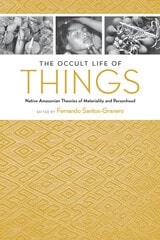
The Occult Life of Things
Native Amazonian Theories of Materiality and PersonhoodEdited by Fernando Santos-Granero
University of Arizona Press, 2009
A view so antithetical to Western thought offers a refreshing perspective on the place and role of objects in human social life—one that has remained under-studied in Amazonian anthropology. In this book, ten scholars re-introduce objects to contemporary studies of animism in order to explore how various peoples envision the lives of material objects: the occult, or extraordinary, lives of “things,” whose personas are normally not visible to lay people.
Combining linguistic, ethnological, and historical perspectives, the contributors draw on a wealth of information gathered from ten Amerindian peoples belonging to seven different linguistic families to identify the basic tenets of what might be called a native Amazonian theory of materiality and personhood. They consider which objects have subjective dimensions and how they are manifested, focusing on three domains regarding Amazonian conceptions of things: the subjective life of objects, considering which things have a subjective dimension; the social life of things, seeing the diverse ways in which human beings and things relate as subjectivities; and the historical life of things, recognizing the fact that some things have value as ritual objects or heirlooms.
These chapters demonstrate how native Amazonian peoples view animals, plants, and things as “subjectivities” possessing agency, intentionality, and consciousness, as well as a composite anatomy. They also show how materiality is intimately linked to notions of personhood, with artifacts classified as natural or divine creations and living beings viewed as cultural or constructed. The Occult Life of Things offers original insights into these elaborate native ontologies as it breaks new ground in Amazonian studies.

The Occupied Clinic
Militarism and Care in KashmirSaiba Varma
Duke University Press, 2020
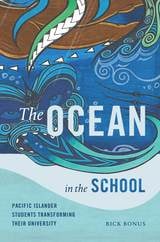
The Ocean in the School
Pacific Islander Students Transforming Their UniversityRick Bonus
Duke University Press, 2020

The Olympics at the Millennium
Power, Politics, and the GamesEdited by Kay Schaffer
Rutgers University Press, 2000
The Olympics thrill the world with spectacle and drama. They also carry a cultural and social significance that goes beyond the stadium, athletes, and fans. The Games are arenas in which individual and team athletic achievement intersect with the politics of national identity in a global context.
The Olympics at the Millennium offers groundbreaking essays that explore the cultural politics of the Games. The contributors investigate such topics as the emergence of women athletes as cultural commodities, the orchestrated spectacles of the opening and closing ceremonies, and the alternative sport culture offered via the Gay Games. Unforgettable events and decisions are discussed: Native American athlete Jim Thorpe winning—and losing—his two gold medals in 1912. Why America was one of the few countries to actually send Jewish athletes to the “Nazi Olympics.” The disqualification of champion Ewa Klobukowska from competing as a woman, due to chromosomal testing in 1967.
With the 2000 Sydney Games imminent, several essays address concerns with which every host country must contend, such as the threat of terrorism. Highlighting the difficult issues of racism and nationalism, another article explores the efforts of this country’s aboriginal people to define a role for themselves in the 2000 Games, as they struggle with ongoing discrimination. And with the world watching, Sydney faces profound pressure to implement a successful Olympics, as a matter of national pride.
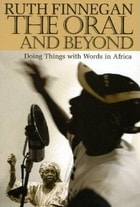
The Oral and Beyond
Doing Things with Words in AfricaRuth Finnegan
University of Chicago Press, 2007
The Oral and Beyond looks simultaneously backwards and forwards, reviewing and critiquing the achievements of scholarship on African oral literature, revisiting issues of perennial contention, and highlighting some of the most interesting new ideas and approaches in the field. Exploring such fundamental questions as how texts and textuality relate to performance, how ideology inflects language, and how traditional forms adapt to modern media and popular culture, Finnegan essentially crafts an intellectual history of her field. At the same time, she propels the ethnography of language forward, bringing the techniques and knowledge developed through her fieldwork in Africa to bear on issues that transcend African studies and reach into the larger world of anthropology and beyond.
The Origin and Development of the Pueblo Katsina Cult
E. Charles Adams
University of Arizona Press, 1991
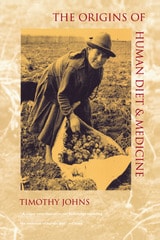
The Origins of Human Diet and Medicine
Chemical EcologyTimothy Johns
University of Arizona Press, 1990
The domestication of the potato serves as the focus of Timothy Johns’s interdisciplinary study, which forges a bold synthesis of ethnobotany and chemical ecology. The Aymara of highland Bolivia have long used varieties of potato containing potentially toxic levels of glycoalkaloids, and Johns proposes that such plants can be eaten without harm owing to human genetic modification and cultural manipulation. Drawing on additional fieldwork in Africa, he considers the evolution of the human use of plants, the ways in which humans obtain foods from among the myriad poisonous and unpalatable plants in the environment, and the consequences of this history for understanding the basis of the human diet. A natural corollary to his investigation is the origin of medicine, since the properties of plants that make them unpalatable and toxic are the same properties that make them useful pharmacologically.
As our species has adapted to the use of plants, plants have become an essential part of our internal ecology. Recovering the ancient wisdom regarding our interaction with the environment preserves a fundamental part of our human heritage.
Originally published in hardcover as With Bitter Herbs They Shall Eat It: Chemical Ecology and the Origins of Human Diet and Medicine

The Other Justice
State Impunity and Maya Re-existence after the Acteal MassacreClaudia Chávez Argüelles
University of Texas Press, 2027
How the Mexican state secured impunity after the 1997 Acteal Massacre in Chiapas, and how Maya survivors reimagine justice through embodied, collective practices of memory, healing, and political autonomy.
In December 1997, forty-five Tsotsil Maya, most of them women and children, were killed in a state-backed paramilitary attack in Acteal, Chiapas––one of the starkest cases of state violence in contemporary Mexico. Yet, as Claudia Chávez Argüelles shows, the counterinsurgent violence unleashed at Acteal did not end with the massacre, but continued in its aftermath as state impunity became a form of governance. Drawing on legal archives and long-term collaborative ethnographic research with survivors and their organization, Las Abejas, Chávez maps the social life of their testimonies across judicial rulings, media narratives, and academic interventions. Her analysis reveals how the state forged a racializing legal truth that discredits Indigenous survivors’ ways of knowing, masks the slaughter’s feminicidal dimensions, and shields state officials from accountability. Against this logic of erasure, the book traces how Las Abejas has cultivated “the Other Justice,” a horizon of re-existence rooted in embodied, collective practices of memory, healing, and autonomy. Exposing the human toll of impunity and the decolonizing force of Las Abejas’ struggle, The Other Justice redefines what justice can mean beyond the confines of law.

The Other Side of the Fence
American Migrants in MexicoBy Sheila Croucher
University of Texas Press, 2009
A growing number of Americans, many of them retirees, are migrating to Mexico's beach resorts, border towns, and picturesque heartland. While considerable attention has been paid to Mexicans who immigrate to the U.S., the reverse scenario receives little scrutiny. Shifting the traditional lens of North American migration, The Other Side of the Fence takes a fascinating look at a demographic trend that presents significant implications for the United States and Mexico.
The first in-depth account of this trend, Sheila Croucher's study describes the cultural, economic, and political lives of these migrants of privilege. Focusing primarily on two towns, San Miguel de Allende in the mountains and Ajijic along the shores of Lake Chapala, Croucher depicts the surprising similarities between immigrant populations on both sides of the border. Few Americans living in Mexico are fluent in the language of their new land, and most continue to practice the culture and celebrate the national holidays of their homeland, maintaining close political, economic, and social ties to the United States while making political demands on Mexico, where they reside.
Accessible, timely, and brimming with eye-opening, often ironic, findings, The Other Side of the Fence brings an important perspective to borderlands debates.
The Otherness of Self
A Genealogy of Self in Contemporary ChinaXin Liu
University of Michigan Press, 2002
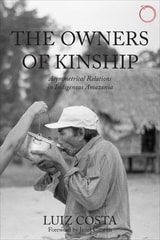
The Owners of Kinship
Asymmetrical Relations in Indigenous AmazoniaLuiz Costa
HAU, 2017
Building on anthropological studies of the acquisition, distribution, and consumption of food and its role in establishing relations of asymmetrical mutuality and kinship, this book breaks theoretical ground for studies in Amazonia and beyond. By investigating how the feeding relation traverses Kanamari society—from the relation between women and the pets they raise, shaman and familiar spirit, mother and child, chiefs and followers, to those between the Brazilian state and the Kanamari—The Owners of Kinship reveals how the mutuality of kinship is determined by the asymmetry of ownership.