1566 books match the query 'Christianity' and 410 start with t
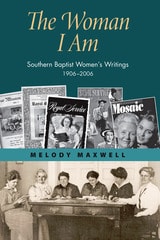
cover of The Woman I Am: Southern Baptist Women's Writings, 1906–2006

The Woman I Am

Southern Baptist Women's Writings, 1906–2006

Melody Maxwell

University of Alabama Press, 2014

Melody Maxwell’s The Woman I Am analyzes the traditional, progressive, and potential roles female Southern Baptist writers and editors portrayed for Southern Baptist women from 1906 to 2006, particularly in the area of missions.

The Southern Baptist Convention (SBC) represents the largest Protestant denomination in the United States, yet Southern Baptist women’s voices have been underreported in studies of American religion and culture. In The Woman I Am, Melody Maxwell explores how female Southern Baptist writers and editors in the twentieth century depicted changing roles for women and responded to the tensions that arose as Southern Baptist women assumed leadership positions, especially in the areas of missions and denominational support.

Given access to a century of primary sources and archival documents, Maxwell writes, as did many of her subjects, in a style that deftly combines the dispassionate eye of an observer with the multidimensional grasp of a participant. She examines magazines published by Woman’s Missionary Union (WMU), an auxiliary to the SBC: Our Mission Fields (1906–1914), Royal Service (1914–1995), Contempo (1970–1995), and Missions Mosaic (1995–2006). In them, she traces how WMU writers and editors perceived, constructed, and expanded the lives of southern women.

Showing ingenuity and resiliency, these writers and editors continually, though not always consciously, reshaped their ideal of Christian womanhood to better fit the new paths open to women in American culture and Southern Baptist life. Maxwell’s work demonstrates that Southern Baptists have transformed their views on biblically sanctioned roles for women over a relatively short historical period.

How Southern Baptist women perceive women’s roles in their churches, homes, and the wider world is of central importance to readers interested in religion, society, and gender in the United States. The Woman I Am is a tour de force that makes a lasting contribution to the world’s understanding of Southern Baptists and to their understanding of themselves.
[more]
cover of The Word and Its Witness: The Spiritualization of American Realism

The Word and Its Witness

The Spiritualization of American Realism

Gregory S. Jackson

University of Chicago Press, 2009

“What would Jesus do?” is now a rhetorical fixture, but the phrase was first popularized in the nineteenth century’s best-selling novel In His Steps. Charles Sheldon’s book is part of the vast, but mostly overlooked, history of evangelical culture that began during the Great Awakening. In this groundbreaking study, Gregory S. Jackson reveals the full impact of this tradition by exploring the development of religious media in America.

Jackson shows how the homiletic tradition in Protestant sermons provided a foundation for the development of visual and literary realism. Evangelical preachers and writers used vivid language grounded in everyday life to translate abstract concepts like hell into concrete reality—a key influence on realist authors that brought about the more secular forms of the movement we know today. This emphasis on the sensuous also paved the way for Protestantism’s embrace of new media, evident in the photographs of Jacob Riis as well as the video game Left Behind: Eternal Forces.

With its remarkable scope and timely insights into the interplay between religion, secularism, and politics, The Word and Its Witness will transform the way we understand American realism and American religion.

[more]
cover of The Word and the Law

The Word and the Law

Milner S. Ball

University of Chicago Press, 1993
Milner Ball takes an experimental journey into the inner life of law and the careers of men and women who use it to help disadvantaged people and to strengthen the fabric of the communities in which they live. At the center of this book are portraits of seven contemporary legal practitioners—lawyers, judges, and advocates—who have devoted their lives to an unconventional vision of the law. In their work, in areas from New York City housing court to the Warm Springs reservation in Oregon, the law exemplifies fundamental human values, manifestations of what Ball calls the "Word," the presence of God in life. To develop this concept of the Word, Ball explores its workings in familiar literary and biblical texts, primarily William Faulkner's The Sound and the Fury, Toni Morrison's Beloved, the Book of Isaiah, and the Gospel of Mark.
[more]
cover of The Word of God: Essays on Mormon Scripture

The Word of God

Essays on Mormon Scripture

Dan Vogel

Signature Books, 1990

Editor’s Introduction
by Dan Vogel

[p.vii]Belief in continuing revelation and an open canon of scripture distinguishes Mormonism from mainstream Christianity. That the church founded by Joseph Smith would proceed on grounds of continuing revelation was established at the outset. The day the church was organized, 6 April 1830, Joseph Smith dictated a revelation commanding the church to “give heed unto all his words and commandments which he shall give unto you as he receiveth them,… for his words ye shall receive, as if from mine own mouth, in all patience and faith” (LDS D&C 21:4-5; RLDS D&C 19:2). Another revelation declared that the Lord had “given him the keys of the mysteries, and the revelations which are sealed” (LDS D&C 28:7; RLDS D&C 27:12). The principle of continuing revelation insured a gradual unfolding and canonization of various doctrines.

In addition to the Bible, the official canon of the Utah-based Church of Jesus Christ of Latter-day Saints includes the Book of Mormon (first published in Palymra, New York, in 1830), the Doctrine and Covenants (issued in 1833 as A Book of Commandments [incomplete] and in 1835 in Kirtland, Ohio), and the Pearl of Great Price (first published in England in 1851 and republished with changes in Salt Lake City in 1880). This latter volume of scripture contains selections from Joseph Smith’s writings including the Book of Moses (extracted from Smith’s “inspired version” or “translation” of the Bible) and the Book of Abraham (taken from Smith’s interpretation of an ancient Egyptian papyrus). The Reorganized Church of Jesus Christ of Latter Day Saints, headquartered in Independence, [p.viii] Missouri, the second largest institution tracing its origins to Joseph Smith, publishes its own editions of the Book of Mormon and Doctrine and Covenants, as well as Smith’s revision of the Bible, but has not canonized the Book of Abraham.

All but one of the following fifteen essays chosen for inclusion in The Word of God: Essays on Mormon Scripture were written by Mormons from either the LDS or RLDS tradition. (The exception is Susan Curtis.) However, rather than being guided by institutional imperatives, each author has attempted to understand Mormon scripture on its own terms. Additionally, each essay wrestles with the problem of the human and the divine in scripture.

Because one’s belief about revelation affects how one approaches scripture, debate about scriptural interpretation often centers on the nature of revelation. The written “word of God” does not come to us direct but rather through human intermediaries. In the words of J. R. Dummelow, writing in A Commentary on The Holy Bible (New York) in 1908, “It is as sunlight through a painted window—the light must come to us coloured by the medium… It is foolish to ignore the existence of the human medium through which the light has come” (p. cxxxv). Book of Mormon prophets, for instance, repeatedly express anxiety over human limitations to convey in language their spiritual teachings. Nephi prays that “the words which I have written in weakness will be made strong” (LDS 2 Ne. 33:4; RLDS 2 Ne. 15:5), and Moroni writes, “if there are faults they are the mistakes of men; wherefore, condemn not the things of God” (Title Page); A position which does not account for the human in revelation will undoubtedly produce disillusionment or distortion.

To consider the human aspects of prophets, revelation, or scripture does not detract from religion, as some traditionalists fear. On the contrary, what cultural and environmental studies challenge are simplistic assumptions about the nature of revelation. Again, Dummelow notes, “Because of our false theory of Verbal Inspiration we are puzzled when the divine is mingled with the human. We must learn that the divine is mingled with the human” (ibid.). We must seek a definition of revelation which accounts for the spectrum of characteristics we encounter in scripture.

Even when we acknowledge the human in revelation and scripture, what exactly is its role and influence? These are not easy [p.ix] questions to answer. But the more precise our identification of human influence on scripture, the more refined our definition of revelation will become. It is hoped that this collection of essays will contribute to that process of understanding.

An awareness of revelation and scripture is an ongoing process and there are differing positions. Readers should therefore understand that neither the authors nor the editor necessarily agree with the views and conclusions reached in all of the essays that follow.

Appreciation is extended to the following authors and publications for permission to reproduce, sometimes in a different format and/or under a different title, many of the essays appearing here: to Dialogue: A Journal of Mormon Thought for essays by Kevin L. Barney, Lester E. Bush, A. Bruce Lindgren, William D. Russell, and George D. Smith; to Sunstone for essays by Anthony A. Hutchinson, Melodie Moench Charles, and Mark D. Thomas; to the John Whitmer Historical Association Journal for essays by Susan Curtis and James E. Lancaster; to Courage for the essay by Richard P. Howard; and to University Bulletin (RLDS) for the essay by Geoffrey F. Spencer. Three of the essays—”Joseph Smith’s Scriptural Cosmology,” by Dan Vogel and Brent Lee Metcalfe; and “Reducing Dissonance: The Book of Abraham as a Case Study” and “Making the Scriptures ‘Indeed One in Our Hands,'” both by Edward H. Ashment—are published here for the first time.

Throughout the essays standardized parenthetical scriptural references are provided for the most recent editions published by both the LDS and RLDS churches. Thus LDS D&C 76:1 refers to the most recent edition of the Doctrine and Covenants published by the LDS church, section 76, verse 1. RLDS 1 Ne. 2:4 refers to the Book of First Nephi, chapter 2, verse 4, in the most recent edition of the Book of Mormon published by the RLDS church. JST means the Joseph Smith translation of the King James Bible published by the RLDS church; Moses to the Book of Moses and Abr. to the Book of Abraham as found in current editions of the Pearl of Great Price (PGP) published by the LDS church.[p.1]
[more]
cover of The Word of Truth, Sealed by the Spirit: Perspectives on the Inspiration and Truth of Sacred Scripture

The Word of Truth, Sealed by the Spirit

Perspectives on the Inspiration and Truth of Sacred Scripture

Matthew C. Genung

Saint Paul Seminary Press, 2022
The Word of Truth, Sealed by the Spirit is a collection of seven essays pertaining to the topic of biblical inspiration and truth. Two chapters provide a critical analysis of the Pontifical Biblical Commission’s 2014 document The Inspiration and Truth of Sacred Scripture and reflect upon its relevance and outcome. Five chapters respond to a particular aspect of this document by investigating a hermeneutical or exegetical question in order to advance the dialogue on the questions of biblical inspiration and truth. This book is intended not only for Catholic seminary and university professors and students but also Protestant scholars and students, as well as catechized lay people of all Christian denominations. Luis Sánchez-Navarro, DCJM, writes on the importance of understanding the relationship between revelation, biblical inspiration, and truth for both biblical interpretation and for Christian living. Michael Magee provides a critical analysis of the PBC document by situating it within the recent history of the Church’s attempts to clarify the theology of biblical inspiration and truth. Matthew C. Genung studies Exodus 19 in its context, showing that the Bible itself indicates that its nature as emended Scripture pertains to its inspired character. Anthony Pagliarini writes about the Book of Ezekiel as inspired Scripture given the non-fulfillment of Ezekiel’s prophetic vision of the restored Temple. Aaron Pidel, SJ, analyzes Joseph Ratzinger’s writings on hermeneutics and biblical theology, to propose a reliable methodology for determining the historicity of conflicting biblical reports. Marcin Kowalski, analyzing 1 Corinthians 11:2–16, addresses the question of the inspired character of a text at variance with changing gender roles in society. Kelly Anderson evaluates biblical texts depicting an inner-trinitarian dialogue in order to shed light on the relationship of inspired Scripture to the eternal dialogue of God.
[more]
cover of The World of Early Egyptian Christianity: Language, Literature, and Social Context (CUA Studies in Early Christianity)

The World of Early Egyptian Christianity

Language, Literature, and Social Context (CUA Studies in Early Christianity)

James E. Goehring

Catholic University of America Press, 2007
With increasing interest in early Egyptian (Coptic) Christianity, this volume offers an important collection of essays about Coptic language, literature, and social history by the very finest authors in the field. The essays explore a wide range of topics and offer much to the advancement of Coptic studies
[more]
cover of The Writer and Religion

The Writer and Religion

Edited by William H. Gass and Lorin Cuoco

Southern Illinois University Press, 2000

“Every significant religious system stands upon a sacred text. This text is indeed its temple. Inside, its heroes and their history are enshrined. Although leaders of varying degrees of divinity are always involved in the creation of a new sect, they usually have short lives, often come to bad ends, and their influence, diluted by disciples, soon disappears as water does in sand. What the leader leaves behind is Mein Kampf or its equivalent: his testament. Occasionally, by the indolent, an existent text is chosen, or a compilation selected—a golden treasury. From time to time, other writings may be dubbed divine, as though knighted. This is not a simple social thing, however. It is more important than a nation adding to its territories. Any addition to the divine canon will approve, proscribe, or admit new thoughts, new practices, and in consequence elevate different people to positions of privilege and power.”—William H. Gass

These essays and panel discussions made up The Writer and Religion Conference held at Washington University in St. Louis. The six essays, all by writers of international stature, were followed by panel discussions, with audience participation.
[more]
cover of The Writings of Norman Maclean: Seeking Truth amid Tragedy

The Writings of Norman Maclean

Seeking Truth amid Tragedy

Timothy P. Schilling

University of Nevada Press, 2024

With a foreword by John N. Maclean, son of Norman Maclean

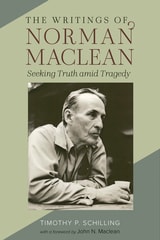
The Writings of Norman Maclean: Seeking Truth amid Tragedy provides the first critical reassessment of this celebrated author’s work in more than a decade. In his study, Timothy P. Schilling focuses on Maclean’s attempt, in A River Runs through It and Other Stories and Young Men and Fire, to come to grips with the tragic side of human existence. From the 1938 death of his brother Paul to the 1949 deaths of thirteen firefighters in Montana’s Mann Gulch wildfire, Maclean is driven by a desire to discover ultimate meaning—the truth—in the face of haunting tragedy. Through careful analysis of all of Maclean’s published works, Schilling highlights the audaciousness of Maclean’s quest to wrest free an answer from “the universe.” 

Ever open to scientific, literary, philosophical, and theological ways of viewing reality, Maclean found ambiguity, paradoxically, to be an essential tool for probing the truth. Beyond exploring Maclean’s use of this tool, Schilling breaks new ground by considering Maclean’s invocation of the Transcendentals in “A River Runs through It,” noting the sly homage Maclean pays to Izaak Walton, examining Maclean’s often-neglected “Other Stories,” assessing Robert Redford’s film adaptation of “A River Runs through It,” and providing the most thorough exploration of Young Men and Fire yet available.

With this book, Schilling offers a current and complete analysis of Maclean—one of the most iconic figures in Western American literature.
[more]
cover of The third spring: G.K. Chesterton, Graham Greene, Christopher Dawson, and David Jones

The third spring

G.K. Chesterton, Graham Greene, Christopher Dawson, and David Jones

Adam Schwartz

Catholic University of America Press, 2005
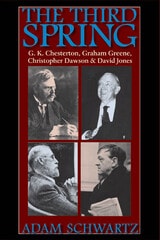
This book is the first detailed examination of these four authors as part of a Roman Catholic, counter-modern community of discourse. It is informed by extensive research in the writers' works, scholarship on them, and their personal papers.
[more]
cover of Then Sings My Soul: The Culture of Southern Gospel Music

Then Sings My Soul

The Culture of Southern Gospel Music

Douglas Harrison

University of Illinois Press, 2012
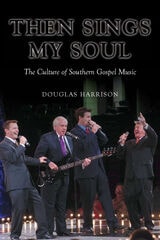
In this ambitious book on southern gospel music, Douglas Harrison reexamines the music's historical emergence and its function as a modern cultural phenomenon. Rather than a single rhetoric focusing on the afterlife as compensation for worldly sacrifice, Harrison presents southern gospel as a network of interconnected messages that evangelical Christians use to make individual sense of both Protestant theological doctrines and their own lived experiences. Harrison explores how listeners and consumers of southern gospel integrate its lyrics and music into their own religious experience, building up individual--and potentially subversive--meanings beneath a surface of evangelical consensus.
 
Reassessing the contributions of such figures as Aldine Kieffer, James D. Vaughan, and Bill and Gloria Gaither, Then Sings My Soul traces an alternative history of southern gospel in the twentieth century, one that emphasizes the music's interaction with broader shifts in American life beyond the narrow confines of southern gospel's borders. His discussion includes the "gay-gospel paradox"--the experience of non-heterosexuals in gospel music--as a cipher for fundamentalism's conflict with the postmodern world.
[more]
cover of Theology Needs Philosophy

Theology Needs Philosophy

Matthew L. Lamb

Catholic University of America Press, 2016
Theology Needs Philosophy brings together essays by leading theologians and philosophers on the fundamental importance of human reason and philosophy for Catholic theology and human cultures generally. This edited collection studies the contributions of reason, with its acquired wisdom, science, and scholarship, in five sections. Those sections are: (1) the inevitable presence and service of philosophy in theology; (2) the metaphysics of creation, nature, and the natural knowledge of God; (3) the history of Logos as reason in the fathers, in St. Thomas Aquinas, and Medieval Biblical commentaries; (4) the role of reason in Trinitarian theology, Christology, and Mariology; and finally (5) reason in the theology of Aquinas.
[more]
cover of Theology and the Political: The New Debate, sic v

Theology and the Political

The New Debate, sic v

Creston Davis, John Milbank and Slavoj Žižek, eds.

Duke University Press, 2005

The essays in Theology and the Political—written by some of the world’s foremost theologians, philosophers, and literary critics—analyze the ethics and consequences of human action. They explore the spiritual dimensions of ontology, considering the relationship between ontology and the political in light of the thought of figures ranging from Plato to Marx, Levinas to Derrida, and Augustine to Lacan. Together, the contributors challenge the belief that meaningful action is simply the successful assertion of will, that politics is ultimately reducible to “might makes right.” From a variety of perspectives, they suggest that grounding human action and politics in materialist critique offers revolutionary possibilities that transcend the nihilism inherent in both contemporary liberal democratic theory and neoconservative ideology.

Contributors. Anthony Baker, Daniel M. Bell Jr., Phillip Blond, Simon Critchley, Conor Cunningham, Creston Davis, William Desmond, Hent de Vries, Terry Eagleton, Rocco Gangle, Philip Goodchild, Karl Hefty, Eleanor Kaufman, Tom McCarthy, John Milbank, Antonio Negri, Catherine Pickstock, Patrick Aaron Riches, Mary-Jane Rubenstein, Regina Mara Schwartz, Kenneth Surin, Graham Ward, Rowan Williams, Slavoj Žižek
[more]
cover of Theology as an Ecclesial Discipline: Ressourcement and Dialogue

Theology as an Ecclesial Discipline

Ressourcement and Dialogue

J. Augustine Di Noia

Catholic University of America Press, 2024
The practice of theology depends in part on asking the right questions. Not any sorts of questions, not idle questions, nor questions framed entirely by our own experience or the great issues of our times, but good theological questions focus the mind of the inquirer on the endlessly intelligible self-revelation of God to which the Sacred Scripture bears witness. Our own questions and the great questions of our times have a place, as long as they are purged of the ideological outlooks that can suppress or obscure the questions that the sacra pagina itself presses upon us. Among the essays gathered in Theology as an Ecclesial Discipline, the first set directs the reader’s attention precisely to questions that trace the distinctive features of the nature of theology itself. What are the principles and scope of the field of theology as practiced by believers in an ecclesial context? Are historical-critical methods of exegesis compatible with a properly theological interpretation of the Scriptures? How can theology have a place in the academy as an intellectual discipline if the Magisterium seems to limit the scope of its inquiries? The second part considers a range of questions that preoccupy contemporary Protestant and Catholic theologians. Can the names Father, Son and Holy Spirit be replaced by more inclusive titles in doctrine and liturgy? By placing humanity at the center of theological investigation, is Christian humanism distinct from secular humanism? How can we be guilty of a sin committed by our first ancestors? Can the Christian vision of procreative human sexuality survive the cultural onslaught of the sexual revolution? The questions in the third part of this book arise from Catholic dialogue with non-Christian religions, or with other Christian communities, or with conceptions of a cosmos in ecological crisis. Is there a future for Catholic theology of religions? How can people who do not believe in Christ be saved? Is the cosmos a safe environment for human beings, or, alternatively, how can the cosmos be protected from human depredation? Can the concept of “church” stretch far enough to encompass Christian communities that see themselves as strictly local and independent bodies?
[more]
cover of Theology of Money

Theology of Money

Philip Goodchild

Duke University Press, 2009

Theology of Money is a philosophical inquiry into the nature and role of money in the contemporary world. Philip Goodchild reveals the significance of money as a dynamic social force by arguing that under its influence, moral evaluation is subordinated to economic valuation, which is essentially abstract and anarchic. His rigorous inquiry opens into a complex analysis of political economy, encompassing markets and capital, banks and the state, class divisions, accounting practices, and the ecological crisis awaiting capitalism.

Engaging with Christian theology and the thought of Carl Schmitt, Georg Simmel, Karl Marx, Adam Smith, and many others, Goodchild develops a theology of money based on four contentions, which he elaborates in depth. First, money has no intrinsic value; it is a promise of value, a crystallization of future hopes. Second, money is the supreme value in contemporary society. Third, the value of assets measured by money is always future-oriented, dependent on expectations about how much might be obtained for those assets at a later date. Since this value, when realized, will again depend on future expectations, the future is forever deferred. Financial value is essentially a degree of hope, expectation, trust, or credit. Fourth, money is created as debt, which involves a social obligation to work or make profits to repay the loan. As a system of debts, money imposes an immense and irresistible system of social control on individuals, corporations, and governments, each of whom are threatened by economic failure if they refuse their obligations to the money system. This system of debt has progressively tightened its hold on all sectors and regions of global society. With Theology of Money, Goodchild aims to make conscious our collective faith and its dire implications.
[more]
cover of Theology of Peter Damian

Theology of Peter Damian

Patricia Ranft

Catholic University of America Press, 2012
In the first comprehensive work based wholly on critical editions of Damian's writings, Ranft explores all 180 letters of Damian and his vita of Romuald.
[more]
cover of These Saints are Stones

These Saints are Stones

Tullis, Millie

Signature Books, 2026

In Millie Tullis’s new poetry collection, These Saints are Stones, a faithless daughter is haunted by her third-great-grandmother, Martha, a woman who married her stepfather at sixteen and became a sister-wife to her own mother. Tullis cannot stop uncovering details about Martha, who left no written history behind, and her silence permeates this collection, which is rife with gaps and fragments, scraps of memory that blend with dreams. Sparse and spare, these poems echo the red desert landscape where the speaker’s ancestors lived and died, where she hunts for graves among the rocks and confronts a past she can never fully know. After all, like a sampling of lace, the cloth of women’s history is more hole than thread.
[more]
cover of They Sought a Land: A Settlement in the Arkansas River Valley, 1840–1870

They Sought a Land

A Settlement in the Arkansas River Valley, 1840–1870

William Oates Ragsdale

University of Arkansas Press, 1997

They Sought a Land, originally published in 1997, is the study of the rise and decline of a group of pioneers from the Carolinas who came to the Arkansas River Valley in the mid nineteenth century. Pisgah, as their settlement came to be known, drew five hundred pioneers from 1840 to 1870, forming a community bound by blood, friendship, and a strong Calvinist heritage.

Pisgah grew and prospered, developing increasingly successful farming practices, landholding patterns, and trading strategies. But the Civil War took a heavy toll, taking workers away from farms, subjecting those left on the home front to deprivation and violence, and creating division in the community. By 1870, the people of Pisgah had dispersed into Arkansas’s larger developing society.

Absorbing to read and rich with colorful detail, They Sought a Land is an important story of the westward expansion of the United States and the settling of the American South during the nineteenth century.
[more]
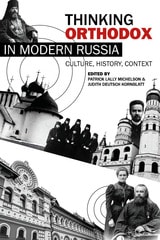
cover of Thinking Orthodox in Modern Russia: Culture, History, Context

Thinking Orthodox in Modern Russia

Culture, History, Context

Edited by Patrick Lally Michelson and Judith Deutsch Kornblatt

University of Wisconsin Press, 2014

Thinking Orthodox in Modern Russia illuminates the significant role of Russian Orthodox thought in shaping the discourse of educated society during the imperial and early Soviet periods. Bringing together an array of scholars, this book demonstrates that Orthodox reflections on spiritual, philosophical, and aesthetic issues of the day informed much of Russia’s intellectual and cultural climate.
            Volume editors Patrick Lally Michelson and Judith Deutsch Kornblatt provide a historical overview of Russian Orthodox thought and a critical essay on the current state of scholarship about religious thought in modern Russia. The contributors explore a wide range of topics, including Orthodox claims to a unique religious Enlightenment, contests over authority within the Russian Church, tensions between faith and reason in academic Orthodoxy, the relationship between sacraments and the self, the religious foundations of philosophical and legal categories, and the effect of Orthodox categories in the formation of Russian literature.
[more]
cover of Thinking with St. John Paul II: JP2 Lectures, 2020/2021

Thinking with St. John Paul II

JP2 Lectures, 2020/2021

Darliusz Karlowicz

Angelicum University Press Fundacja Swietego Mik, 2021

[more]
cover of Thinking with St. John Paul II: Vol 2 (2021-2022)

Thinking with St. John Paul II

Vol 2 (2021-2022)

Dariusz Karlowicz

Angelicum University Press Fundacja Swietego Mik, 2025

Thinking with St. John Paul II vol. IIis a result of a series of monthly "JP2 Lectures" held in the academic year 2021/2022 at the Pontifical University of St. Thomas Aquinas-Angelicum in Rome. The "JP2 Lectures" have been introduced to the Angelicum's curriculum by the St. John Paul II Institute of Culture as lectures open to the public and promoting reflection on a wide range of topics in the light of St. John Paul II's intellectual and spiritual legacy. The authors of texts printed in this volume are some of the most prominent intellectuals of our time from across the world. Volume II is nine texts from John Lord Alderdice, Jean-Luc Marion, George Weigel, Andrea Riccardi, John Milbank, Carl A. Anderson, Ewa Thompson and Stanisław Grygiel. Topics include i.a. questions relating to the role of religion in modern European society, reflections of lessons drawn from JP's social and anthropological teaching and summaries of the pontificate from a historical perspective.
[more]
cover of Thinking with St. John Paul II: Vol. 3 (2022-2023)

Thinking with St. John Paul II

Vol. 3 (2022-2023)

Dariusz Karlowicz

Angelicum University Press Fundacja Swietego Mik, 2025

Thinking with St. John Paul II vol. III is a result of a series of monthly "JP2 Lectures" held in the academic year 2022/2023 at the Pontifical University of St. Thomas Aquinas-Angelicum in Rome. The "JP2 Lectures" have been introduced to the Angelicum's curriculum by the St. John Paul II Institute of Culture as lectures open to the public and promoting reflection on a wide range of topics in the light of St. John Paul II's intellectual and spiritual legacy. The authors of texts included in this volume are some of the most prominent intellectuals of our time from across the world. Volume III is eight texts from 2022/23 by Antoine Arjakovsky, Mirosława Grabowska, Vittorio Possenti, W.H. Weiler, s. Helen Alford, O.P., Dariusz Karłowicz, Rusty R. Reno, and Fr. Franciszek Longchamps de Berier. Topics include i.a. questions relating the theory and reality of secularisation and the crisis and polarisation of Europe in a Christian perspective.
[more]
cover of This Insatiable August

This Insatiable August

Clark, Maureen

Signature Books, 2024
August is an insatiable month. Whether it is a dry spell, drought, or simply parched with want, or filled with thunderstorm, deluge, destruction of property or ideals, it is the place of scarcity or cloudburst, beginnings, or endings. The month of August is the focal point of what this author describes as insatiable. In these poems, she identifies the numerous places in our human experience where we face insatiability, where we are ravenous with desire for greatness, passionate for education, even if, like Vesalius, we get it wrong. We lust after partners we cannot have; yearn for true love; we are voracious for sex. We fall in love with language, buttons, umbrellas, light, and silence. We live in agony and rage at the death of a loved one, or even obsession with a child lost in the mountains whose body is never found. We are insatiable in religious belief, even when it drains us of our time, our creativity, even our own souls. Our appetites direct our lives even if we think we have a foundation of basic beliefs to keep us afloat. In these poems, what we know and what we think we know come down to a thin string of possibility.
[more]
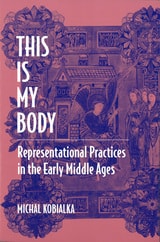
cover of This Is My Body: Representational Practices in the Early Middle Ages

This Is My Body

Representational Practices in the Early Middle Ages

Michal Kobialka

University of Michigan Press, 2003

The recipient of the annual Award for Outstanding Book in Theatre Practice and Pedagogy from the Association for Theatre in Higher Education, This Is My Body realigns representational practices in the early Middle Ages with current debates on the nature of representation. Michal Kobialkai's study views the medieval concept of representation as having been in flux and crossed by different modes of seeing, until it was stabilized by the constitutions of the Fourth Lateran Council in 1215. Kobialka argues that the concept of representation in the early Middle Ages had little to do with the tradition that considers representation in terms of Aristotle or Plato; rather, it was enshrined in the interpretation of Hoc est corpus meum [This is my body] -- the words spoken by Christ to the apostles at the Last Supper -- and in establishing the visibility of the body of Christ that had disappeared from view.
Michal Kobialka is Professor in the Department of Theatre Arts and Dance at the University of Minnesota.
[more]
cover of Thomas Aquinas Today: Still the Common Doctor?

Thomas Aquinas Today

Still the Common Doctor?

Andrew Hofer

Catholic University of America Press, 2026
[more]
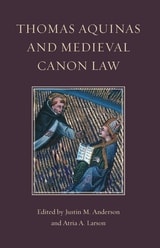
cover of Thomas Aquinas and Medieval Canon Law

Thomas Aquinas and Medieval Canon Law

Justin M. Anderson

Catholic University of America Press, 2025
Thomas Aquinas and Medieval Canon Law bridges, for the first time, two worlds of scholarship that have never been explored in book-length form and investigates an under-researched area in Thomistic studies, namely the question of how Thomas Aquinas engaged the ecclesiastical law and jurisprudence of his day. Neither historians of medieval canon law nor experts on Thomas's thought have previously paid much attention to the canon law tradition as a source for Thomas's work and an influence on his thought. But, as this volume shows, his consideration of mendicant life, law, justice, oaths, penance, clerical orders, the Eucharist, baptism, property, commerce, marriage and more reveal engagement with key canon law texts and concepts and with the jurisprudence of major canonists. The book uncovers how Aquinas encountered canonical regulations and jurisprudence as a Dominican, an educator in both theology and pastoral care, and a participant in the secular-mendicant controversy. In his life, education, community, and his way of thought, Thomas Aquinas could not avoid and necessarily encountered and dealt with the canonical tradition. He did so in a distinctive way, working as he did with his theological and philosophical source material to craft his own great synthesis. What this volume shows, if nothing else, is that the canon law tradition should be taken into consideration when assessing Thomas's synthetic thought. Following the editors' introduction, thirteen scholarly contributions and an epilogue explore Aquinas's interaction with medieval canon law through four major themes: Dominican Matters; Foundations Matters of Faith, Truth, and Law; Moral Matters; and Sacramental Matters. Approximately half the contributors are specialists from the field of medieval canon law, and half are grounded in Thomistic tradition. The result is a unique and scholarly contribution to two major research areas that may open avenues for similar studies of other key figures in the scholastic tradition.
[more]
cover of Thomas Aquinas and the Philosophy of Punishment

Thomas Aquinas and the Philosophy of Punishment

Peter Karl Koritansky

Catholic University of America Press, 2012

Thomas Aquinas and the Philosophy of Punishment explores how Aquinas's understandings of natural law and the common good apply to the contemporary philosophical discussion of punitive justice.
[more]
cover of Thomas Aquinas as Spiritual Teacher

Thomas Aquinas as Spiritual Teacher

Michael A. Dauphinais

Sapientia Press of Ave Maria University, 2023
St. Thomas Aquinas preaches in his sermon Puer Jesus "Just as your father begot you bodily, your teacher begets you spiritually." St. Thomas himself has been blessed with prodigious fecundity through the centuries for his teaching in the Holy Spirit. Always, he leads us to think of the Blessed Trinity and all things from God's own view. With new insights into St. Thomas's spiritual teaching in its sources, context, breadth, wisdom, and influences, Thomas Aquinas as Spiritual Teacher presents chapters inspired by an international conference co-sponsored by the Aquinas Center for Theological Renewal at Ave Maria University and the Thomistic Institute of the Dominican House of Studies. The volume, like its conference, honors Archbishop J. Augustine Di Noia, OP, adjunct secretary of the Dicastery for the Doctrine of the Faith, for his dedication to the spiritual teaching of St. Thomas in several decades of service to the Church and the academy. Luis F. Cardinal Ladaria, SJ, prefect of the Dicastery for the Doctrine of the Faith, contributed the volume's foreword.
[more]
cover of Thomas Shields and the Renewal of Catholic Education

Thomas Shields and the Renewal of Catholic Education

Leonardo Franchi

Catholic University of America Press, 2023
This book explores the contribution of the Rev Dr Thomas Shields (1862-1921) to Catholic education in the United States of America in the late 19th and early 20th century. Fr Shields was a pioneer in combining a career as an academic in Catholic University of America with the publication of many resources for schools. Given his pioneering role in aligning Catholic educational thought with emerging insights in the sciences, and his multi-layered commitment to Catholic education as scholar, author of textbooks and founder of initiatives in the field of Teacher Education, it seems fitting that his considerable body of work should be the subject of fresh scholarly investigation. The book is in five parts. Part 1, “Catholicism as an Educational Movement”, sets out the contours of the intellectual climate in which Shields operated and presents Catholicism as a dynamic educational movement. Part 2, “Responding to Progressive Thought”, explores the relationship between Progressivism and Catholic Education, showing how the Catholic Church responded to the challenges presented by Progressive thought. Part 3, “Shields and the Reform of Pedagogy”, examines both Shields’ general pedagogical principles and how they relate to Catholic education. Part 4, “Forming Teachers in Heart and Mind”, considers Shields’ ideas on Catholic Teacher Formation, exploring issues such as culture, vocation, method and curriculum. Part 5, “The Catholic Education Series”, explores selected examples from Shields’ Catholic Education Series to identify how his material for schools reflected, to a greater or lesser extent, his wider educational ideas. As the present age is also witness to considerable and deep-rooted challenges to Catholic education and, indeed to the Catholic understanding of the human person, Shields’ work will inspire contemporary reform-minded Catholic educators to reassess and develop the mission of Catholic education in light of the traditions of the Church.
[more]
cover of Three Christological Treatises

Three Christological Treatises

Catholic University of America Press, 2014
Twenty-nine in all, these letters cover all but three of Cyril's years as a bishop. The first twelve were published in 2009 (Fathers of the Church 118). The present volume completes the set. Festal letters were used in Alexandria primarily to announce the beginning of Lent and the date of Easter. They also served a catechetical purpose, however, allowing the Patriarch an annual opportunity to write pastorally not just about issues facing the entire see, but also about the theological issues of the day. Thus, in these letters we catch a glimpse of Cyril the pastor writing about complex theology in an uncomplicated way. These letters also illuminate other realities of the ancient church in Alexandria, especially the relationship with the Jewish community and the rising influence of asceticism.
[more]
cover of Thrift & Generosity: Joy Of Giving

Thrift & Generosity

Joy Of Giving

John M. Templeton

Templeton Press, 2004

In these difficult economic times, thrift may seem like a necessity, rather than a route to joy. But in this handbook, the reader learns about the virtue of thrift, and how, in combination with gratitude and generosity, it can lead to deep, lasting contentment.
The book explores the qualities that distinguish thriftiness from merely being cheap; it looks at thrift and wisdom, thrift and gratitude, thrift and ethical standards, and thrift and hard work. With references from the Bible, literature, poetry, and philosophy, as well as examples from daily life, thrift is shown to be more than just understanding the bottom line. Indeed, thrift is part of a religious and cultural understanding of how we use our time, our talents, and our resources.


[more]
cover of Through a Glass Darkly: Contested Notions of Baptist Identity

Through a Glass Darkly

Contested Notions of Baptist Identity

Keith Harper

University of Alabama Press, 2012

Rethinking what it means to be Baptist through four centuries of debate, belief, and identity.Normal0falsefalsefalseMicrosoftInternetExplorer4 

Through a Glass Darkly is a collection of essays by scholars who argue that Baptists are frequently misrepresented, by outsiders as well as insiders, as members of an unchanging monolithic sect. In contemporary discussions of religious denominations, it is often fashionable and easy to make bold claims regarding the history, beliefs, and practices of certain groups. Select versions of Baptist history have been used to vindicate incomplete or inaccurate assertions, attitudes, and features of Baptist life and thought. Historical figures quickly become saints, and overarching value systems can minimize the unsavory realities that would contribute to a truer interpretation of Baptist life.

The essays in this volume use the term Baptist in the broadest sense to refer to those Christians who identify themselves as Baptists and who baptize by immersion as a non-sacramental church rite. Over the past four hundred years, Baptists have grown from a persecuted minority to a significant portion of America’s religious population. They have produced their fair share of controversies and colorful characters that have, in turn, contributed to a multifaceted history.

But what does it mean to be a “real Baptist”? Some look to historical figures as heroic exemplars of Baptist core values. Others consider cultural, social, or political issues to be guideposts for Baptist identity. Through a Glass Darkly dives deeper into history for answers, revealing a more complete version of the expansive and nuanced history of one of America’s most influential religious groups.

Normal0falsefalsefalseMicrosoftInternetExplorer4 

Contributors:

James P. Byrd / John G. Crowley / Edward R. Crowther / Christopher H. Evans / Elizabeth H. Flowers / Curtis W. Freeman / Barry G. Hankins / Paul Harvey / Bill J. Leonard / James A. Patterson / Jewel L. Spangler / Alan Scot Willis

[more]
cover of Through the Open Door: A New Look at C.S. Lewis

Through the Open Door

A New Look at C.S. Lewis

Dabney Adams Hart

University of Alabama Press, 1984

Unlocking the imagination, language, and vision that shaped C. S. Lewis's enduring legacy.

Through the Open Door: A New Look at C. S. Lewis offers a fresh and illuminating examination of one of the twentieth century's most beloved writers, scholars, and Christian thinkers. In this insightful study, Dabney Adams Hart moves beyond familiar assessments of C. S. Lewis as the creator of The Chronicles of Narnia to explore the intellectual foundations that shaped his work as a literary critic, educator, and defender of the Christian faith. Drawing on Lewis's essays, criticism, fiction, and apologetic writings, Hart reveals the central importance of imagination, language, myth, and meaning in Lewis's understanding of literature and human experience.

Rather than treating Lewis's diverse writings as separate endeavors, Hart demonstrates how they reflect a coherent and unified vision of truth, beauty, and morality. The book shows how Lewis used story and symbolism to address enduring questions about faith, reason, and the search for purpose in a modern world. Accessible to general readers while engaging for scholars, this volume provides valuable insight into the ideas that continue to make Lewis a significant figure in literary and religious studies. An important contribution to Lewis scholarship, Through the Open Door invites readers to discover anew the imagination and intellect behind one of the most influential Christian authors of the modern era.
[more]
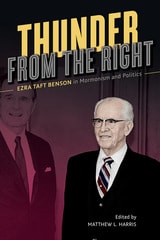
cover of Thunder from the Right: Ezra Taft Benson in Mormonism and Politics

Thunder from the Right

Ezra Taft Benson in Mormonism and Politics

Edited by Matthew L. Harris

University of Illinois Press, 2019
Ezra Taft Benson's ultra-conservative vision made him one of the most polarizing leaders in the history of the Church of Jesus Christ of Latter-day Saints. His willingness to mix religion with extreme right-wing politics troubled many. Yet his fierce defense of the traditional family, unabashed love of country, and deep knowledge of the faith endeared him to millions. In Thunder from the Right, a group of veteran Mormon scholars probe aspects of Benson's extraordinary life. Topics include: how Benson's views influenced his actions as Secretary of Agriculture in the Eisenhower Administration; his dedication to the conservative movement, from alliances with Barry Goldwater and the John Birch Society to his condemnation of the civil rights movement as a communist front; how his concept of the principal of free agency became central to Mormon theology; his advocacy of traditional gender roles as a counterbalance to liberalism; and the events and implications of Benson's term as Church president. Contributors: Gary James Bergera, Matthew Bowman, Newell G. Bringhurst, Brian Q. Cannon, Robert A. Goldberg, Matthew L. Harris, J. B. Haws, and Andrea G. Radke-Moss
[more]
cover of Ties That Enable: Community Solidarity for People Living with Serious Mental Health Problems

Ties That Enable

Community Solidarity for People Living with Serious Mental Health Problems

Teresa L. Scheid

Rutgers University Press, 2021
Ties that Enable is written for students, providers, and advocates seeking to understand how best to improve mental health care – be it for themselves, their loved ones, their clients, or for the wider community. The authors integrate their knowledge of mental health care as researchers, teachers, and advocates and rely on the experiences of people living with severe mental health problems to help understand the sources of community solidarity. Communities are the primary source of social solidarity, and given the diversity of communities, solutions to the problems faced by individuals living with severe mental health problems must start with community level initiatives. “Ties that Enable” examines the role of a faith-based community group in providing a sense of place and belonging as well as reinforcing a valued social identity. The authors argue that mental health reform efforts need to move beyond a focus on individual recovery to more complex understandings of the meaning of community care. In addition, mental health care needs to move from a medical model to a social model which sees the roots of mental illness and recovery as lying in society, not the individual. It is our society’s inability to provide inclusive supportive environments which restrict the ability of individuals to recover. This book provides insights into how communities and system level reforms can promote justice and the higher ideals we aspire to as a society.
[more]
cover of Time & Eternity: The Question of Time in Church, Science and Theology

Time & Eternity

The Question of Time in Church, Science and Theology

Antje Jackelen

Templeton Press, 2005

What is time? Is there a link between objective knowledge about time and subjective experience of time? And what is eternity? Does religion have the answer? Does science?

Internationally known scholar Antje Jackelén investigates the problem and concept of time. Her study draws on her experiences in the Continental-European science and religion dialogue, with a particular focus on the German, Scandinavian, and Anglo-American dialogues. Her analysis of the subject includes:
 
•The notion of time and eternity as it is narrated through Christian hymn books stemming from Germany, Sweden, and the English-speaking world, with insights into changes of the concept and understanding of time in Christian spirituality over the past few decades
•Theological approaches to time and eternity, as well as a look at Trinitarian theology and its relation to time
•The discussion of scientific theories of time, including Newtonian, relativistic, quantum, and chaos theories
•The formulation of a "theology of time," a theological-mathematical model incorporating relational thinking oriented toward the future, the doctrine of trinity, and the notion of eschatology
 

[more]
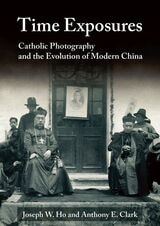
cover of Time Exposures: Catholic Photography and the Evolution of Modern China

Time Exposures

Catholic Photography and the Evolution of Modern China

Joseph W. Ho and Anthony E. Clark

Hong Kong University Press, 2026

A history of China’s transition from empire to modern nation, told through photographs by and of Chinese Catholic communities.

Time Exposures explores how historical photographs created by and of Chinese Catholic communities illuminate the vicissitudes of China’s transition from empire to modern nation. Relying on an expansive worldwide network of Catholic photographic archives, this book examines largely unseen and unpublished images related to Catholicism in China. These images, made from the 1870s through the 1990s, were central to visual practices and afterlives that represent, recover, and reenvision diverse Chinese experiences. This volume provides insight into the lives of women and men behind and in front of the camera who were important documentarians of China’s local and national changes over time, shaping ways of seeing and belonging to the country’s many cultural evolutions.
[more]
cover of To Be a Friend of Christ: The Life of Marion D. Hanks

To Be a Friend of Christ

The Life of Marion D. Hanks

Hanks, Richard D.

Signature Books, 2024

Marion Duff Hanks (1921–2011) was one of the most beloved and influential leaders of the Church of Jesus Christ of Latter-day Saints in the twentieth century, serving as a General Authority (senior leader) for forty years. He was also a leader of national import. As a recognized expert on youth, five US presidents appointed him to their President’s Council on Physical Fitness and Sports. Hanks also served as an executive leader of Rotary International and the Boy Scouts of America.

Author Richard Hanks draws on previously unavailable primary sources—journals, correspondence, notebooks, and recordings—to share this first and only authorized biography of his father. Hanks traces his father’s influence as he advocated for numerous changes in the institutional church, including humanitarian efforts, refugee relief services, missionary community service, a focus on mercy for the sinner, and a churchwide emphasis on “coming unto Christ.” A Renaissance man, Duff Hanks felt comfortable mingling with presidents and world leaders and speaking from pulpits and podiums to huge audiences and on television. But he found his greatest joy in assisting the individual, encouraging each in their personal search for happiness. Once, when asked about his goals, he replied, “My strongest desire is to qualify to be a friend of Christ.”
[more]
cover of To Be a Friend of Christ: The Life of Marion D. Hanks

To Be a Friend of Christ

The Life of Marion D. Hanks

Hanks, Richard D.

Signature Books, 2025

Marion Duff Hanks (1921–2011) was one of the most beloved and influential leaders of the Church of Jesus Christ of Latter-day Saints in the twentieth century, serving as a General Authority (senior leader) for forty years. He was also a leader of national import. As a recognized expert on youth, five US presidents appointed him to their President’s Council on Physical Fitness and Sports. Hanks also served as an executive leader of Rotary International and the Boy Scouts of America.

Author Richard Hanks draws on previously unavailable primary sources—journals, correspondence, notebooks, and recordings—to share this first and only authorized biography of his father. Hanks traces his father’s influence as he advocated for numerous changes in the institutional church, including humanitarian efforts, refugee relief services, missionary community service, a focus on mercy for the sinner, and a churchwide emphasis on “coming unto Christ.” A Renaissance man, Duff Hanks felt comfortable mingling with presidents and world leaders and speaking from pulpits and podiums to huge audiences and on television. But he found his greatest joy in assisting the individual, encouraging each in their personal search for happiness. Once, when asked about his goals, he replied, “My strongest desire is to qualify to be a friend of Christ.”
[more]
cover of To Know God and the Soul: Essays on the Thought of Saint Augustine

To Know God and the Soul

Essays on the Thought of Saint Augustine

Roland J. Teske

Catholic University of America Press, 2008
To Know God and the Soul presents a collection of essays on Augustine of Hippo written over the past twenty-five years by renowned philosopher Roland Teske.
[more]
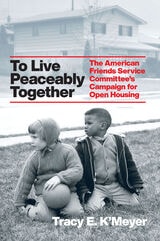
cover of To Live Peaceably Together: The American Friends Service Committee's Campaign for Open Housing

To Live Peaceably Together

The American Friends Service Committee's Campaign for Open Housing

Tracy E. K'Meyer

University of Chicago Press, 2022

A groundbreaking look at how a predominantly white faith-based group reset the terms of the fight to integrate US cities.

The bitterly tangled webs of race and housing in the postwar United States hardly suffer from a lack of scholarly attention. But Tracy K’Meyer’s To Live Peaceably Together delivers something truly new to the field: a lively examination of a predominantly white faith-based group—the Quaker-aligned American Friends Service Committee (AFSC)—that took a unique and ultimately influential approach to cultivating wider acceptance of residential integration. Built upon detailed stories of AFSC activists and the obstacles they encountered in their work in Chicago, Philadelphia, and Richmond, California, To Live Peaceably Together is an engaging and timely account of how the organization allied itself to a cause that demanded constant learning, reassessment, and self-critique. K’Meyer details the spiritual and humanist motivations behind the AFSC, its members’ shifting strategies as they came to better understand structural inequality, and how those strategies were eventually adopted by a variety of other groups. Her fine-grained investigation of the cultural ramifications of housing struggles provides a fresh look at the last seventy years of racial activism.

 
[more]
cover of To Live Peaceably Together: The American Friends Service Committee's Campaign for Open Housing

To Live Peaceably Together

The American Friends Service Committee's Campaign for Open Housing

Tracy E. K'Meyer

University of Chicago Press, 2022

This is an auto-narrated audiobook edition of this book.

A groundbreaking look at how a predominantly white faith-based group reset the terms of the fight to integrate US cities.

The bitterly tangled webs of race and housing in the postwar United States hardly suffer from a lack of scholarly attention. But Tracy K’Meyer’s To Live Peaceably Together delivers something truly new to the field: a lively examination of a predominantly white faith-based group—the Quaker-aligned American Friends Service Committee (AFSC)—that took a unique and ultimately influential approach to cultivating wider acceptance of residential integration. Built upon detailed stories of AFSC activists and the obstacles they encountered in their work in Chicago, Philadelphia, and Richmond, California, To Live Peaceably Together is an engaging and timely account of how the organization allied itself to a cause that demanded constant learning, reassessment, and self-critique. K’Meyer details the spiritual and humanist motivations behind the AFSC, its members’ shifting strategies as they came to better understand structural inequality, and how those strategies were eventually adopted by a variety of other groups. Her fine-grained investigation of the cultural ramifications of housing struggles provides a fresh look at the last seventy years of racial activism.
[more]
cover of To Save My Race from Abuse: The Life of Samuel Robert Cassius

To Save My Race from Abuse

The Life of Samuel Robert Cassius

Edward J. Robinson

University of Alabama Press, 2009

The story of a fascinating and important figure in black American religious history
 
Samuel Robert Cassius was born to a slave mother and a white father in Virginia in 1853 and became a member of the Restorationist Movement (Disciples of Christ) while a coal miner in Indiana. For the rest of his long life (he died in 1931 at age 78), Cassius was an active evangelist, prolific publicist, dedicated leader of black Disciples, and an outspoken and uncompromising opponent of racism in religion and society.
 
An indefatigable preacher, Cassius ranged throughout the Midwest, California, and the southwestern states, founding and encouraging black Stone-Campbell Restorationist congregations. After entering the Oklahoma Territory in 1891, he worked for three decades as an educator, newspaper editor, social activist, postmaster, and Justice of the Peace. Because he consistently incorporated social and racial issues into his religious writings, Cassius often found himself at odds with whites in the Stone-Campbell Movement, the very people he relied on for monetary support. He advocated a Booker T. Washington-style self-help ethos while at the same time firmly resisting racism wherever he encountered it. Largely invisible in a world dominated by such towering figures as Washington, Frederick Douglass, Ida B. Wells, and W. E. B. DuBois, Cassius lived a life of virtual obscurity beyond the circle of the Stone-Campbell Movement. His story is important because, as a racial militant and separatist, he presaged the schism that would engulf and fracture the Churches of Christ in the 1960s, when blacks and whites went their separate ways and formed two distinct groups in one religious fellowship.
 
By combing through a plethora of primary sources that Cassius left behind in both religious and nonreligious journals, Edward J. Robinson has successfully reconstructed and recaptured the essence of Cassius’ complex and extraordinary life. This book offers the first full-length study of a man of remarkable attainment despite daily obstacles and resistance.
 
 
[more]
cover of To Train His Soul in Books: Syriac Asceticism in Early Christianity

To Train His Soul in Books

Syriac Asceticism in Early Christianity

Robin Darling Young

Catholic University of America Press, 2011
To Train His Soul in Books explores numerous aspects of this rich religious culture, extending previous lines of scholarly investigation and demonstrating the activity of Syriac-speaking scribes and translators busy assembling books for the training of biblical interpreters, ascetics, and learned clergy.
[more]
cover of Tolkien, Philosopher of War

Tolkien, Philosopher of War

Graham McAleer

Catholic University of America Press, 2024
Book sales of the works of J.R.R. Tolkien keep pace with those of the Koran and the Bible. TV companies pay hundreds of millions to the Tolkien Trust to make adaptations of his work. In the UK, he routinely tops the list of the nation’s favorite authors. An estimated 2 million war gamers use The Lord of the Rings figurines in their RPG. It is incontestable that Tolkien is the most influential Catholic writer of the last century. Tolkien, Philosopher of War fills a gap in the scholarship. It is the first book addressing the philosophical and theological understanding of war in Tolkien and will interest readers of Catholic Studies, the philosophy and theology of literature, war studies, Tolkien Studies, English studies, political theory, and aesthetics. In popular imagination, Tolkien is a Luddite, but recent scholarship has identified Tolkien’s extensive modern sympathies. Tolkien, Philosopher of War contributes to this growing literature. His is a modern critique of Enlightenment thinking, specifically those philosophies of history that wrest the initiative from God in divinizing man. His worry is apocalyptic politics, those political movements that take Christ’s "Be ye therefore perfect, even as your Father which is in heaven is perfect" (Matt. 5: 48) out of the realm of grace and make it a platform for political action. Tolkien, Philosopher of War has three core theses: metaphysical, political, and aesthetic. In this, Tolkien is comparable to Cormac McCarthy, especially his Blood Meridian. Tolkien took note of a tight analytical connection between the vanity driving commercial civilization – which Hume, Smith, and Ferguson all identified – and the vanity driving the Promethean fantasies of apocalyptic politics. War – indeed, total war – is a predictable outcome of this analytical connection. The three theses run: 1) metaphysical: the apocalyptic anxiety of Tolkien’s lore is traceable to the gnostic rejection of the analogy of being typical of the philosophies of history that dominated his day; 2) political: in the English context, Tolkien sided with the Tories against Whiggery, defending monarchy as a counterweight to the vanity driving progressive philosophy of history; 3) aesthetic: Futurism’s philosophy of history celebrated the Machine; inverting the value order, the Futurism art movement encoded anti-Christianity, fascist politics, and apocalyptic war. Tolkien’s “cosmogonical drama,” with its pastoralism and portraits of angels (Gandalf) and gods (Nienna), dramatizes an aesthetic resistance to Futurism.
[more]
cover of Tomáš Špidlík: A Theological Life

Tomáš Špidlík

A Theological Life

Karel Sládek

Karolinum Press, 2020

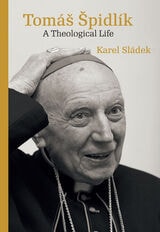
Tomáš Špidlík: A Theological Life offers one of the first comprehensive reflections on the life and work of the enigmatic Czech theologian. In part one, Karel Sládek explores Špidlík’s thoughts on family, the formation of Jesuit priests, the ecumenical mission of the monastery at Velehrad in Moravia (where Špidlík himself studied), and the wisdom he acquired during stays in Rome. The latter part of the book focuses on Špidlík’s spiritual theology, which was grounded in a synthesis of Eastern and Western Christianity. Here, the book explores subjects such as the Holy Spirit, the Eucharist as a source of spiritual life, and the influence of the Philokalia on Eastern spirituality. 
 
By the conclusion, we see Špidlík’s most mature ideas and his forming of a theology of beauty; Špidlík spent his final years in Rome, living and working at the Centro Aletti’s renowned art studio, where he put his mind to observing the theology of art for an understanding of music, film, literature, and iconography.
[more]
cover of Tracy Y. Cannon: Tabernacle Organist and Pioneering Musician, 1879-1961

Tracy Y. Cannon

Tabernacle Organist and Pioneering Musician, 1879-1961

Fisher, Shelby

Signature Books, 2026

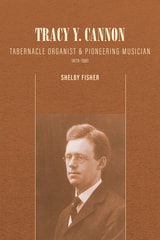
Tracy Y. Cannon guided the musical voice of Mormonism from its provincial roots at the turn of the twentieth century into a state of maturity by the end of his career in 1960. Cannon served as Salt Lake Tabernacle organist from 1905 until 1930, accompanying some of the first radio broadcasts of Music and the Spoken Word. Under his leadership, the McCune School of Music and Art became a cultural hub, offering accredited music degrees as well as community enrichment activities, influencing Utah’s next generation of music educators, composers, leaders, and policymakers. But perhaps his most lasting legacy was his work with the General Music Committee of the Church of Jesus Christ of Latter-day Saints, through which he oversaw the creation of two hymnals, many anthem books, organ anthologies, method books, and an expansive organist and chorister education program.

Cannon’s musical tastes—dignified, refined, reverent, and heavily influenced by Northern European tradition—became the norm for Latter-day Saint congregations for generations. Through his multifaceted career, this brief biography explores the evolution of Latter-day Saint hymnody, “art music,” cultural taste, and music education during the first half of the twentieth century.
[more]
cover of Trading Futures: A Theological Critique of Financialized Capitalism

Trading Futures

A Theological Critique of Financialized Capitalism

Filipe Maia

Duke University Press, 2022

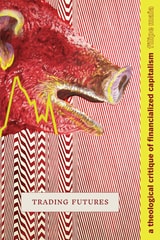
The discourse of financialized capitalism tries to create a future predictable enough to manage risk for the wealthy, to shape the future into a profit-making site that constrains and privatizes the sense of what’s possible. Here, people’s hopes and meaning-making energies are policed through the burden of debt. In Trading Futures Filipe Maia offers a theological reflection on hope and the future, calling for escape routes from the debt economy. Drawing on Marxism, continental philosophy, and Latin American liberation theology, Maia provides a critical portrayal of financialization as a death-dealing mechanism that colonizes the future in its own image. Maia elaborates a Christian eschatology of liberation that offers a subversive mode of imagining future possibilities. He shows how the Christian vocabulary of hope can offer a way to critique the hegemony of financialized capitalism, propelling us in the direction of a just future that financial discourse cannot manage or control.
[more]
cover of Tradition in Act: Development and Its Counterfeits After Newman

Tradition in Act

Development and Its Counterfeits After Newman

Reinhard Hütter

Catholic University of America Press, 2027
Tradition in Act addresses the present crisis over a proper understanding of the development of doctrine in contemporary Catholic theology and thus is a critical as well as constructive theological intervention in arguably the most central controversy in contemporary Catholic theology. The concept of “tradition in act” provides an approach that enables a recovered understanding of the development of doctrine for the theologian, and one that avoids the Scylla of antiquarianism and the Charybdis of presentism. The concept of “tradition in act” (drawing on the distinction between act and potency) is understood as the active undergoing of the continuously unfolding of the History of Salvation in the Church by way of the living paradosis of the doctrina evangelii in the Eucharistic liturgy, the life, and teaching of the Church. If doctrine is to develop at all, it must do so as the unfolding of a revelation once delivered to the apostles and entrusted to the Church as a sacred deposit. Hence it is required that subsequent formulations, however diverse in expression or circumstance, remain one with their antecedents—homogeneous with them, cognate to them in meaning and intention. This necessary continuity is identity. Without such identity, development degenerates into alteration and hence corruption; the line of transmission is broken, and the Church no longer hands on what she has herself received. The unfolding argument utilizes both the work and the approach of John Henry Newman to propose the criteria of identity of doctrine understood in terms of St Vincent of Lerins’ second rule, as presented by Newman, as constitutive of authentic development. The notion of authentic development of doctrine understood in terms of “tradition in act” offers a novel approach that avoids entirely the inherent risks in the historical consciousness of how doctrine has developed, in short, it is meant to offer an antidote to the historicism at large. Tradition in Act assays a contemporary Catholic theological articulation of the development of doctrine in the spirit of Gustav Mahler’s famous statement that “Tradition is not the worship of ashes, but the preservation of fire.”
[more]
cover of Transformation of the Mormon Culture Region

Transformation of the Mormon Culture Region

Ethan R. Yorgason

University of Illinois Press, 2010

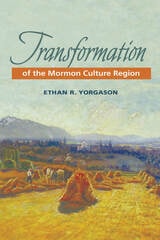
In this unique study, Ethan R. Yorgason examines the Mormon "culture region" of the American West, which in the late nineteenth century was characterized by sexual immorality, communalism, and anti-Americanism but is now marked by social conservatism. Foregrounding the concept of region, Yorgason traces the conformist-conservative trajectory that arose from intense moral and ideological clashes between Mormons and non-Mormons from 1880 to 1920. Looking through the lenses of regional geography, history, and cultural studies, Yorgason investigates shifting moral orders relating to gender authority, economic responsibility, and national loyalty, community, and home life.
 
Transformation of the Mormon Culture Region charts how Mormons and non-Mormons resolved their cultural contradictions over time by a progressive narrowing of the range of moral positions on gender (in favor of Victorian gender relations), the economy (in favor of individual economics), and the nation (identifying with national power and might). Mormons and non-Mormons together constructed a regime of effective coexistence while retaining regional distinctiveness.
[more]
cover of Transformed in Christ

Transformed in Christ

John S. Grabowski

Catholic University of America Press, 2017

[more]