Results by title
3369 books match the query 'Cultural & Social' and 577 start with t

The Prohibition Hangover
Alcohol in America from Demon Rum to Cult CabernetPeck, Garrett
Rutgers University Press, 2009
In The Prohibition Hangover, Garrett Peck explores the often-contradictory social history of alcohol in America, from the end of Prohibition in 1933 to the twenty-first century. For Peck, Repeal left American society wondering whether alcohol was a consumer product or a controlled substance, an accepted staple of social culture or a danger to society. Today the legal drinking age, binge drinking, the neo-prohibitionist movement led by Mothers Against Drunk Driving, the 2005 Supreme Court decision in Granholm v. Heald that rejected discriminatory curbs on wine sales, the health benefits of red wine, advertising, and other issues remain highly contested.
Based on primary research, including hundreds of interviews with those on all sides, clergy, bar and restaurant owners, public health advocates, citizen crusaders, industry representatives, and more, as well as secondary sources, The Prohibition Hangover provides a panoramic assessment of alcohol in American culture. Traveling through the California wine country, the beer barrel backroads of New England and Pennsylvania, and the blue hills of Kentucky's bourbon trail, Peck places the concerns surrounding alcohol use within the broader context of American history, religious traditions, and governance.
Society is constantly evolving, and so are our drinking habits. Cutting through the froth and discarding the maraschino cherries, The Prohibition Hangover examines the modern American temperament toward drink amid the $189-billion-dollar-a-year industry that defines itself by the production, distribution, marketing, and consumption of alcoholic beverages.
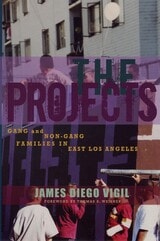
The Projects
Gang and Non-Gang Families in East Los AngelesBy James Diego Vigil
University of Texas Press, 2007
2008 — ALLA Prize for Best Book on Latina/o Anthropology
The Pico Gardens housing development in East Los Angeles has a high percentage of resident families with a history of persistent poverty, gang involvement, and crime. In some families, members of three generations have belonged to gangs. Many other Pico Gardens families, however, have managed to avoid the cycle of gang involvement.
In this work, Vigil adds to the tradition of poverty research and elaborates on the association of family dynamics and gang membership. The main objective of his research was to discover what factors make some families more vulnerable to gang membership, and why gang resistance was evidenced in similarly situated non-gang-involved families. Providing rich, in-depth interviews and observations, Vigil examines the wide variations in income and social capital that exist among the ostensibly poor, mostly Mexican American residents. Vigil documents how families connect and interact with social agencies in greater East Los Angeles to help chart the routines and rhythms of the lives of public housing residents. He presents family life histories to augment and provide texture to the quantitative information.
By studying life in Pico Gardens, Vigil feels we can better understand how human agency interacts with structural factors to produce the reality that families living in all public housing developments must contend with daily.

The Promise of Infrastructure
Nikhal Anand, Akhil Gupta, and Hannah Appel, editors
Duke University Press, 2018
A School for Advanced Research Advanced Seminar
Contributors. Nikhil Anand, Hannah Appel, Geoffrey C. Bowker, Dominic Boyer, Akhil Gupta, Penny Harvey, Brian Larkin, Christina Schwenkel, Antina von Schnitzler

The Promise of Multispecies Justice
Sophie Chao, Karin Bolender, and Eben Kirksey, editors
Duke University Press, 2022
Contributors. Karin Bolender, Sophie Chao, M. L. Clark, Radhika Govindrajan, Zsuzsanna Dominika Ihar, Noriko Ishiyama, Eben Kirksey, Elizabeth Lara, Jia Hui Lee, Kristina Lyons, Michael Marder, Alyssa Paredes, Craig Santos Perez, Kim TallBear

The Pulse of the Earth
Political Geology in JavaAdam Bobbette
Duke University Press, 2023
The Pursuit of Happiness
Black Women, Diasporic Dreams, and the Politics of Emotional TransnationalismBianca C. Williams
Duke University Press, 2018

The Quality of Home Runs
The Passion, Politics, and Language of Cuban BaseballThomas F. Carter
Duke University Press, 2008
As an avid baseball fan, Carter draws on his experiences listening to and participating in discussions of baseball in Cuba (particularly in Havana) and among Cubans living abroad to describe how baseball provides the ground for negotiations of national, masculine, and class identities wherever Cubans gather. He considers the elaborate spectacle of Cuban baseball as well as the relationship between the socialist state and the enormously popular sport. Carter provides a detailed history of baseball in Cuba, analyzing players, policies, rivalries, and fans, and he describes how the sport has forged connections (or reinforced divisions) between Cuba and other nations. Drawing on insights from cultural studies, political theory, and anthropology, he maintains that sport and other forms of play should be taken seriously as crucibles of social and cultural experience.
The Question of the Commons
The Culture and Ecology of Communal ResourcesEdited by Bonnie J. McCay and James M. Acheson
University of Arizona Press, 1987
The Rain Gods' Rebellion
The Cultural Basis of a Nahua InsurgencyJames M. Taggart
University Press of Colorado, 2019
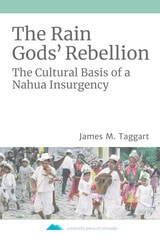
The Rain Gods’ Rebellion examines Nahua oral narratives to illuminate the cultural basis of the 1977–1984 rebellion against the local Hispanic elite in Huitzilan de Serdán, Mexico. Drawing from forty years of fieldwork in the region, James M. Taggart traces the sociopolitical role of Nahua rain gods—who took both human and divine forms—back hundreds of years and sheds new light on the connections between social experiences and the Nahua understanding of water and weather in stories. As Taggart shows, Nahua tales of the rain gods’ rebellion anticipated the actual 1977 land invasion in Huitzilan, in which some 200–300 Nahua were killed.
The Rain Gods’ Rebellion reveals how local culture evolves from the expression of unrest to organized insurgency and then into collective memory. Taggart records a tradition of storytelling in which Nahuas radicalized themselves through recounting the rain gods’ stories—stories of the gods organizing and striking with bolts of lightning the companion spirits of autocratic local leaders who worked closely with mestizos. The tales are part of a tradition of resisting the friars’ efforts to convert the Nahuas, Totonacs, Otomi, and Tepehua to Christianity and inspiring nativistic movements against invading settlers.Providing a rare longitudinal look at the cultural basis of this grassroots insurgency, The Rain Gods’ Rebellion offers rare insight into the significance of oral history in forming Nahua collective memory and, by extension, culture. It will be of significance to scholars of Indigenous studies, anthropology, oral history, and violence studies, as well as linguistic anthropologists and sociolinguists.
The Ramapo Mountain People
Cohen, David Steven
Rutgers University Press, 1986
In a study combining tee disciplines of anthropology, sociology, folklore, and history, David Cohen found that the old stories about these people were legends, not history.
He found no reliable evidence that their ancestors were Tuscarora Indians, Hessian deserters from the British army, escaped slaves, and British and West Indian prostitutes imported by a sea captain named Jackson for the pleasure of British soldiers occupying Manhattan during the War for Independence.
David Cohen lived among the Ramapo Mountain People for a year, conducting genealogical research into church records, deeds, wills, and inventories in county courthouses and libraries. He established that their ancestors included free black landowners in New York City and mulattoes with some Dutch ancestry who were among the first pioneers to settle in the Hackensack River Valley of New Jersey.
In describing his findings and his experiences, Professor Cohen shows how their racially mixed ancestry, their special family and kinship system, and their intergroup attitudes and folkways distinguish and socially isolate these people as a separate racial group today, despite modern communications and transportation and their proximity to New York City.

The Real Hiphop
Battling for Knowledge, Power, and Respect in the LA UndergroundMarcyliena Morgan
Duke University Press, 2009
Morgan intersperses her observations with excerpts from interviews and transcripts of freestyle lyrics. Providing a thorough linguistic interpretation of the music, she teases out the cultural antecedents and ideologies embedded in the language, emphases, and wordplay. She discusses the artistic skills and cultural knowledge MCs must acquire to rock the mic, the socialization of hiphop culture’s core and long-term members, and the persistent focus on skills, competition, and evaluation. She brings attention to adults who provided material and moral support to sustain underground hiphop, identifies the ways that women choose to participate in Project Blowed, and vividly renders the dynamics of the workshop’s famous lyrical battles.
The Red Riviera
Gender, Tourism, and Postsocialism on the Black SeaKristen Ghodsee
Duke University Press, 2005
Interspersed throughout The Red Riviera are vivid examinations of the lives of Bulgarian women, including a waitress, a tour operator, a chef, a maid, a receptionist, and a travel agent. Through these women’s stories, Ghodsee describes their employment prior to 1989 and after. She considers the postsocialist forces that have shaped the tourist industry over the past fifteen years: the emergence of a new democratic state, the small but increasing interest of foreign investors and transnational corporations, and the proliferation of ngos. Ghodsee suggests that many of the ngos, by insisting that Bulgarian women are necessarily disenfranchised, ignore their significant professional successes.
The Renewal of Cultural Studies
Edited by Paul Smith
Temple University Press, 2011
Cultural Studies, once a burgeoning academic field, developed into a discipline in which just about any cultural text, object or event could be studied. The Renewal of Cultural Studies offers a panoramic view of the field, its assumptions, and its methodologies. Editor Paul Smith and thirty contributors map out new directions that will redefine and sustain the field of cultural studies.
In twenty-seven original essays, cultural studies is examined in relation to other disciplines—history, anthropology, literature, media, and American studies. The discipline is reviewed in the context of globalization, in relation to topics such as war, public policy, and labor, its pedagogy and politics, and in Marxist, feminist, and environmentalist contexts.
Smith wants to establish theoretical and methodological common ground among cultural studies scholars. Providing a “state of the discipline,” The Renewal of Cultural Studies asks, “What can and should the field of Cultural Studies be doing now?”
The Republic Unsettled
Muslim French and the Contradictions of SecularismMayanthi L. Fernando
Duke University Press, 2014

The Republic of Therapy
Triage and Sovereignty in West Africa’s Time of AIDSVinh-Kim Nguyen
Duke University Press, 2010
The Resonance of Unseen Things
Poetics, Power, Captivity, and UFOs in the American UncannySusan Lepselter
University of Michigan Press, 2016
“We really don’t have anything like this in terms of a focused, sympathetic, open-minded ethnographic study of UFO experiencers. . . . The author’s semiotic approach to the paranormal is immensely productive, positive, and, above all, resonant with what actually happens in history.”
—Jeffrey J. Kripal, J. Newton Rayzor Professor of Religion, Rice University
“Lepselter relates a weave of intimate alien sensibilities in out-off-the-way places which are surprisingly, profoundly, close to home. Readers can expect to share her experience of contact with complex logics of feeling, and to do so in a contemporary America they may have thought they understood.”
—Debbora Battaglia, Mount Holyoke College
“An original and beautifully written study of contemporary American cultural poetics. . . . The book convincingly brings into relief the anxieties of those at the margins of American economic and civic life, their perceptions of state power, and the narrative continuities that bond them to histories of violence and expansion in the American West.”
—Deirdre de la Cruz, University of Michigan
The Returns of Fetishism
Charles de Brosses and the Afterlives of an IdeaCharles de Brosses, Rosalind C. Morris, and Daniel H. Leonard
University of Chicago Press, 2017
The product of de Brosses’s autodidactic curiosity and idiosyncratic theories of language, On the Worship of Fetish Gods is an enigmatic text that is often difficult for contemporary audiences to assess. In a thorough introduction to the text, Leonard situates de Brosses’s work within the cultural and intellectual milieu of its time. Then, Morris traces the concept of fetishism through its extraordinary permutations as it was picked up and transformed by the fields of philosophy, comparative religion, political economy, psychoanalysis, and anthropology. Ultimately, she breaks new ground, moving into and beyond recent studies by thinkers such as William Pietz, Hartmut Böhme, and Alfonso Iacono through illuminating new discussions on topics ranging from translation issues to Africanity and the new materialisms.
The Revolution’s Echoes
Music, Politics, and Pleasure in GuineaNomi Dave
University of Chicago Press, 2019
Dave introduces readers to the music supporting the authoritarian regime of former Guinean president Sékou Touré, and the musicians who, even long after his death, have continued to praise dictators and avoid dissent. Dave shows that this isn’t just the result of state manipulation; even in the absence of coercion, musicians and their audiences take real pleasure in musical praise of leaders. Time and again, whether in traditional music or in newer genres such as rap, Guinean musicians have celebrated state power and authority. With The Revolution’s Echoes, Dave insists that we must grapple with the uncomfortable truth that some forms of music choose to support authoritarianism, generating new pleasures and new politics in the process.
The Rise of Necro/Narco Citizenship
Belonging and Dying in the Southwest North American RegionCarlos G. Vélez-Ibáñez
University of Arizona Press, 2025
Carlos G. Vélez-Ibáñez’s latest work, The Rise of Necro/Narco Citizenship investigates the intricate and often harrowing dynamics that define the borderlands between the United States, Mexico, and beyond. This groundbreaking book provides a comprehensive cultural, economic, social, and political-ecological analysis, illustrating how various forms of violence and militarization have reshaped the daily lives and identities of the region’s inhabitants. Through meticulous ethnographic fieldwork, extensive archival research, and rigorous statistical data, Vélez-Ibáñez exposes the deeply entrenched networks of exploitation and conflict that have emerged in response to global capitalism’s pressures.
Vélez-Ibáñez builds on theorization about necrocitizenship to introduce the concept of necro/narco citizenship, which argues that pervasive violence and socioeconomic disruptions create a unique form of existence on both sides of the border. The author examines the dislocation of thousands, the persistent threat of violence, and the ways in which these forces compel individuals to navigate a reality steeped in addiction, self-destruction, and civil deterioration. This book reveals the transnational networks and the morally compromised political economies that sustain them, offering readers an unflinching look at the cost of survival in this tumultuous region.
This essential volume is not only a critical addition to the field of anthropology but also an invaluable resource for those interested in the sociopolitical landscape of the U.S.-Mexico border. Vélez-Ibáñez’s insights will resonate with scholars, students, and policymakers alike. The Rise of Necro/Narco Citizenship challenges us to rethink the narratives of violence, militarization, and resistance that define our understanding of the Southwest North American Region.

The Rise of Nerd Politics
Digital Activism and Political ChangeJohn Postill
Pluto Press, 2018
Drawing from long-term ethnographic research in Spain, Indonesia and Malaysia--as well as empirical examples from the United States, Iceland, Taiwan and further afield--Postill tracks the rise of technology "nerds" as a new transnational class of political brokers with growing influence. The book identifies and explores four domains of "nerd politics" that have experienced a dramatic expansion since 2010: digital rights, data activism, social protest, and institutional politics.
A lively and engaging intervention at the conjuncture of anthropology, media studies, and sociology, this book offers a pertinent reflection on the future of political change in the digital age.

The Rites of Passage, Second Edition
Arnold van Gennep
University of Chicago Press, 2019
With a new introduction by Pulitzer Prize–winner David I. Kertzer
Arnold van Gennep’s masterwork, The Rites of Passage, has been a staple of anthropological education for more than a century. First published in French in 1909, and translated into English by the University of Chicago Press in 1960, this landmark book explores how the life of an individual in any society can be understood as a succession of transitions: birth, puberty, marriage, parenthood, old age, and, finally, death. Van Gennep’s great insight was discerning a common structure in each of these seemingly different transitions, involving rituals of separation, liminality, and incorporation. With compelling precision, he set out the terms that would both define twentieth-century ritual theory and become a part of our everyday lexicon.
This new edition of his work demonstrates how we can still make use of its enduring critical tools to understand our own social, religious, and political worlds, and even our personal and professional lives. In his new introduction, Pulitzer Prize–winning historian and anthropologist David I. Kertzer sheds new light on van Gennep, on the battles he fought, and on the huge impact the book has had since publication of the first English edition.
The Roma as Agents of the “G*psy Question”
Belonging, Mobility, and Resettlement Policy in Socialist Czechoslovakia in the 1960sJan Ort
Karolinum Press, 2024
The story of Romani people in communist Czechoslovakia has long been framed by a discriminatory policy of assimilation, and thus by fatal interventions into Romani family ties and their broader socio-cultural systems. Paradoxically, such a narrative failed to integrate the perspective of the Roma themselves, who often associated the same period with an unprecedented experience of social inclusion and material security. In this book, Jan Ort examines the state policy that in the mid-1960s aimed at the definitive elimination of "G*psy backwardness" through the placement of thousands of Roma families in non-Roma society, thus becoming a symbol of the social engineering interventions of the Communist regime in the lives of Czechoslovak Roma. In contrast to the predominant focus on the perspective of state authorities, Ort seeks to map the practice of this policy in specific places with an emphasis on the experiences and agency of the Roma themselves, especially those who had their homes in eastern Slovakia. In the empirical richness of a micro-historical approach, Roma as Agents of the “G*psy Question” uncovers the diverse stories of ordinary Roma who were able to incorporate various aspects of state policy into their own lives without necessarily giving up their distinctive cultural identity.

The Rule of Dons
Criminal Leaders and Political Authority in Urban JamaicaRivke Jaffe
Duke University Press, 2024

The SIRENIC
Follow the Water Follow the Sound. Essays and Studies Across Film and the ArtsEdited by Fabienne Liptay and Giuseppe di Salvatore
Diaphanes, 2026
An original perspective on the mythologies and ecologies of water, the poetics and politics of voice, and the invocation of a communal spirit through film and other arts.
“Follow the Water Follow the Sound” is a call and response. Far removed from the associations of seduction and fear that the siren—both as mythological figure and alarm device—has inspired, it is an invitation to another perceptual attunement to our environment. Offering an original perspective, this bookengages with notions of singing, voicing, and listening that reach into a sonic pluriverse and imagine the "sirenic" as a practice oriented towards emergent futures, fabulations of becoming, and pedagogies of transformation. Through these notions, it provides the grounds for an expanded conception of cinema emerging through sound, music, and performance. Bringing together scholars, curators, and artists from across disciplines, Sirenic unfolds as a polyphonic publication.
With contributions by Ruth Baettig, Dalida María Benfield, Elena Biserna, Mattia Capelletti, Caroline Courrioux, Alice Jasmine Crippa, Giuseppe Di Salvatore, Magali Dougoud, Burcu Dogramaci, Lidia Gasperoni, Alexandra Gelis, Tobias Gerber, Ute Holl, Roberta Ioli, Pauline Julier, Fabienne Liptay, Niccolò Moronato, Gabriel Paiuk, Dorota Sajewska, Alice Sartori, Alexandra Tsiamparta, and Matthias Wittmann.

The Sacred Remains
Myth, History, and Polity in BelauRichard J. Parmentier
University of Chicago Press, 1987
Richard J. Parmentier employs semiotic methods to analyze both linguistic and nonlinguistic signs representing Belauan history, showing that these signs also organize social and political structures. He identifies four pervasive semiotic patterns that appear rhetorically in myths, chants, and historical narratives and graphically in the arrangement of certain classes of stones, including village boundary markers, burial platforms, exchange valuables, and monoliths found at abandoned sites in the islands.
While not neglecting historical evidence from Western sources, Parmentier contends that the history of Belau cannot be understood without taking into full account indigenous categories of space, time, and transformation and without recognizing the importance of Belauan social actions that construct, interpret, and transmit historical knowledge. Supporting his analysis of Belauan history with concrete ethnographic demonstration, Parmentier presents a work of central importance for Austronesianists, anthropologists, and historians.

The San Carlos Indian Cattle Industry
Harry T. Getty
University of Arizona Press, 1963
The Savage Mind
Claude Lévi-Strauss
University of Chicago Press, 1968
"No outline is possible; I can only say that reading this book is a most exciting intellectual exercise in which dialectic, wit, and imagination combine to stimulate and provoke at every page."—Edmund Leach, Man
"Lévi-Strauss's books are tough: very scholarly, very dense, very rapid in argument. But once you have mastered him, human history can never be the same, nor indeed can one's view of contemporary society. And his latest book, The Savage Mind, is his most comprehensive and certainly his most profound. Everyone interested in the history of ideas must read it; everyone interested in human institutions should read it."—J. H. Plumb, Saturday Review
"A constantly stimulating, informative and suggestive intellectual challenge."—Geoffrey Gorer, The Observer, London

The Scattered Family
Parenting, African Migrants, and Global InequalityCati Coe
University of Chicago Press, 2013

The Sea as Mirror
Essayings in and against Philosophy as HistoryWu Yi
Diaphanes, 2021
These include philosophical texts drawn from a constellation of historical topoi at the critical moments of their encounter with the maritime: Plato and Euripedes’s work from fifth-century Athens; Augustus and Plautus’s writings from republican and early imperial Rome; Shakespeare’s creations from Elizabethan England; Kant and Rousseau’s texts from enlightenment continental Europe; and the thinking of Husserl and Heidegger from interwar Germany of the twentieth century. For each historical topos, Yi juxtaposes different representations of and responses to the maritime through the reading of a philosophical text vis-à-vis the reading of a literary text. In so doing, she lays bare the deep political and moral ambiguity attributed to the ocean in Western philosophical and literary imaginaries.

The Seductions of Quantification
Measuring Human Rights, Gender Violence, and Sex TraffickingSally Engle Merry
University of Chicago Press, 2016
With The Seductions of Quantification, leading legal anthropologist Sally Engle Merry investigates the techniques by which information is gathered and analyzed in the production of global indicators on human rights, gender violence, and sex trafficking. Although such numbers convey an aura of objective truth and scientific validity, Merry argues persuasively that measurement systems constitute a form of power by incorporating theories about social change in their design but rarely explicitly acknowledging them. For instance, the US State Department’s Trafficking in Persons Report, which ranks countries in terms of their compliance with antitrafficking activities, assumes that prosecuting traffickers as criminals is an effective corrective strategy—overlooking cultures where women and children are frequently sold by their own families. As Merry shows, indicators are indeed seductive in their promise of providing concrete knowledge about how the world works, but they are implemented most successfully when paired with context-rich qualitative accounts grounded in local knowledge.
The Senses Still
C. Nadia Seremetakis
University of Chicago Press, 1996
The contributors are Susan Buck-Morss, Allen Feldman, Jonas Frykman, C. Nadia Seremetakis, and Paul Stoller.
C. Nadia Seremetakis is Advisor to the Minister of Public Health in Greece and visiting professor at the National School of Public Heath in Athens. She is the author of The Last Word: Women, Death, and Divination in Inner Mani, available from the University of Chicago Press.
The Servant Class City
Urban Revitalization versus the Working Poor in San DiegoDavid J. Karjanen
University of Minnesota Press, 2016
San Diego, California, is frequently viewed as a model for American urban revitalization. It looks like a success story, with blight and poverty replaced by high-rises and jobs. But David J. Karjanen shows that the much-touted job opportunities for poor people have been concentrated in low-paying service work as the cost of living in San Diego has soared. The Servant Class City documents how, over a period of three decades, San Diego’s urban transformation actually eroded the economic standing of the city’s working poor.
Karjanen demonstrates that urban policy in San Diego, which has been devoted to increasing tourism, has fostered the creation of jobs that do not actually provide either livable wages or paths to upward mobility. Marshaling a wealth of heretofore uncollected data, he challenges the presumption that decades-long stagnation of job mobility in the united states is a result of insufficient worker training or a “skills mismatch,” or is attributable to various personal qualities of the urban poor.
Karjanen interweaves profiles of people with a compelling presentation of data. Each chapter addresses a significant topic: hospitality industry jobs, retail work, informal employment, “fringe banking,” and economic barriers to mobility. In revealing the true story of the “poverty traps” that are associated with low-wage jobs in the service economy, The Servant Class City complicates the rosy picture of life in an American tourist boomtown.

The Seventies Now
Culture as SurveillanceStephen Paul Miller
Duke University Press, 1999
The concept of surveillance and its attendant social ramifications have been powerful agents in U.S. culture for many decades, but in describing how during the 1970s Americans learned to “survey” themselves, Miller shines surprising new light on such subjects as the women’s movement, voting rights enforcement, the Ford presidency, and environmental legislation. He illuminates the significance of what he terms “microperiods” and analyzes relevant themes in many of the decade’s major films—such as The Deer Hunter, Network, Jaws, Star Wars, and Apocalypse Now—and in the literature of writers including John Ashbery, Toni Morrison, Adrienne Rich, and Sam Shepard. In discussing the reverberations of the 1969 Stonewall riots, technological innovations, the philosophy of Michel Foucault, and a host of documents and incidents, Miller shows how the 1970s marked an important period of transition, indeed a time of many transitions, to the world we confront at the end of the millennium.
The Seventies Now will interest students and scholars of cultural studies, American history, theories of technology, film and literature, visual arts, and gay and lesbian studies.
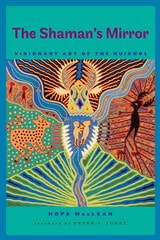
The Shaman’s Mirror
Visionary Art of the HuicholBy Hope MacLean
University of Texas Press, 2011
Huichol Indian yarn paintings are one of the world's great indigenous arts, sold around the world and advertised as authentic records of dreams and visions of the shamans. Using glowing colored yarns, the Huichol Indians of Mexico paint the mystical symbols of their culture—the hallucinogenic peyote cactus, the blue deer-spirit who appears to the shamans as they croon their songs around the fire in all-night ceremonies deep in the Sierra Madre mountains, and the pilgrimages to sacred sites, high in the central Mexican desert of Wirikuta.
Hope MacLean provides the first comprehensive study of Huichol yarn paintings, from their origins as sacred offerings to their transformation into commercial art. Drawing on twenty years of ethnographic fieldwork, she interviews Huichol artists who have innovated important themes and styles. She compares the artists' views with those of art dealers and government officials to show how yarn painters respond to market influences while still keeping their religious beliefs.
Most innovative is her exploration of what it means to say a tourist art is based on dreams and visions of the shamans. She explains what visionary experience means in Huichol culture and discusses the influence of the hallucinogenic peyote cactus on the Huichol's remarkable use of color. She uncovers a deep structure of visionary experience, rooted in Huichol concepts of soul-energy, and shows how this remarkable conception may be linked to visionary experiences as described by other Uto-Aztecan and Meso-American cultures.

The Shrinking Jungle
Kevin T. Jones
University of Utah Press, 2012
Anthropologist Kevin Jones takes the reader on a journey into the world of the Aché, hunter-gatherers of the deep jungles of Paraguay. The Aché were among the last tribal peoples to come into peaceful contact with the outside world, with some bands leaving the forest only in the late 1970s. Jones was fortunate to live among them while conducting ethnoarchaeological fieldwork as part of his graduate studies. Their stories were so compelling and the insights into their lives so profound that he wove them into this fictional account, seeking to share the uniqueness of the culture while illustrating the universal nature of the Achés’ concerns.
The Shrinking Jungle tells the story of a fictional Aché band forced to deal with the tribulations of living in a forest gradually diminished by the encroachments of loggers and farmers. It follows the lives of one family and their band as they grapple for existence in a world of waning resources. The unfolding narrative captures the human struggle to live, love, care for family, fend off danger, and dream and hope for a bright future.
A compassionate look at the lives of people affected by the expansion of modern industrial society, The Shrinking Jungle gives a face to the human cost of tropical forest habitat loss. It also provides a realistic glimpse into the lifeways that were common to all human beings for much of our history.

The Skin of the Film
Intercultural Cinema, Embodiment, and the SensesLaura U. Marks
Duke University Press, 2000
Much of intercultural cinema, Marks argues, has its origin in silence, in the gaps left by recorded history. Filmmakers seeking to represent their native cultures have had to develop new forms of cinematic expression. Marks offers a theory of “haptic visuality”—a visuality that functions like the sense of touch by triggering physical memories of smell, touch, and taste—to explain the newfound ways in which intercultural cinema engages the viewer bodily to convey cultural experience and memory. Using close to two hundred examples of intercultural film and video, she shows how the image allows viewers to experience cinema as a physical and multisensory embodiment of culture, not just as a visual representation of experience. Finally, this book offers a guide to many hard-to-find works of independent film and video made by Third World diasporic filmmakers now living in the United States, Great Britain, and Canada.
The Skin of the Film draws on phenomenology, postcolonial and feminist theory, anthropology, and cognitive science. It will be essential reading for those interested in film theory, experimental cinema, the experience of diaspora, and the role of the sensuous in culture.

The Sky Is Incomplete
Travel Chronicles in PalestineIrmgard Emmelhainz
Vanderbilt University Press, 2023
In order to render the issue of representation, of speaking on behalf of the Palestinian ordeal in all its complexity, The Sky Is Incomplete is composed as a collage, gathering diary entries, letters, experimental passages, script, poetry, art criticism, political analysis, and other genres to convey an opaque view of the Palestine Question. Beyond representation in the sense of giving testimony or speaking on behalf of the Palestinians, however, the author’s parting point is relational: The Sky Is Incomplete is about encounters—with friends, mentors, interlocutors, lovers, children, activists, and soldiers (Israeli and Palestinian).

The Slumbering Masses
Sleep, Medicine, and Modern American LifeMatthew J. Wolf-Meyer
University of Minnesota Press, 2016
Americans spend billions of dollars every year on drugs, therapy, and other remedies trying to get a good night’s sleep. Anxieties about not getting enough sleep and the impact of sleeplessness on productivity, health, and happiness pervade medical opinion, the workplace, and popular culture. In The Slumbering Masses, Matthew J. Wolf-Meyer addresses the phenomenon of sleep and sleeplessness in the United States, tracing the influence of medicine and industrial capitalism on the sleeping habits of Americans from the nineteenth century to the present.
Before the introduction of factory shift work, Americans enjoyed a range of sleeping practices, most commonly two nightly periods of rest supplemented by daytime naps. The new sleeping regimen—eight uninterrupted hours of sleep at night—led to the pathologization of other ways of sleeping. Arguing that the current model of sleep is rooted not in biology but in industrial capitalism’s relentless need for productivity, The Slumbering Masses examines so-called Z-drugs that promote sleep, the use of both legal and illicit stimulants to combat sleepiness, and the contemporary politics of time. Wolf-Meyer concludes by exploring the extremes of sleep, from cases of perpetual sleeplessness and the use of the sleepwalking defense in criminal courts to military experiments with ultra-short periods of sleep.
Drawing on untapped archival sources and long-term ethnographic research with people who both experience and treat sleep abnormalities, Wolf-Meyer analyzes and sharply critiques how sleep and its supposed disorders are understood and treated. By recognizing the variety and limits of sleep, he contends, we can establish more flexible expectations about sleep and, ultimately, subvert the damage of sleep pathology and industrial control on our lives.

The Small Matter of Suing Chevron
Suzana Sawyer
Duke University Press, 2022

The Social Life of Financial Derivatives
Markets, Risk, and TimeEdward LiPuma
Duke University Press, 2017
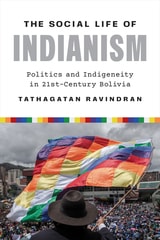
The Social Life of Indianism
Politics and Indigeneity in Twenty-First-Century BoliviaTathagatan Ravindran
University of Texas Press, 2025
A sophisticated analysis of an influential Indigenous political ideology.
When the political ideology known as “Indianism” developed in Bolivia in the 1960s, it was premised on a rejection of Bolivian nationalism. Over the ensuing decades, however, it underwent several mutations as it moved out of a close circle of intellectuals to grip the urban masses that brought Evo Morales—the first Indigenous president—to power in 2006.
The Social Life of Indianism offers a fresh perspective by examining Bolivian Indigenous politics through the lens of political ideology. Through an ethnographic study of Indianism in the city of El Alto, Tathagatan Ravindran shows how canonical Indianism—the original ideology that rejects Bolivia as enslaver of the Indian nation—provided philosophical ballast for exponents of a more popular folk Indianism that accommodates the Bolivian state and pursues Indigenous empowerment within it. Synthesizing approaches from several disciplines, Ravindran demonstrates how canonical Indianism was not refuted or supplanted; it refracted, in the broader public, into a new common sense. A sophisticated analysis of a complex political landscape, The Social Life of Indianism brings much-needed nuance to one of the most prominent forms of Indigenous ideology and offers a unique framework for analyzing political ideologies across the contemporary world.
The Social Life of Spirits
Edited by Ruy Blanes and Diana Espírito Santo
University of Chicago Press, 2013
The contributors tour the spiritual globe—the globe of nonthings—in essays on topics ranging from the Holy Ghost in southern Africa to spirits of the “people of the streets” in Rio de Janeiro to dragons and magic in Britain. Avoiding a reliance on religion and belief systems to explain the significance of spirits, they reimagine spirits in a rich network of social trajectories, ultimately arguing for a new ontological ground upon which to examine the intangible world and its interactions with the tangible one.

The Social Lives of Forests
Past, Present, and Future of Woodland ResurgenceEdited by Susanna B. Hecht, Kathleen D. Morrison, and Christine Padoch
University of Chicago Press, 2014
Focusing on the history and current use of woodlands from India to the Amazon, The Social Lives of Forests attempts to build a coherent view of forests sited at the nexus of nature, culture, and development. With chapters covering the effects of human activities on succession patterns in now-protected Costa Rican forests; the intersection of gender and knowledge in African shea nut tree markets; and even the unexpectedly rich urban woodlands of Chicago, this book explores forests as places of significant human action, with complex institutions, ecologies, and economies that have transformed these landscapes in the past and continue to shape them today. From rain forests to timber farms, the face of forests—how we define, understand, and maintain them—is changing.
The Social Organization of the Western Apache
Grenville Goodwin; Preface by Keith H. Basso
University of Arizona Press, 1969
The Social Organization of the Western Apache is still one of the most comprehensive descriptions of the social life of an American Indian tribe. Grenville Goodwin knew the Western Apache better than any other ethnographer who ever lived. And he wrote about them from the conviction that his knowledge was important—not only for specialists interested in the tribes of the Southwest, but for all anthropologists concerned with the structure and operation of primitive social systems.

The Social Sciences in the Looking Glass
Studies in the Production of KnowledgeDidier Fassin and George Steinmetz, editors
Duke University Press, 2023
Contributors. Chitralekha, Jean-Louis Fabiani, Didier Fassin, Johan Heilbron, Miriam Kingsberg Kadia, Kristoffer Kropp, Nicolas Langlitz, John Lardas Modern, Álvaro Morcillo Laiz, Amín Pérez, Carel Smith, George Steinmetz, Peter D. Thomas, Bregje van Eekelen, Agata Zysiak

The Social World of Batavia
Europeans and Eurasians in Colonial IndonesiaJean Gelman Taylor
University of Wisconsin Press, 2009
Original in its focus on gender and use of varied sources—travelers’ accounts, newspapers, legal codes, genealogical data, photograph albums, paintings, and ceramics—The Social World of Batavia, first published in 1983, forged new paths in the study of colonial society. In this second edition, Gelman offers a new preface as well as an additional chapter tracing the development of these themes by a new generation of scholars.

The Socialist Way of Life in Siberia
Transformation in BuryatiaMelissa Chakars
Central European University Press, 2014
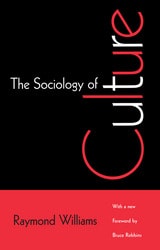
The Sociology of Culture
Raymond Williams
University of Chicago Press, 1995
"A historical analysis of the social organization of culture in terms of its institutions and formations. Insisting that the term sociology of culture implies a convergence of interests and methods, Williams draws from a broad range of examples: Greek drama, Celtic bards, the Pre-Raphaelites, Bloomsbury and modern copyright laws, among others."—Library Journal
Raymond Williams (1921-87) was professor of drama at Cambridge University. His many books include Marxism and Literature, Keywords, Country and the City, and Culture and Society.

The Sociology of the State
Bertrand Badie and Pierre Birnbaum
University of Chicago Press, 1983
The book opens with a review of the principal evolutionary theories concerning the origin of the institution proposed by such thinkers as Marx, Durkheim, and Weber. Rejecting these views, the authors set forward and defend their thesis that the state was an "invention" rather than a necessary consequence of any other process. Once invented, the state was disseminated outside its Western European birthplace either through imposition or imitation. The study concludes with concrete analyses of the differences in actual state institutions in France, Prussia, Great Britain, the United States, and Switzerland.

The Soul of Anime
Collaborative Creativity and Japan's Media Success StoryIan Condry
Duke University Press, 2013