Results by title
3745 books match the query 'Europe' and 973 start with t
The History of Cartography, Volume Four
Cartography in the European EnlightenmentEdited by Matthew H. Edney and Mary Sponberg Pedley
University of Chicago Press, 2020
The social and intellectual changes that swept Enlightenment Europe also transformed many of its mapmaking practices. A new emphasis on geometric principles gave rise to improved tools for measuring and mapping the world, even as large-scale cartographic projects became possible under the aegis of powerful states. Yet older mapping practices persisted: Enlightenment cartography encompassed a wide variety of processes for making, circulating, and using maps of different types. The volume’s more than four hundred encyclopedic articles explore the era’s mapping, covering topics both detailed—such as geodetic surveying, thematic mapping, and map collecting—and broad, such as women and cartography, cartography and the economy, and the art and design of maps. Copious bibliographical references and nearly one thousand full-color illustrations complement the detailed entries.
The History of Cartography, Volume One
Cartography in Prehistoric, Ancient, and Medieval Europe and the MediterraneanEdited by J. B. Harley and David Woodward
University of Chicago Press, 1987
Volume One addresses the prehistorical and historical mapping traditions of premodern Europe and the Mediterranean world. A substantial introductory essay surveys the historiography and theoretical development of the history of cartography and situates the work of the multi-volume series within this scholarly tradition. Cartographic themes include an emphasis on the spatial-cognitive abilities of Europe's prehistoric peoples and their transmission of cartographic concepts through media such as rock art; the emphasis on mensuration, land surveys, and architectural plans in the cartography of Ancient Egypt and the Near East; the emergence of both theoretical and practical cartographic knowledge in the Greco-Roman world; and the parallel existence of diverse mapping traditions (mappaemundi, portolan charts, local and regional cartography) in the Medieval period.
Throughout the volume, a commitment to include cosmographical and celestial maps underscores the inclusive definition of "map" and sets the tone for the breadth of scholarship found in later volumes of the series.
The History of the Royal Botanic Gardens Kew
Ray Desmond
Royal Botanic Gardens, Kew, 2007
Kew's heritage - the herbarium, art and architecture, from Kew Palace and Burton's great Palm House to the Princess of Wales Conservatory, state of the art laboratories and new Davies Alpine House - is illustrated and described, together with the events leading to its UNESCO World Heritage Site status in 2003. Lastly, it is a social history of the Gardens, and of the scientists, architects, designers and gardeners who have made Kew.
Detailed appendices and bibliography have been updated, and two new chapters added, bringing the book up to date as the authoritative reference work on Kew, its history and function.

The Holocaust and Other Genocides
History, Representation, EthicsHelmut Walser Smith
Vanderbilt University Press, 2002
The book consists of five parts: introduction; history of the Holocaust; representations of the Holocaust in literature, film, and the arts; other genocides; and ethics. The curriculum, shaped with feedback from those who teach Holocaust studies, consists mainly of primary documents and their analysis. Each section includes a general introduction to a body of knowledge that reflects current research and detailed introductions to particular documents. Throughout the book, there are provocative discussion questions and suggestions for further reading and other resources. Each section features "links" to other parts to encourage interdisciplinary reflection. The final section on ethics addresses the difficult questions raised by genocide.
The Holocaust and Other Genocides is designed as a model for flexible, innovative teaching about this complex subject. It is also a sophisticated, interdisciplinary effort to create the conditions for discussing and understanding the genocides of the twentieth century.
The Holocaust and the West German Historians
Historical Interpretation and Autobiographical MemoryNicolas Berg, Translated and edited by Joel Golb
University of Wisconsin Press, 2015
This English-language translation is also a shortened and reorganized edition, which includes a new introduction by Berg reviewing and commenting on the response to the German editions. Notably, in this American edition, discussion of historian Joseph Wulf and his colleague and fellow Holocaust survivor Léon Poliakov has been united in one chapter. And special care has been taken to make clear to English speakers the questions raised about German historiographical writing. Translator Joel Golb comments, "From 1945 to the present, the way historians have approached the Holocaust has posed deep-reaching problems regarding choice of language. . . . This book is consequently as much about language as it is about facts."
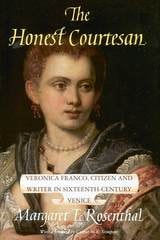
The Honest Courtesan
Veronica Franco, Citizen and Writer in Sixteenth-Century VeniceMargaret F. Rosenthal
University of Chicago Press, 1992
Margaret F. Rosenthal draws a compelling portrait of Veronica Franco in her cultural social, and economic world. Rosenthal reveals in Franco's writing a passionate support of defenseless women, strong convictions about inequality, and, in the eroticized language of her epistolary verses, the seductive political nature of all poetic contests. It is Veronica Franco's insight into the power conflicts between men and women—and her awareness of the threat she posed to her male contemporaries—that makes her literary works and her dealings with Venetian intellectuals so pertinent today.
Combining the resources of biography, history, literary theory, and cultural criticism, this sophisticated interdisciplinary work presents an eloquent and often moving account of one woman's life as an act of self-creation and as a complex response to social forces and cultural conditions.
"A book . . . pleasurably redolent of Venice in the 16th-century. Rosenthal gives a vivid sense of a world of salons and coteries, of intricate networks of family and patronage, and of literary exchanges both intellectual and erotic."—Helen Hackett, Times Higher Education Supplement
The Honest Courtesan is the basis for the film Dangerous Beauty (1998) directed by Marshall Herskovitz. (The film was re-titled The Honest Courtesan for release in the UK and Europe in 1999.)
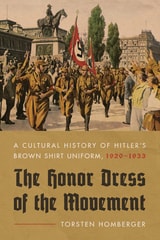
The Honor Dress of the Movement
A Cultural History of Hitler’s Brown Shirt Uniform, 1920–1933Torsten Homberger
University of Massachusetts Press, 2021
In The Honor Dress of the Movement, Torsten Homberger contends that the brown-shirted Stormtrooper uniform was central to Hitler's rise to power. By analyzing its design and marketing, he investigates how Nazi leaders used it to project a distinct political and military persona that was simultaneously violent and orderly, retrograde and modern—a dual image that proved popular with the German people and was key to the Nazis' political success. Based on a wealth of sources that includes literature, films, and newspapers of the era, Homberger exhibits how the Nazis shaped and used material culture to destroy democracy.
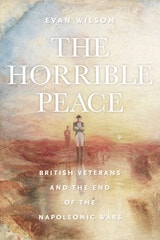
The Horrible Peace
British Veterans and the End of the Napoleonic WarsEvan Wilson
University of Massachusetts Press, 2023
Few battles in world history provide a cleaner dividing line than Waterloo: before, there was Napoleon; after, there was the Pax Britannica. While Waterloo marked France’s defeat and Britain’s ascendance as an imperial power, the war was far from over for many soldiers and sailors, who were forced to contend with the lasting effects of battlefield trauma, the realities of an impossibly tight labor market, and growing social unrest. The Horrible Peace details a story of distress and discontent, of victory complicated by volcanism, and of the challenges facing Britain at the beginning of its victorious century.
Examining the process of demobilization and its consequences for British society, Evan Wilson draws on archival research and veterans’ memoirs to tell the story of this period through the experiences of veterans who struggled to reintegrate and soldiers and sailors who remained in service as Britain attempted to defend and expand the empire. Veterans were indeed central to Britain’s experience of peace, as they took to the streets to protest the government’s indifference to widespread unemployment and misery. The fighting did not stop at Waterloo.
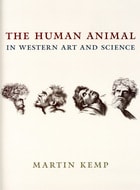
The Human Animal in Western Art and Science
Martin Kemp
University of Chicago Press, 2007
From the lazy, fiddling grasshopper to the sneaky Big Bad Wolf, children’s stories and fables enchant us with their portrayals of animals who act like people. But the comparisons run both ways, as metaphors, stories, and images—as well as scientific theories—throughout history remind us that humans often act like animals, and that the line separating them is not as clear as we’d like to pretend.
Here Martin Kemp explores a stunning range of images and ideas to demonstrate just how deeply these underappreciated links between humans and other fauna are embedded in our culture. Tracing those interconnections among art, science, and literature, Kemp leads us on a dazzling tour of Western thought, from Aristotelian physiognomy and its influence on phrenology to the Great Chain of Being and Darwinian evolution. We learn about the racist anthropology underlying a familiar Degas sculpture, see paintings of a remarkably simian Judas, and watch Mowgli, the man-child from Kipling’s The Jungle Book, exhibit the behaviors of the beasts who raised him. Like a kaleidoscope, Kemp uses these stories to refract, reconfigure, and echo the essential truth that the way we think about animals inevitably inflects how we think about people, and vice versa.
Loaded with vivid illustrations and drawing on sources from Hesiod to La Fontaine, Leonardo to P. T. Barnum, The Human Animal in Western Art and Science is a fascinating, eye-opening reminder of our deep affinities with our fellow members of the animal kingdom.
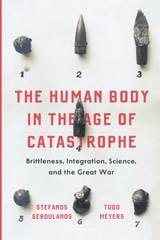
The Human Body in the Age of Catastrophe
Brittleness, Integration, Science, and the Great WarStefanos Geroulanos and Todd Meyers
University of Chicago Press, 2018
In The Human Body in the Age of Catastrophe, Stefanos Geroulanos and Todd Meyers uncover a fascinating story of how medical scientists came to conceptualize the body as an integrated yet brittle whole. Responding to the harrowing experience of the Great War, the medical community sought conceptual frameworks to understand bodily shock, brain injury, and the vast differences in patient responses they occasioned. Geroulanos and Meyers carefully trace how this emerging constellation of ideas became essential for thinking about integration, individuality, fragility, and collapse far beyond medicine: in fields as diverse as anthropology, political economy, psychoanalysis, and cybernetics.
Moving effortlessly between the history of medicine and intellectual history, The Human Body in the Age of Catastrophe is an intriguing look into the conceptual underpinnings of the world the Great War ushered in.
The Human Shore
Seacoasts in HistoryJohn R. Gillis
University of Chicago Press, 2012
Since before recorded history, people have congregated near water. But as growing populations around the globe continue to flow toward the coasts on an unprecedented scale and climate change raises water levels, our relationship to the sea has begun to take on new and potentially catastrophic dimensions. The latest generation of coastal dwellers lives largely in ignorance of the history of those who came before them, the natural environment, and the need to live sustainably on the world’s shores. Humanity has forgotten how to live with the oceans.

The Humours of Parliament
Harry Furniss's View of Late-Victorian Political CultureEdited and with an Introduction by Gareth Cordery and Joseph S. Meisel
The Ohio State University Press, 2014
Reproducing some 150 images drawn from Furniss’s extensive graphic work, The Humours of Parliament: Harry Furniss’s View of Late-Victorian Political Culture, edited and with an introduction by Gareth Cordery and Joseph S. Meisel, presents Furniss’s unpublished lecture text for the first time. The extensive introduction places the show in its biographical, political, and performative contexts. Cordery and Meisel’s volume therefore both documents a pivotal moment in British political and social history and provides a rare case study of an important yet little studied nineteenth-century performance genre: the illustrated platform lecture.
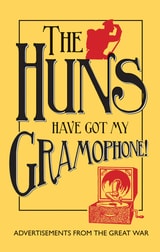
The Huns Have Got my Gramophone!
Advertisements from the Great WarAmanda Jane Doran and Andrew McCarthy
Bodleian Library Publishing, 2014
Ladies! Learn to Drive! Your Country Needs Women Drivers!
Do you drink German water?
When Britain declared war on Germany in 1914, industrious companies wasted no time in seizing the commercial opportunities presented by the conflict. Without TV or radio, newspapers provided one of the few ways in which the British public could get reliable news of the war. To cater to their rising readerships, advertising emerged as the new science of sales, growing increasingly sophisticated throughout the war years in both visual presentation and psychological appeal.
The Huns Have Got my Gramophone! collects some of the most compelling and cleverly worded original advertisements created between 1914 and 1918. Many of the advertisements are aimed at women, from fearless guard dogs promising protection while husbands are away to soaps and skin creams for “beauty on duty.” Others use the power of patriotism to push new products for men, including “officers’ waterproof trench coats,” and one young officer writing in the Times attests to the coats’ superior weather resistance by boldly asserting that he’d leave his sword behind before he left his Burberry. Together, the advertisements collected in the book reveal how advertisers sought to create new markets for products that took into account social change throughout the course of the conflict.
Featuring a range of products, from clothing, cigarettes, and invalid carriages to motorcycles and portable Decca phonographs—the “ideal gramophone for active service”—the book offers a new and unexpected source of historical information and an intimate glimpse of a nation at war.
The Hunt for Nazi Spies
Fighting Espionage in Vichy FranceSimon Kitson
University of Chicago Press, 2007
Simon Kitson informs this remarkable story with findings from his investigation—the first by any historian—of thousands of Vichy documents seized in turn by the Nazis and the Soviets and returned to France only in the 1990s. His pioneering detective work uncovers a puzzling paradox: a French government that was hunting down left-wing activists and supporters of Charles de Gaulle’s Free French forces was also working to undermine the influence of German spies who were pursuing the same Gaullists and resisters. In light of this apparent contradiction, Kitson does not deny that Vichy France was committed to assisting the Nazi cause, but illuminates the complex agendas that characterized the collaboration and shows how it was possible to be both anti-German and anti-Gaullist.
Combining nuanced conclusions with dramatic accounts of the lives of spies on both sides, The Hunt for Nazi Spies adds an important new dimension to our understanding of the French predicament under German occupation and the shadowy world of World War II espionage.
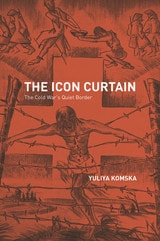
The Icon Curtain
The Cold War's Quiet BorderYuliya Komska
University of Chicago Press, 2015
Yuliya Komska transports readers to the western edge of the Bohemian Forest, one of Europe’s oldest borderlands, where in the 1950s civilians set out to shape the so-called prayer wall. A chain of new and repurposed pilgrimage sites, lookout towers, and monuments, the prayer wall placed two long-standing German obsessions, forest and border, at the heart of the century’s most protracted conflict. Komska illustrates how civilians used the prayer wall to engage with and contribute to the new political and religious landscape. In the process, she relates West Germany’s quiet sylvan periphery to the tragic pitch prevalent along the Iron Curtain’s better-known segments.
Steeped in archival research and rooted in nuanced interpretations of wide-ranging cultural artifacts, from vandalized religious images and tourist snapshots to poems and travelogues, The Icon Curtain pushes disciplinary boundaries and opens new perspectives on the study of borders and the Cold War alike.
The Idea of the Sciences in the French Enlightenment
A ReinterpretationG. Matthew Adkins
University of Delaware Press, 2014
Published by University of Delaware Press. Distributed worldwide by Rutgers University Press.
The Idea of the Theater in Latin Christian Thought
Augustine to the Fourteenth CenturyDonnalee Dox
University of Michigan Press, 2004
---Margaret Knapp, Arizona State University
"...an elegantly concise survey of the way classical notions of theater have been interpreted in the Latin Middle Ages. Dox convincingly demonstrates that far from there being a single 'medieval' attitude towards theater, there was in fact much debate about how theater could be understood to function within Christian tradition, even in the so-called 'dark ages' of Western culture. This book makes an innovative contribution to studies of the history of the theater, seen in terms of the history of ideas, rather than of practice."
---Constant Mews, Director, Centre for the Study of Religion & Theology, University of Monash, Australia
"In the centuries between St. Augustine and Bartholomew of Bruges, Christian thought gradually moved from a brusque rejection of classical theater to a progressively nuanced and positive assessment of its value. In this lucidly written study, Donnalee Dox adds an important facet to our understanding of the Christian reaction to, and adaptation of, classical culture in the centuries between the Church Fathers and the rediscovery of Aristotle."
---Philipp W. Rosemann, University of Dallas
This book considers medieval texts that deal with ancient theater as documents of Latin Christianity's intellectual history. As an exercise in medieval historiography, this study also examines biases in modern scholarship that seek links between these texts and performance practices. The effort to bring these texts together and place them in their intellectual contexts reveals a much more nuanced and contested discourse on Greco-Roman theater and medieval theatrical practice than has been acknowledged. The book is arranged chronologically and shows the medieval foundations for the Early Modern integration of dramatic theory and theatrical performance.
The Idea of the Theater in Latin Christian Thought will be of interest to theater historians, intellectual historians, and those who work on points of contact between the European Middle Ages and Renaissance. The broad range of documents discussed (liturgical treatises, scholastic commentaries, philosophical tracts, and letters spanning many centuries) renders individual chapters useful to philosophers, aestheticians, and liturgists as well as to historians and historiographers. For theater historians, this study offers an alternative reading of familiar texts which may alter our understanding of the emergence of dramatic and theatrical traditions in the West. Because theater is rarely considered as a component of intellectual projects in the Middle Ages, this study opens a new topic in the writing of medieval intellectual history.

The Igor Moiseyev Dance Company
Dancing DiplomatsAnthony Shay
Intellect Books, 2019
The Illuminated Chronicle
Chronicle of the Deeds of the Hungarians from the Fourteenth-Century Illuminated CodexJános M. Bak
Central European University Press, 2018
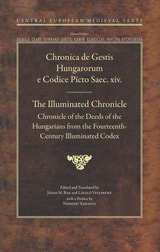
The Illuminated Chronicle was composed in 1358 in the international artistic style at the royal court of Louis I of Hungary. Its text, presented here in a new edition and translation, is the most complete record of Hungary's medieval historical tradition, going back to the eleventh century and including the mythical past of its people. The pictures in this manuscript—formerly known as the Vienna Chronicle—are not merely occasional illustrations added to some exemplars, but text and image are closely connected and mutually related to each other, to qualify it as a proper “illuminated chronicle”. The artistic value of the miniatures is quite high, and the characters are drawn with detail and with a knowledge of anatomy. Forty-two of the miniatures are included in the present volume. A full color facsimile will be accessible online.
The 147 pictures are an invaluable source of information on late medieval cultural history, costume, and court life. In a historiographical context, The Illuminated Chronicle is an attempt at the popularization of the national history and a systematic appeal to circles beyond the old monastic-clerical audience.
The Illuminated Chronicle (Chronica de gestis Hungarorum e codice picto saec. xiv.) is the ninth volume in the Central European Medieval Texts, a Latin–English bilingual series.
The Illusion of History
Andrew R. Russ
Catholic University of America Press, 2012
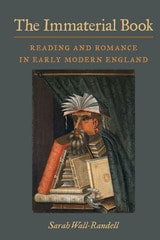
The Immaterial Book
Reading and Romance in Early Modern EnglandSarah Wall-Randell
University of Michigan Press, 2013
In romances—Renaissance England’s version of the fantasy novel—characters often discover books that turn out to be magical or prophetic, and to offer insights into their readers’ selves. The Immaterial Book examines scenes of reading in important romance texts across genres: Spenser’s Faerie Queene, Shakespeare’s Cymbeline and The Tempest, Wroth’s Urania, and Cervantes’ Don Quixote. It offers a response to “material book studies” by calling for a new focus on imaginary or “immaterial” books and argues that early modern romance authors, rather than replicating contemporary reading practices within their texts, are reviving ancient and medieval ideas of the book as a conceptual framework, which they use to investigate urgent, new ideas about the self and the self-conscious mind.

The Immigrant Threat
The Integration of Old and New Migrants in Western Europe since 1850Leo Lucassen
University of Illinois Press, 2005
Leo Lucassen tackles the question of whether the integration process of these recent immigrants will fundamentally differ in the long run (over multiple generations) from the experiences of similar immigrant groups in the past. For comparison, Lucassen focuses on "large and problematic groups" from Western Europe's past (the Irish in the United Kingdom, the Poles in Germany, and the Italians in France) and demonstrates a number of structural similarities in the way migrants and their descendants integrated into these nation states. Lucassen emphasizes that the geographic sources of the "threat" have changed and that contemporaries tend to overemphasize the threat of each successive wave of immigrants, in part because the successfully incorporated immigrants of the past have become invisible in national histories.
The Importance of Being Poirot
Jeremy Black
St. Augustine's Press, 2021
Hercule Poirot as a character is masterfully imagined, but Black shows us how he is inseparable from Christie’s turbulent and changing world. He also illuminates significant social commentary in Christie’s fiction, and in so doing Black often uses his authority to vindicate Christie’s work from hastily, at times stupidly, applied labels and interpretations. He is especially magnificent in his chapters, “Xenophobia” and “The Sixties.” Black nevertheless gives due recognition to Christie’s critics when they have something relevant and reasonable to say, and hence the reader finds yet another service in Black’s comprehensive review of the reviewers over the expanse of Christie’s writing career.
For all this, Black proves himself to be a worthy history-teller because he can aptly ‘detect’ the meaning of stories that seeks to answer the past and guide the present. His erudition runs much deeper than his ability to navigate the stores of resources available on the subject, and the reader gets a glimpse of this early on when in the introduction he proffers his own defense for writing about the importance of a Hercule Poirot. Black writes, “the notion of crime had a moral component from the outset, and notably so in terms of the struggle between Good and Evil, and in the detection of the latter. Indeed, it is this detection that is the basis of the most powerful strand of detection story, because Evil disguises its purposes. It has to do so in a world and humanity made fundamentally benign and moral by God.” The Golden Age of detective novels represents much more than a triumph of a literary genre. It is in its own right a story of how the challenge to address the problem of evil was accepted. Its convergence with the plot-rich narrative of the twentieth century in the modern age renders Black’s account a thrilling masterpiece, seducing historians to read fiction and crime junkies to read more history.
The Imprisoned Traveler
Joseph Forsyth and Napoleon's ItalyKeith Crook
Bucknell University Press, 2020
Published by Bucknell University Press. Distributed worldwide by Rutgers University Press.

The Indies Diaspora in the Netherlands
Essays on Race, Whiteness, and Identity in Dutch LiteratureAlfred Birney; Translated by Annemarie Toebosch and Marjolein van Pagee
Michigan Publishing Services, 2021
The Indies of the Setting Sun
How Early Modern Spain Mapped the Far East as the Transpacific WestRicardo Padrón
University of Chicago Press, 2020
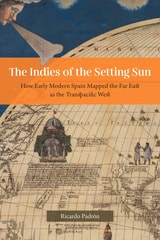
Narratives of Europe’s westward expansion often tell of how the Americas came to be known as a distinct landmass, separate from Asia and uniquely positioned as new ground ripe for transatlantic colonialism. But this geographic vision of the Americas was not shared by all Europeans. While some imperialists imagined North and Central America as undiscovered land, the Spanish pushed to define the New World as part of a larger and eminently flexible geography that they called las Indias, and that by right, belonged to the Crown of Castile and León. Las Indias included all of the New World as well as East and Southeast Asia, although Spain’s understanding of the relationship between the two areas changed as the realities of the Pacific Rim came into sharper focus. At first, the Spanish insisted that North and Central America were an extension of the continent of Asia. Eventually, they came to understand East and Southeast Asia as a transpacific extension of their empire in America called las Indias del poniente, or the Indies of the Setting Sun.
The Indies of the Setting Sun charts the Spanish vision of a transpacific imperial expanse, beginning with Balboa’s discovery of the South Sea and ending almost a hundred years later with Spain’s final push for control of the Pacific. Padrón traces a series of attempts—both cartographic and discursive—to map the space from Mexico to Malacca, revealing the geopolitical imaginations at play in the quest for control of the New World and Asia.
The Individual and the Cosmos in Renaissance Philosophy
Ernst Cassirer
University of Chicago Press, 2010
This provocative volume, one of the most important interpretive works on the philosophical thought of the Renaissance, has long been regarded as a classic in its field. Ernst Cassirer here examines the changes brewing in the early stages of the Renaissance, tracing the interdependence of philosophy, language, art, and science; the newfound recognition of individual consciousness; and the great thinkers of the period—from da Vinci and Galileo to Pico della Mirandola and Giordano Bruno. The Individual and the Cosmos in Renaissance Philosophy discusses the importance of fifteenth-century philosopher Nicholas Cusanus, the concepts of freedom and necessity, and the subject-object problem in Renaissance thought.
“This fluent translation of a scholarly and penetrating original leaves little impression of an attempt to show that a ‘spirit of the age’ or ‘spiritual essence of the time’ unifies and expresses itself in all aspects of society or culture.”—Philosophy
The Individuality of Portugal
A Study in Historical-Political GeographyBy Dan Stanislawski
University of Texas Press, 1959
Many map users have wondered why Portugal, sharing with Spain the Iberian Peninsula, ever became a separate nation. That question is answered with remarkable clarity by Dan Stanislawski. This book also presents an analysis of the factors that produce separate nations and offers a study of the evolution of national cultures generally, especially as they apply to Portugal.
The Information Master
Jean-Baptiste Colbert's Secret State Intelligence SystemJacob Soll
University of Michigan Press, 2011
"Colbert has long been celebrated as Louis XIV's minister of finance, trade, and industry. More recently, he has been viewed as his minister of culture and propaganda. In this lively and persuasive book, Jake Soll has given us a third Colbert, the information manager."
---Peter Burke, University of Cambridge
"Jacob Soll gives us a road map drawn from the French state under Colbert. With a stunning attention to detail Colbert used knowledge in the service of enhancing
royal power. Jacob Soll's scholarship is impeccable and his story long
overdue and compelling."
---Margaret Jacob, University of California, Los Angeles
"Nowadays we all know that information is the key to power, and that the masters of information rule the world. Jacob Soll teaches us that Jean-Baptiste Colbert had grasped this principle three and a half centuries ago, and used it to construct a new kind of state. This imaginative, erudite, and powerfully written book re-creates the history of libraries and archives in early modern Europe, and ties them in a novel and convincing way to the new statecraft of Europe's absolute monarchs."
---Anthony Grafton, Princeton University
"Brilliantly researched, superbly told, and timely, Soll's story is crucial for the history of the modern state."
---Keith Baker, Stanford University
When Louis XIV asked his minister Jean-Baptiste Colbert---the man who was to oversee the building of Versailles and the Royal Academy of Sciences, as well as the navy, the Paris police force, and French industry---to build a large-scale administrative government, Colbert created an unprecedented information system for political power. In The Information Master, Jacob Soll shows how the legacy of Colbert's encyclopedic tradition lies at the very center of the rise of the modern state and was a precursor to industrial intelligence and Internet search engines.
Soll's innovative look at Colbert's rise to power argues that his practice of collecting knowledge originated from techniques of church scholarship and from Renaissance Italy, where merchants recognized the power to be gained from merging scholarship, finance, and library science. With his connection of interdisciplinary approaches---regarding accounting, state administration, archives, libraries, merchant techniques, ecclesiastical culture, policing, and humanist pedagogy---Soll has written an innovative book that will redefine not only the history of the reign of Louis XIV and information science but also the study of political and economic history.
Jacob Soll is Associate Professor of History at Rutgers University and the author of Publishing The Prince: History, Reading, and the Birth of Political Criticism (University of Michigan Press, 2005), and winner of the 2005 Jacques Barzun Prize from the American Philosophical Society and a 2009 Guggenheim Fellowship. Soll edited a special issue of Journal of the History of Ideas titled "The Uses of Historical Evidence in Early Modern Europe"; has cofounded the online journal Republics of Letters; and is editor, along with Anthony Grafton and Ann Blair, of the series Cultures of Knowledge in the Early Modern World.
The Inner Lives of Medieval Inquisitors
Karen Sullivan
University of Chicago Press, 2011
There have been numerous studies in recent decades of the medieval inquisitions, most emphasizing larger social and political circumstances and neglecting the role of the inquisitors themselves. In this volume, Karen Sullivan sheds much-needed light on these individuals and reveals that they had choices—both the choice of whether to play a part in the orthodox repression of heresy and, more frequently, the choice of whether to approach heretics with zeal or with charity.
In successive chapters on key figures in the Middle Ages—Bernard of Clairvaux, Dominic Guzmán, Conrad of Marburg, Peter of Verona, Bernard Gui, Bernard Délicieux, and Nicholas Eymerich—Sullivan shows that it is possible to discern each inquisitor making personal, moral choices as to what course of action he would take. All medieval clerics recognized that the church should first attempt to correct heretics through repeated admonitions and that, if these admonitions failed, it should then move toward excluding them from society. Yet more charitable clerics preferred to wait for conversion, while zealous clerics preferred not to delay too long before sending heretics to the stake. By considering not the external prosecution of heretics during the Middles Ages, but the internal motivations of the preachers and inquisitors who pursued them, as represented in their writings and in those of their peers, The Inner Lives of Medieval Inquisitors explores how it is that the most idealistic of purposes can lead to the justification of such dark ends.
The Inquisition of Francisca
A Sixteenth-Century Visionary on TrialFrancisca de los Apóstoles
University of Chicago Press, 2005
This book contains what little is known about Francisca—the several letters she wrote as well as the transcript of her trial—and offers modern readers a perspective on the unique role and status of religious women in sixteenth-century Spain. Chronicling the drama of Francisca's interrogation and her spirited but ultimately unsuccessful defense, The Inquisition of Francisca—transcribed from more than three hundred folios and published for the first time in any language—will be a valuable resource for both specialists and students of the history and religion of Spain in the sixteenth century.
The Institutional Revolution
Measurement and the Economic Emergence of the Modern WorldDouglas W. Allen
University of Chicago Press, 2011
Few events in the history of humanity rival the Industrial Revolution. Following its onset in eighteenth-century Britain, sweeping changes in agriculture, manufacturing, transportation, and technology began to gain unstoppable momentum throughout Europe, North America, and eventually much of the world—with profound effects on socioeconomic and cultural conditions.
The Intellectual Properties of Learning
A Prehistory from Saint Jerome to John LockeJohn Willinsky
University of Chicago Press, 2017
Willinsky begins with Saint Jerome in the fifth century, then traces the evolution of reading, writing, and editing practices in monasteries, schools, universities, and among independent scholars through the medieval period and into the Renaissance. He delves into the influx of Islamic learning and the rediscovery of classical texts, the dissolution of the monasteries, and the founding of the Bodleian Library before finally arriving at John Locke, whose influential lobbying helped bring about the first copyright law, the Statute of Anne of 1710. Willinsky’s bravura tour through this history shows that learning gave rise to our idea of intellectual property while remaining distinct from, if not wholly uncompromised by, the commercial economy that this concept inspired, making it clear that today’s push for marketable intellectual property threatens the very nature of the quest for learning on which it rests.
The International Jewish Labor Bund after 1945
Toward a Global HistorySlucki, David
Rutgers University Press, 2012
The Jewish Labor Bund was one of the major political forces in early twentieth-century Eastern Europe. But the decades after the Second World War were years of enormous difficulty for Bundists. Like millions of other European Jews, they faced the challenge of resurrecting their lives, so gravely disrupted by the Holocaust. Not only had the organization lost many members, but its adherents were also scattered across many continents. In this book, David Slucki charts the efforts of the surviving remnants of the movement to salvage something from the wreckage.
Covering both the Bundists who remained in communist Eastern Europe and those who emigrated to the United States, France, Australia, and Israel, the book explores the common challenges they faced—building transnational networks of friends, family, and fellow Holocaust survivors, while rebuilding a once-local movement under a global umbrella. This is a story of resilience and passion—passion for an idea that only barely survived Auschwitz.
The Interpreter
Alice Kaplan
University of Chicago Press, 2007
No story of World War II is more triumphant than the liberation of France, made famous in countless photos of Parisians waving American flags and kissing GIs as columns of troops paraded down the Champs Élysées. But one of the least-known stories from that era is also one of the ugliest chapters in the history of Jim Crow. In The Interpreter, celebrated author Alice Kaplan recovers this story both as eyewitnesses first saw it, and as it still haunts us today.
The American Army executed 70 of its own soldiers between 1943 and 1946—almost all of them black, in an army that was overwhelmingly white. Through the French interpreter Louis Guilloux’s eyes, Kaplan narrates two different trials: one of a white officer, one of a black soldier, both accused of murder. Both were court-martialed in the same room, yet the outcomes could not have been more different.
Kaplan’s insight into character and setting creates an indelible portrait of war, race relations, and the dangers of capital punishment.
“A nuanced historical account that resonates with today’s controversies over race and capital punishment.” Publishers Weekly
“American racism could become deadly for black soldiers on the front. The Interpreter reminds us of this sad component of a heroic chapter in American military history.” Los Angeles Times
“With elegance and lucidity, Kaplan revisits these two trials and reveals an appallingly separate and unequal wartime U.S. military justice system.” Minneapolis Star Tribune
“Kaplan has produced a compelling look at the racial disparities as they were played out…She explores both cases in considerable and vivid detail.” Sacramento Bee
The Invention of Sodomy in Christian Theology
Mark D. Jordan
University of Chicago Press, 1997
"A crucial contribution to our understanding of the tortured and tortuous relationship between men who love men, and the Christian religion—indeed, between our kind and Western society as a whole. . . . The true power of Jordan's study is that it gives back to gay and lesbian people our place in history and that it places before modern theologians and church leaders a detailed history of fear, inconsistency, hatred and oppression that must be faced both intellectually and pastorally."—Michael B. Kelly, Screaming Hyena
"[A] detailed and disturbing tour through the back roads of medieval Christian thought."—Dennis O'Brien, Commonweal
"Being gay and being Catholic are not necessarily incompatible modes of life, Jordan argues. . . . Compelling and deeply learned."—Virginia Quarterly Review
The Invention of World Religions
Or, How European Universalism Was Preserved in the Language of PluralismTomoko Masuzawa
University of Chicago Press, 2005
In this ambitious study, Tomoko Masuzawa examines the emergence of "world religions" in modern European thought. Devoting particular attention to the relation between the comparative study of language and the nascent science of religion, she demonstrates how new classifications of language and race caused Buddhism and Islam to gain special significance, as these religions came to be seen in opposing terms-Aryan on one hand and Semitic on the other. Masuzawa also explores the complex relation of "world religions" to Protestant theology, from the hierarchical ordering of religions typical of the Christian supremacists of the nineteenth century to the aspirations of early twentieth-century theologian Ernst Troeltsch, who embraced the pluralist logic of "world religions" and by so doing sought to reclaim the universalist destiny of European modernity.
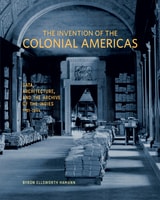
The Invention of the Colonial Americas
Data, Architecture, and the Archive of the Indies, 1781–1844Byron Ellsworth Hamann
J. Paul Getty Trust, The, 2022
The Invention of the Colonial Americas is an architectural history and media-archaeological study of changing theories and practices of government archives in Enlightenment Spain. It centers on an archive created in Seville for storing Spain’s pre-1760 documents about the New World. To fill this new archive, older archives elsewhere in Spain—spaces in which records about American history were stored together with records about European history—were dismembered. The Archive of the Indies thus constructed a scholarly apparatus that made it easier to imagine the history of the Americas as independent from the history of Europe, and vice versa.
In this meticulously researched book, Byron Ellsworth Hamann explores how building layouts, systems of storage, and the arrangement of documents were designed to foster the creation of new knowledge. He draws on a rich collection of eighteenth-century architectural plans, descriptions, models, document catalogs, and surviving buildings to present a literal, materially precise account of archives as assemblages of spaces, humans, and data—assemblages that were understood circa 1800 as capable of actively generating scholarly innovation.
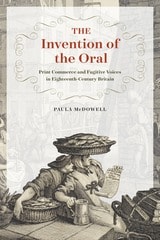
The Invention of the Oral
Print Commerce and Fugitive Voices in Eighteenth-Century BritainPaula McDowell
University of Chicago Press, 2017
Drawing on an impressive array of sources including travel narratives, elocution manuals, theological writings, ballad collections, and legal records, McDowell re-creates a world in which everyone from fishwives to philosophers, clergymen to street hucksters, competed for space and audiences in taverns, marketplaces, and the street. She argues that the earliest positive efforts to theorize "oral tradition," and to depict popular oral culture as a culture (rather than a lack of culture), were prompted less by any protodemocratic impulse than by a profound discomfort with new cultures of reading, writing, and even speaking shaped by print.
Challenging traditional models of oral versus literate societies and key assumptions about culture’s ties to the spoken and the written word, this landmark study reorients critical conversations across eighteenth-century studies, media and communications studies, the history of the book, and beyond.
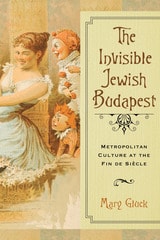
The Invisible Jewish Budapest
Metropolitan Culture at the Fin de SiècleMary Gluck
University of Wisconsin Press, 2019
Famed for its cosmopolitan culture and vibrant nightlife, Budapest owed much to its Jewish population. Indeed, it was Jews who helped shape the city's complex urban modernity between 1867 and 1914. Yet these contributions were often unacknowledged, leading to a metaphoric, if not literal, invisible status for many of Budapest's Jews.
In the years since, particularly between the wars, anti-Semites within and outside Budapest sought to further erase Jewish influences in the city. Appellations such as the "sinful city" and "Judapest" left a toxic inheritance that often inhibited serious conversation or scholarly research on the subject.
Into this breach strides Mary Gluck, whose goal is no less than to retrieve the lost contours of Jewish Budapest. She delves into the popular culture of the city's coffee houses, music halls, and humor magazines to uncover the enormous influence of assimilated Jews in creating modernist Budapest. She explores the paradox of this culture, which was Jewish-identified yet lacked a recognizable Jewish face. Because much of the Jewish population embraced and promoted a secular, metropolitan culture, their influence as Jews was both profound and invisible.
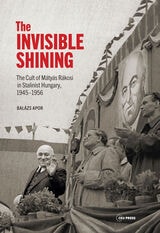
The Invisible Shining
The Cult of Mátyás Rákosi in Stalinist Hungary, 19451956Balazs Apor
Central European University Press, 2018
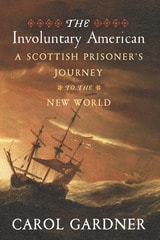
The Involuntary American
A Scottish Prisoner's Journey to the New WorldCarol R. Gardner
Westholme Publishing, 2024
In the winter of 1650–51, one hundred fifty ragged and hungry Scottish prisoners of war arrived at Massachusetts Bay Colony, where they were sold as indentured laborers for 20 to 30 pounds each. Among them was Thomas Doughty, a common foot soldier who had survived the Battle of Dunbar, a forced marched of 100 miles without food or water, imprisonment in Durham Cathedral, and a difficult Atlantic crossing. An ordinary individual who experienced extraordinary events, Doughty was among some 420 Scottish soldiers who were captured during the War of the Three Kingdoms, transported to America, and sold between 1650 and 1651. Their experiences offer a fresh perspective on seventeenth-century life.
The Involuntary American: A Scottish Prisoner’s Journey to the New World by Carol Gardner describes Doughty’s life as a soldier, prisoner of war, exile, servant, lumberman, miller, and ultimately free landowner. It follows him and his peers through critical events: the apex of the Little Ice Age, the War of the Three Kingdoms, the colonization of New England, the burgeoning transatlantic trade in servants and slaves, King Philip’s and King William’s wars, and the Salem witch crisis. Firstperson accounts of individuals who lived through those events—Scottish, English, Puritan, Native American, wealthy, poor, working class, educated or not— provide rich period detail and a variety of perspectives.
The Involuntary American demonstrates how even individuals of humble circumstances were swept into the maelstrom of the First Global Age. It expands our understanding of immigration to the colonies, colonial servitude, the linkages and tensions between Europe, Massachusetts Bay, and America’s northeastern frontier, and of New England society in the early colonial period.
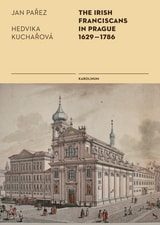
The Irish Franciscans in Prague 1629-1786
Jan Parez and Hedvika Kucharová
Karolinum Press, 2015
Dealing with a hitherto largely neglected theme, Parez and Kucharová attempt to place the Franciscan College within Bohemian history and to document the activities of its members. This wealth of historical material from the Czech archives, presented in English for the first time, will be of great aid for international researchers, particularly those interested in Bohemia or the Irish diaspora.
The Irish Question, Volume 2009
Conor McGrady, Donal Ó Drisceoil and Van Gosse, eds.
Duke University Press, 0
One contributor addresses the issue of constitutional nationalism in late-nineteenth- and early-twentieth-century Ireland, while another looks at the recent history of Irish republicanism in relation to the peace process. Other essays examine Protestant society and Unionist hegemony in nineteenth-century Ulster, immigration and racism as the Irish experienced them in postwar Britain, and the historiography of race and racialization in Ireland. The historical adviser for the award-winning film The Wind That Shakes the Barley reflects on its portrayal of the period of the Irish War of Independence and Civil War and a photographic essay focuses on supporters of the modern Irish republican movement in the United States and Ireland.
Contributors. Kevin Bean, Pauline Collombier-Lakeman, Mary Conley, John Corbally, Steve Garner, Diane George, Van Gosse, Martin Hayes, Bill Kissane, Conor McGrady, Kerby Miller, Kevin Noble, Donal Ó Drisceoil
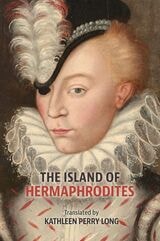
The Island of Hermaphrodites
Translated by Kathleen Perry Long
Arizona Center for Medieval and Renaissance Studies, 2025
A scandalous and subversive satire, Island of Hermaphrodites skewers the decadence and corruption of early seventeenth-century French society with razor-sharp wit. Published anonymously in 1605, this daring Menippean satire created an uproar for its irreverent portrayal of the French court, critique of absolute monarchy, and radical questioning of gender and power. A blend of political critique and biting humor, the novel follows an imagined land of aristocratic excess, where opulent feasts, elaborate fashion, and absurd rituals mask the deeper instability of a society built on privilege and deception.
Republished throughout the eighteenth century and connected to the intellectual ferment leading up to the French Revolution, Island of Hermaphrodites remains a strikingly modern indictment of unchecked power and economic exploitation. In its first full English translation, Kathleen P. Long offers new audiences a satirical romp through a world of absurdist power—one that feels politically salient today.
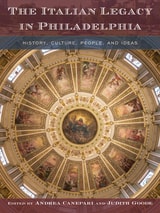
The Italian Legacy in Philadelphia
History, Culture, People, and IdeasEdited by Andrea Canepari and Judith Goode
Temple University Press, 2021
Italian arts and culture have been a significant influence on Philadelphia dating back to Thomas Jefferson and colonial times. Throughout the ensuing decades, Italian art and architecture styles flourished, and wealthy Philadelphians traveled to Italy and brought back objects to display in emerging institutions of art and culture. New immigration formed neighborhoods—such as South Philly, home to the Italian Market—and Italian business leaders, politicians, artists, musicians and sports figures came to prominence and became part of the social fabric of the city.
This glorious volume, The Italian Legacy in Philadelphia, celebrates the history, impact, and legacy of this vibrant community, tracing four periods of key transformation in the city’s political, economic, and social structures. The editors and contributors chronicle the changing dynamics of the city as Italian immigrants established themselves and as they continue to have lively interactions with people and institutions in Italy.
Interdisciplinary essays, along with nearly 250 gorgeous images, explore the changing perspectives and styles of those who contributed Italian influences. As settlers and their descendants brought everyday cultural practices, memories, and traditions, they created different Italian-American experiences that became important parts of American culture, a legacy that is thriving in contemporary, globalized Philadelphia.

The Iuvenilia of Marc-Antoine Muret
With a translation, introduction, notes, and commentary by Kirk M. Summers
The Ohio State University Press, 2006
A growing interest in the contributions and perspectives of Renaissance authors who wrote in Latin has created an urgent need for accessible modern editions of their works. There is no hope of truly understanding the Renaissance, which, after all, was a revival of ancient learning integrated with an emerging modern world view, without taking into account the large body of work produced by neo-Latin authors. The Iuvenilia of Marc-Antoine Muret helps fill the need for critical editions that provide a general context and interpretation. A major neo-Latin poet, Muret was thoroughly versed in classical literature, mythology, rhetoric, and philosophy. He had inherited centuries of medieval learning and practices, both secular and religious. Muret incorporated the generic innovations of contemporary humanists while referring to current events and figures. In short, he summed up in his own person the body of human endeavor and thinking as it stood in his own time.
Given Muret’s importance, this lively translation by Kirk M. Summers, with an introduction, notes, and commentary, will appeal to classicists, including those interested in the classical tradition, as well as to scholars working on the French and European Renaissance.
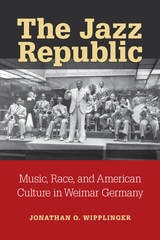
The Jazz Republic
Music, Race, and American Culture in Weimar GermanyJonathan O. Wipplinger
University of Michigan Press, 2017
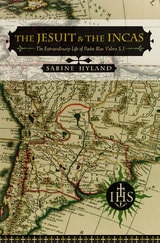
The Jesuit and the Incas
The Extraordinary Life of Padre Blas Valera, S.J.Sabine Hyland
University of Michigan Press, 2004
This is the tale of Father Blas Valera, the child of a native Incan woman and Spanish father, caught between the ancient world of the Incas and the conquistadors of Spain. Valera, a Jesuit in sixteenth-century Peru, believed in what to his superiors was pure heresy: that the Incan culture, religion, and language were equal to their Christian counterparts.
As punishment for his beliefs he was imprisoned, beaten, and, finally, exiled to Spain, where he died at the hands of English pirates in 1597.
Four centuries later, this Incan chronicler had been all but forgotten, until an Italian anthropologist discovered some startling documents in a private Neapolitan collection. The documents claimed, among other things, that Valera's death had been faked by the Jesuits; that he had returned to Peru; and, intriguingly, while there had taught his followers that the Incas used a secret phonetic quipu-a record-keeping device of the Inca empire-to record history.
Far from settling anything, the documents created an international sensation among scholars and led to bitter disputes over how they should be assessed. Are they forgeries, authentic documents, or something in between? If genuine, they will radically reform our view of Inca culture and Valera. The author insightfully examines the evidence, showing how fact and fiction intertwine, and brings the dimly understood history of this author-priest to light.
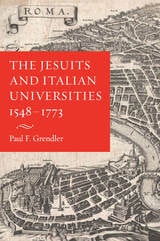
The Jesuits and Italian Universities, 1548-1773
Paul F. Grendler
Catholic University of America Press, 2017
The Jesuits were rejected. Italy already had fourteen universities famous for their research and teaching. They were ruled by princes and cities who refused to share their universities with a religious order led by Spaniards. Between 1548 and 1773 the Jesuits made sixteen attempts, from Turin in the north to Messina in Sicily, to found new universities or to become professors in existing universities. They had some successes, as they helped found four new universities and became professors of mathematics in three more universities. But they suffered nine total failures. The battles between universities, civil governments, and the Jesuits were memorable. Lay professors accused the Jesuits of teaching philosophy badly. The Jesuits charged that Italian professors delivered few lectures and skipped most of Aristotle. Behind the denunciations were profound differences about what universities should be.
Italian universities were dominated by law and the Jesuits emphasized the humanities and theology. Nevertheless, the Society of Jesus had an impact. They added cases of conscience to the training of clergymen. They made four years of study the norm for a degree in theology. They offered a student-centered alternative to Italian universities that focused on research and ignored student misbehavior.
Paul Grendler tells a new story based on years of research in a dozen archives. Anyone interested in the volatile mix of universities, religion, and politics will find this book fascinating and instructive, as will anyone who contemplates what it means to be a Catholic university.