Results by title
1861 books match the query 'Social life and customs' and 358 start with t

Turn Out the Lights
Chronicles of Texas during the 80s and 90sBy Gary Cartwright
University of Texas Press, 2000
Whether the subject is Jack Ruby, Willie Nelson, or his own leukemia-stricken son Mark, when it comes to looking at the world through another person's eyes, nobody does it better than Gary Cartwright. For over twenty-five years, readers of Texas Monthly have relied on Cartwright to tell the stories behind the headlines with pull-no-punches honesty and wry humor. His reporting has told us not just what's happened over three decades in Texas, but, more importantly, what we've become as a result.
This book collects seventeen of Cartwright's best Texas Monthly articles from the 1980s and 1990s, along with a new essay, "My Most Unforgettable Year," about the lasting legacy of the Kennedy assassination. He ranges widely in these pieces, from the reasons for his return to Texas after a New Mexican exile to profiles of Kris Kristofferson and Willie Nelson. Along the way, he strolls through San Antonio's historic King William District; attends a Dallas Cowboys old-timers reunion and the Holyfield vs. Foreman fight; visits the front lines of Texas' new range wars; gets inside the heads of murderers, gamblers, and revolutionaries; and debunks Viagra miracles, psychic surgery, and Kennedy conspiracy theories. In Cartwright's words, these pieces all record "the renewal of my Texas-ness, a rediscovery of Texas after returning home."
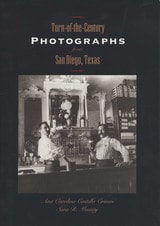
Turn-of-the-Century Photographs from San Diego, Texas
By Ana Carolina Castillo Crimm and Sara R. Massey
University of Texas Press, 2003
Situated in the South Texas borderlands some fifty miles west of Corpus Christi, San Diego was a thriving town already a hundred years old at the turn of the twentieth century. With a population that was 90 percent Mexican or Mexican American and 10 percent Anglo, the bicultural community was the seat of Duval County and a prosperous town of lumberyards, banks, mercantile stores, and cotton gins, which also supplied the needs of area ranchers and farmers. Though Anglos dominated its economic and political life, San Diego was culturally Mexican, and Mexican Americans as well as Anglos built successful businesses and made fortunes.
This collection of nearly one hundred photographs from the estate of amateur photographer William Hoffman captures the cosmopolitan town of San Diego at a vibrant moment in its history between 1898 and 1909. Grouped into the categories women and their jobs, local homes, men and their businesses, children at school and church, families and friends, and entertainment about town, the photos offer an immediate visual understanding of the cultural and economic life of the community, enhanced by detailed captions that identify the subjects and circumstances of the photos. An introductory historical chapter constitutes the first published history of Duval County, which was one of the most important areas of South Texas in the early twentieth century.
Twelve Mormon Homes Revisited
Touring Polygamous Utah with Elizabeth Kane, 1872-1873Lowell C. Bennion
University of Utah Press, 2024
Twelve Years
An American Boyhood in East GermanyJoel Agee
University of Chicago Press, 2000
"A wonderfully evocative memoir. . . . Agee evoked for me the atmosphere of postwar Berlin more vividly than the actual experience of it—and I was there." —Christopher Lehmann-Haupt, New York Times
"One of those rare personal memoirs that brings to life a whole country and an epoch." —Christopher Isherwood
"Twelve Years consists of a series of finely honed anecdotes written in a precise, supple prose rich with sensual detail." —David Ghitelman, Newsday
"By turns poetic and picturesque, Agee energetically catalogues his expatriate passage to manhood with a pinpoint eye and a healthy American distaste for pretension. . . . Huckleberry Finn would have . . . welcomed [him] as a soulmate on the raft." —J. D. Reed, Time
"A triumph. . . . Unfettered by petty analysis or quick explanations, a story that is timeless and ageless and vital." —Robert Michael Green, Baltimore Sun
Twenty Acres
A Seventies Childhood in the WoodsSarah Neidhardt
University of Arkansas Press, 2023
"A memoir infused with both empathy and inquiry."
—Wendy J. Fox, Electric Literature
“Twenty Acres is an engaging, thoughtful memoir of growing up in an off-the-grid cabin as part of the 1970s back-to-the-land movement. Sarah Neidhardt captures her subject beautifully and offers a compelling portrait of a highly specific, historically significant time and place.”
—Kate Daloz, author of We Are As Gods: Back to the Land in the 1970s on the Quest for a New America
Sarah Neidhardt grew up in the woods. When she was an infant, her parents left behind comfortable, urbane lives to take part in the back-to-the-land movement. They moved their young family to an isolated piece of land deep in the Arkansas Ozarks where they built a cabin, grew crops, and strove for eight years to live self-sufficiently.
In this vivid memoir Neidhardt explores her childhood in wider familial and social contexts. Drawing upon a trove of family letters and other archival material, she follows her parents’ journey from privilege to food stamps—from their formative youths, to their embrace of pioneer homemaking and rural poverty, to their sudden and wrenching return to conventional society—and explores the back-to-the-land movement of the 1970s as it was, and as she lived it.
A story of strangers in a strange land, of class, marriage, and family in a changing world, Twenty Acres: A Seventies Childhood in the Woods is part childhood idyll, part cautionary tale. Sarah Neidhardt reveals the treasures and tolls of unconventional, pastoral lives, and her insightful reflections offer a fresh perspective on what it means to aspire to pre-industrial lifestyles in a modern world.
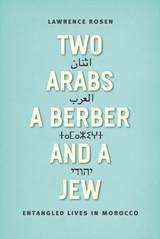
Two Arabs, a Berber, and a Jew
Entangled Lives in MoroccoLawrence Rosen
University of Chicago Press, 2015
Through the intellectual lives of these four men, this book explores a number of interpretative and theoretical issues that have made Arab culture distinct, especially in relationship to the West: how nothing is ever hard and fast, how everything is relational and always a product of negotiation. It showcases the vitality of the local in a global era, and it contrasts Arab notions of time, equality, and self with those in the West. Likewise, Rosen unveils his own entanglement in their world and the drive to keep the analysis of culture first and foremost, even as his own life enmeshes itself in those of his study. An exploration of faith, politics, history, and memory, this book highlights the world of everyday life in Arab society in ways that challenge common notions and stereotypes.
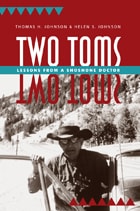
Two Toms
Lessons from a Shoshone DoctorThomas H. Johnson
University of Utah Press, 2011
In 1969, Tom Wesaw was an 83-year-old Shoshone doctor and religious leader on the Wind River Reservation in Wyoming. He could no longer drive, which posed problems in making house calls. The arrival of young anthropologist Tom Johnson changed that. Johnson would drive Wesaw, and cook, pump water, and build fires for sweat lodges. In exchange, the elder Tom would show the younger Tom his work. The two were together so often that the people of Wind River began to refer to them affectionately by one name: Two Toms. By the light of the lamp Wesaw gave him, Johnson would write down what he learned. The Shoshone doctor wanted his student to share everything he saw and heard. Now, in Two Toms: Lessons from a Shoshone Doctor, he has.
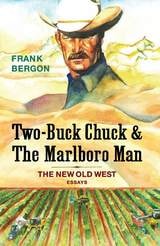
Two-Buck Chuck & The Marlboro Man
The New Old WestFrank Bergon
University of Nevada Press, 2019
Bergon presents a powerful array of rural and small-town Westerners who often see themselves as part of a region and a way of life most Americans aren’t aware of or don’t understand, their voices unheard, their stories untold. In these essays, Westerners from the diverse heritage of the San Joaquin Valley include California’s legendary Fred Franzia, the maker of the world’s best-selling Charles Shaw wines dubbed “Two-Buck Chuck,” and Darrell Winfield, a Dust Bowl migrant and lifelong working cowboy who for more than thirty years reigned as the iconic Marlboro Man. Their voices help us understand the complexities of today’s rural West, where Old West values intersect with New West realities. This is the West (and America today)—a region in conflict with itself.