Results by title
28167 books match the query 'History' and 6372 start with t

The Redskins Encyclopedia
Michael Richman
Temple University Press, 2007
"Hail to the Redskins" and Redskin-mania have consumed the nation's capital since 1937, the Redskins' fist year in Washington. And the fervor remains as strong, if not stronger, today.
Amply illustrated with 200 photos of players, coaches, and fans, The Redskins Encyclopedia recounts the franchise's first 75 seasons, reliving the great -- and not so great -- moments in the team's storied history, and the men who helped make Sundays memorable.
Fans will read about:
--Coaches like George Allen, the eccentric, passionate man who left a legacy as an NFL pioneer, and Joe Gibbs, who formed a D-Y-N-A-S-T-Y
--Players like star running back and all-time Redskins ground-gainer John Riggins, who once told Supreme Court Justice Sandra Day O'Connor to "loosen up, Sandy baby," and Doug Williams, the first black quarterback to win a Super Bowl and Super Bowl MVP honors
--The franchise's golden run of four Super Bowl appearances -- and three wins -- in the 1980s and early 1990s
--The legendary Redskins-Cowboys rivalry
--A year-by-year history of the team from 1932 to the present, with stats from each season
--Individual profiles of more than 100 Redskins players -- from Sammy Baugh to Darrell Green to Art Monk to Sonny Jurgensen to Charley Taylor to Joe Theismann
With an unparalleled collection of anecdotes, quotes, trivia, and hard-to-find information, The Redskins Encyclopedia is a must-have book for any fan who has ever bled burgundy and gold.

The Reel Thrilling Events of Bank Robber Henry Starr
From Gentleman Bandit to Movie Star and Back AgainMark Archuleta
University of North Texas Press, 2025
The Reflective Age
Nostalgia at the End of HistoryZachary Griffith
Rutgers University Press, 2026
The Reformation of Emotions in the Age of Shakespeare
Steven Mullaney
University of Chicago Press, 2015
As Steven Mullaney shows in The Reformation of Emotions in the Age of Shakespeare, Elizabethan popular drama played a significant role in confronting the uncertainties and unresolved traumas of Elizabethan Protestant England. Shakespeare and his contemporaries—audiences as well as playwrights—reshaped popular drama into a new form of embodied social, critical, and affective thought. Examining a variety of works, from revenge plays to Shakespeare’s first history tetralogy and beyond, Mullaney explores how post-Reformation drama not only exposed these faultlines of society on stage but also provoked playgoers in the audience to acknowledge their shared differences. He demonstrates that our most lasting works of culture remain powerful largely because of their deep roots in the emotional landscape of their times.
The Reformation of the Image
Joseph Leo Koerner
University of Chicago Press, 2004
But if words—not iconic images—showed the way to salvation, why didn't religious imagery during the Reformation disappear along with indulgences? The answer, according to Joseph Leo Koerner, lies in the paradoxical nature of Protestant religious imagery itself, which is at once both iconic and iconoclastic. Koerner masterfully demonstrates this point not only with a multitude of Lutheran images, many never before published, but also with a close reading of a single pivotal work—Lucas Cranach the Elder's altarpiece for the City Church in Wittenberg (Luther's parish). As Koerner shows, Cranach, breaking all the conventions of traditional Catholic iconography, created an entirely new aesthetic for the new Protestant ethos.
In the Crucifixion scene of the altarpiece, for instance, Christ is alone and stripped of all his usual attendants—no Virgin Mary, no John the Baptist, no Mary Magdalene—with nothing separating him from Luther (preaching the Word) and his parishioners. And while the Holy Spirit is nowhere to be seen—representation of the divine being impossible—it is nonetheless dramatically present as the force animating Christ's drapery. According to Koerner, it is this "iconoclash" that animates the best Reformation art.
Insightful and breathtakingly original, The Reformation of the Image compellingly shows how visual art became indispensable to a religious movement built on words.
The Refracted Muse
Literature and Optics in Early Modern SpainEnrique Garcia Santo-Tomas
University of Chicago Press, 2017
While Spain is often thought to have taken little notice of the Scientific Revolution, García Santo-Tomás tells a different story, one that reveals Golden Age Spanish literature to be in close dialogue with the New Science. Drawing on the work of writers such as Cervantes, Lope de Vega, Calderón de la Barca, and Quevedo, he helps us trace the influence of science and discovery on the rapidly developing and highly playful genre of the novel. Indeed, García Santo-Tomás makes a strong case that the rise of the novel cannot be fully understood without taking into account its relationship to the scientific discoveries of the period.

The Regional Dynamics of Language Differentiation in Belgium
A Study in Cultural-Political GeographyAlexander B. Murphy
University of Chicago Press, 1988
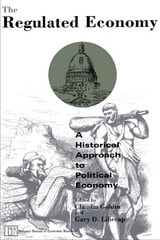
The Regulated Economy
A Historical Approach to Political EconomyEdited by Claudia Goldin and Gary D. Libecap
University of Chicago Press, 1994
The Regulated Economy examines how constituent groups emerged and demanded government action to solve perceived economic problems, such as exorbitant railroad and utility rates, bank failure, falling agricultural prices, the immigration of low-skilled workers, workplace injury, and the financing of government. The contributors look at how preexisting policies, institutions, and market structures shaped regulatory activity; the origins of regulatory movements at the state and local levels; the effects of consensus-building on the timing and content of legislation; and how well government policies reflect constituency interests.
A wide-ranging historical view of the way interest group demands and political bargaining have influenced the growth of economic regulation in the United States, this book is important reading for economists, political scientists, and public policy experts.
The Regulatory Process
With Illustrations from Commercial AviationBy Emmette S. Redford
University of Texas Press, 1969
The subject of regulation is one of the most vital and troublesome in our system of government. In this detailed study of early and mid-twentieth-century regulation of commercial aviation Emmette S. Redford illustrates what happens when government regulates a particular industry.
He first sets forth the perspectives for a study of an area of regulation and develops an argument for eclectic perspectives in the study of selected systems, or universes, of social action, such as the performance of an economic function under government regulation.
These perspectives are illustrated in the following series of case studies on regulation of commercial aviation:
- The significance of belief patterns on the content of the Civil Aeronautics Act of 1938.
- The role of Congress in the regulation of commercial aviation in a two-year period.
- The interactions of Congress, the president, and the regulated industry in strengthening safety regulation through passage of the Federal Aviation Act of 1958.
- The actions of the Civil Aeronautics Board on a set of complicated economic issues in the General Passenger Fare Investigation.
- The position of the Air Transport Association in the regulatory pattern.
In "An Essay on Evaluation" Redford summarizes what is revealed in the case studies that is significant with respect to the system of government regulation. He searches for standards for evaluating a system of social control, or for evaluating parts of it, and relates his conclusions to issues regarding the beneficence of a system of regulated private supply of a service.
The Regulatory Process is a study of interest to the aviation industry, to students of regulation of the economy, and to those who seek an understanding of social systems.

The Reincarnation of Russia
Struggling with the Legacy of Communism, 1990–1994John Löwenhardt
Duke University Press, 1995
Building on analysis of the failure of the Soviet system, Löwenhardt compares the emergence of Russia as a newborn state with other countries that have undergone transitions from authoritarianism toward democracy. Although it is often claimed that Russia is a unique case, the author argues that the lessons of other nations are relevant to the Russian situation. In conjunction with this comparative analysis and with consideration of the significance of the communist and Russian past, Löwenhardt discusses political and economic developments—including both foreign and domestic policy concerns—in Russia over the last four years. He provides a better understanding of the Russian condition and a guarded optimism regarding the ongoing process taking place in Russia today.
The Reincarnation of Russia will be welcomed by scholars with specialized interests in the democratization of Russia, political leaders, journalists, and general readers concerned with the global impact of Russia’s changing status.
The Reinvention of Mexico in Contemporary Spanish Travel Writing
Jane Hanley
Vanderbilt University Press, 2021
To frame the analysis of contemporary travel writing, author Jane Hanley examines key moments in the history of Mexican-Spanish relations, including the origins of narratives regarding Spaniards' sense of Mexico's similarity to and difference from Spain. This history underpins the discussion of the role of Spanish travelers in their encounters with Mexican peoples and places and their reflection on their own role as communicators of cultural meaning and participants in the tourist economy with its impact—both negative and positive—on places.
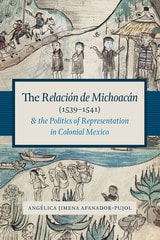
The Relación de Michoacán (1539-1541) and the Politics of Representation in Colonial Mexico
By Angélica Jimena Afanador-Pujol
University of Texas Press, 2015
Through close readings of the painted images in a major sixteenth-century illustrated manuscript, this book demonstrates the critical role that images played in ethnic identity formation and politics in colonial Mexico.
The Relación de Michoacán (1539–1541) is one of the earliest surviving illustrated manuscripts from colonial Mexico. Commissioned by the Spanish viceroy Antonio de Mendoza, the Relación was produced by a Franciscan friar together with indigenous noble informants and anonymous native artists who created its forty-four illustrations. To this day, the Relación remains the primary source for studying the pre-Columbian practices and history of the people known as Tarascans or P’urhépecha. However, much remains to be said about how the Relación’s colonial setting shaped its final form.
By looking at the Relación in its colonial context, this study reveals how it presented the indigenous collaborators a unique opportunity to shape European perceptions of them while settling conflicting agendas, outshining competing ethnic groups, and carving a place for themselves in the new colonial society. Through archival research and careful visual analysis, Angélica Afanador-Pujol provides a new and fascinating account that situates the manuscript’s images within the colonial conflicts that engulfed the indigenous collaborators. These conflicts ranged from disputes over political posts among indigenous factions to labor and land disputes against Spanish newcomers. Afanador-Pujol explores how these tensions are physically expressed in the manuscript’s production and in its many contradictions between text and images, as well as in numerous emendations to the images. By studying representations of justice, landscape, conquest narratives, and genealogy within the Relación, Afanador-Pujol clearly demonstrates the visual construction of identity, its malleability, and its political possibilities.
The Religion of Falun Gong
Benjamin Penny
University of Chicago Press, 2012
In July 1999, a mere seven years after the founding of the religious movement known as the Falun Gong, the Chinese government banned it. Falun Gong is still active in other countries, and its suppression has become a primary concern of human rights activists and is regularly discussed in dealings between the Chinese government and its Western counterparts. But while much has been written on Falun Gong’s relation to political issues, no one has analyzed in depth what its practitioners actually believe and do.
The Religion of the Etruscans
Edited by Nancy Thomson de Grummond and Erika Simon
University of Texas Press, 2006
Devotion to religion was the distinguishing characteristic of the Etruscan people, the most powerful civilization of Italy in the Archaic period. From a very early date, Etruscan religion spread its influence into Roman society, especially with the practice of divination. The Etruscan priest Spurinna, to give a well-known example, warned Caesar to beware the Ides of March. Yet despite the importance of religion in Etruscan life, there are relatively few modern comprehensive studies of Etruscan religion, and none in English. This volume seeks to fill that deficiency by bringing together essays by leading scholars that collectively provide a state-of-the-art overview of religion in ancient Etruria.
The eight essays in this book cover all of the most important topics in Etruscan religion, including the Etruscan pantheon and the roles of the gods, the roles of priests and divinatory practices, votive rituals, liturgical literature, sacred spaces and temples, and burial and the afterlife. In addition to the essays, the book contains valuable supporting materials, including the first English translation of an Etruscan Brontoscopic Calendar (which guided priests in making divinations), Greek and Latin sources about Etruscan religion (in the original language and English translation), and a glossary. Nearly 150 black and white photographs and drawings illustrate surviving Etruscan artifacts and inscriptions, as well as temple floor plans and reconstructions.
The Religious Question in Modern China
Vincent Goossaert and David A. Palmer
University of Chicago Press, 2011
Recent events—from strife in Tibet and the rapid growth of Christianity in China to the spectacular expansion of Chinese Buddhist organizations around the globe—vividly demonstrate that one cannot understand the modern Chinese world without attending closely to the question of religion. The Religious Question in Modern China highlights parallels and contrasts between historical events, political regimes, and cultural movements to explore how religion has challenged and responded to secular Chinese modernity, from 1898 to the present.
Vincent Goossaert and David A. Palmer piece together the puzzle of religion in China not by looking separately at different religions in different contexts, but by writing a unified story of how religion has shaped, and in turn been shaped by, modern Chinese society. From Chinese medicine and the martial arts to communal temple cults and revivalist redemptive societies, the authors demonstrate that from the nineteenth century onward, as the Chinese state shifted, the religious landscape consistently resurfaced in a bewildering variety of old and new forms. The Religious Question in Modern China integrates historical, anthropological, and sociological perspectives in a comprehensive overview of China’s religious history that is certain to become an indispensible reference for specialists and students alike.
The Remains of War
Bodies, Politics, and the Search for American Soldiers Unaccounted For in Southeast AsiaThomas M. Hawley
Duke University Press, 2005
Hawley combines the theoretical insights of Judith Butler, Michel Foucault, and Emmanuel Levinas with detailed research into the history of the movement to recover the remains of soldiers missing in Vietnam. He examines the practices that constitute the Defense Department’s accounting protocol: the archival research, archaeological excavation, and forensic identification of recovered remains. He considers the role of the American public and the families of missing soldiers in demanding the release of pows and encouraging the recovery of the missing; the place of the body of the Vietnam veteran within the war’s legacy; and the ways that memorials link individual bodies to the body politic. Highlighting the contradictions inherent in the recovery effort, Hawley reflects on the ethical implications of the massive endeavor of the American government and many officials in Vietnam to account for the remains of American soldiers.

The Remasculinization of Korean Cinema
Kyung Hyun Kim
Duke University Press, 2004
Kim offers in-depth examinations of more than a dozen of the most representative films produced in Korea since 1980. In the process, he draws on the theories of Jacques Lacan, Slavoj Zizek, Gilles Deleuze, Rey Chow, and Kaja Silverman to follow the historical trajectory of screen representations of Korean men from self-loathing beings who desire to be controlled to subjects who are not only self-sufficient but also capable of destroying others. He discusses a range of movies from art-house films including To the Starry Island (1993) and The Day a Pig Fell into the Well (1996) to higher-grossing, popular films like Whale Hunting (1984) and Shiri (1999). He considers the work of several Korean auteurs—Park Kwang-su, Jang Sun-woo, and Hong Sang-su. Kim argues that Korean cinema must begin to imagine gender relations that defy the contradictions of sexual repression in order to move beyond such binary struggles as those between the traditional and the modern, or the traumatic and the post-traumatic.
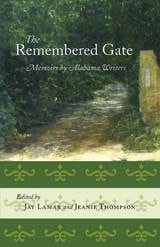
The Remembered Gate
Memoirs by Alabama WritersJay Lamar
University of Alabama Press, 2002
Nineteen acclaimed writers reflect on the Alabama landscapes, memories, and experiences that shaped their voices.
In The Remembered Gate, nationally prominent fiction writers, essayists, and poets recall how their formative years in Alabama shaped them as people and as writers. The essays range in tone from the pained and sorrowful to the wistful and playful, in class from the privileged to the poverty-stricken, in geography from the rural to the urban, and in time from the first years of the 20th century to the height of the Civil Rights era and beyond.
In all the essays we see how the individual artists came to understand something central about themselves and their art from a changing Alabama landscape. Whether from the perspective of C. Eric Lincoln, beaten for his presumption as a young black man asking for pay for his labors, or of Judith Hillman Paterson, floundering in her unresolved relationship with her troubled family, these personal renderings are intensely realized visions of a writer's sense of being a writer and a human being. Robert Inman tells of exploring his grandmother's attic, and how the artifacts he found there fired his literary imagination. William Cobb profiles the lasting influence of the town bully, the diabolical Cletus Hickey. And in “Growing up in Alabama: A Meal in Four Courses, Beginning with Dessert,” Charles Gaines chronicles his upbringing through the metaphor of southern cooking.
What emerges overall is a complex, richly textured portrait of men and women struggling with, and within, Alabama’s economic and cultural evolution to become major voices of our time.
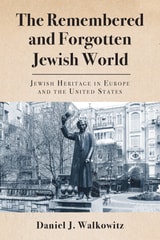
The Remembered and Forgotten Jewish World
Jewish Heritage in Europe and the United StatesDaniel J. Walkowitz
Rutgers University Press, 2018
The Remembered and Forgotten Jewish World investigates the politics of heritage tourism and collective memory. In an account that is part travelogue, part social history, and part family saga, acclaimed historian Daniel J. Walkowitz visits key Jewish museums and heritage sites from Berlin to Belgrade, from Krakow to Kiev, and from Warsaw to New York, to discover which stories of the Jewish experience are told and which are silenced. As he travels to thirteen different locations, participates in tours, displays, and public programs, and gleans insight from local historians, he juxtaposes the historical record with the stories presented in heritage tourism. What he finds raises provocative questions about the heritage tourism industry and its role in determining how we perceive Jewish history and identity. This book offers a unique perspective on the importance of collective memory and the dangers of collective forgetting.
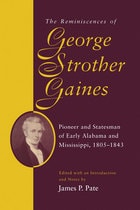
The Reminiscences of George Strother Gaines
Pioneer and Statesman of Early Alabama and Mississippi, 1805–1843George Strother Gaines
University of Alabama Press, 1998
One man’s remarkable account of nation‑building, Native diplomacy, and the making of the early American South.
The Reminiscences of George Strother Gaines: Pioneer and Statesman of Early Alabama and Mississippi, 1805–1843 offers one of the most vivid, irreplaceable firsthand accounts of the American Southeast during its most transformative decades. Edited and expertly contextualized by historian James P. Pate, this volume gathers Gaines’s dictated memoirs, rare letters, early newspaper publications, oral-history interviews, and extensive editorial notes to illuminate a world on the cusp of monumental change.
George Strother Gaines was no ordinary frontier figure. Trusted by U.S. officials and Choctaw leaders alike, he played central roles as federal factor at the Choctaw Trading House, a key intermediary during treaty negotiations, a primary organizer of the first Choctaw removal, a banker and state senator in newly formed Alabama, and later a driving force behind the Mobile & Ohio Railroad. His reminiscences reveal intimate knowledge of the region’s political development, frontier economy, Native diplomacy, and daily life. They are written in a strikingly elegant “Addisonian” style praised even in his own lifetime.
This edition’s special features—including detailed maps, illustrations, genealogical material, and a robust scholarly introduction—make it the most comprehensive and authoritative presentation of Gaines’s writings ever published. It not only preserves his voice but situates him within the broader historical forces reshaping the Gulf South and Native nations in the nineteenth century.
Ideal readers include:
• Historians of Alabama, Mississippi, and the early American South
• Scholars of Native American and Choctaw/Chickasaw history
• Readers of frontier, antebellum, or political history
• Genealogists and local-history enthusiasts
• Anyone seeking an engaging, elegantly written window into the early Southeast
This is a foundational text for understanding the region’s past—and a compelling story told by one of its most influential witnesses.
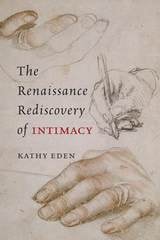
The Renaissance Rediscovery of Intimacy
Kathy Eden
University of Chicago Press, 2012
In 1345, when Petrarch recovered a lost collection of letters from Cicero to his best friend Atticus, he discovered an intimate Cicero, a man very different from either the well-known orator of the Roman forum or the measured spokesman for the ancient schools of philosophy. It was Petrarch’s encounter with this previously unknown Cicero and his letters that Kathy Eden argues fundamentally changed the way Europeans from the fourteenth through the sixteenth centuries were expected to read and write.
The Renaissance Rediscovery of Intimacy explores the way ancient epistolary theory and practice were understood and imitated in the European Renaissance.Eden draws chiefly upon Aristotle, Cicero, and Seneca—but also upon Plato, Demetrius, Quintilian, and many others—to show how the classical genre of the “familiar” letter emerged centuries later in the intimate styles of Petrarch, Erasmus, and Montaigne. Along the way, she reveals how the complex concept of intimacy in the Renaissance—leveraging the legal, affective, and stylistic dimensions of its prehistory in antiquity—pervades the literary production and reception of the period and sets the course for much that is modern in the literature of subsequent centuries. Eden’s important study will interest students and scholars in a number of areas, including classical, Renaissance, and early modern studies; comparative literature; and the history of reading, rhetoric, and writing.
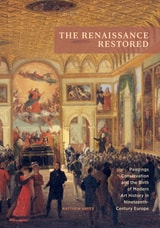
The Renaissance Restored
Paintings Conservation and the Birth of Modern Art History in Nineteenth-Century EuropeMatthew Hayes
J. Paul Getty Trust, The, 2021
Repairing works of art and writing about them—the practices that became art conservation and art history—share a common ancestry. By the nineteenth century the two fields had become inseparably linked. While the art historical scholarship of this period has been widely studied, its restoration practices have received less scrutiny—until now.
This book charts the intersections between art history and conservation in the treatment of Italian Renaissance paintings in nineteenth-century Europe. Initial chapters discuss the restoration of works by Giotto and Titian, framed by the contemporary scholarship of art historians such as Jacob Burckhardt, G. B. Cavalcaselle, and Joseph Crowe that was redefining the earlier age. Subsequent chapters recount how paintings conservation was integrated into museum settings. The narrative uses period texts, unpublished archival materials, and historical photographs in probing how paintings looked at a time when scholars were writing the foundational texts of art history, and how contemporary restorers were negotiating the appearances of these works. The book proposes a model for a new conservation history, object focused yet enriched by consideration of a wider cultural horizon.
The Renewal of the Kibbutz
From Reform to TransformationRussell, Raymond
Rutgers University Press, 2015
This book explores the waves of reforms since 1990. Looking through the lens of organizational theories that predict how open or closed a group will be to change, the authors find that less successful kibbutzim were most receptive to reform, and reforms then spread through imitation from the economically weaker kibbutzim to the strong.

The Renewed, the Destroyed, and the Remade
The Three Thought Worlds of the Iroquois and the Huron, 1609-1650Roger M. Carpenter
Michigan State University Press, 2004
For three decades, Native American history has been dominated by two major themes. The first is "The Cant of Conquest," the notion that all native peoples who came into contact with Europeans suffered devastating effects due to disease, alcohol, and warfare. However, the argument can be made that in some cases native peoples controlled their own fortunes, at least for awhile. The other dominant theme is the "The Contest of Cultures," the idea that Native American history needs to be examined in the context of dealings with Europeans. Europeans changed the Americas, but this approach concerns colonialism and colonists as well as Native Americans.
The Renewed, the Destroyed, and the Remade examines the changing worldviews of the Huron and the Iroquois in the first half of the seventeenth century, during a period of increasing European contact. From Samuel de Champlain’s armed encounter with the Iroquois, in 1609, to the dispersal of the Huron in the mid-seventeenth century, Carpenter’s book traces the evolving thought worlds of Iroquoian peoples.
The Iroquois and the Huron-peoples with an intertwined history and many cultural similarities-reacted differently to European contact. The Huron thought world began to change when the French initiated intense trade and missionary activity early in the seventeenth century. French missionary efforts resulted in a split within the Huron nation between traditionalists and Christian converts. By contrast, the Iroquois were interested primarily in trade with the newcomers. The Iroquois, like the Huron, accepted European trade goods, but unlike the Huron, they rejected European religion.
The Renewed, the Destroyed, and the Remade differs from other works of Native American history on several counts. Native American historiography has not been overly comparative. This work is a comparative history of two culturally similar Native American nations. It also differs in that, rather than another history of Native-European contacts, it is an Indian-centered history.
The Reorder of Things
The University and Its Pedagogies of Minority DifferenceRoderick A. Ferguson
University of Minnesota Press, 2012
In the 1960s and 1970s, minority and women students at colleges and universities across the United States organized protest movements to end racial and gender inequality on campus. African American, Chicano, Asia American, American Indian, women, and queer activists demanded the creation of departments that reflected their histories and experiences, resulting in the formation of interdisciplinary studies programs that hoped to transform both the university and the wider society beyond the campus.
In The Reorder of Things, however, Roderick A. Ferguson traces and assesses the ways in which the rise of interdisciplines—departments of race, gender, and ethnicity; fields such as queer studies—were not simply a challenge to contemporary power as manifest in academia, the state, and global capitalism but were, rather, constitutive of it. Ferguson delineates precisely how minority culture and difference as affirmed by legacies of the student movements were appropriated and institutionalized by established networks of power.
Critically examining liberationist social movements and the cultural products that have been informed by them, including works by Adrian Piper, Toni Cade Bambara, Jhumpa Lahiri, and Zadie Smith, The Reorder of Things argues for the need to recognize the vulnerabilities of cultural studies to co-option by state power and to develop modes of debate and analysis that may be in the institution but are, unequivocally, not of it.
The Repoliticization of the Welfare State
Ian P. McManus
University of Michigan Press, 2022
The Repoliticization of the Welfare State grapples with the evolving nature of political conflict over social spending after the Great Recession. While the severity of the economic crisis encouraged strong social spending responses to protect millions of individuals, governments have faced growing pressure to reduce budgets and make deep cuts to the welfare state. Whereas conservative parties have embraced fiscal discipline and welfare state cuts, left-wing parties have turned away from austerity in favor of higher social spending. These political differences represent a return of traditional left-right beliefs over social spending and economic governance.
This book is one of the first to systematically compare welfare state politics before and after the Great Recession, arguing that a new and lasting post-crisis dynamic has emerged where political parties once again matter for social spending. At the heart of this repoliticization are intense ideological debates over market regulation, social inequality, redistribution, and the role of the state. The book analyzes social spending dynamics for 28 countries before and after the crisis. It also includes in-depth country case studies representing five distinct welfare state types: Germany, the United Kingdom, Sweden, Spain, and the Czech Republic.

The Reprobation of Humans and Angels
Augustinus, Tome III, Book XCornelius Jansen
Catholic University of America Press, 2026
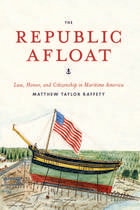
The Republic Afloat
Law, Honor, and Citizenship in Maritime AmericaMatthew Taylor Raffety
University of Chicago Press, 2013
The Republic Estranged
Christians, Muslims, and Jews between Algeria and France, 1870-1919Yuval Tal
University of Chicago Press, 0
Examines how the modern French Republic came into being through state efforts to assimilate Christians, Muslims, and Jews across France and colonial Algeria.
In The Republic Estranged, Yuval Tal studies three religious communities—Christians, Muslims, and Jews—and their interactions with French settlers in colonial Algeria. While each of these groups wanted to “become French” without abandoning their communal identities, the French system had its own ideas about what kind of assimilation was possible or desirable. It welcomed Christians, excluded Muslims, and enfranchised Jews while insisting that Jews could never become as naturally French as Christians could. The result, Tal shows, was a “republican ethnic common sense” that continues to shape French politics today.
Tal argues we must understand France’s deeply entrenched anti-Muslim rhetoric as part of a larger strategy that selectively privileges Christians over and against Muslim and Jewish minorities. He focuses on a period between 1870 and 1919, in which we see how France’s supposedly universalist project of national assimilation was predicated on the notion that some ethnically and religiously defined communities were more capable of “becoming French” than others. Working with sources in Arabic, French, Spanish, and Italian, including literary, political, and legal texts, this book speaks to readers across French studies, Jewish studies, and Middle East and North African studies, showing the ongoing relevance of this important period in French history.
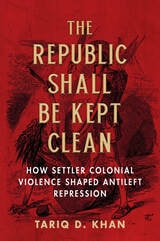
The Republic Shall Be Kept Clean
How Settler Colonial Violence Shaped Antileft RepressionTariq D. Khan
University of Illinois Press, 2023
The colonizing wars against Native Americans created the template for anticommunist repression in the United States. Tariq D. Khan’s analysis reveals bloodshed and class war as foundational aspects of capitalist domination and vital elements of the nation’s long history of internal repression and social control. Khan shows how the state wielded the tactics, weapons, myths, and ideology refined in America’s colonizing wars to repress anarchists, labor unions, and a host of others labeled as alien, multi-racial, multi-ethnic urban rabble. The ruling classes considered radicals of all stripes to be anticolonial insurgents. As Khan charts the decades of red scares that began in the 1840s, he reveals how capitalists and government used much-practiced counterinsurgency rhetoric and tactics against the movements they perceived and vilified as “anarchist.”
Original and boldly argued, The Republic Shall Be Kept Clean offers an enlightening new history with relevance for our own time.
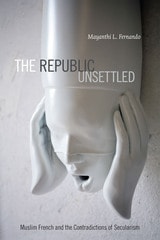
The Republic Unsettled
Muslim French and the Contradictions of SecularismMayanthi L. Fernando
Duke University Press, 2014
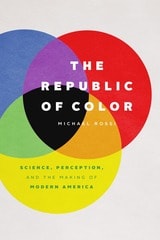
The Republic of Color
Science, Perception, and the Making of Modern AmericaMichael Rossi
University of Chicago Press, 2019
For a nation in the grip of profound economic, cultural, and demographic crises, the standardization of color became a means of social reform—a way of sculpting the American population into one more amenable to the needs of the emerging industrial order. Delineating color was also a way to characterize the vagaries of human nature, and to create ideal structures through which those humans would act in a newly modern American republic. Michael Rossi’s compelling history goes far beyond the culture of the visual to show readers how the control and regulation of color shaped the social contours of modern America—and redefined the way we see the world.

The Republic of Football
Legends of the Texas High School GameChad S. Conine
University of Texas Press, 2016
Anywhere football is played, Texas is the force to reckon with. Its powerhouse programs produce the best football players in America. In The Republic of Football, Chad S. Conine vividly captures Texas’s impact on the game with action-filled stories about legendary high school players, coaches, and teams from around the state and across seven decades.
Drawing on dozens of interviews, Conine offers rare glimpses of the early days of some of football’s biggest stars. He reveals that some players took time to achieve greatness—LaDainian Tomlinson wasn’t even the featured running back on his high school team until a breakthrough game in his senior season vaulted him to the highest level of the sport—while others, like Colt McCoy, showed their first flashes of brilliance in middle school. In telling these and many other stories of players and coaches, including Hayden Fry, Spike Dykes, Bob McQueen, Lovie Smith, Art Briles, Lawrence Elkins, Warren McVea, Ray Rhodes, Dat Nguyen, Zach Thomas, Drew Brees, and Adrian Peterson, Conine spotlights the decisive moments when players caught fire and teams such as Celina, Southlake Carroll, and Converse Judson turned into Texas dynasties. Packed with never-before-told anecdotes, as well as fresh takes on the games everyone remembers, The Republic of Football is a must-read for all fans of Friday night lights.

The Republic of Love
Cultural Intimacy in Turkish Popular MusicMartin Stokes
University of Chicago Press, 2010
At the heart of The Republic of Love are the voices of three musicians—queer nightclub star Zeki Müren, arabesk originator Orhan Gencebay, and pop diva Sezen Aksu—who collectively have dominated mass media in Turkey since the early 1950s. Their fame and ubiquity have made them national icons—but, Martin Stokes here contends, they do not represent the official version of Turkish identity propagated by anthems or flags; instead they evoke a much more intimate and ambivalent conception of Turkishness.
Using these three singers as a lens, Stokes examines Turkey’s repressive politics and civil violence as well as its uncommonly vibrant public life in which music, art, literature, sports, and journalism have flourished. However, Stokes’s primary concern is how Müren, Gencebay, and Aksu’s music and careers can be understood in light of theories of cultural intimacy. In particular, he considers their contributions to the development of a Turkish concept of love, analyzing the ways these singers explore the private matters of intimacy, affection, and sentiment on the public stage.
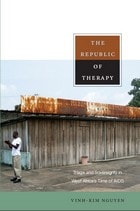
The Republic of Therapy
Triage and Sovereignty in West Africa’s Time of AIDSVinh-Kim Nguyen
Duke University Press, 2010
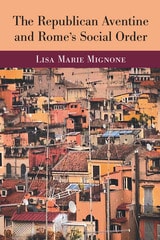
The Republican Aventine and Rome’s Social Order
Lisa Marie Mignone
University of Michigan Press, 2016
The myth of the “plebeian Aventine” became embedded not only in classical scholarship, but also in modern political and cultural consciousness; it has even been used by modern figures to support their political agenda. Yet The Republican Aventine and Rome’s Social Order makes bold new claims regarding the urban design and social history of ancient Rome and raises a significant question about ancient urbanism and social stability more generally: Did social integration reduce violence in premodern cities and promote urban concord?
The Republican Party of Texas
A Political HistoryBy Wayne Thorburn
University of Texas Press, 2021
On July 4, 1867, a group of men assembled in Houston to establish the Republican Party of Texas. Combatting entrenched statewide support for the Democratic Party and their own internal divisions, Republicans struggled to gain a foothold in the Lone Star State, which had sided with the Confederacy and aligned with the Democratic platform. In The Republican Party of Texas, Wayne Thorburn, former executive director of the Texas GOP, chronicles over one hundred and fifty years of the defeats and victories of the party that became the dominant political force in Texas in the modern era.
Thorburn documents the organizational structure of the Texas GOP, drawing attention to prominent names, such as Harry Wurzbach and George W. Bush, alongside lesser-known community leaders who bolstered local support. The 1960s and 1970s proved a watershed era for Texas Republicans as they shored up ideological divides and elected the first Republican governor and more state senators and congressional representatives than ever before. From decisions about candidates and shifting allegiances and political stances, to race-based divisions and strategic cooperation with leaders in the Democratic Party, Thorburn unearths the development of the GOP in Texas to understand the unique Texan conservatism that prevails today.
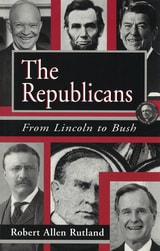
The Republicans
From Lincoln to BushRobert Allen Rutland
University of Missouri Press, 1996
The Republican party has always been fascinating to those who subscribe to its principles, as well as to those who take an alternative stand on the issues. In The Republicans: From Lincoln to Bush, Robert Allen Rutland has brought a clear and concise understanding of this political party to the general reader. The book is a lucid and fast-paced overview of the Republican party from its beginnings in the 1850s through the 1994 congressional elections, which saw the Democratic domination of the House and Senate come to an abrupt end.
In a crisp, highly readable style, Rutland begins by explaining how the "obnoxious" Kansas-Nebraska Act of 1854 overturned the Missouri Compromise, inflamed the North, and caused the collapse of the Whig and American parties. The result was the birth of the Republican party, whose purpose was to oppose the Democrats and stop the spread of slavery. Abraham Lincoln was elected the first Republican president in 1860.
The Republicans suggests that a major shift in voting strength took place twice during the twentieth century, first in the New Deal years, and again after 1968 when the GOP made an appeal to southern voters and finally took control of the area that had previously been dominated by the Democrats. With the 1980 election of Ronald Reagan as the fortieth president of the United States, the Republicans gained support from many first-time voters, middle-class whites, and labor unions-- groups not previously expected to vote Republican. In the companion volume, The Democrats: From Jefferson to Clinton, Rutland provides an honest and straightforward assessment of the strengths and weaknesses of Democratic presidents. Here he presents an evenhanded look at the good and not-so-good Republicans. By skillfully using stories and anecdotes from various administrations to enliven this narrative of political history, Rutland gives Republicans and Democrats alike a deeper appreciation for the two-party system.
The Reputation of the Roman Merchant
Jane Sancinito
University of Michigan Press, 2024
The Reredos of All Souls College Oxford
Edited by Peregrine Horden
Paul Holberton Publishing, 2021
The Rescue of Joshua Glover
A Fugitive Slave, the Constitution, and the Coming of the Civil WarH. Robert Baker
Ohio University Press, 2006
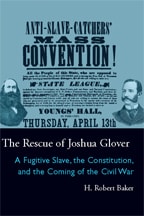
On March 11, 1854, the people of Wisconsin prevented agents of the federal government from carrying away the fugitive slave, Joshua Glover. Assembling in mass outside the Milwaukee courthouse, they demanded that the federal officers respect his civil liberties as they would those of any other citizen of the state. When the officers refused, the crowd took matters into its own hands and rescued Joshua Glover. The federal government brought his rescuers to trial, but the Wisconsin Supreme Court intervened and took the bold step of ruling the Fugitive Slave Act unconstitutional.
The Rescue of Joshua Glover delves into the courtroom trials, political battles, and cultural equivocation precipitated by Joshua Glover’s brief, but enormously important, appearance in Wisconsin on the eve of the Civil War.
H. Robert Baker articulates the many ways in which this case evoked powerful emotions in antebellum America, just as the stage adaptation of Uncle Tom’s Cabin was touring the country and stirring antislavery sentiments. Terribly conflicted about race, Americans struggled mightily with a revolutionary heritage that sanctified liberty but also brooked compromise with slavery. Nevertheless, as The Rescue of Joshua Glover demonstrates, they maintained the principle that the people themselves were the last defenders of constitutional liberty, even as Glover’s rescue raised troubling questions about citizenship and the place of free blacks in America.
The Rescue of Romanticism
Walter Pater and John RuskinKenneth Daley
Ohio University Press, 2001
Valuable and timely in its long historical and critical perspective on the legacy of romanticism to Victorian art and thought, The Rescue of Romanticism is the first book-length study of the close intellectual relationship between Walter Pater and John Ruskin, the two most important Victorian critics of art. Kenneth Daley explores the work and thought of both writers in context with other Victorian writers, and enlarges the issues at stake between them, connecting these issues to ongoing artistic, cultural, and political concerns of the modern world.
Professor Daley gives a more finely honed picture than ever before of romanticism’s emergence as a literary concept in Victorian England, detailing the political differences that characterize the opposition between John Ruskin and his younger contemporary, Walter Pater, over the nature of romanticism. Individual chapters reassess the Victorian reception of such romantic figures as Wordsworth, Dante Gabriel Rossetti, Leonardo, and Michelangelo.
Daley demonstrates how Pater’s “modern” reading of romanticism emerged from Ruskin’s distrust of romanticism and from Ruskin’s arguments and examples defining pathetic fallacy. His discussion of Ruskin’s Oxford lectures and their timing in Pater’s developing career refresh the intersections of the two bodies of work and the portrait of the Victorian period in general.
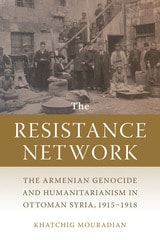
The Resistance Network
The Armenian Genocide and Humanitarianism in Ottoman Syria, 1915–1918Khatchig Mouradian
Michigan State University Press, 2021
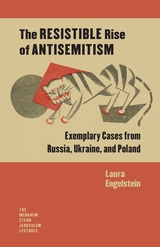
The Resistible Rise of Antisemitism
Exemplary Cases from Russia, Ukraine, and PolandLaura Engelstein
Brandeis University Press, 2020
Antisemitism as a political weapon did not stand unchallenged, even in Eastern Europe, where its consequences were particularly dire. In this region, Jewish leaders mobilized across national borders and in alliance with non-Jewish public figures on behalf of Jewish rights and in opposition to anti-Jewish violence. Antisemites were called to account and forced on the defensive. In Imperial and then Soviet Russia, in newly emerging Poland, and in aspiring Ukraine—notorious in the West as antisemitic hotbeds—antisemitism was sometimes a moral and political liability. These intriguing essays explore the reasons why, and they offer lessons from surprising places on how we can continue to fight antisemitism in our times.

The Resolution of African Conflicts
The Management of Conflict Resolution and Post-Conflict ReconstructionAlfred Nhema
Ohio University Press, 2007
“These two volumes clearly demonstrate the efforts by a wide range of African scholars to explain the roots, routes, regimes and resolution of African conflicts and how to re-build post-conflict societies. They offer sober and serious analyses, eschewing the sensationalism of the western media and the sophistry of some of the scholars in the global North for whom African conflicts are at worst a distraction and at best a confirmation of their pet racist and petty universalist theories.”
—From the introduction by Paul Tiyambe Zeleza
This book offers analyses of a range of African conflicts and demonstrates that peace is too important to be left to outsiders.
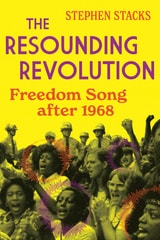
The Resounding Revolution
Freedom Song after 1968Stephen Stacks
University of Illinois Press, 2025
Stacks’s analysis shifts the focus of attention from genre--freedom song--to process and practice--freedom singing. As he shows, freedom singing after 1968 generates multilayered meanings. It can reinforce, or resist, consensus memories or dominant narratives. Stacks illuminates freedom singing’s diversity by examining it in three contexts: performance, protest, and within documentary sound recording/film.
Insightful and vividly detailed, The Resounding Revolution examines sixty years of Black music to challenge and reshape the entrenched story of the Civil Rights Movement.
The Response to Industrialism, 1885-1914
Samuel P. Hays
University of Chicago Press, 1995
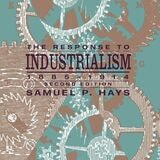
Hays draws on the vast knowledge of America's urban and social history that has been developed over the last thirty-eight years to make the second edition an unusually well-rounded study. He enhances the original coverage of politics, labor, and business with new accounts of the growth of cities, the rise of modern values, cultural conflicts with Native Americans and foreign nations, and changing roles for women, African-Americans, education, religion, medicine, law, and leisure. The result is a tightly woven portrait of America in transition that underscores the effects of impersonal market forces and greater personal freedom on individuals and chronicles such changes as the rise of social inequality, shifting power, in the legal system, the expansion of the federal government, and the formation of the Populist, Progressive, and Socialist parties.
The Response to Industrialism, 1885-1914
Samuel P. Hays
University of Chicago Press, 1995
In this new edition, Samuel P. Hays expands the scope of his pioneering account of the ways in which Americans reacted to industrialism during its early years from 1885 to 1914. Hays now deepens his coverage of cultural transformations in a study well known for its concise treatment of political and economic movements.
Hays draws on the vast knowledge of America's urban and social history that has been developed over the last thirty-eight years to make the second edition an unusually well-rounded study. He enhances the original coverage of politics, labor, and business with new accounts of the growth of cities, the rise of modern values, cultural conflicts with Native Americans and foreign nations, and changing roles for women, African-Americans, education, religion, medicine, law, and leisure. The result is a tightly woven portrait of America in transition that underscores the effects of impersonal market forces and greater personal freedom on individuals and chronicles such changes as the rise of social inequality, shifting power, in the legal system, the expansion of the federal government, and the formation of the Populist, Progressive, and Socialist parties.
The Rest of It
Hustlers, Cocaine, Depression, and Then Some, 1976–1988Martin Duberman
Duke University Press, 2018
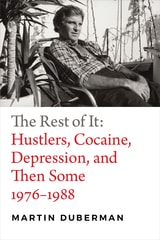
Despite the hardships, Duberman managed to be incredibly productive: he wrote his biography of Paul Robeson, rededicated himself to teaching, wrote plays, and coedited the prize-winning Hidden from History. His exploration of new paths of scholarship culminated in his founding of the Center for Lesbian and Gay Studies, thereby inaugurating a new academic discipline. At the outset of the HIV/AIDS epidemic Duberman increased his political activism, and in these pages he also describes the tensions between the New Left and gay organizers, as well as the profound homophobia that created the conditions for queer radical activism. Filled with gossip, featuring cameo appearances by luminaries such as Gore Vidal, Norman Mailer, Vivian Gornick, Susan Brownmiller, Kate Millett, and Néstor Almendros, among many others, and most importantly, written with an unflinching and fearless honesty, The Rest of It provides scathing insights into a troubling decade of both personal and political history. It is a stimulating look into a key period of Duberman's life, which until now had been too painful to share.
The Restless Clock
A History of the Centuries-Long Argument over What Makes Living Things TickJessica Riskin
University of Chicago Press, 2016
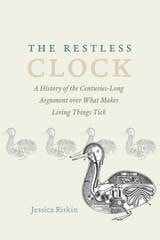
The Restless Clock examines the history of this principle, banning agency, in the life sciences. It also tells the story of dissenters embracing the opposite idea: that agency is essential to nature. The story begins with the automata of early modern Europe, as models for the new science of living things, and traces questions of science and agency through Descartes, Leibniz, Lamarck, and Darwin, among many others. Mechanist science, Jessica Riskin shows, had an associated theology: the argument from design, which found evidence for a designer in the mechanisms of nature. Rejecting such appeals to a supernatural God, the dissenters sought to naturalize agency rather than outsourcing it to a “divine engineer.” Their model cast living things not as passive but as active, self-making machines.
The conflict between passive- and active-mechanist approaches maintains a subterranean life in current science, shaping debates in fields such as evolutionary biology, cognitive science, and artificial intelligence. This history promises not only to inform such debates, but also our sense of the possibilities for what it means to engage in science—and even what it means to be alive.