Results by title
28167 books match the query 'History' and 6372 start with t
The Age of Sex
Custom, Law, and Ritual in Twentieth-Century East AfricaCorrie Decker
University of Wisconsin Press, 2025
In The Age of Sex, Decker demonstrates how maturation became defined as the hypothetical moment when a girl becomes a woman capable of engaging in heterosexual activity and a boy becomes a man imbued with the right and responsibility to have heterosexual intercourse. Colonial ethnographic studies reduced complex precolonial rites of passage to “puberty rites” fixated on these sexual transformations. The resulting stereotypes influenced, in turn, how colonial and postcolonial court officials decided age-of-consent and other sex crime cases. Court rituals thus legally transformed girls into women by ruling on their sexual maturity and boys into men by sentencing them to corporal punishment, marking their acceptance of heterosexual responsibilities.
The Age of Strict Construction
a History of the Growth of Federal Power, 1789-1861Peter Zavodnyik
Catholic University of America Press, 2007
The Age of Subtlety
Nature and Rhetorical Conceits in Early Modern EuropeJavier Patiño Loira
University of Delaware Press, 2024
The Age of the Cathedrals
Art and Society, 980-1420Georges Duby
University of Chicago Press, 1981
"If Age of the Cathedrals has a fault, it is that Professor Duby knows too much, has too many new ideas and takes such a delight in setting them out. . . insights whiz to and fro like meteorites."—John Russell, New York Times Book Review
The Age of the Gods
Christopher Dawson
Catholic University of America Press, 2012
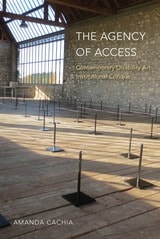
The Agency of Access
Contemporary Disability Art & Institutional CritiqueAmanda Cachia
Temple University Press, 2025
Showcasing artwork by contemporary disabled artists Corban Walker, Christine Sun Kim, and Carmen Papalia, among others, The Agency of Access inscribes contemporary disability art in the broad canon of contemporary art, where the artistic past is regarded differently.
Cachia is an outspoken advocate for artists living with sensory disabilities. She understands disabled artists’ experiences in both the world and the gallery. The artists she has curated make bold, astonishing, and compelling statements about interdependency, care, and the ways in which our environment affects disabled, ill, and immunocompromised bodies.
The Ages of Homer
A Tribute to Emily Townsend VermeuleEdited by Jane B. Carter and Sarah P. Morris
University of Texas Press, 1995
Homer’s Iliad and Odyssey have fascinated listeners and readers for over twenty-five centuries. In this volume of original essays, collected to honor the distinguished career of Emily T. Vermeule, thirty-four leading experts in Homeric studies and related fields provide up-to-date, multidisciplinary accounts of the most current issues in the study of Homer.
The book is divided into three sections. The first section treats the Bronze Age setting of the poems (around 1200 B.C.), using archaeological evidence to reveal how poetic memory preserves, distorts, and invents the past. The second section explores the early Iron Age, in which the poems were written (c. 800-500 B.C.), using the strategies of comparative philology and mythology, literary theory, historical linguistics, anthropology, and iconography to determine how the poems took shape. The final section traces the use of Homer for literary and artistic inspiration by classical Greece and Rome.
The Aggada of the Bavli and Its Cultural World
Geoffrey Herman
SBL Press, 2018
Essays that explore the rich engagement of the Talmud with its cultural world
The Babylonian Talmud (Bavli), the great compilation of Jewish law edited in the late Sasanian era (sixth–seventh century CE), also incorporates a great deal of aggada, that is, nonlegal material, including interpretations of the Bible, stories, folk sayings, and prayers. The Talmud’s aggadic traditions often echo conversations with the surrounding cultures of the Persians, Eastern Christians, Manichaeans, Mandaeans, and the ancient Babylonians, and others. The essays in this volume analyze Bavli aggada to reveal this rich engagement of the Talmud with its cultural world.
Features:
- A detailed analysis of the different conceptions of martyrdom in the Talmud as opposed to the Eastern Christian martyr accounts
- Illustration of the complex ways rabbinic Judaism absorbed Christian and Zoroastrian theological ideas
- Demonstration of the presence of Persian-Zoroastrian royal and mythological motifs in talmudic sources
The Agon in Classical Literature
Studies in Honour of Professor Chris CareyEdited by Michael Edwards, Athanasios Efstathiou, Ioanna Karamanou, and Eleni Volonaki
University of London Press, 2022
The papers collected in this volume are offered by colleagues and former students in honor of Chris Carey, emeritus professor of Greek at University College London. The multifaceted topic of the agon, or contest of word, and its varying representations in Greek literature aptly corresponds to the outstanding variety of Carey’s research interests, which include the works of Homer, lyric poetry, drama, law, rhetoric, and historiography. This volume sets out to reflect on facets of the agon across these literary genres and the pivotal role of competition in ancient Greek thought. It aims to explore the wide range of agonal dynamics, and their generic and cultural value, as well as stimulating fresh discussions under a broad spectrum of theoretical and methodological approaches.

The Agony of Heroes
Medical Care for America's Besieged Legions from Bataan to Khe SanhThomas S. Helling
Westholme Publishing, 2024
Bataan, Anzio, Bastogne, Chosin, Khe Sanh: names that define the American spirit. They are synonymous with courage, resilience, and determination against great odds. At each of these battles American soldiers and Marines weathered desperation and fear to survive, advance, and triumph. Along with these heroes of the battlefield were no less determined and courageous providers of medical care. From the heat and disease-ridden jungles of Bataan, the precarious beachhead of Anzio, the encircled town of Bastogne, the frozen fields of Chosin, and the forsaken plateau of Khe Sanh, doctors and nurses worked under intense conditions with whatever means at hand, to staunch bleeding, repair damage, and resurrect the dying. In so doing they gave a glimmer of hope for the warriors facing possible death or capitulation. Often completely cut off from vital supplies and modern technology, and under the threat of enemy fire, these medical professionals—men and women—never lost sight of their passionate commitment to the sick and wounded. As noncombatants, this took extraordinary resolve to ignore the mortal threats of explosions and gunfire to focus on the mission of relieving pain, dragging from the brink of death damaged soldiers completely dependent on their resourcefulness. Some of these brave men and women would suffer the same fate as their fighting comrades, cut down by enemy fire in the prime of life, many times in the very task of rendering the bottomless compassion that was their hallmark and sometimes their only tonic.
In The Agony of Heroes: Medical Care for America’s Besieged Legions from Bataan to Khe Sanh, distinguished surgeon Thomas S. Helling relates the inspirational and compelling stories of the doctors, nurses, corpsmen, aides, and others who braved the most frightening conditions in order to save lives. Their experiences testify to the indomitable human grit that, when asked, transforms ordinary behavior into extraordinary achievements.
The Agrarian Dispute
The Expropriation of American-Owned Rural Land in Postrevolutionary MexicoJohn J. Dwyer
Duke University Press, 2008
Dwyer weaves together elite and subaltern history and highlights the intricate relationship between domestic and international affairs. Through detailed studies of land redistribution in Baja California and Sonora, he demonstrates that peasant agency influenced the local application of Cárdenas’s agrarian reform program, his regional state-building projects, and his relations with the United States. Dwyer draws on a broad array of official, popular, and corporate sources to illuminate the motives of those who contributed to the agrarian dispute, including landless fieldworkers, indigenous groups, small landowners, multinational corporations, labor leaders, state-level officials, federal policymakers, and diplomats. Taking all of them into account, Dwyer explores the circumstances that spurred agrarista mobilization, the rationale behind Cárdenas’s rural policies, the Roosevelt administration’s reaction to the loss of American-owned land, and the diplomatic tactics employed by Mexican officials to resolve the international conflict.

The Agrarian Roots of Pragmatism
Paul B. Thompson
Vanderbilt University Press, 2000
Today, most historians, philosophers, political theorists, and scholars of rural America take a dim view of the agrarian ideal that farmers and farming occupy a special moral and political status in society. Agrarian rhetoric is generally seen as special pleading on the part of farmers seeking protection from labor reform and environmental regulation while continuing to receive direct payments and subsidies from the public till.
Agrarianism should not be viewed as a set of immutable claims about farming and political order, but as a tradition of moral and political philosophy that has evolved and deepened over the centuries. Agrarian naturalism--the belief that culture and conduct are conditioned by nature because they are of a piece with nature--becomes pragmatic naturalism, giving way to a new set of puzzles about how we are to understand the rural landscape and our responsibilities for its use. The agrarian idea that personality and sociability are integrated with the material transformation of the landscape can serve as the basis for a new, pragmatically grounded ethic of natural resources and rural development.
The essays in this volume critically analyze and revitalize agrarian philosophy by tracing its evolution in the classical American philosophy of key figures such as Franklin, Jefferson, Emerson, Thoreau, Dewey, and Royce. Three chapters address the belief that farming peoples develop moral virtue and a taste for democracy as it evolved in the American context, and four examine how a reconstitution of agrarian themes might invigorate our nation's thinking on environment, food, and rural development policy.
The Agrarian Roots of Pragmatism will be of broad interest to scholars of American philosophy, rural history, history of ideas, geography, and agricultural or natural resource policy.
The Ahhiyawa Texts
Gary M. Beckman
SBL Press, 2011
The Ailing City
Health, Tuberculosis, and Culture in Buenos Aires, 1870–1950Diego Armus
Duke University Press, 2011

The Air-Line to Seattle
Kenneth S. Lynn
University of Chicago Press, 1984
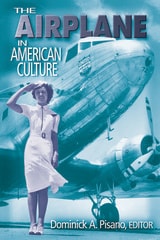
The Airplane in American Culture
Dominick A. Pisano, Editor
University of Michigan Press, 2003
Although countless books for aviation buffs have appeared since World War II, none has attempted to place the airplane in its full social, cultural, and interdisciplinary context until now. The first book of its kind, The Airplane in American Culture presents essays by distinguished contributors including historians, literary scholars, scholars of American studies, art historians, and museum professionals that explore a range of topics, including the connections between flying and race and gender; aviation's role in forming perceptions of the landscape; the airplane's significance to the culture of war; and the influence of flight on literature and art.
A must-read collection for anyone fascinated by the airplane, The Airplane in American Culture represents a dramatic new approach to writing the history of aviation, and makes an important contribution to American social and cultural history.
Dominick A. Pisano is Curator of the Aeronautics Department at the National Air and Space Museum, Smithsonian Institution.
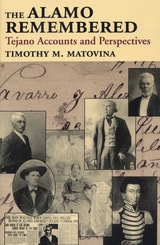
The Alamo Remembered
Tejano Accounts and PerspectivesBy Timothy M. Matovina
University of Texas Press, 1995
As Mexican soldiers fought the mostly Anglo-American colonists and volunteers at the Alamo in 1836, San Antonio's Tejano population was caught in the crossfire, both literally and symbolically. Though their origins were in Mexico, the Tejanos had put down lasting roots in Texas and did not automatically identify with the Mexican cause. Indeed, as the accounts in this new collection demonstrate, their strongest allegiance was to their fellow San Antonians, with whom they shared a common history and a common plight as war raged in their hometown.
Timothy M. Matovina here gathers all known Tejano accounts of the Battle of the Alamo. These accounts consist of first reports of the battle, including Juan N. Seguín's funeral oration at the interment ceremony of the Alamo defenders, conversations with local Tejanos, unpublished petitions and depositions, and published accounts from newspapers and other sources. This communal response to the legendary battle deepens our understanding of the formation of Mexican American consciousness and identity.
The Alaska Native Reader
History, Culture, PoliticsMaria Shaa Tláa Williams, ed.
Duke University Press, 2009
The Alaska Native Reader describes indigenous worldviews, languages, arts, and other cultural traditions as well as contemporary efforts to preserve them. Several pieces examine Alaska Natives’ experiences of and resistance to Russian and American colonialism; some of these address land claims, self-determination, and sovereignty. Some essays discuss contemporary Alaska Native literature, indigenous philosophical and spiritual tenets, and the ways that Native peoples are represented in the media. Others take up such diverse topics as the use of digital technologies to document Native cultures, planning systems that have enabled indigenous communities to survive in the Arctic for thousands of years, and a project to accurately represent Dena’ina heritage in and around Anchorage. Fourteen of the volume’s many illustrations appear in color, including work by the contemporary artists Subhankar Banerjee, Perry Eaton, Erica Lord, and Larry McNeil.
The Albigensian Crusades
Joseph R. Strayer
University of Michigan Press, 1992
The Alchemical Body
Siddha Traditions in Medieval IndiaDavid Gordon White
University of Chicago Press, 1996
"White proves a skillful guide in disentangling historical and theoretical complexities that have thus far bedeviled the study of these influential aspects of medieval Indian culture."—Yoga World
"Anyone seriously interested in finding out more about authentic tantra, original hatha yoga, embodied liberation . . . sacred sexuality, paranormal abilities, healing, and of course alchemy will find White's extraordinary book as fascinating as any Tom Clancy thriller."—Georg Feuerstein, Yoga Journal
The Alexander Medvedkin Reader
Alexander Medvedkin
University of Chicago Press, 2016
Although he was a dedicated Communist, Medvedkin’s satirical approach and social critiques ultimately led to his suppression by the Soviet regime. State institutions held back or marginalized his work, and for many years, his films were assumed to have been lost or destroyed. These texts, many assembled for this volume by Medvedkin himself, document for the first time his considerable achievements, experiments in film and theater, and attempts to develop satire as a major Soviet film genre. Through scripts, letters, autobiographical writings, and more, we see a Medvedkin supported and admired by figures like Eisenstein, Dovzhenko, and Maxim Gorky.
The Algerian Memoirs
Days of Hope and CombatHenri Alleg
Seagull Books, 2011
The personal history of journalist Henri Alleg is tied inextricably to the history of the French-Algerian Conflict. Best known for his book The Question, a first-hand account of his torture by French troops during the Algerian war for independence, Alleg is famous both for having brought the issue of French torture to the public eye and for his passionate work as a writer, a newspaperman, and a communist activist.
The Algerine Spy in Pennsylvania
Peter Markoe
Westholme Publishing, 2008
An Important Book in America’s Early Encounter with the Arab World
“A pungent satire on American affairs.” —Samuel Eliot Morison
In 1787, while American sailors languished in a Barbary prison, delegates debated the Constitution in Philadelphia. Despite America’s desire to respond to the crisis, without a central government, the new republic had no means to create a naval force. Enter an anonymously published book, The Algerine Spy in Pennsylvania: or, Letters Written by a Native of Algiers on the Affairs of the United States in America, which began circulating among the delegates. Consisting of a series of letters ostensibly written by an Algerian agent “Mehmet” back to his leader, the spy predicted that the former colonies would never be able to resolve their differences and be “ruined by disunion.” The book created a sensation and it helped tip the balance for those in favor of adopting the new Constitution. Following the Constitution’s final ratification in 1789, the United States created a navy and began asserting its power overseas. With its commentary about men and women, business and pleasure, and historical and religious comparisons between nations, The Algerine Spy in Pennsylvania provides both a contemporary snapshot of early American life and the political ideas of the period. Never before reprinted, and recently rated one of the five best works in the history of America’s encounter with the Arab world, this new edition is edited by historian Timothy Marr, who reconsiders the importance of this early work in the political and literary history of the United States.
The Allure of Labor
Workers, Race, and the Making of the Peruvian StatePaulo Drinot
Duke University Press, 2011
Although the vast majority of laboring peoples in Peru were indigenous, in the minds of social reformers indigeneity was not commensurable with labor: Indians could not be workers and were therefore excluded from the labor policies enacted in the 1920s and 1930s and, more generally, from elite conceptions of industrial progress. Drinot shows how the incommensurability of indigeneity with labor was expressed in the 1920 constitution, in specific labor policies, and in the activities of state agencies created to oversee collective bargaining and provide workers with affordable housing, inexpensive food, and social insurance. He argues that the racialized assumptions of the modernizing Peruvian state are reflected in the enduring inequalities of present-day Peru.
The Alpine Enlightenment
Horace-Bénédict de Saussure and Nature’s SensoriumKathleen Kete
University of Chicago Press, 2024
In The Alpine Enlightenment, historian Kathleen Kete takes us into the world of the Genevan geologist, physicist, inventor, and mountaineer Horace-Bénédict de Saussure. During his prodigious climbs into the upper ranges of the Alps, Saussure focused intensely on the natural phenomena he encountered—glaciers, crevasses, changes in the weather, and shifts in the color of the sky—and he described with great precision what he saw, heard, and touched. Kete uses Saussure’s evocative writings, which emphasized above all physical engagement with the earth, to uncover not just how people during the Enlightenment thought about nature, but how they experienced it. As Kete shows, Saussure thought with and through his body: he harnessed his senses to understand the forces that shaped the world around him. In so doing, he offered a vision of nature as worthy of respect independent of human needs, anticipating present-day concerns about the environment and our shared place within it.
The Amalgamation Waltz
Race, Performance, and the Ruses of MemoryTavia Nyong’o
University of Minnesota Press, 2009
Does racial hybridity offer a future beyond racial difference?
At a time when the idea of a postracial society has entered public discourse, The Amalgamation Waltz investigates the practices that conjoined blackness and whiteness in the nineteenth and twentieth centuries. Scrutinizing widely diverse texts—archival, musical, visual, and theatrical—Tavia Nyong’o traces the genealogy of racial hybridity, analyzing how key events in the nineteenth century spawned a debate about interracialism that lives on today.
Deeply interested in how discussions of racial hybridity have portrayed the hybrid as the recurring hope for a distant raceless future, Nyong’o is concerned with the ways this discourse deploys the figure of the racial hybrid as an alibi for a nationalism that reinvents the racist logics it claims to have broken with. As Nyong’o demonstrates, the rise of a pervasive image of racially anomalous bodies responded to the appearance of an independent black public sphere and organized politics of black uplift. This newfound mobility was apprehended in the political imaginary as a bodily and sexual scandal, and the resultant amalgamation discourse, he argues, must be recognized as one of the earliest and most enduring national dialogues on sex and sexuality. Nyong’o tracks the emergence of the concept of the racial hybrid as an ideological modernization of the older concept of the mongrel and shows how this revision brought race-thinking in line with new understandings of sex and gender, providing a racial context for the shift toward modern heterosexuality, the discourse on which postracial metaphors so frequently rely. A timely rebuttal to our contemporary fascination with racial hybridity, The Amalgamation Waltz questions the vision of a national future without racial difference or conflict.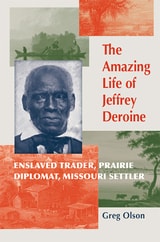
The Amazing Life of Jeffrey Deroine
Enslaved Trader, Prairie Diplomat, and Missouri SettlerGreg Olson
University of Missouri Press, 2026
Though scraps of his life are still present in the historical record, specifics have proven elusive. Still, it is important to tell Deroine’s life story, as it gives us a look both into the life of an enslaved man and the struggles of a free person of color in pre-Civil War Missouri. His life spanned a critical point in the history of the state, and he seems to have spent most of it at the very heart of the action.
Though not well known, the story of Jeffrey Deroine is significant because it illustrates the nuanced intersectionality of lives on the American frontier. Deroine was a man of both French and African descent who lived much of his life among Indigenous people. Born into slavery, he became a free person of color who was a businessman, owned property, and enslaved others. His life defied expectations and stereotypes, and a consideration of it allows us to better understand the history of Missouri and the West.
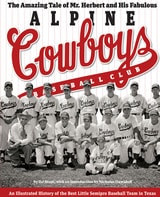
The Amazing Tale of Mr. Herbert and His Fabulous Alpine Cowboys Baseball Club
An Illustrated History of the Best Little Semipro Baseball Team in TexasBy DJ Stout
University of Texas Press, 2010
Back in the 1940s and 1950s, almost every small town in America had a baseball team. Most players were simply local heroes with a local following, but a few teams achieved fame far beyond their region. The Alpine Cowboys—despite being based in Texas's remote, sparsely populated Big Bend country—became a star in the firmament of semi-pro baseball. Lavishly underwritten by a wealthy rancher with a passion not only for baseball but even more for helping young men get a good start in life, the Cowboys played on a "field of dreams" whose facilities rivaled those of professional ballparks. Many Cowboys went on to play in the big leagues, and several pro teams, including the Pittsburgh Pirates, Chicago White Sox, and St. Louis Browns, came to play exhibition games at Kokernot Field.
The story of Herbert Kokernot Jr. and his Alpine Cowboys is a legend among baseball aficionados, but until now it has never been the subject of a book. DJ Stout, son of former Cowboys player Doyle Stout, presents a hall-of-fame-worthy collection of photographs, memorabilia, and reminiscences from Alpine Cowboys players, family members, and fans to capture fifteen years (1946–1961) of baseball at its finest. Nicholas Dawidoff's introduction, originally published in Sports Illustrated, tells the fascinating tale of "Mr. Herbert" and his determination to build a baseball team and ballpark that deserved to carry his ranch's 06 brand.
One of the most heartwarming episodes in the annals of the game, The Amazing Tale of Mr. Herbert and His Fabulous Alpine Cowboys is a fitting tribute to a man, a team, and a ballpark.
The Ambassador and the Courtesan
Political Bodies in Renaissance ItalyPaola De Santo
University of Delaware Press, 2026
The Ambuiguity of Being
Lonergan and the Problems of the SupernaturalJonathan R. Heaps
Catholic University of America Press, 2024
The American 1890s
A Cultural ReaderSusan Harris Smith and Melanie Dawson, eds.
Duke University Press, 2000
To depict the many changes taking place in the United States at this time, Susan Harris Smith and Melanie Dawson have drawn from an eclectic range of periodicals: elite monthlies such as Scribner’s, Harper’s, and the Atlantic Monthly; political magazines such as the North American Review and Forum; magazines for general readers such as Cosmopolitan and McClures; and specialized publications including the Chatauquan, Outing, and Colored American Magazine. Authors represented in the collection include Andrew Carnegie, Edith Wharton, Theodore Roosevelt, Susan B. Anthony, Booker T. Washington, Stephen Crane,
W. E. B. DuBois, Jacob Riis, and Frederick Jackson Turner. A general introduction to the period, a brief contextualizing essay for each selection, and a comprehensive bibliography of secondary sources are provided as well. In examining and debating the decade’s momentous political and social developments, the essays, editorials, and stories in this anthology reflect a constantly shifting culture at a time of internal turmoil, unprecedented political expansion, and a renaissance of modern ideas and new technologies.
Bringing together a carefully chosen selection of primary sources, The American 1890s presents a remarkable variety of views—nostalgic, protective, imperialist, progressive, egalitarian, and democratic—held by American citizens a century ago.
The American Aviation Experience
A HistoryEdited by Tim Brady
Southern Illinois University Press, 2000
This book is designed to be a primary text for courses in aviation history and development and aviation in America.
The seventeen chapters in The American Aviation Experience: A History range chronologically from ancient times through the Wright brothers through both world wars, culminating with the development of the U.S. space program. Contributors also cover balloons and dirigibles, African American pioneers in aviation, and women in aviation. These essayists—leading scholars in the field—present the history of aviation mainly from an American perspective.
The American Aviation Experience includes 335 black-and-white photographs, two maps, and an appendix, “Leonardo da Vinci and the Science of Flight.”.
The American Child
A Cultural Studies ReaderLevander, Caroline F
Rutgers University Press, 2003
Although the volume is grounded heavily in the literary, it draws on other disciplines, revealing that representations of children and childhood are not isolated artifacts but cultural productions that in turn affect the social climates around them. Essayists look at games, pets, adolescent sexuality, death, family relations, and key texts such as The Adventures of Huckleberry Finn and the movie Pocahontas; they reveal the ways in which the figure of the child operates as a rich vehicle for writers to consider evolving ideas of nation and the diverse role of citizens within it.
The American College in the Nineteenth Century
Roger L. Geiger
Vanderbilt University Press, 2000
At the end of the eighteenth century, just eighteen colleges existed in the United States, with an average enrollment of fewer than seventy. One hundred years later, over 450 American colleges and universities boasted enrollments up more than one hundredfold. The role of educational institutions in the life of the nation had been utterly transformed.
As the bridge between the two eras, the nineteenth-century college has been among the most controversial subjects in the history of American higher education. While earlier historians portrayed the "old-time" college as an impediment to modernization, later scholars affirmed the broad role of the colleges in the education of the American people.
The American College in the Nineteenth Century combines the best recent scholarship with an interpretive introduction to provide a fresh view of the development of American colleges. The contributors consider these institutions within four new contexts: first, the dramatic transformation in the college students' experience from oppressive discipline to relative freedom; second, the regional variations among the developing American colleges (for example, a South dominated by state colleges, a Midwest by denominational schools); third, the revolution in the century's third quarter as colleges became multipurpose institutions; and fourth, universities that became dominant by the end of the century, incorporating rather than displacing the colleges.
Innovative in its examination of the nature and function of these uniquely American institutions, The American College in the Nineteenth Century is a vital addition to the scholarship of the period.
Contributors: David B. Potts, Leon Jackson, Julie Ann Bubolz, Michael Sugrue, James Findlay, Margaret A. Nash, Peter Dobkin Hall, James Turner, Paul Bernard, and Willard J. Pugh.
The American Colonial State in the Philippines
Global PerspectivesJulian Go and Anne L. Foster, eds.
Duke University Press, 2003
Written by social scientists and historians, these essays investigate various aspects of American colonial government through comparison with and contextualization within colonial regimes elsewhere in the world—from British Malaysia and Dutch Indonesia to Japanese Taiwan and America's other major overseas colony, Puerto Rico. Contributors explore the program of political education in the Philippines; constructions of nationalism, race, and religion; the regulation of opium; connections to politics on the U.S. mainland; and anticolonial resistance. Tracking the complex connections, circuits, and contests across, within, and between empires that shaped America's colonial regime, The American Colonial State in the Philippines sheds new light on the complexities of American imperialism and turn-of-the-century colonialism.
Contributors. Patricio N. Abinales, Donna J. Amoroso, Paul Barclay, Vince Boudreau, Anne L. Foster, Julian Go, Paul A. Kramer
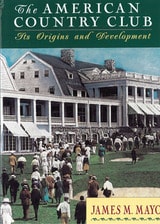
The American Country Club
Its Origins and DevelopmentMayo, James M.
Rutgers University Press, 1998
The American country club movement parallels the rise of suburbanization in the United States. Its roots can be found in the exclusive city clubs and summer resorts of the nineteenth century; its growth reflects a desire for permanent and organized places where the wealthy could spend their leisure time. By the late nineteenth century, mass transportation enabled the wealthy to escape the confines of the city, and suburbanization began. Their pursuit of leisure—in the form of city clubs, spas, summer resorts, and elite sports—became the foundation for the country club. Country clubs provided places where the elite could combine their interests in sports, the outdoors, and leisure while separating themselves from those they considered non-elite. The American Country Club chronicles the social and economic evolution of this elite leisure landscape.
The founding clubs were makeshift landscapes that took advantage of existing conditions, but in the early twentieth century, standard club practices emerged. Clubhouse design, golf course layouts, financial arrangements, and the rise of club management furthered the country club movement. Residential developers also learned to use the country club as a way to organize their elite subdivisions and to sell homes. But the Depression and World War II stifled the growth of country clubs. Eventually the country club movement regained its momentum, and corporations began to develop country clubs to meet the growing demand for club life and to treat the country club as a revenue source.
Some critics feel that the country club addresses a basic liberty of social choice whereas others view it as an unnecessary source of social discrimination. Beyond these positions, James Mayo argues that our nation’s political economy is reflected in the country club, which simultaneously thrives as a business and provides social status for its members.
The American Dance Festival
Jack Anderson
Duke University Press, 1987
The American Development of Biology
Maienschein, Jane
Rutgers University Press, 1991
The American Discovery of Europe
Jack D. Forbes
University of Illinois Press, 2011
The American Dream and the National Game
Leverett T. Smith, Jr.
University of Wisconsin Press, 1975
First paperback edition
The American Dream in the 21st Century
Edited by Sandra Hanson and John White
Temple University Press, 2011
The American Dream has long been a dominant theme in U.S. culture, one with enduring significance, but these are difficult times for dreamers. The editors of and contributors to The American Dream in the 21st Century examine the American Dream historically, socially, and economically and consider its intersection with politics, religion, race, gender, and generation.
The conclusions presented in this short, readable volume provide both optimism for the faith that most Americans have in the possibility of achieving the American Dream and a realistic assessment of the cracks in the dream. The last presidential election offered hope, but the experts here warn about the need for better programs and policies that could make the dream a reality for a larger number of Americans.
The American Enemy
The History of French Anti-AmericanismPhilippe Roger
University of Chicago Press, 2005
Buffon, as Philippe Roger demonstrates here, was just one of the first in a long line of Frenchmen who have built a history of anti-Americanism in that country, a progressive history that is alternately ludicrous and trenchant. The American Enemy is Roger's bestselling and widely acclaimed history of French anti-Americanism, presented here in English translation for the first time.
With elegance and good humor, Roger goes back 200 years to unearth the deep roots of this anti-Americanism and trace its changing nature, from the belittling, as Buffon did, of the "savage American" to France's resigned dependency on America for goods and commerce and finally to the fear of America's global domination in light of France's thwarted imperial ambitions. Roger sees French anti-Americanism as barely acquainted with actual fact; rather, anti-Americanism is a cultural pillar for the French, America an idea that the country and its culture have long defined themselves against.
Sharon Bowman's fine translation of this magisterial work brings French anti-Americanism into the broad light of day, offering fascinating reading for Americans who care about our image abroad and how it came about.
“A brilliant and exhaustive guide to the history of French Ameriphobia.”—Simon Schama, New Yorker
The American Essay in the American Century
Ned Stuckey-French
University of Missouri Press, 2011
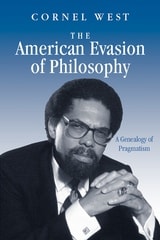
The American Evasion of Philosophy
A Genealogy of PragmatismCornel West
University of Wisconsin Press, 1989
Taking Emerson as his starting point, Cornel West’s basic task in this ambitious enterprise is to chart the emergence, development, decline, and recent resurgence of American pragmatism. John Dewey is the central figure in West’s pantheon of pragmatists, but he treats as well such varied mid-century representatives of the tradition as Sidney Hook, C. Wright Mills, W. E. B. Du Bois, Reinhold Niebuhr, and Lionel Trilling. West’s "genealogy" is, ultimately, a very personal work, for it is imbued throughout with the author’s conviction that a thorough reexamination of American pragmatism may help inspire and instruct contemporary efforts to remake and reform American society and culture.
"West . . . may well be the pre-eminent African American intellectual of our generation."—The Nation
"The American Evasion of Philosophy is a highly intelligent and provocative book. Cornel West gives us illuminating readings of the political thought of Emerson and James; provides a penetrating critical assessment of Dewey, his central figure; and offers a brilliant interpretation—appreciative yet far from uncritical—of the contemporary philosopher and neo-pragmatist Richard Rorty. . . . What shines through, throughout the work, is West's firm commitment to a radical vision of a philosophic discourse as inextricably linked to cultural criticism and political engagement."—Paul S. Boyer, professor emeritus of history, University of Wisconsin–Madison.
Wisconsin Project on American Writers
Frank Lentricchia, General Editor
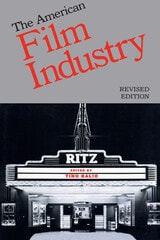
The American Film Industry
Edited by Tino T. Balio
University of Wisconsin Press, 1985
Upon its original publication in 1976, The American Film Industry was welcomed by film students, scholars, and fans as the first systematic and unified history of the American movie industry. Now this indispensible anthology has been expanded and revised to include a fresh introductory overview by editor Tino Balio and ten new chapters that explore such topics as the growth of exhibition as big business, the mode of production for feature films, the star as market strategy, and the changing economics and structure of contemporary entertainment companies. The result is a unique collection of essays, more comprehensive and current than ever, that reveals how the American movie industry really worked in a century of constant change-from kinetoscopes and the coming of sound to the star system, 1950s blacklisting, and today's corporate empires.

The American Girl Goes to War
Women and National Identity in U.S. Silent FilmLiz Clarke
Rutgers University Press, 2022
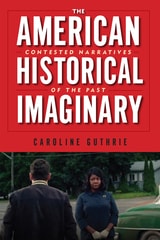
The American Historical Imaginary
Contested Narratives of the PastCaroline Guthrie
Rutgers University Press, 2023
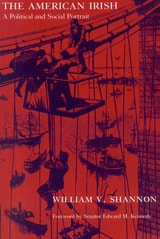
The American Irish
A Political and Social PortraitWilliam V. Shannon
University of Massachusetts Press, 1989

The American Jeremiad
Sacvan Bercovitch
University of Wisconsin Press, 1978
When Sacvan Bercovitch’s The American Jeremiad first appeared in 1978, it was hailed as a landmark study of dissent and cultural formation in America, from the Puritans’ writings through the major literary works of the antebellum era. For this long-awaited anniversary edition, Bercovitch has written a deeply thoughtful and challenging new preface that reflects on his classic study of the role of the political sermon, or jeremiad, in America from a contemporary perspective, while assessing developments in the field of American studies and the culture at large.

The American Mail
Enlarger of the Common LifeWayne E. Fuller
University of Chicago Press, 1972