Results by title
2646 books match the query 'History & Criticism' and 549 start with t
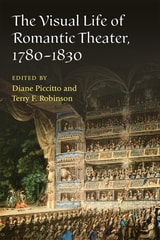
The Visual Life of Romantic Theater, 1780-1830
Edited by Diane Piccitto and Terry F. Robinson
University of Michigan Press, 2023
The Visual Life of Romantic Theater examines the dynamism and vibrancy of stage spectacle and its impact in an era of momentous social upheaval and aesthetic change. Situating theatrical production as key to understanding visuality ca. 1780-1830, this book places the stage front and center in Romantic scholarship—a field in a period long defined by its focus on poetry—by reenvisioning traditional approaches to artistic and social production. How, it asks, did dramaturgy and stagecraft influence aesthetic and sociopolitical concerns? How does a focus on visuality expand our understanding of the historical experience of theatergoing? In what ways did stage performance converge with visual culture beyond the theater? How did extra-theatrical genres engage with theatrical sight and spectacle? Finally, how does a focus on dramatic vision change the way we conceive of Romanticism itself? The volume’s essays by emerging and established scholars provide exciting and suggestive answers to these questions, along with a more capacious conception of Romantic theater as a locus of visual culture that reached well beyond playhouse walls.
The Visual Turn
Classical Film Theory and Art HistoryDalle Vacche, Angela
Rutgers University Press, 2002
The Visual Turn is a cutting-edge dialogue between art historians and film theorists from the silent period to the aftermath of World War II. Its aim is to broaden the horizons of film studies, while making students of art history more comfortable when they approach the key texts of classical film theory.
Through pairings of articles, The Visual Turn demonstrates that an implicit dialogue between art historians and film specialists has enriched both fields for decades. By combining original essays, reprints, and translations from French and Italian, The Visual Turn makes this little-known dialogue between two disciplines speak about such rich issues as: iconophobia, iconophilia, and iconoclasm; haptic and optical images; cognitivism and aesthetics; visual form, history, and technology.
The Vital Lie
Reality and Illusion in Modern DramaAnthony S. Abbott
University of Alabama Press, 1988
The Vital Lie: Reality and Illusion in Modern Drama is a sweeping inquiry into the stories people tell themselves in order to endure, survive, and belong. Moving from Ibsen and Strindberg to Beckett, Pinter, and beyond, Anthony S. Abbott traces the uneasy traffic between actuality and self-invention that animates modern theater. Rather than offering a simple survey, he uncovers a recurring dramatic predicament: the cognitive dissonance that afflict people when the beliefs they hold about themselves collide with reality.
Anthony S. Abbott writes with the erudite observation of a critic and the curiosity of a participant. His book explores illusion, meaning, and human resilience, a perspective that lends unusual urgency to its readings of canonical playwrights. Abbott's scholarship is expansive without becoming academic in the pejorative sense; his arguments remain animated by large questions about purpose, dignity, and the imaginative structures that sustain ordinary lives.
Ideal for theater devotees, literary historians, students of modernism, philosophy-minded readers, directors, dramaturgs, and anyone fascinated by self-deception, mythmaking, and identity. Admirers of intellectual biography, cultural criticism, existential inquiry, and ambitious cross-author interpretation will find this volume especially rewarding. Those who relish fresh angles on familiar classics will discover a study that is probing, elegant, and unexpectedly memorable.
The Voice as Something More
Essays toward MaterialityEdited by Martha Feldman and Judith T. Zeitlin
University of Chicago Press, 2019
Using Mladen Dolar’s influential A Voice and Nothing More as a reference point, The Voice as Something More reorients Dolar’s psychoanalytic analysis around the material dimensions of voices—their physicality and timbre, the fleshiness of their mechanisms, the veils that hide them, and the devices that enhance and distort them. Throughout, the essays put the body back in voice. Ending with a new essay by Dolar that offers reflections on these vocal aesthetics and paradoxes, this authoritative, multidisciplinary collection, ranging from Europe and the Americas to East Asia, from classics and music to film and literature, will serve as an essential entry point for scholars and students who are thinking toward materiality.
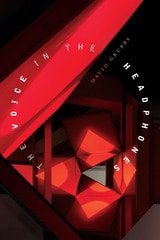
The Voice in the Headphones
David Grubbs
Duke University Press, 2020
The Voice in the Headphones is an experiment in music writing in the form of a long poem centered on the culture of the recording studio. It describes in intricate, prismatic detail one marathon day in a recording studio during which an unnamed musician struggles to complete a film soundtrack. The book extends the form of Grubbs's previous volume Now that the audience is assembled, sharing its goal of musicalizing the language of writing about music. Mulling the insight that “studio is the absence of pushback”—now that no audience is assembled—The Voice in the Headphones details one musician's strategies for applying the requisite pressure to the proceedings, for making it count. The Voice in the Headphones is both a literary work and a meditation on sound recording, delivered at a moment in which the commercial recording studio shades into oblivion. It draws upon Grubbs's own history of several decades as a recording artist, and its location could be described as every studio in which he has set foot.
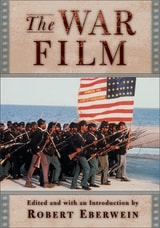
The War Film
Eberwein, Robert
Rutgers University Press, 2004
War has had a powerful impact on the film industry. But it is not only wars that affect films; films influence war-time behavior and incisively shape the way we think about the battles that have been waged.
In The War Film, Robert Eberwein brings together essays by scholars using a variety of critical approaches to explore this enduringly popular film genre. Contributors examine the narrative and aesthetic elements of war films from four perspectives: consideration of generic conventions in works such as All Quiet on the Western Front, Bataan, and The Thin Red Line; treatment of race in various war films, including Glory, Home of the Brave, Platoon,and Hamburger Hill; aspects of gender, masculinity and feminism in The Red Badge of Courage, Rambo, Dogfight, and Courage under Fire; and analysis of the impact of contemporary history on the production and reception of films such as The Life and Times of Rosie the Riveter, Saving Private Ryan, and We Were Soldiers.
Drawing attention to the dynamic interrelationships among politics, nationalism, history, gender, and film, this comprehensive anthology is bound to become a classroom favorite.

The Way of Nature and the Way of Grace
Philosophical Footholds on Terrence Malick's "The Tree of Life"Jonathan Beever and Vernon W. Cisney
Northwestern University Press, 2016
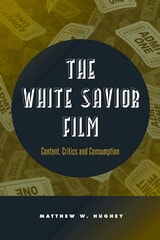
The White Savior Film
Content, Critics, and ConsumptionMatthew Hughey
Temple University Press, 2014
In The White Savior Film, Matthew Hughey provides a cogent, multipronged analysis of this subgenre of films to investigate the underpinnings of the Hollywood-constructed images of idealized (and often idealistic) white Americans.
Hughey considers the production, distribution, and consumption of white savior films to show how the dominant messages of sacrifice, suffering, and redemption are perceived by both critics and audiences. Examining the content of fifty films, nearly 3,000 reviews, and interviews with viewer focus groups, he accounts for the popularity of this subgenre and its portrayal of "racial progress."
The White Savior Film shows how we as a society create and understand these films and how they reflect the political and cultural contexts of their time.
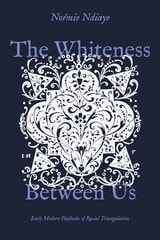
The Whiteness Between Us
Early Modern Playbooks of Racial TriangulationNoémie Ndiaye
University of Chicago Press, 2026
A theorization of the representational juxtapositions, frictions, and connections between Black people and other non-white people in early modern European theatre.
Over the course of the seventeenth century, European drama was an important tool for whiteness to imagine itself at the top of an aspirational structure of power relations. Indeed, that structure could only be aspirational at a time when Europeans were profoundly divided along easily racializable religious and ethnic lines, and when their sovereignty was threatened by the Ottoman empire. It was to strengthen this emerging consciousness of racial whiteness, Noémie Ndiaye argues, that European drama engaged in a form of racial triangulation, fitting Muslim, Jewish, Indigenous, Romani, and Asian characters into a spurious black/white racial binary.
Focusing on English, Spanish, and French drama from 1580 to 1715, The Whiteness Between Us shows how plays became a crucial tool to position not only black people but any non-white community in the new racial architecture that white supremacy sought to build. Ndiaye reveals the stage of this era as a space for wish fulfillment, enabling participants to imagine and work towards a whiter future.
The early modern playbooks of racial triangulation that Ndiaye brings to light can and have been reactivated for white supremacist purposes in our own day and age. Partly in response to the contemporary threat of white nationalism, scholars and students have sought to unearth the early modern roots of racial whiteness and white supremacy. Ndiaye’s book participates in this wave of interest, offering several innovations, including its capacious transnational claims.
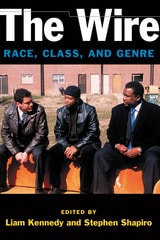
The Wire
Race, Class, and GenreEdited by Liam Kennedy and Stephen Shapiro
University of Michigan Press, 2012
Few other television series have received as much academic, media, and fan celebration as The Wire, which has been called the best dramatic series ever created. The show depicts the conflict between Baltimore's police and criminals to raise a warning about race; drug war policing; deindustrialization; and the inadequacies of America’s civic, educational, and political institutions. The show's unflinching explorations of a city in crisis and its nuanced portrayals of those affected make it a show all about race and class in America.
The essays in this volume offer a range of astute critical responses to this television phenomenon. More consistently than any other crime show of its generation, The Wire challenges viewers' perceptions of the racialization of urban space and the media conventions that support this. The Wire reminds us of just how remarkably restricted the grammar of race is on American television and related media, and of the normative codings of race---as identity, as landscape---across urban narratives, from documentary to entertainment media.
The Witch's Flight
The Cinematic, the Black Femme, and the Image of Common SenseKara Keeling
Duke University Press, 2007
Keeling draws on the thought of Frantz Fanon, Angela Davis, Karl Marx, Antonio Gramsci, and others in addition to Deleuze. She pursues the elusive figure of the black femme through Haile Gerima’s film Sankofa, images of women in the Black Panther Party, Pam Grier’s roles in the blaxploitation films of the early 1970s, F. Gary Gray’s film Set It Off, and Kasi Lemmons’s Eve’s Bayou.
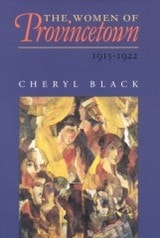
The Women of Provincetown, 1915–1922
Cheryl Black
University of Alabama Press, 2001
In this fascinating work, Cheryl Black reveals that, in addition to its role in developing an American tradition of non-commercial theatre, Provincetown has another, largely unacknowledged claim to fame as one of the first theatre companies in America in which women achieved prominence in every area of operation. At a time when women playwrights were rare, women directors rarer, and women scenic designers unheard of, Provincetown’s female members excelled in all of these roles.
In addition to the well-known playwright Susan Gaspell, the company’s female membership included luminaries such poets Edna St. Vincent Millay, Mina Loy, and Djuna Barnes; journalists Louise Bryant and Mary Heaton Vorce; novelists Neith Boyce and Evelyn Scott; and painter Marguerite Zorach. Illuminating a fascinating chapter in the history of one of the world's most picturesque and beloved artist colonies, The Women of Provincetown is an engaging work of social history, offering new insights into the relationship between gender and theatre. This work includes 40 images of the key artists in the book.
The Work of Music
Labor and Creativity in Germany's Long Nineteenth CenturyCelia Applegate
University of Wisconsin Press, 2025
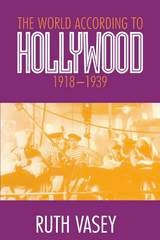
The World According to Hollywood, 1918–1939
Ruth Vasey
University of Wisconsin Press, 1997
Ruth Vasey shows how the Motion Picture Producers and Distributors of America (MPPDA), by implementing such strategies as the industry’s Production Code, ensured that domestic and foreign distribution took place with a minimum of censorship or consumer resistance. Drawing upon MPPDA archives, studio records, trade papers, and the records of the U.S. Department of Commerce, Vasey reveals the ways the MPPDA influenced the representation of sex, violence, religion, foreign and domestic politics, corporate capitalism, ethnic minorities, and the conduct of professional classes.
Vasey is the first scholar to document fully how the demands of the global market frequently dictated film content and created the movies’ homogenized picture of social and racial characteristics, in both urban America and the world beyond. She uncovers telling evidence of scripts and treatments that were abandoned before or during the course of production because of content that might offend foreign markets. Among the fascinating points she discusses is Hollywood’s frequent use of imaginary countries as story locales, resulting from a deliberate business policy of avoiding realistic depictions of actual countries. She argues that foreign governments perceived movies not just as articles of trade, but as potential commercial and political emissaries of the United States. Just as Hollywood had to persuade its domestic audiences that its products were morally sound, its domination of world markets depended on its ability to create a culturally and politically acceptable product.
The World in a Frame
What We See in FilmsLeo Braudy
University of Chicago Press, 1976

The World in a Frame
What We See in Films, 25th Anniversary EditionLeo Braudy
University of Chicago Press, 2002
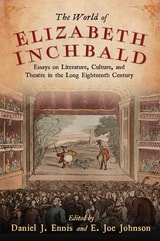
The World of Elizabeth Inchbald
Essays on Literature, Culture, and Theatre in the Long Eighteenth CenturyDaniel J. Ennis
University of Delaware Press, 2022
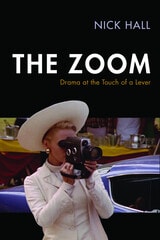
The Zoom
Drama at the Touch of a LeverHall, Nick
Rutgers University Press, 2018
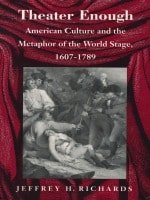
Theater Enough
American Culture and the Metaphor of the World Stage, 1607–1789Jeffrey H. Richards
Duke University Press, 1991
The rhetoric, or discourse, of early American theater emerged out of the figures of speech that permeated the colonists’ lives and literary productions. Jeffrey H. Richards examines a variety of texts—histories, diaries, letters, journals, poems, sermons, political tracts, trial transcripts, orations, and plays—and looks at the writings of such authors as John Winthrop and Mercy Otis Warren. Richards places the American usage of theatrum mundi—the world depicted as a stage—in the context of classical and Renaissance traditions, but shows how the trope functions in American rhetoric as a register for religious, political, and historical attitudes.
Theater Historiography
Critical InterventionsHenry Bial and Scott Magelssen, editors
University of Michigan Press, 2010
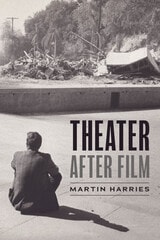
Theater after Film
Martin Harries
University of Chicago Press, 2025
In Theater after Film, Martin Harries argues that after 1945, as cinema became omnipresent in popular culture, theater had to respond to cinema’s hegemony. Theater couldn’t break that hegemony, but it could provide a zone of contestation. Theater made film’s domination of the cultural field visible through hyperbole, refusal, and other strategies, thereby unsettling its power. Postwar theatrical experiment, Harries shows, often channeled and represented film’s mass cultural force, while knowing that it could never possess that force. Throughout the book, Harries brings critical theory into contact with theories of performance. Although Theater after Film treats the theatrical work of many figures, its central focus falls on Tennessee Williams, Samuel Beckett, and Adrienne Kennedy. Discussions of these dramatists consider their ways of addressing spectators, the politics of race between film and theater, and the place of the theatrical apparatus. Readings of these central figures in twentieth-century theater exemplify the book’s historical engagement with the media surround that drama confronted. This confrontation, Harries shows, was central to the development of some of the most continually compelling postwar drama.

Theater and Democracy in an Era of Immersion
James R. Ball III
University of Michigan Press, 2027
From theater to virtual reality, we find ourselves making sense of imagined worlds that surround us. Our experience of democracy in the twenty-first century is similar: we are spectators to politics, immersed in 24-hour news, joining candidates on the campaign trail, reflecting on civic life and national memory in spaces of culture. Theater and Democracy in an Era of Immersion draws on extensive interviews with artists to develop a theory of immersive spectatorship as political action, arguing that through our experience of art, we can cultivate practices to navigate the disorientations and disenchantments of our democracy. This theory complements and complicates debates over the democratic promise of participatory performance by theorizing a mode of spectatorship that cuts across media, disciplines, genres, and everyday experiences.
James R. Ball III investigates phenomena that compose our experience of democracy, including campaign trail debates and rallies; electoral microtargeting; misinformation, disinformation, and conspiracy theory; sonic weapons and psychic spying; political assassination; racist state violence; public commemoration; AI in government; and the democratic work of mourning. Theater and Democracy in an Era of Immersion provides a unique performance studies intervention into political theory, indicating new avenues for research into political spectatorship and the theatricality of deliberative and ocular democracy.
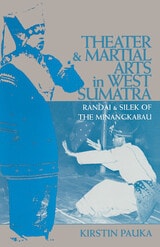
Theater and Martial Arts in West Sumatra
Randai and Silek of the MinangkabauKirstin Pauka
Ohio University Press, 1998
Randai, the popular folk theater tradition of the Minangkabau ethnic group in West Sumatra, has evolved to include influences of martial arts, storytelling, and folk songs. Theater and Martial Arts in West Sumatra describes the origin, development, and cultural background of randai and highlights two recent developments: the emergence of female performers and modern staging techniques.
This book also explores the indigenous martial arts form silek, a vital part of randai today. The strong presence of silek is illustrated in the martial focus of the stories that are told through randai, in its movement repertoire, and even in its costumes and musical accompaniment. As Kirstin Pauka shows, randai, firmly rooted in silek and Minangkabau tradition, is an intriguing mirror of the Minangkabau culture.

Theater and Social Change, Volume 31
Alisa Solomon, ed.
Duke University Press, 0
Theater and Social Change not only tracks the historical evolution of political theater but also explores the current state and future prospects of different modes, including agit-prop, demonstrations, solo performance, Augusto Boal’s Theater of the Oppressed, and community-based production. With such notable contributors as Anna Deavere Smith, Jonathan Kalb, Holly Hughes, and Tony Kushner, the issue offers a diverse assemblage of personal statements, conversations, photographs, interviews, and performance text.
Contributors include: Reverend Billy, Jan Cohen-Cruz, Arlene Goldbard, Sharon Green, Lani Guinier, Holly Hughes, Jonathan Kalb, Tony Kushner, Judith Malina, Robbie McCauley, John O'Neal, Claudia Orenstein, Bill Rauch, Julie Salverson, Anna Deavere Smith, Alisa Solomon, Roberta Uno
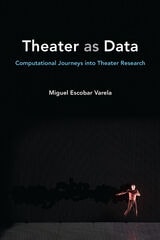
Theater as Data
Computational Journeys into Theater ResearchMiguel Escobar Varela
University of Michigan Press, 2021
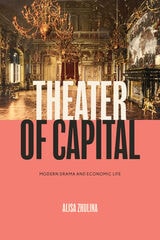
Theater of Capital
Modern Drama and Economic LifeAlisa Zhulina
Northwestern University Press, 2024
Emerging amid the turbulent rise of market finance and wider socioeconomic changes, modern drama enacted vital critiques of art and life under capitalism. Alisa Zhulina shows how fin-de-siècle playwrights such as Henrik Ibsen, August Strindberg, Anton Chekhov, George Bernard Shaw, and Gerhart Hauptmann interrogated the meaning of this newly coined economic concept. Acutely aware of their complicity in the system they sought to challenge, these playwrights staged economic questions as moral and political concerns, using their plays to explore the theories of Adam Smith, Karl Marx and Friedrich Engels, Max Weber, and others within the boundaries of bourgeois theater.
Theater of Capital: Modern Drama and Economic Life reveals the prescient and unsettling visions of life in a new financial and societal reality in now-canonical plays such as A Doll’s House, Miss Julie, and The Cherry Orchard, as well as in lesser-known and long-overlooked works. This wide-ranging study prompts us to reevaluate modern drama and its legacy for the urgent economic and political questions that haunt our present moment.
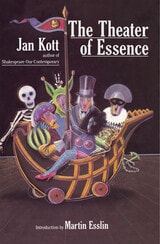
Theater of Essence
Jan Kott
Northwestern University Press, 1986
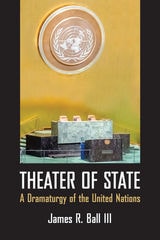
Theater of State
A Dramaturgy of the United NationsJames R. Ball III
Northwestern University Press, 2020
This study of the lived experience of spectacular politics on the world stage draws on theories of theater, performance, and politics to offer new ways of approaching issues of war, cosmopolitanism, international justice, governance, and activism. Situated at the nexus of two disciplines, performance studies and political science, this volume encourages conversations between the two so that each might offer lessons to the other.
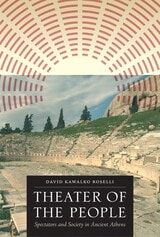
Theater of the People
Spectators and Society in Ancient AthensBy David Kawalko Roselli
University of Texas Press, 2011
Greek drama has been subject to ongoing textual and historical interpretation, but surprisingly little scholarship has examined the people who composed the theater audiences in Athens. Typically, scholars have presupposed an audience of Athenian male citizens viewing dramas created exclusively for themselves—a model that reduces theater to little more than a medium for propaganda. Women's theater attendance remains controversial, and little attention has been paid to the social class and ethnicity of the spectators. Whose theater was it?
Producing the first book-length work on the subject, David Kawalko Roselli draws on archaeological and epigraphic evidence, economic and social history, performance studies, and ancient stories about the theater to offer a wide-ranging study that addresses the contested authority of audiences and their historical constitution. Space, money, the rise of the theater industry, and broader social forces emerge as key factors in this analysis. In repopulating audiences with foreigners, slaves, women, and the poor, this book challenges the basis of orthodox interpretations of Greek drama and places the politically and socially marginal at the heart of the theater. Featuring an analysis of the audiences of Aeschylus, Sophocles, Euripides, Aristophanes, and Menander, Theater of the People brings to life perhaps the most powerful influence on the most prominent dramatic poets of their day.
Theater, War, and Memory in Crisis
Vichy, Algeria, the AftermathJohn Ireland
University of Michigan Press, 2025
Theatermachine
Tadeusz Kantor in ContextEdited by Magda Romanska and Kathleen Cioffi
Northwestern University Press, 2019
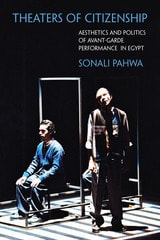
Theaters of Citizenship
Aesthetics and Politics of Avant-Garde Performance in EgyptSonali Pahwa
Northwestern University Press, 2020
In 2004, independent cultural institutions were sites for more democratic forms of youth organization and cultural participation than were Egyptian state theaters. Sonali Pahwa looks at identity formation within this infrastructure for new cultural production: festivals, independent troupes, workshops, and manifesto movements. Bringing institutional changes in dialogue with new performance styles on stages and streets, Pahwa conceptualizes performance culture as a school of citizenship. Independent theater incubated hope in times of despair and pointed to different futures for the nation’s youth than those seen in television and newspapers. Young dramatists countered their generation’s marginalization in the neoliberal economy, media, and political institutions as they performed alternative visions for the nation. An important contribution to the fields of anthropology and performance studies, Pahwa’s analysis will also interest students of sociology and Egyptian history.

Theaters of Occupation
Hollywood and the Reeducation of Postwar GermanyJennifer Fay
University of Minnesota Press, 2008
In the aftermath of total war and unconditional surrender, Germans found themselves receiving instruction from their American occupiers. It was not a conventional education. In their effort to transform German national identity and convert a Nazi past into a democratic future, the Americans deployed what they perceived as the most powerful and convincing weapon-movies.
In a rigorous analysis of the American occupation of postwar Germany and the military’s use of “soft power,” Jennifer Fay considers how Hollywood films, including Ninotchka, Gaslight, and Stagecoach, influenced German culture and cinema. In this cinematic pedagogy, dark fantasies of American democracy and its history were unwittingly played out on-screen. Theaters of Occupation reveals how Germans responded to these education efforts and offers new insights about American exceptionalism and virtual democracy at the dawn of the cold war.
Fay’s innovative approach examines the culture of occupation not only as a phase in U.S.–German relations but as a distinct space with its own discrete cultural practices. As the American occupation of Germany has become a paradigm for more recent military operations, Fay argues that we must question its efficacy as a mechanism of cultural and political change.
Jennifer Fay is associate professor and codirector of film studies in the Department of English at Michigan State University.
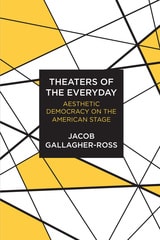
Theaters of the Everyday
Aesthetic Democracy on the American StageJacob Gallagher-Ross
Northwestern University Press, 2018
Offering both fresh reappraisals of canonical figures and movements and new examinations of theatrical innovators, Theaters of the Everyday reveals surprising affinities between artists often considered poles apart, such as John Cage and Lee Strasberg, and Thornton Wilder and the New York experimentalist Nature Theater of Oklahoma. Gallagher-Ross persuasively shows how these creators eschew conventional definitions of dramatic action and focus attention on smaller but no less profound dramas of perception, consciousness, and day-to-day life.
Gallagher-Ross traces some of the intellectual roots of the theater of the everyday to American transcendentalism, with its pragmatic process philosophy as well as its sense of ordinary experience as the wellspring of aesthetic awareness.
Theatre History Studies 1982, Vol. 2
Ron Engle
University of Alabama Press, 1982
Theatre History Studies 1983, Vol. 3
Ron Engle
University of Alabama Press, 1983
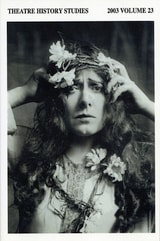
Theatre History Studies 2003, Vol. 23
Robert A. Schanke
University of Alabama Press, 2003
Theatre History Studies is a peer-reviewed journal of theatre history and scholarship published annually since 1981 by the Mid-American Theatre Conference (MATC), a regional body devoted to theatre scholarship and practice. The conference encompasses the states of Illinois, Iowa, Nebraska, Kansas, Missouri, Minnesota, North Dakota, South Dakota, Wisconsin, Indiana, Michigan, and Ohio. The purpose of the conference is to unite persons and organizations within the region with an interest in theatre and to promote the growth and development of all forms of theatre.
THS is a member of the Council of Editors of Learned Journals and is included in the MLA Directory of Periodicals. THS is indexed in Humanities Index, Humanities Abstracts, Book Review Index, MLA International Bibliography, International Bibliography of Theatre, Arts & Humanities Citation Index, IBZ International Bibliography of Periodical Literature, and IBR International Bibliography of Book Reviews. Full texts of essays appear in the databases of both Humanities Abstracts Full Text as well as SIRS.
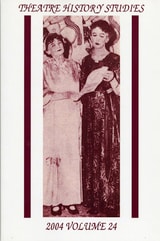
Theatre History Studies 2004, Vol. 24
VoluRobert A. Schanke
University of Alabama Press, 2004
THS is a member of the Council of Editors of Learned Journals and is included in the MLA Directory of Periodicals. THS is indexed in Humanities Index, Humanities Abstracts, Book Review Index, MLA International Bibliography, International Bibliography of Theatre, Arts & Humanities Citation Index, IBZ International Bibliography of Periodical Literature, and IBR International Bibliography of Book Reviews. Full texts of essays appear in the databases of both Humanities Abstracts Full Text as well as SIRS.
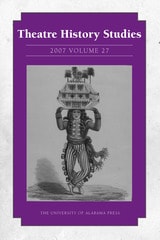
Theatre History Studies 2007, Vol. 27
Edited by Rhona Justice-Malloy
University of Alabama Press, 2007
A Copublication of the Mid-American Theatre Conference and The University of Alabama Press.
Theatre History Studies is a peer-reviewed journal of theatre history and scholarship published annually since 1981 by the Mid-American Theatre Conference (MATC), a regional body devoted to theatre scholarship and practice. The conference encompasses the states of Illinois, Iowa, Nebraska, Kansas, Missouri, Minnesota, North Dakota, South Dakota, Wisconsin, Indiana, Michigan, and Ohio. The purpose of the conference is to unite persons and organizations within the region with an interest in theatre and to promote the growth and development of all forms of theatre.
Rhona Justice-Malloy is Chair of the Department of Theatre Arts at the University of Mississippi.
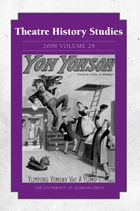
Theatre History Studies 2008, Vol. 28
Edited by Rhona Justice-Malloy
University of Alabama Press, 2008
Theatre History Studies is a peer-reviewed journal of theatre history and scholarship published annually since 1981 by the Mid-American Theatre Conference (MATC), a regional body devoted to theatre scholarship and practice. The conference encompasses the states of Illinois, Iowa, Nebraska, Kansas, Missouri, Minnesota, North Dakota, South Dakota, Wisconsin, Indiana, Michigan, and Ohio. The purpose of the conference is to unite persons and organizations within the region with an interest in theatre and to promote the growth and development of all forms of theatre.
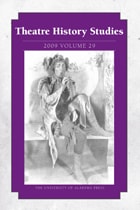
Theatre History Studies 2009, Vol. 29
Edited by Rhona Justice-Malloy, with contributions from Christin Essin, Carolyn D. Roark, Meredith Lowe, Valleri J. Hohman, Fonzie D. Geary II, Robert B. Shimko, Robert B. Theatre History Studies, Elizabeth Osborne, Paul Cornwell, Harry J. Elam Jr., etc.
University of Alabama Press, 2009
Reimagining the archive, one performance at a time.
Theatre History Studies is a peer-reviewed journal dedicated to excellence in theatre historiography. Volume 29, edited by Rhona Justice-Malloy, includes essays that span a wide range of historical periods, geographic regions, and thematic concerns. Highlights include explorations of pain and torment in performance, the aesthetics of American modernity through Belasco and Jones, and the cultural politics of prohibition on stage. The volume also features visual and archival studies, including an interview with playwright Wendy Wasserstein and analyses of Shakespeare’s reception in Restoration theatre. With contributions from over thirty scholars, this edition offers a rich and multifaceted view of how theatre reflects, resists, and reshapes historical narratives.
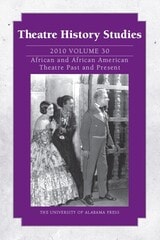
Theatre History Studies 2010, Vol. 30
Edited by Rhona Justice-Malloy
University of Alabama Press, 2010
To mark the thirtieth anniversary of the Theatre History Studies journal, editor Rhona Justice-Malloy and the Mid-America Theatre Conference have collected a special-themed volume covering the past and present of African and African American theatre. Topics included range from modern theatrical trends and challenges in Zimbabwe and Kenya, and examining the history and long-range impact of Paul Robeson’s groundbreaking and troubled life and career, to gender issues in the work of Ghanaian playwright Efo Kodjo Mawugbe, and the ways that 19th-century American blackness was defined through Othello and Desdemona. This collection fills a vacancy in academic writing. Readers will enjoy it; academics can incorporate it into their curriculum; and students will find it helpful and illuminating.
Theatre History Studies 2011, Vol. 31
Rhona Justice-Malloy
University of Alabama Press, 2011
THS is a member of the Council of Editors of Learned Journals and is included in the MLA Directory of Periodicals. THS is indexed in Humanities Index, Humanities Abstracts, Book Review Index, MLA International Bibliography, International Bibliography of Theatre, Arts & Humanities Citation Index, IBZ International Bibliography of Periodical Literature, and IBR International Bibliography of Book Reviews. Full texts of essays appear in the databases of both Humanities Abstracts Full Text as well as SIRS
From published reviews
“This established annual is a major contribution to the scholarly analysis and historical documentation of international drama. Refereed, immaculately printed and illustrated . . . . The subject coverage ranges from the London season of 1883 to the influence of David Belasco on Eugene O’Neill.”—CHOICE
“International in scope but with an emphasis on American, British, and Continental theater, this fine academic journal includes seven to nine scholarly articles dealing with everything from Filipino theater during the Japanese occupation to numerous articles on Shakespearean production to American children’s theater. . . . an excellent addition for academic, university, and large public libraries.”—Magazines for Libraries, 6th Edition
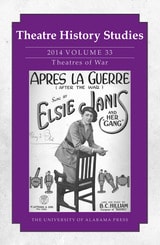
Theatre History Studies 2014, Vol. 33
Theatres of WarElizabeth Reitz Mullenix
University of Alabama Press, 2014
War and theatre is a subject of increasing popularity among scholars of theatre. The essays in this special edition of Theatre History Studies brings together a unique collection of work by thirteen innovative scholars whose work explores such topics as theatre performances during war times, theatre written and performed to resist war, and theatre that fosters and promotes war.
The contributors to this volume write poignantly about nationhood and about how war—through both propaganda and protest—defines a people. The contributors also delve into numerous fascinating themes that transcend time, peoples, nations, and particular conflicts: the foundations of nationalism and the concepts of occupied and occupier, nostalgia and utopia, and patriotism and revolution.
These essays survey a march of civil and international wars spanning three centuries. Arranged chronologically, they invite comparisons between themes and trace the development of the major themes of war. Ideas manifest in the theatre of one period recall ideologies and propaganda of the past, reflect those of the present, and anticipate wars to come.
Theatre History Studies 2015, Vol. 34
Elizabeth Reitz Mullenix
University of Alabama Press, 2015
The five essays are arranged chronologically, starting with Alan Sikes’s discussion of the Abydos Passion Play. Sikes challenges the long-held interpretation of that ritualized annual reenactment of the death, dismemberment, and return to life of Egyptian god-king Osiris as the world’s first recorded dramatic production. In analyzing the “Passion Play”—Sikes argues the term is not apt—he applies semiotic theory using "sign and referent" to revise general concepts of mimesis, and in so doing clarifies the fundamental answer to the question, “What is theatre?”
In a pair of essays, Andrew Gibb and Nicole Berkin both explore theatre during America’s antebellum period. Gibb examines minstrelsy in antebellum California, exploding narrow definitions of minstrelsy as a primarily Eastern phenomenon and one reflecting a stark interaction of two races. Following the story of Jewish African Caribbean immigrant William Alexander Leidesdorff, Gibb demonstrates that national forms are always affected by their local productions and audiences. Berkin’s essay focuses on the struggles over cultural power that took place between popular entertainers and theatre managers. She examines how both parties used touring strategically to engage with antebellum notions of deception and fraud.
The last two essays, by Megan Geigner and Heide Nees, present findings from performance studies which, by examining a wide array of dramatic and performative texts, expands the interdisciplinary foundations of theatre history studies. This fascinating collection is rounded out by an expanded selection of insightful reviews of recent literature in the area.
Theatre History Studies 2018, Vol. 37
Sara Freeman
University of Alabama Press, 2018
THEATRE HISTORY STUDIES, VOLUME 37
STEFAN AQUILINA
Meyerhold and The Revolution: A Reading through Henri Lefebvre’s Theories on “Everyday Life”
VIVIAN APPLER
“Shuffled Together under the Name of a Farce”: Finding Nature in Aphra Behn’s The Emperor of the Moon
KRISTI GOOD
Kate Soffel’s Life of Crime: A Gendered Journey from Warden’s Wife to Criminal Actress
PETER A. CAMPBELL
Staging Ajax’s Suicide: A Historiography
BRIAN E. G. COOK
Rousing Experiences: Theatre, Politics, and Change
MEGAN LEWIS
Until You See the Whites of Their Eyes: Brett Bailey’s Exhibit B and the Consequences of Staging the Colonial Gaze
PATRICIA GABORIK
Taking the Theatre to the People: Performance Sponsorship and Regulation in Mussolini’s Italy
ILINCA TODORUT AND ANTHONY SORGE
To Image and to Imagine: Walid Raad, Rabih Mouré, and the Arab Spring
SHULAMITH LEV-ALADGEM
Where Has the Political Theatre in Israel Gone? Rethinking the Concept of Political Theatre Today
CHRISTINE WOODWORTH
“Equal Rights By All Means!”: Beatrice Forbes-Robertson’s 1910 Suffrage Matinee and the Onstage Junction of the US And UK Franchise Movements
LURANA DONNELS O’MALLEY
“Why I Wrote the Phyllis Wheatley Pageant-Play”: Mary Church Terrell’s Bicentennial Activism
JULIET GUZZETTA
The Lasting Theatre of Dario Fo and Franca Rame
ASHLEY E. LUCAS
Chavez Ravine: Culture Clash and the Political Project of Rewriting History
NOE MONTEZ
The Heavy Lifting: Resisting the Obama Presidency’s Neoliberalist Conceptions of the American Dream in Kristoffer Diaz’s The Elaborate Entrance of Chad Deity
Theatre History Studies 2019, Vol. 38
Edited by Sara Freeman
University of Alabama Press, 2019
THEATRE HISTORY STUDIES, VOLUME 38
PART I: Studies in Theatre History
ELIZABETH COEN
Hanswurst’s Public: Defending the Comic in the Theatres of Eighteenth-Century Vienna
BRIDGET MCFARLAND
“This Affair of a Theatre”: The Boston Theatre Controversy and the Americanization of the Stage
RYAN TVEDT
From Moscow to Simferopol: How the Russian Cubo-Futurists Accessed the Provinces
DANIELLA VINITSKI MOONEY
So Long Ago I Can’t Remember: GAle GAtes et al. and the 1990s Immersive Theatre
Part II: The Site-Based Theatre Audience Experience: Dramaturgy and Ethics
—EDITED BY PENELOPE COLE AND RAND HARMON
PENELOPE COLE
Site-Based Theatre: The Beginning
PENELOPE COLE
Becoming the Mob: Mike Brookes and Mike Pearson’s Coriolan/us
SEAN BARTLEY
A Walk in the Park: David Levine’s Private Moment and Ethical Participation in Site-Based Performance
DAVID BISAHA
“I Want You to Feel Uncomfortable”: Adapting Participation in A 24-Decade History of Popular Music at San Francisco’s Curran Theatre
COLLEEN RUA
Navigating Neverland and Wonderland: Audience as Spect-Character
GUILLERMO AVILES-RODRIGUEZ, PENELOPE COLE, RAND HARMON, AND ERIN B. MEE
Ethics and Site-Based Theatre: A Curated Discussion
PART III: The Robert A. Schanke Award-Winning Essay from the 1038 Mid-America Theatre Conference
MICHELLE GRANSHAW
Inventing the Tramp: The Early Tramp Comic on the Variety Stage
Theatre History Studies 2020, Vol. 39
Edited by Lisa Jackson-Schebetta
University of Alabama Press, 2020
Theatre History Studies (THS) is a peer-reviewed journal of theatre history and scholarship published annually since 1981 by the Mid-America Theatre Conference
Reframing the past to illuminate the future of performance.
Theatre History Studies is a peer-reviewed journal devoted to excellence in theatre historiography. Volume 38, edited by Lisa Jackson-Schebetta, features three distinct sections: foundational studies in theatre history, a special section on hemispheric historiographies, and award-winning essays from the Mid-America Theatre Conference. Contributors examine topics ranging from Shakespeare and racial antagonism to systemic dramaturgy, labor unions in regional theatre, and digital diasporic activism. The volume also includes visual histories and decolonial methodologies that challenge Eurocentric narratives and foreground Latinx, feminist, and socialist performance traditions. With 272 pages and 18 black-and-white figures, this edition is a rich resource for scholars seeking to expand the scope and methods of theatre history.
Theatre History Studies 2021, Vol 40
Edited by Lisa Jackson-Schebetta
University of Alabama Press, 2021
A peer-reviewed journal of theatre history and scholarship published annually since 1981 by the Mid-America Theatre Conference
Theatre History Studies 2021, Vol. 40, edited by Lisa Jackson-Schebetta, marks the fortieth volume of the respected, peer-reviewed journal published by the Mid-America Theatre Conference, a leading forum for innovative scholarship in theatre and performance studies. Bringing together a diverse collection of essays from established and emerging scholars, this volume examines the intersections of theatre history, cultural memory, performance, identity, race, gender, and social change across a wide range of historical and contemporary contexts.
The volume opens with a series of studies that challenge conventional narratives of theatre history and performance. Contributors explore topics including Voltaire and Enlightenment thought, the contributions and erasure of African American artists within the Federal Theatre Project's Negro Unit, questions of empathy and historical consciousness in contemporary drama, and the influence of Asian aesthetics on the work of modern dance innovator Alwin Nikolais. Together, these essays demonstrate the ongoing importance of theatre history as a lens through which to understand cultural power, representation, and artistic expression.
A special section,"Witch Characters and Witchy Performance," investigates the enduring cultural fascination with witches on stage and in popular performance. Essays examine witchcraft in the works of Joanna Baillie and Shakespeare, representations of female bodies and power in Caryl Churchill's Vinegar Tom, the feminist dimensions of Wicked, and the immersive theatrical worlds of productions such as Sleep No More and Then She Fell. Through these studies, the collection highlights how witch figures continue to serve as powerful symbols for exploring gender, authority, resistance, and cultural imagination.
The volume also features the recipient of the Robert A. Schanke Award, recognizing outstanding scholarship presented at the Mid-America Theatre Conference. This essay examines the evolving relationship between Broadway and high school musical theatre in the 2010s, offering valuable insight into theatre education, performance culture, and the transmission of theatrical traditions to new generations.
In addition to original research articles, Theatre History Studies 2021, Vol. 40 includes scholarly book reviews, contributor notes, and discussions of recent publications in the field, making it an essential resource for researchers, educators, students, and theatre practitioners. By bringing together rigorous historical inquiry and contemporary critical perspectives, this landmark volume showcases the breadth, vitality, and continuing relevance of theatre and performance scholarship in the twenty-first century.
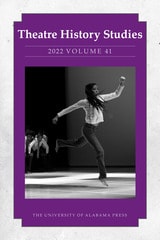
Theatre History Studies 2022, Vol 41
edited by Lisa Jackson-Schebetta
University of Alabama Press, 2023
New perspectives and rigorous scholarship shaping the histories of theatre and performance.
Theatre History Studies 2022, Vol. 41 presents a dynamic collection of peer‑reviewed essays that exemplify current directions in theatre and performance historiography. Edited by Lisa Jackson‑Schebetta, this volume brings together scholars whose work spans diverse periods, geographies, and performance traditions, demonstrating the field’s continued expansion in scope and methodology. As the official journal of the Mid‑America Theatre Conference, Theatre History Studies remains a vital venue for rigorous historical inquiry grounded in archival research, critical theory, and historiographic reflection.
Volume 41 engages pressing questions about how theatre histories are constructed, narrated, and mobilized in relation to social, political, and cultural contexts. Contributors explore performance as a site of embodied knowledge, identity formation, resistance, and memory, with essays that address race, gender, sexuality, labor, migration, and transnational exchange. The volume reflects a historiographic turn toward interdisciplinary approaches, drawing from dance studies, performance studies, critical race theory, and cultural history to reconsider established narratives and recover overlooked voices.
Together, the essays in this volume demonstrate the continued relevance of theatre history as both a scholarly practice and a critical framework for understanding performance’s role in shaping—and being shaped by—broader historical forces. Theatre History Studies 2022, Vol. 41 will be of particular value to scholars, educators, and graduate students in theatre and performance studies, as well as researchers in related fields who are interested in innovative historical methods and the evolving contours of performance scholarship.
CONTRIBUTORS
Angela K. Ahlgren / Samer Al-Saber / Kelly I. Aliano / Gordon Alley-Young / Melissa Blanco Borelli / Trevor Boffone / Jay Buchanan / Matthieu Chapman / Joanna Dee Das / Ryan J. Douglas / Victoria Fortuna / Christiana Molldrem Harkulich / Alani Hicks-Bartlett / Jeanmarie Higgins / Lisa Jackson-Schebetta / Erin Rachel Kaplan / Heather Kelley / Patrick Maley / Karin Maresh / Lisa Milner / Courtney Elkin Mohler / Heather S. Nathans / Heidi L. Nees / Sebastian Samur / Michael Schweikardt / Teresa Simone / Dennis Sloan / Guilia Taddeo / Kyle A. Thomas / Alex Vermillion / Bethany Wood