Results by title
3785 books match the query 'Poetry' and 833 start with t
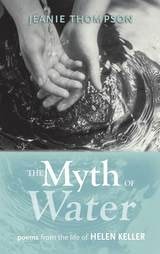
The Myth of Water
Poems from the Life of Helen KellerJeanie Thompson
University of Alabama Press, 2016
Thompson’s artfully concatenated vignettes form a mosaic that maps the insightful mind behind the elegant and enigmatic persona Keller projected. Thompson takes readers on the journey of Keller’s life, from some of the thirty-seven countries she visited, including the British Isles, Europe, and Japan to the wellsprings of her emotional awakening and insight. The poems are paired with fascinating biographical anecdotes from Keller’s life and samplings from her writing, which infuse the work with richly-rewarding biographical detail.
The poems in The Myth of Water reveal the discerning subtlety, resiliency, and complexity of the person Thompson perceives Helen Keller to have been. Through a combination of natural intuition, manual signs, Braille alphabets, and lip reading, Keller came to grasp the revolving tapestry of the seasons and the infinite colors of human relationships.
Not a biography or a fictional retelling, The Myth of Water attempts to unlock what moved Keller to her life of service and self-examination. This is a deeply personal story of coming through—not overcoming—a double disability to a fully realized life in which a woman gives her heart to the world.

The Nail in the Tree
Essays on Art, Violence, and ChildhoodCarol Ann Davis
Tupelo Press, 2020
The Names of Birds
Daniel Wolff
Four Way Books, 2015
The Narrows
Daniel Tobin
Four Way Books, 2005
The Necessary Past
Revising History in Contemporary African American PoetryAnnette Debo
Northwestern University Press, 2024
“Poets are lyric historians,” proclaimed Langston Hughes. Today, historical poetry offers a lyric history necessary to our current moment—poetry with the power to correct the past, realign the present, and create a more hopeful, or even hoped-for, future. The Necessary Past: Revising History in Contemporary African American Poetry focuses on six of today’s most celebrated poets: Elizabeth Alexander, Natasha Trethewey, A. Van Jordan, Kevin Young, Frank X Walker, and Camille T. Dungy. Their works reimagine the interiority of Black historical figures like the so-called Venus Hottentot Sara Baartman and the would-be spelling champion MacNolia Cox, the African American Native Guard who fought in the Civil War and the unknown victims of domestic violence, Jack Johnson and Jean-Michel Basquiat, Medgar Evers and those freed and enslaved in the early nineteenth century. These poets shift the power dynamic in revising our shared history, reconfiguring who speaks and whose stories are told, and writing a past that frees readers to change the present and envision a more just future.
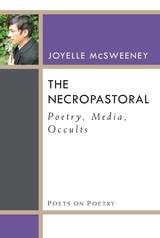
The Necropastoral
Poetry, Media, OccultsJoyelle McSweeney
University of Michigan Press, 2014
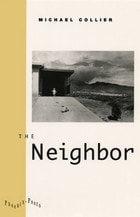
The Neighbor
Michael Collier
University of Chicago Press, 1995

The Nervous Filaments
David Dodd Lee
Four Way Books, 2010
The word “Filament,” taken from David Dodd Lee’s title The Nervous Filaments, suggests both a fine thread
and the element of a light bulb that can be heated to incandescence, and appropriately so, as each of these
illuminated poems acts as a thread in a finely woven collection. Together they create a cultural commentary
that is at once wry and satirical while still teeming with emotion. “One of the new jobs we have is dating // you
work in reality TV—// the myth of the soul mate,” Dodd writes, but is the soul mate a myth? Still wary, Dodd
says “Love is a form of gambling,” yet allows emotion to make its way in: “Pushing the linens back / we
conceive a love.” This is the beauty of these poems: Dodd is able to find underlying truth and emotion in a
sometimes artificial and frenzied world, as when a speaker declares “I know I woke up / and the sun was
staring at me // Orange Juice // it’s all about packaging // And the mockingbird knows something at 2 a.m.”
Lee’s poems explore both presence and absence, or, rather, what is present in the space created by absence: “I
have this candle and what she left on it // her smell.” The juxtaposition of stark imagery in The Nervous
Filaments creates an acute sense of longing and loss: “She got the call at ten ‘oh’ seven // every child in her
class began evaporating . . . // no good bye kiss // not even a word // driving and driving over long bridges.” We
are continually left with a haunted feeling that the voices in these poems feel as we feel, and that they
experience what we have or will experience.
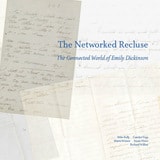
The Networked Recluse
The Connected World of Emily DickinsonMike Kelly, Carolyn Vega, Marta Werner, Susan Howe, Richard Wilbur
Amherst College Press, 2017
Yet that image scarcely captures the fullness and vitality of Dickinson’s life, most notably her many connections—to family, to friends, to correspondents, to the literary tastemakers of her day, even to the unnamed, and perhaps unknowable, “Master” to whom she addressed three of her most breathtaking works of prose. Through an exploration of a relatively small group of items from Dickinson’s vast literary remains, this volume—an accompaniment to an exhibition on Dickinson mounted at The Morgan Library & Museum in New York—demonstrates the complex ways in which these often humble objects came into conversation with other people, places, and events in the poet’s life. Seeing the network of connections and influences that shaped Dickinson’s life presents us with a different understanding of this most enigmatic yet elegiac poet in American letters, and allows us more fully to appreciate both her uniqueness and her humanity.
The materials collected here make clear that the story of Dickinson’s manuscripts, her life, and her work is still unfolding. While the image of Dickinson as the reclusive poet dressed only in white remains a popular myth, details of Dickinson’s life continue to emerge. Several items included both in the exhibit and in this volume were not known to exist until the present century. The scrap of biographical intelligence recorded by Sarah Tuthill in a Mount Holyoke catalogue, or the concern about Dickinson’s salvation expressed by Abby Wood in a private letter to Abiah Root, were acquired by Amherst College in the last fifteen years. What additional pieces of evidence remain to be uncovered and identified in the attics and basements of New England?
Published to accompany The Morgan Library & Museum’s pathbreaking exhibit I’m Nobody! Who are You? The Life and Poetry of Emily Dickinson—part of a series of exhibits at the Morgan celebrating and exploring the creative lives of significant women authors—The Networked Recluse offers the reader an account of the exhibit itself, together with a series of contributions by curators, scholars of Dickinson, and poets whose own work her words have influenced.
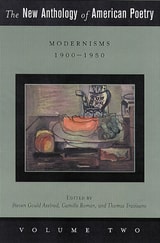
The New Anthology of American Poetry
Modernisms: 1900-1950Edited by Steven Gould Axelrod and Camille Roman
Rutgers University Press, 2005
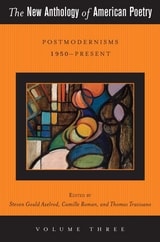
The New Anthology of American Poetry
Postmodernisms 1950-PresentAxelrod, Steven Gould
Rutgers University Press, 2012
Steven Gould Axelrod, Camille Roman, and Thomas Travisano continue the standard of excellence set in Volumes I and II of this extraordinary anthology. Volume III provides the most compelling and wide-ranging selection available of American poetry from 1950 to the present. Its contents are just as diverse and multifaceted as America itself and invite readers to explore the world of poetry in the larger historical context of American culture.
Nearly three hundred poems allow readers to explore canonical works by such poets as Elizabeth Bishop, Robert Lowell, and Sylvia Plath, as well as song lyrics from such popular musicians as Bob Dylan and Queen Latifah. Because contemporary American culture transcends the borders of the continental United States, the anthology also includes numerous transnational poets, from Julia de Burgos to Derek Walcott. Whether they are the works of oblique avant-gardists like John Ashbery or direct, populist poets like Allen Ginsberg, all of the selections are accompanied by extensive introductions and footnotes, making the great poetry of the period fully accessible to readers for the first time.
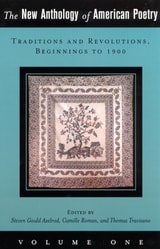
The New Anthology of American Poetry
Traditions and Revolutions, Beginnings to 1900Edited by Steven Gould Axelrod, Camille Roman, and Thomas Travisano
Rutgers University Press, 2002
Volume I begins with a generous selection of Native American materials, then spans the years from the establishment of the American colonies to about 1900, a world on the brink of World War I and the modern era. Part One focuses on poetry from the very beginnings through the end of the eighteenth century. The expansion and development of a newly forged nation engendered new kinds of poetry. Part Two includes works from the early nineteenth century through the time of the Civil War. The poems in Part Three reflect the many issues affecting a nation undergoing tumultuous change: the Civil War, immigration, urbanization, industrialization, and cultural diversification.
Such well-recognized names as Anne Bradstreet, Edward Taylor, Phillis Wheatley, Edgar Allan Poe, Herman Melville, Walt Whitman, Emily Dickinson, and Stephen Crane appear in this anthology alongside such less frequently anthologized poets as George Horton, Sarah Helen Whitman, Elizabeth Oakes-Smith, Frances Harper, Rose Terry Cooke, Helen Hunt Jackson, Adah Menken, Sarah Piatt, Ina Coolbrith, Emma Lazarus, Albery Whitman, Owl Woman (Juana Manwell) Sadakichi Hartmann, Ernest Fenollosa, James Weldon Johnson, Paul Laurence Dunbar, and—virtually unknown as a poet—Abraham Lincoln. It also includes poems and songs reflecting the experiences of a variety of racial and ethnic groups.

The New Apologists for Poetry
Murray Krieger
University of Minnesota Press, 1956
The New Apologists for Poetry was first published in 1956. Minnesota Archive Editions uses digital technology to make long-unavailable books once again accessible, and are published unaltered from the original University of Minnesota Press editions.
The author's purpose is to clear the ground for a systematic aesthetics of poetry consistent with the insights of our most influential contemporary literary critics. The book is concerned with those of the so-called "new critics" who are trying to answer the need, forced on them by historical and cultural pressures, to justify poetry by securing for it a unique function for which modern "scientism" cannot find a substitute.
This volume provides intensive analyses of work by critics of several persuasions: T. E. Hulme, T. S. Eliot, I. A. Richards, John Crowe Ransom, Yvor Winters, Allen Tate, and Cleanth Brooks, and, for purposes of contrast, D. G. James, R. S. Crane, Elder Olson, and Max Eastman.
Allen Tate, the poet and critic, writes: "Mr. Krieger's book is the most searching in scholarship and the most profound in critical analysis of the existing books in this field."
Robert B. Heilman, critic and teacher, comments: "The author's knowledge of a complex field and his mastery of the analytical techniques which he is applying to a chosen set of critical positions are very impressive. He not only clarifies the positions of various contemporary critics by examining them in the light of the same set of general principles, but also provides some helpful, at times brilliant, insights into the works of various critics from the Greeks up to the present. He traces the history of concepts and thus establishes relationships among individual critics and critical schools."
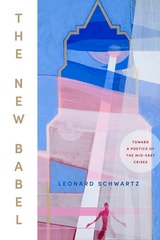
The New Babel
Toward a Poetics of the Mid-East CrisesLeonard Schwartz
University of Arkansas Press, 2016
The New Babel: Toward a Poetics of the Mid-East Crises evokes and investigates—from a Jewish American perspective and in the forms of poetry, essays, and interviews—the Israeli-Palestinian conflict, America’s involvement as both perpetrator and victim of events in the Middle East and Afghanistan, and the multiple ways that poetics can respond to political imperatives.
The poems range from the immediately lyrical to the experimental forms of the “Apple Anyone Sonnets” series, which relies heavily on the Arabic but has Shakespeare as its scaffolding.
In the essays, Schwartz calls on the power of poetry—and of some of the great poets in the Arabic, Jewish, and American traditions—to help rethink the battle lines of the contemporary Mid-East, with the Jewish philosopher Martin Buber looming large.
The interviews provide Schwartz’s discussions with Israeli poet and activist Aharon Shabtai, political philosopher Michael Hardt, and the late, great American poet Amiri Baraka.
In these creative, analytical, and conversational moments, Leonard Schwartz rethinks the battle lines of the contemporary Middle East and calls on the power of language as the essence of our humanity, endlessly fluid, but also the source of an intentional confusion there is a necessity to counter.
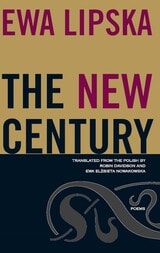
The New Century
PoemsEwa Lipska, translated from the Polisyh by Robin Davidson and Ewa Nowakowska
Northwestern University Press, 2009
Since the publication of her first book in 1967, Ewa Lipska has been among the most acclaimed of contemporary Polish poets. Yet, to date she has not enjoyed the same popularity in the United States as her fellow Poles Wislawa Szymborska, Czeslaw Milosz, and her contemporary Adam Zagajewski. The New Century: Poems, a selection of her recent work, introduces to an American audience the work of an underappreciated master.
Although Lipska’s work displays an acute awareness of history and politics, she’s nonetheless most concerned with individual experience and the most difficult philosophical questions of evil. Lipska is capable of being awed by beauty despite the deep pessimism that flows through her poems, including the failure of language itself to have any ameliorative effect on human experience.
Surreal, skeptical, and laced with wit, Lipska’s poetry, like that of Milosz and Szymborska, seems to effortlessly achieve a kind of hard-won and gracefully wielded authority that tells us something essential about the legacies of the twentieth century’s horrors.
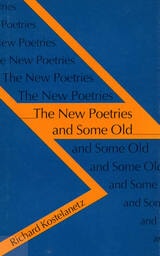
The New Poetries and Some Old
Richard Kostelanetz
Southern Illinois University Press, 1991
This collection of twenty-nine essays represents a summation of Kostelanetz’s thoughts on poetry since the publication of his earlier work The Old Poetries and the New.
In sections on “The New Poetries,” “Some Old,” and “Autobiographical Addenda,” the essays range from sketches of Kenneth Burke, John Berryman, and Northrop Frye through considerations of the latest sound-text poetry to Kostelanetz’s justification of his own work. These pieces reflect Kostelanetz’s ongoing commitment to the esthetics he ascribes to high modernism—innovation, abstraction, intelligence, and complexity in all the arts.
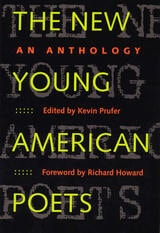
The New Young American Poets
An AnthologyEdited by Kevin Prufer. Foreword by Richard Howard
Southern Illinois University Press, 2000
Poetry today holds mainstream attention as never before. From community workshops to reading groups, from coffee house poetry slams to small press lit mags, from universities to web 'zines, the world of poetry has become part of our everyday lives. Demonstrating the range and vitality of the new generation of American writers, The New Young American Poets features the work of forty poets born since 1960.
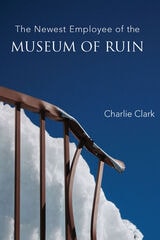
The Newest Employee of the Museum of Ruin
Charlie Clark
Four Way Books, 2020
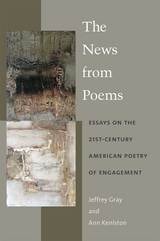
The News from Poems
Essays on the 21st-Century American Poetry of EngagementJeffrey Gray and Ann Keniston
University of Michigan Press, 2016
The News from Poems brings together newly commissioned essays by eminent poets and scholars of poetry and serves as a companion volume to an earlier anthology of engaged poetry compiled by the editors. Essays by Bob Perelman, Steven Gould Axelrod, Tony Hoagland, Eleanor Wilner, and others reveal how recent poetry has redefined our ideas of politics, authorship, identity, and poetics.
The volume showcases the diversity of contemporary American poetry, discussing mainstream and experimental poets, including some whose work has sparked significant controversy. These and other poets of our time, the volume suggests, are engaged not only with public events and topics but also with new ways of imagining subjectivity, otherness, and poetry itself.
The Next Bend in the Road
Michael Fried
University of Chicago Press, 2004
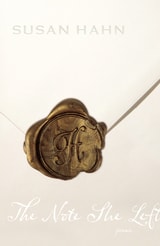
The Note She Left
PoemsSusan Hahn
Northwestern University Press, 2008
Hahn’s new collection wrestles with the elemental and enduring challenges of the human condition: What can we use from our spiritual heritage? How should we find relief? How, after it all, do we live? The poems are presented as a letter to the world from a woman preparing to leave it. In four sections—“The Bells,” “The Crosses,” “Widdershins,” and “Afterwor(l)d”—she contrasts the hope against the dark that is embodied by an amulet or cross with the abased resignation of torture, failed prayers, and witchcraft. Though Hahn’s vision is a dark one, its dramatic emotional depth speaks to a human power that, though damaged, can still engage.
from The Crosses (V)
Cross my fingers, cross my heart,
arms extended, legs together, not apart,
I make of myself a cross.
In my pockets bright blue beads,
small clay gods, scarabs,
four-leaf clovers, bejewelled mezuzahs.
In my hat cockleshells
to exorcize the demons,
to keep hidden the seventh chakra,
the tonsure, the bald compulsion.
Cross my fingers, cross my heart,
arms extended, legs together, not apart.
In my ears little bells of confusion,
to frighten away eyes of the evil.
On my breast a foul sachet
to repel the lick of the Devil.
Cross my fingers, cross my heart.
In my window a glass witch ball
to guard against the shatter
from intruders.
Cross my fingers.
The Objectivist Nexus
Essays in Cultural PoeticsPeter Quartermain
University of Alabama Press, 1999
Outstanding poets and critics present cultural readings of the Objectivist poets, a group whose works have been largely unexamined.
"Objectivist" writers, conjoined through a variety of personal, ideological, and literary-historical links, have, from the late 1920s to the present, attracted emulation and suspicion. Representing a nonsymbolist, postimagist poetics and characterized by a historical, realist, antimythological worldview, Objectivists have retained their outsider status. Despite such status, however, the formal, intellectual, ideological, and ethical concerns of the Objectivist nexus have increasingly influenced poetry and poetics in the United States.
Thus, argue editors Rachel Blau DuPlessis and Peter Quartermain, the time has come for an anthology that unites essential works on Objectivist practices and presents Objectivist writing as an enlargement of the possibilities of poetry rather than as a determinable and definable literary movement. The authors' collective aim is to bring attention to this group of poets and to exemplify and specify cultural readings for poetic texts--readings alert to the material world, politics, society, and history, and readings concerned with the production, dissemination, and reception of poetic texts.
The contributors consider Basil Bunting, Lorine Niedecker, George Oppen, Carl Rakosi, Charles Reznikoff, and Louis Zukofsky within both their historical milieu and our own. The essays insist on poetry as a mode of thought; analyze and evaluate Objectivist politics; focus on the ethical, spiritual, and religious issues raised by certain Objectivist affiliations with Judaism; and explore the dissemination of poetic texts and the vagaries of Objectivist reception. Running throughout the book are two related threads: Objectivist writing as generally a practice aware of its own historical and social contingency and Objectivist writing as a site of complexity, contestation, interrogation, and disagreement.
The Obligation Toward the Difficult Whole
Postmodernist Long PoemsBrian McHale
University of Alabama Press, 2003
Addressing subjects as wide-ranging as angelology, the court masque, pop art, caricature, the cult of the ruin, hip-hop, Spense’'s Irish policy, and the aesthetics of silence, Brian McHale pulls varied threads together to identify a repertoire of postmodernist elements characteristic of the long poems he examines.
As critic Jed Rasula explains, “McHale is wonderfully resourceful in changing the subject from chapter to chapter to fit the poems discussed, and while his approach adheres to the conventions of textual exegesis, the chapters really shine as orchestrations of issues. For instance, James Merrill’s The Changing Light at Sandover works unexpectedly well in raising the subject of found poetry and procedural composition; Melvin Tolso’'s Harlem Gallery and Edward Dorn's Gunslinger are effectively paired to demonstrate the period flavor of pastiche; Geoffrey Hill’s Mercian Hymns and Armand Schwerner’s The Tablets explode the modernist fixation with depth; John Ashbery’s work is given a nuanced reading as proto-theory; Letter to an Imaginary Friend by Thomas McGrath provides a lucid backdrop to raise the question of political efficacy in approaching language poet Bruce Andrews; and Susan Howe's The Europe of Trusts is explored for its intertextual tapestry.”
McHale shows how elements from these long poems overlap, interfere, pull in different directions, jar against, and even contradict each other; and he demonstrates how they also echo, amplify, and reinforce each other. They do not slot smoothly together like pieces in a jigsaw puzzle, but they do form (what else?) a difficult whole.
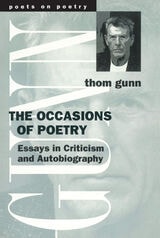
The Occasions of Poetry
Essays in Criticism and AutobiographyThom Gunn
University of Michigan Press, 1999
Thom Gunn is well-known as a poet, and increasingly as a literary critic. The Occasions of Poetry includes insightful critical pieces on writers ranging from William Carlos Williams and Gary Snyder to Thomas Hardy and Robert Duncan. "The occasion in all cases," writes Gunn, "is the starting point, only, of a poem, but it should be a starting point to which the poet must in some sense stay true." The first loyalty of a writer who is "true to his occasions," he writes, must be to the facts of experience.
The book includes five autobiographical essays, which combine to form an engaging account of the author's development as a poet and to chronicle some of the most significant literary currents of recent decades, both in England and America.
Thom Gunn, born in England in 1929, has lived in America since 1954. His books include Shelf Life: Essays, Memoirs, and an Interview; The Man with Night Sweats; Collected Poems; and The Passages of Joy. The Occasions of Poetry was originally published by Faber and Faber.
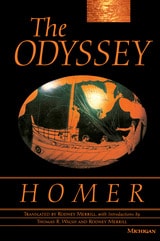
The Odyssey
Homer, Translated by Rodney Merrill
University of Michigan Press, 2002
This epic began life as the music composed by a "singer of tales," not as words on a page. As such, its meter allows for pleasing variations with a strong basic "beat," thus providing a rhythmic impetus that carries the story swiftly forward. The resulting "music" has important repercussions for the reader's perception of the many repeated elements that provide structure for the poem and bring out significant themes, just as the repetitions in a piece of music do.
This edition of the Odyssey includes selections for further reading, a list of proper names (with a guide to pronunciation), and three maps. It also provides introductory discussions of how the work came into being and was transmitted until it became the work we read, how it is divided into six "performance sessions" of four books each, and how the poem's various themes are developed. Rodney Merrill's Odyssey is thus an ideal edition for students, teachers, and general readers.
The audiobook is available on twelve cassettes, and is read by Rodney Merrill. This version will bring Homer's epic masterpiece to life like never before. Perfect for the car or classroom!
Rodney Merrill is retired and an independent scholar. He has taught at Stanford University, the University of San Francisco, and the University of California, Berkeley.
Thomas R. Walsh, Senior Professor at Occidental College, has written articles on Homeric poetics, with a forthcoming book on anger in Homer.
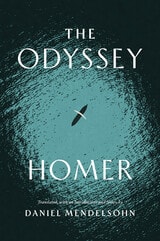
The Odyssey
Homer
University of Chicago Press, 2025
The most accurate and poetic translation of the world's greatest epic, which is now a film by Academy Award winner Christopher Nolan!
“This may be the best translation of The Odyssey yet."—Edith Hall, The Telegraph
A magnificent feat of translation, hailed by classicists and poets alike as a “momentous achievement”: “thrilling,” “rich and rhythmical,” “superb,” “mesmerizing,” “searingly faithful—yet absolutely original.”
With this edition of Homer’s Odyssey, the celebrated author, critic, and classicist Daniel Mendelsohn brings the great epic to vividly poetic new life. Widely known for his essays on classical literature and culture in The New Yorker and many other publications, Mendelsohn gives us a line-for-line rendering of The Odyssey that is both engrossing as poetry and true to its source. Rejecting the streamlining and modernizing approach of many recent translations, he artfully reproduces the epic’s formal qualities—meter, enjambment, alliteration, assonance—and in so doing restores to Homer’s masterwork its archaic grandeur. Mendelsohn’s expansive six-beat line, far closer to the original than that of other recent translations, allows him to capture each of Homer’s dense verses without sacrificing the amplitude and shadings of the original.
The result is the richest, most ample, most precise, and most musical Odyssey in English, conveying the beauty of its poetry, the excitement of its hero’s adventures, and the profundity of its insights. Supported by an extensive introduction and the fullest notes and commentary currently available, Daniel Mendelsohn’s Odyssey is poised to become the authoritative version of this magnificent and enduringly influential masterpiece.
The Odyssey
Homer
University of Chicago Press, 2025
The most accurate and poetic translation of the world's greatest epic, which is now a film by Academy Award winner Christopher Nolan!
“This may be the best translation of The Odyssey yet."—Edith Hall, The Telegraph
A magnificent feat of translation, hailed by classicists and poets alike as a “momentous achievement”: “thrilling,” “rich and rhythmical,” “superb,” “mesmerizing,” “searingly faithful—yet absolutely original.”
With this edition of Homer’s Odyssey, the celebrated author, critic, and classicist Daniel Mendelsohn brings the great epic to vividly poetic new life. Widely known for his essays on classical literature and culture in The New Yorker and many other publications, Mendelsohn gives us a line-for-line rendering of The Odyssey that is both engrossing as poetry and true to its source. Rejecting the streamlining and modernizing approach of many recent translations, he artfully reproduces the epic’s formal qualities—meter, enjambment, alliteration, assonance—and in so doing restores to Homer’s masterwork its archaic grandeur. Mendelsohn’s expansive six-beat line, far closer to the original than that of other recent translations, allows him to capture each of Homer’s dense verses without sacrificing the amplitude and shadings of the original.
The result is the richest, most ample, most precise, and most musical Odyssey in English, conveying the beauty of its poetry, the excitement of its hero’s adventures, and the profundity of its insights. Supported by an extensive introduction and the fullest notes and commentary currently available, Daniel Mendelsohn’s Odyssey is poised to become the authoritative version of this magnificent and enduringly influential masterpiece.

The Off-Season
Jen Levitt
Four Way Books, 2016
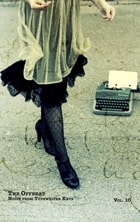
The Offbeat
Noise from Typewriter KeysGoldie Currie
Michigan State University Press, 2010
Noise from Typewriter Keys is the tenth volume in the independent literary series, The Offbeat, devoted to publishing a diverse collection of voices, and to promoting contact and discussion among writers. The Offbeat is run entirely by Michigan State Undergraduates, and is centered in East Lansing. The mission of The Offbeat is to provide an alternative literary outlet for writers from Michigan and beyond, and to call attention to voices both emerging and established.
The Offbeat: Noise from Typewriter Keys is an ensemble of voices and eruptions heard from the inside and out. This volume includes a wide variety of writers and focuses on the ambition of new creation. This part of the series seeks to capture movement of a writer while exploring the varied sounds that come from imagination.
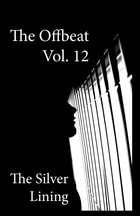
The Offbeat
The Silver LiningChelsea Beck
Michigan State University Press, 2013
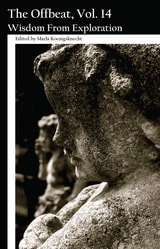
The Offbeat
Wisdom from ExplorationMarla Koenigsknecht
Michigan State University Press, 2014
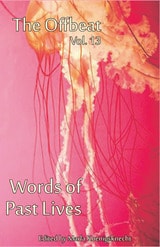
The Offbeat
Words of Past LivesMarla Koenigsknecht
Michigan State University Press, 2013
The Offense of Love
Ars Amatoria, Remedia Amoris, and Tristia 2Ovid, A verse translation by Julia D. Hejduk, with introduction and notes
University of Wisconsin Press, 2014
In exile, Ovid composed Sad Things (Tristia), which included a defense of his life and work as brilliant and cheeky as his controversial love manuals. In a poem addressed to Augustus (Tristia 2), he argues, "Since all of life and literature is one long, steamy sex story, why single poor Ovid out?" While seemingly groveling at the emperor's feet, he creates an image of Augustus as capricious tyrant and himself as suffering artist that wins over every reader (except the one to whom it was addressed).
Bringing together translations of the Ars Amatoria, Remedia Amoris, and Tristia 2, Julia Dyson Hejduk's The Offense of Love is the first book to include both the offense and the defense of Ovid's amatory work in a single volume. Hejduk's elegant and accurate translations, helpful notes, and comprehensive introduction will guide readers through Ovid's wickedly witty poetic tour of the literature, mythology, topography, religion, politics, and (of course) sexuality of ancient Rome.
Finalist, National Translation Award, American Literary Translators Association
A Choice Outstanding Academic Book
The Old English Poem Seasons for Fasting
A Critical EditionMary P. Richards
West Virginia University Press, 2014
Seasons for Fasting, a late Old English poem probably composed in the early eleventh century, focuses on proper fasting observances in England. This poem, composed in eight-line stanzas, survives only in a sixteenth-century transcript made by the antiquary Laurence Nowell. With its topics, vocabulary, sources, and style derived from those of contemporary ecclesiastical prose, it belongs to a school of late tenth/early eleventh century poetry that only now is coming to be recognized and defined.
The Old English Poem Seasons for Fasting: A Critical Edition provides a new text and translation of the poem, accompanied by an extensive introduction, commentary, and glossary. The introduction includes analyses of the poem’s manuscript origins, sources, language, meter, style, and structure. The text is collated with all previous editions. The commentary elucidates points of grammar and style, and justifies all editorial decisions. The glossary covers every instance of each word in the poem.
Since its discovery among the papers of Laurence Nowell in 1934, the poem has had only four editions, two of the text with basic notes, and two in doctoral theses with more commentary and analysis. This new edition brings the latest resources on manuscript study, lexicon (through the Concordance and Dictionary of Old English A-G), poetics, and cultural milieu to bear on this fascinating poem. The apparatus, including the glossary, will allow fellow scholars to extend these findings through links to their own work.
The Open Door
One Hundred Poems, One Hundred Years of "Poetry" MagazineEdited by Don Share and Christian Wiman
University of Chicago Press, 2012
When Harriet Monroe founded Poetry magazine in Chicago in 1912, she began with an image: the Open Door. “May the great poet we are looking for never find it shut, or half-shut, against his ample genius!” For a century, the most important and enduring poets have walked through that door—William Carlos Williams and Wallace Stevens in its first years, Rae Armantrout and Kay Ryan in 2011. And at the same time, Poetry continues to discover the new voices who will be read a century from now.
Poetry’s archives are incomparable, and to celebrate the magazine’s centennial, editors Don Share and Christian Wiman combed them to create a new kind of anthology, energized by the self-imposed limitation to one hundred poems. Rather than attempting to be exhaustive or definitive—or even to offer the most familiar works—they have assembled a collection of poems that, in their juxtaposition, echo across a century of poetry. Adrienne Rich appears alongside Charles Bukowski; poems by Isaac Rosenberg and Randall Jarrell on the two world wars flank a devastating Vietnam War poem by the lesser-known George Starbuck; August Kleinzahler’s “The Hereafter” precedes “Prufrock,” casting Eliot’s masterpiece in a new light. Short extracts from Poetry’s letters and criticism punctuate the verse selections, hinting at themes and threads and serving as guides, interlocutors, or dissenting voices.
The resulting volume is an anthology like no other, a celebration of idiosyncrasy and invention, a vital monument to an institution that refuses to be static, and, most of all, a book that lovers of poetry will devour, debate, and keep close at hand.
The Opening Ritual
G.C. Waldrep
Tupelo Press, 2024
In The Opening Ritual, G. C. Waldrep contends with the failure of the body, the irreducible body, in the light of faith. What can or should “healing” mean when it can’t ever mean “wholeness” again? And what kind of architecture is “mercy” when we live inside damage? These are poems that take both the material and the spiritual seriously, that cast their unsparing glances toward “All that is not / & could never be a parable.”
The collection concludes with a sequence of truly grand meditations on spiritual consciousness—in one the poet notes how, in the stillness of contemplation, the world begins to hum and resound with music. The Opening Ritual attends to and fashions its song from that music.
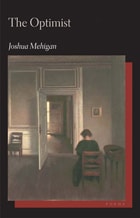
The Optimist
PoemsJoshua Mehigan
Ohio University Press, 2005
In Joshua Mehigan’s award-winning poetry, one encounters a lucid, resolute vision driven by an amazing facility with the metrical line. Most of the poems in The Optimist unapologetically employ traditional poetic technique, and, in each of these, Mehigan stretches the fabric of living language over a framework of regular meter to produce a compelling sonic counterpoint.
The Optimist stares at contemporary darkness visible, a darkly lit tableau that erases the boundary between the world and the perceiving self. Whether narrative or lyric, dramatic or satirical, Mehigan’s poems explore death, desire, and change with a mixture of reason and compassion.
In choosing The Optimist for the Hollis Summers Poetry Prize, final judge James Cummins, wrote:
“The world is given its due in these poems, but its due is the subjective voice making ‘objective’ reality into the reality of art. To do this Mehigan accesses a tradition of voices—the echoes in The Optimist are, to name a few, of Frost, Robinson, Kees, and Justice; and more in terms of point of view, Bishop and Jarrell—to form with great integrity his own. It isn’t that Mehigan is concerned more with what’s outside himself than inside; nor merely that he travels the highway between the two with such humility and grace. It’s also that these voices, this great tradition, infuses his line with what the best verse, metrical or free, must have: wonder.”
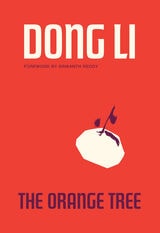
The Orange Tree
Dong Li
University of Chicago Press, 2023
Dong Li’s The Orange Tree is a collection of narrative poems that braids forgotten legends, personal sorrows, and political upheavals into a cinematic account of Chinese history as experienced by one family. Amid chaos and catastrophe, the child narrator examines a yellowed family photo to find resemblances and learns a new language, inventing compound words to conjure and connect family stories. These invented words and the calligraphy of untranslated Chinese characters appear in lists separating the book’s narrative sections.
Li’s lyrical and experimental collection transcends the individual, placing generations of family members and anonymous others together in a single moment that surpasses chronological time. Weaving through stories of people with little means, between wars and celebrations, over bridges and walls, and between trees and gardens, Li’s poems offer intimate perspectives on times that resonate with our own. The result is an unflinching meditation on family history, collective trauma, and imaginative recovery.
The Orange Tree is the recipient of the inaugural Phoenix Emerging Poet Book Prize for 2023.
The Origins of Free Verse
H. T. Kirby-Smith
University of Michigan Press, 1998
Though free verse became a dominant poetic mode only in the twentieth century, Kirby-Smith finds its roots in seventeenth-century England. Beginning his study with writers such as John Milton--who was considered by T. S. Eliot to be the greatest writer of free verse in English--the author places recent and divisive topics in poetics in context, showing them to be attenuated remnants of issues first broached hundreds of years ago.
The book seeks to establish a consensus on the nature of free verse, with reference to critics and poets including Pound, Eliot, Williams, Amy Lowell, Yvor Winters, and Hugh Kenner. Good free verse, argues Kirby-Smith, arises as a reaction to a well-established set of conventions. Likewise, The Origins of Free Verse goes against the conventions of existing poetic scholarship, offering an encompassing yet fresh--and controversial--literary history of free verse.
"At moments, this study is revelatory. . . . In its range and detail it offers a way of thinking about the history of English-language prosody which recognizes the importance of the poet's individual choices and undercuts our century's vanity. . . . Poetry is a learned art, and Kirby-Smith brings both insight and much learning to reading it." --Times Literary Supplement
"The best study of free verse I have seen. . . . The Origins of Free Verse is a book that all students of prosody will want to read. " --Harvard Review
". . . a witty and polemical account of the emergence and development of free verse." --Choice
H. T. Kirby-Smith is Professor of English, University of North Carolina at Greensboro.
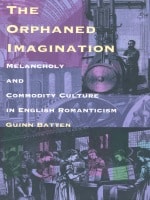
The Orphaned Imagination
Melancholy and Commodity Culture in English RomanticismGuinn Batten
Duke University Press, 1998
Building on the theoretical insights of Slavoj Zizek, Judith Butler, Julia Kristeva, and Eve Kosofsky Sedgwick, Batten interweaves the discourses of psychoanalysis, economics, biography, sexuality, melancholy, value, and exchange to question accepted ideas of how Romantic poetry works. She asserts that poetic labor is in fact paradigmatic of the kinds of production—and the kinds of desire—that capitalist culture renders invisible. If symbolic exchange, in cash or in words, requires the surrender of a beloved object, if healthy mourning requires an orphan to “work through” emotional loss through the consolation of art or a love for the living, then the rebellious Romantic poet, Batten contends, possessed unique insight into the alternative authority of a poetic language that renounced a culture of denial. Batten urges that scholars move beyond critical approaches condemning allegedly regressive forms of pleasure, recognizing that they, too, are haunted by melancholic attachments to dead poets as they conduct their work.
The Orphaned Imagination will interest anyone concerned with the claims of the English Romantic poets to a distinctive, valuable form of knowledge and those who may wonder about the power of contemporary theory to illuminate a traditional field.
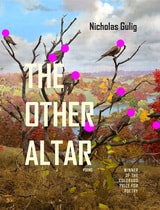
The Other Altar
Nicholas Gulig
University Press of Colorado, 2024
The Other Journey
Poems New and SelectedKatherine Chapin
University of Minnesota Press, 1959
The Other Lover
Bruce Smith
University of Chicago Press, 2000
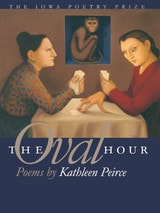
The Oval Hour
Kathleen Peirce
University of Iowa Press, 1999
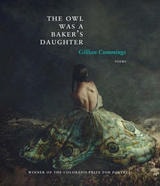
The Owl Was a Baker’s Daughter
Gillian Cummings
University Press of Colorado, 2018
If it is true, as Joseph Campbell said, that “the psychotic drowns in the same waters in which the mystic swims with delight,” then Cummings strains the boundaries of this notion: “Is it the same? The desire to end a life / and the need to know how: a flower’s simple bliss?” Her women and girls, part “little heavenling” and part “small hellborn,” understand the emptiness of utmost despair and long for that other emptiness, which can be thought of as union with God, the death of the troublesome ego. Cummings’s poetic ancestors may be Dickinson and Plath and her source here Shakespeare, but more contemporary voices also echo in her poems, those of Lucie Brock-Broido, Larissa Szporluk, and Cynthia Cruz. Here, in The Owl Was a Baker’s Daughter, is what might happen if, after sealing off the doors and turning on the gas, indeed, after dying, a poet had come to embrace the holiness in how “all dissolves: one color, / one moon, all earth, red as love, red as living.”
The Pact
Jennifer Militello
Tupelo Press, 2021
The Pages of Day and Night
Adonis
Northwestern University Press, 2001
Restless and relentless, Adonis explores the pain and otherness of exile, a state so complete that absence replaces identity and becomes the exile's only presence. Exile can take many forms for the Arabic poet, who must practice his craft as an outsider, separated not only from the nation of his birth but from his own language; in the present as in the past, that exile can mean censorship, banishment, or death. Through these poems, Adonis gives an exquisite voice to the silence of absence.
The Palace of Bones
Allison Eir Jenks
Ohio University Press, 2002
The Palace of Bones by Allison Eir Jenks is an often stark and startling vision of the way we live, the places we inhabit, and the relics we make to comfort ourselves.
Haunted by a quiet, unquenchable longing, Jenks expertly and calmly guides the reader through a vivid dreamscape in this first full-length collection of poems.
The Palace of Bones was selected by final judge and Pulitzer Prize winner Carolyn Kizer. At once dark in its vision and light in its tone, this remarkable book is its author’s self-confident invitation for us to join her in a world she knows intimately and has made almost familiar if not entirely safe.
The Palace of Bones is a stunning debut.
The Paper Wasp
Teresa Cader
Northwestern University Press, 1998
The Passion Book
A Tibetan Guide to Love and SexGendun Chopel
University of Chicago Press, 2018
Gendun Chopel here condemns the hypocrisy of both society and church, portraying sexual pleasure as a force of nature and a human right for all. On page after page, we find the exuberance of someone discovering the joys of sex, made all the more intense because they had been forbidden to him for so long: he had taken the monastic vow of celibacy in his youth and had only recently renounced it. He describes in ecstatic and graphic detail the wonders he discovered. In these poems, written in beautiful Tibetan verse, we hear a voice with tints of irony, self-deprecating wit, and a love of women not merely as sources of male pleasure but as full partners in the play of passion.