Results by title
1713 books match the query '21st century' and 34 start with u
Ugly White People
Writing Whiteness in Contemporary AmericaStephanie Li
University of Minnesota Press, 2023
Whiteness revealed: an analysis of the destructive complacency of white self-consciousness
White Americans are confronting their whiteness more than ever before, with political and social shifts ushering in a newfound racial awareness. And with white people increasingly seeing themselves as distinctly racialized (not simply as American or human), white writers are exposing a self-awareness of white racialized behavior—from staunch antiracism to virulent forms of xenophobic nationalism. Ugly White People explores representations of whiteness from twenty-first-century white American authors, revealing white recognition of the ugly forms whiteness can take.
Stephanie Li argues that much of the twenty-first century has been defined by this rising consciousness of whiteness because of the imminent shift to a “majority minority” population and the growing diversification of America’s political, social, and cultural institutions. The result is literature that more directly grapples with whiteness as its own construct rather than a wrongly assumed norm. Li contextualizes a series of literary novels as collectively influenced by changes in racial and political attitudes. Turning to works by Dave Eggers, Sarah Smarsh, J. D. Vance, Claire Messud, Ben Lerner, and others, she traces the responses to white consciousness that breed shared manifestations of ugliness. The tension between acknowledging whiteness as an identity built on domination and the failure to remedy inequalities that have proliferated from this founding injustice is often the source of the ugly whiteness portrayed through these narratives.
The questions posed in Ugly White People about the nature and future of whiteness are vital to understanding contemporary race relations in America. From the election of Trump and the rise of white nationalism to Karen memes and the war against critical race theory to the pervasive pattern of behavior among largely liberal-leaning whites, Li elucidates truths about whiteness that challenge any hope of national unity and, most devastatingly, the basic humanity of others.
Retail e-book files for this title are screen-reader friendly.
Unacknowledged Kinships
Postcolonial Studies and the Historiography of ZionismEdited by Stefan Vogt, Derek Penslar, and Arieh Saposnik
Brandeis University Press, 2023
There is an “unacknowledged kinship” between studies of Zionism and post-colonial studies, a kinship that deserves to be both discovered and acknowledged. Unacknowledged Kinships strives to facilitate a conversation between the historiography of Zionism and postcolonial studies by identifying and exploring possible linkages and affiliations between their subjects as well as the limits of such connections. The contributors to this volume discuss central theoretical concepts developed within the field of postcolonial studies, and they use these concepts to analyze crucial aspects of the history of Zionism while contextualizing Zionist thought, politics, and culture within colonial and postcolonial histories. This book also argues that postcolonial studies could gain from looking at the history of Zionism as an example of not only colonial domination but also the seemingly contradictory processes of national liberation and self-empowerment.
Unacknowledged Kinships is the first work to systematically investigate the potential for a dialogue between postcolonial studies and Zionist historiography. It is also unique in suggesting that postcolonial concepts can be applied to the history of European Zionism just as comprehensively as to the history of Zionism in Palestine and Israel or Arab countries. Most importantly, the book is an overture for a dialogue between postcolonial studies and the historiography of Zionism.

Unaffordable
American Healthcare from Johnson to TrumpJonathan Engel
University of Wisconsin Press, 2018
Unaffordable covers, in a conversational style punctuated by apt examples, topics ranging from health insurance, pharmaceutical pricing, and physician training to health maintenance organizations and hospital networks. Along the way, Engel introduces approaches that other nations have taken in organizing and paying for healthcare and offers insights on ethical quandaries around end-of-life decisions, neonatal care, life-sustaining treatments, and the limits of our ability to define death. While describing the political origins of many of the federal and state laws that govern our healthcare system today, he never loses sight of the impact that healthcare delivery has on our wallets and on the balance sheets of hospitals, doctors' offices, government agencies, and private companies.
Unbordering Migration Studies in the Caribbean and Latin America
Patsy Lewis
Rutgers University Press, 2026
Unbordering Migration Studies in the Caribbean and Latin America brings together scholars and artists across regions, generations, disciplines, and modes of expression to decenter the US-Mexico border as both a site and a concept. Calling for renewed attention to the spaces, identities, and conflicts that remain understudied and excluded from our hemispheric knowledge of forced movement, the volume reveals a wider diversity of migratory realities and considers race, ethnicity, and class beyond the hegemonic formations that eclipse non-US histories. Through multidisciplinary and geographically expansive essays that draw from history, social anthropology, environmental studies, feminist studies, and lived experience, the volume examines diverse migratory flows from Chile and Argentina in the South to Georgia and New York in the North. Individually and collectively, the essays remap migratory movements other than through the most studied South-to-North trajectories and remove the US and US-based racial formations from the center of analysis. By tracking East-West flows, intraregional mobilities, and changing conceptions of racial identity, Unbordering Migration Studies in the Caribbean and Latin America complicates the concepts of forced mobility and border crossing by highlighting alternative liminalities in sites of transit, destination, and return. Demanding engagement with the submerged histories of racism and the production of ethnoracial categories beyond the Black/white binary, the collection brings into focus identities, sites, and forces that have not yet occupied the foreground of global migration study.
Uncivil Agreement
How Politics Became Our IdentityLilliana Mason
University of Chicago Press, 2018
Political polarization in America is at an all-time high, and the conflict has moved beyond disagreements about matters of policy. For the first time in more than twenty years, research has shown that members of both parties hold strongly unfavorable views of their opponents. This is polarization rooted in social identity, and it is growing. The campaign and election of Donald Trump laid bare this fact of the American electorate, its successful rhetoric of “us versus them” tapping into a powerful current of anger and resentment.
With Uncivil Agreement, Lilliana Mason looks at the growing social gulf across racial, religious, and cultural lines, which have recently come to divide neatly between the two major political parties. She argues that group identifications have changed the way we think and feel about ourselves and our opponents. Even when Democrats and Republicans can agree on policy outcomes, they tend to view one other with distrust and to work for party victory over all else. Although the polarizing effects of social divisions have simplified our electoral choices and increased political engagement, they have not been a force that is, on balance, helpful for American democracy. Bringing together theory from political science and social psychology, Uncivil Agreement clearly describes this increasingly “social” type of polarization in American politics and will add much to our understanding of contemporary politics.
Uncomfortable Television
Hunter Hargraves
Duke University Press, 2023
Uncommon Threads
Ohio's Art Quilt RevolutionGayle A. Pritchard
Ohio University Press, 2006
Against the backdrop of America’s counterculture and civil rights movements, author Gayle A. Pritchard’s compelling narrative threads its way through the emergence of the art quilt, from artists working in isolation to the explosive “big bang” of the first Quilt National and its inevitable reverberations. Pritchard provides a fascinating and personal glimpse into the private world of these unique artists through in-depth interviews, rare photographs, and abundant quilt illustrations.
As Uncommon Threads demonstrates, the art quilt movement could not have occurred without Ohio’s unparalleled contribution. Quilt lovers around theworld will relish discovering this tale of the uncommon energy, vision, creativity, and devotion to self-expression that truly made a quilt revolution.
Uncommon Weather
Alaska StoriesRichard Chiappone
University of Alaska Press, 2024
Richard Chiappone’s characters hail from a wide range of socioeconomic strata, each one attempting to figure out the difficult question of how best to live among others. Odd connections abound. In the seriocomic title story, a lonely middle-aged woman, weary of her austere Alaskan life and her crumbling marriage, picks up a hockey stick and a younger man and tries to brawl her way to some better future. A man diagnosed with an apparently terminal illness is caught up in a catastrophic criminal undertaking masterminded by a precocious seventeen-year-old girl. A young boy, determined to fit in with his edgier peers, goes through a metamorphosis, becoming a strange new creature he’s never seen before. With sometimes hilarious missteps, each character stumbles in and out of predicaments that are by turns tender, heartbreaking, dangerous, and even violent.
Told with great empathy and often deeply ironic, wry, and sardonic humor, these stories are a counterpoint to the usual mythos, illuminating an Alaska not usually portrayed in books, on TV, or in movies.
Under the Campus, the Land
Anishinaabe Futuring, Colonial Non-Memory, and the Origin of the University of MichiganAndrew Herscher
University of Michigan Press, 2025
Under the Campus, the Land narrates the University of Michigan’s place in both Anishinaabe and settler history, tracing the university’s participation in the colonization of Anishinaabe homelands, Anishinaabe efforts to claim their right to an education, and the university’s history of disavowing, marginalizing, and minimizing its responsibilities and obligations to Anishinaabe people. Continuing the public conversations of the same name on U-M’s campus in 2023, Under the Campus, the Land provides a new perspective on the relationship between universities and settler colonialism in the US. Members of the U-M community, scholars of Midwest history, and those interested in Indigenous studies will find this book compelling.
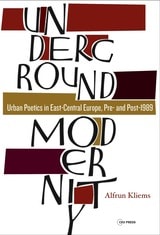
Underground Modernity
Urban Poetics in East-Central Europe, Pre- and Post-1989Alfrun Kliems
Central European University Press, 2021
The literary scholar Alfrun Kliems explores the aesthetic strategies of Eastern European underground literature, art, film and music in the decades before and after the fall of communism, ranging from the ‘father’ of Prague Underground, Egon Bondy, to the neo-Dada Club of Polish Losers in Berlin.
The works she considers are "underground" in the sense that they were produced illegally, or were received as subversive after the regimes had fallen. Her study challenges common notions of ‘Underground’ as an umbrella term for nonconformism. Rather, it depicts it as a sociopoetic reflection of modernity, intimately linked to urban settings, with tropes and aesthetic procedures related to Surrealism, Dadaism, Expressionism, and, above all, pop and counterculture.
The author discusses these commonalities and distinctions in Czech, Polish, Slovak, Ukrainian, Russian, and German authors, musicians, and filmmakers. She identifies intertextual relations across languages and generations, and situates her findings in a transatlantic context (including the Beat Generation, Susan Sontag, Neil Young) and the historical framework of Romanticism and modernity (including Baudelaire and Brecht).
Despite this wide brief, the book never loses sight of its core message: Underground is no arbitrary expression of discontent, but rather the result of a fundamental conflict at the socio-philosophical roots of modernity.
Undermining Intersectionality
The Perils of Powerblind FeminismBarbara Tomlinson
Temple University Press, 2019
In this provocative book, esteemed scholar Barbara Tomlinson asserts that intersectionality—the idea that categories such as gender, race, and class create overlapping systemsof oppression—is consistently misinterpreted in feminist argument. Despite becoming a central theme in feminist scholarship and activism, Tomlinson believes dominant feminism has failed to fully understand the concept.
Undermining Intersectionality reveals that this apparent paradox is the result of the disturbing racial politics underlying more than two decades of widely-cited critiques of intersectionality produced by prominent white feminist scholars who have been insufficiently attentive to racial dynamics. As such, feminist critiques of intersectionality repeatedly reinforce racial hierarchies, undermining academic feminism’s supposed commitment to social justice. Tomlinson offers a persuasive analysis of the rhetorics and conventions of argument used in these critiques to demonstrate their systematic reliance on “powerblind” discursive practices.
Undermining Intersectionality concludes by presenting suggestions about concrete steps feminist researchers, readers, authors, and editors can take to promote more productive and principled engagements with intersectional thinking.

Understanding Contemporary Ireland
Edited by Brendan Bartley and Rob Kitchin
Pluto Press, 2006
The "Celtic Tiger" phenomenon has made Ireland the focus of much attention in recent years. Other countries have openly declared that they want to follow the Irish economic and social model. Yet there is no book that gives a comprehensive, spatially-informed analysis of the Irish experience. This book fills that gap.
Divided into four parts—planning and development, the economy, the political landscape, and population and social issues—the chapters provide an explanation of a particular aspect of Ireland and Irish life accompanied by illustrative material. In particular, the authors reveal how the transformations that have occurred are uneven and unequal in their effects across the country and highlight the challenges now facing Irish society and policy-makers.
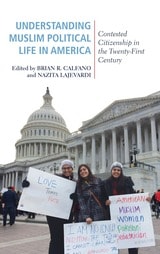
Understanding Muslim Political Life in America
Contested Citizenship in the Twenty-First CenturyBrian R. Calfano
Temple University Press, 2019
“Muslim Americans are at a political crossroads,” write editors Brian Calfano and Nazita Lajevardi. Whereas Muslims are now widely incorporated in American public life, there are increasing social and political pressures that disenfranchise them or prevent them from realizing the American Dream. Understanding Muslim Political Life in America brings clarity to the social, religious, and political dynamics that this diverse religious community faces.
In this timely volume, leading scholars cover a variety of topics assessing the Muslim American experience in the post-9/11 and pre-Trump era, including law enforcement; identity labels used in Muslim surveys; the role of gender relations; recognition; and how discrimination, tolerance, and politics impact American Muslims.
Understanding Muslim Political Life in America offers an update and reappraisal of what we know about Muslims in American political life. The editors and contributors also consider future directions and important methodological questions for research in Muslim American scholarship.
Contributors include Matt A. Barreto, Alejandro Beutel, Tony Carey, Youssef Chouhoud, Karam Dana, Oz Dincer, Rachel Gillum, Kerem Ozan Kalkan, Anwar Manje, Valerie Martinez-Ebers, Dani McLaughlan, Melissa R. Michelson, Yusuf Sarfati, Ahmet Tekelioglu, Marianne Marar Yacobian, and the editors.
Understanding and Teaching Contemporary US History since Reagan
Kimber M. Quinney Amy L. Sayward
University of Wisconsin Press, 2022
The volume addresses a wide swath of topics, from social movements around identity and representation to the Supreme Court, law enforcement, migration, climate change, and international relations. Emphasizing critical thinking and primary-source analysis, it will aid teachers in creating an invigorating and democratizing classroom experience. Intended for use in both secondary and postsecondary classrooms, the book’s structure allows for a variety of applications and invites a broad audience.
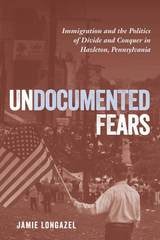
Undocumented Fears
Immigration and the Politics of Divide and Conquer in Hazleton, PennsylvaniaJamie Longazel
Temple University Press, 2016
The Illegal Immigration Relief Act (IIRA), passed in the small Rustbelt city of Hazleton, Pennsylvania in 2006, was a local ordinance that laid out penalties for renting to or hiring undocumented immigrants and declared English the city’s official language. The notorious IIRA gained national prominence and kicked off a parade of local and state-level legislative initiatives designed to crack down on undocumented immigrants.
In his cogent and timely book, UndocumentedFears, Jamie Longazel uses the debate around Hazleton’s controversial ordinance as a case study that reveals the mechanics of contemporary divide and conquer politics. He shows how neoliberal ideology, misconceptions about Latina/o immigrants, and nostalgic imagery of “Small Town, America” led to a racialized account of an undocumented immigrant “invasion,” masking the real story of a city beset by large-scale loss of manufacturing jobs.
Offering an up-close look at how the local debate unfolded in the city that set off this broader trend, Undocumented Fears makes an important connection between immigration politics and the perpetuation of racial and economic inequality.
Unfolding the City
Women Write the City in Latin AmericaAnne Lambright
University of Minnesota Press, 2007
Unfollowers
Leigh Ann Ruggiero
University of Massachusetts Press, 2022
Winner of the 2023 National Indie Excellence Award in Multicultural Fiction
Winner of the 2022 Forward INDIES Silver Award for Literary Fiction
Finalist of the 2023 National Indie Excellence Award in New Fiction
Finalist of the 2023 Eric Hoffer Book Award
Barb Matheson doesn’t fit in: not on the Standing Rock Reservation where her mother was born; not at the mission in rural Ethiopia where she grew up; and certainly not at the Pennsylvania church where her husband preaches. Expansive and lyrical, Unfollowers is a tale of religious angst, unrequited love, and the upheaval of racial and economic privilege. Equally adrift on both sides of the Atlantic, Barb must negotiate the distance between white America and Africa, between the spirituality of her ancestors and the straight tones of evangelicalism, and between rules and grace. When a former lover crashes her daughter’s third birthday party, she’s offered the chance to find her way home to Ethiopia, leaving her to choose between a rote life in America and an improvised life abroad.
Unknowing and the Everyday
Sufism and Knowledge in IranSeema Golestaneh
Duke University Press, 2023
Unlawful Violence
Mexican Law and Cultural ProductionRebecca Janzen
Vanderbilt University Press, 2022
The abundance of laws and constitutional amendments that have cropped up in response are mirrored in Mexico's fragmented cultural production of the same period. Contemporary Mexican literature grapples with this splintered reality through non-linear stories from multiple perspectives, often told through shifts in time. The novels, such as Jorge Volpi's Una novela criminal [A Novel Crime] (2018) and Julián Herbert's La casa del dolor ajeno [The House of the Pain of Others] (2015) take multiple perspectives and follow non-linear plotlines; other examples, such as the very short stories in ¡Basta! 100 mujeres contra la violencia de género [Enough! 100 Women against Gender-Based Violence] (2013), present perspectives from multiple authors.
Few scholars compare cultural production and legal texts in situations like Mexico, where extreme violence coexists with a high number of human rights laws. Unlawful Violence measures fictional accounts of human rights against new laws that include constitutional amendments to reform legal proceedings, laws that protect children, laws that condemn violence against women, and laws that protect migrants and Indigenous peoples. It also explores debates about these laws in the Mexican house of representatives and senate, as well as interactions between the law and the Mexican public.
Unlearning Eugenics
Sexuality, Reproduction, and Disability in Post-Nazi EuropeDagmar Herzog
University of Wisconsin Press, 2020
Bringing together the latest findings in Holocaust studies, the history of religion, and the history of sexuality in postwar—and now also postcommunist—Europe, Unlearning Eugenics shows how central the controversies over sexuality, reproduction, and disability have been to broader processes of secularization and religious renewal. Herzog also restores to the historical record a revelatory array of activists: from Catholic and Protestant theologians who defended abortion rights in the 1960s–70s to historians in the 1980s–90s who uncovered the long-suppressed connections between the mass murder of the disabled and the Holocaust of European Jewry; from feminists involved in the militant "cripple movement" of the 1980s to lawyers working for right-wing NGOs in the 2000s; and from a handful of pioneers in the 1940s–60s committed to living in intentional community with individuals with cognitive disability to present-day disability self-advocates.
Unlocking V.O. Key Jr.
"Southern Politics" for the Twenty-First CenturyAngie Maxwell
University of Arkansas Press, 2011
Unnatural Ecopoetics
Unlikely Spaces in Contemporary PoetrySarah Nolan
University of Nevada Press, 2017
By approaching environments in a new way, Nolan closes this gap and recognizes how contemporary poets employ self-reflexive commentary and formal experimentation in order to create new natural/cultural environments on the page. She proposes a radical new direction for ecopoetics and deploys it in relation to four major American poets. Working from literal to textual spaces through the contemporary poetry of A.R. Ammons’s Garbage, Lyn Hejinian’s My Life, Susan Howe’s The Midnight, and Kenneth Goldsmith’s Seven American Deaths and Disasters, the book presents applications of unnatural ecopoetics in poetic environments, ones that do not engage with traditional ideas of nature and would otherwise remain outside the scope of ecocritical and ecopoetic studies.
Nolan proposes a new practical approach for reading poetic language. Ecocriticism is a very fluid and evolving discipline, and Nolan’s pioneering new book pushes the boundaries of second-wave ecopoetics—the fundamental issue being what is nature/natural, and how does poetic language, particularly self-conscious contemporary poetic agency, contribute to and complicate that question.
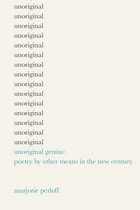
Unoriginal Genius
Poetry by Other Means in the New CenturyMarjorie Perloff
University of Chicago Press, 2010
What is the place of individual genius in a global world of hyper-information— a world in which, as Walter Benjamin predicted more than seventy years ago, everyone is potentially an author? For poets in such a climate, "originality" begins to take a back seat to what can be done with other people’s words—framing, citing, recycling, and otherwise mediating available words and sentences, and sometimes entire texts. Marjorie Perloff here explores this intriguing development in contemporary poetry: the embrace of "unoriginal" writing. Paradoxically, she argues, such citational and often constraint-based poetry is more accessible and, in a sense, "personal" than was the hermetic poetry of the 1980s and 90s.
Perloff traces this poetics of "unoriginal genius" from its paradigmatic work, Benjamin’s encyclopedic Arcades Project, a book largely made up of citations. She discusses the processes of choice, framing, and reconfiguration in the work of Brazilian Concretism and Oulipo, both movements now understood as precursors of such hybrid citational texts as Charles Bernstein’s opera libretto Shadowtime and Susan Howe’s documentary lyric sequence The Midnight. Perloff also finds that the new syncretism extends to language: for example, to the French-Norwegian Caroline Bergvall writing in English and the Japanese Yoko Tawada, in German. Unoriginal Genius concludes with a discussion of Kenneth Goldsmith’s conceptualist book Traffic—a seemingly "pure’" radio transcript of one holiday weekend’s worth of traffic reports. In these instances and many others, Perloff shows us "poetry by other means" of great ingenuity, wit, and complexity.
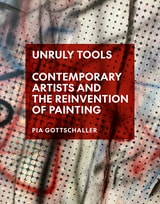
Unruly Tools
Contemporary Artists and the Reinvention of PaintingPia Gottschaller
J. Paul Getty Trust, The, 0
The first book to examine the role of unconventional tools in contemporary painting is required reading for anyone interested in painting’s recent past and future.
Painting, often regarded as the oldest of art forms, has been repeatedly declared “dead.” In this original and compelling study, technical art historian Pia Gottschaller thoroughly dismantles that notion, revealing how painters radically reimagined the medium in the years following World War II. No longer confined to the paintbrush, artists began to experiment with new methods, employing found, fabricated, and repurposed objects—as varied as an Afro comb, the human body, and a robotic airbrush—to create paintings unlike any seen before, revolutionizing the course of art history.
- Begins in 1945 with Jackson Pollock and the Gutai Art Association in Japan and traces the transformation of painting across the globe from the post-war period to the present.
- Explores the work of thirty-eight contemporary painters, including Amoako Boafo, Helen Frankenthaler, Yves Klein, Julie Mehretu, Beatriz Milhazes, Howardena Pindell, Kazuo Shiraga, and Andy Warhol.
- Richly illustrated with over 240 images of artists and their creations.
Unruly Tools is the first study of this kind and offers essential testimony to painting’s continued vitality and reinvention.
Unsafe Haven
The United States, the IRA and Political PrisonersKaren McElrath
Pluto Press, 2000
Karen McElrath questions US government attempts to portray an impartial role in the Irish conflict, arguing that historical and contemporary evidence reveals otherwise. She shows that, far from being a neutral process, the success of bids for political asylum often depends on the relationship between the US and the government of the applicant’s country of origin. Drawing on exclusive interviews with Irish Republicans who have faced deportation or extradition from the United States, or who have been prosecuted in the US for politically-motivated offences, McElrath explores the links between deportation and extradition outcomes and foreign policy issues. The tools of exclusion are defined in their historical context, and the history of US extradition law is described, with particular focus on the treaties with Britain. McElrath also examines the offences for which Irish and Irish-American Republicans have been charged, discusses the various levels of support for Irish political prisoners in the US, and summarises the findings by international human rights organisations.
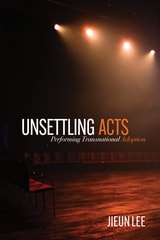
Unsettling Acts
Performing Transnational AdoptionJieun Lee
The Ohio State University Press, 2025
Analyzing contemporary theater and performance works about Korean transnational adoption, Jieun Lee’s Unsettling Acts: Performing Transnational Adoption challenges longstanding ideas about adoption. Lee contends that in staging adoptees’ birth family searches and reunions, theater and performance artists unsettle dominant discourses that have essentialized adoptees through ethnonationalist, gendered, and postwar humanitarian narratives in both birth and adoptive cultures. In doing so, Lee reveals how these performances engage in acts of disavowal of and resistance to mythologies of adoption and adoptee experience.
Lee examines twelve works—from South Korea, the United States, the United Kingdom, Belgium, and Denmark—including plays, musicals, solo performances, community-based theater, and performance art. Through her analysis, theater and performance become a means for reimagining adoptees’ identity, kinship, and sense of belonging. Further, these pieces encourage critical exploration of the history, politics, and social impacts of Korean transnational adoption. These works thus nurture a countermemory to engender redressive accountability and transpacific justice, pointing a way forward for remaking the transnational adoptee experience in the twenty-first century.
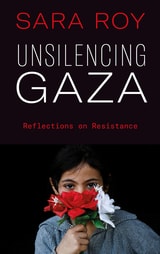
Unsilencing Gaza
Reflections on ResistanceSara Roy
Pluto Press, 2021
Gaza, the centre of Palestinian nationalism and resistance to the occupation, is the linchpin of the Israeli-Palestinian conflict and the key to its resolution. Since 2005, Israel has deepened the isolation of the territory, severing it almost completely from its most vital connections to the West Bank, Israel and beyond, and has deliberately shattered its economy, transforming Palestinians from a people with political rights into a humanitarian problem.
Sara Roy unpacks this process, looking at US foreign policy towards the Palestinians, as well as analysing the trajectory of Israeli policy toward Gaza, which became a series of punitive approaches meant not only to contain the Hamas regime but weaken Gazan society.
Roy also reflects on Gaza's ruination from a Jewish perspective and discusses the connections between Gaza's history and her own as a child of Holocaust survivors. This book, a follow up from the renowned Failing Peace, comes from one of the world's most acclaimed writers on the region.
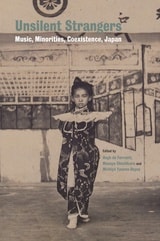
Unsilent Strangers
Music, Minorities, Co-existence, JapanEdited by Hugh de Ferranti, Michiyo Yoneno-Reyes, and Masaya Shishikura
National University of Singapore Press, 2023
This collection of essays on the music of migrant minorities in and from Japan examines the central role music plays in the ongoing adjustment, conciliation, and transformation of newcomers and “hosts” alike. It is the first academic text to address musical activities across a range of migrant groups in Japan––particularly those of Tokyo and its neighboring areas and the first to juxtapose such communities with those of Japanese emigrants as ethnic minorities elsewhere. It presents both archival and fieldwork-based case studies that highlight music in the dynamics of encounter and attempted identity-making, under a unifying framework of migration.
The 2019 introduction of a new “Specified Skilled Worker” visa category marked the beginning of Japan’s “new immigration era,” led by the slogan of tabunka kyosei, or “multicultural coexistence.” The contributors to this volume analyze the concept itself and the many problems around realizing this ideal through ethnographic accounts of current minorities, including South Indians, Brazilians, Nepalis, Filipinos, Iranians, and Ainu domestic migrants. This volume will be of interest to ethnomusicologists, students of the cultures of migrant communities, and those engaged with cultural change and diversity in Japan and East Asia.
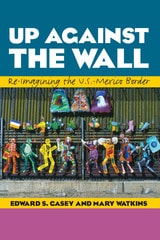
Up Against the Wall
Re-Imagining the U.S.-Mexico BorderBy Edward S. Casey and Mary Watkins
University of Texas Press, 2014
Using the U.S. wall at the border with Mexico as a focal point, two experts examine the global surge of economic and environmental refugees, presenting a new vision of the relationships between citizen and migrant in an era of “Juan Crow,” which systematically creates a perpetual undercaste.
Winner, National Association for Ethnic Studies (NAES) Outstanding Book Award, 2017
As increasing global economic disparities, violence, and climate change provoke a rising tide of forced migration, many countries and local communities are responding by building walls—literal and metaphorical—between citizens and newcomers. Up Against the Wall: Re-imagining the U.S.-Mexico Border examines the temptation to construct such walls through a penetrating analysis of the U.S. wall at the U.S.-Mexico border, as well as investigating the walling out of Mexicans in local communities. Calling into question the building of a wall against a friendly neighboring nation, Up Against the Wall offers an analysis of the differences between borders and boundaries. This analysis opens the way to envisioning alternatives to the stark and policed divisions that are imposed by walls of all kinds. Tracing the consequences of imperialism and colonization as citizens grapple with new migrant neighbors, the book paints compelling examples from key locales affected by the wall—Nogales, Arizona vs. Nogales, Sonora; Tijuana/San Diego; and the lower Rio Grande Valley of Texas. An extended case study of Santa Barbara describes the creation of an internal colony in the aftermath of the U.S. conquest of Mexican land, a history that is relevant to many U.S. cities and towns.
Ranging from human rights issues in the wake of massive global migration to the role of national restorative shame in the United States for the treatment of Mexicans since 1848, the authors delve into the broad repercussions of the unjust and often tragic consequences of excluding others through walled structures along with the withholding of citizenship and full societal inclusion. Through the lens of a detailed examination of forced migration from Mexico to the United States, this transdisciplinary text, drawing on philosophy, psychology, and political theory, opens up multiple insights into how nations and communities can coexist with more justice and more compassion.
Urban Dwellings, Haitian Citizenships
Housing, Memory, and Daily Life in HaitiVincent Joos
Rutgers University Press, 2022
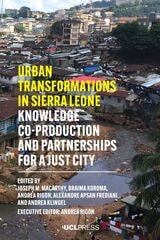
Urban Transformations in Sierra Leone
Knowledge Co-Production and Partnerships for a Just CityEdited by Joseph M. Macarthy, Braima Koroma, Andrea Rigon, Alexandre Apsan Frediani, and Andrea Klingel
University College London, 2024
With a population of over one million, Freetown, Sierra Leone faces serious challenges with service provisions, housing, infrastructure, employment, and climate change. In 2015, the Sierra Leone Urban Research Centre (SLURC) was established to address these challenges through research, capacity building, and advocacy. Urban Transformations in Sierra Leone shares SLURC’s progress, articulating its key findings and reflections on the partnerships it helped enable.
Utopias Of Otherness
Nationhood And Subjectivity In Portugal And BrazilFernando Arenas
University of Minnesota Press, 2003
Forges a new understanding of how these two Lusophone nations are connected
The closely entwined histories of Portugal and Brazil remain key references for understanding developments—past and present—in either country. Accordingly, Fernando Arenas considers Portugal and Brazil in relation to one another in this exploration of changing definitions of nationhood, subjectivity, and utopias in both cultures. Examining the two nations’s shared language and histories as well as their cultural, social, and political points of divergence, Arenas pursues these definitive changes through the realms of literature, intellectual thought, popular culture, and political discourse.
Both Brazil and Portugal are subject to the economic, political, and cultural forces of postmodern globalization. Arenas analyzes responses to these trends in contemporary writers including José Saramago, Caio Fernando Abreu, Maria Isabel Barreno, Vergílio Ferreira, Clarice Lispector, and Maria Gabriela Llansol. Ultimately, Utopias of Otherness shows how these writers have redefined the concept of nationhood, not only through their investment in utopian or emancipatory causes such as Marxist revolution, women’s liberation, or sexual revolution, but also by shifting their attention to alternative modes of conceiving the ethical and political realms.
Utter, Earth
Advice on Living in a More-than-Human WorldIsaac Yuen
West Virginia University Press, 2024
Honorable Mention, Alanna Bondar Prize, 2026, Association for Literature, Environment, and Culture in Canada (ALECC)
Part nature guide, part self-help column, and all love letter to the more-than-human world, Utter, Earth is an exercise in wonder. For animal lovers and readers of Brian Doyle, Aimee Nezhukumatathil, and Amy Leach.
A light, literary take on an animal book for grown-ups, a tongue-in-cheek self-help column with lessons drawn from nature, a sort of hitchhiker’s guide to the more-than-human world—Isaac Yuen’s Utter, Earth is a celebration, through wordplay and earthplay, of our planet’s riotous wonders.
In a time of dirges and elegies for the natural world, Utter, Earth features odes to sloths, tributes to trilobites, and ringing endorsements for lichen. For animal lovers and readers of Brian Doyle, Aimee Nezhukumatathil, and Amy Leach, each essay of this one-of-a-kind collection combines joyous language, whimsical tangents, and scientific findings to remind us of and reconnect us with those to whom we are inextricably bound. Highlighting life that once was, still is, and all that we stand to lose, this living and lively mini encyclopedia (complete with glossary) shines the spotlight on the motley, fantastical, and astonishing denizens with whom we share this planet.