Results by title
234 books match the query 'Americas (North, Central, South, West Indies)' and 5 start with u
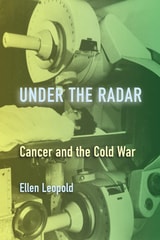
Under the Radar
Cancer and the Cold WarLeopold, Ellen
Rutgers University Press, 2008
In Under the Radar, Ellen Leopold shows how nearly every aspect of our understanding and discussion of cancer bears the imprint of its Cold War entanglement. The current biases toward individual rather than corporate responsibility for rising incidence rates, research that promotes treatment rather than prevention, and therapies that can be patented and marketed all reflect a largely hidden history shaped by the Cold War. Even the language we use to describe the disease, such as the guiding metaphor for treatment, "fight fire with fire," can be traced back to the middle of the twentieth century.
Writing in a lucid style, Leopold documents the military, governmental, industrial, and medical views of radiation and atomic energy to examine the postwar response to cancer through the prism of the Cold War. She explores the role of radiation in cancer therapies today, using case studies and mammogram screening, in particular, to highlight the surprising parallels. Taking into account a wide array of disciplines, this book challenges our understanding of cancer and how we approach its treatment.
- Examines the postwar response to cancer through the prism of the Cold War
- Goes beyond medical science to look at the influence of Cold War policies on the way we think about cancer today
- Links the experience of postwar cancer patients with the broader evolution of what have become cancer industries
- Traces the history of human-made radiation as a state-sponsored environmental toxin
Unequal Partnerships
The Political Economy of Urban Redevelopment in Postwar AmericaEdited by Gregory Squires
Rutgers University Press, 1989
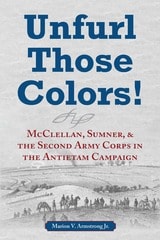
Unfurl Those Colors!
McClellan, Sumner, and the Second Army Corps in the Antietam CampaignMarion V. Armstrong Jr.
University of Alabama Press, 2008
Traces the engrossing story of the Union Army’s strategies, stratagems, and movements on the bloodiest day in American military history
Unfurl Those Colors! provides an operational study of the Army of the Potomac during the pivotal Battle of Antietam on September 17, 1862, illuminating in details that will fascinate scholars and armchair generals alike US army commander George B. McClellan’s command decisions and how those decisions were carried out in the middle and lower ranks of the Second Army Corps.
Armstrong offers the most comprehensive account yet of the Second Army Corps’s fight at Antietam, including Sedgwick’s division in the West Woods and French’s and Richardson’s divisions at Bloody Land. He offers a fresh reappraisal of the leadership of Bostonian Edwin V. “Bull Head” Sumner as the only federal corps commander who doggedly and accurately carried out McClellan’s battle plan and effectively directed the battle on the Federal right.
Many esteemed Civil War historians consider Antietam a watershed moment in the Civil War, a crucial success after which Abraham Lincoln was emboldened to issue the Emancipation Proclamation. Unfurl Those Colors! offers a vital examination of the operational fabric of the Army of the Potomac’s leadership and command in one of the most important days in American history.
Unrequited Conquests
Love and Empire in the Colonial AmericasRoland Greene
University of Chicago Press, 2000
European encounters with the Americas awakened many forms of desire, which pervaded the writings of explorers like Columbus and his contemporaries. These experiences in turn shaped colonial society in Brazil, Peru, and elsewhere. The New World, while it could be explored, conquered, and exploited, could never really be "known"—leaving Europe's desire continually unrequited and the project of empire unfulfilled.
Using numerous poetic examples and extensive historical documentation, Unrequited Conquests rewrites the relations between the Renaissance and colonial Latin America and between poetry and history.
Utopia, New Jersey
Travels in the Nearest EdenBuchan, Perdita
Rutgers University Press, 2007
Winner of the 2008 Honor Book by the New Jersey Council for the Humanities
Utopia. New Jersey. For most people—even the most satisfied New Jersey residents—these words hardly belong in the same sentence. Yet, unbeknown to many, history shows that the state has been a favorite location for utopian experiments for more than a century. Thanks to its location between New York and Philadelphia and its affordable land, it became an ideal proving ground where philosophical and philanthropical organizations and individuals could test their utopian theories.
In this intriguing look at this little-known side of New Jersey, Perdita Buchan explores eight of these communities. Adopting a wide definition of the term utopia—broadening it to include experimental living arrangements with a variety of missions—Buchan explains that what the founders of each of these colonies had in common was the goal of improving life, at least as they saw it.
In every other way, the communities varied greatly, ranging from a cooperative colony in Englewood founded by Upton Sinclair, to an anarchist village in Piscataway centered on an educational experiment, to the fascinating Physical Culture City in Spotswood, where drugs, tobacco, and corsets were banned, but where nudity was widespread.
Despite their grand intentions, all but one of the utopias—a single-tax colony in Berkeley Heights—failed to survive. But Buchan shows how each of them left a legacy of much more than the buildings or street names that remain today—legacies that are inspiring, surprising, and often outright quirky.