Results by title
3258 books match the query 'Art' and 39 start with u
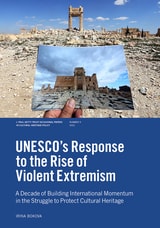
UNESCO’S Response to the Rise of Violent Extremism
A Decade of Building International Momentum in the Struggle to Protect Cultural HeritageIrina Bokova
J. Paul Getty Trust, The, 2021
The fifth issue of this series, written by Irina Bokova, former director-general of UNESCO, focuses on the value that UNESCO can bring to the fight to protect cultural heritage. During her two terms at UNESCO, Bokova worked to promote international peace and cooperation by raising awareness of the value of cultural heritage and partnering with local communities to rebuild and revitalize their damaged heritage—and themselves. One of Bokova’s most successful campaigns, #Unite4Heritage, has created a global social network of people who are sharing stories, knowledge, and personal experiences about their heritage in an effort to challenge the hate-filled narratives put forward by extremists and keep threatened cultures alive and vital.

Un-American Psycho
Brian De Palma and the Political InvisibleChris Dumas
Intellect Books, 2012
Brian De Palma is perhaps best known as the director behind the gangster classic Scarface. Yet as ingrained as Scarface is in American popular culture, it is but one of a sizeable number of controversial films—many of which are consistently misread or ignored—directed by De Palma over his more than four-decade career.
Unbecoming Cinema
Unsettling Encounters with Ethical Event FilmsDavid H. Fleming
Intellect Books, 2017
A PDF version of this book is available for free in open access via the OAPEN Library platform, www.oapen.org It has been made available under a Creative Commons Attribution 4.0 International Public License and is part of Knowledge Unlatched.
Uncanny Creatures
Doll Thinking in Modern German CultureChristophe Koné
University of Michigan Press, 2024
Uncanny Creatures then explores how this unusual interest in human-like figures continues a long tradition of thought devoted to conceptualizing “things,” from Immanuel Kant’s theory of the thing-in-itself to Martin Heidegger’s lecture on the thing, and Eduard Mörike or Rainer Maria Rilke’s thing-poems. Because dolls occupy a liminal space—not quite things and more than mere objects—they appear as uncanny creatures which have held a fascination for writers, thinkers, and artists alike. Uncanny Creatures moves past the Freudian discourse of fetishism to propose a new reading of doll artifacts in German culture centered on their ability to evoke a feeling of uncertainty and unsettlement in the viewer.
Uncanny Histories in Film and Media
Patrice Petro
Rutgers University Press, 2022
Uncle Tom's Cabins
The Transnational History of America's Most Mutable BookTracy C. Davis and Stefka Mihaylova, Editors
University of Michigan Press, 2018
Throughout these encounters, Stowe’s story of American slavery serves as a paradigm for understanding oppression, selectively and strategically refracting the African American slave onto other iconic victims and freedom fighters. The book brings together performance historians, literary critics, and media theorists to demonstrate how the myriad cultural and political effects of Stowe’s enduring story has transformed it into a global metanarrative with national, regional, and local specificity.
Uncommon Goods
Global Dimensions of the ReadymadeJaimey Hamilton Faris
Intellect Books, 2013
Since Marcel Duchamp created his “readymades” a century ago—most famously christening a urinal as a fountain— the practice of incorporating commodity objects into art has become ever more pervasive. Uncommon Goods traces one particularly important aspect of that progression: the shift in artistic concern toward the hidden ethical dimensions of global commerce. Jaimey Hamilton Faris discusses the work of, among many others, Ai Weiwei, Cory Arcangel, Thomas Hirschhorn, and Santiago Sierra, reading their artistic explorations as overlapping with debates about how common goods hold us and our world in common. The use of readymade now registers concerns about international migrant labor, outsourced manufacturing, access to natural resources, intellectual copyright, and the commoditization of virtual space.
In each chapter, Hamilton Faris introduces artists who exemplify the focus of readymade aesthetics on aspects of global commodity culture, including consumption, marketing, bureaucracy, labor, and community. She explores how materially intensive, “uncommon” aesthetic situations can offer moments to meditate on the kinds of objects, experiences, and values we ostensibly share in the age of globalization. The resulting volume will be an important contribution to scholarship on readymade art as well as to the study of materiality, embodiment, and globalization.
Unconsolable Contemporary
Observing Gerhard RichterPaul Rabinow
Duke University Press, 2017
Under Discussion
The Encyclopedic MuseumDonatien Grau
J. Paul Getty Trust, The, 2021
Over the last two decades, the encyclopedic museum has been criticized and praised, constantly discussed, and often in the news. Encyclopedic museums are a phenomenon of Europe and the United States, and their locations and mostly Eurocentric collections have in more recent years drawn attention to what many see as bias. Debates on provenance in general, cultural origins, and restitutions of African heritage have exerted pressure on encyclopedic museums, and indeed on all manner of museums. Is there still a place for an institution dedicated to gathering, preserving, and showcasing all the world’s cultures?
Donatien Grau’s conversations with international arts officials, museum leaders, artists, architects, and journalists go beyond the history of the encyclopedic format and the last decades’ issues that have burdened existing institutions. Are encyclopedic museums still relevant? What can they contribute when the Internet now seems to offer the greater encyclopedia? How important is it for us to have in-person access to objects from all over the world that can directly articulate something to us about humanity? The fresh ideas and nuances of new voices on the core principles important to museums in Dakar, Abu Dhabi, and Mumbai complement some of the world’s arts leaders from European and American institutions—resulting in some revealing and unexpected answers. Every interviewee offers differing views, making for exciting, stimulating reading.
Includes interviews with George Abungu, National Museums of Kenya; Kwame Anthony Appiah, New York University; Homi K. Bhabha, Harvard University; Hamady Bocoum, Musée des Civilisationes Noires, Dakar; Irina Bokova, UNESCO; Partha Chatterjee, Columbia University; Thomas Campbell, Fine Arts Museum of San Francisco; James Cuno, J. Paul Getty Trust; Philippe de Montebello, New York University; Bachir Souleymane Diagne, Columbia University; Kaywin Feldman, National Gallery of Art; Marc Fumaroli, Collège de France; Massimiliano Gioni, New Museum; Michael Govan, Los Angeles County Museum of Art; Camille Henrot, artist; Max Hollein, Metropolitan Museum of Art; Henri Loyrette, Musée du Louvre; Jean Nouvel, architect; Zaki Nusseibeh, United Arab Emirates; Mikhail Piotrovsky, State Hermitage Museum; Grayson Perry, artist; Krzysztof Pomian, École des Hautes Études en Sciences Sociales; Mari Carmen Ramírez, Museum of Fine Arts, Houston; Fiammetta Rocco, The Economist; Sabyasachi Mukherjee, CSMVS Mumbai; Bénédicte Savoy; Collège de France; Kavita Singh, Jawaharlal Nehru University, New Delhi; Amit Sood, Google Arts & Culture.
Under the Spell of Orpheus
The Persistence of a Myth in Twentieth-Century ArtJudith E. Bernstock. Foreword by Peter Selz
Southern Illinois University Press, 1991
This comprehensive view of the Orpheus myth in modern art focuses on an extremely rich artistic symbol and cuts through all the clichés to explore truly significant problems of meaning. The author takes a new approach to the iconography of major modern artists by incorporating psychological and literary analysis, as well as biography.
The three parts of the book explore the ways in which artists have identified with different aspects of the often paradoxical Orpheus myth. The first deals with artists such as Paul Klee, Carl Milles, and Barbara Hepworth. In the second, Max Beckmann, Oskar Kokoschka, and Isamu Noguchi are discussed. Artists examined in the final part include Pablo Picasso, Jacques Lipchitz, Ethel Schwabacher, and Cy Twombly. The author documents her argument with more than sixty illustrations.
Undercut
Cut Glass in Working-Class Life During the Long Gilded AgeJoseph Larnerd
University of Delaware Press, 0
How did workers experience cut glass during its cultural heyday? Rather than privilege the stories of factory owners or wealthy consumers, Undercut: Cut Glass in Working-Class Life During the Long Gilded Age refracts the medium’s history through the labors required to make and maintain these dazzling artifacts as well as popular representations of this work, from demonstrations at world's fairs to images of domestic workers with finished pieces in their charge. Cut glass and the many manifestations of public interest in its labors offered working people, too, occasions for self-reflection and, perhaps, self-realization. Foregrounding their lives, Undercut offers a multifaceted social art history of a once-popular genre of decorative art that cuts across class, gender, and race.
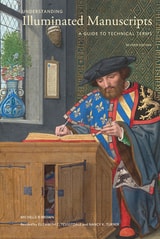
Understanding Illuminated Manuscripts
A Guide to Technical Terms, Revised EditionMichelle Brown
J. Paul Getty Trust, The, 2018
Updated to reflect current research and technologies, this beautifully illustrated guide includes images of important manuscript illuminations from the collection of the J. Paul Getty Museum and beyond. Concise, readable explanations of the technical terms most frequently encountered in manuscript studies make this portable volume an essential resource for students, scholars, and readers who wish a deeper understanding and enjoyment of illuminated manuscripts and medieval book production.
Understanding the Arts and Creative Sector in the United States
Cherbo, Joni Maya
Rutgers University Press, 2008
Illuminating key issues and reflecting the rapid growth of the field of arts and cultural policy, this book will be of interest to students at both the undergraduate and graduate levels, to arts educators and management professionals, government agency and foundation officials, and researchers and academics in the cultural policy field.
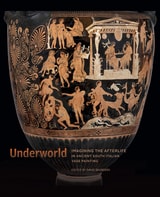
Underworld
Imagining the Afterlife in Ancient South Italian Vase PaintingDavid Saunders
J. Paul Getty Trust, The, 2022
What happens to us when we die? What might the afterlife look like? For the ancient Greeks, the dead lived on, overseen by Hades in the Underworld. We read of famous sinners, such as Sisyphus, forever rolling his rock, and the fierce guard dog Kerberos, who was captured by Herakles. For mere mortals, ritual and religion offered possibilities for ensuring a happy existence in the beyond, and some of the richest evidence for beliefs about death comes from southern Italy, where the local Italic peoples engaged with Greek beliefs. Monumental funerary vases that accompanied the deceased were decorated with consolatory scenes from myth, and around forty preserve elaborate depictions of Hades’s domain.
For the first time in over four decades, these compelling vase paintings are brought together in one volume, with detailed commentaries and ample illustrations. The catalogue is accompanied by a series of essays by leading experts in the field, which provides a framework for understanding these intriguing scenes and their contexts. Topics include attitudes toward the afterlife in Greek ritual and myth, inscriptions on leaves of gold that provided guidance for the deceased, funerary practices and religious beliefs in Apulia, and the importance accorded to Orpheus and Dionysos. Drawing from a variety of textual and archaeological sources, this volume is an essential source for anyone interested in religion and belief in the ancient Mediterranean.
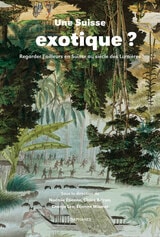
Une Suisse exotique ?
Regarder l’ailleurs en Suisse au siècle des LumièresEdited by Noémie Etienne, Claire Brizon, Chonja Lee, and Étienne Wismer
Diaphanes, 2020
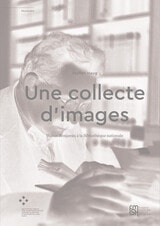
Une collecte d’images
Walter Benjamin à la Bibliothèque nationaleSteffen Haug
Diaphanes, 2022
Au fil de ses recherches, Benjamin se rend à l’évidence : il faudra que son Livre des passages soit enrichi par des images. Une « documentation visuelle » se constitue bientôt, écrit-il, glanée pour l’essentiel dans les recueils du Cabinet des estampes de la Bibliothèque nationale où il travaille pendant son exil parisien. Une centaine de notes témoignent de cette collecte et conservent, enfermée dans leurs plis, la mention d’une ou de plusieurs images qui sont restées pour la plupart inconnues jusqu’ici.
Steffen Haug a voulu retrouver cette réserve enfouie. Gravures et dessins de presse, tracts, réclames, affiches et photographies, de Meryon et Grandville à Daumier, en passant par l’infinie cohorte anonyme et le tout-venant de la production visuelle à grand tirage du XIXe siècle : la moisson rapportée ici est surprenante. Elle invite à lire ou relire les Passages en faisant à l’image toute la place qu’elle occupe dans la pensée du dernier Benjamin, à l’heure où s’élaborent, sous la menace de temps assombris, son essai « L’œuvre d’art à l’époque de sa reproductibilité technique », le projet de livre sur Baudelaire ou ses « Thèses sur le concept d’histoire ».
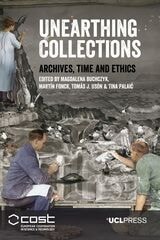
Unearthing Collections
Archives, Time and EthicsEdited by Magdalena Buchczyk, Martín Fonck, Tomás J. Usón, and Tina Palaic
University College London, 2025
Featuring insights from a range of scholars and collection practitioners, Unearthing Collections reconsiders the ethics of collections and archives through the lens of temporality. The volume explores the concept of “unearthing,” meaning the extractive process of uncovering the unknown, and advocates for processes of “re-earthing” to foster new ethical approaches among archivists and museum professionals in preserving and engaging with remnants of the past. It examines a diverse selection of case studies—from film and photography to medical history, geology, and contemporary art—to demonstrate how ethical challenges intersect across different types of collections and archives.

Unfolding Corpus
Radical Creativity and Vulnerability in Times of PlagueGeorge Ayala
Rutgers University Press, 2027
UnfoldingCorpus is a carefully curated collection of visual and textual works by artists and writers from past issues of Corpus, a community produced journal, which was originally published between 2003 and 2008 by the AIDS Project Los Angeles (APLA). Corpus was a publication that held open valuable space for Black, Brown, and queer people to see themselves reflected in an honest exploration of HIV and sex, but it was also a celebration of sexuality, connectivity, curiosity, and resilience.
Unfolding Corpus uses contributions from the original journal to draw parallels between HIV, COVID, and monkey pox, all of which have disproportionately affected the queer community. By centering the experiences of communities historically excluded from public health decision-making, the mix of art, poetry, essays, and radical storytelling throughout the collection aims to disrupt and reveal the wrongs waged on low income, Black, Brown, and queer bodies across time and across pandemics. This collection once again confronts a hostile state and cultural environment by celebrating a world in which queer and trans sexuality can flourish, be seen, and be understood as a tool to envision radical futures rooted in equality and unfurling justice.
United by AIDS
An Anthology on Art in Response to HIV/AIDSEdited by Raphael Gygax and Heike Munder
Scheidegger and Spiess, 2019
United by AIDS sheds light on the multifaceted and complex interrelation between art and HIV/AIDS from the 1980s to the present. Published to accompany an exhibition at Zurich’s Migros Museum of Contemporary Art, it looks at the blurred lines between art production and HIV/AIDS activism and showcases artists who played—and still play—leading roles in this discourse. Alongside fifty illustrations of important works, including many in color, the book includes brief texts on the featured artists and essays by Douglas Crimp, Alexander García Düttmann, Raphael Gygax, Elsa Himmer, Ted Kerr, Elisabeth Lebovici, and Nurja Ritter.
Universal Prostitution and Modernist Abstraction
A CounterhistoryJaleh Mansoor
Duke University Press, 2025
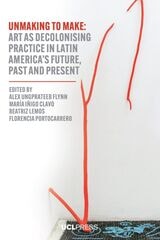
Unmaking to Make
Art as Decolonising Practice in Latin America’s Future, Past and PresentEdited by Alex Ungprateeb Flynn, María Iñigo Clavo, Beatriz Lemos, and Florencia Portocarrero
University College London, 2026
An examination of art's evolving role in theorizing decolonization, with Afro-diasporic and Indigenous perspectives in Latin America at its center.
Unmaking to Make reorients global conversations on decolonization by centering Afro-diasporic and Indigenous perspectives from across Latin America. Through a wide-ranging selection of texts, including critical essays, curatorial reflections, and interviews, it explores how artistic practice actively theorizes, models, and enacts alternative modes of living. Showcases cutting-edge work of emerging artists and curators, currently under-recognized in North American and European contexts. The volume establishes new reference points, methodologies, and institutional models for the next generation of scholars. By mapping forthcoming debates and potential institutional shifts, the book provides forward-looking insights into where and how decolonial thought will unfold in the years to come.
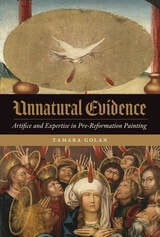
Unnatural Evidence
Artifice and Expertise in Pre-Reformation PaintingTamara Golan
University of Chicago Press, 2026
A novel account of the rise of pictorial naturalism on the eve of the Reformation.
In the summer of 1507, the town of Bern was abuzz with rumors about a sculpture at the Dominican church that had wept tears of blood. But astonishment soon gave way to doubt when a group of local artisans denounced the authenticity of the miracle, complaining that the tears were too poorly made to be the work of a skilled hand, let alone divine intervention. The resulting trial exposed an elaborate fraud staged by the church’s leaders and, with it, a tension that had been building across the region for nearly a century. In a world where claims of sanctity faced judicial scrutiny, the threshold between artistry and deception had become dangerously thin.
Tamara Golan examines how three generations of painters working in fifteenth- and sixteenth-century Switzerland navigated this fraught terrain. Golan traces how, amid intensifying skepticism over the authenticity of miracles and visions, these artists forged what she calls an “alternative naturalism,” a conspicuously unnatural mode of painting marked by distorted perspective, unusual modeling, and heavily tooled gold ground. Rather than striving for the faithful transcription of appearances, these artists drew on shared premises of artisanal expertise and juridical inquiry to advance bold claims about the capacity of their craft to represent not just the natural but the supernatural. The first study to identify this body of work as a coherent enterprise, Unnatural Evidence recovers an epistemological experiment at once ambitious and inherently unstable.
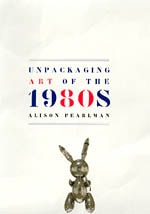
Unpackaging Art of the 1980s
Alison Pearlman
University of Chicago Press, 2003
Pearlman reassesses the works and careers of six artists who became critics' biggest targets. In each of three chapters, she pairs two artists the critics viewed as emblematic of a given trend: Julian Schnabel and David Salle in association with Neo-Expressionism; Jean-Michel Basquiat and Keith Haring vis-à-vis Graffiti Art; and Peter Halley and Jeff Koons in relation to Simulationism. Pearlman shows how all these artists shared important but unrecognized influences and approaches: a crucial and overwhelming inheritance of 1960s and 1970s Conceptualism, a Warholian understanding of public identity, and a deliberate and nuanced use of past styles and media. Through in-depth discussions of works, from Haring's body-paintings of Grace Jones to Schnabel's movie Basquiat, Pearlman demonstrates how these artists' interests exemplified a broader, generational shift unrecognized by critics. She sees this shift as starting not in the 1980s but in the mid-1970s, when key developments in artistic style, art-world structures, and consumer culture converged to radically alter the course of American art.
Unpackaging Art of the 1980s offers an innovative approach to one of the most significant yet least understood episodes in twentieth-century art.
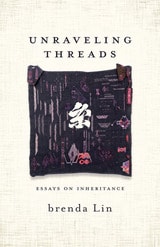
Unraveling Threads
Essays on Inheritancebrenda Lin
The Ohio State University Press, 2026
“Tactile memory feels like it is the easiest to lose,” brenda Lin writes in Unraveling Threads. But in these exquisite essays, she demonstrates just how the tactile bolsters personal, familial, and cultural memory. From the remnant of a baby’s umbilical cord to the antique hand-embroidered baby carriers her mother collects, Lin shows us how the tactile and handmade connect parents and children, homeland and diaspora, and give texture to caregiving’s many forms. As Lin writes, the radical for thread forms the basis of Chinese characters for women’s work, for practice through repetition, for inheritance. Threads form the mesh in the stent that keeps her father’s heart working. And yuan, the red thread of fate, is the first word she translated for her future husband. When Lin returns to Taiwan after decades away, this time with her young family, the threads of creativity and caretaking become the warp and weft of the continual process of homecoming. These essays on motherhood, language, art, and diaspora will resonate with anyone who has experienced the process of returning to, or building, a home.
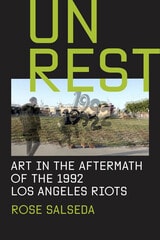
Unrest
Art in the Aftermath of the 1992 Los Angeles RiotsRose Salseda
University of Chicago Press, 2026
The first book to examine the visual art legacy of the 1992 Los Angeles Riots.
On April 29, 1992, a jury’s acquittal of four white Los Angeles police officers who had beaten Rodney King, a Black man, incited five days of intense protests. The 1992 Los Angeles Riots resulted in nearly four thousand fires, over $1 billion in property damage, fourteen thousand arrests, two thousand injuries, and sixty-three deaths. While many scholars have studied the period leading up to and following the riots, few have focused on how contemporary artists reacted to and continued to respond to this traumatic event.
In Unrest, Rose Salseda provides the first major art historical account of the 1992 Los Angeles Riots that chronicles the works of two generations of artists. Closely examining visual art that explores overlooked cross-racial, immigrant, and intergenerational experiences of the events, Salseda provocatively frames unrest as an act of the bereaved that makes visible the unrelenting experiences of injustice. She provides important insights into how we process violence through imagery; how the criminal justice system visualizes race and tolerates racial and xenophobic violence; and how we adapt racialized modes of viewing, normalize violence and oppression, and perhaps unwittingly contribute to these injustices. Ultimately, Unrest highlights how the experience of the 1992 Los Angeles Riots has driven artists to address the King beating and related episodes of racial violence for over thirty years—underscoring unrest as the inability to rest in the face of state-sanctioned violence, which persists to this day.
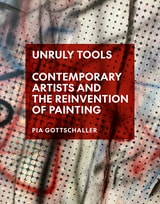
Unruly Tools
Contemporary Artists and the Reinvention of PaintingPia Gottschaller
J. Paul Getty Trust, The, 0
The first book to examine the role of unconventional tools in contemporary painting is required reading for anyone interested in painting’s recent past and future.
Painting, often regarded as the oldest of art forms, has been repeatedly declared “dead.” In this original and compelling study, technical art historian Pia Gottschaller thoroughly dismantles that notion, revealing how painters radically reimagined the medium in the years following World War II. No longer confined to the paintbrush, artists began to experiment with new methods, employing found, fabricated, and repurposed objects—as varied as an Afro comb, the human body, and a robotic airbrush—to create paintings unlike any seen before, revolutionizing the course of art history.
- Begins in 1945 with Jackson Pollock and the Gutai Art Association in Japan and traces the transformation of painting across the globe from the post-war period to the present.
- Explores the work of thirty-eight contemporary painters, including Amoako Boafo, Helen Frankenthaler, Yves Klein, Julie Mehretu, Beatriz Milhazes, Howardena Pindell, Kazuo Shiraga, and Andy Warhol.
- Richly illustrated with over 240 images of artists and their creations.
Unruly Tools is the first study of this kind and offers essential testimony to painting’s continued vitality and reinvention.
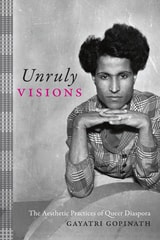
Unruly Visions
The Aesthetic Practices of Queer DiasporaGayatri Gopinath
Duke University Press, 2018
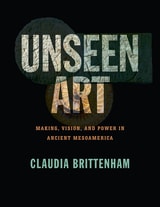
Unseen Art
Making, Vision, and Power in Ancient MesoamericaClaudia Brittenham
University of Texas Press, 2023
In Unseen Art, Claudia Brittenham unravels one of the most puzzling phenomena in Mesoamerican art history: why many of the objects that we view in museums today were once so difficult to see. She examines the importance that ancient Mesoamerican people assigned to the process of making and enlivening the things we now call art, as well as Mesoamerican understandings of sight as an especially godlike and elite power, in order to trace a gradual evolution in the uses of secrecy and concealment, from a communal practice that fostered social memory to a tool of imperial power.
Addressing some of the most charismatic of all Mesoamerican sculptures, such as Olmec buried offerings, Maya lintels, and carvings on the undersides of Aztec sculptures, Brittenham shows that the creation of unseen art has important implications both for understanding status in ancient Mesoamerica and for analyzing art in the present. Spanning nearly three thousand years of the Indigenous art of Mexico, Guatemala, Honduras, and Belize, Unseen Art connects the dots between vision, power, and inequality, providing a critical perspective on our own way of looking.
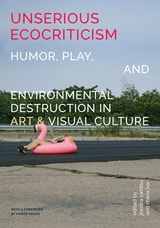
Unserious Ecocriticism
Humor, Play & Environmental Destruction in Art & Visual CultureEdited by Jessica Landau and Maria Lux
Amherst College Press, 2026
Climate change, biodiversity loss, and environmental injustice are complex, messy, and gravely important issues. In addressing these concerns, traditional ecocriticism understandably has taken itself very seriously. Unserious Ecocriticism, by contrast, highlights alternative responses to the challenges of environmental collapse and catastrophe. By theorizing an unserious ecocriticism, contributors to this volume validate and empower alternatives to mainstream environmentalism, scholarship, and artmaking. The essays, artworks, and non-traditional scholarly formats of this edited collection demonstrate that the creative tools available to artists and those who study them are particularly well positioned to inventively disrupt normative modes of ecocritical presentation and environmentalist thought.
Rather than approach environmental crises through tragic and dire warnings, contributors take seriously the unexpected or easily dismissed, play with format and form, embrace the bodily and abject, take pleasure in their subjects of study, have fun, and crack jokes. In Unserious Ecocriticism, humor, playfulness, parody, and irreverence become tools to challenge expectations, cope with complicated problems, and imagine new futures.
Edited by Jessica Landau and Maria Lux, with a foreword by Aaron Sachs and contributions from Allie ES Wist, Deke Weaver, Kathleen McDermott, Annie Ronan, Kimiko Matsumura, Ina Linge, Paula Kupfer, Craig Carey, Anna Ialeggio, Topher Lineberry, Stentor Danielson, Patrick Gonder, Matthew Teti, Nicole Seymour, with Emily Eliza Scott, Rob Gioielli, and Jenny Price, Phaan Howng, and Jennifer Schell.
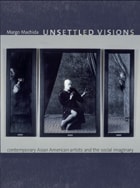
Unsettled Visions
Contemporary Asian American Artists and the Social ImaginaryMargo Machida
Duke University Press, 2008
Analyses of the work of individual artists are grouped around three major themes that Asian American artists engaged with during the 1990s: representations of the Other; social memory and trauma; and migration, diaspora, and sense of place. Machida considers the work of the photographers Pipo Nguyen-duy and Hanh Thi Pham, the printmaker and sculptor Zarina Hashmi, and installations by the artists Tomie Arai, Ming Fay, and Yong Soon Min. She examines the work of Marlon Fuentes, whose films and photographs play with the stereotyping conventions of visual anthropology, and prints in which Allan deSouza addresses the persistence of Orientalism in American popular culture. Machida reflects on Kristine Aono’s museum installations embodying the multigenerational effects of the internment of Japanese Americans during World War II and on Y. David Chung’s representations of urban spaces transformed by migration in works ranging from large-scale charcoal drawings to multimedia installations and an “electronic rap opera.”
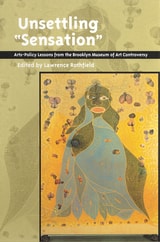
Unsettling 'Sensation'
Arts Policy Lessons from the Brooklyn Museum of Art ControversyRothfield, Lawrence
Rutgers University Press, 2001
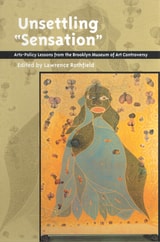
Unsettling 'Sensation'
Arts-Policy Lessons from the Brooklyn Museum of Art ControversyRothfield, Lawrence
Rutgers University Press, 2001
In September 1999, Sensation, an exhibition at the Brooklyn Museum, opened its doors, igniting a controversy still burning in the art world. This collection of cutting-edge art from the Saatchi collection in England, and the museum’s arrangements with Charles Saatchi to finance the show, so offended New York City mayor Rudolph Giuliani that he attempted to shut the museum down by withholding city funds that are crucially needed by that institution. Only a legal ruling prevented him from doing so. Like the Robert Mapplethorpe exhibition before it, Sensation once again raises questions about public spending for “controversial” art, but with the added dimension of religious conflict and charges of commercialization.
The contributors to this volume use the Sensation exhibition as a stepping-stone to analyze larger questions such as the authority the government has to withhold funds, various interpretations of the First Amendment, how to respect divergent cultural and religious values; and the economic stake of museums and dealers in art. In their articles—written expressly for this volume, and spanning the disciplines of law, cultural studies, public policy, and art—the contributors consider issues at the center of arts policy. They propose various legal strategies, curatorial practices, and standards of doing business intended to serve the public interest in the arts.
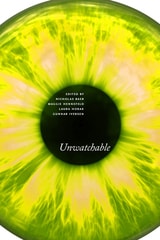
Unwatchable
Baer, Nicholas
Rutgers University Press, 2019
With over 50 original essays by leading scholars, artists, critics, and curators, this is the first book to trace the “unwatchable” across our contemporary media environment, in which viewers encounter difficult content on various screens and platforms. Appealing to a broad academic and general readership, the volume offers multidisciplinary approaches to the vast array of troubling images that circulate in global visual culture.
Up Against the Real
Black Mask from Art to ActionNadja Millner-Larsen
University of Chicago Press, 2023
With Up Against the Real, Nadja Millner-Larsen offers the first comprehensive study of the group Black Mask and its acrimonious relationship to the New York art world of the 1960s. Cited as pioneers of now-common protest aesthetics, the group’s members employed incendiary modes of direct action against racism, colonialism, and the museum system. They shut down the Museum of Modern Art, fired blanks during a poetry reading, stormed the Pentagon in an antiwar protest, sprayed cow’s blood at the secretary of state, and dumped garbage into the fountain at Lincoln Center. Black Mask published a Dadaist broadside until 1968, when it changed its name to Up Against the Wall Motherfucker (after line in a poem by Amiri Baraka) and came to classify itself as “a street gang with analysis.” American activist Abbie Hoffman described the group as “the middle-class nightmare . . . an anti-media phenomenon simply because their name could not be printed.”
Up Against the Real examines how and why the group ultimately rejected art in favor of what its members deemed “real” political action. Exploring this notorious example of cultural activism that rose from the ruins of the avant-garde, Millner-Larsen makes a critical intervention in our understanding of political art.
Urban Cinematics
Understanding Urban Phenomena through the Moving ImageEdited by François Penz and Andong Lu
Intellect Books, 2011
Urban Cinematics surveys the mechanisms by which cinema contributes to our understanding of cities to address two key issues: How do filmmakers make use of urban spaces, and how do urban spaces make use of cinema? Merging the disciplines of architecture, landscape design, and urban planning with film studies, this book explores the potential of cinema as a tool to investigate the communal narratives of cities. A series of dialogues with filmmakers rounds out this insightful and methodologically innovative volume.
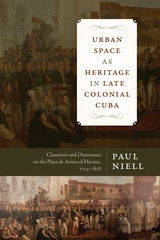
Urban Space as Heritage in Late Colonial Cuba
Classicism and Dissonance on the Plaza de Armas of Havana, 1754-1828By Paul Niell
University of Texas Press, 2015
According to national legend, Havana, Cuba, was founded under the shade of a ceiba tree whose branches sheltered the island’s first Catholic mass and meeting of the town council (cabildo) in 1519. The founding site was first memorialized in 1754 by the erection of a baroque monument in Havana’s central Plaza de Armas, which was reconfigured in 1828 by the addition of a neoclassical work, El Templete. Viewing the transformation of the Plaza de Armas from the new perspective of heritage studies, this book investigates how late colonial Cuban society narrated Havana’s founding to valorize Spanish imperial power and used the monuments to underpin a local sense of place and cultural authenticity, civic achievement, and social order.
Paul Niell analyzes how Cubans produced heritage at the site of the symbolic ceiba tree by endowing the collective urban space of the plaza with a cultural authority that used the past to validate various place identities in the present. Niell’s close examination of the extant forms of the 1754 and 1828 civic monuments, which include academic history paintings, neoclassical architecture, and idealized sculpture in tandem with period documents and printed texts, reveals a “dissonance of heritage”—in other words, a lack of agreement as to the works’ significance and use. He considers the implications of this dissonance with respect to a wide array of interests in late colonial Havana, showing how heritage as a dominant cultural discourse was used to manage and even disinherit certain sectors of the colonial population.
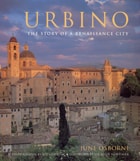
Urbino
The Story of a Renaissance CityJune Osborne
University of Chicago Press, 2003
With Urbino: The Story of a Renaissance City, art historian June Osborne brings to life not only the great city and its art but also its turbulent history and the intrigue surrounding its ruling family. First settled by the ancient Umbrians, Urbino reached its zenith during the fifteenth century under the rule of Duke Federico da Montefeltro and his son Guidobaldo. Federico may have been a usurper and a fierce, opportunistic warlord, but his lust for power was more than matched by his passion for great art. Indeed it was under his direct guidance that the magnificent Ducal Palace was built—its perfectly proportioned courtyard a wonder of early Renaissance architecture.
Today the Ducal Palace hosts the National Gallery of the Marches, one of the most important art galleries in Italy, featuring works by no lesser lights than Raphael, Uccello, Piero della Francesca, and Titian. Exploring such sites as the fourteenth-century Oratorio di San Giovanni Battista and the Gothic Church of San Domenico, Osborne captures not only the startling beauty of Urbino and the Apennine foothills but also the tumultuous legacy of Frederico and his son (and their many wives and courtiers).
With over a hundred lavish color photographs, many by renowned landscape photographer Joe Cornish, Urbino is the best—and the only—guide to this gem of the Italian Marches.
Using Art as Research in Learning and Teaching
Multidisciplinary Approaches Across the ArtsEdited by Ross Prior
Intellect Books, 2018
Utopian Ruins
A Memorial Museum of the Mao EraJie Li
Duke University Press, 2020