662 books match the query 'China' and 14 start with u
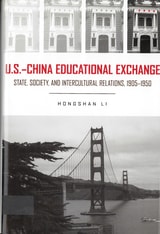
cover of U.S.- China Educational Exchange: State, Society, and Intercultural Relations, 1905-1950

U.S.- China Educational Exchange

State, Society, and Intercultural Relations, 1905-1950

Li, Hongshan

Rutgers University Press, 2007

U.S.-China relations became increasingly important and complex in the twentieth century. While economic, political, and military interactions all grew over time, the most dramatic expansion took place in educational exchange, turning it into the strongest tie between the two nations. By the end of the 1940s, tens of thousands of Chinese and American students and scholars had crisscrossed the Pacific, leaving indelible marks on both societies. Although all exchange programs were terminated during the cold war, the two nations reemerged as top partners within a decade after the reestablishment of diplomatic relations.

            Approaching U.S.-China relations from a unique and usually overlooked perspective, Hongshan Li reveals that both the drastic expansion and complete termination of educational ties between the two nations in the first half of the twentieth century were largely the results of direct and deep intervention from the American and Chinese governments. Benefiting from government support and collaboration, educational exchange succeeded in diffusing knowledge and improving mutual understanding between the two peoples across the divide of civilizations. However, the visible hand of government also proved to be most destructive to the development of healthy intercultural relations when educational interactions were treated merely as an instrument for crisis management. 
[more]
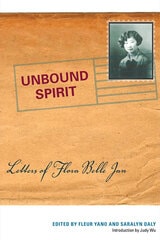
cover of Unbound Spirit: Letters of Flora Belle Jan

Unbound Spirit

Letters of Flora Belle Jan

Flora Belle Jan. Edited by Fleur Yano and Saralyn Daly. Introduction by Judy Wu.

University of Illinois Press, 2008
This volume collects the letters written over a thirty-year period by a second generation Chinese American woman, Flora Belle Jan (1906–50). Born in California to immigrant parents and educated at Berkeley and the University of Chicago, Jan raised three children with her husband Charles Wang and worked as a journalist in both the United States and China. Written during the years 1918–48, these letters offer unique insight into the social and political situation of educated, middle-class, professional Chinese American women in the early twentieth century. Literate, candid, and charming, they convey the intellectual curiosity and perspicacity of a vivacious and ambitious woman while tracing her engagement with two different worlds.
[more]
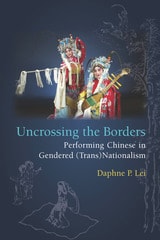
cover of Uncrossing the Borders: Performing Chinese in Gendered (Trans)Nationalism

Uncrossing the Borders

Performing Chinese in Gendered (Trans)Nationalism

Daphne P. Lei

University of Michigan Press, 2019

Over many centuries, women on the Chinese stage committed suicide in beautiful and pathetic ways just before crossing the border for an interracial marriage. Uncrossing the Borders asks why this theatrical trope has remained so powerful and attractive. The book analyzes how national, cultural, and ethnic borders are inevitably gendered and incite violence against women in the name of the nation. The book surveys two millennia of historical, literary, dramatic texts, and sociopolitical references to reveal that this type of drama was especially popular when China was under foreign rule, such as in the Yuan (Mongol) and Qing (Manchu) dynasties, and when Chinese male literati felt desperate about their economic and political future, due to the dysfunctional imperial examination system. Daphne P. Lei covers border-crossing Chinese drama in major theatrical genres such as zaju and chuanqi, regional drama such as jingju (Beijing opera) and yueju (Cantonese opera), and modernized operatic and musical forms of such stories today.
[more]
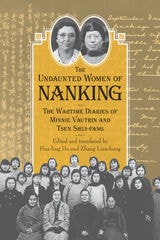
cover of Undaunted Women of Nanking: The Wartime Diaries of Minnie Vautrin and Tsen Shui-fang

Undaunted Women of Nanking

The Wartime Diaries of Minnie Vautrin and Tsen Shui-fang

Edited and Translated by Hua-ling Hu and Zhang Lian-hong

Southern Illinois University Press, 2010

One of the Chinese American Librarians Association’s Ten Best Books of 2010

During the infamous “Rape of Nanking,” a brutal military occupation of Nanking, China, that began on December 13, 1937, it is estimated that Japanese soldiers killed between 200,000 and 300,000 Chinese and raped between 20,000 and 80,000 women. To shelter civilian refugees, a group of Westerners established a Nanking Safety Zone. Among these humanitarians was Minnie Vautrin, an American missionary and acting president of Ginling College. She and Tsen Shui-fang, her Chinese assistant and a trained nurse, turned the college into a refugee camp, which protected more than 10,000 women and children during the height of the ordeal. The Undaunted Women of Nanking juxtaposes day-by-day the exhausted and terrified women’s wartime diaries, providing vital eyewitness accounts of the Rape of Nanking and a unique focus on the Ginling refugee camp and the sufferings of women and children. Vautrin's diary reveals the humanity and courage of a female missionary in a time of terror. Tsen Shui-fang’s diary, never before published in English and translated here for the first time, is the only known daily account by a Chinese national written during the crisis and not retrospectively. As such, it records a unique perspective: that of a woman grappling with feelings of anger, sorrow, and compassion as she witnesses the atrocities being committed in her war-torn country.

Editors Hua-ling Hu and Zhang Lian-hong have added many informative annotations to the diary entries from sources including the proceedings of the Tokyo War Crimes Trial of 1946, Vautrin’s correspondence, John Rabe’s diary, and other historical documents. Also included are biographical sketches of the two women, a note on the diaries, and information about the aftermath of the tragedy, as well as maps and photos—some of which appear in print in this book for the first time.
[more]
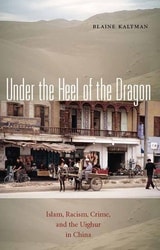
cover of Under the Heel of the Dragon: Islam, Racism, Crime, and the Uighur in China

Under the Heel of the Dragon

Islam, Racism, Crime, and the Uighur in China

Blaine Kaltman

Ohio University Press, 2007

The Turkic Muslims known as the Uighur have long faced social and economic disadvantages in China because of their minority status. Under the Heel of the Dragon: Islam, Racism, Crime, and the Uighur in China offers a unique insight into current conflicts resulting from the rise of Islamic fundamentalism and the Chinese government’s oppression of religious minorities, issues that have heightened the degree of polarization between the Uighur and the dominant Chinese ethnic group, the Han.

Author Blaine Kaltman’s study is based on in-depth interviews that he conducted in Chinese without the aid of an interpreter or the knowledge of the Chinese government. These riveting conversations expose the thoughts of a wide socioeconomic spectrum of Han and Uighur, revealing their mutual prejudices. The Uighur believe that the Han discriminate against them in almost every aspect of their lives, and this perception of racism motivates Uighur prejudice against the Han.

Kaltman reports that criminal activity by Uighur is directed against their perceived oppressors, the Han Chinese. Uighur also resist Han authority by flouting the laws—such as tax and licensing regulations or prohibitions on the use or sale of hashish—that they consider to be imposed on them by an alien regime. Under the Heel of the Dragon offers a unique insight into a misunderstood world and a detailed explanation of the cultural perceptions that drive these misconceptions.
[more]
cover of Underglobalization: Beijing's Media Urbanism and the Chimera of Legitimacy

Underglobalization

Beijing's Media Urbanism and the Chimera of Legitimacy

Joshua Neves

Duke University Press, 2020
Despite China's recent emergence as a major global economic and geopolitical power, its association with counterfeit goods and intellectual property piracy has led many in the West to dismiss its urbanization and globalization as suspect or inauthentic. In Underglobalization Joshua Neves examines the cultural politics of the “fake” and how frictions between legality and legitimacy propel dominant models of economic development and political life in contemporary China. Focusing on a wide range of media technologies and practices in Beijing, Neves shows how piracy and fakes are manifestations of what he calls underglobalization—the ways social actors undermine and refuse to implement the specific procedures and protocols required by globalization at different scales. By tracking the rise of fake politics and transformations in political society, in China and globally, Neves demonstrates that they are alternate outcomes of globalizing processes rather than anathema to them.
[more]
cover of Underground Front: The Chinese Communist Party in Hong Kong, Second Edition

Underground Front

The Chinese Communist Party in Hong Kong, Second Edition

Christine Loh

Hong Kong University Press, 2019
Underground Front is a pioneering examination of the role that the Chinese Communist Party has played in Hong Kong since the creation of the party in 1921, through to the present day. The second edition goes into greater depth on the party’s view on “one country, two systems”, “patriotism”, and “elections”. The introduction has been extensively revised and the concluding chapter has been completely rewritten in order to give a thorough account of the post-1997 governance and political system in Hong Kong, and where challenges lie. Christine Loh endeavours to keep the data and the materials up to date and to include the discussion of some recent events in Hong Kong. The appendices on the key targets of the party’s united front activities also make the book an especially useful read for all who are interested in Hong Kong history and politics, and the history of modern China.
[more]
cover of Unearthing the Nation: Modern Geology and Nationalism in Republican China

Unearthing the Nation

Modern Geology and Nationalism in Republican China

Grace Yen Shen

University of Chicago Press, 2014

Questions of national identity have long dominated China’s political, social, and cultural horizons. So in the early 1900s, when diverse groups in China began to covet foreign science in the name of new technology and modernization, questions of nationhood came to the fore. In Unearthing the Nation, Grace Yen Shen uses the development of modern geology to explore this complex relationship between science and nationalism in Republican China.
           
Shen shows that Chinese geologists—in battling growing Western and Japanese encroachment of Chinese sovereignty—faced two ongoing challenges: how to develop objective, internationally recognized scientific authority without effacing native identity, and how to serve China when China was still searching for a stable national form. Shen argues that Chinese geologists overcame these obstacles by experimenting with different ways to associate the subjects of their scientific study, the land and its features, with the object of their political and cultural loyalties. This, in turn, led them to link national survival with the establishment of scientific authority in Chinese society.

The first major history of modern Chinese geology, Unearthing the Nation introduces the key figures in the rise of the field, as well as several key organizations, such as the Geological Society of China, and explains how they helped bring Chinese geology onto the world stage.
[more]
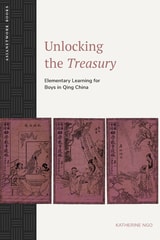
cover of Unlocking the Treasury: Elementary Learning for Boys in Qing China

Unlocking the Treasury

Elementary Learning for Boys in Qing China

Katherine Ngo

Lever Press, 2025

In recent years, the renewed interest in traditional Chinese elementary educational material has led to an increased use of these texts as teaching materials in Chinese schools, as well as popular literature and in academic research. Unlocking the Treasury: Elementary Learning for Boys in Qing China seeks to address the existing gap in Western scholarship regarding pre-modern Chinese primary education, its theories, and textbooks. With a focus on the Qing dynasty textbook, Treasury of Elementary Learning (Youxue qionglin 幼學瓊林), this volume is the first major study of the Treasury in English and reveals a rich tradition of education through close and critical readings of the text. 

Unlocking the Treasury grounds its study of primary education in the intellectual history of the period. Using the concept of interpretive communities, Katherine Ngo explores the impact of socio-political influences and differences in Qing schools of thought, including the school of principle, the school of heart-mind, and practical learning. As such, this volume examines the Treasury through three critical readings of the text: as a handbook for practical learning, a child-oriented reading of the school of heart-mind, and the instrumental perspective of education as examination training. 

Ngo reframes the curricular content, skills, learning approaches, and teaching strategies of Chinese pre-modern elementary education with the goal of facilitating a broader transcultural dialogue in contemporary education. Far from the notion of traditional Chinese elementary education being monolithic and “rote learning,” Unlocking the Treasury reveals that elementary learning in the Qing dynasty offered a sophisticated and complex educational agenda with diverse learning goals of examination, preparation, moral development, and textual scholarship training that were shaped by intellectual trends of the time. An engaging text for scholars of Qing China and historians of education alike, Katherine Ngo’s Unlocking the Treasury is essential to understanding the philosophical, historical, literary, and psychological dimensions of education and educational theory in the Qing era.
[more]
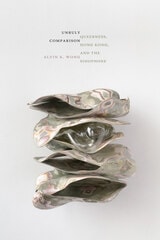
cover of Unruly Comparison: Queerness, Hong Kong, and the Sinophone

Unruly Comparison

Queerness, Hong Kong, and the Sinophone

Alvin K. Wong

Duke University Press, 2025
In Unruly Comparison, Alvin K. Wong examines queerness in Hong Kong through a transdisciplinary analysis of Sinophone literature, cinema, visual culture, and civil society. Moving beyond Eurocentrism in queer theory and China-centrism in area studies, Wong frames Hong Kong as a model for global comparison by theorizing a method of unruly comparison—acknowledging the incommensurability of cultural texts and queer figures across different temporal and spatial locations. Here, unruly comparison positions Hong Kong as an undefinable time-space that troubles historicist, colonial, and China-centric renderings of the city as merely a site of British colonial legacy, Chinese rule, or global capital. Wong analyzes queer interracial desire in WWII; a cinema of gay male cosmopolitanism; queer intimacy among migrant workers; trans visuality and legality; cross-border sex work; and the queer diaspora of Hong Kong after the 2019 protests. Through Wong’s readings, Hong Kong becomes a queer region of racial, gender, and sexual incommensurability. By foregrounding the friction, asymmetry, and perverse juxtapositions of unruly comparison of Hong Kong with the Sinophone world, Wong reframes key debates in queer theory and East Asian studies.
[more]
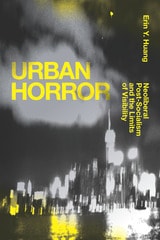
cover of Urban Horror: Neoliberal Post-Socialism and the Limits of Visibility

Urban Horror

Neoliberal Post-Socialism and the Limits of Visibility

Erin Y. Huang

Duke University Press, 2020
In Urban Horror Erin Y. Huang theorizes the economic, cultural, and political conditions of neoliberal post-socialist China. Drawing on Marxist phenomenology, geography, and aesthetics from Engels and Merleau-Ponty to Lefebvre and Rancière, Huang traces the emergence and mediation of what she calls urban horror—a sociopolitical public affect that exceeds comprehension and provides the grounds for possible future revolutionary dissent. She shows how documentaries, blockbuster feature films, and video art from China, Hong Kong, and Taiwan made between the 1990s and the present rehearse and communicate urban horror. In these films urban horror circulates through myriad urban spaces characterized by the creation of speculative crises, shifting temporalities, and dystopic environments inhospitable to the human body. The cinematic image and the aesthetics of urban horror in neoliberal post-socialist China lay the groundwork for the future to such an extent, Huang contends, that the seeds of dissent at the heart of urban horror make it possible to imagine new forms of resistance.
[more]
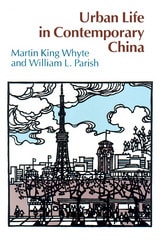
cover of Urban Life in Contemporary China

Urban Life in Contemporary China

Martin King Whyte and William L. Parish

University of Chicago Press, 1984
Through interviews with city residents, Martin King Whyte and William L. Parish provide a unique survey of urban life in the last decade of Mao Zedong's rule. They conclude that changes in society produced under communism were truly revolutionary and that, in the decade under scrutiny, the Chinese avoided ostensibly universal evils of urbanism with considerable success. At the same time, however, they find that this successful effort spawned new and equally serious urban problems—bureaucratic rigidity, low production, and more.
[more]
cover of Utopia and Modernity in China: Contradictions in Transition

Utopia and Modernity in China

Contradictions in Transition

David Margolies

Pluto Press, 2022

The contradictions of modernization run through the whole of modern Chinese history. The abundance of manufactured goods being sold in the West attests to China's industrial revolution, but this capitalist vision of 'utopia' sits uneasily with traditional Chinese values. It is also in conflict with the socialism that has been the bedrock of Chinese society since the foundation of the People's Republic in 1949.

Utopia and Modernity in China examines the conflicts inherent in China's attempt to achieve a 'utopia' by advancing production and technology. Through the lenses of literature, arts, law, the press and the environment, the contributors interrogate the contradictions of modernization in Chinese society and its fundamental challenges.

By unpicking both China's vision of utopia and its realities and the increasing tension between traditional Chinese values and those of the West, this book offers a unique insight into the cultural forces that are part of reshaping today's China.
[more]
cover of Utopian Ruins: A Memorial Museum of the Mao Era

Utopian Ruins

A Memorial Museum of the Mao Era

Jie Li

Duke University Press, 2020

In Utopian Ruins Jie Li traces the creation, preservation, and elision of memories about China's Mao era by envisioning a virtual museum that reckons with both its utopian yearnings and its cataclysmic reverberations. Li proposes a critical framework for understanding the documentation and transmission of the socialist past that mediates between nostalgia and trauma, anticipation and retrospection, propaganda and testimony. Assembling each chapter like a memorial exhibit, Li explores how corporeal traces, archival documents, camera images, and material relics serve as commemorative media. Prison writings and police files reveal the infrastructure of state surveillance and testify to revolutionary ideals and violence, victimhood and complicity. Photojournalism from the Great Leap Forward and documentaries from the Cultural Revolution promoted faith in communist miracles while excluding darker realities, whereas Mao memorabilia collections, factory ruins, and memorials at trauma sites remind audiences of the Chinese Revolution's unrealized dreams and staggering losses.
[more]