Results by title
89 books match the query 'Communities' and 3 start with u
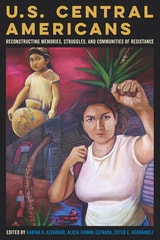
U.S. Central Americans
Reconstructing Memories, Struggles, and Communities of ResistanceEdited by Karina O. Alvarado, Alicia Ivonne Estrada, and Ester E. Hernández
University of Arizona Press, 2017
In summer 2014, a surge of unaccompanied child migrants from Central America to the United States gained mainstream visibility—yet migration from Central America has been happening for decades. U.S. Central Americans explores the shared yet distinctive experiences, histories, and cultures of 1.5-and second-generation Central Americans in the United States.
While much has been written about U.S. and Central American military, economic, and political relations, this is the first book to articulate the rich and dynamic cultures, stories, and historical memories of Central American communities in the United States. Contributors to this anthology—often writing from their own experiences as members of this community—articulate U.S. Central Americans’ unique identities as they also explore the contradictions found within this multivocal group.
Working from within Guatemalan, Salvadoran, and Maya communities, contributors to this critical study engage histories and transnational memories of Central Americans in public and intimate spaces through ethnographic, in-depth, semistructured, qualitative interviews, as well as literary and cultural analysis. The volume’s generational, spatial, urban, indigenous, women’s, migrant, and public and cultural memory foci contribute to the development of U.S. Central American thought, theory, and methods. Woven throughout the analysis, migrants’ own oral histories offer witness to the struggles of displacement, travel, navigation, and settlement of new terrain. This timely work addresses demographic changes both at universities and in cities throughout the United States.
U.S. Central Americans draws connections to fields of study such as history, political science, anthropology, ethnic studies, sociology, cultural studies, and literature, as well as diaspora and border studies. The volume is also accessible in size, scope, and language to educators and community and service workers wanting to know about their U.S. Central American families, neighbors, friends, students, employees, and clients.
Contributors:
Leisy Abrego
Karina O. Alvarado
Maritza E. Cárdenas
Alicia Ivonne Estrada
Ester E. Hernández
Floridalma Boj Lopez
Steven Osuna
Yajaira Padilla
Ana Patricia Rodríguez
Understanding Covenants and Communities
Jews and Latter-Day Saints in DialogueMark Diamond
Central Conference of American Rabbis, 2020
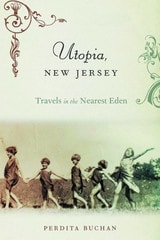
Utopia, New Jersey
Travels in the Nearest EdenBuchan, Perdita
Rutgers University Press, 2007
Winner of the 2008 Honor Book by the New Jersey Council for the Humanities
Utopia. New Jersey. For most people—even the most satisfied New Jersey residents—these words hardly belong in the same sentence. Yet, unbeknown to many, history shows that the state has been a favorite location for utopian experiments for more than a century. Thanks to its location between New York and Philadelphia and its affordable land, it became an ideal proving ground where philosophical and philanthropical organizations and individuals could test their utopian theories.
In this intriguing look at this little-known side of New Jersey, Perdita Buchan explores eight of these communities. Adopting a wide definition of the term utopia—broadening it to include experimental living arrangements with a variety of missions—Buchan explains that what the founders of each of these colonies had in common was the goal of improving life, at least as they saw it.
In every other way, the communities varied greatly, ranging from a cooperative colony in Englewood founded by Upton Sinclair, to an anarchist village in Piscataway centered on an educational experiment, to the fascinating Physical Culture City in Spotswood, where drugs, tobacco, and corsets were banned, but where nudity was widespread.
Despite their grand intentions, all but one of the utopias—a single-tax colony in Berkeley Heights—failed to survive. But Buchan shows how each of them left a legacy of much more than the buildings or street names that remain today—legacies that are inspiring, surprising, and often outright quirky.