Results by title
4531 books match the query 'Cultural & Ethnic Studies' and 71 start with u
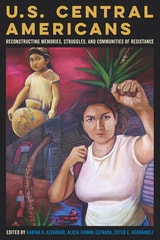
U.S. Central Americans
Reconstructing Memories, Struggles, and Communities of ResistanceEdited by Karina O. Alvarado, Alicia Ivonne Estrada, and Ester E. Hernández
University of Arizona Press, 2017
In summer 2014, a surge of unaccompanied child migrants from Central America to the United States gained mainstream visibility—yet migration from Central America has been happening for decades. U.S. Central Americans explores the shared yet distinctive experiences, histories, and cultures of 1.5-and second-generation Central Americans in the United States.
While much has been written about U.S. and Central American military, economic, and political relations, this is the first book to articulate the rich and dynamic cultures, stories, and historical memories of Central American communities in the United States. Contributors to this anthology—often writing from their own experiences as members of this community—articulate U.S. Central Americans’ unique identities as they also explore the contradictions found within this multivocal group.
Working from within Guatemalan, Salvadoran, and Maya communities, contributors to this critical study engage histories and transnational memories of Central Americans in public and intimate spaces through ethnographic, in-depth, semistructured, qualitative interviews, as well as literary and cultural analysis. The volume’s generational, spatial, urban, indigenous, women’s, migrant, and public and cultural memory foci contribute to the development of U.S. Central American thought, theory, and methods. Woven throughout the analysis, migrants’ own oral histories offer witness to the struggles of displacement, travel, navigation, and settlement of new terrain. This timely work addresses demographic changes both at universities and in cities throughout the United States.
U.S. Central Americans draws connections to fields of study such as history, political science, anthropology, ethnic studies, sociology, cultural studies, and literature, as well as diaspora and border studies. The volume is also accessible in size, scope, and language to educators and community and service workers wanting to know about their U.S. Central American families, neighbors, friends, students, employees, and clients.
Contributors:
Leisy Abrego
Karina O. Alvarado
Maritza E. Cárdenas
Alicia Ivonne Estrada
Ester E. Hernández
Floridalma Boj Lopez
Steven Osuna
Yajaira Padilla
Ana Patricia Rodríguez
U.S. Latinos and Criminal Injustice
Lupe S. Salinas
Michigan State University Press, 2015
U.S. Orientalisms
Race, Nation, and Gender in Literature, 1790-1890Malini Johar Schueller
University of Michigan Press, 2001
This book begins with an examination of the literature of the "Barbary" Orient generated by the U.S. Algerian conflict in the late eighteenth century in the works of such writers as Royall Tyler, Susanna Rowson, and Washington Irving. It then moves on to the Near East Orientalist literature of the nineteenth century in light of Egyptology, theories of race, and the growth of missionary fervor in writers such as John DeForest, Maria Susanna Cummins, Herman Melville, Edgar Allan Poe, and Harriet Prescott Spofford. Finally, Schueller considers the Indic Orientalism of the period in the context of Indology, British colonialism, and the push for Asian trade in the United States, focusing particularly on Emerson and Whitman. U.S. Orientalisms demonstrates how these writers strove to create an Orientalism premised on the idea of civilization and empire moving West, from Asia, through Europe, and culminating in the New World.
Schueller draws on the work of Michel Foucault, Edward Said, Homi Bhabha, Rey Chow, and Judith Butler and compellingly demonstrates how a raced, compensatory "Orientalist" discourse of empire was both contested and evoked in the literary works of a wide variety of writers. The book will be of interest to readers in American history, postcolonial studies, gender studies, and literary theory.
Malini Johar Schueller is Associate Professor, Department of English, University of Florida. She is the author of The Politics of Voice: Liberalism and Social Criticism from Franklin to Kingston.
U.S.- China Educational Exchange
State, Society, and Intercultural Relations, 1905-1950Li, Hongshan
Rutgers University Press, 2007
U.S.-China relations became increasingly important and complex in the twentieth century. While economic, political, and military interactions all grew over time, the most dramatic expansion took place in educational exchange, turning it into the strongest tie between the two nations. By the end of the 1940s, tens of thousands of Chinese and American students and scholars had crisscrossed the Pacific, leaving indelible marks on both societies. Although all exchange programs were terminated during the cold war, the two nations reemerged as top partners within a decade after the reestablishment of diplomatic relations.
Approaching U.S.-China relations from a unique and usually overlooked perspective, Hongshan Li reveals that both the drastic expansion and complete termination of educational ties between the two nations in the first half of the twentieth century were largely the results of direct and deep intervention from the American and Chinese governments. Benefiting from government support and collaboration, educational exchange succeeded in diffusing knowledge and improving mutual understanding between the two peoples across the divide of civilizations. However, the visible hand of government also proved to be most destructive to the development of healthy intercultural relations when educational interactions were treated merely as an instrument for crisis management.
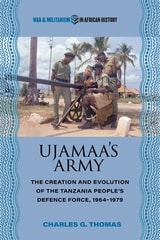
Ujamaa’s Army
The Creation and Evolution of the Tanzania People's Defence Force, 1964–1979Charles G. Thomas
Ohio University Press, 2024
The immediate postcolonial moment brought both promise and peril for the states of Africa and their security. The process of decolonization generated instability, and the emergent Cold War caught up the still-fragile independent states in a global ideological struggle between superpowers. While the political story of these states has been written in detail, the story of their militaries has been largely inaccessible, leaving only sketches of the coups, mutinies, and overall failures of security that outside observers could chronicle.
Ujamaa’s Army traces the evolution of the Tanzania People’s Defence Force from its inception in 1964 following the broader East African uprisings to its fully realized form on the eve of Tanzania’s 1978 conflict with Uganda. The book gathers primary interviews with key military actors within Tanzania and interweaves their narratives with archival sources to produce a detailed history of the culmination of President Julius Nyerere’s ideological project and the military leadership’s vision of a professional and effective force for guarding the nation and supporting liberation struggles across Southern Africa.
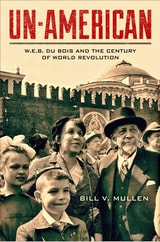
Un-American
W.E.B. Du Bois and the Century of World RevolutionBill V Mullen
Temple University Press, 2015
Un-American is Bill Mullen’s revisionist account of renowned author and activist W.E.B. Du Bois’s political thought toward the end of his life, a period largely dismissed and neglected by scholars. He describes Du Bois’s support for what the Communist International called “world revolution” as the primary objective of this aged radical’s activism. Du Bois was a champion of the world’s laboring millions and critic of the Cold War, a man dedicated to animating global political revolution.
Mullen argues that Du Bois believed that the Cold War stalemate could create the conditions in which the world powers could achieve not only peace but workers’ democracy. Un-American shows Du Bois to be deeply engaged in international networks and personal relationships with revolutionaries in India, China, and Africa. Mullen explores how thinkers like Karl Marx, Jawaharlal Nehru, Mohandas Gandhi, and C.L.R. James helped him develop a theory of world revolution at a stage in his life when most commentators regard him as marginalized. This original political biography also challenges assessments of Du Bois as an American “race man.”
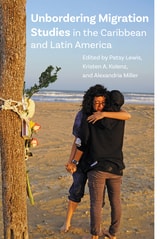
Unbordering Migration Studies in the Caribbean and Latin America
Patsy Lewis
Rutgers University Press, 2026
Unbordering Migration Studies in the Caribbean and Latin America brings together scholars and artists across regions, generations, disciplines, and modes of expression to decenter the US-Mexico border as both a site and a concept. Calling for renewed attention to the spaces, identities, and conflicts that remain understudied and excluded from our hemispheric knowledge of forced movement, the volume reveals a wider diversity of migratory realities and considers race, ethnicity, and class beyond the hegemonic formations that eclipse non-US histories. Through multidisciplinary and geographically expansive essays that draw from history, social anthropology, environmental studies, feminist studies, and lived experience, the volume examines diverse migratory flows from Chile and Argentina in the South to Georgia and New York in the North. Individually and collectively, the essays remap migratory movements other than through the most studied South-to-North trajectories and remove the US and US-based racial formations from the center of analysis. By tracking East-West flows, intraregional mobilities, and changing conceptions of racial identity, Unbordering Migration Studies in the Caribbean and Latin America complicates the concepts of forced mobility and border crossing by highlighting alternative liminalities in sites of transit, destination, and return. Demanding engagement with the submerged histories of racism and the production of ethnoracial categories beyond the Black/white binary, the collection brings into focus identities, sites, and forces that have not yet occupied the foreground of global migration study.

Unbound Spirit
Letters of Flora Belle JanFlora Belle Jan. Edited by Fleur Yano and Saralyn Daly. Introduction by Judy Wu.
University of Illinois Press, 2008
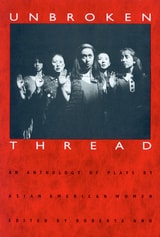
Unbroken Thread
An Anthology of Plays by Asian American WomenRoberta Uno
University of Massachusetts Press, 1993
This book contains plays by Genny Lim (Paper Angels), Wakako Yamauchi (The MusicLessons), Momoko Iko (Gold Watch),Velina Hasu Houston (Tea), Jeannie Barroga (Walls), and Elizabeth Wong (Letters to a Student Revolutionary). The volume includes an extended introduction, a profile of each playwright, and an appendix. The six plays of this anthology represent some of the best dramatic literature written by Asian American women since the 1970s. Each is a groundbreaking work and addresses in its own way the experiences of Asians in America. All six playwrights are American-born daughters of Asian immigrants, and their voices span the genres of naturalism, impressionism, ritual drama, postmodern collage, and media-influenced episodic drama.
Uncivil Rights
Teachers, Unions, and Race in the Battle for School EquityJonna Perrillo
University of Chicago Press, 2012
Uncivil Youth
Race, Activism, and Affirmative GovernmentalitySoo Ah Kwon
Duke University Press, 2013
Uncle Tom's Cabins
The Transnational History of America's Most Mutable BookTracy C. Davis and Stefka Mihaylova, Editors
University of Michigan Press, 2018
Throughout these encounters, Stowe’s story of American slavery serves as a paradigm for understanding oppression, selectively and strategically refracting the African American slave onto other iconic victims and freedom fighters. The book brings together performance historians, literary critics, and media theorists to demonstrate how the myriad cultural and political effects of Stowe’s enduring story has transformed it into a global metanarrative with national, regional, and local specificity.
Unconventional Sisterhood
Feminist Catholic Nuns in the PhilippinesHeather L. Claussen
University of Michigan Press, 2001
This work represents an important addition to scholarship on Philippine feminism. It is one of few ethnographies that focuses on female monasticism--of particular cultural importance in the Christian Philippines, where nuns enjoy relatively high social status and freedom from many of the traditional constraints delineating Filipina lives. It is noteworthy as well for its focus on metropolitan Manila--a socially complex, dynamic, diverse, and understudied environment.
Heather L. Claussen is an anthropologist currently living in Santa Cruz, California.

Unconventional Sisterhood
Feminist Catholic Nuns in the PhilippinesHeather L. Claussen
University of Michigan Press, 0
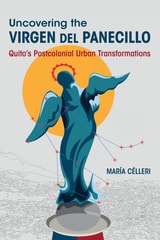
Uncovering the Virgen del Panecillo
Quito’s Postcolonial Urban TransformationsMaría Célleri
University of Illinois Press, 2026
María Célleri examines the eighty-year effort to complete Quito’s soaring monument to the Virgin Mary. Focusing on the negotiations behind the project, Célleri uncovers the links between the government and Church—links that became stronger during moments of political and economic transition. Célleri also investigates how the city’s residents and activists, and artists like filmmakers, graffiti artists, and photographers, interact with the monument. Throughout, she looks at questions like the Virgen del Panecillo’s service to Ecuador as a form of cultural capital, the Virgen’s symbolic meanings to different groups, and the often-hidden connections between colonialism, Catholicism, and artistic production.
Original and multifaceted, Uncovering the Virgen del Panecillo provides readers with a rigorous decolonial analysis of an iconic monument and its history.
Under a Bad Sign
Criminal Self-Representation in African American Popular CultureJonathan Munby
University of Chicago Press, 2011
What accounts for the persistence of the figure of the black criminal in popular culture created by African Americans? Unearthing the overlooked history of art that has often seemed at odds with the politics of civil rights and racial advancement, Under a Bad Sign explores the rationale behind this tradition of criminal self-representation from the Harlem Renaissance to contemporary gangsta culture.
In this lively exploration, Jonathan Munby takes a uniquely broad view, laying bare the way the criminal appears within and moves among literary, musical, and visual arts. Munby traces the legacy of badness in Rudolph Fisher and Chester Himes’s detective fiction and in Claude McKay, Julian Mayfield, and Donald Goines’s urban experience writing. Ranging from Peetie Wheatstraw’s gangster blues to gangsta rap, he also examines criminals in popular songs. Turning to the screen, the underworld films of Oscar Micheaux and Ralph Cooper, the 1970s blaxploitation cycle, and the 1990s hood movie come under his microscope as well. Ultimately, Munby concludes that this tradition has been a misunderstood aspect of African American civic life and that, rather than undermining black culture, it forms a rich and enduring response to being outcast in America.
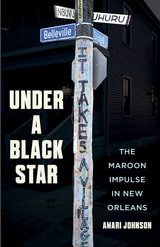
Under a Black Star
The Maroon Impulse in New OrleansAmari Johnson
University of Minnesota Press, 2025
Uncovering the spirit of freedom and self-determination in New Orleans
In Under a Black Star, Amari Johnson explores what he defines as the “maroon impulse” among the BlackStar Community in the Algiers neighborhood of New Orleans. This community sought autonomy for Black people facing systemic marginalization through denied employment, insufficient education, and a housing crisis following Hurricane Katrina, establishing initiatives such as Kamali Academy, a homeschool collective, and BlackStar Books and Caffé, a bookstore and gathering place. Instead of appealing to the city, they built the community they desired by employing legacies of marronage: disengagement, flight, and reengagement.
An active participant in the physical and ideological development of these autonomous spaces, Johnson provides nuanced insights into the community’s work toward liberation and self-determination. Demonstrating that marronage is a cultural tradition throughout the African Diaspora, he focuses on the transtemporal maroon process to show how it is central to the pursuit of autonomy, community, and freedom.
From the swamps of southeastern Louisiana, across urban obstacles, and into BlackStar’s creative spaces, Johnson’s path leads him to ask: How did the New Orleans community mobilize the tradition of marronage to create autonomous spaces amid gentrification? What forms might the maroon impulse take in the twenty-first century? This dynamic ethnographic memoir ultimately illuminates marronage as a potent form of liberatory potential, offering strategies for similar communities across the country and around the world.
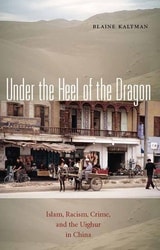
Under the Heel of the Dragon
Islam, Racism, Crime, and the Uighur in ChinaBlaine Kaltman
Ohio University Press, 2007
The Turkic Muslims known as the Uighur have long faced social and economic disadvantages in China because of their minority status. Under the Heel of the Dragon: Islam, Racism, Crime, and the Uighur in China offers a unique insight into current conflicts resulting from the rise of Islamic fundamentalism and the Chinese government’s oppression of religious minorities, issues that have heightened the degree of polarization between the Uighur and the dominant Chinese ethnic group, the Han.
Author Blaine Kaltman’s study is based on in-depth interviews that he conducted in Chinese without the aid of an interpreter or the knowledge of the Chinese government. These riveting conversations expose the thoughts of a wide socioeconomic spectrum of Han and Uighur, revealing their mutual prejudices. The Uighur believe that the Han discriminate against them in almost every aspect of their lives, and this perception of racism motivates Uighur prejudice against the Han.
Kaltman reports that criminal activity by Uighur is directed against their perceived oppressors, the Han Chinese. Uighur also resist Han authority by flouting the laws—such as tax and licensing regulations or prohibitions on the use or sale of hashish—that they consider to be imposed on them by an alien regime. Under the Heel of the Dragon offers a unique insight into a misunderstood world and a detailed explanation of the cultural perceptions that drive these misconceptions.
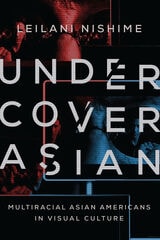
Undercover Asian
Multiracial Asian Americans in Visual CultureLeiLani Nishime
University of Illinois Press, 2014
Understanding Mainland Puerto Rican Pov
Susan Baker
Temple University Press, 2002
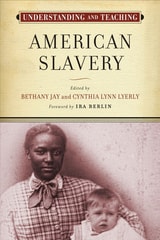
Understanding and Teaching American Slavery
Edited by Bethany Jay and Cynthia Lynn Lyerly, Foreword by Ira Berlin
University of Wisconsin Press, 2016
Opening with Ira Berlin’s reflections on ten elements that are essential to include in any course on this topic, Understanding and Teaching American Slavery offers practical advice for teaching specific content, utilizing sources, and getting students to think critically. Contributors address, among other topics, slavery and the nation’s founders, the diverse experiences of the enslaved, slavery’s role in the Civil War, and the relationship between slavery and the northern economy. Other chapters offer ideas for teaching through slave narratives, runaway ads, spirituals, films, and material culture. Taken together, the essays in the volume help instructors tackle problems, discover opportunities, and guide students in grappling with the ugliest truths of America’s past.
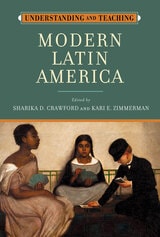
Understanding and Teaching Modern Latin America
Edited by Sharika D. Crawford and Kari E. Zimmerman
University of Wisconsin Press, 2026
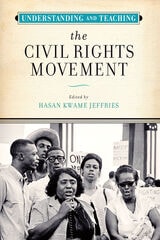
Understanding and Teaching the Civil Rights Movement
Hasan Kwame Jeffries
University of Wisconsin Press, 2019
Books in the popular Harvey Goldberg Series provide high school and introductory college-level instructors with ample resources and strategies for better engaging students in critical, thought-provoking topics. By allowing for the implementation of a more nuanced curriculum, this is history instruction at its best. Understanding and Teaching the Civil Rights Movement will transform how the United States civil rights movement is taught.
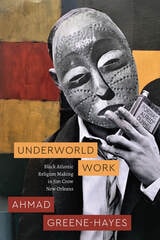
Underworld Work
Black Atlantic Religion Making in Jim Crow New OrleansAhmad Greene-Hayes
University of Chicago Press, 2025
When Zora Neale Hurston traveled to New Orleans, she encountered a religious underworld, a beautiful anarchy of spiritual life. In Underworld Work, Ahmad Greene-Hayes follows Hurston on a journey through the rich tapestry of Black religious expression from emancipation through Jim Crow. He looks within and beyond the church to recover the diverse leadership of migrants, healers, dissidents, and queer people who transformed their marginalized homes, bars, and street corners into sacred space.
Greene-Hayes shows how, while enclosed within an anti-black world, these outcasts embraced Africana esotericisms—ancestral veneration, faith healing, spiritualized sex work, and more—to conjure a connection to freer worlds past and yet to come. In recovering these spiritual innovations, Underworld Work celebrates the resilience and creativity of Africana religions.
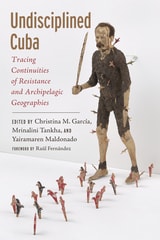
Undisciplined Cuba
Tracing Continuities of Resistance and Archipelagic GeographiesChristina M. García
Rutgers University Press, 2027
Undisciplined Cuba brings scholars of diverse disciplines and moves through multiple temporalities and geographies, allowing Cuba to emerge as a negotiated reality. Rather than rehearse narratives of exceptionalism and Cold War relationships that have detached the nation from its Antillean neighbors, this edited volume understands Cuba as deeply embedded in the Caribbean archipelago. Its chapters encompass feminist activism, public health, cinema for social justice, marine geopoetics, racial geographies, and literary corporealities. Drawing from an archipelagic framework and a decolonial practice of undisciplining, the anthology counters the tendency to treat landscapes, and cultural and political manifestations as artifacts of a national identity or evidence of a discrete geopolitical entity. Instead, Undisciplined Cuba attends to processes, to dynamic relations and continuities of resistance that defy periodization and institutional representation. The book offers a granular view of Cuba and an approach to Caribbean studies that imagines networks in excess of traditional categories of thought.
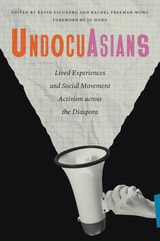
UndocuAsians
Lived Experiences and Social Movement Activism Across the DiasporaKevin Escudero
Rutgers University Press, 2026
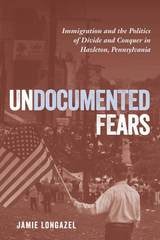
Undocumented Fears
Immigration and the Politics of Divide and Conquer in Hazleton, PennsylvaniaJamie Longazel
Temple University Press, 2016
The Illegal Immigration Relief Act (IIRA), passed in the small Rustbelt city of Hazleton, Pennsylvania in 2006, was a local ordinance that laid out penalties for renting to or hiring undocumented immigrants and declared English the city’s official language. The notorious IIRA gained national prominence and kicked off a parade of local and state-level legislative initiatives designed to crack down on undocumented immigrants.
In his cogent and timely book, UndocumentedFears, Jamie Longazel uses the debate around Hazleton’s controversial ordinance as a case study that reveals the mechanics of contemporary divide and conquer politics. He shows how neoliberal ideology, misconceptions about Latina/o immigrants, and nostalgic imagery of “Small Town, America” led to a racialized account of an undocumented immigrant “invasion,” masking the real story of a city beset by large-scale loss of manufacturing jobs.
Offering an up-close look at how the local debate unfolded in the city that set off this broader trend, Undocumented Fears makes an important connection between immigration politics and the perpetuation of racial and economic inequality.
Undocumented Motherhood
Conversations on Love, Trauma, and Border CrossingElizabeth Farfán-Santos
University of Texas Press, 2022
2023 SANA Book Award, Society for the Anthropology of North America
2023 Honorable Mention, Outstanding Book Award NACCS Tejas Foco Award for Non-Fiction, National Association for Chicana and Chicano Studies
2022 Nonfiction Discovery Prize, Writers' League of Texas
An intimate portrayal of the hardships faced by an undocumented family navigating the medical and educational systems in the United States.
Claudia Garcia crossed the border because her toddler, Natalia, could not hear. Leaving behind everything she knew in Mexico, Claudia recounts the terror of migrating alone with her toddler and the incredible challenges she faced advocating for her daughter’s health in the United States. When she arrived in Texas, Claudia discovered that being undocumented would mean more than just an immigration status—it would be a way of living, of mothering, and of being discarded by even those institutions we count on to care.
Elizabeth Farfán-Santos spent five years with Claudia. As she listened to Claudia’s experiences, she recalled her own mother’s story, another life molded by migration, the US-Mexico border, and the quest for a healthy future on either side. Witnessing Claudia’s struggles with doctors and teachers, we see how the education and medical systems enforce undocumented status and perpetuate disability. At one point, in the midst of advocating for her daughter, Claudia suddenly finds herself struck by debilitating pain. Claudia is lifted up by her comadres, sent to the doctor, and reminded why she must care for herself.
A braided narrative that speaks to the power of stories for creating connection, this book reveals what remains undocumented in the motherhood of Mexican women who find themselves making impossible decisions and multiple sacrifices as they build a future for their families.
Undoing Empire
Race And Nation In The Mulatto CaribbeanJose F. Buscaglia-Salgado
University of Minnesota Press, 2003
A revelatory account that places mulatto experience at the center of Caribbean history
This ambitious book brings to light the story of what José F. Buscaglia-Salgado terms mulataje—the ways Caribbean aesthetics offer the possibility of the ultimate erasure of racial difference. Undoing Empire gives a broad panorama stretching from the complex politics of medieval Iberian societies to the beginning of direct U.S. hegemony in the Caribbean at the end of the nineteenth century.
Buscaglia-Salgado begins with an examination of Washington Irving’s “American Columbiad” as an act of historical and territorial plundering. He then traces the roots of mulatto society to the pre-1492 Iberian world, not only finding a connection between the Moors of “Old Spain” and the morenos—the blacks and mulattoes of the New World—but also offering a profound critique of creole and imperial discourses. Buscaglia-Salgado reads the pursuit and contestation of what he terms the European Ideal in colonial texts, architecture, and paintings, then identifies the mulatto movement of “undoing” the Ideal in the wars that shook the nineteenth-century Caribbean from Haiti to Cuba, arguing that certain projects of national liberation have moved contrary to the historical claims to freedom in the mulatto world.
Unequal City
Race, Schools, and Perceptions of InjusticeCarla Shedd is assistant professor of sociology and African American studies at Columbia University.
Russell Sage Foundation, 2015
Shedd draws from an array of data and in-depth interviews with Chicago youth to offer new insight into this understudied group. Focusing on four public high schools with differing student bodies, Shedd reveals how the predominantly low-income African American students at one school encounter obstacles their more affluent, white counterparts on the other side of the city do not face. Teens often travel long distances to attend school which, due to Chicago’s segregated and highly unequal neighborhoods, can involve crossing class, race, and gang lines. As Shedd explains, the disadvantaged teens who traverse these boundaries daily develop a keen “perception of injustice,” or the recognition that their economic and educational opportunities are restricted by their place in the social hierarchy.
Adolescents’ worldviews are also influenced by encounters with law enforcement while traveling to school and during school hours. Shedd tracks the rise of metal detectors, surveillance cameras, and pat-downs at certain Chicago schools. Along with police procedures like stop-and-frisk, these prison-like practices lead to distrust of authority and feelings of powerlessness among the adolescents who experience mistreatment either firsthand or vicariously. Shedd finds that the racial composition of the student body profoundly shapes students’ perceptions of injustice. The more diverse a school is, the more likely its students of color will recognize whether they are subject to discriminatory treatment. By contrast, African American and Hispanic youth whose schools and neighborhoods are both highly segregated and highly policed are less likely to understand their individual and group disadvantage due to their lack of exposure to youth of differing backgrounds.
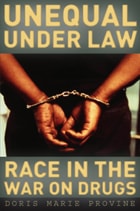
Unequal under Law
Race in the War on DrugsDoris Marie Provine
University of Chicago Press, 2007
Doris Marie Provine’s engaging analysis traces the history of race in anti-drug efforts from the temperance movement of the early 1900s to the crack scare of the late twentieth century, showing how campaigns to criminalize drug use have always conjured images of feared minorities. Explaining how alarm over a threatening black drug trade fueled support in the 1980s for a mandatory minimum sentencing scheme of unprecedented severity, Provine contends that while our drug laws may no longer be racist by design, they remain racist in design. Moreover, their racial origins have long been ignored by every branch of government. This dangerous denial threatens our constitutional guarantee of equal protection of law and mutes a much-needed national discussion about institutionalized racism—a discussion that Unequal under Law promises to initiate.
Uneven Encounters
Making Race and Nation in Brazil and the United StatesMicol Seigel
Duke University Press, 2009
Seigel explores the circulation of images of Brazilian coffee and of maxixe in the United States during the period just after the imperial expansions of the early twentieth century. Exoticist interpretations structured North Americans’ paradoxical sense of themselves as productive “consumer citizens.” Some people, however, could not simply assume the privileges of citizenship. In their struggles against racism, Afro-descended citizens living in Rio de Janeiro, São Paulo, New York, and Chicago encountered images and notions of each other, and found them useful. Seigel introduces readers to cosmopolitan Afro-Brazilians and African Americans who rarely traveled far from home but who nonetheless absorbed ideas from abroad. She suggests that studies comparing U.S. and Brazilian racial identities as two distinct constructions are misconceived. Racial formation transcends national borders; attempts to understand it must do the same.

Unfastened
Globality and Asian North American NarrativesEleanor Ty
University of Minnesota Press, 2010

Unfit For Marriage
Impotent Spouses On Trial In The Basque Region Of Spain, 1650-1750Edward J. Behrend-Martinez
University of Nevada Press, 2014
The Catholic Church of early modern Europe intended the sacrament of matrimony to represent a lifelong commitment, and it allowed few grounds for the dissolution of an unhappy marriage. One was nonconsummation owing to the sexual impotency of one of the partners. Even then, an annulment was granted only after a church court had conducted a lengthy investigation of the case, soliciting testimony from numerous witnesses as well as from the aggrieved couple, and had subjected the allegedly impotent spouse (and sometimes both spouses) to an intimate physical examination.
Edward J. Behrend-Martinez has studied the transcripts of eighty-three impotency trials conducted by the ecclesiastical court of Calahorra (La Rioja), a Spanish diocese with urban and rural parishes, both Basque and Castilian. From these records, he draws a detailed, fascinating portrait of private life and public sexuality in early modern Europe. These trials were far more than a salacious inquiry into the intimate details of other people’s lives. The church valued marital sex as a cornerstone of stable society, intended not only for procreation but also for maintaining domestic harmony. Every couple’s sex life, however private in practice or intention, was a matter of public and ecclesiastical concern. Unfit for Marriage offers vivid accounts of marital sex and the role that property, gender, and personal preference played in marriage in early modern Europe. It is essential reading for anyone interested in social history, sexuality, gender studies, canon law, legal history, and the history of divorce in western Europe.
Union by Law
Filipino American Labor Activists, Rights Radicalism, and Racial CapitalismMichael W. McCann with George I. Lovell
University of Chicago Press, 2020
Union by Law analyzes the broader social and legal history of Filipino American workers’ rights-based struggles, culminating in the devastating landmark Supreme Court ruling, Wards Cove Packing Co. v. Atonio (1989). Organized chronologically, the book begins with the US invasion of the Philippines and the imposition of colonial rule at the dawn of the twentieth century. The narrative then follows the migration of Filipino workers to the United States, where they mobilized for many decades within and against the injustices of American racial capitalist empire that the Wards Cove majority willfully ignored in rejecting their longstanding claims. This racial innocence in turn rationalized judicial reconstruction of official civil rights law in ways that significantly increased the obstacles for all workers seeking remedies for institutionalized racism and sexism. A reclamation of a long legacy of racial capitalist domination over Filipinos and other low-wage or unpaid migrant workers, Union by Law also tells a story of noble aspirational struggles for human rights over several generations and of the many ways that law was mobilized both to enforce and to challenge race, class, and gender hierarchy at work.
United States-Latin American Relations, 1800-1850
The Formative GenerationsT. Ray Shurbutt
University of Alabama Press, 1991
Relations between the United States and the countries of Latin America have been characterized by misunderstandings based on language and culture, a lack of sustained commitment on the part of the United States, and, in some cases, incompetent diplomats. During the era when many of the Latin American countries discarded the yoke of colonial status, the young United States attempted to define itself culturally, economically, constitutionally, geographically, and diplomatically. As Latin American emerged from the crucible of revolution and international power politics, it was affected by—and in varying degrees affected—the United States and its desired position of leadership in the Western Hemisphere.
To make sense of these relationships, this volume concentrates on Central America, Peru, Colombia, Argentina, Brazil, Chile, and Mexico. Describing the particular paths taken by each of the formation of relations with the United States, Shurbutt and his colleagues focus on the American diplomatic community and its effectiveness in tense political situations.
Contributors in addition to the editor include Lawrence A. Clayton, Paul B. Goodwin, Eugene R. Huck, Phil Brian Johnson, Edward H. Moseley, Wesley P. Newton, Charles S. Stansifer, and Robert Kim Stevens.
Universal Tonality
The Life and Music of William ParkerCisco Bradley
Duke University Press, 2021
Unjustly Dishonored
An African American Division in World War IRobert H. Ferrell
University of Missouri Press, 2026
Unlearning the Hush
Oral Histories of Black Female Educators in Mississippi in the Civil Rights EraMarlee S. Bunch Foreword by Christopher M. Span
University of Illinois Press, 2025
Unmaking Waste
New Histories of Old ThingsSarah Newman
University of Chicago Press, 2023
Garbage is often assumed to be an inevitable part and problem of human existence. But when did people actually come to think of things as “trash”—as becoming worthless over time or through use, as having an end?
Unmaking Waste tackles these questions through a long-term, cross-cultural approach. Drawing on archaeological finds, historical documents, and ethnographic observations to examine Europe, the United States, and Central America from prehistory to the present, Sarah Newman traces how different ideas about waste took shape in different times and places. Newman examines what people consider to be “waste” and how they interact with it, as well as what happens when different perceptions of trash come into conflict. Conceptions of waste have shaped forms of reuse and renewal in ancient Mesoamerica, early modern ideas of civility and forced religious conversion in New Spain, and even the modern discipline of archaeology. Newman argues that centuries of assumptions imposed on other places, times, and peoples need to be rethought. This book is not only a broad reconsideration of waste; it is also a call for new forms of archaeology that do not take garbage for granted. Unmaking Waste reveals that waste is not—and never has been—an obvious or universal concept.
Unmaking to Make
Art as Decolonising Practice in Latin America’s Future, Past and PresentEdited by Alex Ungprateeb Flynn, María Iñigo Clavo, Beatriz Lemos, and Florencia Portocarrero
University College London, 2026
An examination of art's evolving role in theorizing decolonization, with Afro-diasporic and Indigenous perspectives in Latin America at its center.
Unmaking to Make reorients global conversations on decolonization by centering Afro-diasporic and Indigenous perspectives from across Latin America. Through a wide-ranging selection of texts, including critical essays, curatorial reflections, and interviews, it explores how artistic practice actively theorizes, models, and enacts alternative modes of living. Showcases cutting-edge work of emerging artists and curators, currently under-recognized in North American and European contexts. The volume establishes new reference points, methodologies, and institutional models for the next generation of scholars. By mapping forthcoming debates and potential institutional shifts, the book provides forward-looking insights into where and how decolonial thought will unfold in the years to come.
Unmastering the Script
Education, Critical Race Theory, and the Struggle to Reconcile the Haitian Other in Dominican IdentitySheridan Wigginton and Richard T. Middleton IV
University of Alabama Press, 2019
Unmastering the Script: Education, Critical Race Theory, and the Struggle to Reconcile the Haitian Other in Dominican Identity examines how school curriculum–based representations of Dominican identity navigate black racial identity, its relatedness to Haiti, and the culturally entrenched pejorative image of the Haitian Other in Dominican society. Wigginton and Middleton analyze how social science textbooks and historical biographies intended for young Dominicans reflect an increasing shift toward a clear and public inclusion of blackness in Dominican identity that serves to renegotiate the country’s long-standing antiblack racial master script.
The authors argue that although many of the attempts at this inclusion reflect a lessening of “black denial,” when considered as a whole, the materials often struggle to find a consistent and coherent narrative for the place of blackness within Dominican identity, particularly regarding the ways in which blackness continues to be meaningfully related to the otherness of Haitian racial identity. Unmastering the Script approaches the text materials as an example of “reconstructing” and “unburying” an African past, supporting the uneven, slow, and highly context-specific nature of the process.
This work engages with multiple disciplines including history, anthropology, education, and race studies, building on a new wave of Dominican scholarship that considers how contemporary perspectives of Dominican identity both accept the existence of an African past and seek to properly weigh its importance. The use of critical race theory as the framework facilitates unfolding the past political and legal agendas of governing elites in the Dominican Republic and also helps to unlock the nuance of an increasingly black-inclusive Dominican identity. In addition, this framework allows the unveiling of some of the socially damaging effects the Haitian Other master script can have on children, particularly those of Haitian ancestry, in the Dominican Republic.

Unnatural Selection
The Yanomami, the Kayapo & the Onslaught of CivilisationLinda Rabben
Pluto Press, 1998
Linda Rabben interviews celebrated leaders such as Paulinho Payakan and Davi Yanomami; looks at the ways that both groups interact with Brazilian society and the wider world, and considers their differing futures.
Unraveling of Civil Society
Peacebuilding, Health Crises, and Aid in Twenty-First-Century Guinea and Sierra LeoneMichelle Reddy
Ohio University Press, 2026
In recent years, the capacity of civil society to respond to crises has been increasingly constrained by rising authoritarianism. Yet in West Africa, where civil society has historically played a pivotal role in democratization, this trend reveals deeper structural challenges. Unraveling of Civil Society examines how international aid strategies emphasizing technical capacity and professionalization have inadvertently contributed to the politicization and fragmentation of civil society in Guinea and Sierra Leone.
Drawing on extensive fieldwork—including interviews with representatives of more than a hundred locally led organizations, analysis of 260 strategic plans, and collection of cross-national survey data—this book offers a rare longitudinal and comparative study of civil society in the region. It traces how donor-driven models have led organizations to become sector specific, mimic donor institutions, or align with political interests—ultimately reducing organizational diversity and weakening the social infrastructure necessary for collective action and crisis resilience.
The book situates these findings within broader debates on democratic backsliding, noting that three of the nine countries that transitioned to autocracy between 2021 and 2023—Guinea, Chad, and Mali—are in West Africa. Despite significant international investment, “coup culture” and unconstitutional power shifts have resurged, raising urgent questions about the effectiveness of aid and the role of civil society in sustaining democratic norms.
Combining comparative historical analysis with a mixed-methods approach, Unraveling of Civil Society challenges prevailing assumptions about capacity building and offers practical recommendations for democratizing local organizations from within. It advocates for participatory governance and funding mechanisms and engages with ongoing conversations around the localization and decolonization of aid in a shifting geopolitical landscape.
This book is essential reading for scholars of African studies, political science, development studies, and global civil society as well as for practitioners in crisis management and political reform.
Unrecognized
A Palestinian Bedouin Feminist in IsraelLihi Ben Shitrit
Rutgers University Press, 2027
In 1998, when Mona Al-Habanin was twenty-eight years old and pregnant with her sixth child, she stood before a council of al-Naqab Bedouin shaykhs and faced the most difficult decision of her life: give up her children or be responsible for more killings in her tribe.
This book tells the extraordinary story of Mona Al-Habanin (b. 1970), the first Bedouin woman to run for elected office in Israel's Negev Desert. Through Mona's life, it illuminates Indigenous Bedouin women's traumas and resilience while documenting a genealogy of contemporary Palestinian Bedouin feminism. It traces her journey from desert tent dwelling through forced dislocation, her community's struggles with violence against women, and her battle for her children—against state-sanctioned tribal justice rooted in British colonial paradigms and Zionist settler-native relations—and to her turn to fierce and irreverent activism, taboo-breaking, and political trailblazing. This book tells the story of an unrecognized community under siege and of a new form of Indigenous feminism that bravely defies the violence of silencing.
Unreconciled
From Racial Reconciliation to Racial Justice in Christian EvangelicalismAndrea Smith
Duke University Press, 2019
Unrepayable Debt
Law, Redress, Reconciliation, and the Unmaking of EmpireYukiko Koga
University of Chicago Press, 2026
What does it mean, and take, to repay the unrepayable?
Unrepayable Debt explores belated attempts to reckon with the savage plundering of labor and life under the Japanese empire. Located within global conversations on reparations for colonialism and slavery, and centered on slave labor lawsuits brought by Chinese victims seeking overdue justice in Japanese courts, Yukiko Koga traces a sea change in the legal sphere propelled by an unprecedented transnational redress movement. The lawsuits exposed not only the original violence but also a structure of transitional injustice etched onto the unmaking of the Japanese empire, which left victims silenced and unredressable for decades.
Challenging the idea of reckoning as a discrete event that brings closure through settlements, apology, or compensation, Koga’s ethnography details the slow and messy intergenerational work of reconciliation on the ground. The book shows how the re-pairing of severed relations, separated by lineages of victimhood and perpetration, lies at the core of repair. By bringing to the surface the prolonged and entangled processes of decolonization and deimperialization, Unrepayable Debt compels a rethinking of what redress, repair, and reconciliation mean, how they are practiced, and where accountability lies.
Unruly Comparison
Queerness, Hong Kong, and the SinophoneAlvin K. Wong
Duke University Press, 2025
Unruly Visions
The Aesthetic Practices of Queer DiasporaGayatri Gopinath
Duke University Press, 2018
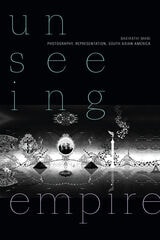
Unseeing Empire
Photography, Representation, South Asian AmericaBakirathi Mani
Duke University Press, 2020