Results by title
281 books match the query 'Disease & Health Issues' and 6 start with u
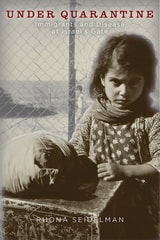
Under Quarantine
Immigrants and Disease at Israel’s GateRhona Seidelman
Rutgers University Press, 2020
Undoing Motherhood
Collaborative Reproduction and the Deinstitutionalization of U.S. MaternityKatherine M. Johnson
Rutgers University Press, 2023
Ungendering Menstruation
przybylo
University of Minnesota Press, 2025
Why and how menstrual pain needs to be incorporated into discussions of gender, embodiment, and disability
Honing a “cranky” approach to being a menstruating body expected to accept and embrace trauma, Ungendering Menstruation examines menstrual suppression, toxicity, and the cooptation of menstrual positivity rhetoric. Drawing on their own experiences as a toxic shock survivor and a menstrual pain and period dysphoria sufferer, Ela Przybyło questions why, on what terms, and for whom menstruation has been fixed around experiences of pain. Instead, they present a vision for menstrual justice that refuses the womaning of bleeding and the further erasure, dismissal, and denial of menstrual pain as real pain.
If menstruating is framed as somatechnically elective, Przybyło contends, it provides avenues for both celebrating and appreciating cultures of bleeding as well as for remaining critical of the ways in which bleeding has been used as a transphobic and sexist tool to fix gender in place.
Unmaking Russia’s Abortion Culture
Family Planning and the Struggle for a Liberal BiopoliticsMichele Rivkin-Fish
Vanderbilt University Press, 2024
Honorable Mention, Davis Center Book Prize in Political and Social Studies, Association for Slavic, East European, and Eurasian Studies, 2025
Honorable Mention, Women’s Forum Book Prize, British Association for Slavonic and East European Studies, 2024
As the predominant form of birth control in Soviet society, abortion reflected key paradoxes of state socialism: women held formal equality but lacked basic needs such as contraceptives. With market reforms, Russians enjoyed new access to Western contraceptives and new pressures to postpone childbearing until economically self-sufficient. But habits of family planning did not emerge automatically—they required extensive physician retraining, public education, and cultural transformation. In Unmaking Russia’s Abortion Culture, author Michele Rivkin-Fish examines the creative strategies of Russians who promoted family planning in place of routine abortion. Rather than emphasizing individual rights, they explained family planning’s benefits to the nation—its potential to strengthen families and prevent the secondary sterility that resulted when women underwent repeat, poor-quality abortions. Still, fierce debates about abortion and contraceptives erupted as declining fertility was framed as threatening Russia’s demographic sovereignty.
Although Russian family planners embraced a culturally meaningful liberalism that would rationalize public policy and reenchant relations, nationalist opponents cast family planning as suspicious for its association with the individualistic, “child-free” West. This book tells the story of how Russian family planners developed culturally salient frameworks to promote the acceptability of contraceptives and help end routine abortion. It also documents how nationalist campaigns for higher fertility denounced family planning and ultimately dismantled its institutions. By tracing these processes, Unmaking Russia’s Abortion Culture demonstrates the central importance of reproductive politics in the struggle for liberalizing social change that preceded Russia’s 2022 descent into war, repression, and global marginalization.
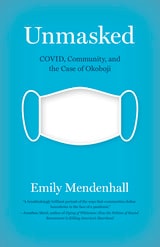
Unmasked
COVID, Community, and the Case of OkobojiEmily Mendenhall
Vanderbilt University Press, 2022
The story is both personal and political. Author Emily Mendenhall, an anthropologist at Georgetown University, grew up in Okoboji, and her family still lives there. As the events unfolded, Mendenhall was in Okoboji, where she spoke formally with over 100 people and observed a community that rejected public health guidance, revealing deep-seated mistrust in outsiders and strong commitments to local thinking. Unmasked is a fascinating and heartbreaking account of where people put their trust, and how isolationist popular beliefs can be in America's small communities.
This book is the recipient of the 2022 Norman L. and Roselea J. Goldberg Prize from Vanderbilt University Press for the best book in the area of art or medicine.
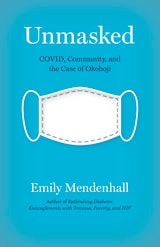
Unmasked
COVID, Community, and the Case of OkobojiEmily Mendenhall
Vanderbilt University Press, 2022
The story is both personal and political. Author Emily Mendenhall, an anthropologist at Georgetown University, grew up in Okoboji, and her family still lives there. As the events unfolded, Mendenhall was in Okoboji, where she spoke formally with over 100 people and observed a community that rejected public health guidance, revealing deep-seated mistrust in outsiders and strong commitments to local thinking. Unmasked is a fascinating and heartbreaking account of where people put their trust, and how isolationist popular beliefs can be in America's small communities.
This book is the recipient of the 2022 Norman L. and Roselea J. Goldberg Prize from Vanderbilt University Press for the best book in the area of art or medicine.