78 books match the query 'Emergence' and 2 start with u
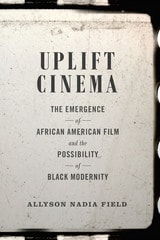
cover of Uplift Cinema: The Emergence of African American Film and the Possibility of Black Modernity

Uplift Cinema

The Emergence of African American Film and the Possibility of Black Modernity

Allyson Nadia Field

Duke University Press, 2015
In Uplift Cinema, Allyson Nadia Field recovers the significant yet forgotten legacy of African American filmmaking in the 1910s. Like the racial uplift project, this cinema emphasized economic self-sufficiency, education, and respectability as the keys to African American progress. Field discusses films made at the Tuskegee and Hampton Institutes to promote education, as well as the controversial The New Era, which was an antiracist response to D. W. Griffith's The Birth of a Nation. She also shows how Black filmmakers in New York and Chicago engaged with uplift through the promotion of Black modernity. Uplift cinema developed not just as a response to onscreen racism, but constituted an original engagement with the new medium that has had a deep and lasting significance for African American cinema. Although none of these films survived, Field's examination of archival film ephemera presents a method for studying lost films that opens up new frontiers for exploring early film culture.
[more]
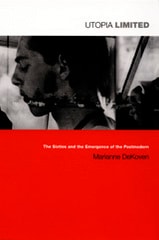
cover of Utopia Limited: The Sixties and the Emergence of the Postmodern

Utopia Limited

The Sixties and the Emergence of the Postmodern

Marianne DeKoven

Duke University Press, 2004

Utopia Limited is an original, engaging account of how postmodernism emerged from the political and cultural upheaval of the 1960s. Marianne DeKoven argues that aspects of sixties radical politics and culture simultaneously embodied the full, final flowering of the modern and the beginning of the postmodern. Analyzing classic sixties texts, DeKoven shows where the utopian master narratives underlying the radical and countercultural movements gave way to the “utopia limited” of the postmodern as a range of competing political values and desires came to the fore. She identifies the pivots where the modern was superseded by the nascent postmodern: where modern mass culture was replaced by postmodern popular culture, modern egalitarianism morphed into postmodern populism, and modern individualism fragmented into postmodern politics and cultures of subjectivity.

DeKoven rigorously analyzes a broad array of cultural and political texts important in the sixties—from popular favorites such as William S. Burroughs’s Naked Lunch to political manifestoes including The Port Huron Statement, the founding document of SDS (Students for a Democratic Society). She examines texts that overtly discuss the conflict in Vietnam, Black Power, and second-wave feminism—including Frances FitzGerald’s Fire in the Lake, James Baldwin’s The Fire Next Time, and Shulamith Firestone’s The Dialectic of Sex; experimental pieces such as The Living Theatre’s Paradise Now; influential philosophical works including Roland Barthes’s Mythologies and Herbert Marcuse’s One-Dimensional Man; and explorations of Las Vegas, the prime location of postmodernity. Providing extensive annotated bibliographies on both the sixties and postmodernism, Utopia Limited is an invaluable resource for understanding the impact of that tumultuous decade on the present.

[more]