511 books match the query 'Government policy' and 9 start with u
cover of Uncharitable: How Restraints on Nonprofits Undermine Their Potential

Uncharitable

How Restraints on Nonprofits Undermine Their Potential

Dan Pallotta

University Press of New England, 2010
Uncharitable goes where no other book on the nonprofit sector has dared to tread. Where other texts suggest ways to optimize performance inside the existing paradigm, Uncharitable suggests that the paradigm itself is the problem and calls into question our fundamental canons about charity. Author Dan Pallotta argues that society’s nonprofit ethic acts as a strict regulatory mechanism on the natural economic law. It creates an economic apartheid that denies the nonprofit sector critical tools and permissions that the for-profit sector is allowed to use without restraint (e.g., no risk-reward incentives, no profit, counterproductive limits on compensation, and moral objections to the use of donated dollars for anything other than program expenditures). These double-standards place the nonprofit sector at extreme disadvantage to the for profit sector on every level. While the for profit sector is permitted to use all the tools of capitalism to advance the sale of consumer goods, the nonprofit sector is prohibited from using any of them to fight hunger or disease. Capitalism is blamed for creating the inequities in our society, but charity is prohibited from using the tools of capitalism to rectify them. Ironically, this is all done in the name of charity, but it is a charity whose principal benefit flows to the for-profit sector and one that denies the nonprofit sector the tools and incentives that have built virtually everything of value in society. The very ethic we have cherished as the hallmark of our compassion is in fact what undermines it. This irrational system, Pallotta explains, has its roots in 400-year-old Puritan ethics that banished self-interest from the realm of charity. The ideology is policed today by watchdog agencies and the use of “efficiency” measures, which Pallotta argues are flawed, unjust, and should be abandoned. By declaring our independence from these obsolete ideas, Pallotta theorizes, we can dramatically accelerate progress on the most urgent social issues of our time. Pallotta has written an important, provocative, timely, and accessible book—a manifesto about equal economic rights for charity. Its greatest contribution may be to awaken society to the fact that they were so unequal in the first place.
[more]
cover of Uncharitable: How Restraints on Nonprofits Undermine Their Potential

Uncharitable

How Restraints on Nonprofits Undermine Their Potential

Dan Pallotta

Brandeis University Press, 2022

Uncharitable investigates how for-profit strategies could and should be used by nonprofits.
 
Uncharitable goes where no other book on the nonprofit sector has dared to tread. Where other texts suggest ways to optimize performance inside the existing charity paradigm, Uncharitable suggests that the paradigm itself is the problem and calls into question our fundamental canons about charity. Dan Pallotta argues that society’s nonprofit ethic creates an inequality that denies the nonprofit sector critical tools and permissions that the for-profit sector is allowed to use without restraint. These double standards place the nonprofit sector at an extreme disadvantage. While the for-profit sector is permitted to use all the tools of capitalism, the nonprofit sector is prohibited from using any of them. Capitalism is blamed for creating inequities in our society, but charity is prohibited from using the tools of capitalism to rectify them—and ironically, this is all done in the name of charity. This irrational system, Pallotta explains, has its roots in four-hundred-year-old Puritan ethics that banished self-interest from the realm of charity. The ideology is policed today by watchdog agencies and the use of so-called efficiency measures, which Pallotta argues are flawed, unjust, and should be abandoned. By declaring our independence from these obsolete ideas, Pallotta theorizes, we can dramatically accelerate progress on the most urgent social issues of our time. Uncharitable is an important, provocative, timely, and accessible book—a manifesto about equal economic rights for charity. This edition has a new, updated introduction by the author.
[more]
cover of Uncharted Terrains: New Directions in Border Research Methodology, Ethics, and Practice

Uncharted Terrains

New Directions in Border Research Methodology, Ethics, and Practice

Edited by Anna Ochoa O’Leary, Colin M. Deeds, and Scott Whiteford

University of Arizona Press, 2013

“We must secure our borders” has become an increasingly common refrain in the United States since 2001. Most of the “securing” has focused on the US–Mexico border. In the process, immigrants have become stigmatized, if not criminalized. This has had significant implications for social scientists who study the lives and needs of immigrants, as well as the effectiveness of programs and policies designed to help them. In this groundbreaking book, researchers describe their experiences in conducting field research along the southern US border and draw larger conclusions about the challenges of contemporary border research.
 
Each chapter raises methodological and ethical questions relevant to conducting research in transnational contexts, which can frequently be unpredictable or even volatile. The volume addresses the central question of  how can scholars work with vulnerable migrant populations along the perilous US–Mexico border and maintain ethical and methodological standards, while also providing useful knowledge to stakeholders? Not only may immigrants be afraid to provide information that could be incriminating, but researchers may also be reluctant to allow their findings to become the basis of harsher law enforcement, unjustly penalize the subjects of their research, and inhibit the formulation of humane and effective immigration policy based on scholarly research.

All of these concerns, which are perfectly legitimate from the social scientists’ point of view, can put researchers into conflict with legal authorities. Contributors acknowledge their quandaries and explain how they have dealt with them. They use specific topics—reproductive health issues and sexually transmitted diseases among immigrant women, a study of undocumented business owners, and the administration of the Mexican Household Survey in Phoenix, among others—to outline research methodology that will be useful for generations of border researchers.
[more]
cover of Under Construction: Making Homeland Security at the Local Level

Under Construction

Making Homeland Security at the Local Level

Kerry B. Fosher

University of Chicago Press, 2008
In the aftermath of the 9/11 terrorist attacks, security became the paramount concern of virtually everyone involved in governing the United States. While the public’s most enduring memories of that time involved the actions of the Bush administration or Congress, the day-to-day reality of homeland security was worked out at the local level. Kerry B. Fosher, having begun an anthropological study of counterterrorism in Boston a few months prior to the attacks, thus found herself in a unique position to observe the formation of an immensely important area of government practice.
 
Under Construction goes behind the headlines and beyond official policy to describe the human activities, emotions, relationships, and decisions that shaped the way most Americans experienced homeland security. Fosher’s two years of fieldwork focused on how responders and planners actually worked, illuminating the unofficial strategies that allowed them to resolve conflicts and get things done in the absence of a functioning bureaucracy. Given her unprecedented access, Fosher’s account is an exceptional opportunity to see how seemingly monolithic institutions are constructed, maintained, and potentially transformed by a community of people.
[more]
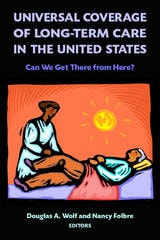
cover of Universal Coverage of Long-Term Care in the United States: Can We Get There from Here?

Universal Coverage of Long-Term Care in the United States

Can We Get There from Here?

Douglas A. Wolfe

Russell Sage Foundation, 2013
As millions of baby boomers retire and age in the coming years, more American families will confront difficult choices about the long-term care of their loved ones. The swelling ranks of the disabled and elderly who need such care—including home care, adult day care, or a nursing home stay—are faced with a strained, inequitable and expensive system. How will American society and policy adapt to this demographic transition? In Universal Coverage of Long-Term Care in the United States, editors Nancy Folbre and Douglas Wolf and an expert group of care researchers assess the current U.S. long-term care policies and exercise what can be learned from other countries facing similar care demands. After the high-profile suspension of the Obama Administration’s public long-term insurance program in 2011, Robert Hudson and Howard Gleckman provide concrete suggestions for lowering the cost and improving the quality of long-term care coverage in America. In a deeply personal and empirically rigorous analysis, family care expert Carol Levine draws crucial lessons from her experience as a caregiver for her ailing husband. She sheds light on the often fraught interactions that occur between the formal care system and family caregivers and analyzes how public policy can best support long-term family care. The volume next examines recent reforms in other developed countries and finds valuable lessons for American policy-makers. Contributors David Bell and Alison Bowes discuss the provision of personal care services in Scotland, which have been publicly financed since 2002. Their analysis shows that the new program reduced costs improved efficiency and allowed more recipients to receive care. The volume assesses the political and institutional prospects for moving towards a truly universal long-term care system in the United States. Robyn Stone provides a sobering overview of the formal, paid long-term care workforce in America, which is in crisis due to increasing demand and a shortage of qualified workers. Economist Leonard Burman focuses on public finances of the long-term care system, which will come under increasing strain as more Americans rely on Medicaid to pay for their long-term care. In the volume’s concluding chapter, Folbre and Wolf summarize criticisms of existing long-term care policies and outline particular reforms that can move the United States toward a universal system of long-term care insurance. Universal Coverage of Long-Term Care in the United States provides an essential resource on how to improve the long-term care sector in America and helps advance the national debate on this pressing topic. This volume is available for free download on the Foundation’s website, as are the volume’s individual chapters.
[more]
cover of Unleaded: How Changing Our Gasoline Changed Everything

Unleaded

How Changing Our Gasoline Changed Everything

Carrie Nielsen

Rutgers University Press, 2021

When leaded gasoline was first developed in the 1920s, medical experts were quick to warn of the public health catastrophes it would cause. Yet government regulators did not heed their advice, and for more than half a century, nearly all cars used leaded gasoline, which contributed to a nationwide epidemic of lead poisoning. By the 1970s, 99.8% of American children had significantly elevated levels of lead in their blood.
 
Unleaded tells the story of how crusading scientists and activists convinced the U.S. government to ban lead additives in gasoline. It also reveals how, for nearly fifty years, scientific experts paid by the oil and mining industries abused their authority to convince the public that leaded gasoline was perfectly harmless. 
 
Combining environmental history, sociology, and neuroscience, Carrie Nielsen explores how lead exposure affects the developing brains of children and is linked to social problems including academic failure, teen pregnancies, and violent crime. She also shows how, even after the nationwide outrage over Flint’s polluted water, many poor and minority communities and communities of color across the United States still have dangerously high lead levels. Unleaded vividly depicts the importance of sound science and strong environmental regulations to protect our nation’s most vulnerable populations.
[more]
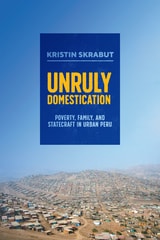
cover of Unruly Domestication: Poverty, Family, and Statecraft in Urban Peru

Unruly Domestication

Poverty, Family, and Statecraft in Urban Peru

Kristin Skrabut

University of Texas Press, 2024

2024 Flora Tristán Book Award, Sección Perú, Latin American Studies Association

How the international war on poverty shapes identities, relationships, politics, and urban space in Peru.

Unruly Domestication investigates how Peru’s ongoing, internationally endorsed "war on poverty" shapes politics, intimate identities, and urban space in Lima. Drawing on a decade of embedded, ethnographic research in Lima’s largest and most recently founded “extreme poverty zone,” Kristin Skrabut demonstrates how Peru’s efforts to fight poverty by formalizing property, identity, and family status perpetuate environmentally unsustainable urban sprawl, deepen discrimination against single mothers, and undermine Peruvians’ faith in public officials and in one another. In the process, Skrabut reveals myriad entanglements of poverty, statecraft, and private life, exploring how families are made and unmade through political practices, how gender inequalities are perpetuated through policy, and how Peruvians’ everyday pursuits of state-sanctioned domestic ideals reproduce informality and landscapes of poverty in the urban periphery.

The only full-length ethnography written about Lima’s iconic and policy-inspiring shantytowns in thirty years, Unruly Domestication provides valuable insight into the dynamics of housing and urban development in the Global South, elucidating the most intimate and profound effects of global efforts to do good.
[more]
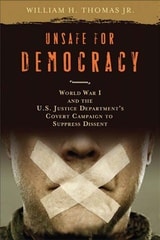
cover of Unsafe for Democracy: World War I and the U.S. Justice Department's Covert Campaign to Suppress Dissent

Unsafe for Democracy

World War I and the U.S. Justice Department's Covert Campaign to Suppress Dissent

William H. Thomas Jr.

University of Wisconsin Press, 2009

During the First World War it was the task of the U.S. Department of Justice, using the newly passed Espionage Act and its later Sedition Act amendment, to prosecute and convict those who opposed America’s entry into the conflict. In Unsafe for Democracy, historian William H. Thomas Jr. shows that the Justice Department did not stop at this official charge but went much further—paying cautionary visits to suspected dissenters, pressuring them to express support of the war effort, or intimidating them into silence. At times going undercover, investigators tried to elicit the unguarded comments of individuals believed to be a threat to the prevailing social order.
In this massive yet largely secret campaign, agents cast their net wide, targeting isolationists, pacifists, immigrants, socialists, labor organizers, African Americans, and clergymen. The unemployed, the mentally ill, college students, schoolteachers, even schoolchildren, all might come under scrutiny, often in the context of the most trivial and benign activities of daily life.
            Delving into numerous reports by Justice Department detectives, Thomas documents how, in case after case, they used threats and warnings to frighten war critics and silence dissent. This early government crusade for wartime ideological conformity, Thomas argues, marks one of the more dubious achievements of the Progressive Era—and a development that resonates in the present day.

Best Books for Special Interests, selected by the American Association of School Librarians

“Recommended for all libraries.”—Frederic Krome, Library Journal

[more]
cover of Urban Housing Segregation of Minorities in Western Europe and the United States

Urban Housing Segregation of Minorities in Western Europe and the United States

Elizabeth Huttman, Juliet Saltman and Wim Blauw, eds.

Duke University Press, 1991

This book provides an expert examination and comparison of housing segregation in major population centers in the United States and Western Europe and analyzes successes and failures of government policies and desegregation programs in the United States, the United Kingdom, the Netherlands, Sweden, France, and West Germany.
The collection begins with a review of the historical development of housing segregation in these countries, describing current housing conditions, concentration of housing in each country’s leading cities, minority populations and the housing they occupy—specifically public, nonprofit, and owner-occupied dwellings. When focusing on the United States, the contributors assess housing segregation, antisegregation measures, and institutional racism toward blacks in the Midwest and South, and toward Mexican-Americans throughout American cities. Chapters dealing with Western Europe include housing segregation of South Asian and West Indian immigrants in Britain, immigrants in Sweden, Turkish, and Yugoslav “guest workers” in West Germany, and Algerian and other Arab groups in France. The book concludes with discussions of public housing policies; suburban desegregation, resegregation, and integration maintenance programs; specific integration stabilization programs; and desegregation efforts in one specific place.

Contributors. Elizabeth Huttman, Michal Arend, Cihan Arin, Maurice Blanc, Wim Blauw, Ger Mik, Clyde McDaniels, Jürgen Friedrichs, Hannes Alpheis, John M. Goering, Len Gordon, Albert Mayer, Rosemary Helper, Barry V. Johnston, Terry Jones, Valerie Karn, Göran Lindberg, Anna Lisa Lindén, Deborah Phillips, Dennis Keating, Juliet Saltman, Alan Murie

[more]