Results by title
944 books match the query 'Indians of North America' and 10 start with u
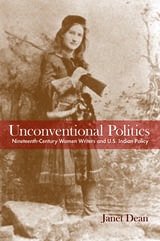
Unconventional Politics
Nineteenth-Century Women Writers and U.S. Indian PolicyJanet Dean
University of Massachusetts Press, 2016
Dean argues that in protesting U.S. Indian policy through popular genres, Wakefield, Sigourney, Callahan, and Eddleman also critiqued cultural protocols and stretched the contours of accepted modes of feminine discourse. Their acts of improvisation and reinvention tell a new story about the development of American women's writing and political expression.
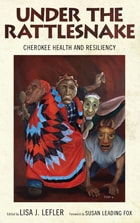
Under the Rattlesnake
Cherokee Health and ResiliencyEdited by Lisa J. Lefler, with a foreword by Susan Leading Fox
University of Alabama Press, 2009
For the Cherokee, health is more than the absence of disease; it includes a fully confident sense of a smooth life, peaceful existence, unhurried pace, and easy flow of time. The natural state of the world is to be neutral, balanced, with a similarly gently flowing pattern. States of imbalance, tension, or agitation are indicative of physical, mental, emotional, or spiritual illness and whether caused intentionally through omission or commission, or by outside actions or influences, the result affects and endangers the collective Cherokee.
Understanding Tribal Sovereignty
Federal Indian Law and Self-GovernanceDonald L. Fixico
University of Arizona Press, 2026
What does tribal sovereignty really mean—and why does it matter today?
Accessibly written for the nonspecialist, acclaimed historian Donald L. Fixico unpacks the complex history and legal foundations of tribal sovereignty in the United States. From traditional Native governance to landmark treaties, federal laws, and court cases, Fixico guides readers through the evolution of tribal self-rule and its modern expressions—from tribal constitutions to license plates and casinos. Designed for students, educators, tribal members, and professionals alike, this book offers a clear, compelling introduction to one of the most important—and often misunderstood—concepts in American Indian affairs.
This book is a go-to source for understanding the federal Indian laws, treaties, and court cases simplified to explain tribal sovereignty.
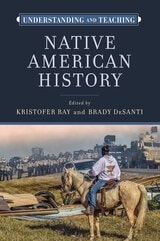
Understanding and Teaching Native American History
Edited by Kristofer Ray and Brady DeSanti
University of Wisconsin Press, 2023
Despite the availability of new scholarship, many teachers struggle with contextualizing Indigenous history and experience. Native peoples frequently find themselves relegated to historical descriptions, merely a foil to the European settlers who are the protagonists in the dominant North American narrative. This book offers a way forward, an alternative framing of the story that highlights the ongoing integral role of Native peoples via broad coverage in a variety of topics including the historical, political, and cultural.
With its scope and clarity of vision, suggestions for navigating sensitive topics, and a multitude of innovative approaches authored by contributors from multidisciplinary backgrounds, Understanding and Teaching Native American History will also find use in methods and other graduate courses. Nearly a decade in the conception and making, this is a groundbreaking source for both beginning and veteran instructors.
Unearthing Indian Land
Living with the Legacies of AllotmentKristin T. Ruppel
University of Arizona Press, 2008
Under the General Allotment Act of 1887, also known as the Dawes Act,individual Indians were issued title to land allotments while so-called “surplus”Indian lands were opened to non-Indian settlement. During the forty-seven years that the act remained in effect, American Indians lost an estimated 90 million acres of land—about two-thirds of the land they had held in 1887. Worse, the loss of control over the land left to them has remained an ongoing and insidious result.
Unearthing Indian Land traces the complex legacies of allotment, including numerous instructive examples of a policy gone wrong. Aside from the initial catastrophic land loss, the fractionated land ownership that resulted from the act’s provisions has disrupted native families and their descendants for more than a century. With each new generation, the owners of tribal lands grow in number and therefore own ever smaller interests in parcels of land. It is not uncommon now to find reservation allotments co-owned by hundreds of individuals.Coupled with the federal government’s troubled trusteeship of Indian assets,this means that Indian landowners have very little control over their own lands.
Illuminated by interviews with Native American landholders, this book is essential reading for anyone who is interested in what happened as a result of the federal government’s quasi-privatization of native lands.

Universities and Indian Country
Case Studies in Tribal-Driven ResearchEdited by Dennis K. Norman and Joseph P. Kalt
University of Arizona Press, 2015
Building on the Harvard Project on American Indian Economic Development’s experience with more than 120 nation-building projects over two decades, Universities and Indian Country posits that the tenets of nation building can provide a strategy for expanding and diversifying universities’ perspectives of knowledge in a multicultural world, while also producing results that are requested by and useful to Native communities.
This groundbreaking volume extends the dialogue begun by the Harvard project, providing another venue for the sharing of knowledge and information. The projects presented address a wide range of topics, including the regulation of genetic research, human resource development, tribal fund-raising, development of tribal museums, and freedom of the press in Indian Country.
Universities and Indian Country’s focus on the concerns and questions of Native communities themselves, provides insight not only into how projects came together, but also into what significance they have to the tribal partners. This compilation is a valuable resource for any student, professional, or community member concerned with issues of nation building and self-determination.
Unlearning the Language of Conquest
Scholars Expose Anti-Indianism in AmericaEdited by Four Arrows (Don Trent Jacobs)
University of Texas Press, 2006
Responding to anti-Indianism in America, the wide-ranging perspectives culled in Unlearning the Language of Conquest present a provocative account of the contemporary hegemony still at work today, whether conscious or unconscious. Four Arrows has gathered a rich collection of voices and topics, including:
- Waziyatawin Angela Cavender Wilson's "Burning Down the House: Laura Ingalls Wilder and American Colonialism," which probes the mentality of hatred woven within the pages of this iconographic children's literature.
- Vine Deloria's "Conquest Masquerading as Law," examining the effect of anti-Indian prejudice on decisions in U.S. federal law.
- David N. Gibb's "The Question of Whitewashing in American History and Social Science," featuring a candid discussion of the spurious relationship between sources of academic funding and the types of research allowed or discouraged.
- Barbara Alice Mann's "Where Are Your Women? Missing in Action," displaying the exclusion of Native American women in curricula that purport to illuminate the history of Indigenous Peoples.
Bringing to light crucial information and perspectives on an aspect of humanity that pervades not only U.S. history but also current sustainability, sociology, and the ability to craft accurate understandings of the population as a whole, Unlearning the Language of Conquest yields a liberating new lexis for realistic dialogues.
Upstream
Trust Lands and Power on the Feather RiverBeth Rose Middleton Manning
University of Arizona Press, 2018
Upstream documents the significance of the Allotment Era to a long and ongoing history of cultural and community disruption. It also details Indigenous resistance to both hydropower and disruptive conservation efforts. With a focus on northeastern California, this book highlights points of intervention to increase justice for Indigenous peoples in contemporary natural resource policy making.
Author Beth Rose Middleton Manning relates the history behind the nation’s largest state-built water and power conveyance system, California’s State Water Project, with a focus on Indigenous resistance and activism. She illustrates how Indigenous history should inform contemporary conservation measures and reveals institutionalized injustices in natural resource planning and the persistent need for advocacy for Indigenous restitution and recognition.
Upstream uses a multidisciplinary and multitemporal approach, weaving together compelling stories with a study of placemaking and land development. It offers a vision of policy reform that will lead to improved Indigenous futures at sites of Indigenous land and water divestiture around the nation.
Urban Indians of Arizona
Phoenix, Tucson, and FlagstaffJoyotpaul Chaudhuri
University of Arizona Press, 1974
Urban Voices
The Bay Area American Indian CommunitySusan Lobo, Coordinating Editor, Community History Project; Forewords by Wilma Mankiller and Simon J. Ortiz
University of Arizona Press, 2002