Results by title
328 books match the query 'Islam' and 5 start with u
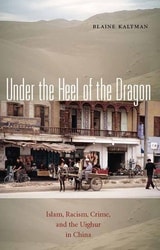
Under the Heel of the Dragon
Islam, Racism, Crime, and the Uighur in ChinaBlaine Kaltman
Ohio University Press, 2007
The Turkic Muslims known as the Uighur have long faced social and economic disadvantages in China because of their minority status. Under the Heel of the Dragon: Islam, Racism, Crime, and the Uighur in China offers a unique insight into current conflicts resulting from the rise of Islamic fundamentalism and the Chinese government’s oppression of religious minorities, issues that have heightened the degree of polarization between the Uighur and the dominant Chinese ethnic group, the Han.
Author Blaine Kaltman’s study is based on in-depth interviews that he conducted in Chinese without the aid of an interpreter or the knowledge of the Chinese government. These riveting conversations expose the thoughts of a wide socioeconomic spectrum of Han and Uighur, revealing their mutual prejudices. The Uighur believe that the Han discriminate against them in almost every aspect of their lives, and this perception of racism motivates Uighur prejudice against the Han.
Kaltman reports that criminal activity by Uighur is directed against their perceived oppressors, the Han Chinese. Uighur also resist Han authority by flouting the laws—such as tax and licensing regulations or prohibitions on the use or sale of hashish—that they consider to be imposed on them by an alien regime. Under the Heel of the Dragon offers a unique insight into a misunderstood world and a detailed explanation of the cultural perceptions that drive these misconceptions.

Understanding Al Qaeda
Changing War and Global PoliticsMohammad-Mahmoud Ould Mohamedou
Pluto Press, 2011
This book controversially argues that Al Qaeda has clear aims, and that the only way to defeat it is to engage with its arguments in a serious way.
Since the publication of the first edition in 2006, Mohamedou has brought the text right up-to-date. Starting with Al Qaeda's creation almost twenty years ago, and sketching its global mutation, Mohamedou explains that there is a cogent strategy to Al Qaeda's actions. He shows that the 'war on terror' is failing, only serving to recruit more terrorists to Al Qaeda's cause. He also puts forward a case for how the international community can best respond.
Arguing that it is dangerous to dismiss Al Qaeda as illogical and irrational, this incisive and original book is important for policy-makers and ideal for undergraduates in international relations, Middle East studies and peace/conflict studies.
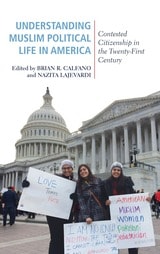
Understanding Muslim Political Life in America
Contested Citizenship in the Twenty-First CenturyBrian R. Calfano
Temple University Press, 2019
“Muslim Americans are at a political crossroads,” write editors Brian Calfano and Nazita Lajevardi. Whereas Muslims are now widely incorporated in American public life, there are increasing social and political pressures that disenfranchise them or prevent them from realizing the American Dream. Understanding Muslim Political Life in America brings clarity to the social, religious, and political dynamics that this diverse religious community faces.
In this timely volume, leading scholars cover a variety of topics assessing the Muslim American experience in the post-9/11 and pre-Trump era, including law enforcement; identity labels used in Muslim surveys; the role of gender relations; recognition; and how discrimination, tolerance, and politics impact American Muslims.
Understanding Muslim Political Life in America offers an update and reappraisal of what we know about Muslims in American political life. The editors and contributors also consider future directions and important methodological questions for research in Muslim American scholarship.
Contributors include Matt A. Barreto, Alejandro Beutel, Tony Carey, Youssef Chouhoud, Karam Dana, Oz Dincer, Rachel Gillum, Kerem Ozan Kalkan, Anwar Manje, Valerie Martinez-Ebers, Dani McLaughlan, Melissa R. Michelson, Yusuf Sarfati, Ahmet Tekelioglu, Marianne Marar Yacobian, and the editors.
Unknowing and the Everyday
Sufism and Knowledge in IranSeema Golestaneh
Duke University Press, 2023
Unveiling Traditions
Postcolonial Islam in a Polycentric WorldAnouar Majid
Duke University Press, 2000
Majid moves beyond Edward Said’s unmasking of orientalism in the West to examine the intellectual assumptions that have prevented a more nuanced understanding of Islam’s legacies. In addition to questioning the pervasive logic that assumes the “naturalness” of European social and political organizations, he argues that it is capitalism that has intensified cultural misunderstanding and created global tensions. Besides examining the resiliency of orientalism, the author critically examines the ideologies of nationalism and colonialist categories that have redefined the identity of Muslims (especially Arabs and Africans) in the modern age and totally remapped their cultural geographies. Majid is aware of the need for Muslims to rethink their own assumptions. Addressing the crisis in Arab-Muslim thought caused by a desire to simultaneously “catch up” with the West and also preserve Muslim cultural authenticity, he challenges Arab and Muslim intellectuals to imagine a post-capitalist, post-Eurocentric future. Critical of Islamic patriarchal practices and capitalist hegemony, Majid contends that Muslim feminists have come closest to theorizing a notion of emancipation that rescues Islam from patriarchal domination and resists Eurocentric prejudices.
Majid’s timely appeal for a progressive, multicultural dialogue that would pave the way to a polycentric world will interest students and scholars of postcolonial, cultural, Islamic, and Marxist studies.