Results by title
98 books match the query 'Labor movement' and 3 start with u
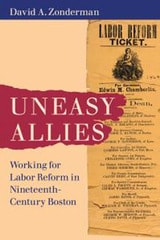
Uneasy Allies
Working for Labor Reform in Nineteenth-Century BostonDavid A. Zonderman
University of Massachusetts Press, 2011
In addition to analyzing what motivated these workers and reformers to create cross-class organizations, David Zonderman examines the internal tactical debates and external political pressures that fractured them, even as new alliances were formed, and shows how these influences changed over time. He describes what workers and reformers learned about politics and social change within these complex and volatile alliances, and speculates as to whether those lessons have relevance for activists and reformers today.
What emerges from this investigation is a narrative of progress and decline that spans nearly three-quarters of a century, as an ever-shifting constellation of associations debated the meaning of labor reform and the best strategy to secure justice for workers. But the quest for ideological consistency and organizational coherence was not easily achieved. By century's end, not only did Boston look dramatically different from its antebellum ancestor, but its labor reform alliances had lost some of their earlier openhearted optimism and stubborn resilience.
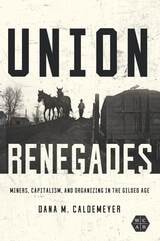
Union Renegades
Miners, Capitalism, and Organizing in the Gilded AgeDana M. Caldemeyer
University of Illinois Press, 2021
Nuanced and eye-opening, Union Renegades challenges popular notions of workers attitudes during the Gilded Age.
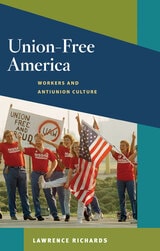
Union-Free America
Workers and Antiunion CultureLawrence Richards
University of Illinois Press, 2008
Union-Free America: Workers and Antiunion Culture confronts one of the most vexing questions with which labor activists and labor academics struggle: why is there so much opposition to organized labor in the United States? Scholars often point to powerful obstacles from employers or governmental policies, but Lawrence Richards offers a more complete picture of the causes for union decline in the postwar period by examining the attitudes of the workers themselves. Large numbers of American workers in the 1970s and 1980s told pollsters that they would vote against a union if an election were held at their place of employment, and Richards provides a provocative explanation for this hostility: a pervasive strain of antiunionism in American culture that has made many workers distrustful of organized labor.
Weighing the arguments of previous historians and sociologists, Richards posits that this underlying antiunion culture in America has been remarkably consistent over the course of half a century. Assessing organizing efforts among blue-collar, white-collar, and pink-collar workers, Richards examines the tactics and countertactics of company and union representatives who sought to either exploit or neutralize workers' popular negative stereotypes of organized labor's insidious control over workers' autonomy. The book considers a number of case studies of organizing drives throughout recent history, from the failed attempt by District 65 to organize clerical workers at New York University in 1970, to a similarly fruitless drive by the Textile Workers Union in 1980 at a textile factory in Charlottesville, Virginia. In both of these particular cases and in many more, antiunion culture has operated to hinder unions' efforts to organize the unorganized. By examining the manifestations and motivations of antiunion culture in the United States, Richards helps explain why so many American workers seem to vote against their own self-interest and declare themselves "Union Free and Proud."