Results by title
355 books match the query 'Middle Atlantic (DC, DE, MD, NJ, NY, PA)' and 5 start with u
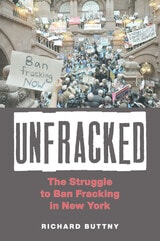
Unfracked
The Struggle to Ban Fracking in New YorkRichard Buttny
University of Massachusetts Press, 2024
Since fracking emerged as a way of extracting natural gas, through intense deep drilling and the use of millions of gallons of water and chemicals to fracture shale, it has been controversial. It is perceived in different ways by different people—by some as an opportunity for increased resources and possibly jobs and other income; by others as a public health and environmental threat; and for many, an unknown. Richard Buttny, a scholar who works on rhetoric and discursive practices, read a story in his local paper in New York about hydrofracking coming to his area and had to research what it was, and what it could mean for his community. Soon he joined neighbors in fighting to have the practice banned state-wide. At the same time, he turned his scholarly eye to the messaging from both sides of the fight, using first-person accounts, interviews, and media coverage.
The activists fighting fracking won. New York is now the only state in the US with sizable deposits of natural gas that has banned hydraulic fracturing, or fracking. Unfracked explains the competing rhetoric and discourses on fracking among New York-based advocates, experts, the grassroots, and political officials. Buttny examines how these positions evolved over time and how eventually the state arrived at a decision to ban this extractive technology. His accessible approach provides both a historical recounting of the key events of this seven-year conflict, along with four in-depth case studies: a grassroots citizen group, a public hearing with medical physicians, a key intergovernmental hearing, and a formal debate among experts. The result is a look at a very recent, important historical moment and a useful examination of environmental activist and fossil fuel advocate rhetoric around an issue that continues to cause debate nationwide.
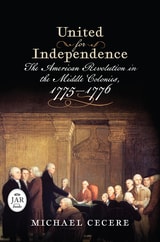
United for Independence
The American Revolution in the Middle Colonies, 1775–1776Michael Cecere
Westholme Publishing, 2027
In the aftermath of the battles of Lexington and Concord in April 1775 and the start of the Revolutionary War, it was not clear whether the colonies outside of New England would participate militarily in the conflict. Troops from the four New England colonies surrounded Boston immediately after the fighting at Lexington and Concord, and two months into the standoff the Continental Congress, meeting in Philadelphia, assumed authority over the New England army, but the middle and southern colonies had yet to see armed conflict or bloodshed with British forces.
In United for Independence: The American Revolution in the Middle Colonies, 1775–1776, historian Michael Cecere examines how the inhabitants of New York, New Jersey, Pennsylvania, Delaware, and Maryland reacted to the outbreak of war in Massachusetts. Leaders in these middle colonies, influenced by strong Loyalist sentiment within their borders and, in some cases, among themselves, fiercely debated whether to support the war in New England. Congress’s decision in the summer to establish the Continental Army, and its authorization for an invasion of Canada, both of which involved troops from the middle colonies, set the stage for their full-scale involvement in the Revolutionary War.
Using primary source extracts and proceeding chronologically from the spring of 1775 to the fall of 1776, the author presents the key events in each of these colonies, from the political struggles between Whigs and Tories, through the failed Canadian expedition, to the loss of Long Island and New York City. Designed for readers to understand the sequence of events that transformed a resistance movement into a war for independence, United for Independence provides an important overview of events in the middle colonies at the start of the Revolutionary War that complements other works that focus on specific military clashes and campaigns.
Unwelcome Shores
Black Refugees in AmericaBernadette Ludwig
Rutgers University Press, 2026
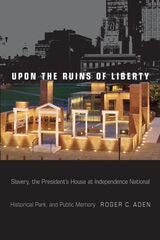
Upon the Ruins of Liberty
Slavery, the President's House at Independence National Historical Park, and Public MemoryRoger C. Aden
Temple University Press, 2014
In Upon the Ruins of Liberty, Roger Aden offers a compelling account that explores the development of this important historic site and how history, space, and public memory intersected with contemporary racial politics. Aden constructs this engrossing tale by drawing on archival material and interviews with principal figures in the controversy-including historian Ed Lawler, site activist Michael Coard, and site designer Emanuel Kelly.
Upon the Ruins of Liberty chronicles the politically-charged efforts to create a fitting tribute to the place where George Washington (and later, John Adams) shaped the presidency while denying freedom to the nine enslaved Africans in his household. From design to execution, the plans prompted advocates to embrace stories informed by race, and address difficulties that included how to handle the results of the site excavation. As such, this landmark project raised concerns and provided lessons about the role of public memory and how places are made to shape the nation's identity.
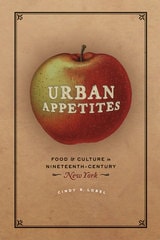
Urban Appetites
Food and Culture in Nineteenth-Century New YorkCindy R. Lobel
University of Chicago Press, 2014
Historians, sociologists, and foodies alike will devour the story of the origins of New York City’s food industry in Urban Appetites. Cindy R. Lobel focuses on the rise of New York as both a metropolis and a food capital, opening a new window onto the intersection of the cultural, social, political, and economic transformations of the nineteenth century. She offers wonderfully detailed accounts of public markets and private food shops; basement restaurants and immigrant diners serving favorites from the old country; cake and coffee shops; and high-end, French-inspired eating houses made for being seen in society as much as for dining. But as the food and the population became increasingly cosmopolitan, corruption, contamination, and undeniably inequitable conditions escalated. Urban Appetites serves up a complete picture of the evolution of the city, its politics, and its foodways.