Results by title
941 books match the query 'Military' and 13 start with u
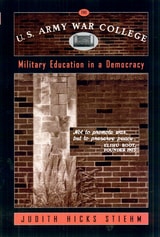
U.S. Army War College
Military Education In A DemocracyJudith Hicks Stiehm
Temple University Press, 2002
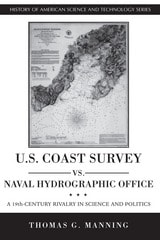
U.S. Coast Survey vs. Naval Hydrographic Office
A 19th-Century Rivalry in Science and PoliticsThomas G. Manning
University of Alabama Press, 1988
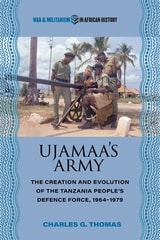
Ujamaa’s Army
The Creation and Evolution of the Tanzania People's Defence Force, 1964–1979Charles G. Thomas
Ohio University Press, 2024
The immediate postcolonial moment brought both promise and peril for the states of Africa and their security. The process of decolonization generated instability, and the emergent Cold War caught up the still-fragile independent states in a global ideological struggle between superpowers. While the political story of these states has been written in detail, the story of their militaries has been largely inaccessible, leaving only sketches of the coups, mutinies, and overall failures of security that outside observers could chronicle.
Ujamaa’s Army traces the evolution of the Tanzania People’s Defence Force from its inception in 1964 following the broader East African uprisings to its fully realized form on the eve of Tanzania’s 1978 conflict with Uganda. The book gathers primary interviews with key military actors within Tanzania and interweaves their narratives with archival sources to produce a detailed history of the culmination of President Julius Nyerere’s ideological project and the military leadership’s vision of a professional and effective force for guarding the nation and supporting liberation struggles across Southern Africa.
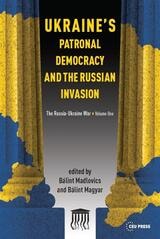
Ukraine's Patronal Democracy and the Russian Invasion
The Russia-Ukraine War, Volume OneBálint Madlovics
Central European University Press, 2023
The Russian invasion of Ukraine in 2022 jeopardizes the country's independence and its chances for Western-style development. However, the heroic attitude of the Ukrainian people, combined with a solidifying national identity, makes the domestic foundations for a western turn stronger than ever. After the invasion, building strong foundations of liberal democracy will be a top priority. In addition to alleviating immediate problems, the country must also address its post-communist legacy and address the constraints of patronalism.
The authors of this edited volume, leading Ukrainian scholars supplemented by colleagues from Hungary, examine the chances of an anti-patronal transformation after the war. The book provides an overview of the development of Ukraine's political-economic system: color revolutions in 2004 and 2014 brought democratic transformation, but no change in the patronage system The result was patronal regime cycles instead of the emergence of a Western-type liberal democracy in the country. Building on the conceptual framework of the editors' The Anatomy of Post-Communist Regimes (CEU Press, 2020), the 12 chapters examine the impact of the war on patronal democracy, the relational economy, clientelist society, and the international environment in which Ukraine operates.
This collection is complemented by the book entitled Russia. Imperial Endeavor and Geopolitical Consequences.
Understanding and Teaching the Cold War
Edited by Matthew Masur
University of Wisconsin Press, 2016
Teaching the Cold War is both necessary and challenging. Understanding and Teaching the Cold War is designed to help collegiate and high school teachers navigate the complexity of the topic, integrate up-to-date research and concepts into their classes, and use strategies and tools that make this important history meaningful to students.
The volume opens with Matthew Masur’s overview of models for approaching the subject, whether in survey courses or seminars. Two prominent historians, Carole Fink and Warren Cohen, offer accounts of their experience as longtime scholars and teachers of the Cold War from European and Asian perspectives. Sixteen essays dig into themes including the origins and end of the conflict, nuclear weapons, diplomacy, propaganda, fear, popular culture, and civil rights, as well as the Cold War in Eastern Europe, Western Europe, East Asia, Africa, Latin America, and the nonaligned nations. A final section provides practical advice for using relevant, accessible primary sources to implement the teaching ideas suggested in this book.
Undertones of War
Edmund Blunden
University of Chicago Press, 2007
In Undertones of War, one of the finest autobiographies to come out of World War I, the acclaimed poet Edmund Blunden records his devastating experiences in combat. After enlisting at the age of twenty, he took part in the disastrous battles at the Somme, Ypres, and Passchendaele, describing them as “murder, not only to the troops but to their singing faiths and hopes.”
All the horrors of trench warfare, all the absurdity and feeble attempts to make sense of the fighting, all the strangeness of observing war as a writer—of being simultaneously soldier and poet—pervade Blunden’s memoir. In steely-eyed prose as richly allusive as any poetry, he tells of the endurance and despair found among the men of his battalion, including the harrowing acts of bravery that won him the Military Cross.
Now back in print for American readers, the volume includes a selection of Blunden’s war poems that unflinchingly juxtapose death in the trenches with the beauty of Flanders’s fields. Undertones of War deserves a place on anyone’s bookshelf between Siegfried Sassoon’s poetry and Robert Graves’s Goodbye to All That.
Unfurl Those Colors!
McClellan, Sumner, and the Second Army Corps in the Antietam CampaignMarion V. Armstrong Jr.
University of Alabama Press, 2008
Traces the engrossing story of the Union Army’s strategies, stratagems, and movements on the bloodiest day in American military history
Unfurl Those Colors! provides an operational study of the Army of the Potomac during the pivotal Battle of Antietam on September 17, 1862, illuminating in details that will fascinate scholars and armchair generals alike US army commander George B. McClellan’s command decisions and how those decisions were carried out in the middle and lower ranks of the Second Army Corps.
Armstrong offers the most comprehensive account yet of the Second Army Corps’s fight at Antietam, including Sedgwick’s division in the West Woods and French’s and Richardson’s divisions at Bloody Land. He offers a fresh reappraisal of the leadership of Bostonian Edwin V. “Bull Head” Sumner as the only federal corps commander who doggedly and accurately carried out McClellan’s battle plan and effectively directed the battle on the Federal right.
Many esteemed Civil War historians consider Antietam a watershed moment in the Civil War, a crucial success after which Abraham Lincoln was emboldened to issue the Emancipation Proclamation. Unfurl Those Colors! offers a vital examination of the operational fabric of the Army of the Potomac’s leadership and command in one of the most important days in American history.
Unjustly Dishonored
An African American Division in World War IRobert H. Ferrell
University of Missouri Press, 2026
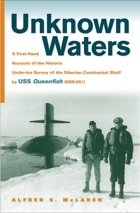
Unknown Waters
A First-Hand Account of the Historic Under-Ice Survey of the Siberian Continental Shelf by USS Queenfish (SSN-651)Alfred S. McLaren
University of Alabama Press, 2008
“A first-person view of submarine under-ice operations that appears in very few other works.” —Gary E. Weir, author of Rising Tide: The Untold Story of the Russian Submarines that Fought the Cold War
Unknown Waters tells the story of the brave officers and men of the nuclear attack submarine USS Queenfish (SSN-651), who made the first survey of an extremely important and remote region of the Arctic Ocean. The unpredictability of deep-draft sea ice, shallow water, and possible Soviet discovery, all played a dramatic part in this engrossing 1970 voyage.
Covering 3,100 miles over a period of some 20 days at a laborious average speed of 6.5 knots or less, the attack submarine carefully threaded its way through innumerable underwater canyons of ice and over irregular seafloors, at one point becoming entrapped in an “ice garage.” Only cool thinking and skillful maneuvering of the nearly 5,000-ton vessel enabled a successful exit.
Unmanning
How Humans, Machines and Media Perform Drone WarfareKatherine Fehr Chandler
Rutgers University Press, 2020
Unsettling Sovereignty
International Law, Nuclear Weapons, and US Extraterritorial Power in Postwar OceaniaM. X. Mitchell
University of Chicago Press, 2026
Marshall Islanders and their ancestral lands and waters played important roles in reshaping the United States’ offshore power, state sovereignty, and the international politics of decolonization.
In the years following World War II, the United States conducted sixty-seven devastating nuclear blasts in the Marshall Islands—yet the archipelago was never a US territory. Working through the United Nations, US diplomats engineered a new, one-of-a-kind extraterritorial status, called strategic trusteeship, to control the Native lands, waters, and peoples of the Marshall, Caroline, and Northern Mariana Islands. Strategic trusteeship permitted the US to militarize a vast expanse of Western Oceania. This novel and racialized legal form of international dependency was integral to US nuclear weapons detonations and damage in the region.
In Unsettling Sovereignty, M. X. Mitchell recounts this untold legal history, exploring how nuclear weapons changed claims and practices of sovereignty from the 1940s to the present. US nuclear blasting in the Marshall Islands troubled conventional renderings of state sovereignty under international law. The explosions, disastrous for Marshallese communities and their ancestral atolls, also caused hazardous nuclear fallout, which spread around the globe. Islanders and their allies turned to law, using legal wrangling over blasting and fallout to raise new questions about the location, time, and subjects of state violence in a period of decolonization; the intersections between race, Indigeneity, and wide-scale technogenic harm; and the pitfalls and unfulfilled promises of international law. Mitchell shows that the Marshallese people and their lands and waters were, and remain, central to redefining sovereignty in an era of boundless pollution and climate change.
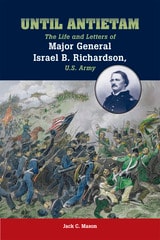
Until Antietam
The Life and Letters of Major General Israel B. Richardson, U.S. ArmyJack C. Mason
Southern Illinois University Press, 2009
While researching this book, Jack C. Mason made the kind of discovery that historians dream of. He found more than one hundred unpublished and unknown letters from Union general Israel B. Richardson to his family, written from his time as a West Point cadet until the day before his fatal wounding at the Battle of Antietam, the bloodiest day in American history. Using these freshly uncovered primary sources as well as extensive research in secondary materials, Mason has written the first-ever biography of Israel Bush Richardson.
Mason traces Richardson’s growth as a soldier through his experiences and the guidance of his superiors, and then as a leader whose style reflected the actions of the former commanders he respected. Though he was a disciplinarian, Richardson took a relaxed attitude toward military rules, earning him the affection of his men. Unfortunately, his military career was cut short just as high-ranking officials began to recognize his aggressive leadership. He was mortally wounded while leading his men at Antietam and died on November 3, 1862.
Until Antietam brings to life a talented and fearless Civil War infantry leader. Richardson’s story, placed within the context of nineteenth-century warfare, exemplifies how one soldier’s life influenced his commanders, his men, and the army as a whole.
Winner of the Army Historical Foundation 2009 Distinguished Book Award
Upstaging the Cold War
American Dissent and Cultural Diplomacy, 1940-1960Andrew J. Falk
University of Massachusetts Press, 2010
Traditional interpretations of the 1950s have emphasized how American anti-communists deployed censorship and the blacklist to silence dissent, particularly in the realm of foreign policy. Yet those efforts at repression did not always succeed. Throughout the early years of the Cold War, a significant number of writers and performers continued to express controversial views about international relations in Hollywood films, through the new medium of television, on the Broadway stage, and from behind the scenes.
By promoting superpower cooperation, decolonization, nuclear disarmament, and other taboo causes, dissident artists such as Lillian Hellman, Arthur Miller, Rod Serling, Dalton Trumbo, Reginald Rose, and Paddy Chayefsky managed both to stretch the boundaries of Cold War ideology and to undermine some of its basic assumptions. Working at times under assumed names and in some cases outside the United States, they took on the role of informal diplomats who competed with Washington in representing America to the world.
Ironically, the dissidents' international appeal eventually persuaded the U.S. foreign policy establishment that their unconventional views could be an asset in the Cold War contest for “hearts and minds,” and their artistic work an effective means to sell American values and culture abroad. By the end of the 1950s, the Eisenhower administration not only appropriated the work of these talented artists but enlisted some of them to serve as official voices of Cold War cultural diplomacy.