Results by title
179 books match the query 'Past' and 4 start with u
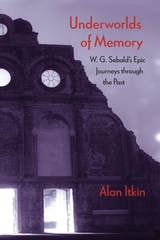
Underworlds of Memory
W. G. Sebald's Epic Journeys through the PastAlan Itkin
Northwestern University Press, 2017
Scholars often read Sebald’s work as a project of cultural memory that aims to reevaluate Europe's past in the wake of the traumatic and complex events of the twentieth century. Sebald’s characters seek out the traces of Europe’s destructive history in strange places. They linger in disused train stations, pause before works of art, and return to childhood homes that turn out to be more foreign than any place they have visited. Underworlds of Memory demonstrates that these strange encounters with the past are based on central tropes of classical epic: the journey to the underworld, the encounter with a work of art, and the return to the homeland.
Sebald thus follows in the footsteps of German Jewish authors, including Peter Weiss, Siegfried Kracauer, and Jean Améry, who use these same epic tropes to reconsider the cultural memory of the Holocaust. Underworlds of Memory reads Sebald's works together with the works of these German Jewish authors and the classical epics of Homer and Virgil in order to describe and trace the origins of the unique intervention into cultural memory they embody.
Unfinished Business
Thoughts on the Past, Present, Future, and Nurturing of Homo ScribensCharles Bazerman
University Press of Colorado, 2024
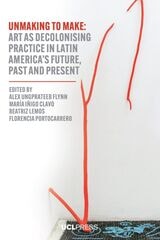
Unmaking to Make
Art as Decolonising Practice in Latin America’s Future, Past and PresentEdited by Alex Ungprateeb Flynn, María Iñigo Clavo, Beatriz Lemos, and Florencia Portocarrero
University College London, 2026
An examination of art's evolving role in theorizing decolonization, with Afro-diasporic and Indigenous perspectives in Latin America at its center.
Unmaking to Make reorients global conversations on decolonization by centering Afro-diasporic and Indigenous perspectives from across Latin America. Through a wide-ranging selection of texts, including critical essays, curatorial reflections, and interviews, it explores how artistic practice actively theorizes, models, and enacts alternative modes of living. Showcases cutting-edge work of emerging artists and curators, currently under-recognized in North American and European contexts. The volume establishes new reference points, methodologies, and institutional models for the next generation of scholars. By mapping forthcoming debates and potential institutional shifts, the book provides forward-looking insights into where and how decolonial thought will unfold in the years to come.
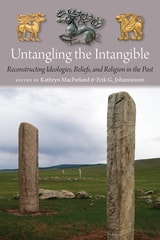
Untangling the Intangible
Reconstructing Ideologies, Beliefs, and Religion in the PastKathryn MacFarland
University Press of Colorado, 2026
In Untangling the Intangible a diverse group of authors focuses on new and rigorous ways to approach religion, beliefs, and ideology in archaeology. Reconstructing the human experience from archaeologically recovered materials is a complex task that can only benefit by making use of all available avenues of inquiry. To that end, the authors of this volume model inclusive discussions that recognize the inherent overlap, intersectionality, and co-constitutive relationship among the widely considered “intangibles” of culture: ideas, beliefs, ideology, and religion. The material and tangible aspects of these related elements inform human behavior and should not be treated independently because they constitute different and equal parts of a cognitive mosaic that forms the basis of the human experience.
The chapters encompass an array of research topics, geographical settings (Crete, Eurasia, the eastern Mediterranean, Madagascar, Mexico, and Mongolia), and temporal periods and highlight how practices associated with religious and ideological beliefs have shaped human societies across space and time. By focusing on multiple scales of inquiry and novel ways of accessing the material expressions of cultural phenomena and addressing underrepresented themes, this book challenges existing approaches and perspectives on the topic and directs future researchers to grapple with these elements as integral to researching the past.
Emphasizing a more comprehensive study of religious and ideological aspects of material culture, Untangling the Intangible highlights the potential for a more holistic understanding of the past and for approaching the very aspects that make us human through archaeology.
Publication of this book has been aided by a grant from the von Bothmer Publication Fund of the Archaeological Institute of America.