Results by title
2018 books match the query 'Political aspects' and 25 start with u
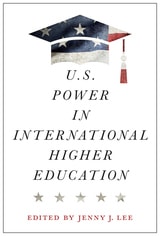
U.S. Power in International Higher Education
Jenny J. Lee
Rutgers University Press, 2021
U.S. Power in International Higher Education explores how internationalization in higher education is not just an educational endeavor, but also a geopolitical one. By centering and making explicit the role of power, the book demonstrates the United States’s advantage in international education as well as the changing geopolitical realities that will shape the field in the future. The chapter authors are leading critical scholars of international higher education, with diverse scholarly ties and professional experiences within the country and abroad. Taken together, the chapters provide broad trends as well as in-depth accounts about how power is evident across a range of key international activities. This book is intended for higher education scholars and practitioners with the aim of raising greater awareness on the unequal power dynamics in internationalization activities and for the purposes of promoting more just practices in higher education globally.

Unbecoming Nationalism
From Commemoration to Redress in CanadaHelene Vosters
University of Manitoba Press, 2019
Unburied Bodies
Subversive Corpses and the Authority of the DeadJames R. Martel
Amherst College Press, 2018
Uncanny Rest
For AntiphilosophyAlberto Moreiras
Duke University Press, 2022
Uncensored
Samizdat Novels and the Quest for Autonomy in Soviet DissidenceAnn Komaromi
Northwestern University Press, 2015
Under Pressure
A Song by David Bowie and QueenMax Brzezinski
Duke University Press, 2025
Underground Leviathan
Corporate Sovereignty and Mining in the AmericasIsrael G. Solares
University of Nevada Press, 2024
Author Israel G. Solares examines how the twentieth century multinational firm established and articulated multinational corporate sovereignty in ways that reflect other multinational titans, like the East Asian Trade companies, and presages the digital giants and space corporations of the twenty-first century. Bridging the domineering practices used during the colonization of Southern Asia with the futuristic colonies on the Moon, Underground Leviathan documents the cost of a corporation’s unyielding desire to consume the secrets at the center of the Earth.

Understanding Film
Marxist PerspectivesEdited by Mike Wayne
Pluto Press, 2005
From the introduction
Film remains one of the most dominant cultural forms in the world today. Crossing classes and cultures, it permeates many aspects of our consciousness. In film, perhaps more than any other medium, we can read the politics of time and place, past and present. The history of Marxism has intersected with film in many ways and this book is a timely reminder of the fruits of that intersection, in film theory and film practice. Marxist film theory returns to film studies some of the key concepts which make possible a truly radical, political understanding of the medium and its place both within capitalism and against it. This book shows how questions of ideology, technology and industry must be situated in relation to class – a category which academia is distinctly uncomfortable with. It explores the work of some of the key theorists who have influenced our understanding of film, such as Adorno, Althusser, Benjamin, Brecht, Gramsci, Jameson and others. It shows how films must be situated in their social and historical contexts, whether Hollywood, Russian, Cuban, Chinese or North Korean cinema. The authors explore the political contradictions and tensions within dominant cinema and discuss how Marxist filmmakers have pushed the medium in new and exciting directions.
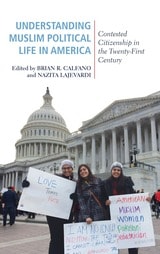
Understanding Muslim Political Life in America
Contested Citizenship in the Twenty-First CenturyBrian R. Calfano
Temple University Press, 2019
“Muslim Americans are at a political crossroads,” write editors Brian Calfano and Nazita Lajevardi. Whereas Muslims are now widely incorporated in American public life, there are increasing social and political pressures that disenfranchise them or prevent them from realizing the American Dream. Understanding Muslim Political Life in America brings clarity to the social, religious, and political dynamics that this diverse religious community faces.
In this timely volume, leading scholars cover a variety of topics assessing the Muslim American experience in the post-9/11 and pre-Trump era, including law enforcement; identity labels used in Muslim surveys; the role of gender relations; recognition; and how discrimination, tolerance, and politics impact American Muslims.
Understanding Muslim Political Life in America offers an update and reappraisal of what we know about Muslims in American political life. The editors and contributors also consider future directions and important methodological questions for research in Muslim American scholarship.
Contributors include Matt A. Barreto, Alejandro Beutel, Tony Carey, Youssef Chouhoud, Karam Dana, Oz Dincer, Rachel Gillum, Kerem Ozan Kalkan, Anwar Manje, Valerie Martinez-Ebers, Dani McLaughlan, Melissa R. Michelson, Yusuf Sarfati, Ahmet Tekelioglu, Marianne Marar Yacobian, and the editors.
Undocumented Fears
Immigration and the Politics of Divide and Conquer in Hazleton, PennsylvaniaJamie Longazel
Temple University Press, 2016
The Illegal Immigration Relief Act (IIRA), passed in the small Rustbelt city of Hazleton, Pennsylvania in 2006, was a local ordinance that laid out penalties for renting to or hiring undocumented immigrants and declared English the city’s official language. The notorious IIRA gained national prominence and kicked off a parade of local and state-level legislative initiatives designed to crack down on undocumented immigrants.
In his cogent and timely book, UndocumentedFears, Jamie Longazel uses the debate around Hazleton’s controversial ordinance as a case study that reveals the mechanics of contemporary divide and conquer politics. He shows how neoliberal ideology, misconceptions about Latina/o immigrants, and nostalgic imagery of “Small Town, America” led to a racialized account of an undocumented immigrant “invasion,” masking the real story of a city beset by large-scale loss of manufacturing jobs.
Offering an up-close look at how the local debate unfolded in the city that set off this broader trend, Undocumented Fears makes an important connection between immigration politics and the perpetuation of racial and economic inequality.
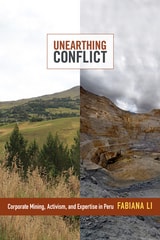
Unearthing Conflict
Corporate Mining, Activism, and Expertise in PeruFabiana Li
Duke University Press, 2015
Unequal Thailand
Aspects of Income, Wealth and PowerEdited by Pasuk Phongpaichit and Chris Baker
National University of Singapore Press, 2015
The contributors to this important study—Thai scholars, reformers and civil servants—shed light on the many dimensions of inequality in Thailand, looking beyond simple income measures to consider land ownership, education, finance, business structures and politics. The contributors propose a series of reforms in taxation, spending and institutional reform that can address growing inequality.
Inequality is among the biggest threats to social stability in Southeast Asia, and this close study of a key Southeast Asian country will be relevant to regional policy-makers, economists and business decision-makers, as well as students of oligarchy and inequality more generally.
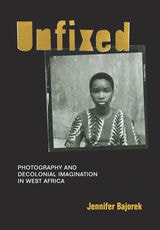
Unfixed
Photography and Decolonial Imagination in West AfricaJennifer Bajorek
Duke University Press, 2020
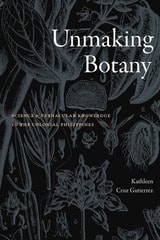
Unmaking Botany
Science and Vernacular Knowledge in the Colonial PhilippinesKathleen Cruz Gutierrez
Duke University Press, 2025
Unmaking Russia’s Abortion Culture
Family Planning and the Struggle for a Liberal BiopoliticsMichele Rivkin-Fish
Vanderbilt University Press, 2024
Honorable Mention, Davis Center Book Prize in Political and Social Studies, Association for Slavic, East European, and Eurasian Studies, 2025
Honorable Mention, Women’s Forum Book Prize, British Association for Slavonic and East European Studies, 2024
As the predominant form of birth control in Soviet society, abortion reflected key paradoxes of state socialism: women held formal equality but lacked basic needs such as contraceptives. With market reforms, Russians enjoyed new access to Western contraceptives and new pressures to postpone childbearing until economically self-sufficient. But habits of family planning did not emerge automatically—they required extensive physician retraining, public education, and cultural transformation. In Unmaking Russia’s Abortion Culture, author Michele Rivkin-Fish examines the creative strategies of Russians who promoted family planning in place of routine abortion. Rather than emphasizing individual rights, they explained family planning’s benefits to the nation—its potential to strengthen families and prevent the secondary sterility that resulted when women underwent repeat, poor-quality abortions. Still, fierce debates about abortion and contraceptives erupted as declining fertility was framed as threatening Russia’s demographic sovereignty.
Although Russian family planners embraced a culturally meaningful liberalism that would rationalize public policy and reenchant relations, nationalist opponents cast family planning as suspicious for its association with the individualistic, “child-free” West. This book tells the story of how Russian family planners developed culturally salient frameworks to promote the acceptability of contraceptives and help end routine abortion. It also documents how nationalist campaigns for higher fertility denounced family planning and ultimately dismantled its institutions. By tracing these processes, Unmaking Russia’s Abortion Culture demonstrates the central importance of reproductive politics in the struggle for liberalizing social change that preceded Russia’s 2022 descent into war, repression, and global marginalization.
Unruly Cinema
History, Politics, and BollywoodRini Bhattacharya Mehta
University of Illinois Press, 2020
Rini Bhattacharya Mehta considers four aspects of Indian cinema's complicated history. She begins with the industry's surprising, market-driven triumph over imports from Hollywood and elsewhere in the 1930s. From there she explores how the nationalist social melodrama outwitted the government with its 1950s cinematic lyrical manifestoes. In the 1970s, an action cinema centered on the angry young male co-opted the voice of the oppressed. Finally, Mehta examines Indian film's discovery of the global neoliberal aesthetic that encouraged the emergence of Bollywood.
Unruly Souls
The Digital Activism of Muslim and Christian FeministsKristin M. Peterson
Rutgers University Press, 2022
Unsettling Archival Research
Engaging Critical, Communal, and Digital ArchivesEdited by Gesa E. Kirsch, Romeo García, Caitlin Burns Allen, and Walker P. Smith
Southern Illinois University Press, 2023
A collection of accessible, interdisciplinary essays that explore archival practices to unsettle traditional archival theories and methodologies.
What would it mean to unsettle the archives? How can we better see the wounded and wounding places and histories that produce absence and silence in the name of progress and knowledge? Unsettling Archival Research sets out to answer these urgent questions and more, with essays that chart a more just path for archival work.
Unsettling Archival Research is one of the first publications in rhetoric and writing studies dedicated to scholarship that unsettles disciplinary knowledge of archival research by drawing on decolonial, Indigenous, antiracist, queer, and community perspectives. Written by established and emerging scholars, essays critique not only the practices, ideologies, and conventions of archiving, but also offer new tactics for engaging critical, communal, and digital archiving within and against systems of power. Contributors reflect on efforts to unsettle and counteract racist, colonial histories, confront the potentials and pitfalls of common archival methodologies, and chart a path for the future of archival research otherwise. Unsettling Archival Research intervenes in a critical issue: whether the discipline’s assumptions about the archives serve or fail the communities they aim to represent and what can be done to center missing voices and perspectives. The aim is to explore the ethos and praxis of bearing witness in unsettling ways, carried out as a project of queering and/or decolonizing the archives.
Unsettling Archival Research takes seriously the rhetorical force of place and wrestles honestly with histories that still haunt our nation, including the legacies of slavery, colonial violence, and systemic racism.
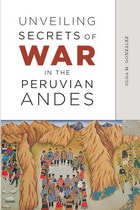
Unveiling Secrets of War in the Peruvian Andes
Olga M. González
University of Chicago Press, 2011
The Maoist guerrilla group Shining Path launched its violent campaign against the government in Peru’s Ayacucho region in 1980. When the military and counterinsurgency police forces were dispatched to oppose the insurrection, the violence quickly escalated. The peasant community of Sarhua was at the epicenter of the conflict, and this small village is the focus of Unveiling Secrets of War in the Peruvian Andes. There, nearly a decade after the event, Olga M. González follows the tangled thread of a public secret: the disappearance of Narciso Huicho, the man blamed for plunging Sarhua into a conflict that would sunder the community for years.
Drawing on extensive fieldwork and a novel use of a cycle of paintings, González examines the relationship between secrecy and memory. Her attention to the gaps and silences within both the Sarhuinos’ oral histories and the paintings reveals the pervasive reality of secrecy for people who have endured episodes of intense violence. González conveys how public secrets turn the process of unmasking into a complex mode of truth telling. Ultimately, public secrecy is an intricate way of “remembering to forget” that establishes a normative truth that makes life livable in the aftermath of a civil war.
Up Against the Real
Black Mask from Art to ActionNadja Millner-Larsen
University of Chicago Press, 2023
With Up Against the Real, Nadja Millner-Larsen offers the first comprehensive study of the group Black Mask and its acrimonious relationship to the New York art world of the 1960s. Cited as pioneers of now-common protest aesthetics, the group’s members employed incendiary modes of direct action against racism, colonialism, and the museum system. They shut down the Museum of Modern Art, fired blanks during a poetry reading, stormed the Pentagon in an antiwar protest, sprayed cow’s blood at the secretary of state, and dumped garbage into the fountain at Lincoln Center. Black Mask published a Dadaist broadside until 1968, when it changed its name to Up Against the Wall Motherfucker (after line in a poem by Amiri Baraka) and came to classify itself as “a street gang with analysis.” American activist Abbie Hoffman described the group as “the middle-class nightmare . . . an anti-media phenomenon simply because their name could not be printed.”
Up Against the Real examines how and why the group ultimately rejected art in favor of what its members deemed “real” political action. Exploring this notorious example of cultural activism that rose from the ruins of the avant-garde, Millner-Larsen makes a critical intervention in our understanding of political art.
Up in the Air?
The Future of Public Service Media in the Western BalkansTarik Jusic
Central European University Press, 2021
The agenda for transition after the demise of communism in the Western Balkans made the conversion of state radio and television into public service broadcasters a priority, converting mouthpieces of the regime into public forums in which various interests and standpoints could be shared and deliberated. There is general agreement that this endeavor has not been a success. Formally, the countries adopted the legal and institutional requirements of public service media according to European standards. The ruling political elites, however, retained their control over the public media by various means.
Can this trend be reversed? Instead of being marginalized or totally manipulated, can public service media become vehicles of genuine democratization?
A comparison of public service media in seven countries (Albania, Bosnia & Herzegovina, Croatia, Kosovo, Montenegro, North Macedonia, and Serbia) addresses these important questions.
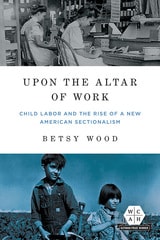
Upon the Altar of Work
Child Labor and the Rise of a New American SectionalismBetsy Wood
University of Illinois Press, 2020
Betsy Wood examines the evolution of ideas about child labor and the on-the-ground politics of the issue against the backdrop of broad developments related to slavery and emancipation, industrial capitalism, moral and social reform, and American politics and religion. Wood explains how the decades-long battle over child labor created enduring political and ideological divisions within capitalist society that divided the gatekeepers of modernity from the cultural warriors who opposed them. Tracing the ideological origins and the politics of the child labor battle over the course of eighty years, this book tells the story of how child labor debates bequeathed an enduring legacy of sectionalist conflict to modern American capitalist society.
Urban Horror
Neoliberal Post-Socialism and the Limits of VisibilityErin Y. Huang
Duke University Press, 2020
Ushering in a New Republic
Theologies of Arrival at Rome in the First Century BCETrevor S. Luke
University of Michigan Press, 2014

Utopian Horizons
Ideology, Politics, LiteratureZsolt Cziganyik
Central European University Press, 2017