Results by title
1427 books match the query 'Politics' and 14 start with u
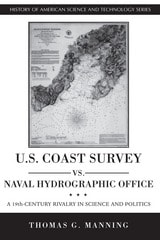
U.S. Coast Survey vs. Naval Hydrographic Office
A 19th-Century Rivalry in Science and PoliticsThomas G. Manning
University of Alabama Press, 1988
Under a Bad Sun
Police, Politics, and Corruption in AustraliaPaul Bleakley
Michigan State University Press, 2021
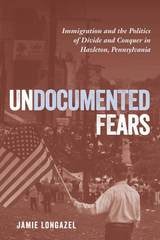
Undocumented Fears
Immigration and the Politics of Divide and Conquer in Hazleton, PennsylvaniaJamie Longazel
Temple University Press, 2016
The Illegal Immigration Relief Act (IIRA), passed in the small Rustbelt city of Hazleton, Pennsylvania in 2006, was a local ordinance that laid out penalties for renting to or hiring undocumented immigrants and declared English the city’s official language. The notorious IIRA gained national prominence and kicked off a parade of local and state-level legislative initiatives designed to crack down on undocumented immigrants.
In his cogent and timely book, UndocumentedFears, Jamie Longazel uses the debate around Hazleton’s controversial ordinance as a case study that reveals the mechanics of contemporary divide and conquer politics. He shows how neoliberal ideology, misconceptions about Latina/o immigrants, and nostalgic imagery of “Small Town, America” led to a racialized account of an undocumented immigrant “invasion,” masking the real story of a city beset by large-scale loss of manufacturing jobs.
Offering an up-close look at how the local debate unfolded in the city that set off this broader trend, Undocumented Fears makes an important connection between immigration politics and the perpetuation of racial and economic inequality.
Undocuments
John-Michael Rivera
University of Arizona Press, 2021
How do you document the undocumented? UNDOCUMENTS both poses and attempts to answer this complex question by remixing the forms and styles of the first encyclopedia of the New World, the Florentine Codex, in order to tell a modern story of Greater Mexico. Employing a broad range of writing genres and scholarly approaches, UNDOCUMENTS catalogs, recovers, and erases documents and images by and about peoples of Greater Mexico from roughly the first colonial moment. This brave and bracing volume organizes and documents ancient New World Mexican peoples from the Florentine Codex (1592) to our current technology-heavy age, wherein modern lawmakers and powerful global figures desire to classify, deport, and erase immigrants and their experiences.
While grappling with anxiety and the physical and mental health consequences of the way the United States treats immigrant bodies, John-Michael Rivera documents and scrutinizes what it means to seek opportunities in America. With a focus on the poetics of Latinx documentality itself, this book is concerned with the complicated and at times contradictory ways peoples of Greater Mexico have been documented and undocumented within systems of colonial knowledges, and how these peoples have been rendered as specters of the bureaucratic state. Rivera takes us through the painful, anxiety-ridden, and complex nature of what it means to be documented or undocumented, and the cruelty married to each of these states of being.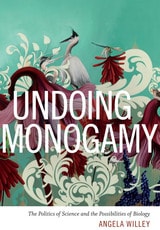
Undoing Monogamy
The Politics of Science and the Possibilities of BiologyAngela Willey
Duke University Press, 2016
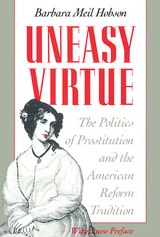
Uneasy Virtue
The Politics of Prostitution and the American Reform TraditionBarbara Meil Hobson
University of Chicago Press, 1990
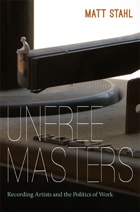
Unfree Masters
Popular Music and the Politics of WorkMatt Stahl
Duke University Press, 2012

Universal Abandon
The Politics of PostmodernismAndrew Ross, Editor
University of Minnesota Press, 1989
Universal Abandon was first published in 1989. Minnesota Archive Editions uses digital technology to make long-unavailable books once again accessible, and are published unaltered from the original University of Minnesota Press editions.
In recent years, the debate about postmodernism has become a full-blown, global discussion about the nature and future of society: it has challenged and redefined the cultural and sexual politics of the last two decades, and is increasingly shaping tomorrow's agenda. Postmodernist culture is a medium in which we all live, no matter how unevenly its effects are felt across the jagged spectrum of color, gender, class, sexual, orientation, region, and nationality. But it is also a culture that proclaims its abandonment of the universalist foundations of Enlightenment thought in the West. At a time when interests can no longer be universalized, the question arises: Whose interests are served by this "universal abandon"?
Universal Abandon is the first volume in a new series entitled Cultural Politics, edited by the Social Text collective. This collection tackles a wider range of cultural and political issues than are usually addressed in the debates about postmodernism—color, ethnicity, and neocolonialism; feminism and sexual difference; popular culture and the question of everyday life—as well as some political and philosophical matters that have long been central to the Western tradition. Together, the contributors provide no consensus about the politics of postmodernism; they insist, rather, that "universal abandon?" remain a question and not an answer.
The contributors: Anders Stephanson, Chantal Mouffe, Stanley Aronowitz, Ernesto Laclau, Nancy Fraser, Linda Nicholson, Meaghan Morris, Paul Smith, Laura Kipnis, Lawrence Grossberg, Abigail Solomon-Godeau, George Yudice, Jacqueline Rose, and Hal Foster.
Andrew Ross teaches English at Princeton University and is the author of The Failure of Modernism.
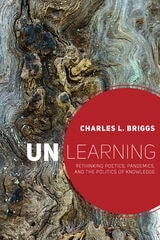
Unlearning
Rethinking Poetics, Pandemics, and the Politics of KnowledgeCharles L. Briggs
Utah State University Press, 2021
Eschewing narrow Eurocentric modes of explanation and research foci, Briggs brings together colonialism, health, media, and psychoanalysis to rethink classic work on poetics and performance that revolutionized linguistic anthropology, folkloristics, media studies, communication, and other fields. Beginning with a candid memoir that credits the mentors whose disconcerting insights prompted him to upend existing scholarly approaches, Briggs combines his childhood experiences in New Mexico with his work in graduate school, his ethnography in Venezuela working with Indigenous peoples, and his contemporary work—which is heavily weighted in medical folklore.
Unlearning offers students, emerging scholars, and veteran researchers alike a guide for turning ethnographic objects into provocations for transforming time-worn theories and objects of analysis into sources of scholarly creativity, deep personal engagement, and efforts to confront unconscionable racial inequities. It will be of significant interest to folklorists, anthropologists, and social theorists and will stimulate conversations across these disciplines.
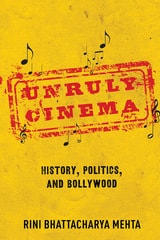
Unruly Cinema
History, Politics, and BollywoodRini Bhattacharya Mehta
University of Illinois Press, 2020
Rini Bhattacharya Mehta considers four aspects of Indian cinema's complicated history. She begins with the industry's surprising, market-driven triumph over imports from Hollywood and elsewhere in the 1930s. From there she explores how the nationalist social melodrama outwitted the government with its 1950s cinematic lyrical manifestoes. In the 1970s, an action cinema centered on the angry young male co-opted the voice of the oppressed. Finally, Mehta examines Indian film's discovery of the global neoliberal aesthetic that encouraged the emergence of Bollywood.

Unsettled Scores
Politics, Hollywood, and the Film Music of Aaron Copland and Hanns EislerSally Bick
University of Illinois Press, 2019
Unwanted Claims
The Politics of Participation in the U.S. Welfare SystemJoe Soss
University of Michigan Press, 2002
Unwanted Claims is a work of political sociology that provides an illuminating account of political life in the U.S. welfare system that should be of interest to scholars, students, policy practitioners, and the general public. Written in a style that minimizes technical jargon, avoids complex statistical presentations, and makes extensive use of clients' own descriptions of their experiences, beliefs, and actions, it offers an accessible and humanizing portrait of welfare participation that challenges conventional wisdom and raises important questions about poverty, welfare, and democracy in America.
Joe Soss is Assistant Professor of Government, The American University.
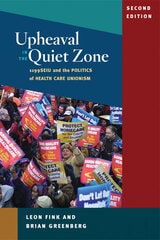
Upheaval in the Quiet Zone
1199/SEIU and the Politics of Healthcare UnionismLeon Fink and Brian Greenberg
University of Illinois Press, 2008
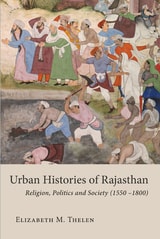
Urban Histories of Rajasthan
Religion, Politics and Society (1550–1800)Elizabeth M. Thelen
Gingko, 2022
Diverse peoples intermingled in the streets and markets of premodern Indian cities. This book considers how these diverse residents lived together and negotiated their differences. Which differences mattered, when and to whom? How did state actions and policies affect urban society and the lives of various communities? How and why did conflict occur in urban spaces? Through these questions, this book explores the histories of urban communities in the three cities of Ajmer, Nagaur, and Pushkar in Rajasthan, between the sixteenth and eighteenth centuries. The focus of this study is on everyday life, contextualizing religious practices and conflicts by considering patterns of patronage and broader conflict patterns within society. The book examines various archival documents, from family and institutional records to state registers, and uses these documents to demonstrate the complex and sometimes contradictory ways religion intersected with politics, economics, and society. The author shows how many patronage patterns and processes persisted in altered forms, and how the robustness of these structures contributed to the resilience of urban spaces and society in precolonial Rajasthan.