Results by title
1201 books match the query 'Race relations' and 19 start with u
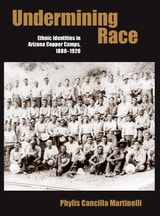
Undermining Race
Ethnic Identities in Arizona Copper Camps, 1880–1920Phylis Cancilla Martinelli
University of Arizona Press, 2009
Phylis Martinelli argues that the case of Italians in Arizona provides insight into “in between” racial and ethnic categories, demonstrating that the categorizing of Italians varied from camp to camp depending on local conditions—such as management practices in structuring labor markets and workers’ housing, and the choices made by immigrants in forging communities of language and mutual support. Italians—even light-skinned northern Italians—were not considered completely “white” in Arizona at this historical moment, yet neither were they consistently racialized as non-white, and tactics used to control them ranged from micro to macro level violence.
To make her argument, Martinelli looks closely at two “white camps” in Globe and Bisbee and at the Mexican camp of Clifton-Morenci. Comparing and contrasting the placement of Italians in these three camps shows how the usual binary system of race relations became complicated, which in turn affected the existing race-based labor hierarchy, especially during strikes. The book provides additional case studies to argue that the biracial stratification system in the United States was in fact triracial at times. According to Martinelli, this system determined the nature of the associations among laborers as well as the way Americans came to construct “whiteness.”
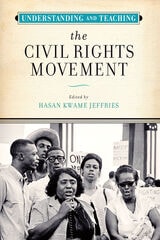
Understanding and Teaching the Civil Rights Movement
Hasan Kwame Jeffries
University of Wisconsin Press, 2019
Books in the popular Harvey Goldberg Series provide high school and introductory college-level instructors with ample resources and strategies for better engaging students in critical, thought-provoking topics. By allowing for the implementation of a more nuanced curriculum, this is history instruction at its best. Understanding and Teaching the Civil Rights Movement will transform how the United States civil rights movement is taught.
Undoing Empire
Race And Nation In The Mulatto CaribbeanJose F. Buscaglia-Salgado
University of Minnesota Press, 2003
A revelatory account that places mulatto experience at the center of Caribbean history
This ambitious book brings to light the story of what José F. Buscaglia-Salgado terms mulataje—the ways Caribbean aesthetics offer the possibility of the ultimate erasure of racial difference. Undoing Empire gives a broad panorama stretching from the complex politics of medieval Iberian societies to the beginning of direct U.S. hegemony in the Caribbean at the end of the nineteenth century.
Buscaglia-Salgado begins with an examination of Washington Irving’s “American Columbiad” as an act of historical and territorial plundering. He then traces the roots of mulatto society to the pre-1492 Iberian world, not only finding a connection between the Moors of “Old Spain” and the morenos—the blacks and mulattoes of the New World—but also offering a profound critique of creole and imperial discourses. Buscaglia-Salgado reads the pursuit and contestation of what he terms the European Ideal in colonial texts, architecture, and paintings, then identifies the mulatto movement of “undoing” the Ideal in the wars that shook the nineteenth-century Caribbean from Haiti to Cuba, arguing that certain projects of national liberation have moved contrary to the historical claims to freedom in the mulatto world.
Unequal under Law
Race in the War on DrugsDoris Marie Provine
University of Chicago Press, 2007
Doris Marie Provine’s engaging analysis traces the history of race in anti-drug efforts from the temperance movement of the early 1900s to the crack scare of the late twentieth century, showing how campaigns to criminalize drug use have always conjured images of feared minorities. Explaining how alarm over a threatening black drug trade fueled support in the 1980s for a mandatory minimum sentencing scheme of unprecedented severity, Provine contends that while our drug laws may no longer be racist by design, they remain racist in design. Moreover, their racial origins have long been ignored by every branch of government. This dangerous denial threatens our constitutional guarantee of equal protection of law and mutes a much-needed national discussion about institutionalized racism—a discussion that Unequal under Law promises to initiate.
Uneven Encounters
Making Race and Nation in Brazil and the United StatesMicol Seigel
Duke University Press, 2009
Seigel explores the circulation of images of Brazilian coffee and of maxixe in the United States during the period just after the imperial expansions of the early twentieth century. Exoticist interpretations structured North Americans’ paradoxical sense of themselves as productive “consumer citizens.” Some people, however, could not simply assume the privileges of citizenship. In their struggles against racism, Afro-descended citizens living in Rio de Janeiro, São Paulo, New York, and Chicago encountered images and notions of each other, and found them useful. Seigel introduces readers to cosmopolitan Afro-Brazilians and African Americans who rarely traveled far from home but who nonetheless absorbed ideas from abroad. She suggests that studies comparing U.S. and Brazilian racial identities as two distinct constructions are misconceived. Racial formation transcends national borders; attempts to understand it must do the same.
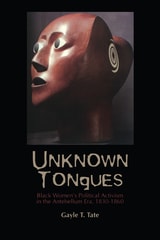
Unknown Tongues
Black Women's Political Activism in the Antebellum Era, 1830-1860Gayle T. Tate
Michigan State University Press, 2003
Unknown Tongues examines the social and economic factors of northern industrialization, social reform, and black nationalism, all of which undergirded black women’s political consciousness during the decades before the American Civil War. The linkages between black women’s roles in the “culture of resistance” in slave communities and their transformations in the urban market economy fueled the development of black women’s political consciousness. As community activists and then as abolitionists, black urban women organized and protested against slavery, racism, sexism, and its attendant ills. Driven by market forces of nascent capitalism, black women created broad- based protest responses to the white power structure. Unknown Tongues explores the material realities that underpinned black women’s political development as well as the transformative stages of their political consciousness and activity.
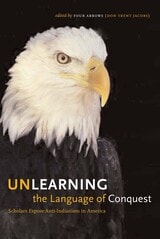
Unlearning the Language of Conquest
Scholars Expose Anti-Indianism in AmericaEdited by Four Arrows (Don Trent Jacobs)
University of Texas Press, 2006
Responding to anti-Indianism in America, the wide-ranging perspectives culled in Unlearning the Language of Conquest present a provocative account of the contemporary hegemony still at work today, whether conscious or unconscious. Four Arrows has gathered a rich collection of voices and topics, including:
- Waziyatawin Angela Cavender Wilson's "Burning Down the House: Laura Ingalls Wilder and American Colonialism," which probes the mentality of hatred woven within the pages of this iconographic children's literature.
- Vine Deloria's "Conquest Masquerading as Law," examining the effect of anti-Indian prejudice on decisions in U.S. federal law.
- David N. Gibb's "The Question of Whitewashing in American History and Social Science," featuring a candid discussion of the spurious relationship between sources of academic funding and the types of research allowed or discouraged.
- Barbara Alice Mann's "Where Are Your Women? Missing in Action," displaying the exclusion of Native American women in curricula that purport to illuminate the history of Indigenous Peoples.
Bringing to light crucial information and perspectives on an aspect of humanity that pervades not only U.S. history but also current sustainability, sociology, and the ability to craft accurate understandings of the population as a whole, Unlearning the Language of Conquest yields a liberating new lexis for realistic dialogues.

Unloose My Heart
A Personal Reckoning with the Twisted Roots of My Southern Family TreeMarcia Edwina Herman-Giddens
University of Alabama Press, 2023
A deeply personal memoir that unearths a family history of racism, slaveholding, and trauma as well as love and sparks of delight.
Marcia Herman’s family moved to Birmingham in 1946, when she was five years old, and settled in the steel-making city dense with smog and a rigid apartheid system. Marcia, a shy only child, struggled to fit in and understand this world, shadowed as it was by her mother’s proud antebellum heritage. In 1966, weary of Alabama’s toxic culture, Marcia and her young family left Birmingham and built a life in North Carolina.
Later in life, Herman-Giddens resumed a search to find out what she did not know about her family history. Unloose My Heart interweaves the story of her youth and coming of age in Birmingham during the Civil Rights Movement together with this quest to understand exactly who and what her maternal ancestors were and her obligations as a white woman within a broader sense of American family.
More than a memoir set against the backdrop of Jim Crow and the civil rights struggle, this is the work of a woman of conscience writing in the twenty-first century. Haunted by the past, Unloose My Heart is a journey of exploration and discovery, full of angst, sorrow, and yearning. Unearthing her forebears’ centuries-long embrace of plantation slavery, Herman-Giddens dug deeply to parse the arrogance and cruelty necessary to be a slaveholder and the trauma and fear that ripple out in its wake. All this forced her to scrutinize the impact of this legacy in her life, as well as her debt to the enslaved people who suffered and were exploited at her ancestors’ hands. But she also discovers lost connections, new cousins and friends, unexpected joys, and, eventually, a measure of peace in the process. With heartbreak, moments of grace, and an enduring sense of love, Unloose My Heart shines a light in the darkness and provides a model for a heartfelt reckoning with American history.
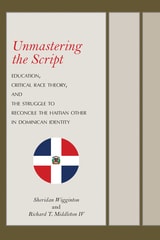
Unmastering the Script
Education, Critical Race Theory, and the Struggle to Reconcile the Haitian Other in Dominican IdentitySheridan Wigginton and Richard T. Middleton IV
University of Alabama Press, 2019
Unmastering the Script: Education, Critical Race Theory, and the Struggle to Reconcile the Haitian Other in Dominican Identity examines how school curriculum–based representations of Dominican identity navigate black racial identity, its relatedness to Haiti, and the culturally entrenched pejorative image of the Haitian Other in Dominican society. Wigginton and Middleton analyze how social science textbooks and historical biographies intended for young Dominicans reflect an increasing shift toward a clear and public inclusion of blackness in Dominican identity that serves to renegotiate the country’s long-standing antiblack racial master script.
The authors argue that although many of the attempts at this inclusion reflect a lessening of “black denial,” when considered as a whole, the materials often struggle to find a consistent and coherent narrative for the place of blackness within Dominican identity, particularly regarding the ways in which blackness continues to be meaningfully related to the otherness of Haitian racial identity. Unmastering the Script approaches the text materials as an example of “reconstructing” and “unburying” an African past, supporting the uneven, slow, and highly context-specific nature of the process.
This work engages with multiple disciplines including history, anthropology, education, and race studies, building on a new wave of Dominican scholarship that considers how contemporary perspectives of Dominican identity both accept the existence of an African past and seek to properly weigh its importance. The use of critical race theory as the framework facilitates unfolding the past political and legal agendas of governing elites in the Dominican Republic and also helps to unlock the nuance of an increasingly black-inclusive Dominican identity. In addition, this framework allows the unveiling of some of the socially damaging effects the Haitian Other master script can have on children, particularly those of Haitian ancestry, in the Dominican Republic.
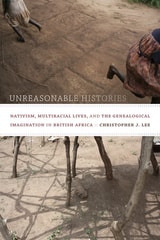
Unreasonable Histories
Nativism, Multiracial Lives, and the Genealogical Imagination in British AfricaChristopher J. Lee
Duke University Press, 2015
Unreconciled
From Racial Reconciliation to Racial Justice in Christian EvangelicalismAndrea Smith
Duke University Press, 2019
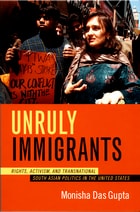
Unruly Immigrants
Rights, Activism, and Transnational South Asian Politics in the United StatesMonisha Das Gupta
Duke University Press, 2006
Das Gupta offers an ethnography of seven South Asian organizations in the northeastern United States, looking at their development and politics as well as the conflicts that have emerged within the groups over questions of sexual, class, and political identities. She examines the ways that women’s organizations have defined and responded to questions of domestic violence as they relate to women’s immigration status; she describes the construction of a transnational South Asian queer identity and culture by people often marginalized by both mainstream South Asian and queer communities in the United States; and she draws attention to the efforts of labor groups who have sought economic justice for taxi drivers and domestic workers by confronting local policies that exploit cheap immigrant labor. Responding to the shortcomings of the state, their communities, and the larger social movements of which they are a part, these groups challenge the assumption that citizenship is the necessary basis of rights claims.
Unsettling Brazil
Urban Indigenous and Black Peoples' Resistances to Dependent Settler CapitalismDesirée Poets
University of Alabama Press, 0
Analyzes favela, quilombola, and indigenous communities’ responses to settler colonialism in urban Brazil. Based on ethnographic research and her experiences growing up in Brazil, the author tells the stories of communities in Rio de Janeiro, São Paulo, and Belo Horizonte
Unsettling Brazil offers a powerful account of five urban Indigenous and Black communities and movements in Brazil that illuminates their struggle for land, dignity, and their ways of life amid historic and ongoing settler colonialism, marked by militarization and dependent capitalist development. The in-depth case studies are the Indigenous movement Aldeia Maracanã and the quilombola community Sacopã in Rio, the Quilombo dos Luízes in Belo Horizonte, the Indigenous movement behind the Pindorama scholarship program in São Paulo, and the Complexo da Maré favela in Rio. For each, Poets vividly documents the intersectional and transnational structures of power that perpetuate the erasure, dispossession, and exploitation of nonwhite populations and the creative ways that Black and Indigenous communities have mobilized to unsettle these structures.
Drawing on the knowledge produced by Black and Indigenous organizers and thinkers, Poets argues for an interdisciplinary framework that prioritizes the voices and experiences of these communities. Addressing increasingly salient calls for decolonization, Poets ponders the paradoxical role of rights, citizenship, and the state in the fight for freedom and justice. Unsettling Brazil urges readers to confront the uncomfortable truths about the nation's history and stands in solidarity with those fighting to reclaim their heritage, identity, and land.
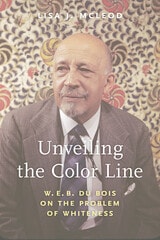
Unveiling the Color Line
W. E. B. Du Bois on the Problem of WhitenessLisa J. McLeod
University of Massachusetts Press, 2024
In The Souls of Black Folk, W. E. B. Du Bois brilliantly details the African American experience. Yet the renowned sociologist was also an astute chronicler of white people, particularly their racism. As Unveiling the Color Line demonstrates, Du Bois’s trenchant analysis of whiteness and white supremacy began in his earliest work—his 1890 speech on Jefferson Davis—and continued in every major book he published in his more than sixty-year career, up to The Black Flame Trilogy.
Lisa J. McLeod traces the development of Du Bois’s conception of whiteness, and the racism inherent to it, as an all-encompassing problem, whether predicated on ignorance, moral failure, or the inability to recognize the humanity in other people. In clear, elegant prose, McLeod investigates Du Bois’s complex and nuanced thinking, putting his insights into dialogue with contemporary racial theorists to demonstrate his continuing value to present-day critical thought and activism.
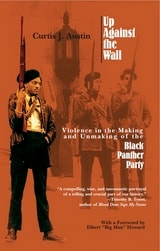
Up Against the Wall
Violence in the Making and Unmaking of the Black Panther PartyCurtis J. Austin
University of Arkansas Press, 2008
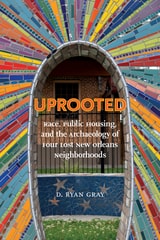
Uprooted
Race, Public Housing, and the Archaeology of Four Lost New Orleans NeighborhoodsD. Ryan Gray
University of Alabama Press, 2020
The archaeology of four New Orleans neighborhoods that were replaced by public housing projects
Uprooted: Race, Public Housing, and the Archaeology of Four Lost New Orleans Neighborhoods uses archaeological research on four neighborhoods that were razed during the construction of public housing in World War II–era New Orleans. Although each of these neighborhoods was identified as a “slum” historically, the material record challenges the simplicity of this designation. D. Ryan Gray provides evidence of the inventiveness of former residents who were marginalized by class, color, or gender and whose everyday strategies of survival, subsistence, and spirituality challenged the city’s developing racial and social hierarchies.
These neighborhoods initially appear to have been quite distinct, ranging from the working-class Irish Channel, to the relatively affluent Creole of Color–dominated Lafitte area, to the former location of Storyville, the city’s experiment in semilegal prostitution. Archaeological and historical investigations suggest that race was the crucial factor in the areas’ selection for clearance. Each neighborhood manifested a particular perceived racial disorder, where race intersected with ethnicity, class, or gender in ways that defied the norms of Jim Crow segregation.
Gray’s research makes use of both primary documents—including census records, city directories, and even the brothel advertising guides called “Blue Books”—and archaeological data to examine what this entailed at a variety of scales, reconstructing narratives of the households and communities affected by clearance. Public housing, both in New Orleans and elsewhere, imposed a new kind of control on urban life that had the effect of making cities both more segregated and less equal. The story of the neighborhoods that were destroyed provides a reminder that their erasure was not an inevitable outcome, and that a more equitable and just city is still possible today. A critical examination of the rise of public housing helps inform the ongoing debates over its demise, especially in light of the changing face of post-Katrina New Orleans.
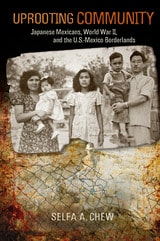
Uprooting Community
Japanese Mexicans, World War II, and the U.S.-Mexico BorderlandsSelfa A. Chew
University of Arizona Press, 2015
In Uprooting Community, Selfa A. Chew examines the lived experience of Japanese Mexicans in the U.S.-Mexico borderlands during World War II. Studying the collaboration of Latin American nation-states with the U.S. government, Chew illuminates the efforts to detain, deport, and confine Japanese residents and Japanese-descent citizens of Latin American countries during World War II. These narratives challenge the notion that Japanese Mexicans enjoyed the protection of the Mexican government during the war and refute the mistaken idea that Japanese immigrants and their descendants were not subjected to internment in Mexico during this period. Through her research, Chew provides evidence that, despite the principles of racial democracy espoused by the Mexican elite, Japanese Mexicans were in fact victims of racial prejudice bolstered by the political alliances between the United States and Mexico.
The treatment of the ethnic Japanese in Mexico was even harsher than what Japanese immigrants and their children in the United States endured during the war, according to Chew. She argues that the number of persons affected during World War II extended beyond the first-generation Japanese immigrants “handled” by the Mexican government during this period, noting instead that the entire multiethnic social fabric of the borderlands was reconfigured by the absence of Japanese Mexicans.
Urban Inequality
Evidence From Four CitiesAlice O'Connor
Russell Sage Foundation, 2001
Urban Nightlife
Entertaining Race, Class, and Culture in Public SpaceMay, Reuben A. Buford
Rutgers University Press, 2014
Watch video now. (http://www.youtube.com/watch?v=VCs1xExStPw).