Results by title
397 books match the query 'Rome' and 4 start with u
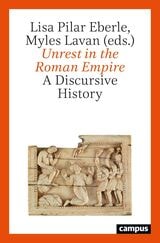
Unrest in the Roman Empire
A Discursive HistoryEdited by Lisa Pilar Eberle and Myles Lavan
Campus Verlag, 2024
Despite Roman claims to have brought peace, unrest was widespread in the Roman Empire. Revolts, protests, and piracy were common occurrences. How did contemporaries relate to and make sense of such phenomena?
This volume gathers eleven contributions by specialists in the various literatures and modes of thinking that flourished in the empire between the second century BCE and the fifth century CE, including Graeco-Roman historiography and philosophy, Jewish prophecy, Christian apology, and the writings of the Tannaitic rabbis, to investigate these questions. Each contribution analyzes the discourses by which the diverse authors of these texts understood instances of unrest. Together, the contributions expand our understanding of the varied politics that pervaded the Roman empire. They highlight the intellectual labor at every level of society that went to (re)making this imperial formation throughout its long history.
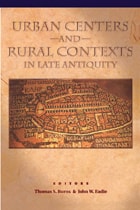
Urban Centers and Rural Contexts in Late Antiquity
Thomas S. Burns
Michigan State University Press, 2001
While ancient literature and the physical remains of cities attest to the power that urban values held over the lives of their inhabitants, the rural areas in which the majority of imperial citizens lived have not been well served by the historical record. Only recently have archeological excavations and integrated field surveys sufficiently enhanced our knowledge of the rural contexts to demonstrate the continuing interdependence of urban centers and rural communities in Late Antiquity. These new data call into question the conventional view that this interdependence progressively declined as a result of governmental crises, invasions, economic dislocation, and the success of Christianization.
The essays in this volume require us to abandon the search for a single model of urban and rural change; to reevaluate the cities and towns of the Empire as centers of habitation, rather than archeological museums; and to reconsider the evidence of continuous and pervasive cultural change across the countryside. Deploying a wide range of material as well as literary evidence, the authors provide access not only into the world of élites, but also to the scarcely known lives of those without a voice in the literature, those men and women who worked in the shops, labored in the fields, and humbled themselves before their gods. They bring us closer to the complexity of life in late ancient communities and, in consequence, closer to both urban and rural citizens.
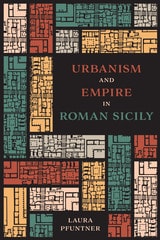
Urbanism and Empire in Roman Sicily
By Laura Pfuntner
University of Texas Press, 2019
Sicily has been the fulcrum of the Mediterranean throughout history. The island’s central geographical position and its status as ancient Rome’s first overseas province make it key to understanding the development of the Roman Empire. Yet Sicily’s crucial role in the empire has been largely overlooked by scholars of classical antiquity, apart from a small number of specialists in its archaeology and material culture.
Urbanism and Empire in Roman Sicily offers the first comprehensive English-language overview of the history and archaeology of Roman Sicily since R. J. A. Wilson’s Sicily under the Roman Empire (1990). Laura Pfuntner traces the development of cities and settlement networks in Sicily in order to understand the island’s political, economic, social, and cultural role in Rome’s evolving Mediterranean hegemony. She identifies and examines three main processes traceable in the archaeological record of settlement in Roman Sicily: urban disintegration, urban adaptation, and the development of alternatives to urban settlement. By expanding the scope of research on Roman Sicily beyond the bounds of the island itself, through comparative analysis of the settlement landscapes of Greece and southern Italy, and by utilizing exciting evidence from recent excavations and surveys, Pfuntner establishes a new empirical foundation for research on Roman Sicily and demonstrates the necessity of including Sicily in broader historical and archaeological studies of the Roman Empire.
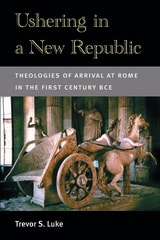
Ushering in a New Republic
Theologies of Arrival at Rome in the First Century BCETrevor S. Luke
University of Michigan Press, 2014