Results by title
461 books match the query 'Teaching' and 19 start with u
Under Construction
edited by Christine Farris & Chris M. Anson
Utah State University Press, 1998
Few composition scholars two decades ago would have imagined the rate at which their field is now developing, expanding beyond its boundaries, creating new alliances, and locating new sites for research and generation of knowledge. In their introduction to this volume, Farris and Anson argue that, faced with a welter of competing models, compositionists too quickly dichotomize and dismiss.
The contributors to Under Construction, therefore, address themselves to the need for commerce among competing visions of the field. They represent diverse settings and distinct points of view, but their over-riding interest is in promoting a view of the field that values interaction and mutual development above dogmatics and isolation.
Understanding Culture
A Handbook for Students in the HumanitiesBabette Hellemans
Amsterdam University Press, 2017
Using examples from the several scholarly traditions in the practice of studying culture, the book is a key introduction to the area. It identifies the history of interpreting culture as a meeting point between the long-standing historical investigation of 'humanism' and 'postmodernism' and is a comprehensive resource for those who wish to further their engagement with culture as both a historical and contemporary phenomenon.
Understanding Language Structure, Interaction, and Variation, Third Ed.
An Introduction to Applied Linguistics and Sociolinguistics for NonspecialistsSteven Brown, Salvatore Attardo, and Cynthia Vigliotti
University of Michigan Press, 2014
Understanding Language Structure, Interaction, and Variation is an introduction to the study of language and applied linguistics for students who have had a minimum of exposure to the discipline of linguistics. Using clear, easy-to-understand explanations and examples, this text avoids the in-depth theoretical coverage found in texts written for those who specialize in linguistics or SLA. As a result, this book is perfect for students whose chosen fields require them to be acquainted with the ways language works--such as future teachers, psychologists, sociologists, and anthropologists--but who do not intend to become linguists. The text is also suitable for English or ESL/EFL teachers who need a reference volume about various aspects of language, particularly as it applies to teaching. Each chapter includes research projects and further readings.
The third edition of Understanding Language Structure, Interaction, and Variation features a new design and reorganization. All content has been significantly revised and updated. Each chapter also debunks a common language myth and now incorporates exercises that, for prior editions, appeared in a supplementary workbook. Extra practice for students is available online, as is additional materials for teachers. (There is no workbook for the third edition.)

Understanding Language Structure, Interaction, and Variation
An Introduction to Applied Linguistics and Sociolinguistics for NonspecialistsSalvatore Attardo and Steven Brown
University of Michigan Press, 2027
In the age of Artificial Intelligence hallucinations and slop, the need for a clear, accessible, uncluttered, and authoritative textbook is more important than ever. The fourth edition of Understanding Language Structure, Interaction, and Variation retains the informal and reader-friendly style of previous editions and has been substantively updated and rewritten to incorporate recent scholarship throughout. Language is important for a number of fields, including teaching, psychology, sociology, and anthropology. The wide coverage of language structure, sociolinguistics, language acquisition, and grammar makes this book suitable for pre-service teachers, undergraduates, and graduate students who need some exposure to linguistics, but do not need highly technical training in formal linguistics.
This extensively classroom-tested book is organized for use in a semester or can be customized for shorter terms by omitting chapters after the foundational core provided by chapters 1–3. The encyclopedic nature of the book, which includes a glossary and an index, make it appropriate for self-study and any reader who is interested in the study of language.
Readers of the fourth edition of Understanding Language Structure, Interaction, and Variation will find:
- Expanded coverage of Prosody, the phonetic alphabet, African American Language, neurodiversity and language, English as a world language, and English as a lingua franca;
- New content on biolinguistics, translanguaging, enregisterment, indexicality, the semiotic turn in sociolinguistics, code-meshing, complex dynamic systems theory, and personality theory in SLA;
- A thorough overview of the basics of English grammar.
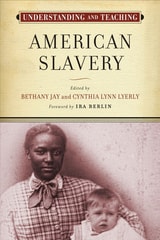
Understanding and Teaching American Slavery
Edited by Bethany Jay and Cynthia Lynn Lyerly, Foreword by Ira Berlin
University of Wisconsin Press, 2016
Opening with Ira Berlin’s reflections on ten elements that are essential to include in any course on this topic, Understanding and Teaching American Slavery offers practical advice for teaching specific content, utilizing sources, and getting students to think critically. Contributors address, among other topics, slavery and the nation’s founders, the diverse experiences of the enslaved, slavery’s role in the Civil War, and the relationship between slavery and the northern economy. Other chapters offer ideas for teaching through slave narratives, runaway ads, spirituals, films, and material culture. Taken together, the essays in the volume help instructors tackle problems, discover opportunities, and guide students in grappling with the ugliest truths of America’s past.
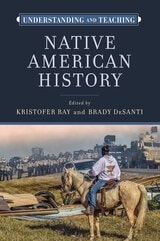
Understanding and Teaching Native American History
Edited by Kristofer Ray and Brady DeSanti
University of Wisconsin Press, 2023
Despite the availability of new scholarship, many teachers struggle with contextualizing Indigenous history and experience. Native peoples frequently find themselves relegated to historical descriptions, merely a foil to the European settlers who are the protagonists in the dominant North American narrative. This book offers a way forward, an alternative framing of the story that highlights the ongoing integral role of Native peoples via broad coverage in a variety of topics including the historical, political, and cultural.
With its scope and clarity of vision, suggestions for navigating sensitive topics, and a multitude of innovative approaches authored by contributors from multidisciplinary backgrounds, Understanding and Teaching Native American History will also find use in methods and other graduate courses. Nearly a decade in the conception and making, this is a groundbreaking source for both beginning and veteran instructors.
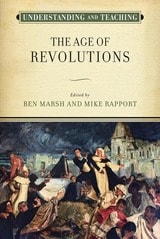
Understanding and Teaching the Age of Revolutions
Edited by Ben Marsh and Mike Rapport
University of Wisconsin Press, 2017
The volume includes chapters on sources and methods for stimulating student debate and learning, including Tom Paine's Common Sense, the Haitian Declaration of Independence, and other key documents; role-playing games; visual arts and culture; and music, including opera and popular songs. Other chapters delve into specific themes, including revolution and riot, revolutionary terror, enlightenment, gender, slavery, nationalism, environment and climate, and the roles of politically excluded groups. Collectively, the contributions ensure a broad Atlantic scope, discussing the revolutions in Britain's North American colonies, Haiti, and Latin America, and European revolutions including France, Belgium, and the Netherlands.
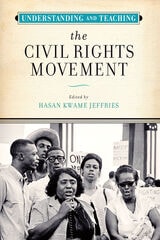
Understanding and Teaching the Civil Rights Movement
Hasan Kwame Jeffries
University of Wisconsin Press, 2019
Books in the popular Harvey Goldberg Series provide high school and introductory college-level instructors with ample resources and strategies for better engaging students in critical, thought-provoking topics. By allowing for the implementation of a more nuanced curriculum, this is history instruction at its best. Understanding and Teaching the Civil Rights Movement will transform how the United States civil rights movement is taught.
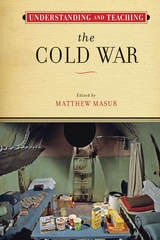
Understanding and Teaching the Cold War
Edited by Matthew Masur
University of Wisconsin Press, 2016
Teaching the Cold War is both necessary and challenging. Understanding and Teaching the Cold War is designed to help collegiate and high school teachers navigate the complexity of the topic, integrate up-to-date research and concepts into their classes, and use strategies and tools that make this important history meaningful to students.
The volume opens with Matthew Masur’s overview of models for approaching the subject, whether in survey courses or seminars. Two prominent historians, Carole Fink and Warren Cohen, offer accounts of their experience as longtime scholars and teachers of the Cold War from European and Asian perspectives. Sixteen essays dig into themes including the origins and end of the conflict, nuclear weapons, diplomacy, propaganda, fear, popular culture, and civil rights, as well as the Cold War in Eastern Europe, Western Europe, East Asia, Africa, Latin America, and the nonaligned nations. A final section provides practical advice for using relevant, accessible primary sources to implement the teaching ideas suggested in this book.
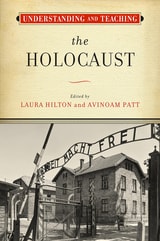
Understanding and Teaching the Holocaust
Edited by Laura Hilton and Avinoam Patt
University of Wisconsin Press, 2022
Each chapter provides pedagogical case studies for teaching content such as antisemitism, resistance and rescue, and the postwar lives of displaced persons. It will transform how students learn about the Holocaust and the circumstances surrounding it.
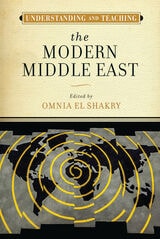
Understanding and Teaching the Modern Middle East
Edited by Omnia El Shakry
University of Wisconsin Press, 2020
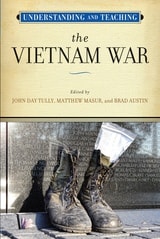
Understanding and Teaching the Vietnam War
Edited by John Day Tully, Matthew Masur, and Brad Austin
University of Wisconsin Press, 2013
Honorable Mention, Franklin Buchanan Prize for Curricular Materials, Association for Asian Studies and the Committee for Teaching about Asia
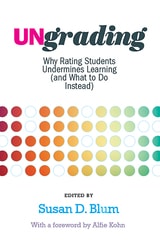
Ungrading
Why Rating Students Undermines Learning (and What to Do Instead)Susan D. Blum
West Virginia University Press, 2020
The moment is right for critical reflection on what has been assumed to be a core part of schooling. In Ungrading, fifteen educators write about their diverse experiences going gradeless. Some contributors are new to the practice and some have been engaging in it for decades. Some are in humanities and social sciences, some in STEM fields. Some are in higher education, but some are the K–12 pioneers who led the way. Based on rigorous and replicated research, this is the first book to show why and how faculty who wish to focus on learning, rather than sorting or judging, might proceed. It includes honest reflection on what makes ungrading challenging, and testimonials about what makes it transformative.
CONTRIBUTORS:
Aaron Blackwelder
Susan D. Blum
Arthur Chiaravalli
Gary Chu
Cathy N. Davidson
Laura Gibbs
Christina Katopodis
Joy Kirr
Alfie Kohn
Christopher Riesbeck
Starr Sackstein
Marcus Schultz-Bergin
Clarissa Sorensen-Unruh
Jesse Stommel
John Warner
Unlocking Learning
International Perspectives on Education in PrisonEdited by Justin McDevitt and Mneesha Gellman
Brandeis University Press, 2024
Countries around the world have disparate experiences with education in prison. For decades, the United States has been locked in a pattern of exceptionally high mass incarceration. Though education has proven to be an impactful intervention, its role and the level of support it receives vary widely. As a result, effective opportunities for incarcerated people to reroute their lives during and after incarceration remain diffuse and inefficient. This volume highlights unique contributions from the field of education in prison globally. In this volume, academics and practitioners highlight new approaches and interesting findings from carceral interventions across twelve countries. From a college degree-granting program in Mexico to educational best practices in Norway and Belgium that support successful reentry, innovations in education are being developed in prison spaces around the world. As contributors from many countries share their insights about providing effective educational programs to incarcerated people, the United States can learn from the models and struggles beyond its borders.
Unmastering the Script
Education, Critical Race Theory, and the Struggle to Reconcile the Haitian Other in Dominican IdentitySheridan Wigginton and Richard T. Middleton IV
University of Alabama Press, 2019
Unmastering the Script: Education, Critical Race Theory, and the Struggle to Reconcile the Haitian Other in Dominican Identity examines how school curriculum–based representations of Dominican identity navigate black racial identity, its relatedness to Haiti, and the culturally entrenched pejorative image of the Haitian Other in Dominican society. Wigginton and Middleton analyze how social science textbooks and historical biographies intended for young Dominicans reflect an increasing shift toward a clear and public inclusion of blackness in Dominican identity that serves to renegotiate the country’s long-standing antiblack racial master script.
The authors argue that although many of the attempts at this inclusion reflect a lessening of “black denial,” when considered as a whole, the materials often struggle to find a consistent and coherent narrative for the place of blackness within Dominican identity, particularly regarding the ways in which blackness continues to be meaningfully related to the otherness of Haitian racial identity. Unmastering the Script approaches the text materials as an example of “reconstructing” and “unburying” an African past, supporting the uneven, slow, and highly context-specific nature of the process.
This work engages with multiple disciplines including history, anthropology, education, and race studies, building on a new wave of Dominican scholarship that considers how contemporary perspectives of Dominican identity both accept the existence of an African past and seek to properly weigh its importance. The use of critical race theory as the framework facilitates unfolding the past political and legal agendas of governing elites in the Dominican Republic and also helps to unlock the nuance of an increasingly black-inclusive Dominican identity. In addition, this framework allows the unveiling of some of the socially damaging effects the Haitian Other master script can have on children, particularly those of Haitian ancestry, in the Dominican Republic.
Unsettling Archival Research
Engaging Critical, Communal, and Digital ArchivesEdited by Gesa E. Kirsch, Romeo García, Caitlin Burns Allen, and Walker P. Smith
Southern Illinois University Press, 2023
A collection of accessible, interdisciplinary essays that explore archival practices to unsettle traditional archival theories and methodologies.
What would it mean to unsettle the archives? How can we better see the wounded and wounding places and histories that produce absence and silence in the name of progress and knowledge? Unsettling Archival Research sets out to answer these urgent questions and more, with essays that chart a more just path for archival work.
Unsettling Archival Research is one of the first publications in rhetoric and writing studies dedicated to scholarship that unsettles disciplinary knowledge of archival research by drawing on decolonial, Indigenous, antiracist, queer, and community perspectives. Written by established and emerging scholars, essays critique not only the practices, ideologies, and conventions of archiving, but also offer new tactics for engaging critical, communal, and digital archiving within and against systems of power. Contributors reflect on efforts to unsettle and counteract racist, colonial histories, confront the potentials and pitfalls of common archival methodologies, and chart a path for the future of archival research otherwise. Unsettling Archival Research intervenes in a critical issue: whether the discipline’s assumptions about the archives serve or fail the communities they aim to represent and what can be done to center missing voices and perspectives. The aim is to explore the ethos and praxis of bearing witness in unsettling ways, carried out as a project of queering and/or decolonizing the archives.
Unsettling Archival Research takes seriously the rhetorical force of place and wrestles honestly with histories that still haunt our nation, including the legacies of slavery, colonial violence, and systemic racism.

Upsetting Composition Commonplaces
Ian Barnard
Utah State University Press, 2014
In Upsetting Composition Commonplaces, Ian Barnard argues that composition still retains the bulk of instructional practices that were used in the decades before poststructuralist theory discredited them. While acknowledging that some of the foundational insights of poststructuralist theory can be difficult to translate to the classroom, Barnard upends several especially intransigent tenets that continue to influence the teaching of writing and how students are encouraged to understand writing.
Using six major principles of writing classrooms and textbooks—clarity, intent, voice, ethnography, audience, and objectivity—Barnard looks at the implications of poststructuralist theory for pedagogy. While suggesting some evocative poststructuralist pedagogical practices, the author focuses on diagnosing the fault lines of composition's refusal of poststructuralism rather than on providing "solutions” in the form of teaching templates.
Upsetting Composition Commonplaces addresses the need to more effectively engage in poststructuralist concepts in composition in an accessible and engaging voice that will advance the conversation about relations between the theory and teaching of writing.

Using Art as Research in Learning and Teaching
Multidisciplinary Approaches Across the ArtsEdited by Ross Prior
Intellect Books, 2018
Using a Genre-Based and Multimodal Approach to Teach Oral Academic Communication
Megan M. Siczek
University of Michigan Press, 2026
This book introduces a model course design and its guiding principles, then explicitly describes a variety of oral communication assignments that promote engaged learning, including steps in the instructional sequence, tips for teaching, and sample guidance to be shared with students. It emphasizes the importance of leveraging students’ cultural and linguistic strengths and global experiences to promote their agency as learners. The principles and practices described in this book are grounded in an English for Academic Purposes (EAP) context but are easily adaptable to other instructional settings and teaching modalities. Implementing a genre-based and multimodal approach helps build students’ rhetorical awareness, increases their communicative capacity, and enables them to participate actively in their academic discourse communities.