Results by title
57 books match the query 'Understanding' and 26 start with u

Understanding and Managing Power Quality Issues
Sincy George
The Institution of Engineering and Technology, 2026
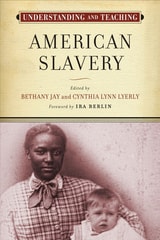
Understanding and Teaching American Slavery
Edited by Bethany Jay and Cynthia Lynn Lyerly, Foreword by Ira Berlin
University of Wisconsin Press, 2016
Opening with Ira Berlin’s reflections on ten elements that are essential to include in any course on this topic, Understanding and Teaching American Slavery offers practical advice for teaching specific content, utilizing sources, and getting students to think critically. Contributors address, among other topics, slavery and the nation’s founders, the diverse experiences of the enslaved, slavery’s role in the Civil War, and the relationship between slavery and the northern economy. Other chapters offer ideas for teaching through slave narratives, runaway ads, spirituals, films, and material culture. Taken together, the essays in the volume help instructors tackle problems, discover opportunities, and guide students in grappling with the ugliest truths of America’s past.
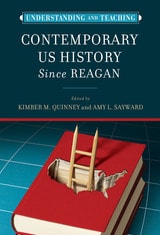
Understanding and Teaching Contemporary US History since Reagan
Kimber M. Quinney Amy L. Sayward
University of Wisconsin Press, 2022
The volume addresses a wide swath of topics, from social movements around identity and representation to the Supreme Court, law enforcement, migration, climate change, and international relations. Emphasizing critical thinking and primary-source analysis, it will aid teachers in creating an invigorating and democratizing classroom experience. Intended for use in both secondary and postsecondary classrooms, the book’s structure allows for a variety of applications and invites a broad audience.
Understanding and Teaching Modern Latin America
Edited by Sharika D. Crawford and Kari E. Zimmerman
University of Wisconsin Press, 2026
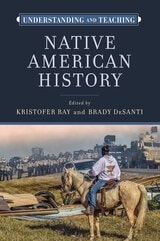
Understanding and Teaching Native American History
Edited by Kristofer Ray and Brady DeSanti
University of Wisconsin Press, 2023
Despite the availability of new scholarship, many teachers struggle with contextualizing Indigenous history and experience. Native peoples frequently find themselves relegated to historical descriptions, merely a foil to the European settlers who are the protagonists in the dominant North American narrative. This book offers a way forward, an alternative framing of the story that highlights the ongoing integral role of Native peoples via broad coverage in a variety of topics including the historical, political, and cultural.
With its scope and clarity of vision, suggestions for navigating sensitive topics, and a multitude of innovative approaches authored by contributors from multidisciplinary backgrounds, Understanding and Teaching Native American History will also find use in methods and other graduate courses. Nearly a decade in the conception and making, this is a groundbreaking source for both beginning and veteran instructors.
Understanding and Teaching Religion in US History
Edited by Karen J. Johnson and Jonathan M. Yeager
University of Wisconsin Press, 2024
This book offers a breadth of voices and approaches to teaching this crucial part of US history. Religion can be a delicate topic, especially in public education, and many students and teachers bring strongly held views and identities to their understanding of the past. The editors and contributors aim to help the reader see religion in fresh ways, to present sources and perspectives that may be unfamiliar, and to suggest practical interventions in the classroom that teachers can use immediately.
Understanding and Teaching U.S. Lesbian, Gay, Bisexual, and Transgender History
Edited by Leila J. Rupp and Susan K. Freeman
University of Wisconsin Press, 2017
Understanding and Teaching the Age of Revolutions
Edited by Ben Marsh and Mike Rapport
University of Wisconsin Press, 2017
The volume includes chapters on sources and methods for stimulating student debate and learning, including Tom Paine's Common Sense, the Haitian Declaration of Independence, and other key documents; role-playing games; visual arts and culture; and music, including opera and popular songs. Other chapters delve into specific themes, including revolution and riot, revolutionary terror, enlightenment, gender, slavery, nationalism, environment and climate, and the roles of politically excluded groups. Collectively, the contributions ensure a broad Atlantic scope, discussing the revolutions in Britain's North American colonies, Haiti, and Latin America, and European revolutions including France, Belgium, and the Netherlands.
Understanding and Teaching the Civil Rights Movement
Hasan Kwame Jeffries
University of Wisconsin Press, 2019
Books in the popular Harvey Goldberg Series provide high school and introductory college-level instructors with ample resources and strategies for better engaging students in critical, thought-provoking topics. By allowing for the implementation of a more nuanced curriculum, this is history instruction at its best. Understanding and Teaching the Civil Rights Movement will transform how the United States civil rights movement is taught.
Understanding and Teaching the Cold War
Edited by Matthew Masur
University of Wisconsin Press, 2016
Teaching the Cold War is both necessary and challenging. Understanding and Teaching the Cold War is designed to help collegiate and high school teachers navigate the complexity of the topic, integrate up-to-date research and concepts into their classes, and use strategies and tools that make this important history meaningful to students.
The volume opens with Matthew Masur’s overview of models for approaching the subject, whether in survey courses or seminars. Two prominent historians, Carole Fink and Warren Cohen, offer accounts of their experience as longtime scholars and teachers of the Cold War from European and Asian perspectives. Sixteen essays dig into themes including the origins and end of the conflict, nuclear weapons, diplomacy, propaganda, fear, popular culture, and civil rights, as well as the Cold War in Eastern Europe, Western Europe, East Asia, Africa, Latin America, and the nonaligned nations. A final section provides practical advice for using relevant, accessible primary sources to implement the teaching ideas suggested in this book.
Understanding and Teaching the Holocaust
Edited by Laura Hilton and Avinoam Patt
University of Wisconsin Press, 2022
Each chapter provides pedagogical case studies for teaching content such as antisemitism, resistance and rescue, and the postwar lives of displaced persons. It will transform how students learn about the Holocaust and the circumstances surrounding it.
Understanding and Teaching the Modern Middle East
Edited by Omnia El Shakry
University of Wisconsin Press, 2020
Understanding and Teaching the Vietnam War
Edited by John Day Tully, Matthew Masur, and Brad Austin
University of Wisconsin Press, 2013
Honorable Mention, Franklin Buchanan Prize for Curricular Materials, Association for Asian Studies and the Committee for Teaching about Asia
Understanding the Age of Transitional Justice
Crimes, Courts, Commissions, and ChroniclingAdler, Nanci
Rutgers University Press, 2018
Understanding the Arizona Constitution
Toni McClory
University of Arizona Press, 2010
Since the book’s first publication, significant constitutional changes have occurred, some even altering the very structure of state government itself. There have been dramatic veto battles, protracted budget wars, and other interbranch conflicts that have generated landmark constitutional rulings from the state courts. The new edition of this handy reference addresses many of the latest issues, including legislative term limits, Arizona’s new redistricting system, educational issues, like the controversial school voucher program, and the influence of special-interest money in the legislature. A total of 63 propositions have reached the ballot, spawning heated controversies over same-sex marriage, immigration, and other hot-button social issues.
This book is the definitive guide to Arizona government and serves as a solid introductory text for classes on the Arizona Constitution. Extensive endnotes make it a useful reference for professionals within the government. Finally, it serves as a tool for any engaged citizen looking for information about online government resources, administrative rules, and voter rights. Comprehensive and clearly written, this book belongs on every Arizonan’s bookshelf.
Understanding the Arizona Constitution
Toni McClory
University of Arizona Press, 2001
An authoritative guide to Arizona government— written in plain language!
How do laws make their way through the state legislature?
What are the specific powers of the governor?
How do the courts make public policy?
Can citizens change the constitution?A leading lawyer and college educator who was an assistant attorney general through six governors, Toni McClory has written a definitive guide to Arizona government that is as comprehensive as it is easy to understand. It provides a thorough explanation of the state's constitution and shows the impact that its unique features have had on the everyday operation of the state's political system.Thoroughly up to date and clearly written, this book belongs on every Arizonan's shelf. Much of the information it contains is based on original research compiled by the author from primary sources and draws on her direct experience with government processes, officials, and events.• For concerned citizens, it offers topics of special interest to voters—including facts about initiatives and referenda and a chapter on local government—and contains references to online government resources.
• For lawyers and business people, it makes available a brief yet sophisticated synopsis of state government along with a wealth of citations and supporting detail.
• For students and teachers, it offers an exceptionally readable introductory text that relies heavily on primary sources and features "pro and con" passages-examining both sides of important issues-that are designed to stimulate critical thinking.From administrative rules to water law, Understanding the Arizona Constitution is your complete guide to the inner workings of the state. It is an essential reference for today's citizens and tomorrow's leaders.
Understanding the Arts and Creative Sector in the United States
Cherbo, Joni Maya
Rutgers University Press, 2008
Illuminating key issues and reflecting the rapid growth of the field of arts and cultural policy, this book will be of interest to students at both the undergraduate and graduate levels, to arts educators and management professionals, government agency and foundation officials, and researchers and academics in the cultural policy field.
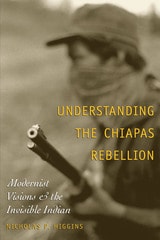
Understanding the Chiapas Rebellion
Modernist Visions and the Invisible IndianBy Nicholas P. Higgins
University of Texas Press, 2004
To many observers in the late 1980s and early 1990s, Mexico appeared to be a modern nation-state at last assuming an international role through its participation in NAFTA and the OECD (Organization of Economic Cooperation and Development). Then came the Zapatista revolt on New Year's Day 1994. Wearing ski masks and demanding not power but a new understanding of the indigenous peoples of Mexico, Subcomandante Marcos and his followers launched what may be the first "post" or "counter" modern revolution, one that challenges the very concept of the modern nation-state and its vision of a fully assimilated citizenry.
This book offers a new way of understanding the Zapatista conflict as a counteraction to the forces of modernity and globalization that have rendered indigenous peoples virtually invisible throughout the world. Placing the conflict within a broad sociopolitical and historical context, Nicholas Higgins traces the relations between Maya Indians and the Mexican state from the conquest to the present—which reveals a centuries-long contest over the Maya people's identity and place within Mexico. His incisive analysis of this contest clearly explains how the notions of "modernity" and even of "the state" require the assimilation of indigenous peoples. With this understanding, Higgins argues, the Zapatista uprising becomes neither surprising nor unpredictable, but rather the inevitable outcome of a modernizing program that suppressed the identity and aspirations of the Maya peoples.
Understanding the Courses We Teach
Local Perspectives on English Language TeachingJohn Murphy and Patricia Byrd, Editors
University of Michigan Press, 2001
Individual chapters are rich in descriptive details and resonate with the contributor-teachers' personal investment in teaching. John Murphy and Patricia Byrd have arranged these chapters in four thematic clusters, the first dealing with general purposes instruction, including workplace literacy, community-based ESL, and courses designed for rich recent immigrants; the second with the teaching of English as a foreign language; the third with university credit-bearing courses focused on the teaching of English for academic purposes; and the fourth with noncredit university-affiliated courses offered through intensive English programs.
The contributors represent a variety of educational settings and many different countries and include many of the most well-known researchers in the field.
.

Understanding the Diaconate
Historical, Theological, and Sociological FoundationsW. Shawn McKnight
Catholic University of America Press, 2018
Understanding the Language of Science
By Steven Darian
University of Texas Press, 2003
2004 — A Choice Outstanding Academic Book
From astronomy to zoology, the practice of science proceeds from scientific ways of thinking. These patterns of thought, such as defining and classifying, hypothesizing and experimenting, form the building blocks of all scientific endeavor. Understanding how they work is therefore an essential foundation for everyone involved in scientific study or teaching, from elementary school students to classroom teachers and professional scientists.
In this book, Steven Darian examines the language of science in order to analyze the patterns of thinking that underlie scientific endeavor. He draws examples from university science textbooks in a variety of disciplines, since these offer a common, even canonical, language for scientific expression. Darian identifies and focuses in depth on nine patterns—defining, classifying, using figurative language, determining cause and effect, hypothesizing, experimenting, visualizing, quantifying, and comparing—and shows how they interact in practice. He also traces how these thought modes developed historically from Pythagoras through Newton.
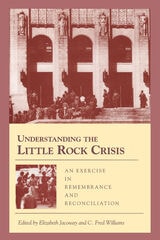
Understanding the Little Rock Crisis
An Exercise in Remembrance and ReconciliationElizabeth Jacoway
University of Arkansas Press, 1999
Understanding the Medieval Meditative Ascent
Augustine, Anselm, Boethius and DanteRobert McMahon
Catholic University of America Press, 2006
Understanding the National Debt
What Every American Needs to KnowCarl Lane
Westholme Publishing, 0
The United States has a debt problem—we owe more than $18 trillion while our gross domestic product, the value of all goods and services produced in America, is only $17.5 trillion. To pay down the debt, some recommend austerity, cutting federal expenditures. Others suggest increasing taxes, especially on the wealthiest Americans. In Understanding the National Debt: What Every American Needs to Know, economic historian Carl Lane urges that the national debt must be addressed in ways beyond program cuts or tax increase alternatives, but change can only occur when more Americans understand what constitutes our debt and the problems it causes. The gross national debt is composed of two elements: the public debt and “intragovernment holdings.” The public debt consists of bonds, bills, and notes purchased by individuals, banks, insurance companies, hedge and retirement funds, foreign governments, and university endowments. Intragovernment holdings refers to money that the U.S. Treasury borrows from other parts of the government, principally Social Security and Medicare. This accounts for approximately a quarter of the gross national debt, but that is money that we owe to ourselves, not another entity. The more the government borrows, the less is available for private sector investment, creating a “squeeze” effect that inhibits economic growth. The most burdensome problem is the interest due each year on the debt. Every dollar spent on interest is a dollar less for other purposes. Those elements of the federal budget which are termed “discretionary” suffer. The mandatory elements of the budget—Social Security, Medicare, Medicaid, and the interest on the debt—must be provided for, but defense and national security, education, energy, infrastructure repair and development, and other needs wind up with less. By understanding the national debt we have an opportunity to address our real debt challenge—its principal and interest.

Understanding the Religious Priesthood
History, Controversy, TheologyChristian, OSB Raab
Catholic University of America Press, 2020

Understanding the Somalia Conflagration
Identity, Political Islam and PeacebuildingAfyare Abdi Elmi
Pluto Press, 2010
Somalia has been devastated by a US-backed Ethiopian invasion and years of civil war, and it has long been without a central government. Against this background of violence, Somali academic Afyare Abdi Elmi, attempts to explain the multiple dimensions of the conflict and find a peace-building consensus.
Somalia is a failed state and a Muslim state. This combination means the West assumes that it will become a breeding ground for extremism. The country regularly hits the headlines as a piracy hotspot. This combination of internal division and outside interference makes for an intensely hostile landscape. Elmi shows that only by addressing the problem of the statelessness in the country can the long process of peace begin. He highlights clan identities, Islam and other countries in the region as the key elements in any peace-building effort.
This unique account from an author who truly understands Somalia should be required reading for students and academics of international relations and peace / conflict studies.