Results by title
4531 books match the query 'Cultural & Ethnic Studies' and 71 start with u
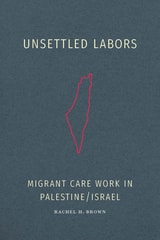
Unsettled Labors
Migrant Care Work in Palestine/IsraelRachel H. Brown
Duke University Press, 2024
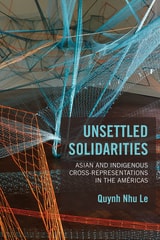
Unsettled Solidarities
Asian and Indigenous Cross-Representations in the AméricasQuynh Nhu Le
Temple University Press, 2019
Unsettled Solidarities examines contemporary Asian and Indigenous cross-representations within different settler states in the Américas. Quynh Nhu Le looks at literary works by both groups alongside public apologies, interviews, and hemispheric race theories to trace cross-community tensions and possibilities for solidarities amidst the uneven imposition of racialization and settler colonization.
Contrasting texts such as Maxine Hong Kingston’s China Men with Gerald Vizenor’s Hiroshima Bugi, and Karen Tei Yamashita’s Through the Arc of the Rain Forest with Leslie Marmon Silko’s Almanac of the Dead, among others, Le reveals how settler colonialism persists through the liberal ideological structuring or incorporation of critical and political resistance. She illuminates the tense collisions of Asian and Indigenous movements from the heroic/warrior traditions, reparations and redress, and transnational/cross-racial mobilization against global capital to mixed-race narratives.
Reading these tensions as formed through the unstable grammatical and emotional economies of liberalism, Le frames settler colonialism as a process that is invoked and yet ruptured by Asian and Indigenous peoples. In analyzing Asian/Indigenous crossings in the United States, Canada, Mexico, and Brazil, Unsettled Solidarities conveys the logics and instabilities that connect these settler empires.
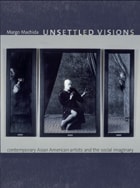
Unsettled Visions
Contemporary Asian American Artists and the Social ImaginaryMargo Machida
Duke University Press, 2008
Analyses of the work of individual artists are grouped around three major themes that Asian American artists engaged with during the 1990s: representations of the Other; social memory and trauma; and migration, diaspora, and sense of place. Machida considers the work of the photographers Pipo Nguyen-duy and Hanh Thi Pham, the printmaker and sculptor Zarina Hashmi, and installations by the artists Tomie Arai, Ming Fay, and Yong Soon Min. She examines the work of Marlon Fuentes, whose films and photographs play with the stereotyping conventions of visual anthropology, and prints in which Allan deSouza addresses the persistence of Orientalism in American popular culture. Machida reflects on Kristine Aono’s museum installations embodying the multigenerational effects of the internment of Japanese Americans during World War II and on Y. David Chung’s representations of urban spaces transformed by migration in works ranging from large-scale charcoal drawings to multimedia installations and an “electronic rap opera.”
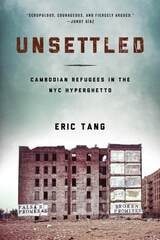
Unsettled
Cambodian Refugees in the New York City HyperghettoEric Tang
Temple University Press, 2015
After surviving the Khmer Rouge genocide, followed by years of confinement to international refugee camps, as many as 10,000 Southeast Asian refugees arrived in the Bronx during the 1980s and ‘90s. Unsettled chronicles the unfinished odyssey of Bronx Cambodians, closely following one woman and her family for several years as they survive yet resist their literal insertion into concentrated Bronx poverty.
Eric Tang tells the harrowing and inspiring stories of these refugees to make sense of how and why the displaced migrants have been resettled in the “hyperghetto.” He argues that refuge is never found, that rescue discourses mask a more profound urban reality characterized by racialized geographic enclosure, economic displacement and unrelenting poverty, and the criminalization of daily life.
Unsettled views the hyperghetto as a site of extreme isolation, punishment, and confinement. The refugees remain captives in late-capitalist urban America. Tang ultimately asks: What does it mean for these Cambodians to resettle into this distinct time and space of slavery’s afterlife?
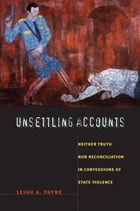
Unsettling Accounts
Neither Truth nor Reconciliation in Confessions of State ViolenceLeigh A. Payne
Duke University Press, 2008
Payne draws on interviews, unedited television film, newspaper archives, and books written by perpetrators to analyze confessions of state violence in Argentina, Chile, Brazil, and South Africa. Each of these four countries addressed its past through a different institutional form—from blanket amnesty, to conditional amnesty based on confessions, to judicial trials. Payne considers perpetrators’ confessions as performance, examining what they say and what they communicate nonverbally; the timing, setting, and reception of their confessions; and the different ways that they portray their pasts, whether in terms of remorse, heroism, denial, or sadism, or through lies or betrayal.
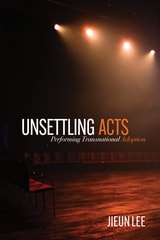
Unsettling Acts
Performing Transnational AdoptionJieun Lee
The Ohio State University Press, 2025
Analyzing contemporary theater and performance works about Korean transnational adoption, Jieun Lee’s Unsettling Acts: Performing Transnational Adoption challenges longstanding ideas about adoption. Lee contends that in staging adoptees’ birth family searches and reunions, theater and performance artists unsettle dominant discourses that have essentialized adoptees through ethnonationalist, gendered, and postwar humanitarian narratives in both birth and adoptive cultures. In doing so, Lee reveals how these performances engage in acts of disavowal of and resistance to mythologies of adoption and adoptee experience.
Lee examines twelve works—from South Korea, the United States, the United Kingdom, Belgium, and Denmark—including plays, musicals, solo performances, community-based theater, and performance art. Through her analysis, theater and performance become a means for reimagining adoptees’ identity, kinship, and sense of belonging. Further, these pieces encourage critical exploration of the history, politics, and social impacts of Korean transnational adoption. These works thus nurture a countermemory to engender redressive accountability and transpacific justice, pointing a way forward for remaking the transnational adoptee experience in the twenty-first century.
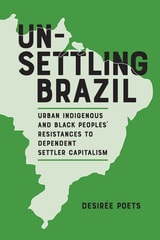
Unsettling Brazil
Urban Indigenous and Black Peoples' Resistances to Dependent Settler CapitalismDesirée Poets
University of Alabama Press, 0
Analyzes favela, quilombola, and indigenous communities’ responses to settler colonialism in urban Brazil. Based on ethnographic research and her experiences growing up in Brazil, the author tells the stories of communities in Rio de Janeiro, São Paulo, and Belo Horizonte
Unsettling Brazil offers a powerful account of five urban Indigenous and Black communities and movements in Brazil that illuminates their struggle for land, dignity, and their ways of life amid historic and ongoing settler colonialism, marked by militarization and dependent capitalist development. The in-depth case studies are the Indigenous movement Aldeia Maracanã and the quilombola community Sacopã in Rio, the Quilombo dos Luízes in Belo Horizonte, the Indigenous movement behind the Pindorama scholarship program in São Paulo, and the Complexo da Maré favela in Rio. For each, Poets vividly documents the intersectional and transnational structures of power that perpetuate the erasure, dispossession, and exploitation of nonwhite populations and the creative ways that Black and Indigenous communities have mobilized to unsettle these structures.
Drawing on the knowledge produced by Black and Indigenous organizers and thinkers, Poets argues for an interdisciplinary framework that prioritizes the voices and experiences of these communities. Addressing increasingly salient calls for decolonization, Poets ponders the paradoxical role of rights, citizenship, and the state in the fight for freedom and justice. Unsettling Brazil urges readers to confront the uncomfortable truths about the nation's history and stands in solidarity with those fighting to reclaim their heritage, identity, and land.
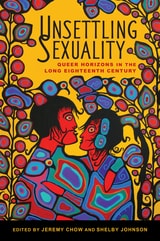
Unsettling Sexuality
Queer Horizons in the Long Eighteenth CenturyJeremy Chow
University of Delaware Press, 2025
This book is also freely available online as an open access digital edition on Manifold, here: https://openpub.udel.edu/projects/unsettling-sexuality.
Unsettling Sexuality: Queer Horizons in the Long Eighteenth Century challenges the traditional ways that scholarship has approached sexuality, gender nonconformity, and sex (as well as its absence) in the long eighteenth century. Drawing from recent and emerging criticisms in Middle Eastern and Asian studies, Black studies, and Native American and Indigenous studies, the collected authors perform intersectional queer readings, reimagine queer historiographic methods, and spearhead new citational models that can invigorate the field. Contributors read with and against diverse European, transatlantic, and global archives to explore mutually informative frameworks of gender, sexuality, race, indigeneity, ability, and class. In charting multidirectional queer horizons, this collection locates new prospective desires and intimacies in the literature, culture, and media of the period to imagine new directions and simultaneously unsettle eighteenth-century studies.
Unspeakable Violence
Remapping U.S. and Mexican National ImaginariesNicole M. Guidotti-Hernández
Duke University Press, 2011
Unsustainable Empire
Alternative Histories of Hawai‘i StatehoodDean Itsuji Saranillio
Duke University Press, 2018
Unveiled Voices, Unvarnished Memories
The Cromwell Family in Slavery and Segregation, 1692-1972Adelaide M. Cromwell
University of Missouri Press, 2006
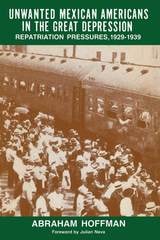
Unwanted Mexican Americans in the Great Depression
Repatriation Pressures, 1929–1939Abraham Hoffman; Foreword by Julian Nava
University of Arizona Press, 1973
Prior to 1931, many Mexican Americans left the United States voluntarily, prompted by homesickness, unemployment, and the Mexican government’s offer of free small land parcels. As the Great Depression deepened, repatriation pressures increased. Anglo groups lobbied for laws that excluded aliens from jobs and welfare benefits. Many businessmen, government officials, and social workers believed that removing Mexican Americans would open up jobs for U.S. citizens and alleviate some of the burden placed on relief agencies.
The Department of Labor’s federal deportation drive, launched in 1931, created an atmosphere of fear and tension in Mexican American communities. Immigration agents conducted surprise searches for people who had entered the country illegally, and Mexicans who had crossed the border before restrictive legislation was passed became prime targets of the deportation campaign.
Welfare agencies throughout the United States organized repatriation programs. The Los Angeles County Welfare Bureau, with the most extensive program, was responsible for the removal of more than thirteen thousand Mexican Americans. A few well-publicized deportations had frightened Mexicans who were unsure of their immigration status. Many chose repatriation over possible deportation.
Using much archival material and many previously unpublished government documents, Hoffman focuses on the repatriation experience in Los Angeles. The city’s large Mexican American population provides an excellent case study of the entire movement. He also surveys the process of Mexican repatriation throughout the entire United States.
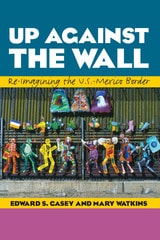
Up Against the Wall
Re-Imagining the U.S.-Mexico BorderBy Edward S. Casey and Mary Watkins
University of Texas Press, 2014
Using the U.S. wall at the border with Mexico as a focal point, two experts examine the global surge of economic and environmental refugees, presenting a new vision of the relationships between citizen and migrant in an era of “Juan Crow,” which systematically creates a perpetual undercaste.
Winner, National Association for Ethnic Studies (NAES) Outstanding Book Award, 2017
As increasing global economic disparities, violence, and climate change provoke a rising tide of forced migration, many countries and local communities are responding by building walls—literal and metaphorical—between citizens and newcomers. Up Against the Wall: Re-imagining the U.S.-Mexico Border examines the temptation to construct such walls through a penetrating analysis of the U.S. wall at the U.S.-Mexico border, as well as investigating the walling out of Mexicans in local communities. Calling into question the building of a wall against a friendly neighboring nation, Up Against the Wall offers an analysis of the differences between borders and boundaries. This analysis opens the way to envisioning alternatives to the stark and policed divisions that are imposed by walls of all kinds. Tracing the consequences of imperialism and colonization as citizens grapple with new migrant neighbors, the book paints compelling examples from key locales affected by the wall—Nogales, Arizona vs. Nogales, Sonora; Tijuana/San Diego; and the lower Rio Grande Valley of Texas. An extended case study of Santa Barbara describes the creation of an internal colony in the aftermath of the U.S. conquest of Mexican land, a history that is relevant to many U.S. cities and towns.
Ranging from human rights issues in the wake of massive global migration to the role of national restorative shame in the United States for the treatment of Mexicans since 1848, the authors delve into the broad repercussions of the unjust and often tragic consequences of excluding others through walled structures along with the withholding of citizenship and full societal inclusion. Through the lens of a detailed examination of forced migration from Mexico to the United States, this transdisciplinary text, drawing on philosophy, psychology, and political theory, opens up multiple insights into how nations and communities can coexist with more justice and more compassion.
Uplift Cinema
The Emergence of African American Film and the Possibility of Black ModernityAllyson Nadia Field
Duke University Press, 2015
Uprooting Racism and Racists in the United States
James Boggs and Grace Lee Boggs
Disobedience Press, 2027
“Uprooting Racism and Racists in the United States” has become even more timely and instructive today than when James and Grace Lee Boggs first sounded the alarm in 1970. In this essay, the Boggses diagnose the “essential contradiction” of economic overdevelopment and political underdevelopment, tracing its path through key stages: how racism has been interwoven into U.S. economic development; a destructive national drive for economic growth at all costs; and how subsequent generations of Americans prioritize economics over principles—breeding a collective social irresponsibility that leaves us unable to act ethically in the face of pressing social challenges.
Today, the contradiction the Boggses identified has grown more entrenched—and its consequences more destructive. “Uprooting” helps explain why millions voted for Trump in 2024 despite his demonstrated corruption, why society fails to regulate the expansion of AI and data centers, why we are unable to forestall the climate changes that scientists have long warned against, why immigrants face racist vilification, and why the federal government is intent on erasing the centrality of race to the making of the country. Ultimately, “Uprooting” offers a crucial assessment of where this contradiction began, how it shapes the nation, and where we need to go.
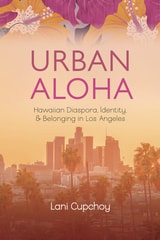
Urban Aloha
Hawaiian Diaspora, Identity, and Belonging in Los AngelesLani Cupchoy
University of Nevada Press, 2027
Urban Aloha reveals the vibrant, little-known story of Kānaka ʻŌiwi (Native Hawaiians) diaspora in Los Angeles, home to the largest Hawaiian community outside Hawai‘i. Moving beyond tourist clichés and the persistent myth that Hawaiian Gardens represents “the” Hawaiian enclave, author Lani Cupchoy traces how a diasporic community took root across the South Bay and San Gabriel Valley. Beginning with the peak migrations of the 1950s and 1960s, and driven by economic recession in the islands, the narrative follows families as they built new lives through civic clubs, newsletters, churches, restaurants, and backyard gatherings.
Drawing on oral histories, archival research, foodways, hula halau, and organizations such as the Hawaiian Inter-Club Council of Southern California, Urban Aloha explores how “Hawaiianness” shifts from identity to lived cultural community. Cupchoy examines how belonging is shaped not only by ancestry but by region, memory, leisure, and everyday practice. At once intimate and intellectually compelling, this book challenges manufactured fantasies of paradise and reveals a dynamic mainland community negotiating authenticity, representation, and cultural resilience. Richly researched and deeply human, Urban Aloha redefines what it means to be Hawaiian—on the continent and beyond.
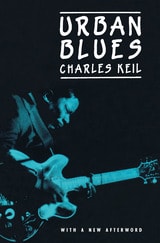
Urban Blues
Charles Keil
University of Chicago Press, 1968
"Enlightening. . . . [Keil] has given a provocative indication of the role of the blues singer as a focal point of ghetto community expression."—John S. Wilson, New York Times Book Review
"[Urban Blues] expresses authentic concern for people who are coming to realize that their past was . . . the source of meaningful cultural values."—Atlantic
"An achievement of the first magnitude. . . . He opens our eyes and introduces a world of amazingly complex musical happening."—Robert Farris Thompson, Ethnomusicology
"[Keil's] vigorous, aggressive scholarship, lucid style and sparkling analysis stimulate the challenge. Valuable insights come from treating urban blues as artistic communication."—James A. Bonar, Boston Herald
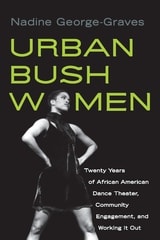
Urban Bush Women
Twenty Years of African American Dance Theater, Community Engagement, and Working It OutNadine George-Graves
University of Wisconsin Press, 2010
Nadine George-Graves presents a comprehensive history of Urban Bush Women since their founding in 1984. She analyzes their complex work, drawing on interviews with current and former dancers and her own observation of and participation in Urban Bush Women rehearsals. This illustrated book captures the grace and power of the dancers in motion and provides an absorbing look at an innovative company that continues to raise the bar for socially conscious dance.
Urban Dwellings, Haitian Citizenships
Housing, Memory, and Daily Life in HaitiVincent Joos
Rutgers University Press, 2022

Urban Leviathan
Mexico City in the Twentieth CenturyDiane E. Davis
Temple University Press, 1994
Why, Diane Davis asks, has Mexico City, once known as the city of palaces, turned into a sea of people, poverty, and pollution? Through historical analysis of Mexico City, Davis identifies political actors responsible for the uncontrolled industrialization of Mexico's economic and social center, its capital city. This narrative biography takes a perspective rarely found in studies of third-world urban development: Davis demonstrates how and why local politics can run counter to rational politics, yet become enmeshed, spawning ineffective policies that are detrimental to the city and the nation.
The competing social and economic demand of the working poor and middle classes and the desires of Mexico's ruling Partido Revolucionario Institutional (PRI) have led to gravely diminished services, exorbitant infrastructural expenditures, and counter-productive use of geographic space. Though Mexico City's urban transport system has evolved over the past seven decades from trolley to bus to METRO (subway), it fails to meet the needs of the population, despite its costliness, and is indicative of the city's disastrous and ill-directed overdevelopment. Examining the political forces behind the thwarted attempts to provide transportation in the downtown and sprawling outer residential areas, Davis analyzes the maneuverings of local and national politicians, foreign investors, middle classes, agency bureaucrats, and various factions of the PRI.
Looking to Mexico's future, Davis concludes that growing popular dissatisfaction and frequent urban protests demanding both democratic reform and administrative autonomy in the capital city suggest an unstable future for corporatist politics and the PRI's centralized one-party government.
Utopia Limited
The Sixties and the Emergence of the PostmodernMarianne DeKoven
Duke University Press, 2004
DeKoven rigorously analyzes a broad array of cultural and political texts important in the sixties—from popular favorites such as William S. Burroughs’s Naked Lunch to political manifestoes including The Port Huron Statement, the founding document of SDS (Students for a Democratic Society). She examines texts that overtly discuss the conflict in Vietnam, Black Power, and second-wave feminism—including Frances FitzGerald’s Fire in the Lake, James Baldwin’s The Fire Next Time, and Shulamith Firestone’s The Dialectic of Sex; experimental pieces such as The Living Theatre’s Paradise Now; influential philosophical works including Roland Barthes’s Mythologies and Herbert Marcuse’s One-Dimensional Man; and explorations of Las Vegas, the prime location of postmodernity. Providing extensive annotated bibliographies on both the sixties and postmodernism, Utopia Limited is an invaluable resource for understanding the impact of that tumultuous decade on the present.