Results by title
3027 books match the query 'Sociology' and 63 start with u
Urban Neighborhoods in a New Era
Revitalization Politics in the Postindustrial CityClarence N. Stone and Robert P. Stoker
University of Chicago Press, 2015
While not denying the hurdles that community revitalization still faces, the contributors ultimately put forth a strong case that a more hospitable local milieu can be created for making neighborhood policy. In examining the course of experiences from an earlier period of redevelopment to the present postindustrial city, this book opens a window on a complex process of political change and possibility for reform.
Urban Nightlife
Entertaining Race, Class, and Culture in Public SpaceMay, Reuben A. Buford
Rutgers University Press, 2014
Watch video now. (http://www.youtube.com/watch?v=VCs1xExStPw).
Urban Nightmares
The Media, The Right, And The Moral Panic Over The CitySteve Macek
University of Minnesota Press, 2006
Urban Policy in the Time of Obama
James DeFilippis
University of Minnesota Press, 2016
With his background as a community organizer and as a state legislator representing Chicago’s South Side, Barack Obama became America’s most “urban” president since Teddy Roosevelt. But what has been his record in dealing with the issues most impacting our metropolitan areas today? Looking past the current administration, what are the future prospects of the nation’s cities, and how have they been shaped by our policies in this century? Seeking to answer these questions, the contributors to Urban Policy in the Time of Obama explore a broad range of policy arenas that shape, both directly and indirectly, metropolitan areas and urbanization processes.
This volume reveals the Obama administration’s surprisingly limited impact on cities, through direct policy initiatives such as Strong Cities, Strong Communities, Promise Neighborhoods, and Choice Neighborhood Initiatives. There has been greater impact with broader policies that shape urban life and governance, including immigration reform, education, and health care.
Closing with Cedric Johnson’s afterword illuminating the Black Lives Matter movement and what its broader social context says about city governance in our times, Urban Policy in the Time of Obama finds that most of the dominant policies and policy regimes of recent years have fallen short of easing the ills of America’s cities, and calls for a more equitable and just urban policy regime.
Contributors: Rachel G. Bratt, Tufts University; Christine Thurlow Brenner, University of Massachusetts Boston; Karen Chapple, University of California, Berkeley; James Fraser, Vanderbilt University; Edward G. Goetz, University of Minnesota; Dan Immergluck, Georgia Tech; Amy T. Khare, University of Chicago; Robert W. Lake, Rutgers University; Pauline Lipman, University of Illinois at Chicago; Lorraine C. Minnite, Rutgers University–Camden; Kathe Newman, Rutgers University; Deirdre Oakley, Georgia State; Frances Fox Piven, City University of New York; Hilary Silver, Brown University; Janet Smith, University of Illinois at Chicago; Preston H. Smith II, Mount Holyoke College; Todd Swanstrom, University of Missouri–St. Louis; Nik Theodore, University of Illinois at Chicago; J. Phillip Thompson, MIT.

Urban Regimes and Strategies
Building Europe's Central Executive District in BrusselsAlex G. Papadopoulos
University of Chicago Press, 1996
In Brussels, Belgium—since 1957 home to the European Union—such change is taking place. Observing the change, Alexis G. Papadopoulos explores a new geographical concept, the Central Executive District. This urban form is significantly different from the Central Business District, its conventional counterpart. Drawing on game and rational choice theories, spatial analysis, and land economics, the author analyzes how the landscape of the city's center has evolved over the last three decades under the influence of successive coalitions of local and foreign elites. He describes how foreign diplomats, international corporate executives, and real-estate developers cooperate with one another to carry out major urban projects in the face of resistance from local neighborhood groups, conservationists, and political factions.
This study makes a substantial contribution to geography and urban studies both for its implications about the future of world cities like New York, London, and Paris and for its original application of the notion of cooperative regimes.

Urban Solidarity
Gender, Mobility, and the Unfinished Politics of Buen VivirJulie Gamble
University of Texas Press, 0
An exploration of how the citizens of Quito created community via transportation systems in spite of political crisis.
Between 2007 and 2017, Ecuadoreans breathed the air of revolution. Their national project, spearheaded by Democratic Socialist president Rafael Correa, was known as buen vivir—good living. Both a discourse and a development strategy, buen vivir promoted interdependence with and among working-class and marginalized people. And public investment shifted toward shared infrastructure, especially transit. Yet much work was still to be done when Correa left office, and Ecuador has since seen retrenchment.
Urban Solidarity explores and interprets buen vivir’s afterlife, as local organizers in the capital Quito sustain and build the interdependence agenda in the midst of state retreat. Since the IMF forced the government to cancel fuel subsidies, residents have responded by developing impressive carsharing (taxirutas) and shared-cycling resources. These efforts are markedly feminist as well, prioritizing women’s safety and independence as they travel about the city to earn money and care for their families. Gamble argues that buen vivir planted the seed of a new politics, that could once again inspire state action. For now, the people of Quito continue to foster the solidarity foundational to a good life.
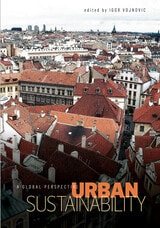
Urban Sustainability
A Global PerspectiveIgor Vojnovic
Michigan State University Press, 2012
More than half the world’s population currently lives in urban areas, and virtually all of the world’s population growth over the next three decades is expected to be in cities. What impact will this growth have on the environment? What can we do now to pave the way for resource longevity? Sustainability has received considerable attention in recent years, though conceptions of the term remain vague. Using a wide array of cities around the globe as case studies, this timely book explores the varying nature of global urban-environmental stresses and the complexities involved in defining sustainability policies. Working with six core themes, the editor examines the past, present, and future of urban sustainability within local, national, and global contexts.
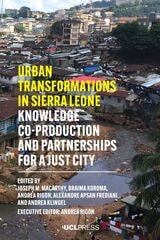
Urban Transformations in Sierra Leone
Knowledge Co-Production and Partnerships for a Just CityEdited by Joseph M. Macarthy, Braima Koroma, Andrea Rigon, Alexandre Apsan Frediani, and Andrea Klingel
University College London, 2024
With a population of over one million, Freetown, Sierra Leone faces serious challenges with service provisions, housing, infrastructure, employment, and climate change. In 2015, the Sierra Leone Urban Research Centre (SLURC) was established to address these challenges through research, capacity building, and advocacy. Urban Transformations in Sierra Leone shares SLURC’s progress, articulating its key findings and reflections on the partnerships it helped enable.
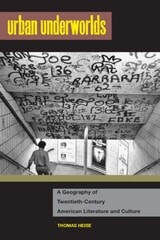
Urban Underworlds
A Geography of Twentieth-Century American Literature and CultureHeise, Thomas
Rutgers University Press, 2010
The quarantining of minority cultures helped to promote white, middle-class privilege. Following a diverse array of literary figures who differ with the assessment of the underworld as the space of the monstrous Other, Heise contends that it is a place where besieged and neglected communities are actively trying to take possession of their own neighborhoods.
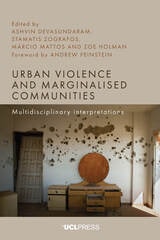
Urban Violence and Marginalised Communities
Multidisciplinary InterpretationsEdited by Ashvin Devasundaram, Stamatis Zografos, Márcio Mattos, and Zoe Holman
University College London, 2026
An accessible, informative, and intrepid insight into urban violence through a decolonial and multidisciplinary lens.
Placing peripheralized people at its center, Urban Violence and Marginalised Communities unpacks how urban violence must be understood from multiple points of view, namely through the distinct perspectives of powerholders, decision-makers, law enforcers, urban planners, creative artists, and particularly from the lived standpoint of less empowered communities. Combining social science approaches with explorations in film, media, and the performing arts, the volume challenges conventional, stereotypical, and reductive definitions and conceptions of urban violence by placing local marginalized communities at the forefront of a multilogue and embracing inclusive, innovative, and unconventional analytical and practical approaches and frameworks. A diverse cohort of contributors offers policy-focused counternarratives and potential solutions to systematized forms of overt, covert, and hybrid forms of urban violence(s).
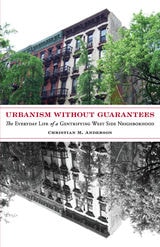
Urbanism without Guarantees
The Everyday Life of a Gentrifying West Side NeighborhoodChristian M. Anderson
University of Minnesota Press, 2020
A unique more-than-capitalist take on urban dynamics
Vigilante action. Renegades. Human intrigue and the future at stake in New York City. In Urbanism without Guarantees, Christian M. Anderson offers a new perspective on urban dynamics and urban structural inequality based on an intimate ethnography of on-the-ground gentrification.
The book is centered on ethnographic work undertaken on a single street in Clinton/Hell’s Kitchen in New York City—once a site of disinvestment, but now rapidly gentrifying. Anderson examines the everyday strategies of residents to preserve the quality of life of their neighborhood and to define and maintain their values of urban living—from picking up litter and reporting minor concerns on the 311 hotline to hiring a private security firm to monitor the local public park. Anderson demonstrates how processes such as investment and gentrification are constructed out of the collective actions of ordinary people, and challenges prevalent understandings of how place-based civic actions connect with dominant forms of political economy and repressive governance in urban space.
Examining how residents are pulled into these systems of gentrification, Anderson proposes new ways to think and act critically and organize for transformation of a place—in actions that local residents can start to do wherever they are.
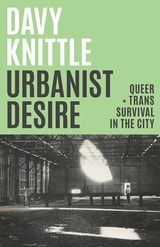
Urbanist Desire
Queer and Trans Survival in the CityDavy Knittle
University of Minnesota Press, 2026
How writers and artists have used city planning strategies to push back against harm
Black queer feminist thinker Audre Lorde famously declared that “the master’s tools will never dismantle the master’s house.” This language is normally understood as a metaphor, but as author Davy Knittle argues in this provocative book, queer and trans activists have long used the tools of city planning and urban design to create written and visual art that critiques those in power and offers points of resilience to their own communities.
A close look at the ways queer and trans writers and artists resisted predatory redevelopment in New York City from 1950 to 2020, Urbanist Desire draws on the work of James Schuyler, June Jordan, David Wojnarowicz, Julian Talamantez Brolaski, and Zeyn Joukhadar, exploring how they intervened in major political flashpoints like the War on Poverty, the AIDS-era housing crisis, and gentrification in Brooklyn and Queens. Presenting a new cultural history of New York City, Knittle explains how urban change and the more-than-human life of cities have been foundational concerns for queer and trans cultural production since the 1950s.
Ending with analysis of the 2022 speculative novel Everything for Everyone: An Oral History of the New York Commune, 2052–2072, Urbanist Desire looks to the past to imagine a better future for New York City and for all marginalized people. Knittle demonstrates how to move past a recuperative response to harm and toward one that can change the structure of society by documenting how queer and trans activists have engaged the strategies of planning and design to address spatial, social, and economic inequality.
Retail e-book files for this title are screen-reader friendly with images accompanied by short alt text and/or extended descriptions.

Us Against Them
Ethnocentric Foundations of American OpinionDonald R. Kinder and Cindy D. Kam
University of Chicago Press, 2009
Ethnocentrism—our tendency to partition the human world into in-groups and out-groups—pervades societies around the world. Surprisingly, though, few scholars have explored its role in political life. Donald Kinder and Cindy Kam fill this gap with Us Against Them, their definitive explanation of how ethnocentrism shapes American public opinion.
Arguing that humans are broadly predisposed to ethnocentrism, Kinder and Kam explore its impact on our attitudes toward an array of issues, including the war on terror, humanitarian assistance, immigration, the sanctity of marriage, and the reform of social programs. The authors ground their study in previous theories from a wide range of disciplines, establishing a new framework for understanding what ethnocentrism is and how it becomes politically consequential. They also marshal a vast trove of survey evidence to identify the conditions under which ethnocentrism shapes public opinion. While ethnocentrism is widespread in the United States, the authors demonstrate that its political relevance depends on circumstance. Exploring the implications of these findings for political knowledge, cosmopolitanism, and societies outside the United States, Kinder and Kam add a new dimension to our understanding of how democracy functions.