Results by title
28164 books match the query 'History' and 339 start with u
Unnatural Narrative
Theory, History, and PracticeBrian Richardson
The Ohio State University Press, 2015
Applying these theoretical insights, Richardson also provides a compelling alternative view of the history of narrative. He traces a genealogy of unnatural narratives from ancient Greek and Sanskrit works through medieval and renaissance fiction to eighteenth-century and romantic fiction. The study continues through the twentieth century, discussing the unnatural elements of Ulysses and other early twentieth-century texts, and engages with contemporary fiction by offering an alternative account of postmodernism. Unnatural Narrative makes an essential intervention in narrative theory and an important contribution to the history of the novel.
Unpackaging Art of the 1980s
Alison Pearlman
University of Chicago Press, 2003
Pearlman reassesses the works and careers of six artists who became critics' biggest targets. In each of three chapters, she pairs two artists the critics viewed as emblematic of a given trend: Julian Schnabel and David Salle in association with Neo-Expressionism; Jean-Michel Basquiat and Keith Haring vis-à-vis Graffiti Art; and Peter Halley and Jeff Koons in relation to Simulationism. Pearlman shows how all these artists shared important but unrecognized influences and approaches: a crucial and overwhelming inheritance of 1960s and 1970s Conceptualism, a Warholian understanding of public identity, and a deliberate and nuanced use of past styles and media. Through in-depth discussions of works, from Haring's body-paintings of Grace Jones to Schnabel's movie Basquiat, Pearlman demonstrates how these artists' interests exemplified a broader, generational shift unrecognized by critics. She sees this shift as starting not in the 1980s but in the mid-1970s, when key developments in artistic style, art-world structures, and consumer culture converged to radically alter the course of American art.
Unpackaging Art of the 1980s offers an innovative approach to one of the most significant yet least understood episodes in twentieth-century art.
Unpacking My Father's Bookstore
Laurence Roth
Rutgers University Press, 2025
2026 Independent Publisher Book Awards (IPPY) Silver Medal in the West – Pacific Non-Fiction category
Unpacking My Father’s Bookstore brings to life the history of J. Roth / Bookseller of Fine & Scholarly Judaica, which was a microcosm of the Los Angeles Jewish community from 1966 to 1994 and one of the premier Jewish bookstores in the United States. Blending critical analysis with a personal account of growing up in his father’s bookstore, and connecting both to larger forces that helped shape Jewish and American book retailing in the twentieth-century, Laurence Roth crafts a richly felt narrative about his family’s Jewish experience in America. It is a reminder, too, that while most independent bookstores like J. Roth Bookseller disappear from history, these retailers often had outsized effects on their communities. Breaking with conventional modes of scholarship, Unpacking My Father’s Bookstore tells a unique and troubled story that rarely gets told, one that is both personal and analytical, theoretical but rooted in the everyday.

Unpacking Tourism
Daniel Bender, Steven Fabian, Jason Ruiz, and Daniel Walkowitz, special issue editors
Duke University Press, 2017
Contributors. Ryvka Barnard, Daniel Bender, Julio Capo Jr., Rüstem Ertuğ Altinay, Steven Fabian, Vernadette Vicuña Gonzalez, Max Holleran, Rebecca J. Kinney, Scott Laderman, Katrina Phillips, Mark Rice, Jason Ruiz, Daniel Walkowitz, Kim Warren
Unpopular Sovereignty
Rhodesian Independence and African DecolonizationLuise White
University of Chicago Press, 2015
White locates Rhodesia’s independence in the era of decolonization in Africa, a time of great intellectual ferment in ideas about race, citizenship, and freedom. She shows that racists and reactionaries were just as concerned with questions of sovereignty and legitimacy as African nationalists were and took special care to design voter qualifications that could preserve their version of legal statecraft. Examining how the Rhodesian state managed its own governance and electoral politics, she casts an oblique and revealing light by which to rethink the narratives of decolonization.
Unraveling Time
Thirty Years of Ethnography in Cuenca, EcuadorAnn Miles
University of Texas Press, 2022
Ann Miles has been chronicling life in the Ecuadorian city of Cuenca for more than thirty years. In that time, she has witnessed change after change. A large regional capital where modern trains whisk residents past historic plazas, Cuenca has invited in the world and watched as its own citizens risk undocumented migration abroad. Families have arrived from rural towns only to then be displaced from the gentrifying city center. Over time, children have been educated, streetlights have made neighborhoods safer, and remittances from overseas have helped build new homes and sometimes torn people apart. Roads now connect people who once were far away, and talking or texting on cell phones has replaced hanging out at the corner store.
Unraveling Time traces the enduring consequences of political and social movements, transnational migration, and economic development in Cuenca. Miles reckons with details that often escape less committed observers, suggesting that we learn a good deal more when we look back on whole lives. Practicing what she calls an ethnography of accrual, Miles takes a long view, where decades of seemingly disparate experiences coalesce into cultural transformation. Her approach not only reveals what change has meant in a major Latin American city but also serves as a reflection on ethnography itself.
Unraveling the Real
The Fantastic in Spanish-American FiccionesAuthored by Cynthia Duncan
Temple University Press, 2010
In literary and cinematic fictions, the fantastic blurs the lines between reality and fantasy. Lacking a consensus on definition, critics often describe the fantastic as supernatural, or similar to, but quite different from fantasy, science fiction, and magical realism.
In Unraveling the Real Cynthia Duncan provides a new theoretical framework for discussing how the fantastic explores both metaphysical and socially relevant themes in Spanish American fictions. Duncan deftly shows how authors and artists have used this literary genre to convey marginalized voices as well as critique colonialism, racism, sexism, and classism. Selecting examples from the works of such noted writers as Jorge Luis Borges, Julio Cortázar, and Carlos Fuentes, among others, she shows how capacious the concept is, and why it eludes standard definition.
Challenging the notion that the fantastic is escapist in nature, Unraveling the Real shows how the fantastic has been politically engaged throughout the twentieth century, often questioning what is real or unreal. Presenting a mirror image of reality, the fantastic does not promoting a utopian parallel universe but rather challenges the way we think about the world around us and the cultural legacy of colonialism.
Unraveling
Remaking Personhood in a Neurodiverse AgeMatthew J. Wolf-Meyer
University of Minnesota Press, 2020
Developing a cybernetic model of subjectivity and personhood that honors disability experiences to reconceptualize the category of the human
Twentieth-century neuroscience fixed the brain as the basis of consciousness, the self, identity, individuality, even life itself, obscuring the fundamental relationships between bodies and the worlds that they inhabit. In Unraveling, Matthew J. Wolf-Meyer draws on narratives of family and individual experiences with neurological disorders, paired with texts by neuroscientists and psychiatrists, to decenter the brain and expose the ableist biases in the dominant thinking about personhood.
Unraveling articulates a novel cybernetic theory of subjectivity in which the nervous system is connected to the world it inhabits rather than being walled off inside the body, moving beyond neuroscientific, symbolic, and materialist approaches to the self to focus instead on such concepts as animation, modularity, and facilitation. It does so through close readings of memoirs by individuals who lost their hearing or developed trauma-induced aphasia, as well as family members of people diagnosed as autistic—texts that rethink modes of subjectivity through experiences with communication, caregiving, and the demands of everyday life.
Arguing for a radical antinormative bioethics, Unraveling shifts the discourse on neurological disorders from such value-laden concepts as “quality of life” to develop an inclusive model of personhood that honors disability experiences and reconceptualizes the category of the human in all of its social, technological, and environmental contexts.
Unreasonable Doubt
Circumstantial Evidence and an Ordinary Murder in New HavenNorma Thompson
University of Missouri Press, 2006
Unreasonable Histories
Nativism, Multiracial Lives, and the Genealogical Imagination in British AfricaChristopher J. Lee
Duke University Press, 2015
Unrecognized
A Palestinian Bedouin Feminist in IsraelLihi Ben Shitrit
Rutgers University Press, 2027
In 1998, when Mona Al-Habanin was twenty-eight years old and pregnant with her sixth child, she stood before a council of al-Naqab Bedouin shaykhs and faced the most difficult decision of her life: give up her children or be responsible for more killings in her tribe.
This book tells the extraordinary story of Mona Al-Habanin (b. 1970), the first Bedouin woman to run for elected office in Israel's Negev Desert. Through Mona's life, it illuminates Indigenous Bedouin women's traumas and resilience while documenting a genealogy of contemporary Palestinian Bedouin feminism. It traces her journey from desert tent dwelling through forced dislocation, her community's struggles with violence against women, and her battle for her children—against state-sanctioned tribal justice rooted in British colonial paradigms and Zionist settler-native relations—and to her turn to fierce and irreverent activism, taboo-breaking, and political trailblazing. This book tells the story of an unrecognized community under siege and of a new form of Indigenous feminism that bravely defies the violence of silencing.
Unrefined
How Capitalism Reinvented SugarDavid Singerman
University of Chicago Press, 2025
Sugar is everywhere in the western diet, blamed for epidemics of obesity, diabetes, and other modern maladies. Our addiction to sweetness has a long and unsavory history. Over the past five hundred years, sugar has shaped empires, made fortunes for a few, and brought misery for millions of workers both enslaved and free. How did sugar become a defining modern food and an essential global commodity?
In Unrefined, David Singerman recasts our thinking about this crucial substance in the history of capitalism. Before the nineteenth century, sugar’s value depended on natural qualities: its color, its taste, where it was grown, and who had made it. But beginning around 1850, a combination of plantation owners, industrialists, and scientists set out to redefine sugar itself. Deploying the tools and rhetoric of science, they transformed not just how sugar was produced or traded but even how people thought about it. By changing sugar into a pure chemical object, these forces stripped power from workers and enabled—and obscured—new kinds of fraud, corruption, and monopoly.
Taking us to unexplored spaces in the world of sugar, from laboratories and docks to refineries and the halls of Congress, Singerman illuminates dark intersections of the histories of corruption, science, and capitalism.
Unrequited Conquests
Love and Empire in the Colonial AmericasRoland Greene
University of Chicago Press, 2000
European encounters with the Americas awakened many forms of desire, which pervaded the writings of explorers like Columbus and his contemporaries. These experiences in turn shaped colonial society in Brazil, Peru, and elsewhere. The New World, while it could be explored, conquered, and exploited, could never really be "known"—leaving Europe's desire continually unrequited and the project of empire unfulfilled.
Using numerous poetic examples and extensive historical documentation, Unrequited Conquests rewrites the relations between the Renaissance and colonial Latin America and between poetry and history.
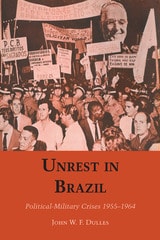
Unrest in Brazil
Political-Military Crises 1955-1964By John W. F. Dulles
University of Texas Press, 1970
… I offer my life in a holocaust … This people whose slave I was will no longer be slave to anyone. My sacrifice will remain forever in their souls and my blood will be the price of their ransom.
President Getulio Vargas' testament—written shortly before his suicide on August 24, 1954—was prophetic, for the Vargas legacy was to cast a shadow on political-military events of the next decade.
With news of Vargas' suicide, opponents of the late President, who were usually out of power, tried to organize. The military itself was split, but those favoring Kubitschek, apparent winner of the 1955 presidential election on a ticket of Vargas-created parties, gained control. To assure Kubitschek's inauguration Army leaders deposed two acting Presidents in 1955.
During Kubitschek's presidency (1956–1961 ) there were manifestations of discontent by military and political groups who ascribed numerous evils to Vargas and his followers.
In 1961, when Kubitschek's successor, Jânio Quadros, resigned after six months in office, the unrest intensified. Vice President Jango Goulart assumed the presidency and sought unsuccessfully to conciliate contending forces; his battle for reform seemed to make him an ally of "far leftists." Feeling that discipline was being undermined by men close to the President and that only military action could save Brazil from following the path favored by influential Communist labor leaders, a majority of the Army officers agreed to overthrow Goulart's administration in 1964.
Unrest in Brazil describes in exciting detail the government crises and resulting military interventions that punctuated the power struggle between supporters and opponents of Vargas in the decade following his death.
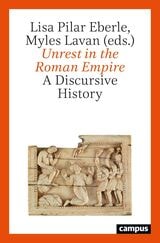
Unrest in the Roman Empire
A Discursive HistoryEdited by Lisa Pilar Eberle and Myles Lavan
Campus Verlag, 2024
Despite Roman claims to have brought peace, unrest was widespread in the Roman Empire. Revolts, protests, and piracy were common occurrences. How did contemporaries relate to and make sense of such phenomena?
This volume gathers eleven contributions by specialists in the various literatures and modes of thinking that flourished in the empire between the second century BCE and the fifth century CE, including Graeco-Roman historiography and philosophy, Jewish prophecy, Christian apology, and the writings of the Tannaitic rabbis, to investigate these questions. Each contribution analyzes the discourses by which the diverse authors of these texts understood instances of unrest. Together, the contributions expand our understanding of the varied politics that pervaded the Roman empire. They highlight the intellectual labor at every level of society that went to (re)making this imperial formation throughout its long history.
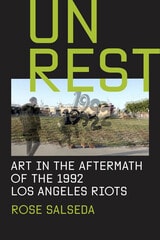
Unrest
Art in the Aftermath of the 1992 Los Angeles RiotsRose Salseda
University of Chicago Press, 2026
The first book to examine the visual art legacy of the 1992 Los Angeles Riots.
On April 29, 1992, a jury’s acquittal of four white Los Angeles police officers who had beaten Rodney King, a Black man, incited five days of intense protests. The 1992 Los Angeles Riots resulted in nearly four thousand fires, over $1 billion in property damage, fourteen thousand arrests, two thousand injuries, and sixty-three deaths. While many scholars have studied the period leading up to and following the riots, few have focused on how contemporary artists reacted to and continued to respond to this traumatic event.
In Unrest, Rose Salseda provides the first major art historical account of the 1992 Los Angeles Riots that chronicles the works of two generations of artists. Closely examining visual art that explores overlooked cross-racial, immigrant, and intergenerational experiences of the events, Salseda provocatively frames unrest as an act of the bereaved that makes visible the unrelenting experiences of injustice. She provides important insights into how we process violence through imagery; how the criminal justice system visualizes race and tolerates racial and xenophobic violence; and how we adapt racialized modes of viewing, normalize violence and oppression, and perhaps unwittingly contribute to these injustices. Ultimately, Unrest highlights how the experience of the 1992 Los Angeles Riots has driven artists to address the King beating and related episodes of racial violence for over thirty years—underscoring unrest as the inability to rest in the face of state-sanctioned violence, which persists to this day.
Unruly Cinema
History, Politics, and BollywoodRini Bhattacharya Mehta
University of Illinois Press, 2020
Rini Bhattacharya Mehta considers four aspects of Indian cinema's complicated history. She begins with the industry's surprising, market-driven triumph over imports from Hollywood and elsewhere in the 1930s. From there she explores how the nationalist social melodrama outwitted the government with its 1950s cinematic lyrical manifestoes. In the 1970s, an action cinema centered on the angry young male co-opted the voice of the oppressed. Finally, Mehta examines Indian film's discovery of the global neoliberal aesthetic that encouraged the emergence of Bollywood.
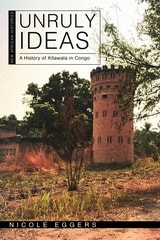
Unruly Ideas
A History of Kitawala in CongoNicole Eggers
Ohio University Press, 2023
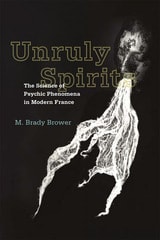
Unruly Spirits
The Science of Psychic Phenomena in Modern FranceM. Brady Brower
University of Illinois Press, 2010
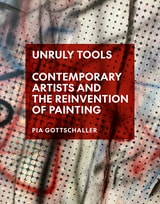
Unruly Tools
Contemporary Artists and the Reinvention of PaintingPia Gottschaller
J. Paul Getty Trust, The, 0
The first book to examine the role of unconventional tools in contemporary painting is required reading for anyone interested in painting’s recent past and future.
Painting, often regarded as the oldest of art forms, has been repeatedly declared “dead.” In this original and compelling study, technical art historian Pia Gottschaller thoroughly dismantles that notion, revealing how painters radically reimagined the medium in the years following World War II. No longer confined to the paintbrush, artists began to experiment with new methods, employing found, fabricated, and repurposed objects—as varied as an Afro comb, the human body, and a robotic airbrush—to create paintings unlike any seen before, revolutionizing the course of art history.
- Begins in 1945 with Jackson Pollock and the Gutai Art Association in Japan and traces the transformation of painting across the globe from the post-war period to the present.
- Explores the work of thirty-eight contemporary painters, including Amoako Boafo, Helen Frankenthaler, Yves Klein, Julie Mehretu, Beatriz Milhazes, Howardena Pindell, Kazuo Shiraga, and Andy Warhol.
- Richly illustrated with over 240 images of artists and their creations.
Unruly Tools is the first study of this kind and offers essential testimony to painting’s continued vitality and reinvention.

Unsafe Haven
The United States, the IRA and Political PrisonersKaren McElrath
Pluto Press, 2000
Karen McElrath questions US government attempts to portray an impartial role in the Irish conflict, arguing that historical and contemporary evidence reveals otherwise. She shows that, far from being a neutral process, the success of bids for political asylum often depends on the relationship between the US and the government of the applicant’s country of origin. Drawing on exclusive interviews with Irish Republicans who have faced deportation or extradition from the United States, or who have been prosecuted in the US for politically-motivated offences, McElrath explores the links between deportation and extradition outcomes and foreign policy issues. The tools of exclusion are defined in their historical context, and the history of US extradition law is described, with particular focus on the treaties with Britain. McElrath also examines the offences for which Irish and Irish-American Republicans have been charged, discusses the various levels of support for Irish political prisoners in the US, and summarises the findings by international human rights organisations.
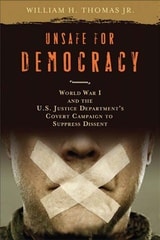
Unsafe for Democracy
World War I and the U.S. Justice Department's Covert Campaign to Suppress DissentWilliam H. Thomas Jr.
University of Wisconsin Press, 2009
“Recommended for all libraries.”—Frederic Krome, Library Journal

Unsecular Media
MAKING NEWS OF RELIGION IN AMERICAMark Silk
University of Illinois Press, 1995
Mark Silk's book is the first to offer a comprehensive description and analysis of how American news media cover religion.
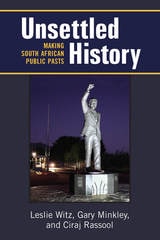
Unsettled History
Making South African Public PastsLeslie Witz, Gary Minkley, and Ciraj Rassool
University of Michigan Press, 2017
Leslie Witz, Gary Minkley, and Ciraj Rassool take the reader to sites of historical production in which complex ideas about pasts are invoked, and navigate a path toward understanding the agencies of image-making and memory production. This volume is the outcome of the authors’ intensive collaborative research and engagement over twenty-five years on questions including the production and performance of apartheid history; the cultural politics of social history; South Africa’s Truth and Reconciliation Commission and practices of orality; tourism as an arena of image-making and historical construction; museums as sites of heritage production for a new South Africa; photographs, archival meanings, and the construction of the social documentary; and the centenary commemorations of the South African War and the making of race. The authors not only witnessed many of these instances of history-making but were also participants in their constitution.
Unsettled Time
Colonial Legacies and Indigenous FuturesEdited by Kaitlin M. Brown and Lee M. Panich
University of Arizona Press, 2027
Time is at the core of how we think about colonialism in North America, with many seeing the first footfalls of newly arrived Europeans as indelibly marking the end of one era and the beginning of another. However, this understanding of time often serves to perpetuate outdated narratives about Indigenous people, normalizing colonial domination.
This volume unsettles conventional understandings of time in the study of Indigenous-colonial interactions in North America, acknowledging both the enduring nature of colonial legacies and the radical possibilities of Indigenous futures. The contributors largely approach this goal from the perspective of archaeology, with a particular concern for how we can effectively employ archaeological and related historical methods in collaboration with tribal nations and other descendant communities. The chapters engage with broader interdisciplinary questions about time, periodization, and temporality to build more nuanced and responsive understandings of Native-lived colonialism.
Contributors
Nathan Acebo
Kaitlin M. Brown
Wade Campbell
Emily Clark
Ruben Cu:k Ba’ak
Jacob Holland-Lulewicz
Nicholas V. Kessler
Nicholas C. Laluk
Koji Lau-Ozawa
Heather Law Pezzarossi
Lindsay Martel Montgomery
Lee M. Panich
Michelle M. Pigott
Robert W. Preucel
Christopher B. Rodning
Sarah Simeonoff
Unsettled
The Culture of Mobility and the Working Poor in Early Modern EnglandPatricia Fumerton
University of Chicago Press, 2006
Migrants made up a growing class of workers in late sixteenth- and seventeenth- century England. In fact, by 1650, half of England’s rural population consisted of homeless and itinerant laborers. Unsettled is an ambitious attempt to reconstruct the everyday lives of these dispossessed people. Patricia Fumerton offers an expansive portrait of unsettledness in early modern England that includes the homeless and housed alike.
Fumerton begins by building on recent studies of vagrancy, poverty, and servants, placing all in the light of a new domestic economy of mobility. She then looks at representations of the vagrant in a variety of pamphlets and literature of the period. Since seamen were a particularly large and prominent class of mobile wage-laborers in the seventeenth century, Fumerton turns to seamen generally and to an individual poor seaman as a case study of the unsettled subject: Edward Barlow (b. 1642) provides a rare opportunity to see how the laboring poor fashioned themselves, for he authored a journal of over 225,000 words and 147 pages of drawings. Barlow’s journal, studied extensively here for the first time, vividly charts what he himself termed his “unsettled mind” and the perpetual anxieties of England’s working and wayfaring poor. Ultimately, Fumerton explores representations of seamen as unsettled in the broadside ballads of Barlow’s time.
Unsettling Acts
Performing Transnational AdoptionJieun Lee
The Ohio State University Press, 2025
Analyzing contemporary theater and performance works about Korean transnational adoption, Jieun Lee’s Unsettling Acts: Performing Transnational Adoption challenges longstanding ideas about adoption. Lee contends that in staging adoptees’ birth family searches and reunions, theater and performance artists unsettle dominant discourses that have essentialized adoptees through ethnonationalist, gendered, and postwar humanitarian narratives in both birth and adoptive cultures. In doing so, Lee reveals how these performances engage in acts of disavowal of and resistance to mythologies of adoption and adoptee experience.
Lee examines twelve works—from South Korea, the United States, the United Kingdom, Belgium, and Denmark—including plays, musicals, solo performances, community-based theater, and performance art. Through her analysis, theater and performance become a means for reimagining adoptees’ identity, kinship, and sense of belonging. Further, these pieces encourage critical exploration of the history, politics, and social impacts of Korean transnational adoption. These works thus nurture a countermemory to engender redressive accountability and transpacific justice, pointing a way forward for remaking the transnational adoptee experience in the twenty-first century.
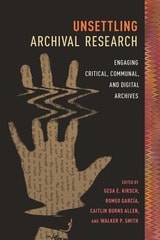
Unsettling Archival Research
Engaging Critical, Communal, and Digital ArchivesEdited by Gesa E. Kirsch, Romeo García, Caitlin Burns Allen, and Walker P. Smith
Southern Illinois University Press, 2023
A collection of accessible, interdisciplinary essays that explore archival practices to unsettle traditional archival theories and methodologies.
What would it mean to unsettle the archives? How can we better see the wounded and wounding places and histories that produce absence and silence in the name of progress and knowledge? Unsettling Archival Research sets out to answer these urgent questions and more, with essays that chart a more just path for archival work.
Unsettling Archival Research is one of the first publications in rhetoric and writing studies dedicated to scholarship that unsettles disciplinary knowledge of archival research by drawing on decolonial, Indigenous, antiracist, queer, and community perspectives. Written by established and emerging scholars, essays critique not only the practices, ideologies, and conventions of archiving, but also offer new tactics for engaging critical, communal, and digital archiving within and against systems of power. Contributors reflect on efforts to unsettle and counteract racist, colonial histories, confront the potentials and pitfalls of common archival methodologies, and chart a path for the future of archival research otherwise. Unsettling Archival Research intervenes in a critical issue: whether the discipline’s assumptions about the archives serve or fail the communities they aim to represent and what can be done to center missing voices and perspectives. The aim is to explore the ethos and praxis of bearing witness in unsettling ways, carried out as a project of queering and/or decolonizing the archives.
Unsettling Archival Research takes seriously the rhetorical force of place and wrestles honestly with histories that still haunt our nation, including the legacies of slavery, colonial violence, and systemic racism.
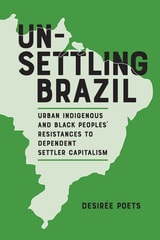
Unsettling Brazil
Urban Indigenous and Black Peoples' Resistances to Dependent Settler CapitalismDesirée Poets
University of Alabama Press, 0
Analyzes favela, quilombola, and indigenous communities’ responses to settler colonialism in urban Brazil. Based on ethnographic research and her experiences growing up in Brazil, the author tells the stories of communities in Rio de Janeiro, São Paulo, and Belo Horizonte
Unsettling Brazil offers a powerful account of five urban Indigenous and Black communities and movements in Brazil that illuminates their struggle for land, dignity, and their ways of life amid historic and ongoing settler colonialism, marked by militarization and dependent capitalist development. The in-depth case studies are the Indigenous movement Aldeia Maracanã and the quilombola community Sacopã in Rio, the Quilombo dos Luízes in Belo Horizonte, the Indigenous movement behind the Pindorama scholarship program in São Paulo, and the Complexo da Maré favela in Rio. For each, Poets vividly documents the intersectional and transnational structures of power that perpetuate the erasure, dispossession, and exploitation of nonwhite populations and the creative ways that Black and Indigenous communities have mobilized to unsettle these structures.
Drawing on the knowledge produced by Black and Indigenous organizers and thinkers, Poets argues for an interdisciplinary framework that prioritizes the voices and experiences of these communities. Addressing increasingly salient calls for decolonization, Poets ponders the paradoxical role of rights, citizenship, and the state in the fight for freedom and justice. Unsettling Brazil urges readers to confront the uncomfortable truths about the nation's history and stands in solidarity with those fighting to reclaim their heritage, identity, and land.
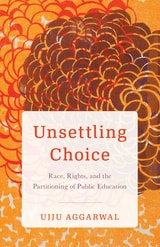
Unsettling Choice
Race, Rights, and the Partitioning of Public EducationUjju Aggarwal
University of Minnesota Press, 2024
How the Great Recession revealed a system of school choice built on crisis, precarity, and exclusion
What do universal rights to public goods like education mean when codified as individual, private choices? Is the “problem” of school choice actually not about better choices for all but, rather, about the competition and exclusion that choice engenders—guaranteeing a system of winners and losers? Unsettling Choice addresses such questions through a compelling ethnography that illuminates how one path of neoliberal restructuring in the United States emerged in tandem with, and in response to, the Civil Rights movement.
Drawing on ethnographic research in one New York City school district, Unsettling Choice traces the contestations that surfaced when, in the wake of the 2007–2009 Great Recession, public schools navigated austerity by expanding choice-based programs. Ujju Aggarwal argues that this strategy, positioned as “saving public schools,” mobilized mechanisms rooted in market logics to recruit families with economic capital on their side, thereby solidifying a public sphere that increasingly resembled the private—where contingency was anticipated and rights for some were marked by intensified precarity for poor and working-class Black and Latinx families.
As Unsettling Choice shows, these struggles over public schools—one of the last remaining universal public goods in the United States—were entrapped within neoliberal regimes that exceeded privatization and ensured exclusion even as they were couched in language of equity, diversity, care, and rights. And yet this richly detailed and engaging book also tracks an architecture of expansive rights, care, and belonging built among poor and working-class parents at a Head Start center, whose critique of choice helps us understand how we might struggle for—and reimagine—justice, and a public that remains to be won.
Retail e-book files for this title are screen-reader friendly with images accompanied by short alt text and/or extended descriptions.
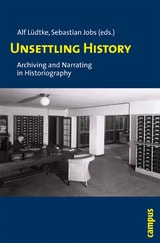
Unsettling History
Archiving and Narrating in HistoriographyEdited by Sebastian Jobs and Alf Lüdtke
Campus Verlag, 2010
In recent decades, scholars working in postcolonial history have successfully challenged the primacy of Western historiography and its Eurocentric worldview. With Unsettling History, a group of historians extend that challenge to two central components of work in history: archiving and narrating. Archival resources, they argue, despite their air of impartiality, are the product of established interests and subject to various practices of selection, cataloguing, and preservation. Narrating, too, is more complicated than it might at first seem, especially as the range of genres available to the historians for presenting their findings has expanded in recent years.
Unsettling Scripture
Iroquois and the Book of MormonThomas W Murphy
University of Utah Press, 2025
In Unsettling Scripture: Iroquois and the Book of Mormon, anthropologist Thomas W Murphy delves into the visions of Seneca prophet Handsome Lake, the epic narratives of the Iroquois Confederacy, and the origin story of the Book of Mormon, revealing surprising parallels between Indigenous and Mormon traditions.
Through ethnohistorical research and decolonizing methodologies, Murphy reexamines how both communities understand their origins, faith, and prophecy. From Handsome Lake’s revelations to Joseph Smith’s seer stone, from ancient sibling rivalries to the Great Peace, this book unsettles traditional narratives while opening new conversations on scripture, identity, and cultural exchange. Drawing from living Indigenous voices, Unsettling Scripture challenges readers to rethink sacred texts and the histories they tell.
Unsettling Sexuality
Queer Horizons in the Long Eighteenth CenturyJeremy Chow
University of Delaware Press, 2025
This book is also freely available online as an open access digital edition on Manifold, here: https://openpub.udel.edu/projects/unsettling-sexuality.
Unsettling Sexuality: Queer Horizons in the Long Eighteenth Century challenges the traditional ways that scholarship has approached sexuality, gender nonconformity, and sex (as well as its absence) in the long eighteenth century. Drawing from recent and emerging criticisms in Middle Eastern and Asian studies, Black studies, and Native American and Indigenous studies, the collected authors perform intersectional queer readings, reimagine queer historiographic methods, and spearhead new citational models that can invigorate the field. Contributors read with and against diverse European, transatlantic, and global archives to explore mutually informative frameworks of gender, sexuality, race, indigeneity, ability, and class. In charting multidirectional queer horizons, this collection locates new prospective desires and intimacies in the literature, culture, and media of the period to imagine new directions and simultaneously unsettle eighteenth-century studies.
Unsettling Sovereignty
International Law, Nuclear Weapons, and US Extraterritorial Power in Postwar OceaniaM. X. Mitchell
University of Chicago Press, 2026
Marshall Islanders and their ancestral lands and waters played important roles in reshaping the United States’ offshore power, state sovereignty, and the international politics of decolonization.
In the years following World War II, the United States conducted sixty-seven devastating nuclear blasts in the Marshall Islands—yet the archipelago was never a US territory. Working through the United Nations, US diplomats engineered a new, one-of-a-kind extraterritorial status, called strategic trusteeship, to control the Native lands, waters, and peoples of the Marshall, Caroline, and Northern Mariana Islands. Strategic trusteeship permitted the US to militarize a vast expanse of Western Oceania. This novel and racialized legal form of international dependency was integral to US nuclear weapons detonations and damage in the region.
In Unsettling Sovereignty, M. X. Mitchell recounts this untold legal history, exploring how nuclear weapons changed claims and practices of sovereignty from the 1940s to the present. US nuclear blasting in the Marshall Islands troubled conventional renderings of state sovereignty under international law. The explosions, disastrous for Marshallese communities and their ancestral atolls, also caused hazardous nuclear fallout, which spread around the globe. Islanders and their allies turned to law, using legal wrangling over blasting and fallout to raise new questions about the location, time, and subjects of state violence in a period of decolonization; the intersections between race, Indigeneity, and wide-scale technogenic harm; and the pitfalls and unfulfilled promises of international law. Mitchell shows that the Marshallese people and their lands and waters were, and remain, central to redefining sovereignty in an era of boundless pollution and climate change.
Unsettling Thoreau
Native Americans, Settler Colonialism, and the Power of PlaceJohn J. Kucich
University of Massachusetts Press, 2024
A CHOICE 2025 Outstanding Academic Title
Finalist for the 2025 New England Society Book Awards
Henry David Thoreau’s life-long fascination with Native Americans is widely known and a recurring topic of interest, and it is also a source of modern debate. This is a figure who both had a deep interest in Native American history and culture and was seen by many of his contemporaries, including Ralph Waldo Emerson and Nathaniel Hawthorne, as “more like an Indian” than his white neighbors. At the same time, Thoreau did little to protest the systematic dispossession of Indigenous people across the country in his lifetime. John J. Kucich charges into this contradiction, considering how Thoreau could demonstrate deep respect for Native American beliefs on one hand and remain largely silent about their genocide, actively happening throughout his life, on the other. Thoreau’s long study of Native peoples, as reflected in so much of his writing, allowed him to glimpse an Indigenous worldview, but it never fully freed him from the blind spots of settler colonialism.
Drawing on Indigenous studies and critiques of settler colonialism, as well as new materialist approaches that illustrate Thoreau’s radical reimagining of the relationship between humans and the natural world, Unsettling Thoreau explores the stakes of Thoreau’s effort to live mindfully and ethically in place when living alongside, or replacing marginalized peoples. By examining the whole scope of his writings, including the unpublished Indian Notebooks, and placing them alongside Native writers and communities in and beyond New England, this book gauges Thoreau’s effort to use Indigenous knowledge to reimagine a settler colonial world, without removing him from its trappings.
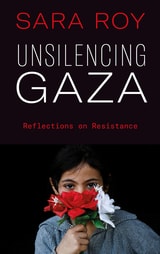
Unsilencing Gaza
Reflections on ResistanceSara Roy
Pluto Press, 2021
Gaza, the centre of Palestinian nationalism and resistance to the occupation, is the linchpin of the Israeli-Palestinian conflict and the key to its resolution. Since 2005, Israel has deepened the isolation of the territory, severing it almost completely from its most vital connections to the West Bank, Israel and beyond, and has deliberately shattered its economy, transforming Palestinians from a people with political rights into a humanitarian problem.
Sara Roy unpacks this process, looking at US foreign policy towards the Palestinians, as well as analysing the trajectory of Israeli policy toward Gaza, which became a series of punitive approaches meant not only to contain the Hamas regime but weaken Gazan society.
Roy also reflects on Gaza's ruination from a Jewish perspective and discusses the connections between Gaza's history and her own as a child of Holocaust survivors. This book, a follow up from the renowned Failing Peace, comes from one of the world's most acclaimed writers on the region.
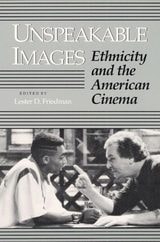
Unspeakable Images
ETHNICITY AND THE AMERICAN CINEMAEdited by Lester D. Friedman
University of Illinois Press, 1991
In fourteen chapters on topics ranging from film comedy to reporter movies to Latins in Manhattan, contributors from diverse disciplines explore ethnicity as a broad, complex, multilayered concept. The book's first section scrutinizes ethnicity within the context of traditional modes of film analysis---historical, auteurist, and generic. Essays in the second section relate ethnicity to broader areas of critical thought such as cultural studies, ethnography, postmodernism, psychoanalysis, feminism, and class studies, analyzing how each intersects and amplifies the other.
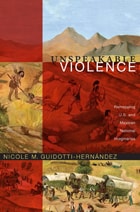
Unspeakable Violence
Remapping U.S. and Mexican National ImaginariesNicole M. Guidotti-Hernández
Duke University Press, 2011
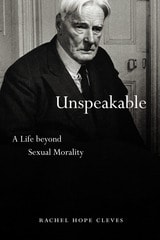
Unspeakable
A Life beyond Sexual MoralityRachel Hope Cleves
University of Chicago Press, 2020
Unspeakable approaches Douglas as neither monster nor literary hero, but as a man who participated in an exploitative sexual subculture that was tolerated in ways we may find hard to understand. Using letters, diaries, memoirs, police records, novels, and photographs—including sources by the children Douglas encountered—Cleves identifies the cultural practices that structured pedophilic behaviors in England, Italy, and other places Douglas favored. Her book delineates how approaches to adult-child sex have changed over time and offers insight into how society can confront similar scandals today, celebrity and otherwise.
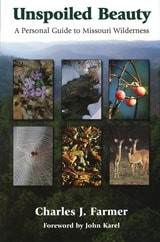
Unspoiled Beauty
A Personal Guide to Missouri WildernessCharles J. Farmer
University of Missouri Press, 1999
Tucked within Missouri's borders are eight Congressionally designated Wilderness areas. These magnificent forests, scattered across the southern portion of the state, combine a wide variety of unique ecosystems. In Unspoiled Beauty, Charles Farmer captures the essence of the Missouri Wilderness experience, allowing even those who have never set foot in the wilderness to enjoy its wonders and appreciate its importance.
Farmer begins by describing the wilderness region prior to the Congressional Wilderness designation, providing an overview of the numerous battles that were waged to reclaim the state's wilderness and to assure its preservation. Featured are key players who were instrumental in the acquisition and preservation of Missouri wilderness.
Farmer devotes a chapter to each of the eight Wilderness areas, accompanied by numerous engaging photographs, many in color. He provides a brief history of each and shares his own fascinating personal experiences of camping, hiking, backpacking, hunting, and fishing within each. He discusses trails, fauna, flora, and other colorful details along the way. His adventures take place during different seasons of the year; he is sometimes alone, sometimes in company. Through his eyes, each area is brought vividly to life.
"Wilderness Tips" and a guide with rules for the novice camper, hiker, backpacker, hunter, and fisherman enhance the book's usefulness. The final chapter lists the areas in Missouri that qualify for Wilderness designation in the New Forest Plan. Unspoiled Beauty may well play a part in saving Missouri's remaining wilderness candidates. It will also help other states that are preparing campaigns to save their own wilderness areas.
Wilderness advocates, hikers and backpackers, fishermen and hunters, anyone who appreciates the great outdoors will enjoy this important new book.
Unspooled
How the Cassette Made Music ShareableRob Drew
Duke University Press, 2024
Unsportsmanlike Conduct
Exploiting College AthletesWalter Byers
University of Michigan Press, 1997
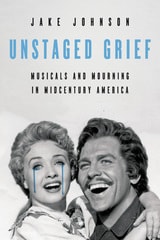
Unstaged Grief
Musicals and Mourning in Midcentury AmericaJake Johnson
University of Illinois Press, 2025
Often dismissed as escapism, screen musicals of the 1960s in fact tapped into unspoken sadness about an America that was slipping away. Jake Johnson delves into film and television musicals of the era to examine their place in networks of grieving in America, for America, and about America.
The Golden Age of musical theater ended just as Elisabeth Kübler-Ross’s On Death and Dying debuted, and Johnson uses Kübler-Ross’s five stages to frame the intertwining of musicals and grief. He analyzes films like Seven Brides for Seven Brothers and State Fair alongside paintings, poetry, and other images and texts to reveal how the musical theater engine built in the first half of the century broke down just as a new language emerged to describe the melancholy felt by people facing the end of the world they had known.
Nuanced and original, Unstaged Grief plumbs the grief, loss, and hope behind the Technicolor spectacle and rousing showstoppers.
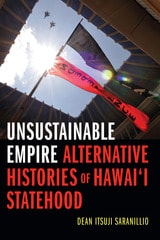
Unsustainable Empire
Alternative Histories of Hawai‘i StatehoodDean Itsuji Saranillio
Duke University Press, 2018
Untaming the Frontier in Anthropology, Archaeology, and History
Edited by Bradley J. Parker and Lars Rodseth
University of Arizona Press, 2005
Unthinking Social Science
Limits Of 19Th Century ParadigmsImmanuel Wallerstein
Temple University Press, 2001
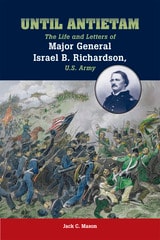
Until Antietam
The Life and Letters of Major General Israel B. Richardson, U.S. ArmyJack C. Mason
Southern Illinois University Press, 2009
While researching this book, Jack C. Mason made the kind of discovery that historians dream of. He found more than one hundred unpublished and unknown letters from Union general Israel B. Richardson to his family, written from his time as a West Point cadet until the day before his fatal wounding at the Battle of Antietam, the bloodiest day in American history. Using these freshly uncovered primary sources as well as extensive research in secondary materials, Mason has written the first-ever biography of Israel Bush Richardson.
Mason traces Richardson’s growth as a soldier through his experiences and the guidance of his superiors, and then as a leader whose style reflected the actions of the former commanders he respected. Though he was a disciplinarian, Richardson took a relaxed attitude toward military rules, earning him the affection of his men. Unfortunately, his military career was cut short just as high-ranking officials began to recognize his aggressive leadership. He was mortally wounded while leading his men at Antietam and died on November 3, 1862.
Until Antietam brings to life a talented and fearless Civil War infantry leader. Richardson’s story, placed within the context of nineteenth-century warfare, exemplifies how one soldier’s life influenced his commanders, his men, and the army as a whole.
Winner of the Army Historical Foundation 2009 Distinguished Book Award
Until Choice Do Us Part
Marriage Reform in the Progressive EraClare Virginia Eby
University of Chicago Press, 2013
For centuries, people have been thinking and writing—and fiercely debating—about the meaning of marriage. Just a hundred years ago, Progressive era reformers embraced marriage not as a time-honored repository for conservative values, but as a tool for social change.
In Until Choice Do Us Part, Clare Virginia Eby offers a new account of marriage as it appeared in fiction, journalism, legal decisions, scholarly work, and private correspondence at the turn into the twentieth century. She begins with reformers like sexologist Havelock Ellis, anthropologist Elsie Clews Parsons, and feminist Charlotte Perkins Gilman, who argued that spouses should be “class equals” joined by private affection, not public sanction. Then Eby guides us through the stories of three literary couples—Upton and Meta Fuller Sinclair, Theodore and Sara White Dreiser, and Neith Boyce and Hutchins Hapgood—who sought to reform marriage in their lives and in their writings, with mixed results. With this focus on the intimate side of married life, Eby views a historical moment that changed the nature of American marriage—and that continues to shape marital norms today.
Until Justice Rolls Down
The Birmingham Church Bombing CaseFrank Sikora
University of Alabama Press, 2005
This book tells the story of one grim Sunday in September 1963 when an intentionally planted cache of dynamite ripped through the walls of the Sixteenth Street Baptist Church and ended the dreams and the lives of four young black girls. Their deaths spurred the Kennedy administration to send an army of FBI agents to Alabama and led directly to the passage of the Civil Rights Act. When the Justice Department was unable to bring anyone to trial for this heinous crime, a young Alabama attorney general named Bill Baxley began his own investigation to find the perpetrators. In 1977, 14 years after the bombing, Baxley brought one Klansman to trial and, in a courtroom only blocks from the bombed church (now a memorial to the victims), persuaded a jury to return a guilty verdict. More than 20 years later two other perpetrators were tried for the bombing, found guilty, and remanded to prison.
Frank Sikora has used the court records, FBI reports, oral interviews, and newspaper accounts to weave a story of spellbinding proportions. A reporter by profession, Sikora tells this story compellingly, explaining why the civil rights movement had to be successful and how Birmingham had to change.