Results by title
8642 books match the query '20th century' and 89 start with v

Vaccine Nation
America's Changing Relationship with ImmunizationElena Conis
University of Chicago Press, 2014
Vaccine Nation opens in the 1960s, when government scientists—triumphant following successes combating polio and smallpox—considered how the country might deploy new vaccines against what they called the “milder” diseases, including measles, mumps, and rubella. In the years that followed, Conis reveals, vaccines fundamentally changed how medical professionals, policy administrators, and ordinary Americans came to perceive the diseases they were designed to prevent. She brings this history up to the present with an insightful look at the past decade’s controversy over the implementation of the Gardasil vaccine for HPV, which sparked extensive debate because of its focus on adolescent girls and young women. Through this and other examples, Conis demonstrates how the acceptance of vaccines and vaccination policies has been as contingent on political and social concerns as on scientific findings.
By setting the complex story of American vaccination within the country’s broader history, Vaccine Nation goes beyond the simple story of the triumph of science over disease and provides a new and perceptive account of the role of politics and social forces in medicine.

Vaccine Nation
America's Changing Relationship with ImmunizationElena Conis
University of Chicago Press, 2014
With employers offering free flu shots and pharmacies expanding into one-stop shops to prevent everything from shingles to tetanus, vaccines are ubiquitous in contemporary life. The past fifty years have witnessed an enormous upsurge in vaccines and immunization in the United States: American children now receive more vaccines than any previous generation, and laws requiring their immunization against a litany of diseases are standard. Yet, while vaccination rates have soared and cases of preventable infections have plummeted, an increasingly vocal cross section of Americans have questioned the safety and necessity of vaccines. In Vaccine Nation, Elena Conis explores this complicated history and its consequences for personal and public health.
Vaccine Nation opens in the 1960s, when government scientists—triumphant following successes combating polio and smallpox—considered how the country might deploy new vaccines against what they called the “milder” diseases, including measles, mumps, and rubella. In the years that followed, Conis reveals, vaccines fundamentally changed how medical professionals, policy administrators, and ordinary Americans came to perceive the diseases they were designed to prevent. She brings this history up to the present with an insightful look at the past decade’s controversy over the implementation of the Gardasil vaccine for HPV, which sparked extensive debate because of its focus on adolescent girls and young women. Through this and other examples, Conis demonstrates how the acceptance of vaccines and vaccination policies has been as contingent on political and social concerns as on scientific findings.
By setting the complex story of American vaccination within the country’s broader history, Vaccine Nation goes beyond the simple story of the triumph of science over disease and provides a new and perceptive account of the role of politics and social forces in medicine.
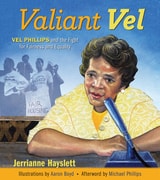
Valiant Vel
Vel Phillips and the Fight for Fairness and EqualityJerrianne Hayslett
Wisconsin Historical Society Press, 2025
An illustrated biography of groundbreaking civil rights activist Vel Phillips for young readers
Fair housing advocate, civil rights champion, and civic leader Vel Phillips spent her life breaking barriers and fighting for justice for all people. As the first Black woman on the Milwaukee Common Council, Wisconsin’s first Black judge, and the first Black woman to win statewide office when she was elected secretary of state of Wisconsin, Phillips left a lasting legacy that has inspired generations to continue the fight for justice and equality.
Valiant Vel depicts Phillips’s captivating story for young readers in middle and high school—from her childhood experiences facing racial discrimination, to achieving her dream of becoming a lawyer, to her long career in politics and civil rights. In the 1960s, Phillips spearheaded a campaign to advocate for fair housing in Milwaukee, joining forces with the NAACP Youth Council and marching alongside other activists in the face of violent opposition. In 1968, Phillips’s persistence paid off when the Milwaukee Common Council passed a fair housing ordinance.
Beautifully illustrated with historic photographs and original artwork by Milwaukee artist Aaron Boyd, Valiant Vel makes an excellent addition to young readers’ bookshelves at school and at home. With an afterword by Phillips’s son, Michael, a glossary of terms, and sources for further research, this book provides a thorough look at an inspirational activist who dedicated her life to making the world a better place.

Valor and Courage
The Story of the USS Block Island Escort Carriers in World War IIBenjamin J. Hruska
University of Alabama Press, 2021
Recounts the stories of the USS Block Island CVE 21 and CVE 106 and their crews, many of whom served on both ships in the Atlantic and Pacific theatres
In Valor and Courage: The Story of the USS Block Island Escort Carriers in World War II Benjamin Hruska explores the history and commemoration of the USS Block Island—or, more properly, the Block Islands, as two escort carriers bore that name during WWII. The first, CVE 21, bears the distinction of having been the only American aircraft carrier sunk in the Atlantic Theatre after being torpedoed by a German U-boat off the coast of North Africa.
Of the CVE 21’s 957 crew members, six sailors were killed and eighteen injured in the strike, and four of the Block Island’s fighter pilots were lost later in the day searching for a safe place to land their planes. When the CVE 106 was commissioned to replace its predecessor, Captain Massie Hughes successfully persuaded the Navy to keep the CVE 21’s crew together in manning the new ship. After resurrection as the CVE 106, the Block Island was assigned to the Pacific theater where it fought until the end of the war. The saga of these two ships and the crew that navigated two very different theaters of war offers a unique lens on naval strategy and engineering as it evolved during WWII, especially as pertains to the escort carrier class—generally underappreciated both in naval studies and in public memory.
Using archival materials, dozens of oral histories, primary sources, and official records, Hruska traces the life of the Block Island from the CVE 21’s construction through its missions in the Atlantic, its work as an antisubmarine hunter, its destruction, and the lasting impact of those experiences on its crew. Hruska’s study juxtaposes traditional military history with an examination of the acts of remembrance and commemoration by veterans who served on the escort carriers, how those practices evolved over time, and how the meanings of personal wartime experiences and memories gradually shifted throughout that process.
Value Change in Global Perspective
Paul R. Abramson and Ronald Inglehart
University of Michigan Press, 1995
from Materialist values (such as the desire for economic and physical security) to Post-materialist values (such as the desire for freedom, self-expression, and the quality of life) is in all likelihood a global phenomenon. Value Change in Global Perspective analyzes over thirty years worth of national surveys in European countries and presents the most comprehensive and nuanced discussion of this shift to date. By paying special attention to the way generational replacement transforms values among mass publics, the authors are able to present a comprehensive analysis of the processes through which values change.

Vanguard
A Queer History of Mutual AidJoseph Plaster
Duke University Press, 2027
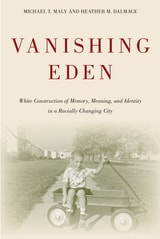
Vanishing Eden
White Construction of Memory, Meaning, and Identity in a Racially Changing CityMichael Maly
Temple University Press, 2015
For many whites, desegregation initially felt like an attack on their community. But how has the process of racial change affected whites’ understanding of community and race? In Vanishing Eden, Michael Maly and Heather Dalmage provide an intriguing analysis of the experiences and memories of whites who lived in Chicago neighborhoods experiencing racial change during the 1950s through the 1980s. They pay particular attention to examining how young people made sense of what was occurring, and how this experience impacted their lives.
Using a blend of urban studies and whiteness studies, the authors examine how racial solidarity and whiteness were created and maintained—often in subtle and unreflective ways. Vanishing Eden also considers how race is central to the ways social institutions such as housing, education, and employment function. Surveying the shifting social, economic, and racial contexts, the authors explore how race and class at local and national levels shaped the organizing strategies of those whites who chose to stay as racial borders began to change.
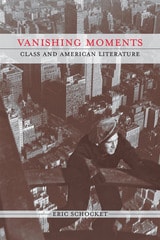
Vanishing Moments
Class and American LiteratureEric Schocket
University of Michigan Press, 2010
Schocket offers careful readings of works by Herman Melville, Rebecca Harding Davis, William Dean Howells, Jack London, T. S. Eliot, Gertrude Stein, Muriel Rukeyser, and Langston Hughes, among others, and explores how these authors worked to try to heal the rift between the classes. He considers the challenges writers faced before the Civil War in developing a language of class amidst the predominant concerns about race and slavery; how early literary realists dealt with the threat of class insurrection; how writers at the turn of the century attempted to span the divide between the classes by going undercover as workers; how early modernists used working-class characters and idioms to shape their aesthetic experiments; and how leftists in the 1930s struggled to develop an adequate model to connect class and literature. Vanishing Moments’ unique combination of a broad historical scope and in-depth readings makes it an essential book for scholars and students of American literature and culture, as well as for political scientists, economists, and humanists.
“An important book containing many brilliant arguments—hard-hitting and original. Schocket demonstrates a sophisticated acquaintance with issues within the working-class studies movement.”
--Barbara Foley, Rutgers University

Vardis Fisher
A Mormon NovelistMichael Austin
University of Illinois Press, 2021
Engrossing and enlightening, Vardis Fisher illuminates the acclaimed author's impact on Mormon culture, American letters, and the literary tradition of the American West.
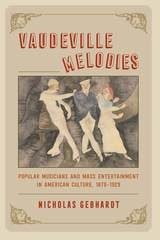
Vaudeville Melodies
Popular Musicians and Mass Entertainment in American Culture, 1870-1929Nicholas Gebhardt
University of Chicago Press, 2017
In Vaudeville Melodies, Nicholas Gebhardt introduces us to the performers, managers, and audiences who turned disjointed variety show acts into a phenomenally successful business. First introduced in the late nineteenth century, by 1915 vaudeville was being performed across the globe, incorporating thousands of performers from every branch of show business. Its astronomical success relied on a huge network of theatres, each part of a circuit and administered from centralized booking offices. Gebhardt shows us how vaudeville transformed relationships among performers, managers, and audiences, and argues that these changes affected popular music culture in ways we are still seeing today. Drawing on firsthand accounts, Gebhardt explores the practices by which vaudeville performers came to understand what it meant to entertain an audience, the conditions in which they worked, the institutions they relied upon, and the values they imagined were essential to their success.
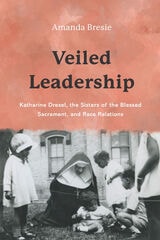
Veiled Leadership
Katharine Drexel, The Sisters of the Blessed Sacrament, and Race RelationsAmanda Bresie
Catholic University of America Press, 2023
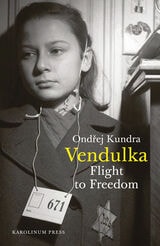
Vendulka
Flight to FreedomOndrej Kundra
Karolinum Press, 2021
Famed Czech photographer Jan Lukas snapped an offhand portrait of twelve-year-old Vendulka Vogl in March 1943. A friend of the Vogls, Lukas was saying goodbye to the family, who were soon to leave Prague for a concentration camp. The photograph almost didn’t see the light of day—Lukas knew that if the Nazis found it on him, he could wind up in the camps as well—but the image was eventually developed and came to symbolize the Holocaust and humanize its victims. Seventy years after this famous picture was taken, investigative journalist Ondřej Kundra discovered that, despite all odds, Vendulka Vogl had survived the camps of Terezín, Auschwitz, and Christianstadt, and was in fact still alive and living in the United States. Kundra persuaded her to tell the remarkable story surrounding the photograph: her survival, her later decision to flee the Communist regime for America, and how she later reconnected with Jan Lukas, maintaining a lifelong friendship.
Vogl’s thrillingly moving story, Kundra’s sharp and engaging writing, and Lukas’s striking photography all combine to make Vendulka an inspiring investigation into the horrors of totalitarianism and the redemptive beauty of friendship.

Vengeance Is Mine
The Scandalous Love Triangle That Triggered the Boyce-Sneed FeudBill Neal
University of North Texas Press, 2011
Venice
A Contested Bohemia in Los AngelesAndrew Deener
University of Chicago Press, 2012
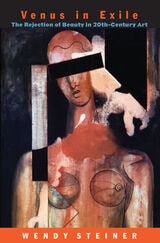
Venus in Exile
The Rejection of Beauty in Twentieth-Century ArtWendy Steiner
University of Chicago Press, 2002
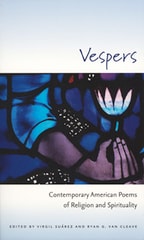
Vespers
Contemporary American Poems of Religion and SpiritualityVirgil Suarez
University of Iowa Press, 2003
At the heart of human existence lie fundamental questions that are pondered by philosophers, theologians, poets and thoughtful people from all walks of life. What is the meaning of life? Who or what is a divine being? How can a benevolent deity justify human suffering? Such questions are especially relevant to our lives in the current climate of American society. In Vespers: American Poems of Religion and Spirituality, editors Virgil Suárez and Ryan G. Van Cleave offer the reading world a timely anthology of powerful and passionate poems that cut to the heart of our contemporary theological and spiritual underpinnings.
Featuring fifty of today's most respected American poets, including Pulitzer Prize winners Stephen Dunn and Carolyn Kizer, Vespers allows us to witness and understand the challenging ideas and philosophies surrounding religion and spirituality. Through these poems, we can come to a better understanding of who, what, and why we are.
From deathbed spirituals to initiation songs, transformative ballads to transcendent sonnets, poets of myriad backgrounds—Native American, African American, Asian American, Latino, Protestant, Buddhist, Catholic, Jewish—echo the thoughts, concerns, and fears that linger in our souls. Their poems help us realize that we are not alone, that we're never truly alone, that even in the face of darkness the world is vibrant, beautiful, joyous.
More than a creative exploration of theological concerns—Vespers is a roadmap of where we've been, where we are, and where we are heading in terms of our spiritual and religious existence. It will keep you company, good company, whatever your religious or spiritual background.
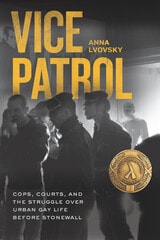
Vice Patrol
Cops, Courts, and the Struggle over Urban Gay Life before StonewallAnna Lvovsky
University of Chicago Press, 2021
In Vice Patrol, Anna Lvovsky chronicles this painful story, tracing the tactics used to criminalize, profile, and suppress gay life from the 1930s through the 1960s, and the surprising controversies those tactics often inspired in court. Lvovsky shows that the vice squads’ campaigns stood at the center of live debates about not only the law’s treatment of queer people, but also the limits of ethical policing, the authority of experts, and the nature of sexual difference itself—debates that had often unexpected effects on the gay community’s rights and freedoms. Examining those battles, Vice Patrol enriches understandings of the regulation of queer life in the twentieth century and disputes about police power that continue today.

Vice Patrol
Cops, Courts, and the Struggle over Urban Gay Life before StonewallAnna Lvovsky
University of Chicago Press, 2021
In the mid-twentieth century, gay life flourished in American cities even as the state repression of queer communities reached its peak. Liquor investigators infiltrated and shut down gay-friendly bars. Plainclothes decoys enticed men in parks and clubs. Vice officers surveilled public bathrooms through peepholes and two-way mirrors.
In Vice Patrol, Anna Lvovsky chronicles this painful story, tracing the tactics used to criminalize, profile, and suppress gay life from the 1930s through the 1960s, and the surprising controversies those tactics often inspired in court. Lvovsky shows that the vice squads’ campaigns stood at the center of live debates about not only the law’s treatment of queer people, but also the limits of ethical policing, the authority of experts, and the nature of sexual difference itself—debates that had often unexpected effects on the gay community’s rights and freedoms. Examining those battles, Vice Patrol enriches understandings of the regulation of queer life in the twentieth century and disputes about police power that continue today.
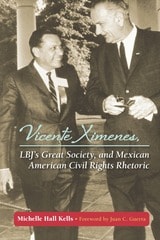
Vicente Ximenes, LBJ's Great Society, and Mexican American Civil Rights Rhetoric
Michelle Hall Kells, with a foreword by Juan C. Guerra
Southern Illinois University Press, 2018
Kells draws on Ximenes’s extensive archive of speeches, reports, articles, and oral interviews to present the activist’s rhetorical history. After a discussion of Ximenes’s early life, the author focuses on his career as an activist, examining Ximenes’s leadership in several key civil rights events, including the historic 1967 White House Cabinet Committee Hearings on Mexican American Affairs. Also highlighted is his role in advancing Mexican Americans and Latinos from social marginalization to greater representation in national politics.
This book shows us a remarkable man who dedicated the majority of his life to public service, using rhetoric to mobilize activists for change to secure civil rights advances for his fellow Mexican Americans.

Victim of History
Cardinal Mindszenty, a biographyMargit Balogh
Catholic University of America Press, 2022
Victims of the Chilean Miracle
Workers and Neoliberalism in the Pinochet Era, 1973–2002Peter Winn, ed.
Duke University Press, 2004
Implemented in the 1970s at the point of the bayonet and in the shadow of the torture chamber, the neoliberal policies of Augusto Pinochet’s dictatorship reversed many of the gains in wages, benefits, and working conditions that Chile’s workers had won during decades of struggle and triggered a severe economic crisis. Later refined and softened, Pinochet’s neoliberal model began, finally, to promote economic growth in the mid-1980s, and it was maintained by the center-left governments that followed the restoration of democracy in 1990. Yet, despite significant increases in worker productivity, real wages stagnated, the expected restoration of labor rights faltered, and gaps in income distribution continued to widen. To shed light on this history and these ongoing problems, the contributors look at industries long part of the Chilean economy—including textiles and copper—and industries that have expanded more recently—including fishing, forestry, and agriculture. They not only show how neoliberalism has affected Chile’s labor force in general but also how it has damaged the environment and imposed special burdens on women. Painting a sobering picture of the two Chiles—one increasingly rich, the other still mired in poverty—these essays suggest that the Chilean miracle may not be as miraculous as it seems.
Contributors.
Paul Drake
Volker Frank
Thomas Klubock
Rachel Schurman
Joel Stillerman
Heidi Tinsman
Peter Winn
Victims or Villains
Jewish Images in Classic English Detective FictionMalcolm J. Turnbull
University of Wisconsin Press, 1998
Victor Arnautoff and the Politics of Art
Robert W. Cherny
University of Illinois Press, 2017

Victoria Ocampo
Against the Wind and the TideBy Doris Meyer
University of Texas Press, 1989
The "first lady of Argentine letters," Victoria Ocampo is best known as the architect of cultural bridges between the American and European continents and as the founder and director of Sur, an influential South American literary review and publishing house.
In this first biographical study in English of "la superbe Argentine," originally published in 1979, Doris Meyer considers Victoria Ocampo's role in introducing European and North American writers and artists to the South American public—through the pages of her review, through translations of their work, and through lecture tours and recitations. She examines Ocampo's personal relationships with some of the most illustrious writers and thinkers of this century—including José Ortega y Gasset, Rabindranath Tagore, Count Hermann Keyserling, Virginia Woolf, Adrienne Monnier, Vita Sackville-West, Gabriela Mistral, and many others. And she portrays an extraordinary woman who rebelled against the strictures of family and social class to become a leading personality in the fight for women's rights in Argentina and, later, a steadfast opponent of the Perón regime, for which she was sent to jail in 1953.
Fifteen of Victoria Ocampo's essays, selected from her more than ten volumes of prose and translated by Doris Meyer, complement the biographical study.
Victorian Afterlife
Postmodern Culture Rewrites the Nineteenth CenturyJohn Kucich
University of Minnesota Press, 2000
A foundational look at contemporary uses of the Victorian and the presence of the past in postmodern culture.
Celebrated films by Francis Ford Coppola, Jane Campion, and Ang Lee; best-selling novels by A. S. Byatt and William Gibson; revivals of Oscar Wilde, Lewis Carroll’s Alice, and nostalgic photography; computer graphics and cyberpunk performances: contemporary culture, high and low, has fallen in love with the nineteenth century. Major critical thinkers have found in the period the origins of contemporary consumerism, sexual science, gay culture, and feminism. And postmodern theory, which once drove a wedge between contemporary interpretation and its historical objects, has lately displayed a new self-consciousness about its own appropriations of the past. This diverse collection of essays begins a long-overdue discussion of how postmodernism understands the Victorian as its historical predecessor.
Contributors: Nancy Armstrong, Brown U; Ian Baucom, Duke U; Jay Clayton, Vanderbilt U; Mary A. Favret, Indiana U; Simon Gikandi, U of Michigan; Jennifer Green-Lewis, George Washington U; Kali Israel, U of Michigan; Laurie Langbauer, U of North Carolina; Susan Lurie, Rice U; John McGowan, U of North Carolina; Judith Roof, Indiana U; Hilary M. Schor, USC; Ronald R. Thomas, Trinity College; and Shelton Waldrep, U of Southern Maine.
Victorian and Modern Poetics
Carol T. Christ
University of Chicago Press, 1984
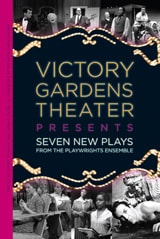
Victory Gardens Theater Presents
Seven New Plays from the Playwrights EnsembleSandy Shinner
Northwestern University Press, 2006
This collection features seven plays by talented authors from the twelve-member Playwrights Ensemble at Victory Gardens. Their works tackle a wide range of topics from a colorful and imaginative retelling of the Medea legend set in the Carribbean to the desperation and regret that can fill a high-school reunion, from a feisty stroke-survivor claiming her independence to a historical drama about the first free man of color to attend Ohio University. Whether focusing on the drama between the four walls of a home or testing the broader realms of culture, history, and politics, the Victory Gardens Theater has always encouraged diverse perspectives and supported original work. Victory Gardens Theater Presents showcases some of the best examples of the distinctive talent that continues to find a home there.

Victory on Two Fronts
The Cleveland Indians and Baseball through the World War II EraScott H. Longert
Ohio University Press, 2022
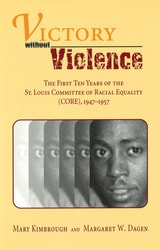
Victory without Violence
The First Ten Years of the St. Louis Committee of Racial Equality (CORE), 1947-1957Mary Kimbrough & Margaret W. Dagen
University of Missouri Press, 2000
Winner, Missouri Conference on History Book Award, 2001
Victory without Violence is the story of a small, integrated group of St. Louisans who carried out sustained campaigns from 1947 to 1957 that were among the earliest in the nation to end racial segregation in public accommodations. Guided by Gandhian principles of nonviolent direct action, the St. Louis Committee of Racial Equality (CORE) conducted negotiations, demonstrations, and sit-ins to secure full rights for the African American residents of St. Louis.
The book opens with an overview of post-World War II racial injustice in the United States and in St. Louis. After recounting the genesis of St. Louis CORE, the writers vividly relate activities at lunch counters, cafeterias, and restaurants, demonstrating CORE's remarkable success in winning over initially hostile owners, manager, and service employees. A detailed review of its sixteen-month campaign at a major St. Louis department store, Stix, Baer & Fuller, illustrates the groups' patient persistence. Kimbrough and Dagen show after the passage of a public accommodations ordinance in 1961, CORE's goal of equal access was realized throughout the city of St. Louis.
On the scene reports drawn from CORE newsletters (1951-1955) and reminiscences by members appear throughout the text. In a closing chapter, the authors trace the lasting effects of the CORE experience on the lives of its members. Victory without Violence casts light on a previously obscured decade in St. Louis civil rights history.
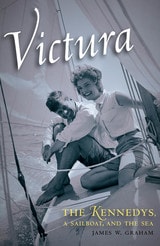
Victura
The Kennedys, a Sailboat, and the SeaJames W. Graham
University Press of New England, 2015

Vida Zoo-cial
The Buenos Aires Zoo and the Making of Argentine Society, 1875–1924Ashley Elizabeth Kerr
Vanderbilt University Press, 2025
Premio al Mejor Libro en Humanidades, Latin American Studies Association, Nineteenth-Century Section, 2026
In late nineteenth- and early twentieth‑century Buenos Aires, elites attempted to tackle growing poverty and social problems with a suite of social, educational, and medical reforms, hoping to make the city and larger nation more “modern” and “progressive” on the world stage. Known as the “social question,” this turn-of-the-century preoccupation with the future of the city and nation was undergirded by a larger set of social Darwinist beliefs about the biological and racial inferiority of immigrants and the working class, linking them to higher susceptibility to alcoholism, sexual deviancy, insanity, and disease.
In Vida Zoo-cial, Ashley Elizabeth Kerr argues that the Buenos Aires Zoo and its many animal species were an important tool in attempts to remake Argentinian society. Elites used the zoo’s physical spaces, programming, and visual and literary representations of its animals to try to educate and “improve” the masses, especially immigrants and the poor, but stopped short of supporting more radical social transformations. Drawing upon extensive archival research from the zoo’s archive, including correspondence, municipal reports, receipts, and employment records, as well as a range of literary and popular culture sources, Kerr records these efforts, which included enlisting lionesses as object lessons in proper motherhood and elephants as model immigrants. Although some projects were successful, Kerr also documents the many ways others went awry when the zoo's animals and the humans who came to see them failed to cooperate.
Vida Zoo-cial is not only a story about how the poor and working class resisted elite efforts for social reform founded upon racialized beliefs and pseudoscience, but also one that challenges readers to rethink the relationship between humans and non‑humans.
Viet Nam Expose
French Scholarship on Twentieth-Century Vietnamese SocietyGisele Bousquet and Pierre Brocheux, Editors
University of Michigan Press, 2002
The book is divided into three parts. Part I, "Vietnamese Society in the Early Twentieth Century," takes a micro approach to the study of Vietnamese society on the eve of the irreversible social transformation that occurred as the colonial infrastructure took root in Indochina. Part II, "Vietnamese Intellectuals: Contesting Colonial Power," contains biographical accounts of Vietnamese intellectuals who tried to reform their society under colonial domination. Part III, "Post-Colonial Vietnam: From Welfare State to Market-Oriented Economy," traces Vietnam's search for a viable economic model while maintaining itself as a socialist state.
The book speaks to diverse themes, including the nature of village life, the development of health care during the colonial era, the status of women, the role of Vietnamese intellectuals in the anticolonial struggle, the building of a socialist state, contemporary rural migration, labor relations, and Vietnam in an age of globalization.
Gisele Bousquet is Research Associate at the Center for Southeast Asian Studies, University of California, Berkeley. Pierre Brocheux is Maître de Conference of History, Université Denis Diderot-Paris VII.

Vietnam Anthology
American War LiteratureNancy Anisfield
University of Wisconsin Press, 1987
Novel excerpts include: Robert Stone’s Dog Soldiers, David Halberstam’s One Very Hot Day, and Jeff Danziger’s Lieutenant Kitt. Short stories include Asa Baber’s “The Ambush,” Tobias Wolff’s “Wingfield,” and Tim O’Brien’s “The Things They Carried.” Drama excerpts include David Rabe’s Streamers and Lanford Wilson’s The 5th of July. Poets include: Denise Levertov, Jan Barry, E. D. Ehrhart, Basil T. Paquet, Stephen Sossaman, Bryan Alec Floyd, Bruce Weigl, and Trang Thi Nga.

Vietnam Zippos
American Soldiers' Engravings and Stories (1965-1973)Edited by Sherry Buchanan
University of Chicago Press, 2007
—from an engraving on a Vietnam-era Zippo lighter
In 1965, journalist Morley Safer followed the United States Marines on a search and destroy mission into Cam Ne. When the Marines he accompanied reached the village, they ordered the civilians there to evacuate their homes—grass huts whose thatched roofs they set ablaze with Zippo lighters. Safer’s report on the event soon aired on CBS and was among the first to paint a harrowing portrait of the War in Vietnam. LBJ responded to the segment furiously, accusing Safer of having “shat on the American flag.” For the first time since World War II, American boys in uniform had been portrayed as murderers instead of liberators. Our perception of the war—and the Zippo lighter—would never be the same.
But as this stunning book attests, the Zippo was far more than an instrument of death and destruction. For the American soldiers who wielded them, they were a vital form of social protest as well. Vietnam Zippos showcases the engravings made by U.S. soldiers on their lighters during the height of the conflict, from 1965 to 1973. In a real-life version of the psychedelic war portrayed in Francis Ford Coppola’s Apocalypse Now, Sherry Buchanan tells the fascinating story of how the humble Zippo became a talisman and companion for American GIs during their tours of duty. Through a dazzling array of images, we see how Zippo lighters were used during the war, and we discover how they served as a canvas for both personal and political expression during the Age of Aquarius, engraved with etchings of peace signs and marijuana leaves and slogans steeped in all the rock lyrics, sound bites, combat slang, and antiwar mottos of the time.
Death from Above. Napalm Sticks to Kids. I Love You Mom, From a Lonely Paratrooper. The engravings gathered in this copiously illustrated volume are at once searing, caustic, and moving, running the full emotional spectrum with both sardonic reflections—I Love the Fucking Army and the Army Loves Fucking Me—and poignant maxims—When the Power of Love Overcomes the Love of Power, the World Will Know Peace. Part pop art and part military artifact, they collectively capture the large moods of the sixties and the darkest days of Vietnam—all through the world of the tiny Zippo.
Vietnam's Southern Revolution
From Peasant Insurrection to Total WarDavid Hunt
University of Massachusetts Press, 2009
In Vietnam, the American government vowed to win the “hearts and minds” of the people. On the other side, among those who led and sympathized with the insurgents, the term “people's war” gained a wide currency. Yet while much has been written about those who professed to speak for the Vietnamese population, we know surprisingly little about the everyday life of the peasants who made up the bulk of the country's inhabitants. This book illuminates that subject. Drawing on a wide range of sources, including interviews conducted by the Rand Corporation with informants from My Tho Province in the Mekong Delta, David Hunt brings to light the daily experience of villagers in the midst of war and revolution.
The peasants of southern Vietnam were neither onlookers nor mere victims as fighting raged throughout their country. From the “concerted uprising” in 1959–1960 to the Tet Offensive of 1968, the revolutionary movement they created was in fact the driving force within the war. Known as the “Viet Cong” to their adversaries, the rebels called themselves the “Liberation Front.” They demanded an end to landlordism and an egalitarian distribution of the means of subsistence as well as a democratization of relations between town and countryside, parents and children, men and women. They hoped the Vietnamese people would achieve a fuller sense of their place in the world and of the power they possessed to fashion their own destinies, without reliance on supernatural forces.In the first half of the book, Hunt analyzes this cultural revolution. As fighting spread and became more destructive, especially after the U.S. escalation in 1965, villagers were driven from their homes, the rural infrastructure collapsed, and customary notions of space and time lost purchase on an increasingly chaotic world. In the second half of the book, Hunt shows how peasants, who earlier had aspired to a kind of revolutionary modernism, now found themselves struggling to survive and to cope with the American intruders who poured into My Tho, and how they managed to regroup and spearhead the Tet Offensive that irrevocably altered the course of the war.
Vietnam-Perkasie
W. D. Ehrhart
University of Massachusetts Press, 1995
In 1982, John Newman, curator of the Vietnam War Literature Collection at Colorado State University, said of W.D. Ehrhart: “As a poet and editor, Bill Ehrhart is clearly one of the major figures in Vietnam War literature.” This autobiographical account of the war, the author's first extended prose work, demonstrates Ehrhart's abilities as a writer of prose as well. Vietnam–Perkasie is grim, comical, disturbing, and accurate. The presentation is novelistic—truly, a “page-turner”—but the events are all real, the atmosphere intensely evocative.
Vietnam
The Early DecisionsEdited by Lloyd C. Gardner and Ted Gittinger
University of Texas Press, 1997
Haunting questions remain about our involvement in Vietnam. Perhaps the most persistent of these is whether President Kennedy would have ended American involvement in Vietnam if he had lived.
For many Americans, Oliver Stone's film JFK left no doubt that before his assassination Kennedy had determined to quit Vietnam. Yet the historical record offers a more complex answer. In this fresh look at the archival evidence, noted scholars take up the challenge to provide us with their conclusions about the early decisions that put the United States on the path to the greatest American tragedy since the Civil War. The tensions and turmoil that accompanied those decisions reveal the American presidency at the center of a storm of conflicting advice.
The book is divided into four sections. Parts one and two delve into the political and military contexts of the early decisions. Part three raises the intriguing questions of Kennedy's and Johnson's roles in the conflict, particularly the thorny issue of whether Kennedy did, in fact, intend to withdraw from Vietnam and whether Johnson reversed that policy. Part four reveals an uncanny parallel between early Soviet policy toward Hanoi and U.S. policy toward Saigon.

View from the Fazenda
A Tale of the Brazilian HeartlandsEllen Bromfield Geld
Ohio University Press, 2012
“I imagine everyone has a center of gravity,” says Ellen Bromfield Geld. “Something which binds one to the earth and gives sense and direction to what one does.” For Ellen, this center is a writing table before a window that looks out upon groves of pecan trees and mahogany-colored cattle in seas of grass. The place is Fazenda Pau D’Alho, Brazil, where she and her husband, Carson, have lived and farmed since 1961.
Healing the ravaged coffee plantation, rearing five children, exploring the outposts, the Gelds have created a dynamic yet peaceful life far from Ellen’s native Ohio. Their practice of sustainable agriculture, and Ellen’s plea for the preservation of Brazil’s remaining wilderness areas, reflect the legacy of her father, the novelist and farm visionary Louis Bromfield. Their shared vision is crystallized in her account of a cattle drive across the Pantanal, the vast flood plain on Brazil’s side of the Paraguay River. She describes a two-hundred year symbiosis between ranchers and a fragile ecosystem that is being threatened by development.
View from the Fazenda is distilled from fifty years of living in Brazil, weaving daily life on the farm into her quest to understand a nation. It portrays a true melting pot of people who—as conquerers, immigrants, or slaves, their blood and history mingled with those of native Indians—have created the character of Brazil. This huge, diverse county, living in several eras at the same time, is ever changing through its people’s amazing ability to “find a way.”
Ellen Bromfield Geld evokes the land and people of Brazil and offers readers an invigorating glimpse into a soulful life. “It seems to me that being a bit of a poet is perhaps the only way one can survive as a farmer,” she explains. “For in the end, more than anything, farming is a way of life you either love or become bitter enduring.”

Vigil
Alan Shapiro
University of Chicago Press, 1997
In Vigil, Shapiro chronicles with heart-wrenching lyricism the final four weeks of Beth's life in a hospice, attended by her parents, brothers, husband, daughter and friends. One by one, as loved ones arrive to visit Beth, Shapiro reveals fragments of their personal history, bringing to life a troubled and poignant past. A visit from their brother David triggers the memory of a searing betrayal—the parents disowned Beth after learning from David that she was secretly dating a black man; a visit from the parents recalls their bitter quarrels over Beth's radical politics; a visit from Beth's black husband brings the painful memory of their wedding and her parents' refusal to attend. These recollections and feelings that surface with each visit evoke the unresolved, deeply disturbing issues that kept the Shapiro family estranged for so long, making the reconciliation that Beth's death brings to her family all the more extraordinary.
Shapiro gives an unconventionally honest account of our responses—horror, relief, impatience, exhaustion, exhilaration, projection, fear, self-criticism, and a sense of fulfillment—in the presence of the dying. Concluding with a selection of moving poems, Shapiro affirms the astonishing link between creativity and healing, and provides a coda to the whole experience. The price of human connection may be great, but human connection, in the end, has the power to redeem even the most painful of human experiences.
Village Work
Development and Rural Statecraft in Twentieth-Century GhanaAlice Wiemers
Ohio University Press, 2021
A robust historical case study that demonstrates how village development became central to the rhetoric and practice of statecraft in rural Ghana.
Combining oral histories with decades of archival material, Village Work formulates a sweeping history of twentieth-century statecraft that centers on the daily work of rural people, local officials, and family networks, rather than on the national governments and large-scale plans that often dominate development stories. Wiemers shows that developmentalism was not simply created by governments and imposed on the governed; instead, it was jointly constructed through interactions between them.
The book contributes to the historiographies of development and statecraft in Africa and the Global South by
- emphasizing the piecemeal, contingent, and largely improvised ways both development and the state are comprised and experienced
- providing new entry points into longstanding discussions about developmental power and discourse
- unsettling common ideas about how and by whom states are made
- exposing the importance of unpaid labor in mediating relationships between governments and the governed
- showing how state engagement could both exacerbate and disrupt inequities
Despite massive changes in twentieth-century political structures—the imposition and destruction of colonial rule, nationalist plans for pan-African solidarity and modernization, multiple military coups, and the rise of neoliberal austerity policies—unremunerated labor and demonstrations of local leadership have remained central tools by which rural Ghanaians have interacted with the state. Grounding its analysis of statecraft in decades of daily negotiations over budgets and bureaucracy, the book tells the stories of developers who decided how and where projects would be sited, of constituents who performed labor, and of a chief and his large cadre of educated children who met and shaped demands for local leaders. For a variety of actors, invoking “the village” became a convenient way to allocate or attract limited resources, to highlight or downplay struggles over power, and to forge national and international networks.
Violence Work
State Power and the Limits of PoliceMicol Seigel
Duke University Press, 2018
Violence and Grace
Exceptional Life between Shakespeare and ModernityNichole E. Miller
Northwestern University Press, 2014
In Violence and Grace, Nichole Miller establishes a conceptual link between early modern English drama and twentieth-century political theology, both of which emerge from the experience of political crisis. Miller’s analyses accordingly undertake to retrieve for political theology the relations between gender, sexuality, and the political aesthetics of violence on the early modern stage, addressing the plays of Marlowe, Middleton, and especially Shakespeare. In doing so, she expands our understanding of drama’s continuing theoretical impact.
Violence in Rural South Africa, 1880–1963
Sean Redding
University of Wisconsin Press, 2023
Many violent acts attempted to reestablish and reinforce a moral, social, and political order among Africans. However, what constituted a moral order changed as white governance became more intrusive, land became scarcer, and people reconstructed their notions of “traditional” culture. State policies became obstacles around which Africans had to navigate by invoking the idea of tradition, using the state’s court system, alleging the use of witchcraft, or engaging in violent threats and acts. Redding’s use of multiple court cases and documents to discuss several types of violence provides a richer context for the scholarly conversation about the legitimation of violence in traditions, family life, and political protest.
Violence in the Model City
The Cavanagh Administration, Race Relations, and the Detroit Riot of 1967Sidney Fine
Michigan State University Press, 2007
On July 23, 1967, the Detroit police raided a blind pig (after-hours drinking establishment), touching off the most destructive urban riot of the 1960s. It took the U.S. Army, the Michigan National Guard, the Michigan State Police, and the Detroit police department—17,000 men—more than a week to restore order. When all was done, the riot had claimed 43 lives (mostly Black) and resulted in nearly 700 injuries. Over 7,000 individuals were arrested, with property damage estimates over $75 million. Yet, Detroit had been lauded nationally as a "model city" in the governance of a large industrial metropolis. On the 40th anniversary of this nation-changing event, we are pleased to reissue Sidney Fine's seminal work—a detailed study of what happened, why, and with what consequences.
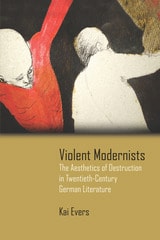
Violent Modernists
The Aesthetics of Destruction in Twentieth-Century German LiteratureKai Evers
Northwestern University Press, 2013
Kai Evers’s Violent Modernists: The Aesthetics of Destruction in Twentieth-Century German Literature develops a new understanding of German modernism that moves beyond the oversimplified dichotomy of an avant-garde prone to aggression on the one hand and a modernism opposed to violence on the other. Analyzing works by Robert Musil, Franz Kafka, Karl Kraus, Walter Benjamin, Elias Canetti, and others, Evers argues that these authors are among the most innovative thinkers on violence and its impact on contemporary concepts of the self, history, and society.
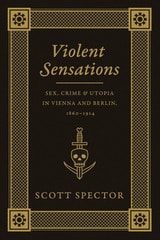
Violent Sensations
Sex, Crime, and Utopia in Vienna and Berlin, 1860-1914Scott Spector
University of Chicago Press, 2016
In Violent Sensations, Scott Spector explores how the protagonists of these stories—people at society’s margins—were given new identities defined by the groundbreaking sciences of psychiatry, sexology, and criminology, and how this expert knowledge was then transmitted to an eager public by journalists covering court cases and police investigations. The book analyzes these sexual and criminal subjects on three levels: first, the expertise of scientists, doctors, lawyers, and scholars; second, the sensationalism of newspaper scandal and pulp fiction; and, third, the subjective ways that the figures themselves came to understand who they were. Throughout, Spector answers important questions about how fantasies of extreme depravity and bestiality figure into the central European self-image of cities as centers of progressive civilization, as well as the ways in which the sciences of social control emerged alongside the burgeoning emancipation of women and homosexuals.
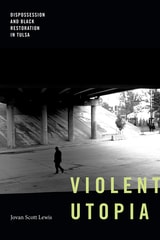
Violent Utopia
Dispossession and Black Restoration in TulsaJovan Scott Lewis
Duke University Press, 2022
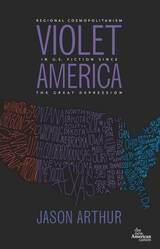
Violet America
Regional Cosmopolitanism in U.S. FictionJason Arthur
University of Iowa Press, 2013
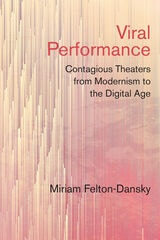
Viral Performance
Contagious Theaters from Modernism to the Digital AgeMiriam Felton-Dansky
Northwestern University Press, 2018
Viral performance practices testify to the age-old—and ever renewed—instinct that when people gather, something spreads. Performance, an art form requiring and relying on live contact, renders such spreading visible, raises its stakes, and encodes it in theatrical form. The artists explored here rarely disseminate their ideas or gestures as directly as a viral marketer or a political movement would; rather, they undermine simplified forms of contagion while holding dialogue with the philosophical and popular discourses, old and new, that have surrounded viral culture.
Viral Performance argues that the concept of the viral is historically deeper than immediate associations with the contemporary digital landscape might suggest, and far more intimately linked to live performance

Virgin Microbe
Essays on DadaMichael White
Northwestern University Press, 2013