Results by title
1678 books match the query 'Archaeology' and 9 start with v
Vandals to Visigoths
Rural Settlement Patterns in Early Medieval SpainKaren Eva Carr
University of Michigan Press, 2002
Vandals to Visigoths uses archaeological survey data as a springboard to a theoretical discussion of rural survival strategies in the non-industrial world and the ways in which these strategies are affected by government actions. Carr draws on historical, archaeological, and ethnographic comparanda to conclude that the larger, more powerful Roman government was more advantageous for the rural poor than the weaker Vandal and Visigothic regimes. Though Carr agrees that the lives of the rural people and the free slaves were miserable, she shows through her data and theory that they became even more wretched after the decline of the empire.
Vandals to Visigoths will appeal to historians of Rome, as well as of Early Medieval Europe and Spain. Anthropologists, economists, and political scientists who study Late Antiquity and the medieval period will also be interested, as it discusses the broader implications of the role of government in the lives of early medieval Spain's subjects.
Karen Eva Carr is Associate Professor of History, Portland State University.
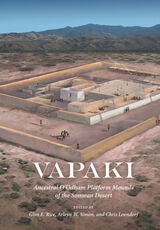
Vapaki
Ancestral O’Odham Platform Mounds of the Sonoran DesertEdited by Glen E. Rice, Arleyn W. Simon, and Chris Loendorf
University of Utah Press, 2022
This volume presents a far-ranging conversation on the topic of Hohokam platform mounds in the history of the southern Arizona desert, exploring why they were built, how they were used, and what they meant in the lives of the farming communities who built them. Vapaki brings together diverse theoretical approaches, a mix of big-picture and tightly focused perspectives, detailed coverage for regional specialists of variation in the mounds, a broad synthesis useful for those working from other regional and topical foundations, and a rich corpus of perspectives and ideas for further research. Contributors grapple with questions about platform mounds, including the social, political, ideological, symbolic, and adaptive factors that contributed to their development, spread, and eventual cessation.
The differing perspectives presented here about what motivated Ancestral O’Odham populations of the Hohokam Period to build these monuments, whether as displays of status, identity, political ability, membership in regional networks, or architectural models of the cosmological order, offer insights to researchers studying monumental architecture in other contexts. O’Odham knowledge of the history and uses of mounds is combined with archaeological data to understand the place of platform mounds in the lives of the Ancestors and their continued presence among modern descendants.
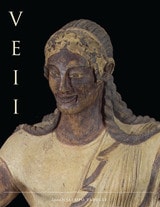
Veii
Edited by Jacopo Tabolli with Orlando Cerasuolo
University of Texas Press, 2019
Reputed to be the richest city of Etruria, Veii was one of the most important cities in the ancient Mediterranean world. It was located ten miles northwest of Rome, and the two cities were alternately allied and at war for over three hundred years until Veii fell to Rome in 396 BCE, although the city continued to be inhabited until the Middle Ages. Rediscovered in the seventeenth century, Veii has undergone the longest continuous excavation of any of the Etruscan cities.
The most complete volume on the city in English, Veii presents the research and interpretations of multiple generations of Etruscan scholars who are at the forefront of the discipline. Their essays are grouped into four parts. The first provides a general overview of archaeological excavation at Veii and discusses the different types of methodologies employed over the years. The second part narrates the history of Etruscan occupation of the city and its role in the greater Mediterranean world. The third section examines the surviving material culture of Veii, including pottery, painting, sculpture, metalworking, and architectural terracottas. Finally, the legacy of Veii is discussed, and a chronology of the site is presented. This pioneering research offers all students of the ancient Mediterranean a new understanding of the development of Veii and its territory from the late Bronze Age to the Roman conquest, as well as of the interactions of Veii with nearby sites and territories in central Tyrrhenian Italy.
Vertebrate Faunal Remains from Grasshopper Pueblo, Arizona
John W. Olsen with a foreword by John D. Speth
University of Michigan Press, 1990
Vintage Moquegua
History, Wine, and Archaeology on a Colonial Peruvian PeripheryBy Prudence M. Rice
University of Texas Press, 2011
The microhistory of the wine industry in colonial Moquegua, Peru, during the colonial period stretches from the sixteenth through nineteenth centuries, yielding a wealth of information about a broad range of fields, including early modern industry and labor, viniculture practices, the cultural symbolism of alcohol consumption, and the social history of an indigenous population. Uniting these perspectives, Vintage Moquegua draws on a trove of field research from more than 130 wineries in the Moquegua Valley.
As Prudence Rice walked the remnants of wine haciendas and interviewed Peruvians about preservation, she saw that numerous colonial structures were being razed for development, making her documentary work all the more crucial. Lying far from imperial centers in pre-Hispanic and colonial times, the area was a nearly forgotten administrative periphery on an agricultural frontier. Spain was unable to supply the Peruvian viceroyalty with sufficient wine for religious and secular purposes, leading colonists to import and plant grapevines. The viniculture that flourished produced millions of liters, most of it distilled into pisco brandy. Summarizing archaeological data and interpreting it through a variety of frameworks, Rice has created a three-hundred-year story that speaks to a lost world and its inhabitants.
Violence and Inequality
An Archaeological HistoryThomas P. Leppard
University Press of Colorado, 2023
The assumption that violence and its threat buttressed elite social control is now challenged from various perspectives. This volume incorporates new models of the relationship between violence and social inequalities into the archaeology of social complexity, building more complicated and nuanced understandings of how different modes of social violence can militate different types of social constitution. Contributions from a variety of methodological angles—such as the bioarchaeology of health and trauma and radiogenic isotope studies and the aesthetics of violence—use a comparative perspective, drawing on data from the Southwestern US, Bronze Age China, early dynastic Egypt, ancient Mesopotamia, Roman Britain, and the Andes.
Violence and Inequality offers an original and deep history of violence and inequality. Understanding the long-term intersection of violence and inequality and how they support or erode one another is of intrinsic importance, making this work significant to the study of archaeology, economic history, and collective action.
Virgin-Kayenta Cultural Relationships
UUAP 79C. Melvin Aikens
University of Utah Press, 1966
Visualizing the Sacred
Cosmic Visions, Regionalism, and the Art of the Mississippian WorldEdited by George E. Lankford, F. Kent Reilly III, and James F. Garber
University of Texas Press, 2011
The prehistoric native peoples of the Mississippi River Valley and other areas of the Eastern Woodlands of the United States shared a complex set of symbols and motifs that constituted one of the greatest artistic traditions of the pre-Columbian Americas. Traditionally known as the Southeastern Ceremonial Complex, these artifacts of copper, shell, stone, clay, and wood were the subject of the groundbreaking 2007 book Ancient Objects and Sacred Realms: Interpretations of Mississippian Iconography, which presented a major reconstruction of the rituals, cosmology, ideology, and political structures of the Mississippian peoples.
Visualizing the Sacred advances the study of Mississippian iconography by delving into the regional variations within what is now known as the Mississippian Iconographic Interaction Sphere (MIIS). Bringing archaeological, ethnographic, ethnohistoric, and iconographic perspectives to the analysis of Mississippian art, contributors from several disciplines discuss variations in symbols and motifs among major sites and regions across a wide span of time and also consider what visual symbols reveal about elite status in diverse political environments. These findings represent the first formal identification of style regions within the Mississippian Iconographic Interaction Sphere and call for a new understanding of the MIIS as a network of localized, yet interrelated religious systems that experienced both continuity and change over time.
Voices in American Archaeology
Wendy Ashmore
University Press of Colorado, 2010