Results by title
1272 books match the query 'Asia' and 21 start with v
Victorian Travelers and the Opening of China 1842–1907
Susan Shoenbauer Thurin
Ohio University Press, 1999
Three men and three women: a plant collector, a merchant and his novelist wife, a military officer, and two famous women travelers went to China between the Opium War and the formal end of the opium trade, 1842–1907. Their range of perspectives, their acquaintance with one another and their similar scope of travel to Hong Kong, the treaty ports, and Sichuan lend intensity to their picture of China and the Western presence there.
What the travelers record reveals is a continuity in the response of the West and China to each other. Susan Schoenbauer Thurin’s study of these writings presents a rich tapestry of impressions, biases, and cultural perspectives that inform our own understanding of the Victorians and their views of the world outside their own.
The strange mix of opium and missionaries, the aura of fabled “Cathay” and its valuable trade items, the attraction and repulsion of the exotic otherness the travelers experience, reflect the political, religious, and racial views of their era, and explain the allure of the Orient that, in part, characterized their age. Victorian Travelers and the Opening of China, 1842–1907 is a remarkable look into the cultural past.

Victors’ Justice
The Tokyo War Crimes TrialRichard H. Minear
University of Michigan Press, 2001
Viet Nam Expose
French Scholarship on Twentieth-Century Vietnamese SocietyGisele Bousquet and Pierre Brocheux, Editors
University of Michigan Press, 2002
The book is divided into three parts. Part I, "Vietnamese Society in the Early Twentieth Century," takes a micro approach to the study of Vietnamese society on the eve of the irreversible social transformation that occurred as the colonial infrastructure took root in Indochina. Part II, "Vietnamese Intellectuals: Contesting Colonial Power," contains biographical accounts of Vietnamese intellectuals who tried to reform their society under colonial domination. Part III, "Post-Colonial Vietnam: From Welfare State to Market-Oriented Economy," traces Vietnam's search for a viable economic model while maintaining itself as a socialist state.
The book speaks to diverse themes, including the nature of village life, the development of health care during the colonial era, the status of women, the role of Vietnamese intellectuals in the anticolonial struggle, the building of a socialist state, contemporary rural migration, labor relations, and Vietnam in an age of globalization.
Gisele Bousquet is Research Associate at the Center for Southeast Asian Studies, University of California, Berkeley. Pierre Brocheux is Maître de Conference of History, Université Denis Diderot-Paris VII.
Viet Nam
Borderless HistoriesEdited by Nhung Tuyet Tran and Anthony Reid
University of Wisconsin Press, 2006
“A wonderful introduction to the exciting work that a new generation of scholars is engaging in.”—Liam C. Kelley, International Journal of Asian Studies
Viet Nam
Tradition and ChangeH?u Ng?c
Ohio University Press, 2016
During his twenty-year tenure as a columnist for Việt Nam News, Hà Nội’s English-language newspaper, Hữu Ngọc charmed and invigorated an international readership hungry for straightforward but elegant entrees into understanding Vietnamese culture. The essays were originally collected in the massive Wandering through Vietnamese Culture. With Viet Nam: Tradition and Change, Ohio University Press presents a selection from these many treasures, which are perfectly suited to students of Vietnamese culture and travelers seeking an introduction to the country’s rich history, culture, and daily life.
With extraordinary linguistic ability and a prodigious memory, Hữu Ngọc is among Việt Nam’s keenest observers of and writers about traditional Vietnamese culture and recent history. The author’s central theme—that all tradition is change through acculturation—twines through each of the book’s ten sections, which contain Hữu Ngọc’s ideas on Vietnamese religion, literature, history, exemplary figures, and more. Taken on its own, each brief essay is an engaging discussion of key elements of Vietnamese culture and the history of an issue confronting Việt Nam today.
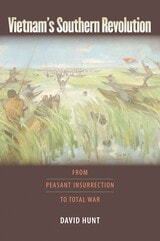
Vietnam's Southern Revolution
From Peasant Insurrection to Total WarDavid Hunt
University of Massachusetts Press, 2009
In Vietnam, the American government vowed to win the “hearts and minds” of the people. On the other side, among those who led and sympathized with the insurgents, the term “people's war” gained a wide currency. Yet while much has been written about those who professed to speak for the Vietnamese population, we know surprisingly little about the everyday life of the peasants who made up the bulk of the country's inhabitants. This book illuminates that subject. Drawing on a wide range of sources, including interviews conducted by the Rand Corporation with informants from My Tho Province in the Mekong Delta, David Hunt brings to light the daily experience of villagers in the midst of war and revolution.
The peasants of southern Vietnam were neither onlookers nor mere victims as fighting raged throughout their country. From the “concerted uprising” in 1959–1960 to the Tet Offensive of 1968, the revolutionary movement they created was in fact the driving force within the war. Known as the “Viet Cong” to their adversaries, the rebels called themselves the “Liberation Front.” They demanded an end to landlordism and an egalitarian distribution of the means of subsistence as well as a democratization of relations between town and countryside, parents and children, men and women. They hoped the Vietnamese people would achieve a fuller sense of their place in the world and of the power they possessed to fashion their own destinies, without reliance on supernatural forces.In the first half of the book, Hunt analyzes this cultural revolution. As fighting spread and became more destructive, especially after the U.S. escalation in 1965, villagers were driven from their homes, the rural infrastructure collapsed, and customary notions of space and time lost purchase on an increasingly chaotic world. In the second half of the book, Hunt shows how peasants, who earlier had aspired to a kind of revolutionary modernism, now found themselves struggling to survive and to cope with the American intruders who poured into My Tho, and how they managed to regroup and spearhead the Tet Offensive that irrevocably altered the course of the war.
Vietnam's Strategic Thinking during the Third Indochina War
Kosal Path
University of Wisconsin Press, 2023
In contrast to earlier studies, Path traces the moving target of these changing policy priorities, providing a vital addition to existing scholarship on asymmetric wartime decision-making and alliance formation among small states. The result uncovers how this critical period had lasting implications for the ways Vietnam continues to conduct itself on the global stage.
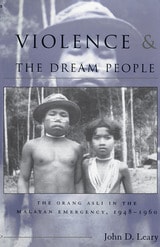
Violence and the Dream People
The Orang Asli in the Malayan Emergency, 1948-1960John D. Leary
Ohio University Press, 1995
Violence and the Dream People is an account of a little-known struggle by the Malayan government and the communist guerrillas, during the 1948-1960 Malayan Emergency, to win the allegiance of the Orang Asli, the indigenous people of the peninsular Malaya. The author argues that the use of force by both sides in their attempts to woo or coerce the jungle dwellers to support one side or the other in the conflict, caused tensions among the Orang Asli that resulted in counter violence against the interlopers and internecine killings in the tribal groups.
This study challenges the depiction of the Orang Asli as naïve innocents, unwittingly manipulated by outsiders for their own purposes. Heavily outnumbered, they looked to their own resources to survive, in the face of relocation, conscription, random bombings, and haphazard killing. Leary argues that they were shrewd enough to recognize the winning side and backed their judgment with force where necessary.
Violence and the Dream People is an important study of a much neglected facet of the Malayan Emergency and of the history of the indigenous peoples of the Malay Peninsula.
Violence of Democracy
Interparty Conflict in South IndiaRuchi Chaturvedi
Duke University Press, 2023
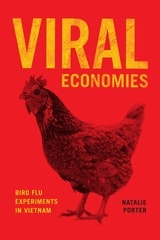
Viral Economies
Bird Flu Experiments in VietnamNatalie Porter
University of Chicago Press, 2019
In Viral Economies, Natalie Porter draws from long-term research on bird flu in Vietnam to chart the pathways of scientists, NGO workers, state veterinarians, and poultry farmers as they define and address pandemic risks. Porter argues that as global health programs expand their purview to include life and livestock, they weigh the interests of public health against those of commercial agriculture, rural tradition, and scientific innovation. Porter challenges human-centered analyses of pandemics and shows how dynamic and often dangerous human-animal relations take on global significance as poultry and their pathogens travel through global livestock economies and transnational health networks. Viral Economies urges readers to think critically about the ideas, relationships, and practices that produce our everyday commodities, and that shape how we determine the value of life—both human and nonhuman.
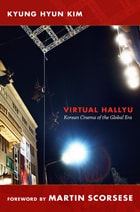
Virtual Hallyu
Korean Cinema of the Global EraKyung Hyun Kim
Duke University Press, 2011
In the late 1990s, South Korean film and other cultural products, broadly known as hallyu (Korean wave), gained unprecedented international popularity. Korean films earned an all-time high of $60.3 million in Japan in 2005, and they outperformed their Hollywood competitors at Korean box offices. In Virtual Hallyu, Kyung Hyun Kim reflects on the precariousness of Korean cinema’s success over the past decade. Arguing that state film policies and socioeconomic factors cannot fully explain cinema’s true potentiality, Kim draws on Deleuze’s concept of the virtual—according to which past and present and truth and falsehood coexist—to analyze the temporal anxieties and cinematic ironies embedded in screen figures such as a made-in-the-USA aquatic monster (The Host), a postmodern Chosun-era wizard (Jeon Woo-chi), a schizo man-child (Oasis), a weepy North Korean terrorist (Typhoon), a salary man turned vengeful fighting machine (Oldboy), and a sick nationalist (the repatriated colonial-era film Spring of Korean Peninsula). Kim maintains that the full significance of hallyu can only be understood by exposing the implicit and explicit ideologies of protonationalism and capitalism that, along with Korea’s ambiguous post-democratization and neoliberalism, are etched against the celluloid surfaces.
Visible Histories, Disappearing Women
Producing Muslim Womanhood in Late Colonial BengalMahua Sarkar
Duke University Press, 2008
Drawing on extensive archival research and oral histories of Muslim women who lived in Calcutta and Dhaka in the first half of the twentieth century, Sarkar traces Muslim women as they surface and disappear in colonial, Hindu nationalist, and liberal Muslim writings, as well as in the memories of Muslim women themselves. The oral accounts provide both a rich source of information about the social fabric of urban Bengal during the final years of colonial rule and a glimpse of the kind of negotiations with stereotypes that even relatively privileged, middle-class Muslim women are still frequently obliged to make in India today. Sarkar concludes with some reflections on the complex links between past constructions of Muslim women, current representations, and the violence against them in contemporary India.
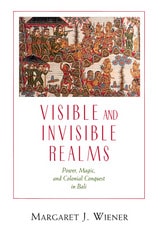
Visible and Invisible Realms
Power, Magic, and Colonial Conquest in BaliMargaret J. Wiener
University of Chicago Press, 1995
Wiener challenges colonial and academic claims that Klungkung had no "real" power and argues that such claims enabled colonial domination. By focusing on Balinese discourses she makes clear the choices open to Balinese, both at the time of the Dutch conquest and in its narration. At the same time, she shows how these discourses, which revolve around magical weapons acquired from invisible agents such as gods, spirits, and ancestors, offer an alternative understanding of Klungkung's power.
Moving between Balinese and Dutch narratives and between past and present, Wiener critiques colonial accounts by recounting Balinese memories and interpretations. Her attention to history and local situations illuminates the ways in which colonialism and orientalist scholarship have obscured the power of indigenous rulers and shows how Klungkung, once Bali's paramount realm, was relegated to a peripheral corner of the Indonesian nation-state. Both as a fascinating story and as a rich example of interdisciplinary scholarship, this book will interest students of colonialism, anthropology, history, religion, and Southeast Asia.
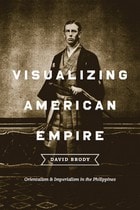
Visualizing American Empire
Orientalism and Imperialism in the PhilippinesDavid Brody
University of Chicago Press, 2010
In 1899 an American could open a newspaper and find outrageous images, such as an American soldier being injected with leprosy by Filipino insurgents. These kinds of hyperbolic accounts, David Brody argues in this illuminating book, were just one element of the visual and material culture that played an integral role in debates about empire in late nineteenth- and early twentieth-century America.
Visualizing American Empire explores the ways visual imagery and design shaped the political and cultural landscape. Drawing on a myriad of sources—including photographs, tattoos, the decorative arts, the popular press, maps, parades, and material from world’s fairs and urban planners—Brody offers a distinctive perspective on American imperialism. Exploring the period leading up to the Spanish-American War, as well as beyond it, Brody argues that the way Americans visualized the Orient greatly influenced the fantasies of colonial domestication that would play out in the Philippines. Throughout, Brody insightfully examines visual culture’s integral role in the machinery that runs the colonial engine. The result is essential reading for anyone interested in the history of the United States, art, design, or empire.
Visualizing Secularism and Religion
Egypt, Lebanon, Turkey, IndiaAlev Cinar, Srirupa Roy and Maha Yahya, Editors
University of Michigan Press, 2012
Over the past two decades secular polities across the globe have witnessed an increasing turn to religion-based political movements, such as the rise of political Islam and Hindu nationalism, which have been fueling new and alternative notions of nationhood and national ideologies. The rise of such movements has initiated widespread debates over the meaning, efficacy, and normative worth of secularism. Visualizing Secularism and Religion examines the constitutive role of religion in the formation of secular-national public spheres in the Middle East and South Asia, arguing that in order to establish secularism as the dominant national ideology of countries such as Turkey, Lebanon, and India, the discourses, practices, and institutions of secular nation-building include rather than exclude religion as a presence within the public sphere. The contributors examine three fields---urban space and architecture, media, and public rituals such as parades, processions, and commemorative festivals---with a view to exploring how the relation between secularism, religion, and nationalism is displayed and performed. This approach demands a reconceptualization of secularism as an array of contextually specific practices, ideologies, subjectivities, and "performances" rather than as simply an abstract legal bundle of rights and policies.

Vittorio Orlando
ItalySpencer Di Scala
Haus Publishing, 2009
Voice in the Drum
Music, Language, and Emotion in Islamicate South AsiaRichard Wolf
University of Illinois Press, 2017
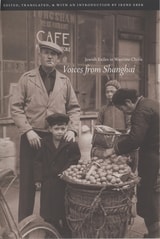
Voices from Shanghai
Jewish Exiles in Wartime ChinaEdited by Irene Eber
University of Chicago Press, 2008
When Hitler came to power and the German army began to sweep through Europe, almost 20,000 Jewish refugees fled to Shanghai. A remarkable collection of the letters, diary entries, poems, and short stories composed by these refugees in the years after they landed in China, Voices from Shanghai fills a gap in our historical understanding of what happened to so many Jews who were forced to board the first ship bound for anywhere.
Once they arrived, the refugees learned to navigate the various languages, belief systems, and ethnic traditions they encountered in an already booming international city, and faced challenges within their own community based on disparities in socioeconomic status, levels of religious observance, urban or rural origin, and philosophical differences. Recovered from archives, private collections, and now-defunct newspapers, these fascinating accounts make their English-languge debut in this volume. A rich new take on Holocaust literature, Voices from Shanghai reveals how refugees attempted to pursue a life of creativity despite the hardships of exile.
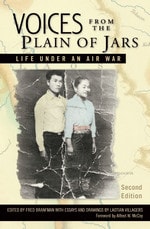
Voices from the Plain of Jars
Life under an Air WarEdited by Fred Branfman with essays and drawings by Laotian villagers; Foreword by Alfred W. McCoy
University of Wisconsin Press, 2013
When first published in 1972, this book was instrumental in exposing the bombing. In this expanded edition, Branfman follows the story forward in time, describing the hardships that Laotians faced after the war when they returned to find their farm fields littered with cluster munitions—explosives that continue to maim and kill today.
Voices from the Thai Countryside
Samruam Singh
University of Wisconsin Press, 2008
Set in northern Thailand during the mid-1970s, the stories in this collection capture a period of dramatic social and economic change. Amidst a setting of marketplaces and paddyfields, lemon trees and leaf-roofed houses, these vignettes offer revealing insights into the daily lives of ordinary villagers and hillspeople struggling to survive.
Voices of Dissent
An EssayRomila Thapar
Seagull Books, 2020
People have argued since time immemorial. Disagreement is a part of life, of human experience. But we now live in times when any form of protest in India is marked as anti-Indian and met with arguments that the very concept of dissent was imported into India from the West. As Romila Thapar explores in her timely historical essay, however, dissent has a long history in the subcontinent, even if its forms have evolved through the centuries.
In Voices of Dissent: An Essay, Thapar looks at the articulation of nonviolent dissent and relates it to various pivotal moments throughout India’s history. Beginning with Vedic times, she takes us from the second to the first millennium BCE, to the emergence of groups that were jointly called the Shramanas—the Jainas, Buddhists, and Ajivikas. Going forward in time, she also explores the views of the Bhakti sants and others of the fifteenth and sixteenth centuries and brings us to a major moment of dissent that helped to establish a free and democratic India: Mahatma Gandhi’s satyagraha. Then Thapar places in context the recent peaceful protests against India’s new, controversial citizenship law, maintaining that dissent in our time must be opposed to injustice and supportive of democratic rights so that society may change for the better.