Results by title
808 books match the query 'Civilization' and 11 start with v

Valentin Serov
Portraits of Russia's Silver AgeElizabeth Valkenier
Northwestern University Press, 2001
Elizabeth Kridl Valkenier weds art criticism to social history in her study of Serov. She casts the artist's work against the Gilden Age of turn-of-the-century Russia, an era when money and consumption abounded and revolutionary change was taking place at all levels of society. Painting prominent people of the day in business, government, the nobility, and the arts, Serov created a gallery of Russia's important figures--figures seen with a sharp eye and painted with subtle irony.
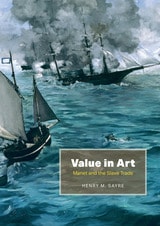
Value in Art
Manet and the Slave TradeHenry M. Sayre
University of Chicago Press, 2022
How did art critics come to speak of light and dark as, respectively, “high in value” and “low in value”? Henry M. Sayre traces the origin of this usage to one of art history’s most famous and racially charged paintings, Édouard Manet’s Olympia.
Art critics once described light and dark in painting in terms of musical metaphor—higher and lower tones, notes, and scales. Sayre shows that it was Émile Zola who introduced the new “law of values” in an 1867 essay on Manet. Unpacking the intricate contexts of Zola’s essay and of several related paintings by Manet, Sayre argues that Zola’s usage of value was intentionally double coded—an economic metaphor for the political economy of slavery. In Manet’s painting, Olympia and her maid represent objects of exchange, a commentary on the French Empire’s complicity in the ongoing slave trade in the Americas.
Expertly researched and argued, this bold study reveals the extraordinary weight of history and politics that Manet’s painting bears. Locating the presence of slavery at modernism’s roots, Value in Art is a surprising and necessary intervention in our understanding of art history.
Vandals to Visigoths
Rural Settlement Patterns in Early Medieval SpainKaren Eva Carr
University of Michigan Press, 2002
Vandals to Visigoths uses archaeological survey data as a springboard to a theoretical discussion of rural survival strategies in the non-industrial world and the ways in which these strategies are affected by government actions. Carr draws on historical, archaeological, and ethnographic comparanda to conclude that the larger, more powerful Roman government was more advantageous for the rural poor than the weaker Vandal and Visigothic regimes. Though Carr agrees that the lives of the rural people and the free slaves were miserable, she shows through her data and theory that they became even more wretched after the decline of the empire.
Vandals to Visigoths will appeal to historians of Rome, as well as of Early Medieval Europe and Spain. Anthropologists, economists, and political scientists who study Late Antiquity and the medieval period will also be interested, as it discusses the broader implications of the role of government in the lives of early medieval Spain's subjects.
Karen Eva Carr is Associate Professor of History, Portland State University.
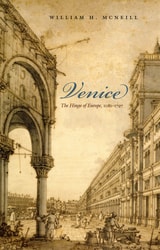
Venice
William H. McNeill
University of Chicago Press, 1974
In this magisterial history, National Book Award winner William H. McNeill chronicles the interactions and disputes between Latin Christians and the Orthodox communities of eastern Europe during the period 1081–1797. Concentrating on Venice as the hinge of European history in the late medieval and early modern period, McNeill explores the technological, economic, and political bases of Venetian power and wealth, and the city’s unique status at the frontier between the papal and Orthodox Christian worlds. He pays particular attention to Venetian influence upon southeastern Europe, and from such an angle of vision, the familiar pattern of European history changes shape.
“No other historian would have been capable of writing a book as direct, as well-informed and as little weighed down by purple prose as this one. Or as impartial. McNeill has succeeded admirably.”—Fernand Braudel, Times Literary Supplement
“The book is serious, interesting, occasionally compelling, and always suggestive.”—Stanley Chojnacki, American Historical Review
Victorian Afterlife
Postmodern Culture Rewrites the Nineteenth CenturyJohn Kucich
University of Minnesota Press, 2000
A foundational look at contemporary uses of the Victorian and the presence of the past in postmodern culture.
Celebrated films by Francis Ford Coppola, Jane Campion, and Ang Lee; best-selling novels by A. S. Byatt and William Gibson; revivals of Oscar Wilde, Lewis Carroll’s Alice, and nostalgic photography; computer graphics and cyberpunk performances: contemporary culture, high and low, has fallen in love with the nineteenth century. Major critical thinkers have found in the period the origins of contemporary consumerism, sexual science, gay culture, and feminism. And postmodern theory, which once drove a wedge between contemporary interpretation and its historical objects, has lately displayed a new self-consciousness about its own appropriations of the past. This diverse collection of essays begins a long-overdue discussion of how postmodernism understands the Victorian as its historical predecessor.
Contributors: Nancy Armstrong, Brown U; Ian Baucom, Duke U; Jay Clayton, Vanderbilt U; Mary A. Favret, Indiana U; Simon Gikandi, U of Michigan; Jennifer Green-Lewis, George Washington U; Kali Israel, U of Michigan; Laurie Langbauer, U of North Carolina; Susan Lurie, Rice U; John McGowan, U of North Carolina; Judith Roof, Indiana U; Hilary M. Schor, USC; Ronald R. Thomas, Trinity College; and Shelton Waldrep, U of Southern Maine.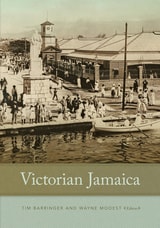
Victorian Jamaica
Timothy Barringer and Wayne Modest, editors
Duke University Press, 2018
Contributors. Anna Arabindan-Kesson, Tim Barringer, Anthony Bogues, David Boxer, Patrick Bryan, Steeve O. Buckridge, Julian Cresser, John M. Cross, Petrina Dacres, Belinda Edmondson, Nadia Ellis, Gillian Forrester, Catherine Hall, Gad Heuman, Rivke Jaffe, O'Neil Lawrence, Erica Moiah James, Jan Marsh, Wayne Modest, Daniel T. Neely, Mark Nesbitt, Diana Paton, Elizabeth Pigou-Dennis, Veerle Poupeye, Jennifer Raab, James Robertson, Shani Roper, Faith Smith, Nicole Smythe-Johnson, Dianne M. Stewart, Krista A. Thompson
Viet Nam
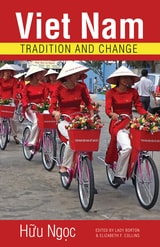
Tradition and ChangeH?u Ng?c
Ohio University Press, 2016
During his twenty-year tenure as a columnist for Việt Nam News, Hà Nội’s English-language newspaper, Hữu Ngọc charmed and invigorated an international readership hungry for straightforward but elegant entrees into understanding Vietnamese culture. The essays were originally collected in the massive Wandering through Vietnamese Culture. With Viet Nam: Tradition and Change, Ohio University Press presents a selection from these many treasures, which are perfectly suited to students of Vietnamese culture and travelers seeking an introduction to the country’s rich history, culture, and daily life.
With extraordinary linguistic ability and a prodigious memory, Hữu Ngọc is among Việt Nam’s keenest observers of and writers about traditional Vietnamese culture and recent history. The author’s central theme—that all tradition is change through acculturation—twines through each of the book’s ten sections, which contain Hữu Ngọc’s ideas on Vietnamese religion, literature, history, exemplary figures, and more. Taken on its own, each brief essay is an engaging discussion of key elements of Vietnamese culture and the history of an issue confronting Việt Nam today.
Visions of the Black Belt
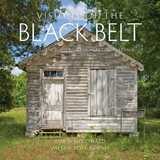
A Cultural Survey of the Heart of AlabamaRobin McDonald and Valerie Pope Burnes
University of Alabama Press, 2015
Capturing the soul of the South’s Black Belt.
In Visions of the Black Belt, Robin McDonald and Valerie Pope Burnes offer a richly illustrated tour of the Black Belt, the fertile arc that represents the cultural efflorescence of Alabama’s heartland. Like knowledgeable friends, McDonald and Burnes guide readers through the Black Belt’s towns and architecture and introduce the region’s great panoply of citizens, farmers, craftspeople, cooks, writers, and musicians.
A constellation of Black Belt towns arose during Alabama’s territorial decades, communities like Selma, Camden, Eutaw, Tuskegee, Greenville, and many more. Visions of the Black Belt recounts their stories and others, such as Demopolis’s founding by exiles from Napoleon’s France. As an escarpment of clouds scuds across an indigo sky, the ruins of Alabama’s lost capital of Cahaba reveal the secrets of its lost squares. Also on this picturesque tour are the Black Belt’s homes, from artless cabins wreathed in fern to ozymandian manses wrapped by stately columns, such as Kirkwood and Reverie.
Among the emblematic houses of worship lovingly photographed in Visions of the Black Belt is Prairieville’s St. Andrew’s Episcopal Church, noted for its “carpenter gothic” style. Also reflecting the region’s history of faith are poignant graveyards such as Greenville’s Pioneer Cemetery with its homespun memorials of seashell-and-concrete and the elegant marbles clad in ebon lichen of Selma's Live Oak Cemetery.
In photos and text, McDonald and Burnes bring to life the layers of history that shaped the Black Belt’s tastes, sounds, and colors. Their gastronomic discoveries include the picant crawfish of the Faunsdale Bar & Grill and GainesRidge Dining Club’s famed Black Bottom pie. They bring the sounds of the Black Belt to life by presenting a wide range of musicians and musical events, from bona fide blues and soul masters to Eutaw’s Black Belt Roots Festival.
Including two maps and more than 370 full-color photographs, Visions of the Black Belt offers a timeless message of faith, determination, and the rich simplicity of living in harmony with the rhythms of the land and nature.
Published in Cooperation with the Black Belt Treasures Cultural Arts Center, Camden, Alabama.

Visualizing Latinx
Creative Practices in Fashion, Film, and BeyondArlene Dávila
Duke University Press, 2026

Voice Machines
The Castrato, the Cat Piano, and Other Strange SoundsBonnie Gordon
University of Chicago Press, 2023
Italian courts and churches began employing castrato singers in the late sixteenth century. By the eighteenth century, the singers occupied a celebrity status on the operatic stage. Constructed through surgical alteration and further modified by rigorous training, castrati inhabited human bodies that had been “mechanized” to produce sounds in ways that unmechanized bodies could not. The voices of these technologically enhanced singers, with their unique timbre, range, and strength, contributed to a dramatic expansion of musical vocabulary and prompted new ways of imagining sound, the body, and personhood.
Connecting sometimes bizarre snippets of history, this multi-disciplinary book moves backward and forward in time, deliberately troubling the meaning of concepts like “technology” and “human.” Voice Machines attends to the ways that early modern encounters and inventions—including settler colonialism, emergent racialized worldviews, the printing press, gunpowder, and the telescope—participated in making castrati. In Bonnie Gordon’s revealing study, castrati serve as a critical provocation to ask questions about the voice, the limits of the body, and the stories historians tell.

Voyages of Catholic Thought to North America
Intellectual Networks and Cultural Exchanges Between Europe, Canada, and the United States, 1920-1950Florian Michel
Catholic University of America Press, 2026