Results by title
1832 books match the query 'Essays' and 17 start with v
VICTORIAN SENSATIONS
ESSAYS ON A SCANDALOUS GENREKIMBERLY HARRISON
The Ohio State University Press, 2006
Veer Ecology
A Companion for Environmental ThinkingJeffrey Jerome Cohen
University of Minnesota Press, 2017
The words most commonly associated with the environmental movement—save, recycle, reuse, protect, regulate, restore—describe what we can do to help the environment, but few suggest how we might transform ourselves to better navigate the sudden turns of the late Anthropocene. Which words can help us to veer conceptually along with drastic environmental flux? Jeffrey Jerome Cohen and Lowell Duckert asked thirty brilliant thinkers to each propose one verb that stresses the forceful potential of inquiry, weather, biomes, apprehensions, and desires to swerve and sheer. Each term is accompanied by a concise essay contextualizing its meaning in times of resource depletion, environmental degradation, and global climate change.
Some verbs are closely tied to natural processes: compost, saturate, seep, rain, shade, sediment, vegetate, environ. Many are vaguely unsettling: drown, unmoor, obsolesce, power down, haunt. Others are enigmatic or counterintuitive: curl, globalize, commodify, ape, whirl. And while several verbs pertain to human affect and action—love, represent, behold, wait, try, attune, play, remember, decorate, tend, hope—a primary goal of Veer Ecology is to decenter the human. Indeed, each of the essays speaks to a heightened sense of possibility, awakening our imaginations and inviting us to think the world anew from radically different perspectives. A groundbreaking guide for the twenty-first century, Veer Ecology foregrounds the risks and potentialities of living on—and with—an alarmingly dynamic planet.
Contributors: Stacy Alaimo, U of Texas at Arlington; Joseph Campana, Rice U; Holly Dugan, George Washington U; Lara Farina, West Virginia U; Cheryll Glotfelty, U of Nevada, Reno; Anne F. Harris, DePauw U; Tim Ingold, U of Aberdeen; Serenella Iovino, U of Turin; Stephanie LeMenager, U of Oregon; Scott Maisano, U of Massachusetts, Boston; Tobias Menely, U of California, Davis; Steve Mentz, St. John’s U; J. Allan Mitchell, U of Victoria; Timothy Morton, Rice U; Vin Nardizzi, U of British Columbia; Laura Ogden, Dartmouth College; Serpil Opperman, Hacettepe U, Ankara; Daniel C. Remein, U of Massachusetts, Boston; Margaret Ronda, U of California, Davis; Nicholas Royle, U of Sussex; Catriona Sandilands, York U; Christopher Schaberg, Loyola U; Rebecca R. Scott, U of Missouri; Theresa Shewry, U of California, Santa Barbara; Mick Smith, Queen’s U; Jesse Oak Taylor, U of Washington; Brian Thill, Golden West College; Coll Thrush, U of British Columbia, Vancouver; Cord J. Whitaker, Wellesley College; Julian Yates, U of Delaware.
Vegas Strong
Bearing Witness 1 October 2017Roberta Sterman Sabbath
University of Nevada Press, 2023
Mass shootings have been on the rise in the United States since the early 2000s, but until the heartbreak of the 1 October 2017 Route 91 Harvest Music Festival, the citizens of Las Vegas had never experienced the violence and tragedy of this now all-too-frequent occurrence. That day, fifty-eight people were shot to death on site, while another two victims later died of their injuries. The 1 October incident physically wounded nearly 900 concert-goers, but psychologically impacted countless untold victims.
As individual and institutional response to urgent requests for help came in both during and after the 1 October catastrophe, those who call Las Vegas home struggled to cope with pain and grief. Now, editor Roberta Sabbath draws together a collection of personal essays, oral histories, interviews, scholarly writings, and commentaries to remember those whose lives were lost, and to honor survivors and their loved ones. Written five years after the tragedy, each contribution offers a unique story of healing, demonstrating the wide-ranging experiences and repercussions of the event. The essays in this collection represent a broad diversity of voices from political leaders, health professionals, first responders, community members, and incident survivors. This work is dedicated to those who lost their lives on 1 October 2017, to survivors and their loved ones, and to the caregivers—both individual and institutional—all of whom continue to keep Vegas Strong.
Vernon Lee
Aesthetics, History, and the Victorian Female IntellectualChrista Zorn
Ohio University Press, 2003
The subject of renewed interest among literary and cultural scholars, Vernon Lee wrote more than forty books, in a broad range of genres, including fiction, history, aesthetics, and travel literature. Early on, Lee established her reputation as a public critic whose unconventional viewpoints stood out among those of her contemporaries.
To feminist and cultural critics, she is a fascinating model of the independent female intellectual who, as Desmond MacCarthy once put it, provides a rare combination of intellectual curiosity and imaginative sensibility.
A startlingly original critical study, Vernon Lee adds new dimensions to the legacy of this woman of letters whose career spans the transition from the late Victorian to the modernist period. Zorn draws on archival materials to discuss Lee’s work in terms of British aestheticism and in the context of the Western European history of ideas.
Zorn contends that Lee’s fiction and nonfiction represent a literary position that bridges and surpasses both the Victorian sage and the modernist aesthetic critic.
Through Professor Zorn’s approach, which combines theoretical framings of texts in terms of recent feminist and cultural criticism with passages of close reading, Vernon Lee emerges as an influential figure in late-nineteenth-century British and continental European thinking on history, art, culture, and gender.
Via Crucis
Essays on Early Medieval Sources and IdeasTHOMAS N. HALL
West Virginia University Press, 2002
This book originated as a series of papers delivered at a Symposium on Irish and Anglo-Saxon Literary Culture in Honor of J. E. Cross, held in conjunction with the 30th International Congress on Medieval Studies at Kalamazoo in May 1996. The purpose of that symposium was to bring together a number of friends and admirers of Professor Cross to celebrate his remarkably rich career as a scholar of Old English and Insular Latin literature; Anglo-Saxon manuscripts; and medieval sermons, saints’ lives, and apocrypha.
Vices, Virtues, and Consequences
Essays in Moral and Political PhilosophyPeter Simpson
Catholic University of America Press, 2019
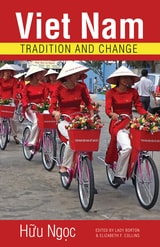
Viet Nam
Tradition and ChangeH?u Ng?c
Ohio University Press, 2016
During his twenty-year tenure as a columnist for Việt Nam News, Hà Nội’s English-language newspaper, Hữu Ngọc charmed and invigorated an international readership hungry for straightforward but elegant entrees into understanding Vietnamese culture. The essays were originally collected in the massive Wandering through Vietnamese Culture. With Viet Nam: Tradition and Change, Ohio University Press presents a selection from these many treasures, which are perfectly suited to students of Vietnamese culture and travelers seeking an introduction to the country’s rich history, culture, and daily life.
With extraordinary linguistic ability and a prodigious memory, Hữu Ngọc is among Việt Nam’s keenest observers of and writers about traditional Vietnamese culture and recent history. The author’s central theme—that all tradition is change through acculturation—twines through each of the book’s ten sections, which contain Hữu Ngọc’s ideas on Vietnamese religion, literature, history, exemplary figures, and more. Taken on its own, each brief essay is an engaging discussion of key elements of Vietnamese culture and the history of an issue confronting Việt Nam today.
Virgin Microbe
Essays on DadaMichael White
Northwestern University Press, 2013
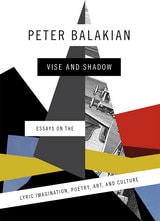
Vise and Shadow
Essays on the Lyric Imagination, Poetry, Art, and CulturePeter Balakian
University of Chicago Press, 2015
Vise and Shadow draws into conversation such disparate figures as W. B. Yeats, Hart Crane, Joan Didion, Primo Levi, Robert Rauschenberg, Bob Dylan, Elia Kazan, and Arshile Gorky, revealing how the lyric imagination of these artists grips experience, "shadows history," and "casts its own type of illumination," creating one of the deepest kinds of human knowledge and sober truth. In these elegantly written essays, Balakian offers a fresh way to think about the power of poetry, art, and the lyrical imagination as well as history, trauma, and memory.
Visions Of Excess
Selected Writings, 1927-1939Georges Bataille
University of Minnesota Press, 1985
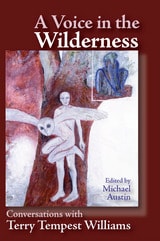
Voice in the Wilderness
Conversations with Terry Tempest Williamsedited by Michael Austin
Utah State University Press, 2006
In her writings, Terry Tempest Williams repeatedly invites us as readers into engagement and conversation with both her and her subject matter, whether it is nature or society, environment or art. From her evocation, in Desert Quartet: An Erotic Landscape, of an eroticism of place that defines erotic as "in relation," to the spiritual connectivity and familial bonds she explores in Refuge: An Unnatural History of Family and Place and the political engagement she urges in The Open Space of Democracy, much of her work is about relationship, connection, and community. Like much good writing, her books invite readers into thoughtful dialogue with the text. Frequently in demand for workshops, lectures, and other speaking venues and well known as an environmental activist, Williams has a public persona and voice almost indistinguishable from her written ones.
Thus, the interviews she has often granted--in print, on the radio, on the Web--seamlessly elaborate the ideas and extend the explorations of her written texts. They also tell us much about the genesis, context, and intent of her books. With her distinctive, impassioned voice and familiar felicity of language, she talks about wilderness and wildlife, place and eroticism, art and literature, democracy and politics, family and heritage, Mormonism and religion, writing and creativity, and other subjects that engage her agile mind. The set of interviews gathered and introduced by Michael Austin in A Voice in the Wilderness represent the span of Terry Tempest Williams's career as a naturalist, author, and activist.

Voices for the Future
Essays on Major Science Fiction WritersUniversity of Wisconsin Press, 0
Voices for the Future
Essays on Major Science Fiction Writers, Volume 1Thomas D. Clareson
University of Wisconsin Press, 1976
Voices for the Future
Essays on Major Science Fiction Writers, Volume 3Thomas D. Clareson
University of Wisconsin Press, 1984
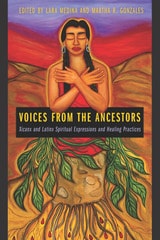
Voices from the Ancestors
Xicanx and Latinx Spiritual Expressions and Healing PracticesEdited by Lara Medina and Martha R. Gonzales
University of Arizona Press, 2019
This wisdom is based on the authors’ oral traditions, research, intuitions, and lived experiences—wisdom inspired by, and created from, personal trajectories on the path to spiritual conocimiento, or inner spiritual inquiry. This conocimiento has reemerged over the last fifty years as efforts to decolonize lives, minds, spirits, and bodies have advanced. Yet this knowledge goes back many generations to the time when the ancestors understood their interconnectedness with each other, with nature, and with the sacred cosmic forces—a time when the human body was a microcosm of the universe.
Reclaiming and reconstructing spirituality based on non-Western epistemologies is central to the process of decolonization, particularly in these fraught times. The wisdom offered here appears in a variety of forms—in reflective essays, poetry, prayers, specific guidelines for healing practices, communal rituals, and visual art, all meant to address life transitions and how to live holistically and with a spiritual consciousness for the challenges of the twenty-first century.
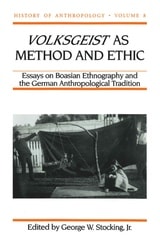
Volksgeist as Method and Ethic
Essays on Boasian Ethnography and the German Anthropological TraditionEdited by George W. Stocking, Jr.
University of Wisconsin Press, 1998

Voting and the Spirit of American Democracy
Essays on the History of Voting and Voting Rights in AmericaEdited by Donald W. Rogers
University of Illinois Press, 1992
manner, leading historians and political scientists trace the history of American
voting from the colonial period to the present incorporating the latest scholarship
on suffrage reform, woman suffrage, black voting rights, and electoral participation.
They explain how voting practices changed over time as the result of broad historical
forces such as economic growth, demographic shifts, the results of war, and
the rise of political reform movements.