Results by title
3388 books match the query 'Fiction' and 25 start with v
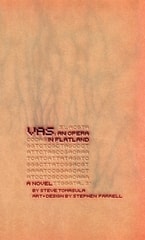
VAS
An Opera in Flatland: A Novel. By Steve Tomasula. Art and Design by Stephen Farrell.Steve Tomasula and Stephen Farrell
University of Chicago Press, 2004
A constantly surprising, VAS combines a variety of voices, from journalism and libretto to poem and comic book. Often these voices meet in counterpoint, and the meaning of the narrative emerges from their juxtapositions, harmonies, or discords. Utilizing a wide and historical sweep of representations of the body—from pedigree charts to genetic sequences—VAS is, finally, the story of finding one's identity within the double helix of language and lineage.
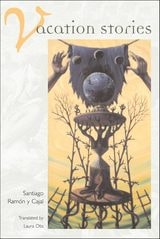
Vacation Stories
FIVE SCIENCE FICTION TALESSantiago Ramón y Cajal
University of Illinois Press, 2006
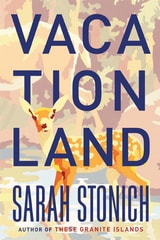
Vacationland
Sarah Stonich
University of Minnesota Press, 2013
On a lake in northernmost Minnesota, you might find Naledi Lodge—only two cabins still standing, its pathways now trodden mostly by memories. And there you might meet Meg, or the ghost of the girl she was, growing up under her grandfather’s care in a world apart and a lifetime ago. Now an artist, Meg paints images “reflected across the mirrors of memory and water,” much as the linked stories of Vacationland cast shimmering spells across distance and time.
Those whose paths have crossed at Naledi inhabit Vacationland: a man from nearby Hatchet Inlet who knew Meg back when, a Sarajevo refugee sponsored by two parishes who can’t afford “their own refugee,” aged sisters traveling to fulfill a fateful pact once made at the resort, a philandering ad man, a lonely Ojibwe stonemason, and a haiku-spouting girl rescued from a bog.
Sarah Stonich, whose work has been described as “unexpected and moving” by the Chicago Tribune and “a well-paced feast” by the Los Angeles Times, weaves these tales of love and loss, heartbreak and redemption into a rich novel of interconnected and disjointed lives. Vacationland is a moving portrait of a place—at once timeless and of the moment, composed of conflicting dreams and shared experience—and of the woman bound to it by legacy and sometimes longing, but not necessarily by choice.
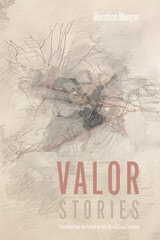
Valor
StoriesMurathan Mungan, translated from the Turkish by Aron Aji and David Gramling
Northwestern University Press, 2022
Among Murathan Mungan’s signature works, Cenk Hikâyeleri (Valor: Stories) has long been considered a milestone of twentieth-century Turkish literature. The six short stories in the collection reflect the author’s multiethnic background (which includes Kurdish, Arab, and Turkish heritage) and represent his lush poetics, literary breadth, and sociopolitical commitments.
Valor reimagines Shahmaran, a mythical half‑human, half‑snake figure that commonly appears in the folklore of Turkey’s southeastern provinces. Legend interweaves with the contemporary realities of ethnicity, religious dogma, gender, and sexuality. Uncovering hidden narratives within a rich and complicated culture, Mungan’s stories depict self-realization and sexual awakening as they showcase one of Turkey’s most popular literary voices.
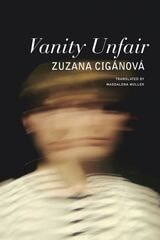
Vanity Unfair
Zuzana Cigánová
Seagull Books, 2022
An accidental pregnancy, a good-looking man who cares about no one but himself, marriage because the man “had a bit of a Christian upbringing,” divorce—that is the trajectory of Pipina’s life, leading to single motherhood and a thousand cruelties of everyday life because she is an ugly woman in a world where ugliness is worse than a death sentence. At every turn, she is reminded of her inferiority. She can’t wait for the end of each day when she can sit in the stairwell outside of her dilapidated apartment and retreat into her thoughts. Her drab life full of indignities dissolves only in her beautiful, cinematic dreams. In them, she experiences whatever she can’t do or have in real life. She creates a rich inner world, and her razor-sharp observations, interlaced with a good dose of humor, produce a revealing narrative about contemporary society. In the first English translation of her work, the brilliant Slovak author Zuzana Cigánová pulls back the veil on people’s most private thoughts—thoughts that could very much be our own.
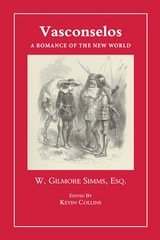
Vasconselos
A Romance of the New WorldKevin Collins
University of Arkansas Press, 2013
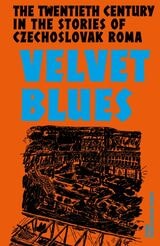
Velvet Blues
Twentieth Century in the Stories of Czechoslovak RomaEdited by Karolína Ryvolová
Karolinum Press, 2026
Romani writers from former Czechoslovakia offer their history and perspective in this important collection that fills a gap in world literature.
As representatives of an oral culture, the Romani people have throughout history been the subject of stories written by outsiders. Sometimes idealized, often defamed, and even condemned, they have seldom been accurately portrayed by the majority of writers. It has only been in the last century that the Roma have finally started writing for themselves.
The fifteen Romani writers from former Czechoslovakia featured in this anthology speak of the people, times, and places they particularly hold dear. Although the roads of the Roma have always been paved with disrespect, discrimination, and vicious racial persecution by mainstream societies, these stories frequently talk about the good things in life. Be it the writers’ homes in the traditional settlements of rural Eastern Slovakia, the Czech industrial towns where the families moved after WWII in search of a better life, or the bustling cities of the post-transition period, they demonstrate immense pride in their Romani identity, love of their Romani language, and heartfelt respect for their elders. Velvet Blues provides a very different picture from the stock character of “the Gypsy” so common in world literature.
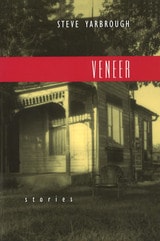
Veneer
StoriesStories by Steve Yarbrough
University of Missouri Press, 1998
Acclaimed short story writer Steve Yarbrough, whose works have been included in the Pushcart Prize anthology and The Best American Mystery Stories 1998, once again demonstrates his gift for vividly rendered characters and evocative themes in his latest collection of fiction.
Veneer presents a variety of characters from cultural backgrounds and settings that range from California to Mississippi to Eastern Europe. Yarbrough's sensitive portrayals of loss and longing are individual and unsettling; a disaffected college football coach, a movie star with a "substance problem," and a small-town girl coming to grips with the murder of her mother are just a few examples of the turbulent lives he portrays. In every instance, each character is "constantly searching for some way to bridge the gap, so small and yet so vast, between a right move and a wrong one."
A poignant theme running through this collection is the conflict between appearance and reality. Yarbrough presents the reader with deep narrative layers, juxtaposing the gritty present with nostalgic recollections of an idealized past or hopeful projections into a rosy future. "Veneer," the title piece, beautifully reveals the depth of this conflict. On the surface, the narrator, a married man whose family is away on vacation, enjoys a dinner with a woman who has been a longtime friend. Beneath that "veneer," however, lies a more complex, perhaps troubling, relationship between the two friends, a relationship only partially obscured by the comic recounting of a childhood Independence Day.
Yarbrough is at his best when he offers us brief glimpses into his characters' minds and imaginations, brilliantly exposing subtle vulnerabilities as cracks in the veneer. "Bohemia" follows the travels of two young lovers as they explore Europe. The woman fears that her lover will abandon her, and when she wakes to find him gone one evening, she believes her fear is confirmed. Yet his return does not alleviate her insecurity. The reality of her lover's presence and her continued anxiety emphasize the many layers that constitute the woman's world.
Diverse in locale, character, and content, the stories in Veneer present rare views into the rifts between husband and wife, parent and child, one sibling and another. Crafting these compelling, deceptively simple stories is a writer whose "true subject is the human heart."
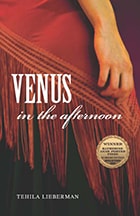
Venus in the Afternoon
Tehila Lieberman
University of North Texas Press, 2012
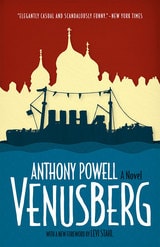
Venusberg
A NovelAnthony Powell
University of Chicago Press, 1932
Powell’s sophomore novel, Venusberg, follows journalist Lushington as he leaves behind his unrequited love in England and travels by boat to an unnamed Baltic state. Awash in a marvelously odd assortment of counts and ladies navigating a multicultural, elegant, and politically precarious social scene, Lushington becomes infatuated with his very own, very foreign Venus. An action-packed literary precursor to Wes Anderson’s The Grand Budapest Hotel, Venusberg is replete with assassins and Nazis, loose countesses and misunderstandings, fatal accidents and social comedy. But beyond its humor, this early installment in Powell’s literary canon will offer readers a welcome window onto the mind of a great artist learning his craft.
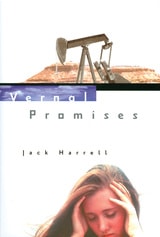
Vernal Promises
Jack Harrell
Signature Books, 2003
“This is a brilliant novel, written with language that crackles. The relationships are treated with force and poignancy. The power of the story is its authenticity and the character’s compelling conversion. He begins as a boy who refuses to accept responsibility, becomes the husband who longs for freedom, and at last the man who feels God’s grace in spite of himself and the self-destructive path that has beckoned to him with a siren’s allure. This brings a voice to Mormon literature that is clearly worth honoring.” —Marilyn Brown, author of The Wine Dark Sea of Grass
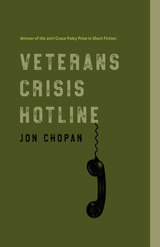
Veterans Crisis Hotline
Jon Chopan
University of Massachusetts Press, 2018
View
Glen Pourciau
Four Way Books, 2017
Villa Amalia
Pascal Quignard
Seagull Books, 2018
With Georges’s help, Ann takes radical action: while Thomas is away, she resolves to secretly sell their shared house and get rid of all the physical manifestations of their sixteen years together. Thomas returns to find her gone, the locks changed, and his few possessions packed up and sent to his office. Ann, meanwhile, has fled the country and started a new, hidden life. But our past is never that easy to escape, and Ann’s secrets eventually seek her out.
Village of the Ghost Bells
A NovelBy Edla Van Steen
University of Texas Press, 1991
In the village of the ghost bells, the church chimes ring—even though the church has no bells. One of the neighbors wants to buy dreams—or is she a dream that someone else is dreaming? Where and why do dreams become nightmares?
These are only some of the fascinating questions raised in Village of the Ghost Bells, Edla Van Steen’s second novel. First published in 1983 as Coraçôes mordidos, the novel tells the story of the would-be utopian community built on an old plantation of the outskirts of São Paulo, Brazil. Its atmosphere is dreamlike, often verging on the supernatural, and strange events signal the transformation of the utopian dream into a nightmare. Ultimately destroyed by greed, corruption, and exploitation, the community becomes a microcosm of the Brazilian socioeconomic system, in which it takes all of a person’s warmth, idealism, passion, and humor to survive the bleak environment.
Violin Playing Herself in a Mirror
PoemsDavid Kutz-Marks
University of Massachusetts Press, 2015
Virtual Lotus
Modern Fiction of Southeast AsiaTeri Shaffer Yamada, Editor
University of Michigan Press, 2002
Short introductions to each story provide a sketch of the country's literary history, revealing the interaction between individual writers and their sociopolitical situations. Many of the stories are ethnographic and provide snapshots of cultures at a specific historical moment. The stories also reflect gender balance, diversity of style, and quality of literary expression. Exploring everything from the realities of being a middle-aged woman in Burma in the witty drama "An Umbrella" to the difficult choice between appeasing a troubled Vietnamese community or tending to an ailing father in "Tu Ben the Actor," this collection is sure to appeal to a variety of readers the world over.
This anthology will be useful in courses in comparative translation and culture, postcolonial studies, political science, Asian history, and gender studies. It is also appropriate for a literary reading public interested in comparative world literature.
Teri Shaffer Yamada is Associate Professor, California State University, Long Beach.
Visit Me in California
StoriesCooley Windsor
Northwestern University Press, 2008
Deftly moving between the comic and the tragic, the sacred and the profane, this collection of short stories is populated by modern children, ancient poets, dying men, and your basic, mundane Greek gods. Windsor turns familiar stories from the Bible and from myth inside out, exploring the feelings of minor characters and looking at events from imaginative perspectives. His prose is rich with detail and emotion and he touches on themes of art and artifice, success and failure, family and its sacrifices, and expectations met or missed.
In “The Last Israelite in the Red Sea,” a follower of Moses who dallies during their Exodus finds it more difficult to walk across the bottom of the temporarily displaced Red Sea without shoes. “Four of the Times My Sister Cried” follows a young narrator as his family rehearses for his mother’s death and then, as they must, lives without her. The wry “The Art of War” has characters from Homer to a courtesan talking shop about the battle of Troy from their perspectives. Set as a series of short pieces, “The Fleshly School of Poetry” tells of lessons learned and lessons taught. With its explorations of expectations, “Meet the Author” gives readers intimate portraits of various plans or coping mechanisms people put up when death draws close. “The End of the World” approaches the Rapture with a humorously practical spin: wouldn’t the angels need a plan to ensure that it goes smoothly? “In Parting” explores some of the troubles with family, especially when a sister’s child turns out to be a marionette. The geographically explicit “Three Mediums in San Francisco” touches on frustrated and imagined eroticism. The collection ends with “The Hilton Epiphany,” a fitting closer in which divinity comes to an unlikely person in an unlikely place.
Vita Nuova
A NovelBohumil Hrabal
Northwestern University Press, 2010
Vita Nuova is the second in a trilogy of memoirs written from the perspective of Bohumil Hrabal’s wife, Elis.ka, about their life in Prague from the 1950s to the 1970s, when Communist repression of artists was at its peak.
Hrabal’s inimitable humor, which in Elis.ka’s ruminations ranges from bawdy slapstick to cutting irony, is all the more penetrating for being directed at himself. Vita Nuova showcases Hrabal’s legendary bohemian intellectual life, particularly his relationship with Vladimír Boudník. Hrabal creates a shrewd, lively portrait of Eastern European intellectual life in the mid-twentieth century.
Vivid and Continuous
Essays and Exercises for Writing FictionJohn McNally
University of Iowa Press, 2013
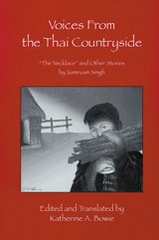
Voices from the Thai Countryside
Samruam Singh
University of Wisconsin Press, 2008
Set in northern Thailand during the mid-1970s, the stories in this collection capture a period of dramatic social and economic change. Amidst a setting of marketplaces and paddyfields, lemon trees and leaf-roofed houses, these vignettes offer revealing insights into the daily lives of ordinary villagers and hillspeople struggling to survive.
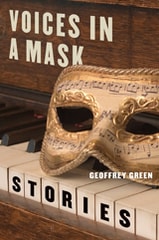
Voices in a Mask
StoriesGeoffrey Green
Northwestern University Press, 2008
Based on images of disguise in literature, theater, and opera, this short-story cycle explores themes of identity and subterfuge in a fictional fugue that ranges from comic to poignant. Into the librettos of Don Giovanni, Tosca, Rigoletto, and other operas, Green weaves the authentic biographies of their singers and composers, modern-day settings, and his own imaginative twists. Throughout Voices in a Mask, characters obscure and reveal themselves as art mimics life and life, art. Ultimately the very acts of masking and projecting reveal a truth about the power of art and its inherent deceptions.
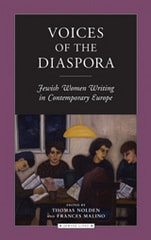
Voices of the Diaspora
Jewish Women Writing in Contemporary EuropeThomas Nolden
Northwestern University Press, 2005
At the same time, these writers address themes specific to their national contexts. Berlin-born Barbara Honigmann questions the possibility of Jewish life in the country responsible for the "final solution." Maghreb-born Marlène Amar and Reina Roffé address the experiences of displacement and emancipation as Sephardic women in Western, post-colonial societies. Clara Sereni describes how Jews in post-Fascist Italy reemerged with a self-assertiveness that troubled a society that had found comfort in amnesia. Ludmila Ulitskaya portrays a Jewish girlhood on the eve of Stalin's death empowered by the religious traditions of Jewish resistance.
From the unique perspective of women's literary voices, this volume reveals to English-speaking readers the extraordinary vivacity and diversity of European Jewry, and introduces them to a new generation of women writers.
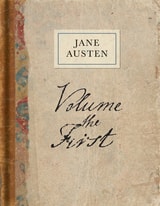
Volume the First
A FacsimileJane Austen
Bodleian Library Publishing, 2013
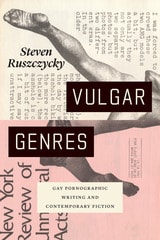
Vulgar Genres
Gay Pornographic Writing and Contemporary FictionSteven Ruszczycky
University of Chicago Press, 2021
Long fixated on visual forms, the field of porn studies is overdue for a book-length study of gay pornographic writing. Steven Ruszczycky delivers with an impressively researched work on the ways gay pornographic writing emerged as a distinct genre in the 1960s and went on to shape queer male subjectivity well into the new millennium.
Ranging over four decades, Ruszczycky draws on a large archive of pulp novels and short fiction, lifestyle magazines and journals, reviews, editorial statements, and correspondence. He puts these materials in conversation with works by a number of contemporary writers, including William Carney, Dennis Cooper, Samuel Delany, John Rechy, and Matthew Stadler. While focused on the years 1966 to 2005, Vulgar Genres reveals that the history of gay pornographic writing during this period informs much of what has happened online over the past twenty years, from cruising to the production of digital pornographic texts. The result is a milestone in porn studies and an important contribution to the history of gay life.