Results by title
1104 books match the query 'Gender Studies' and 14 start with v
Ventures into Childland
Victorians, Fairy Tales, and FemininityU. C. Knoepflmacher
University of Chicago Press, 1998
"Ventures into Childland is acute, well written and stimulating. It also has a political purpose, to insist on the importance of protecting and nurturing children, imaginatively and physically."—Jan Marsh, Times Literary Supplement
"A provocative and interesting book about Victorian culture."—Library Journal
Vernacular Sovereignties
Indigenous Women Challenging World PoliticsManuela Lavinas Picq
University of Arizona Press, 2018
In Vernacular Sovereignties, Manuela Lavinas Picq shows that Indigenous women have long been dynamic political actors who have partaken in international politics and have shaped state practices carrying different forms of resistance. Her research on Ecuador shows that although Kichwa women face overlapping oppressions from socioeconomic exclusions to sexual violence, they are achieving rights unparalleled in the world. They successfully advocated for women’s participation in the administration of Indigenous justice during the 2008 constitutional reform, creating the first constitution in Latin America to explicitly guarantee the rights of Indigenous women and the first constitution worldwide to require gender parity in the administration of justice.
Picq argues that Indigenous women are among the important forces reshaping states in Latin America. She offers empirical research that shows the significance of Indigenous women in international politics and the sophistication of their activism. Indigenous women strategically use international norms to shape legal authority locally, defying Western practices of authority as they build what the author calls vernacular sovereignties. Weaving feminist perspectives with Indigenous studies, this interdisciplinary work expands conceptual debates on state sovereignty.
Picq persuasively suggests that the invisibility of Indigenous women in high politics is more a consequence of our failure to recognize their agency than a result of their de facto absence. It is an invitation not merely to recognize their achievements but also to understand why they matter to world politics.

Vernon Lee
Aesthetics, History, and the Victorian Female IntellectualChrista Zorn
Ohio University Press, 2003
The subject of renewed interest among literary and cultural scholars, Vernon Lee wrote more than forty books, in a broad range of genres, including fiction, history, aesthetics, and travel literature. Early on, Lee established her reputation as a public critic whose unconventional viewpoints stood out among those of her contemporaries.
To feminist and cultural critics, she is a fascinating model of the independent female intellectual who, as Desmond MacCarthy once put it, provides a rare combination of intellectual curiosity and imaginative sensibility.
A startlingly original critical study, Vernon Lee adds new dimensions to the legacy of this woman of letters whose career spans the transition from the late Victorian to the modernist period. Zorn draws on archival materials to discuss Lee’s work in terms of British aestheticism and in the context of the Western European history of ideas.
Zorn contends that Lee’s fiction and nonfiction represent a literary position that bridges and surpasses both the Victorian sage and the modernist aesthetic critic.
Through Professor Zorn’s approach, which combines theoretical framings of texts in terms of recent feminist and cultural criticism with passages of close reading, Vernon Lee emerges as an influential figure in late-nineteenth-century British and continental European thinking on history, art, culture, and gender.
Vexy Thing
On Gender and LiberationImani Perry
Duke University Press, 2018
Violence and Indigenous Communities
Confronting the Past and Engaging the PresentEdited by Susan Sleeper-Smith, Jeffrey Ostler, and Joshua L. Reid
Northwestern University Press, 2021
In contrast to past studies that focus narrowly on war and massacre, treat Native peoples as victims, and consign violence safely to the past, this interdisciplinary collection of essays opens up important new perspectives. While recognizing the long history of genocidal violence against Indigenous peoples, the contributors emphasize the agency of individuals and communities in genocide’s aftermath and provide historical and contemporary examples of activism, resistance, identity formation, historical memory, resilience, and healing. The collection also expands the scope of violence by examining the eyewitness testimony of women and children who survived violence, the role of Indigenous self-determination and governance in inciting violence against women, and settler colonialism’s promotion of cultural erasure and environmental destruction.
By including contributions on Indigenous peoples in the United States, Canada, the Pacific, Greenland, Sápmi, and Latin America, the volume breaks down nation-state and European imperial boundaries to show the value of global Indigenous frameworks. Connecting the past to the present, this book confronts violence as an ongoing problem and identifies projects that mitigate and push back against it.
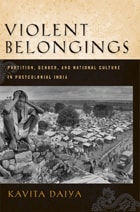
Violent Belongings
Partition, Gender, and National Culture in Postcolonial IndiaKavita Daiya
Temple University Press, 2008
In addition to challenging the official narratives of independence and Partition, these narratives challenge our contemporary understanding of gender and ethnicity in history and politics. Violent Belongings argues that both male and female bodies, and heterosexual coupledom, became symbols of the nation in public life. In the newly independent Indian nation both men and women were transformed into ideal citizens or troubling bodies, immigrants or refugees, depending on whether they were ethnically Hindu, Muslim, Jewish or Sikh. The divisions set in motion during Partition continue into our own time and account for ethnic violence in South Asia.
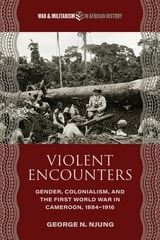
Violent Encounters
Gender, Colonialism, and the First World War in Cameroon, 1884–1916George N. Njung
Ohio University Press, 2027
Violent Encounters offers a powerful and original gendered history of colonial rule and warfare in Cameroon from the advent of German imperialism to the end of the First World War. Centering German Cameroon as an understudied but pivotal site of empire and global conflict, George N. Njung demonstrates that violence was a calculated instrument of colonial governance, which was systematically organized along racial and gendered lines to conquer territory, discipline African communities, and suppress resistance.
Drawing on extensive archival research in Africa and Europe, oral traditions, and interdisciplinary gender analysis, Njung reconstructs how empire and war were lived differently by African men and women. He shows that gender-based violence—especially sexual abuse—functioned as a deliberate political strategy embedded in military campaigns, forced labor regimes, and systems of punishment. African women bore disproportionate burdens at the intersection of gender, race, and militarization, even as they acted as resisters, mobilizers, and negotiators. African men, meanwhile, experienced forced recruitment, battlefield violence, and profound challenges to social authority under colonial rule.
Reinterpreting the First World War in Africa as an escalation rather than a rupture, Violent Encounters situates wartime atrocities, mass displacement, and one of the twentieth century’s earliest refugee crises within a longer continuum of imperial violence. By foregrounding gender, the book repositions Cameroon—and Africa more broadly—as central to understanding the global dynamics of empire, militarization, and resistance in the early twentieth century.

Violent Sensations
Sex, Crime, and Utopia in Vienna and Berlin, 1860-1914Scott Spector
University of Chicago Press, 2016
In Violent Sensations, Scott Spector explores how the protagonists of these stories—people at society’s margins—were given new identities defined by the groundbreaking sciences of psychiatry, sexology, and criminology, and how this expert knowledge was then transmitted to an eager public by journalists covering court cases and police investigations. The book analyzes these sexual and criminal subjects on three levels: first, the expertise of scientists, doctors, lawyers, and scholars; second, the sensationalism of newspaper scandal and pulp fiction; and, third, the subjective ways that the figures themselves came to understand who they were. Throughout, Spector answers important questions about how fantasies of extreme depravity and bestiality figure into the central European self-image of cities as centers of progressive civilization, as well as the ways in which the sciences of social control emerged alongside the burgeoning emancipation of women and homosexuals.

Virtual Pedophilia
Sex Offender Profiling and U.S. Security CultureGillian Harkins
Duke University Press, 2020

Visual Archives of Sex
Heike Bauer, Melina Pappademos, Katie Sutton, and Jennifer Tucker, special issue editors
Duke University Press, 2021
Contributors. Heike Bauer, Roland Betancourt, Alexis L. Boylan, Topher Campbell, João Florêncio, Kyle Frackman, Javier Fernández Galeano, Sarah Jones, Carol Leigh, Conor McGrady, Ben Miller, Derek Conrad Murray, Lynda Nead, Melina Pappademos, Ashkan Sepahvand, David Serlin, Meg Slater, Katie Sutton, Annette F. Timm, Jennifer Tucker, Jeanne Vaccaro, Sunny Xiang

Vita Sexualis
Karl Ulrichs and the Origins of Sexual ScienceRalph M. Leck
University of Illinois Press, 2020
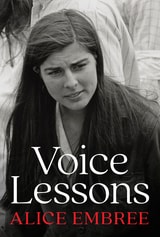
Voice Lessons
By Alice Embree
University of Texas Press, 2021
Voice Lessons explores the rich personal and political terrain of Alice Embree, a 1960s activist and convert to the women’s liberation movement of the 1970s, bringing a woman’s perspective to a transformational time in US history. This riveting memoir traces the author’s roots in segregated Austin and her participation in efforts to integrate the University of Texas. It follows her antiwar activism from a vigil in front of President Lyndon Johnson’s ranch in 1965 to a massive protest after the shootings at Kent State in 1970. Embree’s activism brought her and the Students for a Democratic Society into conflict with Frank Erwin, the powerful chairman of the UT Board of Regents, and inspired a campus free speech movement. She recounts her experiences living in New York during the tumultuous years of 1968 and 1969, including the Columbia University strike and the Woodstock music festival. She also tells about protesting at the Chicago Democratic Convention, her interactions with Yippies and poets, and her travels to Chile, Cuba, and Mexico. Embree highlights the radical roots of the women’s liberation movement in Austin and the audacious women’s community that challenged gender roles, fought for reproductive justice, and inspired a lifetime of activism.

Voice, Silence and Gender in South Africa's Anti-Apartheid Struggle
The Shadow of a Young WomanRachel E. Johnson
University of London Press, 2025
Who spoke about the liberation struggle whilst it was ongoing? When did they speak and how? And what effects do the gendered history of speech and silence within anti-apartheid politics continue to have upon our knowledge of the past? Arguing that she is emblematic of the way gendered narratives of the struggle have been made, this book listens for the voice and silence of Masabata Loate and her contemporaries within political trials; newspapers; photography; human rights reportage; creative fiction, drama, poetry and song; autobiography and memoir; and oral histories. The result is an unconventional biography that sees this young woman as a shadow within the story of South Africa’s anti-apartheid liberation struggle.
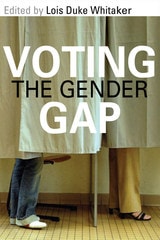
Voting the Gender Gap
Edited by Lois Duke Whitaker
University of Illinois Press, 2007
This book concentrates on the gender gap in voting--the difference in the proportion of women and men voting for the same candidate. Evident in every presidential election since 1980, this polling phenomenon reached a high of 11 percentage points in the 1996 election. The contributors discuss the history, complexity, and ways of analyzing the gender gap; the gender gap in relation to partisanship; motherhood, ethnicity, and the impact of parental status on the gender gap; and the gender gap in races involving female candidates. Voting the Gender Gap analyzes trends in voting while probing how women's political empowerment and gender affect American politics and the electoral process.
Contributors are Susan J. Carroll, Erin Cassese, Cal Clark, Janet M. Clark, M. Margaret Conway, Kathleen A. Dolan, Laurel Elder, Kathleen A. Frankovic, Steven Greene, Leonie Huddy, Mary-Kate Lizotte, Barbara Norrander, Margie Omero, and Lois Duke Whitaker.