Results by title
28164 books match the query 'History' and 259 start with v

V-2
A Combat History of the First Ballistic MissileT. D. Dungan
Westholme Publishing, 2005
In August 1944, Londoners thought the war might be over by Christmas. But on September 8, 1944, in the London suburb of Chiswick, a thunderous double-boom was heard followed by a huge plume of black smoke rising high into the air. Several minutes later another explosion rocked the earth near Epping. There had been no warnings, no drone of aircraft above, just sudden devastation. "Operation Penguin," the V-2 offensive, had begun. The A-4 rocket, better known as the V-2, Vergeltungswaffen Zwei, or "Vengeance Weapon 2," was the first ballistic missile to be used in combat. Soaring over 50 miles high at supersonic speeds, the V-2 would strike its target within 5 minutes of launching. Once in the air its deadly warhead was unstoppable. The ancestor of all Cold War and modern day ballistic missiles, as well as the rockets used for space exploration, the V-2 could not win the war for Germany—it was too expensive, too complicated, too inaccurate, and its warhead was too small—but its unprecedented invulnerability and influence on Allied planning made the V-2 and the advancements it represented the ultimate war prize, and British, American, and Soviet forces scrambled to seize German rocket technology along with its scientists and engineers. In V-2: A Combat History of the First Ballistic Missile, T. D. Dungan relies on an unparalleled collection of original documents, unpublished photographs, and accounts from those who were there to provide a complete description of the V-2 program, the missile's use in combat, and the race to capture its secrets.

VIOLENT DEATH IN THE CITY
SUICIDE, ACCIDENT, AND MURDER IN NINETEEROGER LANE
The Ohio State University Press, 1999
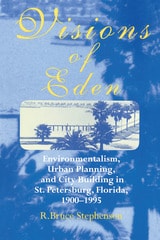
VISIONS OF EDEN
Environmentalism, Urban Planning, and City Building in St. Petersburg, Florida, 1900–1995R. Bruce Stephenson
The Ohio State University Press, 1997
VISIONS OF PLACE
CITY, NEIGHBORHOODS, SUBURBS, AND CINCINNATI'S CLIFTON, 1850–2000ZANE L. MILLER
The Ohio State University Press, 2001
Almost every American city has or had neighborhoods like Clifton, which developed in the mid-nineteenth century as a silk-stocking suburb with a more diverse population than most observers noticed. Incorporated by Cincinnati in the late nineteenth century, Clifton had a reputation as a better-than-average place in which to live, a view that persisted until the end of the twentieth century.
In Visions of Place, Zane L. Miller treats ideas about the nature of cities—including their neighborhoods and their suburbs—as the dynamic factors in Clifton’s experience and examines the changes in Clifton's social, physical, civic, and political structure resulting from these transforming notions. These structural shifts involved a variety of familiar nineteenth- and twentieth-century urban phenomena, including not only the switch from suburban village to city neighborhood and the salience of interracial fears but also the rise of formal city planning and conflicts among Protestants, Catholics, and Jews over the future of Clifton's religious and ethnic ambiance.
Miller concludes with a policy analysis of current and future prospects for neighborhoods like Clifton and the cities and metropolitan areas of which they form a part.

Vacationland
Sarah Stonich
University of Minnesota Press, 2013
On a lake in northernmost Minnesota, you might find Naledi Lodge—only two cabins still standing, its pathways now trodden mostly by memories. And there you might meet Meg, or the ghost of the girl she was, growing up under her grandfather’s care in a world apart and a lifetime ago. Now an artist, Meg paints images “reflected across the mirrors of memory and water,” much as the linked stories of Vacationland cast shimmering spells across distance and time.
Those whose paths have crossed at Naledi inhabit Vacationland: a man from nearby Hatchet Inlet who knew Meg back when, a Sarajevo refugee sponsored by two parishes who can’t afford “their own refugee,” aged sisters traveling to fulfill a fateful pact once made at the resort, a philandering ad man, a lonely Ojibwe stonemason, and a haiku-spouting girl rescued from a bog.
Sarah Stonich, whose work has been described as “unexpected and moving” by the Chicago Tribune and “a well-paced feast” by the Los Angeles Times, weaves these tales of love and loss, heartbreak and redemption into a rich novel of interconnected and disjointed lives. Vacationland is a moving portrait of a place—at once timeless and of the moment, composed of conflicting dreams and shared experience—and of the woman bound to it by legacy and sometimes longing, but not necessarily by choice.

Vaccine Nation
America's Changing Relationship with ImmunizationElena Conis
University of Chicago Press, 2014
Vaccine Nation opens in the 1960s, when government scientists—triumphant following successes combating polio and smallpox—considered how the country might deploy new vaccines against what they called the “milder” diseases, including measles, mumps, and rubella. In the years that followed, Conis reveals, vaccines fundamentally changed how medical professionals, policy administrators, and ordinary Americans came to perceive the diseases they were designed to prevent. She brings this history up to the present with an insightful look at the past decade’s controversy over the implementation of the Gardasil vaccine for HPV, which sparked extensive debate because of its focus on adolescent girls and young women. Through this and other examples, Conis demonstrates how the acceptance of vaccines and vaccination policies has been as contingent on political and social concerns as on scientific findings.
By setting the complex story of American vaccination within the country’s broader history, Vaccine Nation goes beyond the simple story of the triumph of science over disease and provides a new and perceptive account of the role of politics and social forces in medicine.

Vaccine Nation
America's Changing Relationship with ImmunizationElena Conis
University of Chicago Press, 2014
With employers offering free flu shots and pharmacies expanding into one-stop shops to prevent everything from shingles to tetanus, vaccines are ubiquitous in contemporary life. The past fifty years have witnessed an enormous upsurge in vaccines and immunization in the United States: American children now receive more vaccines than any previous generation, and laws requiring their immunization against a litany of diseases are standard. Yet, while vaccination rates have soared and cases of preventable infections have plummeted, an increasingly vocal cross section of Americans have questioned the safety and necessity of vaccines. In Vaccine Nation, Elena Conis explores this complicated history and its consequences for personal and public health.
Vaccine Nation opens in the 1960s, when government scientists—triumphant following successes combating polio and smallpox—considered how the country might deploy new vaccines against what they called the “milder” diseases, including measles, mumps, and rubella. In the years that followed, Conis reveals, vaccines fundamentally changed how medical professionals, policy administrators, and ordinary Americans came to perceive the diseases they were designed to prevent. She brings this history up to the present with an insightful look at the past decade’s controversy over the implementation of the Gardasil vaccine for HPV, which sparked extensive debate because of its focus on adolescent girls and young women. Through this and other examples, Conis demonstrates how the acceptance of vaccines and vaccination policies has been as contingent on political and social concerns as on scientific findings.
By setting the complex story of American vaccination within the country’s broader history, Vaccine Nation goes beyond the simple story of the triumph of science over disease and provides a new and perceptive account of the role of politics and social forces in medicine.
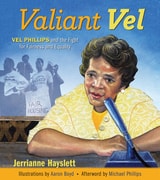
Valiant Vel
Vel Phillips and the Fight for Fairness and EqualityJerrianne Hayslett
Wisconsin Historical Society Press, 2025
An illustrated biography of groundbreaking civil rights activist Vel Phillips for young readers
Fair housing advocate, civil rights champion, and civic leader Vel Phillips spent her life breaking barriers and fighting for justice for all people. As the first Black woman on the Milwaukee Common Council, Wisconsin’s first Black judge, and the first Black woman to win statewide office when she was elected secretary of state of Wisconsin, Phillips left a lasting legacy that has inspired generations to continue the fight for justice and equality.
Valiant Vel depicts Phillips’s captivating story for young readers in middle and high school—from her childhood experiences facing racial discrimination, to achieving her dream of becoming a lawyer, to her long career in politics and civil rights. In the 1960s, Phillips spearheaded a campaign to advocate for fair housing in Milwaukee, joining forces with the NAACP Youth Council and marching alongside other activists in the face of violent opposition. In 1968, Phillips’s persistence paid off when the Milwaukee Common Council passed a fair housing ordinance.
Beautifully illustrated with historic photographs and original artwork by Milwaukee artist Aaron Boyd, Valiant Vel makes an excellent addition to young readers’ bookshelves at school and at home. With an afterword by Phillips’s son, Michael, a glossary of terms, and sources for further research, this book provides a thorough look at an inspirational activist who dedicated her life to making the world a better place.
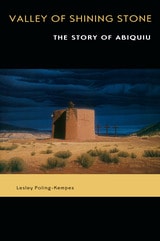
Valley of Shining Stone
The Story of AbiquiuLesley Poling-Kempes
University of Arizona Press, 1997
O'Keeffe saw the magic of sandstone cliffs and turquoise skies, but her life and death here are only part of the story. Reading almost like a novel, this book spills over with other legends buried deep in time, just as some of North America's oldest dinosaur bones lie hidden beneath the valley floor. Here are the stories of Pueblo Indians who have claimed this land for generations. Here, too, are Utes, Navajos, Jicarilla Apaches, Hispanos, and Anglos—many lives tangled together, yet also separate and distinct.
Underlying these stories is the saga of Ghost Ranch itself, a last living vestige of the Old West ideal of horses, cowboys, and wide-open spaces. Readers will meet a virtual Who's Who of visitors from "dude ranch" days, ranging from such luminaries as Willa Cather, Ansel Adams, and Charles Lindbergh to World War II scientist J. Robert Oppenheimer and his colleagues, who were working on the top-secret atomic bomb in nearby Los Alamos. Moving on through the twentieth century, the book describes struggles to preserve the valley's wild beauty in the face of land development and increased tourism.
Just as the Piedra Lumbre landscape has captivated countless wayfarers over hundreds of years, so its stories cast their own spell. Indispensable for travelers, pure pleasure for history buffs and general readers, these pages are a magic carpet to a magic land: Abiquiu, Ghost Ranch, the Valley of Shining Stone.

Valor and Courage
The Story of the USS Block Island Escort Carriers in World War IIBenjamin J. Hruska
University of Alabama Press, 2021
Recounts the stories of the USS Block Island CVE 21 and CVE 106 and their crews, many of whom served on both ships in the Atlantic and Pacific theatres
In Valor and Courage: The Story of the USS Block Island Escort Carriers in World War II Benjamin Hruska explores the history and commemoration of the USS Block Island—or, more properly, the Block Islands, as two escort carriers bore that name during WWII. The first, CVE 21, bears the distinction of having been the only American aircraft carrier sunk in the Atlantic Theatre after being torpedoed by a German U-boat off the coast of North Africa.
Of the CVE 21’s 957 crew members, six sailors were killed and eighteen injured in the strike, and four of the Block Island’s fighter pilots were lost later in the day searching for a safe place to land their planes. When the CVE 106 was commissioned to replace its predecessor, Captain Massie Hughes successfully persuaded the Navy to keep the CVE 21’s crew together in manning the new ship. After resurrection as the CVE 106, the Block Island was assigned to the Pacific theater where it fought until the end of the war. The saga of these two ships and the crew that navigated two very different theaters of war offers a unique lens on naval strategy and engineering as it evolved during WWII, especially as pertains to the escort carrier class—generally underappreciated both in naval studies and in public memory.
Using archival materials, dozens of oral histories, primary sources, and official records, Hruska traces the life of the Block Island from the CVE 21’s construction through its missions in the Atlantic, its work as an antisubmarine hunter, its destruction, and the lasting impact of those experiences on its crew. Hruska’s study juxtaposes traditional military history with an examination of the acts of remembrance and commemoration by veterans who served on the escort carriers, how those practices evolved over time, and how the meanings of personal wartime experiences and memories gradually shifted throughout that process.
Valorizing the Barbarians
Enemy Speeches in Roman HistoriographyBy Eric Adler
University of Texas Press, 2011
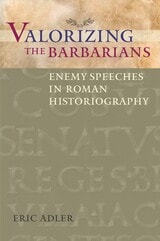
With the growth of postcolonial theory in recent decades, scholarly views of Roman imperialism and colonialism have been evolving and shifting. Much recent discussion of the topic has centered on the ways in which ancient Roman historians consciously or unconsciously denigrated non-Romans. Similarly, contemporary scholars have downplayed Roman elite anxiety about their empire's expansion.
In this groundbreaking new work, Eric Adler explores the degree to which ancient historians of Rome were capable of valorizing foreigners and presenting criticisms of their own society. By examining speeches put into the mouths of barbarian leaders by a variety of writers, he investigates how critical of the empire these historians could be.
Adler examines pairs of speeches purportedly delivered by non-Roman leaders so that the contrast between them might elucidate each writer's sense of imperialism. Analyses of Sallust's and Trogus's treatments of the Eastern ruler Mithradates, Polybius's and Livy's speeches from Carthage's Hannibal, and Tacitus's and Cassius Dio's accounts of the oratory of the Celtic warrior queen Boudica form the core of this study. Adler supplements these with examinations of speeches from other characters, as well as contextual narrative from the historians. Throughout, Adler wrestles with broader issues of Roman imperialism and historiography, including administrative greed and corruption in the provinces, the treatment of gender and sexuality, and ethnic stereotyping.
Value in Art
Manet and the Slave TradeHenry M. Sayre
University of Chicago Press, 2022
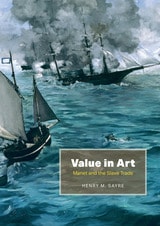
How did art critics come to speak of light and dark as, respectively, “high in value” and “low in value”? Henry M. Sayre traces the origin of this usage to one of art history’s most famous and racially charged paintings, Édouard Manet’s Olympia.
Art critics once described light and dark in painting in terms of musical metaphor—higher and lower tones, notes, and scales. Sayre shows that it was Émile Zola who introduced the new “law of values” in an 1867 essay on Manet. Unpacking the intricate contexts of Zola’s essay and of several related paintings by Manet, Sayre argues that Zola’s usage of value was intentionally double coded—an economic metaphor for the political economy of slavery. In Manet’s painting, Olympia and her maid represent objects of exchange, a commentary on the French Empire’s complicity in the ongoing slave trade in the Americas.
Expertly researched and argued, this bold study reveals the extraordinary weight of history and politics that Manet’s painting bears. Locating the presence of slavery at modernism’s roots, Value in Art is a surprising and necessary intervention in our understanding of art history.
Vampire Nation
Violence as Cultural ImaginaryTomislav Z. Longinovi
Duke University Press, 2011
Interpreting oral and written narratives and visual culture, Longinović traces the early modern invention of ‘the serbs’ and the category’s twentieth-century transformations. He describes the influence of Bram Stoker’s nineteenth-century novel Dracula on perceptions of the Balkan region and reflects on representations of hybrid identities and their violent destruction in the works of the region’s most prominent twentieth-century writers. Concluding on a hopeful note, Longinović considers efforts to imagine a new collective identity in non-nationalist terms. These endeavors include the emigrant Yugoslav writer David Albahari’s Canadian Trilogy and Cyber-Yugoslavia, a mock nation-state with “citizens” in more than thirty countries.

Vampires, Mummies and Liberals
Bram Stoker and the Politics of Popular FictionDavid Glover
Duke University Press, 1996
Glover’s efforts reveal a writer who was more wide-ranging and politically engaged than his current reputation suggests. An Irish Protestant and nationalist, Stoker nonetheless drew his political inspiration from English liberalism at a time of impending crisis, and the tradition’s contradictions and uncertainties haunt his work. At the heart of Stoker’s writing Glover exposes a preoccupation with those sciences and pseudo-sciences—from physiognomy and phrenology to eugenics and sexology—that seemed to cast doubt on the liberal faith in progress. He argues that Dracula should be read as a text torn between the stances of the colonizer and the colonized, unable to accept or reject the racialized images of backwardness that dogged debates about Irish nationhood. As it tracks the phantasmatic form given to questions of character and individuality, race and production, sexuality and gender, across the body of Stoker’s writing, Vampires, Mummies, and Liberals draws a fascinating portrait of an extraordinary transitional figure.
Combining psychoanalysis and cultural theory with detailed historical research, this book will be of interest to scholars of Victorian and Irish fiction and to those concerned with cultural studies and popular culture.
Van Dorn
The Life and Times of a Confederate GeneralRobert G. Hartje
Vanderbilt University Press, 1967
When it came to large-scale military initiatives, however, Van Dorn was remarkable for his failures. His tactical blunders at the battles of Pea Ridge, Arkansas, and Corinth, Mississippi, contributed greatly to the end of the Confederate military advantage in the Civil War.
The intrigue and scandals that figured in his personal life, even at the height of the War, led directly to his murder and the mystery that still surrounds it. Van Dorn’s dishonorable death concludes Hartje’s fascinating account of a checkered career and the role Earl Van Dorn played in the great tragedy of the Civil War.
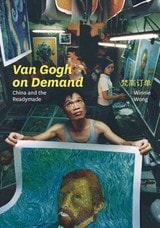
Van Gogh on Demand
China and the ReadymadeWinnie Won Yin Wong
University of Chicago Press, 2014
Vandals to Visigoths
Rural Settlement Patterns in Early Medieval SpainKaren Eva Carr
University of Michigan Press, 2002
Vandals to Visigoths uses archaeological survey data as a springboard to a theoretical discussion of rural survival strategies in the non-industrial world and the ways in which these strategies are affected by government actions. Carr draws on historical, archaeological, and ethnographic comparanda to conclude that the larger, more powerful Roman government was more advantageous for the rural poor than the weaker Vandal and Visigothic regimes. Though Carr agrees that the lives of the rural people and the free slaves were miserable, she shows through her data and theory that they became even more wretched after the decline of the empire.
Vandals to Visigoths will appeal to historians of Rome, as well as of Early Medieval Europe and Spain. Anthropologists, economists, and political scientists who study Late Antiquity and the medieval period will also be interested, as it discusses the broader implications of the role of government in the lives of early medieval Spain's subjects.
Karen Eva Carr is Associate Professor of History, Portland State University.
Vanderbilt Divinity School
Education, Contest and ChangeDale A. Johnson
Vanderbilt University Press, 2002
Engagement with southern culture, present from the beginnings of the university but taking on special significance in the mid-twentieth century around the issue of race;
The transition from an institution of the church (Methodist) to an independent and interdenominational school with a liberal Protestant orientation;
The development of the modern research university, evident in the establishment of a graduate program in religion in addition to its program for the profession of ministry;
From the 1950s, a growing concern with diversity and inclusivity, in keeping with national and international issues and developments both religious and cultural, which has broadened the school's sense of ecumenism and deepened its commitments to social justice.
Conflict has played an important part in shaping the history of the Vanderbilt Divinity School, from struggles over initial visions to questions of financial support and institutional control, from local debates over academic freedom to national issues of social justice. Especially noteworthy are the transformations the school has undergone since 1960: the "James Lawson affair," where the divinity school faculty resigned over the expulsion of an African American graduate student who was organizing local lunch counter sit-ins; the impact of social change on the school since the late 1960s; and the contributions of women and African Americans, including their appointment to the faculty.

Vanguard
A Queer History of Mutual AidJoseph Plaster
Duke University Press, 2027
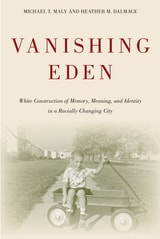
Vanishing Eden
White Construction of Memory, Meaning, and Identity in a Racially Changing CityMichael Maly
Temple University Press, 2015
For many whites, desegregation initially felt like an attack on their community. But how has the process of racial change affected whites’ understanding of community and race? In Vanishing Eden, Michael Maly and Heather Dalmage provide an intriguing analysis of the experiences and memories of whites who lived in Chicago neighborhoods experiencing racial change during the 1950s through the 1980s. They pay particular attention to examining how young people made sense of what was occurring, and how this experience impacted their lives.
Using a blend of urban studies and whiteness studies, the authors examine how racial solidarity and whiteness were created and maintained—often in subtle and unreflective ways. Vanishing Eden also considers how race is central to the ways social institutions such as housing, education, and employment function. Surveying the shifting social, economic, and racial contexts, the authors explore how race and class at local and national levels shaped the organizing strategies of those whites who chose to stay as racial borders began to change.
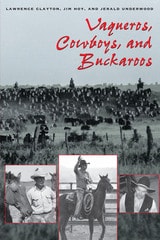
Vaqueros, Cowboys, and Buckaroos
By Lawrence Clayton, Jim Hoy, and Jerald Underwood
University of Texas Press, 2001
Herding cattle from horseback has been a tradition in northern Mexico and the American West since the Spanish colonial era. The first mounted herders were the Mexican vaqueros, expert horsemen who developed the skills to work cattle in the brush country and deserts of the Southwestern borderlands. From them, Texas cowboys learned the trade, evolving their own unique culture that spread across the Southwest and Great Plains. The buckaroos of the Great Basin west of the Rockies trace their origin to the vaqueros, with influence along the way from the cowboys, though they, too, have ways and customs distinctly their own.
In this book, three long-time students of the American West describe the history, working practices, and folk culture of vaqueros, cowboys, and buckaroos. They draw on historical records, contemporary interviews, and numerous photographs to show what makes each group of mounted herders distinctive in terms of working methods, gear, dress, customs, and speech. They also highlight the many common traits of all three groups.
This comparative look at vaqueros, cowboys, and buckaroos brings the mythical image of the American cowboy into focus and detail and honors the regional and national variations. It will be an essential resource for anyone who would know or portray the cowboy—readers, writers, songwriters, and actors among them.
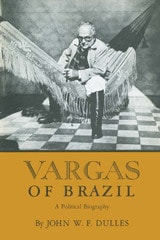
Vargas of Brazil
A Political BiographyBy John W. F. Dulles
University of Texas Press, 1967
The dominant public figure in Brazil from 1930 until 1954 was a highly contradictory and controversial personality. Getúlio Vargas, from the pampas of the southern frontier state of Rio Grande do Sul, became the dictator who ruled without ever forgetting the lower classes.
Vargas was a consummate artist at politics. He climbed the political ladder through seats in the state and national legislatures to the post of federal Finance Minister and to the governorship of Rio Grande do Sul. His career then took him to the National Palace as Provisional President and as Constitutional President, and later as the dictator of his "New State." After his deposition in 1945 and a period of semiretirement, his continuing widespread popularity resulted in his successful come-back campaign in 1950 for the Presidency on the Labor Party ticket.
Vargas' contributions to Brazilian political and economic life were many and important. Taking advantage of the power which his political magic provided him, he brought Brazil from a loose confederacy of semifeudal states to a strongly centralized nation. He was a great eclectic, welding into his social, political, and economic policies what he found good in various programs. He was also a great opportunist in the sense that he adroitly took advantage of conditions and circumstances to effect his ends. He was intimately related to the revolutionary changes in Brazilian life after 1930.
Vargas, "Father of the Brazilians," attributed achievements such as these to power in his own hands. His foes, however, still feared the political wizard, and they cheered the military when it deposed him. After his return, "on the arms of the people," Vargas saw that the armed forces were determined to repeat history, and in 1954 he chose another path—suicide.
All of these exciting events are related in John W. F. Dulles's Vargas of Brazil: A Political Biography. Despite its emphasis on Vargas the politician and statesman, the reader comes to know Vargas the man.
For this portrait of Vargas and of Brazil the author has drawn much material from State Department papers in the National Archives and from other public sources, and from interviews with numerous persons who were participants in the events he describes or observers of them. The result is an interesting, revealing, valid account of an important people. Many illustrations supplement the text.
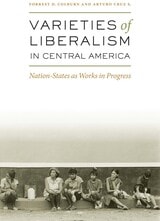
Varieties of Liberalism in Central America
Nation-States as Works in ProgressBy Forrest D. Colburn and Arturo Cruz S.
University of Texas Press, 2007
Why do some countries progress while others stagnate? Why does adversity strengthen some countries and weaken others? Indeed, in this era of unprecedented movement of people, goods, and ideas, just what constitutes a nation-state? Forrest Colburn and Arturo Cruz suggest how fundamental these questions are through an exploration of the evolution of Guatemala, El Salvador, Honduras, Nicaragua, and Costa Rica over the last quarter of a century, a period of intriguing, often confounding, paradoxes in Central America's development.
Offering an elegant defense of empiricism, Colburn and Cruz explore the roles of geography and political choice in constructing nations and states. Countries are shown to be unique: there are a daunting number of variables. There is causality, but not the kind that can be revealed in the laboratory or on the blackboard. Liberalism—today defined as democracy and unfettered markets—may be in vogue, but it has no inherent determinants. Democracy and market economies, when welded to the messy realities of individual countries, are compatible with many different outcomes. The world is more pluralistic in both causes and effects than either academic theories or political rhetoric suggest.
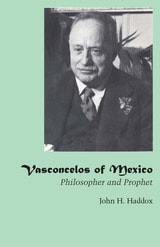
Vasconcelos of Mexico
Philosopher and ProphetBy John H. Haddox
University of Texas Press, 1967
José Vasconcelos—lawyer, politician, writer, educator, philosopher, prophet, and mystic—was one of the most influential and controversial figures in the intellectual life of twentieth-century Mexico.
Vasconcelos was driven by the desire to gain a complete and comprehensive vision of reality, employing his own aesthetic-emotive method and a poetic mode of expression. The complex philosophical system that resulted is what he called “aesthetic monism.” But this is only one side of the man. Vasconcelos was also vitally interested in both the proximate realities and remote possibilities of Mexico, in the character of the “cosmic race” of his homeland, and in the relations between his own country and the others of this hemisphere.
Soon after Vasconcelos’s death in 1959, Eduardo García Máynez spoke of him, in a moving tribute, as “without question the most inspiring intellectual and human figure that Mexico has produced.” Unhappily—and perhaps disgracefully—he has remained almost unknown outside the Spanish-speaking world. Histories of Mexico published in English usually give passing mention to his role as Minister of Public Education or his unsuccessful campaign for the presidency, but his aesthetic system and his socio-political ideas have been ignored by philosophers in the United States.
Here, for the first time, is a unified, inclusive, and occasionally critical presentation of the entire range of Vasconcelos’s thought, from his metaphysics and theory of knowledge through his aesthetics and ethics to his social and political philosophy. It is enriched by an appendix in which the most significant passages from Vasconcelos’s own philosophical writings are presented in English translations.
Vasconselos
A Romance of the New WorldKevin Collins
University of Arkansas Press, 2013
Vatican II Behind the Iron Curtain
Piotr H. Kosicki
Catholic University of America Press, 2016
Vaudeville Melodies
Popular Musicians and Mass Entertainment in American Culture, 1870-1929Nicholas Gebhardt
University of Chicago Press, 2017
In Vaudeville Melodies, Nicholas Gebhardt introduces us to the performers, managers, and audiences who turned disjointed variety show acts into a phenomenally successful business. First introduced in the late nineteenth century, by 1915 vaudeville was being performed across the globe, incorporating thousands of performers from every branch of show business. Its astronomical success relied on a huge network of theatres, each part of a circuit and administered from centralized booking offices. Gebhardt shows us how vaudeville transformed relationships among performers, managers, and audiences, and argues that these changes affected popular music culture in ways we are still seeing today. Drawing on firsthand accounts, Gebhardt explores the practices by which vaudeville performers came to understand what it meant to entertain an audience, the conditions in which they worked, the institutions they relied upon, and the values they imagined were essential to their success.
Vector
A Surprising Story of Space, Time, and Mathematical TransformationRobyn Arianrhod
University of Chicago Press, 2024
The stars of this book, vectors and tensors, are unlikely celebrities. If you ever took a physics course, the word “vector” might remind you of the mathematics needed to determine forces on an amusement park ride, a turbine, or a projectile. You might also remember that a vector is a quantity that has magnitude and (this is the key) direction. In fact, vectors are examples of tensors, which can represent even more data. It sounds simple enough—and yet, as award-winning science writer Robyn Arianrhod shows in this riveting story, the idea of a single symbol expressing more than one thing at once was millennia in the making. And without that idea, we wouldn’t have such a deep understanding of our world.
Vector and tensor calculus offers an elegant language for expressing the way things behave in space and time, and Arianrhod shows how this enabled physicists and mathematicians to think in a brand-new way. These include James Clerk Maxwell when he ushered in the wireless electromagnetic age; Einstein when he predicted the curving of space-time and the existence of gravitational waves; Paul Dirac, when he created quantum field theory; and Emmy Noether, when she connected mathematical symmetry and the conservation of energy. For it turned out that it’s not just physical quantities and dimensions that vectors and tensors can represent, but other dimensions and other kinds of information, too. This is why physicists and mathematicians can speak of four-dimensional space-time and other higher-dimensional “spaces,” and why you’re likely relying on vectors or tensors whenever you use digital applications such as search engines, GPS, or your mobile phone.
In exploring the evolution of vectors and tensors—and introducing the fascinating people who gave them to us—Arianrhod takes readers on an extraordinary, five-thousand-year journey through the human imagination. She shows the genius required to reimagine the world—and how a clever mathematical construct can dramatically change discovery’s direction.
Vegas Strong
Bearing Witness 1 October 2017Roberta Sterman Sabbath
University of Nevada Press, 2023
Mass shootings have been on the rise in the United States since the early 2000s, but until the heartbreak of the 1 October 2017 Route 91 Harvest Music Festival, the citizens of Las Vegas had never experienced the violence and tragedy of this now all-too-frequent occurrence. That day, fifty-eight people were shot to death on site, while another two victims later died of their injuries. The 1 October incident physically wounded nearly 900 concert-goers, but psychologically impacted countless untold victims.
As individual and institutional response to urgent requests for help came in both during and after the 1 October catastrophe, those who call Las Vegas home struggled to cope with pain and grief. Now, editor Roberta Sabbath draws together a collection of personal essays, oral histories, interviews, scholarly writings, and commentaries to remember those whose lives were lost, and to honor survivors and their loved ones. Written five years after the tragedy, each contribution offers a unique story of healing, demonstrating the wide-ranging experiences and repercussions of the event. The essays in this collection represent a broad diversity of voices from political leaders, health professionals, first responders, community members, and incident survivors. This work is dedicated to those who lost their lives on 1 October 2017, to survivors and their loved ones, and to the caregivers—both individual and institutional—all of whom continue to keep Vegas Strong.

Vegetables
A BiographyEvelyne Bloch-Dano
University of Chicago Press, 2012
From Michael Pollan to locavores, Whole Foods to farmers' markets, today cooks and foodies alike are paying more attention than ever before to the history of the food they bring into their kitchens—and especially to vegetables. Whether it’s an heirloom tomato, curled cabbage, or succulent squash, from a farmers' market or a backyard plot, the humble vegetable offers more than just nutrition—it also represents a link with long tradition of farming and gardening, nurturing and breeding.
In this charming new book, those veggies finally get their due. In capsule biographies of eleven different vegetables—artichokes, beans, chard, cabbage, cardoons, carrots, chili peppers, Jerusalem artichokes, peas, pumpkins, and tomatoes—Evelyne Bloch-Dano explores the world of vegetables in all its facets, from science and agriculture to history, culture, and, of course, cooking. From the importance of peppers in early international trade to the most recent findings in genetics, from the cultural cachet of cabbage to Proust’s devotion to beef-and-carrot stew, to the surprising array of vegetables that preceded the pumpkin as the avatar of All Hallow’s Eve, Bloch-Dano takes readers on a dazzling tour of the fascinating stories behind our daily repasts.
Spicing her cornucopia with an eye for anecdote and a ready wit, Bloch-Dano has created a feast that’s sure to satisfy gardeners, chefs, and eaters alike.
Veiled Leadership
Katharine Drexel, The Sisters of the Blessed Sacrament, and Race RelationsAmanda Bresie
Catholic University of America Press, 2023
Veils And Daggers
Linda Steet
Temple University Press, 2000
In Veils and Daggers, Linda Steet provides a critically insightful and alternative interpretation of National Geographic. Through an analysis of the journal's discourses in Orientalism, patriarchy, and primitivism in the Arab world as well as textual and visual constructions of Arab men and women, Islam, and Arab culture, Veils and Daggers unpacks the ideological perspectives that have guided National Geographic throughout its history. Drawing on cultural, feminist, and postcolonial criticism, Steet generates alternative readings that challenge the magazine's claims to objectivity. In this fascinating journey, it becomes clear that neither text nor image in the magazine can be regarded as natural or self-evident and she artfully demonstrates that the act of representing others "inevitably involves some degree of violence, decontextualization, minaturization, etc." The subject area known as Orientalism, she shows, is a manmade concept that as such must be studied as an integral component of the social, rather than the natural or divine world.
Veils and Daggers repositions and redefines National Geographic as an educational journal. Steet's work is an important and groundbreaking contribution in the area of social construction of knowledge, social foundations of education, popular educational media, and social studies as well as racial identity, ethnicity, gender. Once encountered, readers of National Geographic will never regard it in the same manner again.
Velocipedomania
A Cultural History of the Velocipede in FranceCorry Cropper
Bucknell University Press, 2023
Velocipedomania is the first in-depth study of the velocipede fad and the popular culture it inspired. It explores how the device was hailed as a symbol of France’s cutting-edge technological advancements, yet also marketed as an invention with a noble pedigree, born from the nation’s cultural and literary heritage. Giving readers a window into the material culture and enthusiasms of Second Empire France, it provides the first English translations of 1869’s Manual of the Velocipede, 1868’s Note on Monsieur Michaux’s Velocipede, and the 1869 operetta Dagobert and his Velocipede. It also reprints scores of rare images from newspapers and advertisements, analyzing how these magnificent machines captured the era’s visual imagination. By looking at how it influenced French attitudes towards politics, national identity, technology, fashion, fitness, and gender roles, this book shows how the short-lived craze of velocipedomania had a big impact.
Vendulka
Flight to FreedomOndrej Kundra
Karolinum Press, 2021
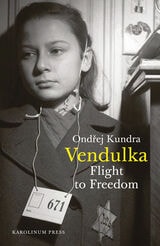
Famed Czech photographer Jan Lukas snapped an offhand portrait of twelve-year-old Vendulka Vogl in March 1943. A friend of the Vogls, Lukas was saying goodbye to the family, who were soon to leave Prague for a concentration camp. The photograph almost didn’t see the light of day—Lukas knew that if the Nazis found it on him, he could wind up in the camps as well—but the image was eventually developed and came to symbolize the Holocaust and humanize its victims. Seventy years after this famous picture was taken, investigative journalist Ondřej Kundra discovered that, despite all odds, Vendulka Vogl had survived the camps of Terezín, Auschwitz, and Christianstadt, and was in fact still alive and living in the United States. Kundra persuaded her to tell the remarkable story surrounding the photograph: her survival, her later decision to flee the Communist regime for America, and how she later reconnected with Jan Lukas, maintaining a lifelong friendship.
Vogl’s thrillingly moving story, Kundra’s sharp and engaging writing, and Lukas’s striking photography all combine to make Vendulka an inspiring investigation into the horrors of totalitarianism and the redemptive beauty of friendship.
Venezuela's Bolivarian Democracy
Participation, Politics, and Culture under ChávezDavid Smilde and Daniel Hellinger, eds.
Duke University Press, 2011
Contributors
Carolina Acosta-Alzuru
Julia Buxton
Luis Duno Gottberg
Sujatha Fernandes
María Pilar García-Guadilla
Kirk A. Hawkins
Daniel Hellinger
Michael E. Johnson
Luis E. Lander
Margarita López-Maya
Elizabeth Gackstetter Nichols
Coraly Pagan
Guillermo Rosas
Naomi Schiller
David Smilde
Alejandro Velasco

Venezuela's Movimiento al Socialismo
From Guerrilla Defeat to Innovative PoliticsSteve Ellner
Duke University Press, 1988
The author places MAS in its international national, and historical contexts in order to determine the extent to which it is a unique communist party, as it claims to be. He traces the theory of "national democratic revolution, " which MAS rejects, back to Lenin, and discusses the Latin American left's reevaluation of that thesis. Ellner examines the guerrilla movement in Venezuela, the student movement of the late 1960s, and the emergence of the "New Left" in other countries, especially noting their influence on the formation of MAS. He also discusses the group's role in Venezuelan elections and it's relations with the other parties.

Vengeance Is Mine
The Scandalous Love Triangle That Triggered the Boyce-Sneed FeudBill Neal
University of North Texas Press, 2011

Vengeance of the Victim
History and Symbol in Giorgio Bassani’s FictionMarilyn Schneider
University of Minnesota Press, 1986
Vengeance of the Victim was first published in 1986. Minnesota Archive Editions uses digital technology to make long-unavailable books once again accessible, and are published unaltered from the original University of Minnesota Press editions.
More profoundly than any documentary record, the collected fiction of Giorgio Bassani—Il Romanzo di Ferrara — captures a very particular and powerful historical reality: Italian Jewish life under Fascism, especially between the passage of the so-called racial laws in 1938 and the end of World War II. Set primarily in the provincial city of Ferrara, Bassani's narratives interweave themes of death, victimization, betrayal, survival, and artistic production. His best-known novel, The Garden of the Finzi-Continis — and other works that concentrate on the crucial years of 1938-1945—stand at the center of the Romanzo.They are preceded by texts that look back on Jewish life in the liberal era of the Risorgimento, and followed by texts set in the liberated, democratic society of the postwar years. These framing narratives provide a space for remembrance and reflection.
Marilyn Schneider's aim, in Vengeance of the Victim, is to uncover the symbolic layers — historical, spatial, topographical, mythopoeic, allegorical, and sexual — that five Bassani's texts their richness and ambiguity, and in so doing to achieve a full understanding of his work and its representation of the Italian Jewish experience. Death and victimization, which pervade these texts, set in motion a process of artistic renewal that is most fully embodied in the vibrant young Micol Finzi-Contini, Bassani's textual icon and a victim of the Holocaust. Schneider also finds that the narratives, especially the late ones, pay self-reflexive attention to the creation of the text, constructing an authorial persona engaged in an existential, moral, and artistic journey from symbolic death to rebirth. It is the writing subject's successful completion of the journey that constitutes the vengeance of the victim.
Venice
William H. McNeill
University of Chicago Press, 1974
In this magisterial history, National Book Award winner William H. McNeill chronicles the interactions and disputes between Latin Christians and the Orthodox communities of eastern Europe during the period 1081–1797. Concentrating on Venice as the hinge of European history in the late medieval and early modern period, McNeill explores the technological, economic, and political bases of Venetian power and wealth, and the city’s unique status at the frontier between the papal and Orthodox Christian worlds. He pays particular attention to Venetian influence upon southeastern Europe, and from such an angle of vision, the familiar pattern of European history changes shape.
“No other historian would have been capable of writing a book as direct, as well-informed and as little weighed down by purple prose as this one. Or as impartial. McNeill has succeeded admirably.”—Fernand Braudel, Times Literary Supplement
“The book is serious, interesting, occasionally compelling, and always suggestive.”—Stanley Chojnacki, American Historical Review
Venice Variations
Tracing the Architectural ImaginationSophia Psarra
University College London, 2018
Through a discussion of Venice and two other works owing their inspiration to this city—Italo Calvino’s Invisible Cities and Le Corbusier’s Venice Hospital—Sophia Psarra describes Venice as a system that starts to resemble a highly probabilistic "algorithm." The rapidly escalating processes of urban development around our big cities share many of the motivations for survival, shelter, and trade that brought Venice into existence. Rather than seeing these places as problems to be solved, we need to understand how urban complexity can evolve, as happened from its unprepossessing origins in the marshes of the Venetian lagoon to the "model city" enduring a thousand years. This book frees Venice from stereotypical representations, revealing its generative capacity to inform potential other "Venices" for the future.
Venice
A Contested Bohemia in Los AngelesAndrew Deener
University of Chicago Press, 2012
Venture Smith and the Business of Slavery and Freedom
James Brewer Stewart
University of Massachusetts Press, 2010
But what began as a scientific inquiry into African origins rapidly evolved into an unparalleled interdisciplinary collaboration between historians, literary analysts, geographers, genealogists, anthropologists, political philosophers, genomic biologists, and, perhaps most revealingly, a poet. Their common goal has been to reconstruct the life of an extraordinary African American and to assay its implications for the sprawling, troubled eighteenth-century world of racial exploitation over which he triumphed. This volume displays the rich results of that collaboration.
A highly intelligent, deeply self-motivated and immensely energetic slave transported from Africa, Venture Smith transformed himself through unstinting labor into a respectable Connecticut citizen, a successful entrepreneur, and the liberator of other enslaved African Americans. As James O. Horton emphasizes in his foreword to this volume, "Venture Smith's saga is a gift to all who seek to understand the complex racial beginnings of America. It helps to connect the broad American story with the stories of many Americans whose lives illustrate the national struggle to live out the national ideals."
In addition to Horton and volume editor James Brewer Stewart, contributors include Cameron Blevins, Vincent Carretta, Anna Mae Duane, Robert P. Forbes, Anne L. Hiskes, Paul Lovejoy, Marilyn Nelson, David Richardson, Chandler B. Saint, Linda Strausbaugh, Kevin Tulimieri, and John Wood Sweet.
Ventures into Childland
Victorians, Fairy Tales, and FemininityU. C. Knoepflmacher
University of Chicago Press, 1998
"Ventures into Childland is acute, well written and stimulating. It also has a political purpose, to insist on the importance of protecting and nurturing children, imaginatively and physically."—Jan Marsh, Times Literary Supplement
"A provocative and interesting book about Victorian culture."—Library Journal

Verdict According to Conscience
Perspectives on the English Criminal Trial Jury, 1200-1800Thomas Andrew Green
University of Chicago Press, 1985
Verdi’s Aida
The History of an Opera in Letters and DocumentsTranslated by Hans Busch
University of Minnesota Press, 1978
Verdi's Aida was first published in 1978. Minnesota Archive Editions uses digital technology to make long-unavailable books once again accessible, and are published unaltered from the original University of Minnesota Press editions.
Vergil's Aeneid and the Roman Self
Subject and Nation in Literary DiscourseYasmin Syed
University of Michigan Press, 2005
Now in Paper!
As the most widely read Roman poem in antiquity, the Aeneid was indelibly burned into the memories of generations of Roman school children. In this book, author Yasmin Syed analyzes the formative influence the poem exerted on its broad audience of educated Romans. Syed analyzes Roman pedagogy and reading practices as well as ancient beliefs about the powerful influence of poetry. Her study considers these cultural components together with the aspects of identity that define the Aeneid’s characters. By doing so, Syed shows how Vergil’s ancient audiences saw themselves—their experiences, goals, and values—reflected in the poem and guided by it. In particular, Syed’s treatment of gender and ethnicity brings to light the key role of Vergil’s poem in the formation of Romanness.
Verner Suomi
The Life and Work of the Founder of Satellite MeteorologyJohn M. Lewis et al.
American Meteorological Society, 2018
Vernon Lee
Aesthetics, History, and the Victorian Female IntellectualChrista Zorn
Ohio University Press, 2003
The subject of renewed interest among literary and cultural scholars, Vernon Lee wrote more than forty books, in a broad range of genres, including fiction, history, aesthetics, and travel literature. Early on, Lee established her reputation as a public critic whose unconventional viewpoints stood out among those of her contemporaries.
To feminist and cultural critics, she is a fascinating model of the independent female intellectual who, as Desmond MacCarthy once put it, provides a rare combination of intellectual curiosity and imaginative sensibility.
A startlingly original critical study, Vernon Lee adds new dimensions to the legacy of this woman of letters whose career spans the transition from the late Victorian to the modernist period. Zorn draws on archival materials to discuss Lee’s work in terms of British aestheticism and in the context of the Western European history of ideas.
Zorn contends that Lee’s fiction and nonfiction represent a literary position that bridges and surpasses both the Victorian sage and the modernist aesthetic critic.
Through Professor Zorn’s approach, which combines theoretical framings of texts in terms of recent feminist and cultural criticism with passages of close reading, Vernon Lee emerges as an influential figure in late-nineteenth-century British and continental European thinking on history, art, culture, and gender.
Versailles 1919
A Centennial PerspectiveAlan Sharp
Haus Publishing, 2018
Fully revised and updated for the centennial of the Conference, Versailles 1919 sets the ramifications of the Paris Peace treaties—for good or ill—within a long-term context. Alan Sharp mounts a powerful argument that the responsibility for Europe’s continuing interwar instability cannot be wholly attributed to the peacemakers of 1919–23. Concise and convincing, Versailles 1919 is a clear guide to the global legacy of the Versailles Settlement.
Vertebrate Faunal Remains from Grasshopper Pueblo, Arizona
John W. Olsen with a foreword by John D. Speth
University of Michigan Press, 1990