Results by title
220 books match the query 'Individual Artists' and 3 start with v
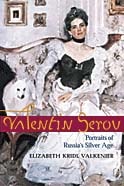
Valentin Serov
Portraits of Russia's Silver AgeElizabeth Valkenier
Northwestern University Press, 2001
Valentin Serov (1865-1911) burst onto the art scene at the age of twenty-two with his portrait Girl with Peaces. In a short time he became the preeminent portraitist of Russia's Silver Age.
Elizabeth Kridl Valkenier weds art criticism to social history in her study of Serov. She casts the artist's work against the Gilden Age of turn-of-the-century Russia, an era when money and consumption abounded and revolutionary change was taking place at all levels of society. Painting prominent people of the day in business, government, the nobility, and the arts, Serov created a gallery of Russia's important figures--figures seen with a sharp eye and painted with subtle irony.
Elizabeth Kridl Valkenier weds art criticism to social history in her study of Serov. She casts the artist's work against the Gilden Age of turn-of-the-century Russia, an era when money and consumption abounded and revolutionary change was taking place at all levels of society. Painting prominent people of the day in business, government, the nobility, and the arts, Serov created a gallery of Russia's important figures--figures seen with a sharp eye and painted with subtle irony.
[more]
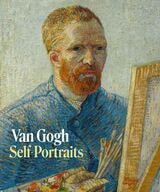
Van Gogh. Self-Portraits
Edited by Karen Serres
Paul Holberton Publishing, 2022
An exhibition catalog tracing the evolution of Van Gogh’s self-presentation in his art.
This volume accompanies an exhibition at London’s Courtauld Gallery, the first to explore the full chronological range of Vincent van Gogh’s self-portraits.
The myth of Van Gogh today is linked as much to his extraordinary life as it is to his world-famous paintings. His biography has often shaped the way his self-portraits have been (mis)understood. Spanning his entire career, this volume explores these highly personal paintings, analyzing the artist’s self-representation in context to reveal the role it plays in his oeuvre. Of particular interest is the striking way the evolution of Van Gogh’s self-representation can be seen as a microcosm of his development as a painter.
In addition to the celebrated Self-Portrait with Bandaged Ear, the exhibition showcases a group of major masterpieces brought together from international collections, including the Van Gogh Museum in Amsterdam, the Musee d’Orsay in Paris, the Art Institute of Chicago, and the National Gallery of Art in Washington, DC, among others. Beautifully illustrated, this exhibition companion includes detailed entries on each work, an appendix illustrating all of Van Gogh’s self-portraits, and three insightful essays on the theme.
[more]
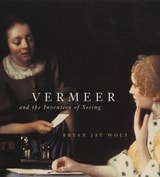
Vermeer and the Invention of Seeing
Bryan Jay Wolf
University of Chicago Press, 2001
This book begins with a single premise: that Vermeer painted images not only of extraordinary beauty, but of extraordinary strangeness. To understand that strangeness, Bryan Jay Wolf turns to the history of early modernism and to ways of seeing that first developed in the seventeenth century. In a series of provocative readings, Wolf presents Vermeer in bracing new ways, arguing for the painter's immersion in—rather than withdrawal from—the intellectual concerns of his day.
The result is a Vermeer we have not seen before: a painter whose serene spaces and calm subjects incorporate within themselves, however obliquely, the world's troubles. Vermeer abandons what his predecessors had labored so carefully to achieve: legible spaces, a world of moral clarity defined by the pressure of a hand against a table, or the scatter of light across a bare wall. Instead Vermeer complicated Dutch domestic art and invented what has puzzled and captivated his admirers ever since: the odd daubs of white pigment, scattered across the plane of the canvas; patches of blurred surface, contradicting the painting's illusionism without explanation; and the querulous silence that endows his women with secrets they dare not reveal.
This beautifully illustrated book situates Vermeer in relation to his predecessors and contemporaries, and it demonstrates how powerfully he wrestled with questions of gender, class, and representation. By rethinking Vermeer's achievement in relation to the early modern world that gave him birth, Wolf takes northern Renaissance and early modern studies in new directions.
[more]